How we make this list: we compare pricing pages, product documentation and public user reviews. Ratings come from G2, Capterra or Trustpilot, with the date we checked them.
What is the best healthcare claims management software in 2026?
Waystar is the best healthcare claims management software for most US practices because it combines a national clearinghouse with claim scrubbing, denial management, and payment posting. Availity Essentials is the best free starting point for small practices, and Claim.MD is the best budget clearinghouse with published prices from 30 dollars a month. Hospitals should compare Change Healthcare and Experian Health.
Key takeaways
- Waystar leads for most practices with a full clearinghouse plus denial management, though pricing is quote-based and third-party guides report it from about 100 dollars a month.
- Availity Essentials is free for providers, the cheapest way to submit claims, check eligibility, and pull remittances for participating payers.
- Claim.MD is the only clearinghouse here with fully published prices: 30, 60, or 120 dollars a month, with no setup fee and no per-provider fee.
- Office Ally Service Center is free to start for participating payers, with a 44.95 dollar fee only in months when you submit claims to non-participating payers.
- Change Healthcare, Experian Health, TriZetto, and eProvider Solutions are quote-based, so budget for per-transaction fees and a sales conversation.
How is claims management software different from medical billing software?
Claims management software is the layer that moves a finished claim from your practice to the payer and back. It scrubs the claim for coding and payer-rule errors before submission, sends the 837 electronic claim through a clearinghouse, tracks claim status, pulls the 835 remittance, and works the denials that come back. Medical billing software is the wider system around it: scheduling, charge capture, patient statements, and the EHR. Rankite already covers those billing suites, including AdvancedMD, Tebra, athenahealth, and eClinicalWorks. This guide covers the claims layer itself: the clearinghouses, scrubbers, and denial tools that decide whether a claim is paid on first submission or comes back for rework.
That distinction matters because a practice can own a good billing system and still lose money on claims. Experian Health reported in its State of Claims 2025 survey that 41 percent of providers now report denial rates at or above 10 percent, up from 30 percent in 2022, and that 50 percent name missing or inaccurate claims data as the leading denial driver. Industry estimates put the cost of reworking a denied claim at 25 to 118 dollars, against about 6.50 dollars for a clean claim. A scrubber that catches errors before submission pays for itself in avoided rework.
What should you check before you buy claims software?
Check four things before you sign. First, payer coverage: confirm your top ten payers by volume are connected, and ask whether each is a participating payer on the free tier or a non-participating payer that triggers extra fees. Second, scrubbing depth: ask how many payer-specific edits the scrubber runs, how often the rule pack is updated, and whether you can build your own edits. Third, enrollment: switching clearinghouses means re-doing payer enrollments, which takes weeks, so confirm who handles enrollment and whether your existing enrollments transfer. Fourth, denial workflow: a scrubber alone does not fix denials, so check whether the tool has a denial work queue, appeal templates, and root-cause reporting.
How much does healthcare claims management software cost?
Entry prices run from free to quote-based. Availity Essentials and Office Ally Service Center both start at zero for participating payers. Claim.MD starts at 30 dollars a month on Basic, 60 dollars on Small Volume, and 120 dollars on Unlimited. Waystar is quote-based, with third-party guides reporting a starting point near 100 dollars a month. TriZetto is quote-based, with third-party guides reporting costs from about 300 dollars per provider per month. Change Healthcare, Experian Health, and eProvider Solutions are quote-based.
Take a solo practice sending 300 claims a month. On Claim.MD Unlimited the bill is 120 dollars a month, or 40 cents per claim. On Office Ally, if all 300 claims go to participating payers and you run 300 eligibility checks, the bill is about 30 dollars a month for the eligibility checks alone. On Availity Essentials the same work costs nothing for participating payers. On Waystar the bill is a quote, so get it in writing before you compare. At 1,000 claims a month Claim.MD Unlimited is still 120 dollars, while a per-claim model at 30 cents a claim costs 300 dollars.
Comparison table
| Tool |
Best for |
Starting price |
Free plan |
| Waystar |
Most practices wanting one clearinghouse plus denial management |
Quote |
No |
| Availity Essentials |
Small practices wanting free payer transactions |
Free |
Yes |
| Change Healthcare |
Large hospitals wanting the broadest payer network |
Quote |
No |
| Experian Health |
Teams whose denials come from dirty claims |
Quote |
No |
| TriZetto Provider Solutions |
Large groups and billing companies |
Quote |
No |
| Office Ally Service Center |
Small practices wanting a free clearinghouse |
Free |
Yes |
| Claim.MD |
Practices wanting published flat pricing |
30 dollars per month |
No |
| eProvider Solutions |
DrChrono and CollaborateMD users |
Quote |
No |
Quick comparison
Is your product missing or out of date?
We review this list regularly. Vendors can request a listing, send updated pricing or ask about featured placement.

#1Waystar
Best for: Most practices wanting one clearinghouse plus denial management4.4/5 on
G2 (119 reviews, checked Oct 2026)
Visit waystar.com
Starting pricequote
Free planNo
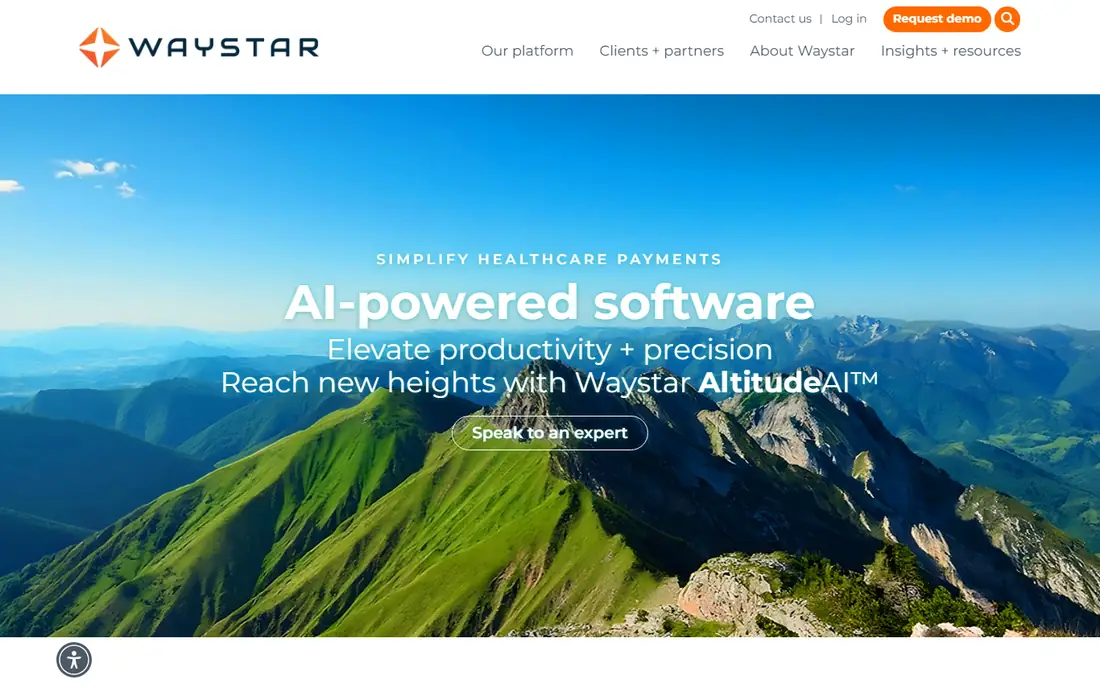
Waystar is the largest dedicated claims platform on this list, a public company formed from the merger of Navicure and ZirMed, and it covers the whole revenue cycle from eligibility checks through claim submission, denial management, and patient payments. Its clearinghouse connects to thousands of payers, its Claim Manager scrubs claims before submission, and its denial tools prioritize what needs review. Client results are strong: Cincinnati Children's cut clearinghouse costs in half after moving to Waystar, and home health provider BAYADA reduced denials by 72 percent. Third-party guides report pricing from near 100 dollars a month, with four plans named Starter, Core, Performance, and Premium, but Waystar does not publish prices, so the real figure depends on volume and which suites you buy. Get renewal terms and per-module prices in writing before you sign.
What we like- Full clearinghouse plus denial management in one platform
- Strong published client results
- Works for any practice size
Watch out for- Pricing is quote-based and modular, so the total climbs as you add suites
- Multi-year contracts with auto-renewal terms that reviewers criticize

#2
Availity Essentials
Best for: Small practices wanting free payer transactions
Visit availity.com
Starting priceFree
Free planYes
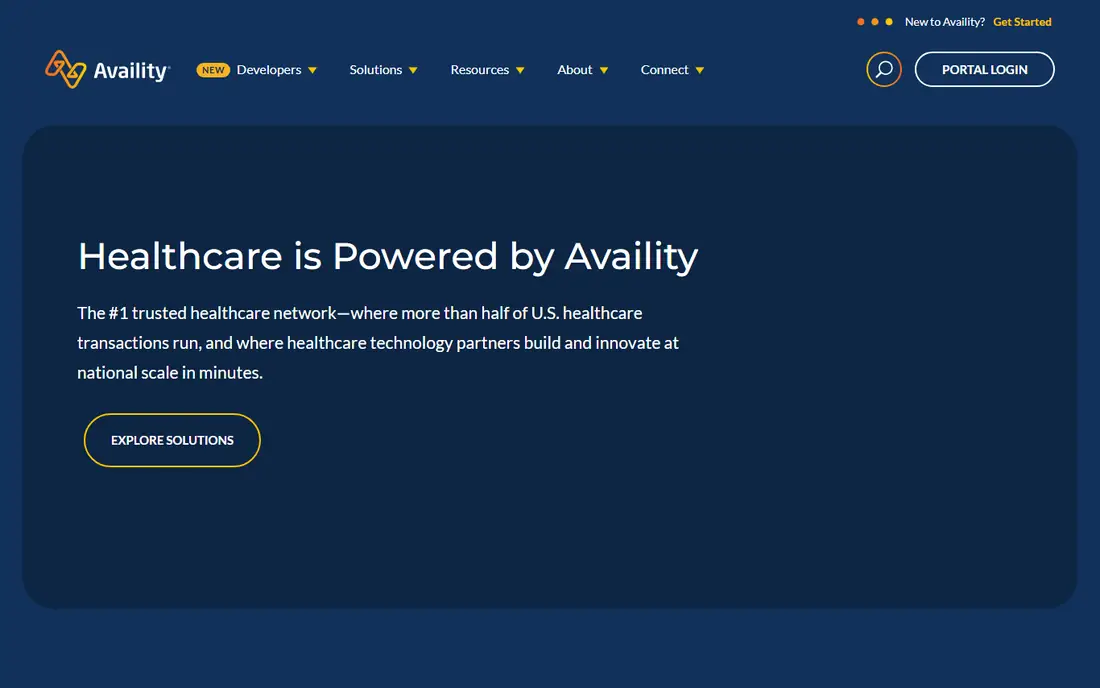
Availity is a health information network owned by a consortium of major health plans, including Humana and Florida Blue, and its Essentials portal is free for providers. Through one login you can check eligibility and benefits, submit authorizations and referrals, submit claims, check claim status, and download remittances, with no setup fee and no monthly fee. The free tier has real limits: it handles individual lookups and single-claim entry well, but batch submission, ERA retrieval at scale, and automation sit in the paid Essentials Pro product, which third-party guides report at roughly 100 to 300 dollars a month, and Essentials Plus starts from 25 dollars a month. If your team works claims one at a time inside a portal, Essentials costs nothing. If you submit batches from practice management software, price Essentials Pro before you commit.
What we like- Essentials portal is free for providers
- Direct connection to hundreds of payers
- No setup or monthly fee for core transactions
Watch out for- Free portal covers basics only, and batch clearinghouse features, analytics, and premium EDI services cost extra
- Some payers require the paid tiers

#3
Change Healthcare
Best for: Large hospitals wanting the broadest payer network
Visit optum.com
Starting pricequote
Free planNo
Change Healthcare is the largest medical claims clearinghouse in the United States, now part of Optum after UnitedHealth Group completed the combination in October 2022. It connects medical, dental, and pharmacy claims to more than 3,000 payers, with claim scrubbing, eligibility checks, electronic remittances, and analytics built for hospitals and large practices that submit high claim volumes. No standard price list is published: fees are negotiated per product and volume, typically as per-transaction charges plus module licensing, so expect an enterprise sales process rather than self-serve signup. The serious con is the February 2024 ransomware attack, which took the clearinghouse down for months and exposed data on roughly 192.7 million people, costing UnitedHealth over 2 billion dollars. The service is restored, but the incident is why many providers now multi-source their clearinghouse.
What we like- Largest US clearinghouse by payer reach
- Deep EDI infrastructure
- Part of Optum and UnitedHealth Group
Watch out for- Pricing is quote-based and enterprise-negotiated
- The February 2024 ransomware attack took its clearinghouse down for months
Starting pricequote
Free planNo
Experian Health sells claims management as a pre-submit scrub rather than a full clearinghouse. Its Claim Scrubber runs line-level edits on each encounter before the 837 claim is built, catching bad codes, demographic errors, and medical-necessity problems while the claim is still on the billing desk. The product ships with around 350 edits, and payer-specific edits replace 60 to 75 percent of an organization's custom edits immediately. Pricing is a fixed monthly rate rather than per-transaction, which suits high-volume teams, but no public rate exists: it is quote-only and sold as an enterprise module. A Forrester study commissioned by Experian found its Patient Access Curator cut coordination-of-benefits denials by 40 percent for a modeled composite health system. The honest limit is scope: it will not replace your denial work queue, patient statements, or EHR, so buy it when your first-pass problem is dirty claims, not authorizations that were never obtained.
What we like- Pre-submit claim scrubbing with around 350 maintained edits
- Fixed monthly rate rather than per-transaction pricing
- Strong denial-prevention evidence
Watch out for- Quote-only enterprise pricing with no public per-claim rate
- A scrubber alone does not replace a denial work queue
Starting pricequote
Free planNo
TriZetto Provider Solutions, part of Cognizant, is a clearinghouse built for scale: advanced claim scrubbing, payer connectivity, and compliance tools for hospitals, multi-specialty groups, and billing companies that submit high claim volumes. It is the default clearinghouse partner for eClinicalWorks and is also integrated with NextGen, which makes it a natural fit if your EHR is already wired to it. It covers the full claims path from submission through remittance. Pricing is custom, based on claim volume, payer connections, and services, and third-party guides report costs from about 300 dollars per provider per month. That puts it above the budget clearinghouses here, and small practices will find the sales process enterprise-shaped. Buy it when your volume and EHR integration justify the premium, and confirm the per-claim rate, monthly minimum, and included modules before you sign.
What we like- Deep payer connectivity and advanced claim scrubbing
- Tight integration with eClinicalWorks and NextGen
- Built for high volumes
Watch out for- Quote-based pricing with no published rate
- Third-party guides report costs from about 300 dollars per provider per month
Starting priceFree
Free planYes
Office Ally Service Center is the cheapest credible clearinghouse for most small practices, because submitting electronic claims to participating payers costs nothing. It is a web portal for eligibility checks, claim submission and correction, claim status, and remittance retrieval, used by more than 80,000 providers. The fees start elsewhere: claims to non-participating payers trigger a 44.95 dollar fee per Tax ID and rendering NPI in any month where those claims are 50 percent or more of your volume, eligibility checks cost 10 dollars for the first 100 each month, and attachments cost 0.55 dollars each. A solo practice sending 300 claims a month to participating payers pays about 30 dollars a month in eligibility fees. The tradeoff is polish: Service Center is a functional portal, not a modern RCM suite.
What we like- Free to start for participating payers
- No per-provider fee
- Used by more than 80,000 providers
Watch out for- Non-participating payer fee of 44.95 dollars a month applies per Tax ID and rendering NPI
- Eligibility checks and attachments are billed per transaction

#7
Claim.MD
Best for: Practices wanting published flat pricing
Visit claim.md
Starting price30 dollars per month
Free planNo
Claim.MD is the most transparent clearinghouse in this category. It publishes three flat monthly plans per tax ID: Basic at 30 dollars a month with a 0.30 dollar charge per claim, ERA, or eligibility check; Small Volume at 60 dollars a month including 100 claims, 100 ERAs, and 100 eligibility checks; and Unlimited at 120 dollars a month with unlimited claims and ERAs plus 1,000 eligibility checks. There is no setup fee and no per-provider fee, and one extra billing provider tax ID is included on Unlimited. Paper claims cost 1 dollar for five pages, and attachments cost 0.60 dollars each. At steady volume, 300 claims a month costs 120 dollars on Unlimited, or 40 cents per claim, while Basic would cost 30 dollars plus 90 dollars in per-claim fees. One caution: a third-party review noted the Claim.MD website was unreachable for a period in mid-October 2026, though it loaded normally when checked on 11 November 2026.
What we like- Fully published prices with no setup fee and no per-provider fee
- Unlimited claims on the 120 dollar plan
- Connects to thousands of payers
Watch out for- No free plan
- Paper claims, attachments, and extra tax IDs cost extra
- The vendor site was reported unreachable for a period in October 2026
Starting pricequote
Free planNo
eProvider Solutions is a clearinghouse that has connected providers with payers since 2005, and it is now part of the EverCommerce family. Most buyers meet it inside an EHR rather than as a standalone purchase: it is the clearinghouse behind DrChrono claims and the in-house clearinghouse for CollaborateMD. Through DrChrono, electronic claims to medical payers cost 0.78 dollars per claim on the Foundation plan, while paper claims to certain payer IDs cost more. It covers claim submission, eligibility, claim status, remittance, and payer enrollment. There is no published standalone price, so the cost depends on your EHR plan and claim volume. It is the right pick when your EHR already routes through it, since enrollment and issue resolution stay inside one vendor relationship, but Claim.MD or Office Ally will be easier to evaluate as a standalone clearinghouse with published prices.
What we like- In business since 2005
- Part of EverCommerce
- Built into DrChrono and CollaborateMD workflows
Watch out for- No direct published pricing
- Mostly bought through an EHR partner rather than standalone
- Per-claim fees apply on some EHR plans
Frequently asked questions
What is the cheapest healthcare claims management software?
Availity Essentials and Office Ally Service Center are both free to start for participating payers. Availity Essentials costs nothing for eligibility checks, claim submission, claim status, and remittances. Office Ally charges nothing to send claims to participating payers, with fees only for eligibility checks, attachments, and non-participating claims. Claim.MD is the cheapest paid option with published prices, starting at 30 dollars a month.
How much does a clearinghouse cost per claim?
Clearinghouse pricing typically runs 0.10 to 0.50 dollars per claim, with monthly minimums of 50 to 200 dollars for small practices, according to 2026 industry guides. Flat monthly plans change the math: Claim.MD Unlimited is 120 dollars a month for unlimited claims, so a practice sending 300 claims a month pays 40 cents per claim, while a practice sending 1,000 claims pays 12 cents per claim. Check whether eligibility checks, ERAs, and attachments are included.
What is the difference between a clearinghouse and claims management software?
A clearinghouse is the network that transmits claims to payers and returns remittances, while claims management software is the wider workflow around it: scrubbing claims for errors, tracking claim status, working denials, and reporting on clean claim rates. Most tools on this list do both. Waystar, Availity, and Office Ally combine a clearinghouse with claim tracking, while Experian Health sells mainly the scrubbing layer that sits in front of a clearinghouse you already use.
Should a small practice use a free clearinghouse?
A free clearinghouse is usually the right start for a solo or small practice whose payers are mostly participating. Availity Essentials and Office Ally Service Center both cost nothing for core transactions with participating payers. Paying makes sense when you need batch submission, automation, or denial management: then Claim.MD at 60 or 120 dollars a month, or Waystar on a quote, will save more staff time than the free portal costs in manual work.
How do I switch clearinghouses without disrupting claims?
Switching means re-doing payer enrollments, which takes weeks, so plan the move around your claim volume. Run the new clearinghouse in parallel for a small set of payers first, confirm that claims and remittances flow cleanly, and only then move the rest. Ask the new vendor who handles enrollment, whether your existing enrollments transfer, and what happens to your historical claim and remit data if you leave.
Sources we checked (14)
- https://www.waystar.com
- https://www.availity.com
- https://www.optum.com
- https://www.experian.com/healthcare
- https://www.trizettoprovider.com
- https://cms.officeally.com
- https://www.claim.md
- https://www.eprovidersolutions.com
- https://www.experian.com/healthcare
- https://www.selecthub.com/p/medical-billing-software/waystar/
- https://pabau.com/blog/claim-md-pricing/
- https://www.cleanclaimsai.com/compare/availity-vs-change-healthcare
- https://support.drchrono.com/home/218162427-how-are-my-claim-submissions-charged-to-my-account
- https://help.collaboratemd.com/help/eprovider-solution-clearinghouse-migration-faq2
Is your product missing or out of date?
We review this list regularly. Vendors can request a listing, send updated pricing or ask about featured placement.

Shihab Mia · Founder, Rankite
Shihab has 5+ years in B2B and SaaS SEO. He writes Rankite's software buying guides from pricing pages, documentation and public user reviews. More about Shihab.
 Experian Health
 TriZetto Provider Solutions
 Office Ally Service Center
 eProvider Solutions