How we make this list: we compare pricing pages, product documentation and public user reviews. Ratings come from G2, Capterra or Trustpilot, with the date we checked them.
Key takeaways
- Healthcare contract management covers payer agreements, physician and provider contracts, vendor deals, and employment contracts, all with renewal dates and compliance duties.
- PandaDoc and ContractWorks suit small to mid-sized healthcare organizations that need e-signatures, templates, and renewal alerts without enterprise complexity.
- Concord, Agiloft, and Ironclad suit larger health systems that need approval workflows, AI clause review, and obligation tracking across departments.
- Icertis and Conga CLM suit large enterprises with complex contract portfolios, ERP integrations, and advanced analytics needs.
- Do not assume HIPAA compliance from marketing alone: verify that a vendor will sign a business associate agreement and confirm how protected health information is handled before storing contracts that contain it.
Quick comparison
| Tool | Best for | Starting price | Free plan |
|---|
 PandaDoc | Small healthcare teams | $19 per user per month | Yes |
 ContractWorks | Simple repository and alerts | $600 per month | No |
 Concord | Cross-department collaboration | $499 per month | No |
 Agiloft | No-code workflow customization | See website | No |
 Ironclad | Legal team clause review | See website | No |
 Icertis | Large enterprise portfolios | See website | No |
 Conga CLM | End-to-end lifecycle | See website | No |
 Gatekeeper | Renewal and risk visibility | See website | No |
Is your product missing or out of date?
We review this list regularly. Vendors can request a listing, send updated pricing or ask about featured placement.
The best healthcare contract management software
#1PandaDoc
Best for: Small healthcare teams4.7/5 on
G2 (3,621 reviews, checked Oct 2026)
Visit pandadoc.com
Starting price$19 per user per month
Free planYes
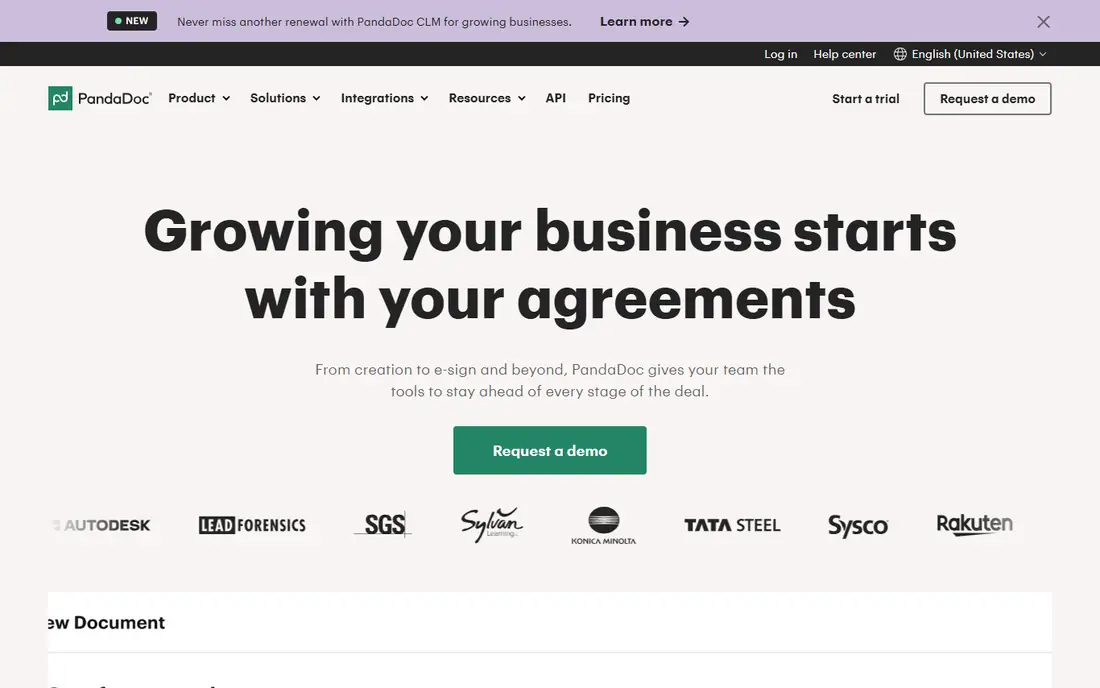
PandaDoc offers document automation, e-signatures, workflow management, and real-time analytics for small to mid-market teams, with pricing from $19 to $49 per user per month across Starter to Business tiers and custom Enterprise pricing. AI features include automatic field capture, contract Q and A, optical character recognition for scanned documents, and connectors to Claude and ChatGPT, which help teams find clauses and answer questions about agreements without reading every page. CRM integrations keep contract data connected to customer and vendor records.
PandaDoc is a general contract tool rather than a healthcare-specific platform, so its compliance depth trails tools built for regulated industries, and enterprise features such as advanced approvals need higher tiers. Per-user pricing also grows with team size. For small clinics, practices, and healthcare vendors that need templates, e-signatures, and workflow without enterprise cost, PandaDoc is the best entry point, provided the organization verifies HIPAA handling and a business associate agreement before storing any protected health information in contracts.
What we like- Low entry price
- Document automation and e-signatures
- CRM integrations
- AI field capture and contract Q and A
Watch out for- Less healthcare-specific compliance depth
- Enterprise features need higher tiers
- Per-user pricing grows with team
#2ContractWorks
Best for: Simple repository and alerts4.8/5 on
G2 (81 reviews, checked Oct 2026)
Visit onit.com
Starting price$600 per month
Free planNo
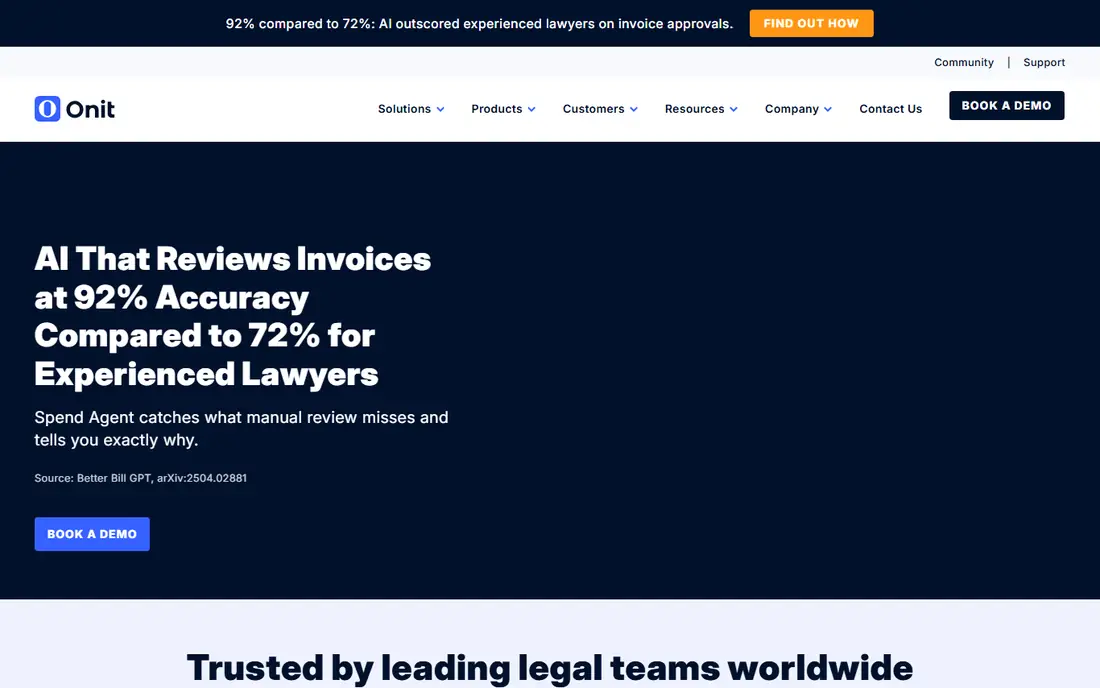
ContractWorks, from Onit, makes executing, storing, and tracking corporate agreements easier, with quick implementation, an easy interface, and pricing starting at $600 to $700 per month for unlimited users depending on billing and tier. Standard pricing at $600 per month billed yearly covers unlimited users, 2,500 documents, 5 e-signature licenses, smart document tagging, OCR, permission-based roles, date alerts, and customizable reporting, while Professional at $800 and Enterprise at $1,000 raise document and signature limits. AI-driven smart document tagging helps teams search and locate clauses across the repository.
ContractWorks workflow depth trails enterprise lifecycle platforms, so organizations needing complex multi-stage approvals or AI clause negotiation should look at Agiloft or Ironclad. Pricing also starts at $600 per month, which is high for very small practices, and e-signature licenses are limited by tier. For mid-sized healthcare organizations that want a simple, searchable repository with renewal alerts and unlimited users, ContractWorks is a strong pick, and its free implementation shortens time to value.
What we like- Unlimited users
- AI smart document tagging
- Date alerts
- Free implementation
- Simple interface
Watch out for- Fewer workflow features than enterprise CLM
- Pricing starts at $600 per month
- E-signature licenses limited by tier
#3Concord
Best for: Cross-department collaboration4.2/5 on
G2 (133 reviews, checked Oct 2026)
Visit concordnow.com
Starting price$499 per month
Free planNo
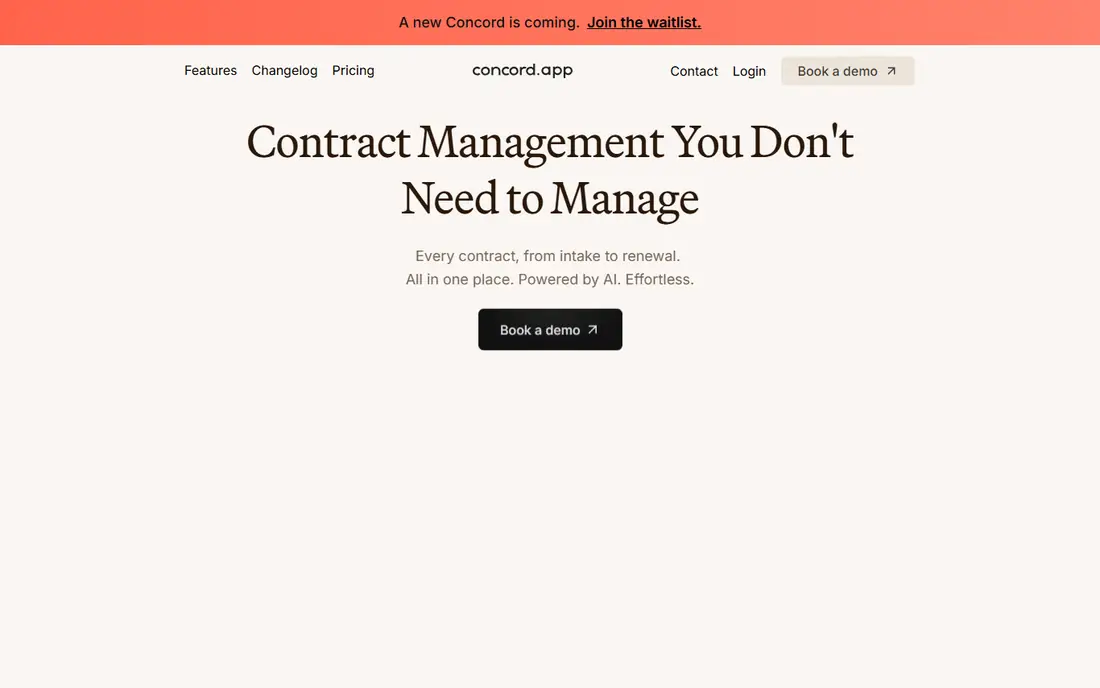
Concord is a contract management platform rebuilt for the AI era as Concord Horizon, applying ten years of Concord expertise to a modern, AI-native architecture with a cleaner interface, collapsible navigation, and consistent tables across modules. AI Copilot lets teams ask natural language questions about any contract, summarize or extract key points, and generate insights, while AI Search combines lexical and semantic search to find meaning rather than just keywords. Core features include unlimited e-signatures, deadline reminders, approval workflows, audit trails, and a template library, with a zero data retention policy for AI partners so customer data is never used to train AI models.
Concord pricing model changed in 2026, so current terms should be verified before budgeting, with Essentials starting at about $499 per month for 5 users on annual billing. AI features also vary by tier, so smaller plans may lack Copilot depth. For healthcare organizations where legal, finance, and operations teams collaborate on contracts across departments, Concord is a strong pick, and its AI search helps large teams find obligations buried in long payer and vendor agreements.
What we like- Unlimited e-signatures
- Deadline reminders
- Approval workflows
- Audit trails
- AI Copilot in Horizon platform
Watch out for- Pricing model changed in 2026, verify current terms
- Essentials starts at $499 per month for 5 users
- AI features vary by tier
#4Agiloft
Best for: No-code workflow customization4.5/5 on
G2 (110 reviews, checked Oct 2026)
Visit agiloft.com
Starting priceSee website
Free planNo
Agiloft provides a contract lifecycle management platform with AI-driven automation that reduces risk and speeds agreements, plus a no-code interface that lets teams customize workflows without programming. Its data-first agreement platform adds advanced data insights and AI capabilities, and integrations to over 1,000 business systems connect legal, procurement, finance, and operations teams. Agiloft reports a 95 percent customer renewal rate, reflecting strong satisfaction among enterprise customers.
Pricing is not published, so healthcare organizations need a sales conversation to budget, and implementation effort grows with workflow complexity, since no-code flexibility still requires design work. Its breadth can also overwhelm small teams that only need a repository and alerts. For health systems that need customized approval chains, such as physician contract routing through medical staff offices, compliance, and finance, Agiloft is a leading choice, and its no-code tools let legal operations teams adjust workflows without waiting on IT.
What we like- No-code workflow customization
- AI-driven automation
- Integrations to over 1,000 systems
- 95 percent renewal rate
Watch out for- Pricing not published
- Implementation effort for complex workflows
- Breadth can overwhelm small teams
Starting priceSee website
Free planNo
Ironclad offers contract lifecycle management built for legal teams, with AI-assisted clause review and risk flagging in newer plans, workflow automation, compliance tracking, collaboration tools, and an analytics dashboard. Clause review matters in healthcare, where payer agreements and physician contracts contain rate, termination, and liability terms that carry financial and legal risk, and AI flagging helps legal teams spot deviations from standard language before signing. Collaboration tools let business teams request, redline, and approve contracts without leaving the platform.
Pricing is not published, and Ironclad legal-team focus may limit operations use for teams that primarily need a repository and renewal alerts. Full lifecycle implementation also takes time for large portfolios. For healthcare legal teams that review high volumes of payer, provider, and vendor contracts and need AI help catching risky clauses, Ironclad is a strong pick, and its compliance tracking supports audit readiness for regulated agreements.
What we like- AI-assisted clause review and risk flagging
- Workflow automation
- Compliance tracking
- Collaboration tools
Watch out for- Pricing not published
- Legal-team focus may limit operations use
- Implementation for full lifecycle takes time
#6Icertis
Best for: Large enterprise portfolios4.2/5 on
G2 (81 reviews, checked Oct 2026)
Visit icertis.com
Starting priceSee website
Free planNo
Icertis provides enterprise contract intelligence with three AI engines: VisualizeAI, DiscoverAI, and NegotiateAI, covering portfolio insight, clause discovery, and negotiation support. Obligation tracking ensures that commitments buried in contracts, such as service levels, reporting duties, and payment terms, are surfaced and followed, while ERP integration connects contract data to finance and procurement systems. Icertis suits large health systems and payers with thousands of agreements across entities, where portfolio visibility matters more than single-contract speed.
Enterprise pricing is custom and high, and complexity makes Icertis overkill for small clinics or single-facility organizations, which should start with PandaDoc or ContractWorks. Implementation for large portfolios takes months and needs dedicated project management. For large healthcare enterprises that need AI-powered insight across a massive contract portfolio, with obligation tracking that prevents missed commitments, Icertis is a leading choice, and its scale justifies the investment at enterprise volume.
What we like- Three AI engines for visualization, discovery, and negotiation
- Obligation tracking
- ERP integration
- Enterprise scale
Watch out for- Pricing not published
- Enterprise complexity and cost
- Overkill for small organizations
#7Conga CLM
Best for: End-to-end lifecycle4.3/5 on
G2 (620 reviews, checked Oct 2026)
Visit conga.com
Starting priceSee website
Free planNo
Conga CLM covers the end-to-end contract lifecycle, from document generation and negotiation portals through e-signatures, obligation management, and analytics, with AI insights across the lifecycle plus guided wizards that walk users through contract creation. Document generation from templates reduces drafting time for standard agreements, while negotiation portals let outside parties redline without email attachments, keeping a single version of truth. Obligation management tracks post-signature duties, which matters for healthcare vendor and payer agreements with ongoing commitments.
Pricing is not published, and some deployments are Salesforce-centric, so organizations without Salesforce should confirm integration fit before committing. Full suite implementation takes effort, particularly for organizations migrating large legacy portfolios. For healthcare organizations that want one platform from drafting through obligation tracking, rather than separate tools for each stage, Conga CLM is a strong pick, and its guided wizards help non-legal staff create compliant agreements without legal bottlenecks.
What we like- End-to-end lifecycle coverage
- AI insights and guided wizards
- Document generation
- Obligation management
Watch out for- Pricing not published
- Salesforce-centric for some deployments
- Implementation effort for full suite
Starting priceSee website
Free planNo
Gatekeeper is an AI-driven contract management solution giving organizations total control and visibility over agreements, with a workflow engine that automates contract processes and ensures agreed procedures are followed every time. Clear visibility across all contracts helps teams identify wasted spend and consolidation opportunities, actively manage renewals, minimize risk through categorization and auditable records, and realize agreed contract benefits such as volume discounts and service credits. Renewal management is its core strength, with alerts and workflows that prevent auto-renewals of unwanted vendor deals.
Pricing is not published, and Gatekeeper US presence is smaller than some rivals, which may affect support coverage and reference customers in healthcare. Workflow depth also varies by tier, so complex approvals may need higher plans. For healthcare organizations whose main pain is missed renewals and poor visibility into vendor spend, Gatekeeper is a focused pick, and its auditable records support compliance reviews and board reporting.
What we like- AI-driven contract visibility
- Renewal management
- Workflow engine
- Auditable activity records
Watch out for- Pricing not published
- Smaller US presence than some rivals
- Workflow depth varies by tier
How we chose
We compared tools on healthcare fit, repository and search quality, approval workflow depth, renewal and obligation tracking, AI clause features, and price transparency, weighting HIPAA readiness and audit trails alongside core contract features. We favored tools with published pricing where available, and we marked enterprise tools as See website where pricing is custom rather than guessing a figure. Prices come from vendor pages and current guides, and they vary by users, volume, and contract terms, so treat every figure as a range to verify with a quote. We did not test any tool hands-on, and we did not list general document tools without contract lifecycle features.
Buying guide
Start from your contract pain. If missed renewals and scattered files are the problem, start with ContractWorks or Gatekeeper and measure renewal visibility within a month. If legal review bottlenecks slow deals, look at Ironclad clause review or Agiloft workflow customization. If your portfolio spans thousands of agreements across entities, evaluate Icertis or Conga CLM with a pilot on one contract type, such as payer agreements, before migrating everything.
Before committing, verify four things: whether the vendor will sign a business associate agreement and how protected health information is handled, whether the tool integrates with your EHR, ERP, or CRM without manual transfers, whether approval workflows match your real routing for physician and payer contracts, and what total cost looks like at your real user count and document volume. Pilot on one department first, measure time from request to signature, and scale only when the pilot shows clear improvement, since contract software value depends on adoption by legal, finance, and operations teams together.
Frequently asked questions
What is healthcare contract management software?
Healthcare contract management software helps healthcare organizations manage payer, provider, vendor, and employment contracts through initiation, negotiation, review, signing, and renewal, with compliance features for industry regulations such as HIPAA and government guidelines.
Is contract management software HIPAA compliant?
It depends on the vendor and your configuration. Verify that the vendor will sign a business associate agreement, confirm how protected health information is stored and encrypted, and check access controls and audit logs before storing contracts that contain protected health information. Do not assume compliance from marketing claims alone.
How much does healthcare contract management software cost?
Entry pricing ranges from $19 per user per month for PandaDoc to $600 per month for ContractWorks and $499 per month for Concord Essentials, while enterprise platforms such as Agiloft, Ironclad, Icertis, and Conga CLM use custom pricing. Total cost depends on users, documents, and features, so get a quote for your real volume.
What is the difference between a repository and a lifecycle platform?
A repository stores and tracks signed contracts with search and renewal alerts, while a lifecycle platform covers the full process from drafting and negotiation through approval, signature, and obligation tracking. Small teams often need only a repository, while large systems benefit from lifecycle automation.
How long does implementation take?
Simple repositories such as ContractWorks offer free implementation and can go live in weeks, while enterprise lifecycle platforms may take months for large portfolios with complex workflows and migrations. Pilot on one department or contract type first to validate fit before full rollout.
Should small clinics use enterprise contract software?
Usually not. Small clinics gain more from PandaDoc or ContractWorks, which start quickly and cost less, than from enterprise platforms that need long implementations. Move to enterprise tools when contract volume, complexity, or compliance needs outgrow the simpler tool.
Sources we checked (0)
Is your product missing or out of date?
We review this list regularly. Vendors can request a listing, send updated pricing or ask about featured placement.

Shihab Mia · Founder, Rankite
Shihab has 5+ years in B2B and SaaS SEO. He writes Rankite's software buying guides from pricing pages, documentation and public user reviews. More about Shihab.