How we make this list: we compare pricing pages, product documentation and public user reviews. Rankite is independent; if a vendor ever pays for a featured spot, that listing is clearly labeled Partner.
Key takeaways
- HR Cloud is the most purpose-built option for healthcare compliance, with automated license expiration alerts, though pricing is quote-based.
- UKG, Dayforce and Workday suit large multi-facility systems that need workforce management and payroll in one platform, at enterprise cost and complexity.
- Paycor and Paylocity fit mid-size providers that want scheduling, payroll and credential tracking without an enterprise implementation.
- MedTrainer and symplr cover the compliance and credentialing layer best; pair them with your HRIS rather than expecting one system to do everything.
Here is the blunt version: most HR software treats a hospital like a slightly bigger office with a dress code. It is not. A hospital has nurses working twelve-hour night shifts across three units, licenses that expire on different dates in different states, mandatory training that auditors actually check, and onboarding that cannot wait two weeks because the schedule has holes tonight. Generic HRIS platforms handle the payroll fine and fumble the rest.
Healthcare HR software earns the label by handling the healthcare parts: credential and license tracking with expiration alerts, shift-based scheduling, healthcare onboarding workflows, and compliance reporting. The nine platforms below are compared on exactly those capabilities, for buyers ranging from single-location clinics to multi-state health systems.
Quick comparison
| Tool | Best for | Starting price | Free plan |
|---|
 HR Cloud HR Cloud | Purpose-built healthcare HR and compliance | See website | Demo |
 UKG UKG | Large multi-facility hospital systems | See website | Demo |
 Paycor Paycor | Mid-size healthcare and long-term care | See website | Demo |
 Paylocity Paylocity | Compliance-driven scheduling plus payroll in one | See website | Demo |
 Dayforce Dayforce | Health systems wanting single-system payroll and HCM | See website | Demo |
 Workday Workday | Very large multi-entity health systems | See website | Demo |
 ADP Workforce Now ADP Workforce Now | Organizations standardized on ADP payroll | See website | Demo |
 MedTrainer MedTrainer | Workforce readiness, credentialing and training compliance | See website | Demo |
 symplr symplr | Provider credentialing and workforce operations | See website | Demo |
Is your product missing or out of date?
We review this list regularly. Vendors can request a listing, send updated pricing or ask about featured placement.
The best healthcare hr software
Starting priceSee website
Free planDemo
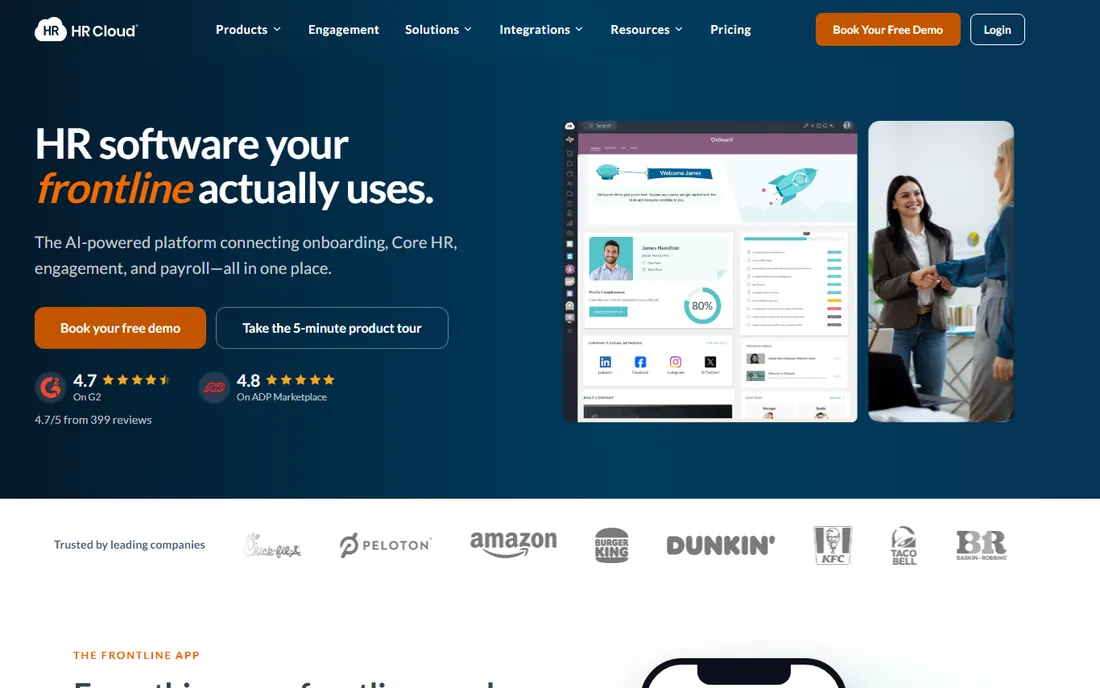
HR Cloud is one of the few HR platforms designed around healthcare from the start rather than adapted to it. The standout is credential management: automated 30, 60 and 90-day expiration alerts for licenses and certifications, so a nurse never works a shift on an expired license because someone forgot a spreadsheet. Onboarding workflows reflect healthcare reality, with compliance documents and role-specific checklists, and the platform serves hospitals, practices and staffing agencies.
The trade-offs are vendor scale and pricing transparency. HR Cloud is smaller than UKG or Workday, which matters for very large systems, and pricing is quote-based with a fixed annual license model. But for mid-size providers where credential compliance is the daily risk, the purpose-built design beats a generic HRIS with a healthcare module bolted on. Ask for references from organizations with your facility count and staff mix.
What we like- Automated 30/60/90-day credential expiration alerts
- Healthcare-specific onboarding
- Used by home health and rehab providers
- Fixed annual license option
Watch out for- Quote-based pricing
- Smaller vendor than the HCM giants
- Less depth outside healthcare workflows
#2
UKG
Best for: Large multi-facility hospital systems
Visit ukg.com
Starting priceSee website
Free planDemo
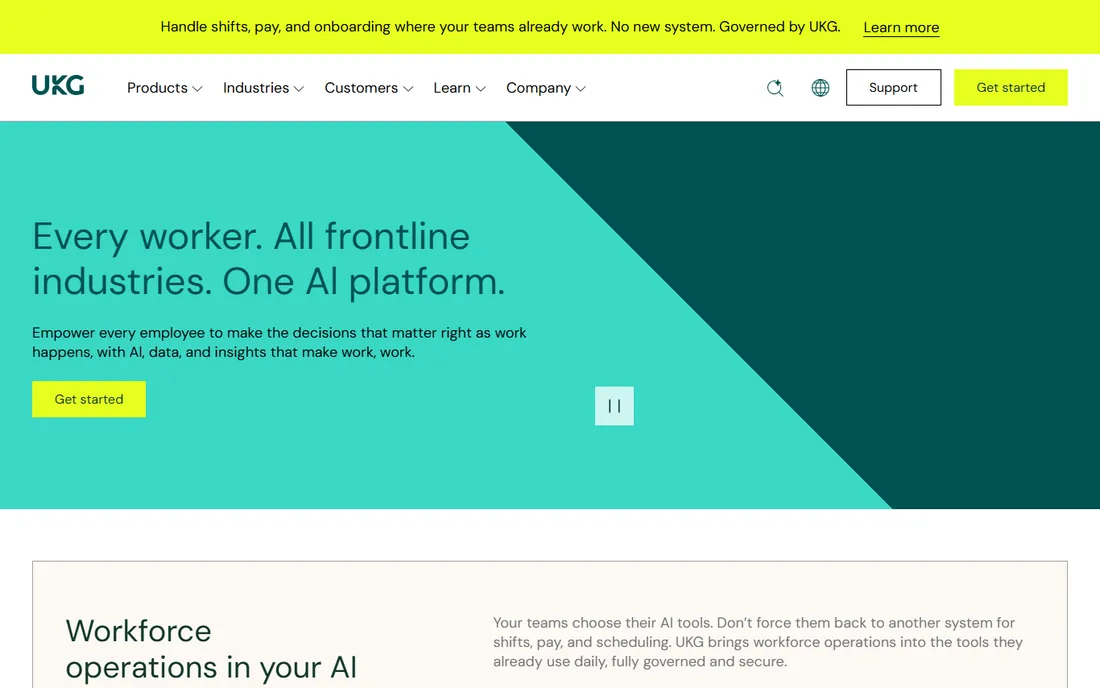
UKG, formed from the Kronos and Ultimate Software merger, is a fixture in hospital workforce management. Its scheduling engine understands healthcare staffing: skill and certification-based assignments, shift differentials, union rules and multi-facility float pools. For a health system running thousands of clinical staff across locations, that scheduling depth is the product, with payroll, timekeeping and HR rounding out the suite.
Everything about UKG is enterprise-grade, including the cost and the implementation. Expect a significant deployment project and dedicated administrators to run it well. A single-location clinic would drown in it. But for large systems where the scheduling problem is genuinely hard, UKG's workforce management remains the benchmark the others are measured against.
What we like- Skill and certification-based scheduling
- Deep workforce management
- Strong healthcare customer base
- Enterprise scale
Watch out for- Enterprise pricing and implementation timelines
- Complexity needs dedicated administrators
- Overkill for small clinics
Starting priceSee website
Free planDemo
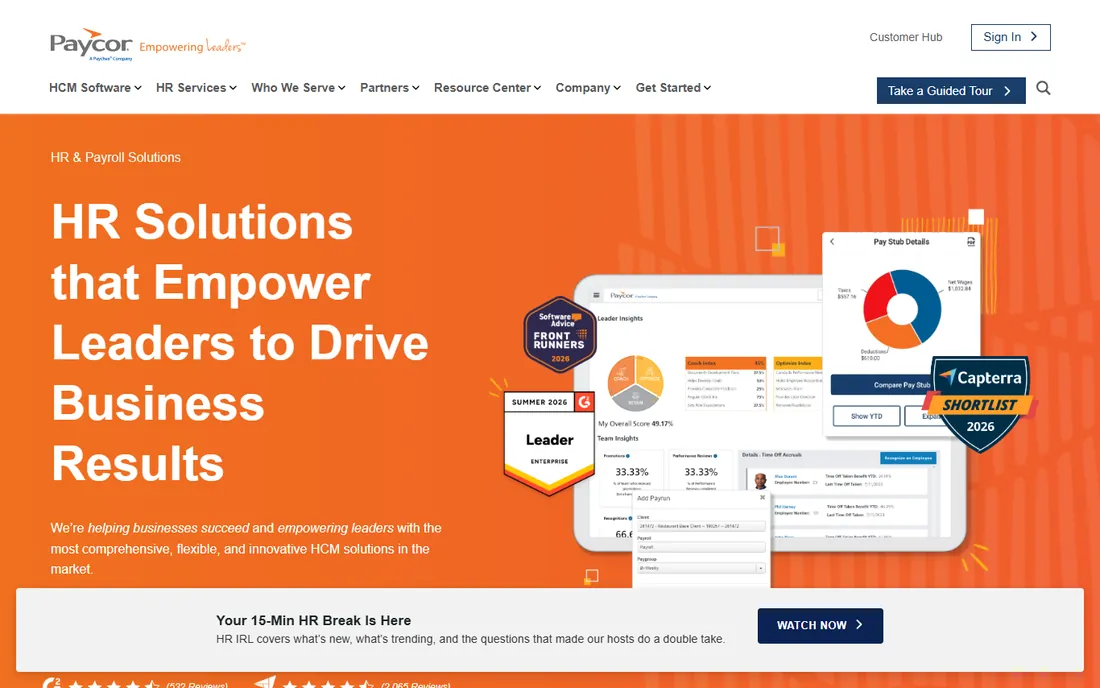
Paycor has built a real healthcare practice, particularly in long-term care, home health and outpatient settings where turnover is high and margins are thin. Credential tracking is built into the scheduling flow rather than sitting in a separate module, which means expired certifications actually block scheduling instead of generating a report nobody reads. Recruiting, onboarding, HR, payroll and timekeeping run in one system sized for mid-market operations.
It is not the tool for a 20-hospital system; Workday or UKG own that tier. Pricing is quote-based. But for mid-size providers that need healthcare-aware HR without an enterprise implementation, Paycor hits a practical middle ground that the giants cannot reach down to and the small tools cannot reach up to.
What we like- Credential tracking built into the scheduling engine
- Strong in long-term care and outpatient
- Recruiting through payroll in one system
- Practical implementation
Watch out for- Quote-based pricing
- Less suited to very large multi-state systems
- Advanced analytics trail the enterprise suites
Starting priceSee website
Free planDemo
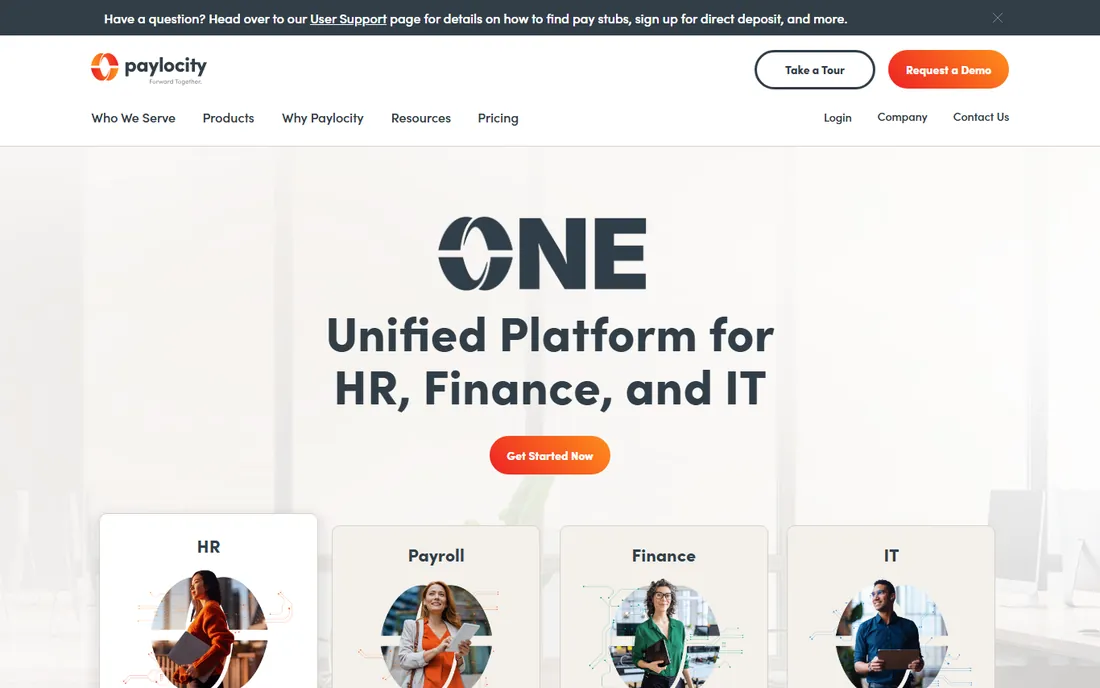
Paylocity combines payroll, HR and workforce management with a modern interface employees actually use, which matters in healthcare where adoption decides whether compliance data stays current. Credential dashboards give managers visibility into who is compliant and who is not, and the built-in LMS ties required training to the same records. Scheduling and payroll in one system removes the reconciliation work that plagues multi-vendor setups.
Healthcare-specific depth varies by module, so validate the credentialing and scheduling workflows against your requirements in a demo rather than assuming coverage. Pricing is quote-based. For compliance-driven providers that want one modern system for payroll, scheduling and credential visibility, Paylocity is a strong mid-market contender.
What we like- Credential dashboards plus LMS
- Payroll and HR unified
- Modern employee experience
- Good reporting for compliance
Watch out for- Quote-based pricing
- Healthcare depth varies by module
- Implementation quality depends on the partner team
#5
Dayforce
Best for: Health systems wanting single-system payroll and HCM
Visit dayforce.com
Starting priceSee website
Free planDemo
Dayforce, from Ceridian, runs payroll, HR, benefits, time and talent on a single data model with continuous calculation, so there is no batch payroll reconciliation. For health systems that want one system of record from hiring through paycheck, that architecture removes a whole class of errors. Workforce management covers the scheduling and timekeeping complexity of clinical operations at scale.
The credentialing tools are general HCM compliance features rather than healthcare-specific license tracking, so verify they meet your state's requirements. Pricing and implementation sit firmly in the enterprise tier. Shortlist Dayforce when the goal is consolidating payroll and HCM for a large system onto one platform, and pair it with a dedicated credentialing tool if license tracking is mission-critical.
What we like- Continuous payroll calculation in one system
- Strong workforce management
- Scales to large health systems
- Single data model
Watch out for- Enterprise pricing
- Healthcare-specific credentialing is general-purpose
- Long implementations
Starting priceSee website
Free planDemo
Workday HCM is the choice of very large, multi-entity health systems that need one platform across dozens of facilities and complex organizational structures. The HCM suite is deep, the analytics are strong, and pairing it with Workday Financials gives the CFO one system too. Its partner ecosystem means implementation help is available, though at enterprise rates.
Be clear-eyed about the cost and the fit. Workday is the most expensive and longest implementation on this list, and healthcare credentialing is configurable rather than purpose-built, which means build effort to match what HR Cloud does out of the box. Buy Workday when the organization is large enough that consolidation itself is the value. Smaller systems will get more healthcare function per dollar elsewhere.
What we like- Proven at the largest health systems
- Deep HCM and financials in one
- Strong analytics
- Extensive partner ecosystem
Watch out for- Highest cost and longest implementation here
- Healthcare credentialing is configurable, not purpose-built
- Needs significant internal team
#7
ADP Workforce Now
Best for: Organizations standardized on ADP payroll
Visit adp.com
Starting priceSee website
Free planDemo
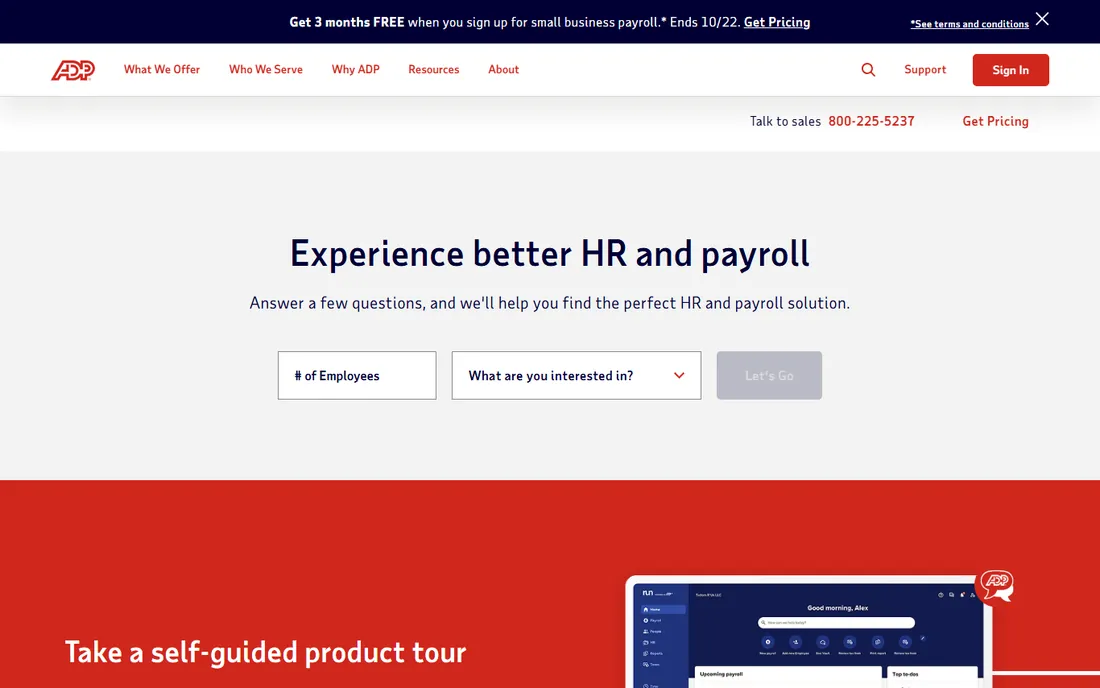
ADP Workforce Now makes this list for a practical reason: many healthcare organizations already run ADP payroll, and extending the existing relationship is cheaper than a rip-and-replace. The platform covers HR, benefits, time and talent at scale, and the ADP Marketplace offers integrations with healthcare-specialist tools for credentialing and scheduling gaps.
The healthcare specificity comes from those add-ons rather than the core, so map your credentialing and scheduling requirements carefully and price the full module stack, not the base quote. Support experiences vary at ADP's scale. If payroll already lives at ADP and finance will not move it, Workforce Now plus targeted integrations is a defensible strategy.
What we like- Payroll reliability at scale
- Broad HR module coverage
- Marketplace integrations including healthcare specialists
- Familiar to finance teams
Watch out for- Healthcare features depend on add-ons and integrations
- Large-vendor support experience varies
- Pricing complexity with modules
#8
MedTrainer
Best for: Workforce readiness, credentialing and training compliance
Visit medtrainer.com
Starting priceSee website
Free planDemo
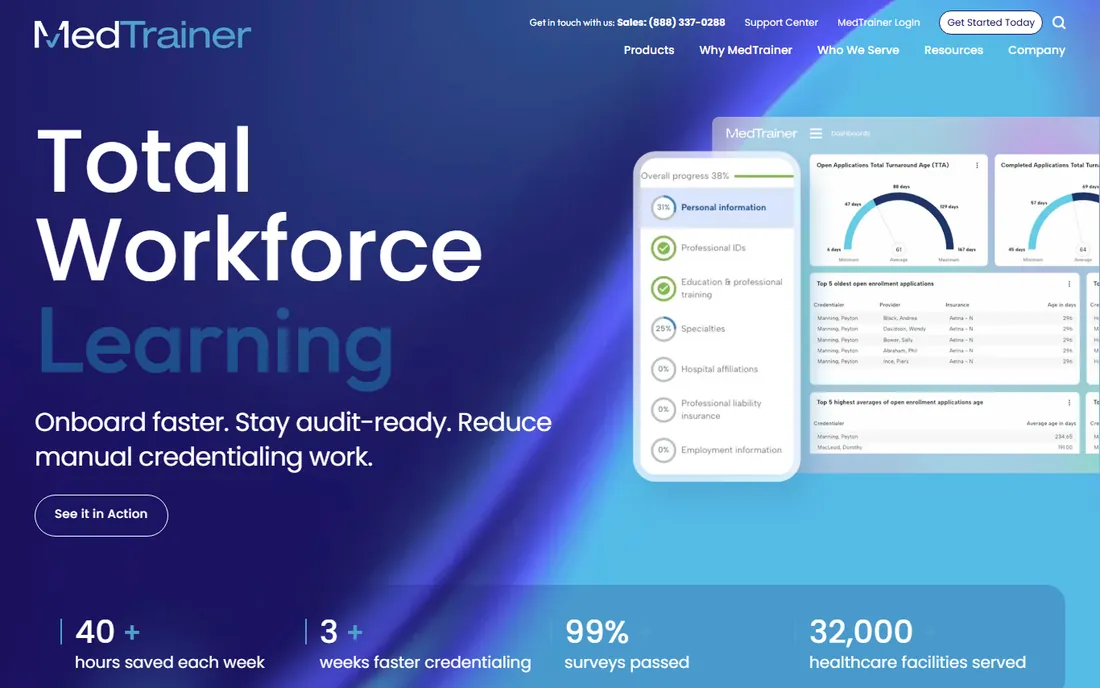
MedTrainer is not an HRIS; it is the compliance layer healthcare HR teams bolt onto one. The platform handles provider credentialing, license verification, exclusion list checking, mandatory training through its LMS, and policy management, with reporting designed for audits and surveys. Organizations report meaningfully faster provider onboarding after replacing manual verification, which translates directly into revenue when clinicians start sooner.
Because it is not a full HR system, you still need payroll, core HR and scheduling elsewhere. That is the honest architecture for many providers: MedTrainer for readiness and compliance, plus an HRIS for the rest. If credentialing delays and training compliance are your actual pain, buying the specialist beats waiting for your HRIS vendor's roadmap.
What we like- Purpose-built healthcare credentialing and exclusion checking
- Training and LMS for mandatory education
- Faster provider onboarding
- Audit-ready reporting
Watch out for- Compliance layer, not a full HRIS
- Needs pairing with payroll and core HR
- Quote-based pricing
#9
symplr
Best for: Provider credentialing and workforce operations
Visit symplr.com
Starting priceSee website
Free planDemo
symplr focuses on the provider side of healthcare operations: credentialing, privileging, payer enrollment and workforce management, expanded through acquisitions including scheduling and workforce tools. Hospitals use it to manage the full lifecycle of provider credentials, from initial application through reappointment, with the audit trails that medical staff offices live on.
Like MedTrainer, it is a specialist, not a replacement for payroll and core HR. The sales motion is enterprise, and connecting it to your HRIS takes integration work. But when the buying criterion is provider credentialing done properly, with privileging and enrollment included, symplr is one of the deepest options in healthcare.
What we like- Deep provider credentialing and privileging
- Workforce management additions via acquisition
- Healthcare-only focus
- Strong hospital customer base
Watch out for- Credentialing-first, not a payroll HRIS
- Enterprise sales motion
- Integration work to connect with core HR
Credentialing is the real buying criterion
Strip away the marketing and one capability decides most healthcare HR purchases: keeping every clinician's licenses, certifications and credentials current, and proving it. An expired license on an active schedule is a compliance event, a liability event and potentially a patient safety event. Generic HRIS platforms track a document expiry date. Healthcare tools automate the alerts, block the scheduling, verify against primary sources and produce the audit report.
So evaluate credentialing first, not last. Bring your actual credential types, renewal cycles and state requirements to the demo. Ask whether expirations block scheduling automatically or just generate a report. Ask about primary source verification versus self-attestation. Ask how the system handles multi-state licenses for float staff. The vendor that answers these crisply is usually the right one, regardless of how slick the payroll demo looks.
How we chose
We evaluated these platforms against vendor documentation, healthcare HR buyer guides and customer case studies published in 2026, and public reviews. We did not run hands-on trials. Every platform here exists today and serves US healthcare organizations as a current product. We weighted healthcare-specific credentialing and license tracking, shift-based scheduling, onboarding for clinical roles, training and compliance reporting, payroll integration and fit for different organization sizes, from single-location clinics to multi-state health systems.
Implementation and the questions to ask
Healthcare HR implementations fail on data, not software. Credential records live in spreadsheets, filing cabinets and three legacy systems, and migrating them is the real project. Before signing, ask the vendor who does the data migration, what it costs, and how long it takes for an organization your size. Get reference customers with a similar facility count and staff mix, and call them.
Ask about the scheduling go-live separately from the HR go-live. Scheduling touches every nurse's daily life, so it needs its own pilot, training plan and rollback criteria. Confirm which state labor rules and union configurations are supported out of the box versus custom-built. And pin down the pricing model: per employee per month is standard, but minimums, implementation fees and add-on modules move the total significantly. Get the three-year cost in writing, not the first-year quote.
Frequently asked questions
What makes HR software healthcare-specific?
Credential and license tracking with expiration alerts, shift-based scheduling for clinical staff, healthcare onboarding workflows, mandatory training management and compliance reporting. Generic HRIS platforms handle payroll and benefits well but usually lack these, which is why healthcare organizations add specialists like MedTrainer or symplr, or buy purpose-built platforms like HR Cloud.
How much does healthcare HR software cost?
Nearly every vendor here is quote-based, priced per employee per month with minimums. Mid-market platforms typically land in the low tens of dollars per employee per month before add-ons; enterprise suites cost multiples of that plus significant implementation fees. Get a three-year total including implementation, data migration and required modules, since first-year quotes understate the real cost.
Can one system handle HR, payroll, scheduling and credentialing?
Sometimes, with compromises. UKG, Dayforce and Workday cover the breadth but their credentialing is general-purpose. HR Cloud and Paycor go deeper on healthcare specifics at mid-market scale. Many organizations run a core HRIS plus a credentialing specialist like MedTrainer or symplr, which is often the best architecture rather than a failure of selection.
How do we handle credentialing across multiple states?
Look for automated expiration tracking per credential, primary source verification, and rules that account for multi-state licenses and different renewal cycles. Confirm the system blocks scheduling on expired credentials rather than just reporting it. Test with your actual credential types and float-staff scenarios in the demo.
How long does implementation take?
Mid-market platforms typically go live in weeks to a few months; enterprise suites take many months. The schedule is usually set by data migration and scheduling configuration, not by software installation. Ask for a written timeline with your data volumes, and confirm who does the migration work.
Should a small clinic buy healthcare-specific HR software?
If credential tracking and compliance reporting consume real staff time, yes. Smaller practices often do well with a mid-market platform like Paycor or Paylocity, or a focused tool for the specific pain. Avoid enterprise suites; the implementation alone would exceed the value. Start from the credentialing requirement and buy the smallest tool that meets it.
Sources we checked (9)
- https://www.hrcloud.com
- https://www.ukg.com
- https://www.paycor.com
- https://www.paylocity.com
- https://www.dayforce.com
- https://www.workday.com
- https://www.adp.com
- https://www.medtrainer.com
- https://www.symplr.com
Is your product missing or out of date?
We review this list regularly. Vendors can request a listing, send updated pricing or ask about featured placement.

Shihab Mia · Founder, Rankite
Shihab has spent more than a decade helping SaaS and e-commerce brands grow through search. He writes Rankite's software buying guides from pricing pages, documentation and public user reviews. More about Shihab.