How we make this list: we compare pricing pages, product documentation and public user reviews. Ratings come from G2, Capterra or Trustpilot, with the date we checked them.
Key takeaways
- Luma Health is the full-featured pick for health systems, with AI scheduling, waitlists and referrals across the whole care journey.
- Artera suits two-way messaging at scale, with a published starting point of $300 per month per location in one 2026 guide.
- Small and mid-size practices should compare Curogram, Klara and Relatient, which are priced and sized for practices rather than health systems.
- HIPAA compliance is a shared obligation, so confirm the business associate agreement and your own configuration, not just the vendor's marketing claim.
Quick comparison
| Tool | Best for | Starting price | Free plan |
|---|
 Luma Health | Full-featured engagement for health systems | See website | No |
 Artera | Two-way messaging at scale | See website | No |
 WELL Health | Digital front door for health systems | See website | No |
 Phreesia | Intake and registration at scale | See website | No |
 Relatient | Primary and urgent care front door | See website | No |
 Klara | Specialty practices and secure messaging | See website | No |
 Curogram | Clear pricing for small practices | $200 per month | No |
 Kyruus | Enterprise provider matching | See website | No |
Is your product missing or out of date?
We review this list regularly. Vendors can request a listing, send updated pricing or ask about featured placement.
#1Luma Health
Best for: Full-featured engagement for health systems4.8/5 on
G2 (84 reviews, checked Oct 2026)
Visit lumahealth.io
Starting priceSee website
Free planNo

Luma Health is the full-featured pick for health systems and larger clinic networks, with an AI-powered platform that automates patient access, scheduling, referrals and outreach across the care journey. It handles appointment scheduling, waitlist management, fax and referral workflows, digital intake, eligibility checks, payments and pre- and post-care communication, with bidirectional EHR integrations keeping patient data synchronized. Reviewers praise its ease of use, comprehensive features and ability to reduce no-shows, with one guide citing a 50 percent no-show reduction.
Pricing is quote-based and enterprise-oriented, with one analysis listing a starting figure near $250 per month, though the vendor does not publish pricing on its website. Small single-location practices should confirm they are the target customer before investing in implementation. For health systems that need access, volume, referrals and outreach working together, Luma Health is the most complete platform here.
What we like- Full patient success platform across the care journey
- AI scheduling, smart waitlist and referral workflows
- Bidirectional EHR integrations
- 4.8 out of 5 on G2
Watch out for- Quote-based pricing, not published
- Enterprise-oriented, so small practices should confirm fit
- Breadth requires thoughtful implementation
Starting priceSee website
Free planNo
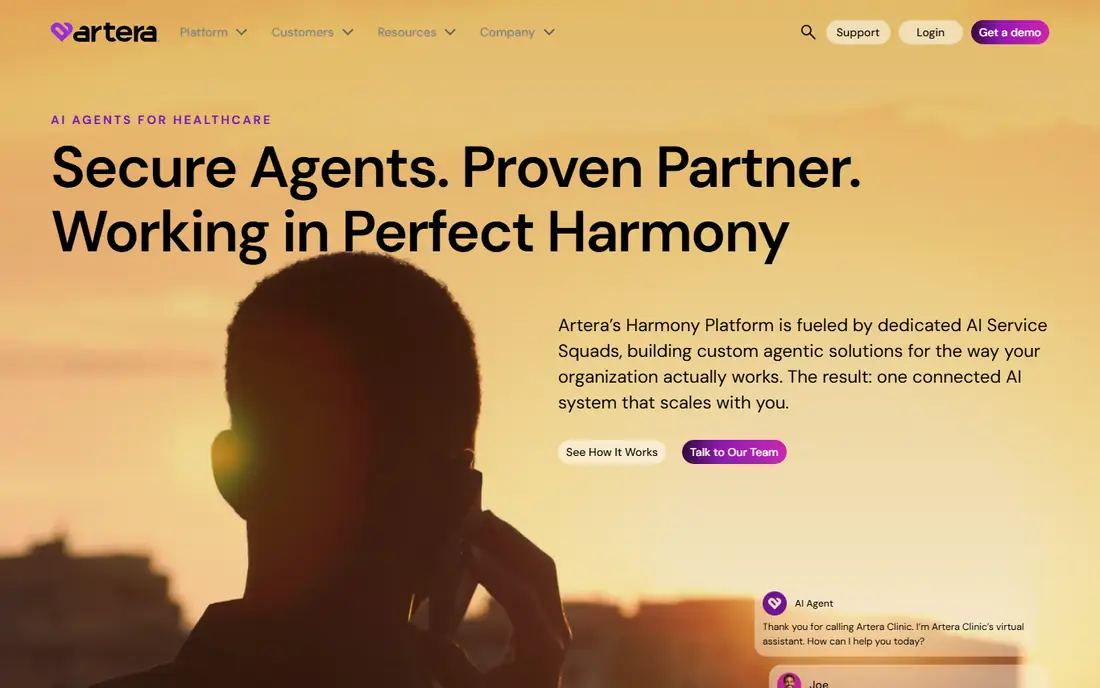
Artera leads on AI agent tools and two-way messaging, with guides citing a 92 percent response rate and pricing starting at $300 per month per location for basic platforms in one 2026 guide, while a competitor comparison puts its entry near $15,000 per year and targets large health systems. That pricing spread is exactly why buyers should get a written quote tied to location count and message volume before budgeting.
The platform suits organizations that run high message volumes across many locations and need AI agents to handle routine conversations. For smaller practices, the enterprise focus and quote-based pricing may make Curogram or Klara better value. For large systems betting on AI messaging, Artera is the category leader.
What we like- Two-way messaging with a 92 percent response rate cited in guides
- AI agent tools lead the category
- Strong for large health systems
- Broad channel coverage
Watch out for- Pricing is quote-based in most listings, with one guide citing $300 per month and another $15,000 per year
- Enterprise focus
- Confirm per-location costs before budgeting
Starting priceSee website
Free planNo

WELL Health, formerly WELL Health Inc, provides a digital front door for health systems and large groups, unifying scheduling, two-way messaging, payments and outreach in one patient communication layer. Its health system customer base and broad EHR integration make it a credible alternative to Luma Health for organizations that want one communication front door rather than several point tools.
Pricing is quote-based, and the platform is enterprise-oriented, so smaller practices may find it heavier and pricier than needed. For a health system consolidating patient communication across locations, WELL Health is a strong contender alongside Luma and Artera.
What we like- Digital front door spanning scheduling, messaging and payments
- Strong health system customer base
- Broad EHR integration
- Unified patient communication
Watch out for- Quote-based pricing
- Enterprise-oriented
- Smaller practices may find it heavier than needed
#4Phreesia
Best for: Intake and registration at scale3.9/5 on
G2 (45 reviews, checked Oct 2026)
Visit phreesia.com
Starting priceSee website
Free planNo
Phreesia is the intake and registration pick, with digital intake forms, insurance verification, payments and appointment management built for large practices and health systems. Its VoiceAI tools add call handling, and its scale gives it deep experience with complex registration workflows that smaller tools cannot match.
Pricing is quote-based, and the intake focus means two-way messaging depth varies by module, so buyers should confirm which communication features are included versus add-ons. For organizations whose biggest pain is registration, eligibility and front-desk workload, Phreesia is the strongest specialist on this list.
What we like- Strong intake, registration and payment workflows
- VoiceAI tools for call handling
- Large practice and health system base
- Reputation and review tools
Watch out for- Quote-based pricing
- Intake focus means messaging depth varies
- Implementation effort for large groups
#5Relatient
Best for: Primary and urgent care front door4.8/5 on
G2 (27 reviews, checked Oct 2026)
Visit relatient.com
Starting priceSee website
Free planNo
Relatient is the digital front door pick for primary and urgent care, with reminders and recalls as a core strength alongside scheduling and two-way messaging. It suits practices that want patients to book, confirm and reschedule without calling the front desk, and its mid-size focus makes it more approachable than enterprise platforms.
Pricing is quote-based, enterprise breadth is thinner than Luma or Artera, and buyers should confirm whether each integration writes back to the EHR or only reads from it, since read-only integrations still require manual re-entry. For primary and urgent care groups, Relatient is a practical, focused choice.
What we like- Digital front door for primary and urgent care
- Reminders and recalls as a core strength
- Scheduling and messaging in one place
- Fits mid-size practices
Watch out for- Quote-based pricing
- Less enterprise breadth than Luma or Artera
- Confirm EHR write-back behavior before buying
Starting priceSee website
Free planNo
Klara focuses on team messaging and telehealth in one hub, with HIPAA-compliant messaging and photo sharing that suit specialty practices such as dermatology, orthopedics and physical therapy, where a photo or image often answers the question faster than a call. The hub design keeps team messages, patient messages and telehealth visits in one place, which small teams find easier than juggling several tools.
Pricing is quote-based, scope is narrower than full platforms like Luma, and health system breadth is limited. For a specialty practice that lives on secure messaging and image sharing, Klara is the best fit on this list.
What we like- HIPAA-compliant messaging for specialty practices
- Photo sharing for clinical communication
- Team messaging and telehealth in one hub
- Approachable for small teams
Watch out for- Quote-based pricing
- Narrower scope than full platforms
- Specialty focus means health system breadth is limited
Starting price$200 per month
Free planNo
Curogram is the transparent pricing pick, with clear pricing from $200 to $400 per month and the ability to connect with any EMR system, a combination that stands out in a category where most vendors hide prices behind sales calls. It covers two-way texting, reminders and mobile apps, with HIPAA compliance, and suits practices of all sizes that want predictable costs.
The feature set is smaller than enterprise platforms, and AI tools are less advanced than Artera's or Luma's. For a small or mid-size practice that wants honest pricing, EMR flexibility and the core messaging features without enterprise complexity, Curogram is the best value on this list.
What we like- Clear pricing from $200 to $400 per month
- Connects with any EMR system
- Two-way texting, reminders and mobile apps
- HIPAA compliant
Watch out for- Smaller feature set than enterprise platforms
- AI tools are less advanced than Artera or Luma
- Fewer health system references
Starting priceSee website
Free planNo
Kyruus is the enterprise provider matching pick, using AI to match patients with the right provider, location and appointment type across large health systems. For organizations whose biggest access problem is getting patients to the right clinician, not just any open slot, that matching depth matters more than generic scheduling.
Pricing is quote-based and enterprise-oriented, making it overkill for small practices, and engagement breadth is narrower than Luma's full platform. For enterprise health systems focused on provider search, matching and patient acquisition, Kyruus is the specialist to evaluate.
What we like- AI provider matching for enterprise health systems
- Strong for patient acquisition and access
- Large health system customer base
- Search and scheduling depth
Watch out for- Quote-based enterprise pricing
- Overkill for small practices
- Engagement breadth is narrower than Luma's full platform
How we chose
We ranked platforms by practice fit first, since a health system and a solo practice need different tools, then by feature breadth, EHR integration, pricing transparency and published outcomes. Luma Health leads on breadth with a 4.8 out of 5 G2 rating, Artera leads on AI messaging with a cited 92 percent response rate, and Curogram leads on pricing transparency at $200 to $400 per month. Most enterprise vendors do not publish pricing, so starting prices are listed as "See website" where no reliable published figure exists.
We also weighed HIPAA carefully. Compliance is a shared obligation, so confirm both the business associate agreement and your own configuration of the platform, and ask whether each EHR integration writes back or only reads. No platform here was used hands-on in a live clinic for this guide; the picks rest on published features, ratings and pricing guides.
What to check before you buy
Confirm your EHR first. Ask each vendor whether the integration with your specific EHR writes back or only reads, which systems it covers, and what breaks if the sync fails. A platform that looks great in a demo can still create daily re-entry work if write-back is missing.
Then confirm the total cost in writing: per-location fees, message volume limits, AI agent charges and implementation fees. Pilot with one location and one workflow, such as reminders or intake, before rolling out system-wide, and measure no-show rates, front-desk call volume and patient response rates against your baseline. Finally, confirm the business associate agreement and your own HIPAA configuration, including who can message patients and how photos are stored.
Frequently asked questions
What is the best patient engagement platform overall?
Luma Health is the most complete platform for health systems, with scheduling, referrals, intake and outreach across the care journey and a 4.8 out of 5 G2 rating. Small practices should compare Curogram at $200 to $400 per month and Klara, which are sized and priced for practices rather than systems.
How much does patient engagement software cost?
Basic platforms start near $300 per month per location in published guides, Curogram lists $200 to $400 per month, and enterprise platforms like Luma Health, Artera and Kyruus use custom quote-based pricing tied to organization size, channel volume and integration scope. Always get a written quote before budgeting.
Does patient engagement software reduce no-shows?
Published guides cite no-show reductions of 38 to 50 percent through automated reminders, two-way messaging and intelligent scheduling, with Luma Health cited at 50 percent. Results vary by practice, reminder timing and patient population, so measure your own baseline before and after implementation.
Is patient engagement software HIPAA compliant?
Vendors market HIPAA compliance, but compliance is a shared obligation. Confirm the business associate agreement, your own configuration, access controls, message retention and photo storage policies. A vendor claim alone does not make your practice compliant.
Which platform is best for small practices?
Curogram, with clear $200 to $400 per month pricing and any-EMR connectivity, and Klara, with specialty messaging and photo sharing, are the best small-practice fits. Relatient also suits mid-size primary and urgent care groups. Enterprise platforms like Luma and Artera may be heavier and pricier than a small practice needs.
Can patient engagement platforms replace the front desk?
They reduce front-desk workload substantially, with guides citing 65 to 80 percent reductions in manual tasks, but they do not replace staff entirely. Complex scheduling, insurance questions and sensitive conversations still need people, and AI agents need guardrails for what they can and cannot handle alone.
Sources we checked (0)
Is your product missing or out of date?
We review this list regularly. Vendors can request a listing, send updated pricing or ask about featured placement.

Shihab Mia · Founder, Rankite
Shihab has 5+ years in B2B and SaaS SEO. He writes Rankite's software buying guides from pricing pages, documentation and public user reviews. More about Shihab.