How we make this list: we compare pricing pages, product documentation and public user reviews. Rankite is independent; if a vendor ever pays for a featured spot, that listing is clearly labeled Partner.
Key takeaways
- Patient portals split into two types: EHR-native portals (MyChart, athenahealth, NextGen) that come with the medical record system, and engagement platforms (Solutionreach, Relatient, NexHealth, Luma) that layer on scheduling, messaging, and payments.
- AI is the 2026 story: Relatient's Dash Voice AI answers scheduling calls, Luma's Spark coordinates operational AI, and ambient documentation is reducing the charting burden behind the portal.
- MyChart dominates by installed base with 190 million-plus patients, but independent practices usually choose the portal bundled with their EHR or a dedicated engagement platform.
- Pricing is universally quote-based; expect demos and sales conversations, with costs scaling by provider count and message volume.
Quick comparison
| Tool | Best for | Starting price | Free plan |
|---|
 MyChart MyChart | health systems on Epic | See website | No |
 athenahealth athenahealth | independent practices on athenaOne | See website | No |
 NextGen Healthcare NextGen Healthcare | specialty practices wanting a virtual front door | See website | No |
 Solutionreach Solutionreach | patient engagement and recall messaging | See website | No |
 Relatient Relatient | AI-powered scheduling and access | See website | No |
 NexHealth NexHealth | dental and medical practices automating the front office | See website | No |
 Luma Health Luma Health | operational AI across the patient journey | See website | No |
Is your product missing or out of date?
We review this list regularly. Vendors can request a listing, send updated pricing or ask about featured placement.
The best patient portal software
Starting priceSee website
Free planNo
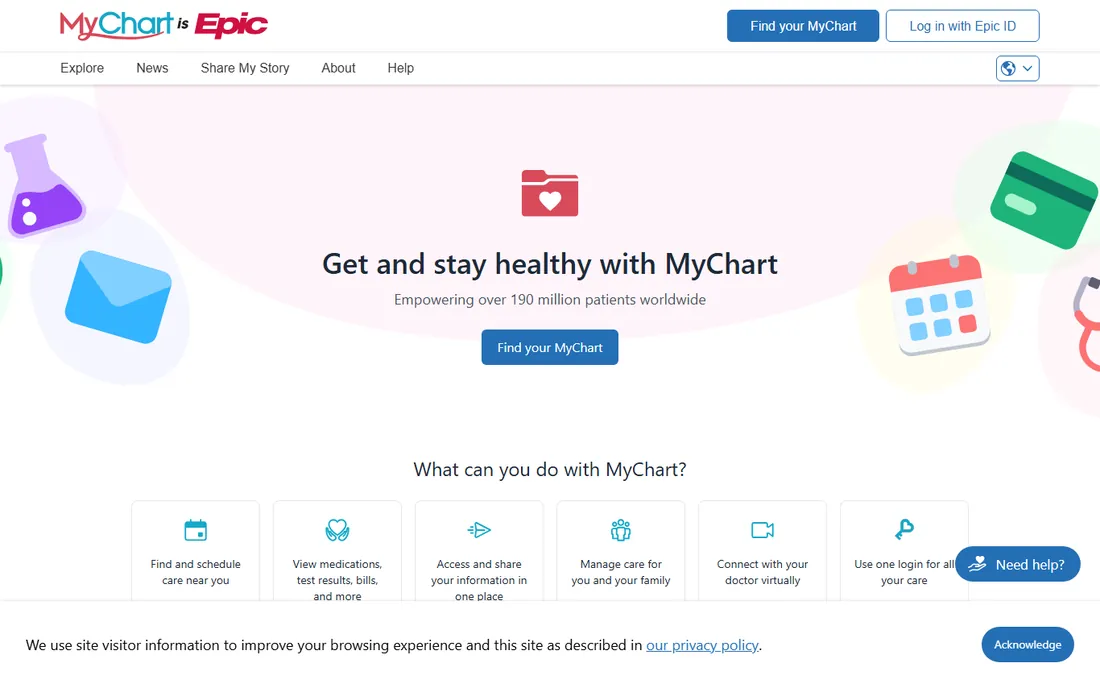
MyChart is the patient portal most Americans have already used. As Epic's patient-facing platform, it lets patients schedule care, view medications and test results, pay bills, message their care team, manage family records, and connect virtually, all under one login that works across participating organizations. With over 190 million patients, it is the default digital front door of US healthcare.
For health systems on Epic, the portal is part of the package: results, scheduling, and messaging flow directly from the clinical record with no integration project. The 2026 site emphasizes scam awareness and account security, reflecting how central MyChart has become to patients' healthcare lives.
The honest catch is availability. MyChart comes with Epic; independent practices on other EHRs cannot adopt it. It is also a portal, not a marketing or engagement engine. For Epic organizations, it is the obvious choice; for everyone else, it is the benchmark competitors are measured against.
What we like- 190 million-plus patients already know how to use it
- Deep integration with the Epic record
- One login across participating organizations
Watch out for- Only available to organizations running Epic
- Smaller practices cannot buy it standalone
Starting priceSee website
Free planNo
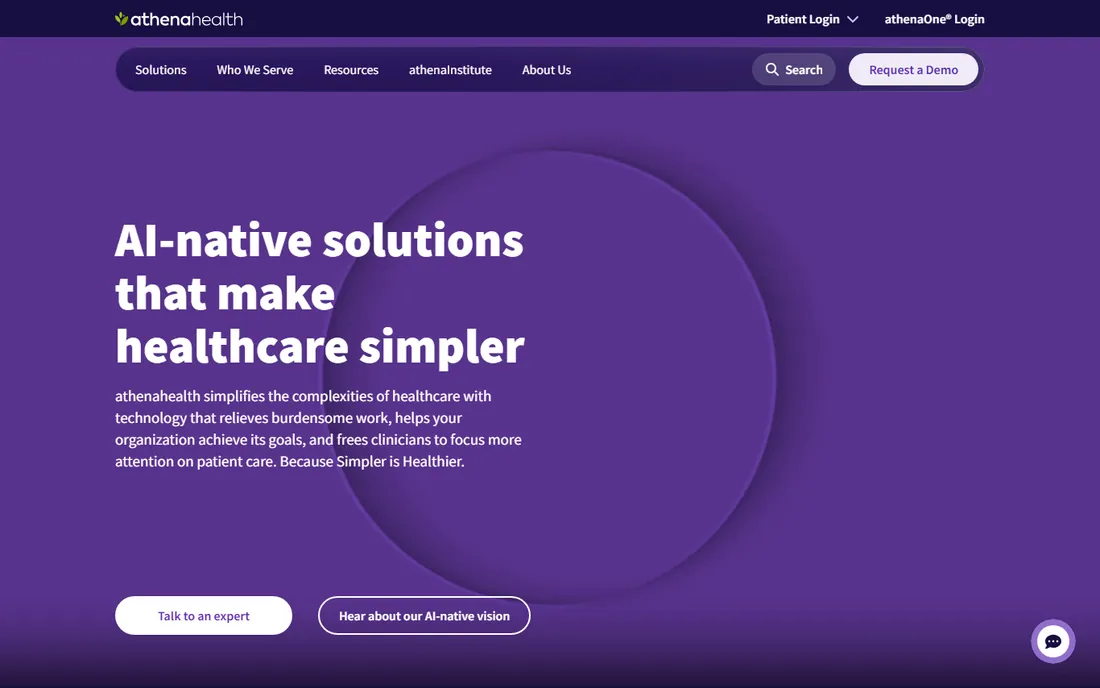
athenahealth's patient portal comes as part of athenaOne, the cloud suite rated Best in KLAS for independent physician practices three years in a row. Patients get online scheduling, messaging, bill pay, and access to their records, while practices benefit from the network effects of athenahealth's rules engine and claims expertise.
The 2026 differentiator is embedded AI: ambient documentation reduces physician charting work, and the platform's automation targets the administrative burden that burns out staff. Practices switching to athenaOne report 2 to 6 percent increases in collections, which funds the portal many times over.
The trade-off is commitment. The portal is not sold standalone; adopting it means adopting athenaOne for EHR, revenue cycle, and engagement. Pricing scales with the practice. For independent practices choosing a full platform, the bundled portal is a strong reason to pick athenahealth.
What we like- Portal bundled with the top-rated athenaOne suite
- Best in KLAS for independent physician practices three years running
- Embedded AI reduces documentation work
Watch out for- The portal is tied to the athenaOne platform
- Pricing is quote-based and scales with collections
#3
NextGen Healthcare
Best for: specialty practices wanting a virtual front door
Visit nextgen.com
Starting priceSee website
Free planNo
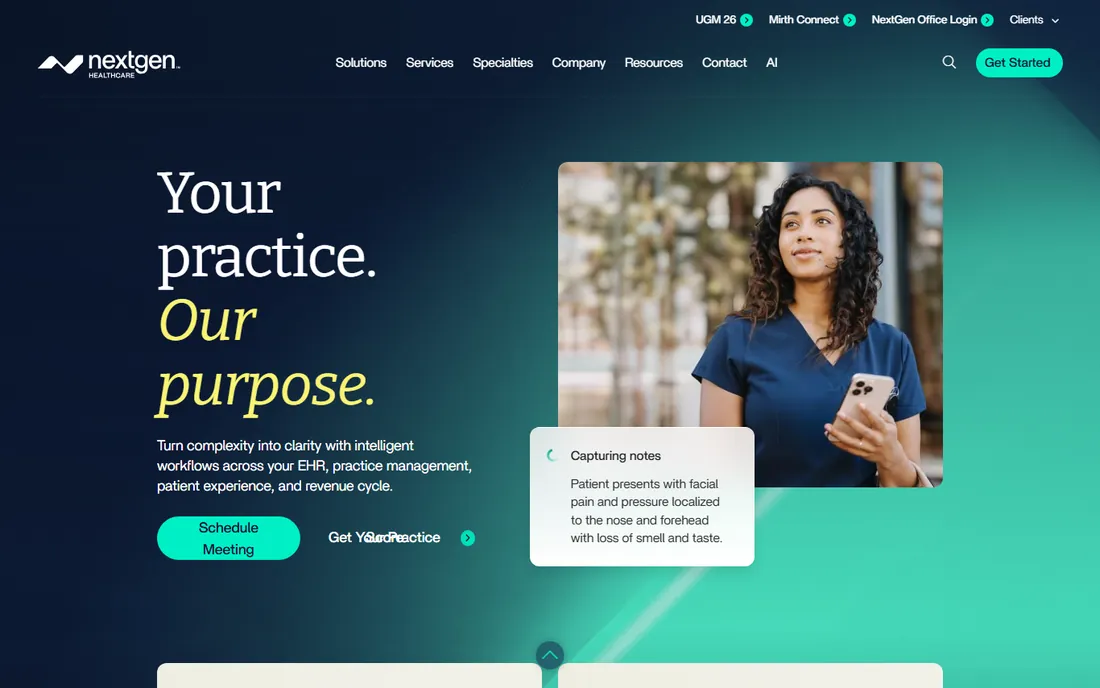
NextGen Healthcare's patient experience centers on the Virtual Front Door: integrated text-to-web scheduling, automated reminders in more than 33 languages, smooth cancellation management, and bill pay, all connected to the specialty-focused EHR. Mobile EHR extends the practice so documentation flows into the chart from anywhere.
The platform suits specialty practices that live on referrals and complex scheduling: orthopedics, behavioral health, and multi-specialty groups benefit from workflows designed around how specialists actually work. Population health tools add outreach and gap-in-care identification on top.
The honest catch is scale and implementation. NextGen is an enterprise EHR with an enterprise rollout; small practices will find it heavy. The portal shines as part of the full NextGen platform rather than as a standalone add-on. For mid-size and large specialty practices, it is a compelling integrated choice.
What we like- Virtual Front Door modernizes scheduling through bill pay
- Specialty-specific EHR workflows
- Integrated text-to-web scheduling in 33-plus languages
Watch out for- Enterprise platform with enterprise implementation
- Best fit is larger specialty groups
Starting priceSee website
Free planNo
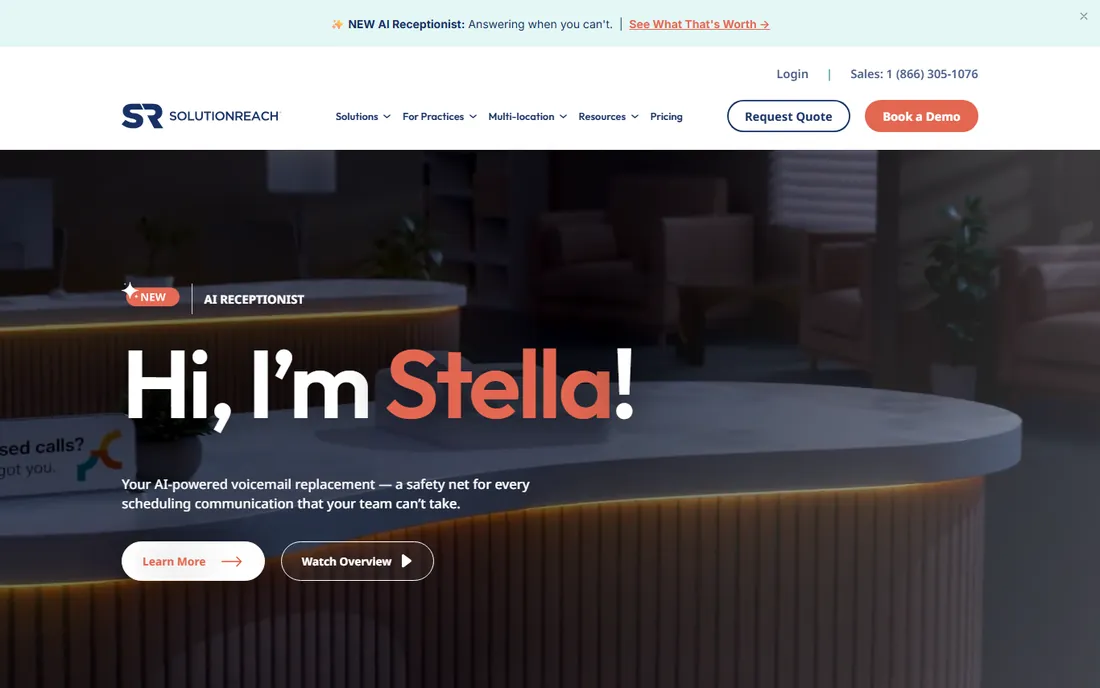
Solutionreach created the patient engagement category in 2000 and still leads it. Serving 50,000-plus practices and reaching 1 in 4 Americans, the platform handles appointment reminders, recall campaigns, two-way texting, and payment reminders, all integrated with the practice's existing PM or EHR system. Implementation takes under a week.
The value proposition is revenue: automated recalls bring overdue patients back, reminders cut no-shows, and text-to-pay speeds collections. The company cites six-figure recall revenue gains for typical practices. For dental, vision, and medical practices, it pays for itself through schedule density alone.
The trade-off is that Solutionreach is engagement software, not a clinical portal; patients will not view full medical records here. It complements the EHR's portal rather than replacing it. For practices whose problem is empty chairs and unpaid balances rather than record access, it is the proven fix.
What we like- The pioneer of patient engagement with 20-plus years in the market
- Automated recalls, reminders, two-way texting, and payments
- Integrates with existing PM/EHR systems
Watch out for- Engagement-focused rather than a full clinical portal
- The interface reflects its long history
Starting priceSee website
Free planNo
Relatient is shaping the standard for healthcare access with Dash, an AI-powered platform spanning the call center to every digital touchpoint. The headline feature is Dash Voice AI, an agentic AI that automates routine calls, books appointments with precision, and works like the practice's best scheduler. Customers report the AI autonomously handling over half of calls.
The numbers are striking: 97 percent fewer cancellations with self-scheduled appointments, 10 percent higher physician utilization, and 60 percent of calls deflected through automation. For organizations drowning in phone volume, that is transformative.
The honest catch is scope. Relatient is patient access software: scheduling, messaging, and call automation, not a longitudinal health record portal. Adopting voice AI also changes front-office workflows, which requires change management. For access-strapped organizations, it is the most innovative option here.
What we like- Dash Voice AI automates routine scheduling calls
- 97 percent fewer cancellations claimed with self-scheduling
- Deep PM/EHR integrations
Watch out for- Access-focused rather than a full portal
- AI voice is powerful but represents a workflow change
#6
NexHealth
Best for: dental and medical practices automating the front office
Visit nexhealth.com
Starting priceSee website
Free planNo
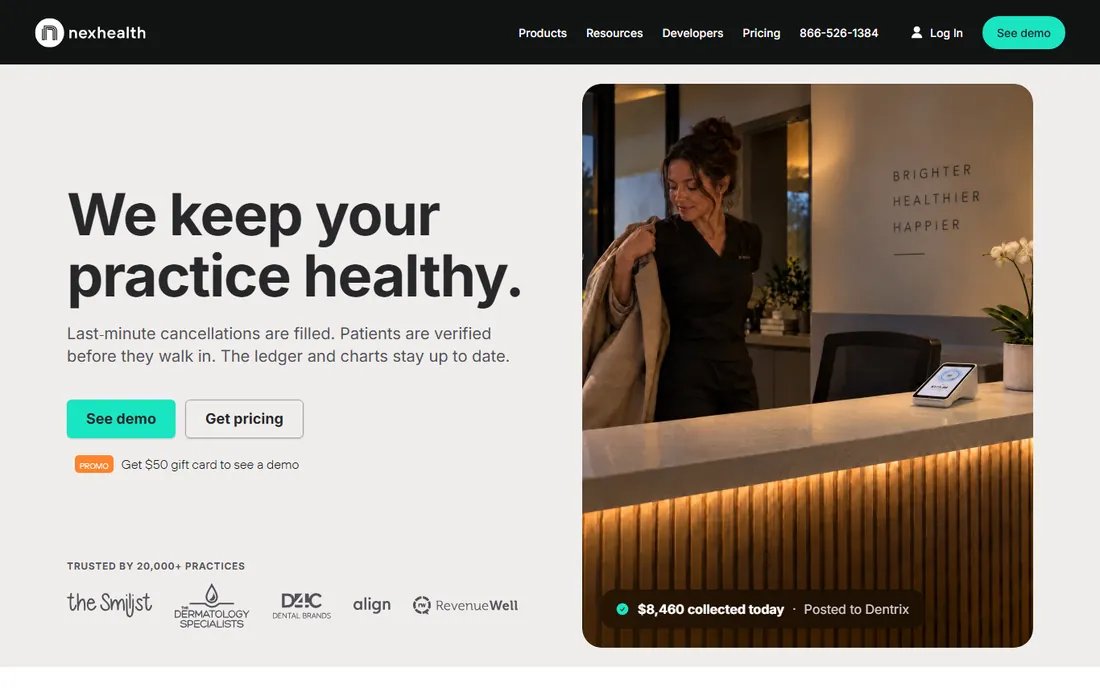
NexHealth is the patient experience platform that keeps the practice's calendar full and the front office automated. Online booking from Google Maps, the website, and social media feeds the schedule; recalls and smart waitlists refill cancellations in about 16 minutes; digital forms, eligibility verification, and payments happen before and during the visit.
The technical edge is the Synchronizer: real-time read and write sync with Dentrix, Eaglesoft, Open Dental, Epic, athenahealth, eClinicalWorks, and dozens more, so forms, appointments, and balances write back to the practice management system automatically. Rated 4.8 on G2, it is a favorite of dental groups in particular.
The trade-off is heritage. NexHealth's deepest roots are in dental; medical practices are a growing but newer segment. Pricing requires a sales conversation. For practices wanting the front office to run itself on top of their existing system, NexHealth is the most complete automation layer.
What we like- Real-time sync with dozens of practice management systems
- Online booking including Google Maps
- Trusted by 20,000-plus practices
Watch out for- Strongest in dental with medical as the newer motion
- Quote-based pricing
Starting priceSee website
Free planNo
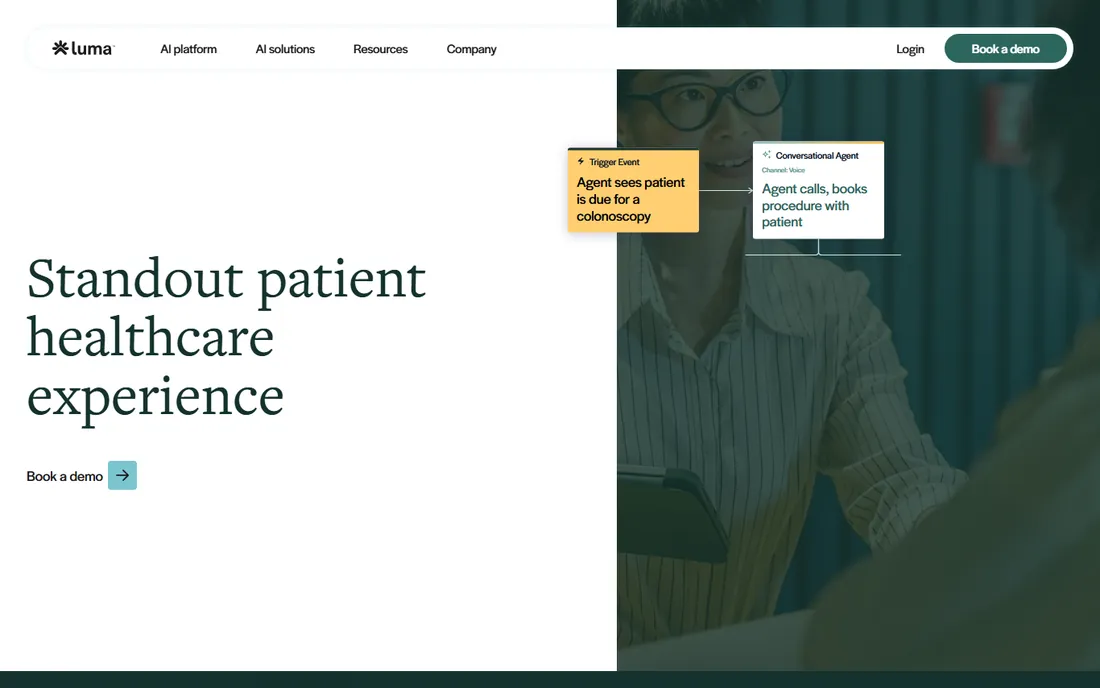
Luma Health repositioned in 2026 around Operational AI for healthcare, with Spark, a healthcare-native AI core, coordinating capabilities across the patient journey: attracting patients, scheduling, referrals, conversational agents, intake forms, eligibility, payments, and retention. The pitch is one platform running every step from first contact to follow-up.
The proof points are operational: 61 days average reduction in time to care, 2 to 3 hours saved on manual calls daily, and deep EHR integration that made it a fit for Epic-based organizations like UAMS, where it automated 95 percent of after-hours calls. Security credentials include ISO 27001 and SOC certification.
The honest catch is that operational AI is a new category with real implementation questions: how much autonomy, what guardrails, what happens when the AI is wrong. Luma's decade of patient engagement experience helps, but buyers should pilot carefully. For organizations ready to automate the operational layer, it is the most ambitious platform here.
What we like- Spark AI core coordinates agents across scheduling, intake, and follow-up
- Deep EHR integration including Epic
- Strong security certifications
Watch out for- Platform breadth requires thoughtful implementation
- Newer AI positioning means vetting the autonomy carefully
How we chose
We compared patient portal and patient experience platforms serving US healthcare organizations in 2026, using current vendor homepages and product announcements. We weighted patient-facing capability (scheduling, messaging, records access, bill pay), EHR integration depth, AI and automation features, security and compliance posture, and fit across health systems, independent practices, and dental groups. We did not claim hands-on testing; all facts come from vendor-published material.
What to check before you commit
First decide which problem you are solving. If patients cannot access their records, you need an EHR-native portal. If the schedule has gaps and the phones never stop, you need an engagement or access platform. Many organizations need both.
Verify the EHR integration
The portal is only as good as its connection to the clinical system. Confirm real-time, bidirectional sync with your specific EHR and version: NexHealth publishes a long supported-systems list, while EHR-native portals integrate by definition. Get the integration scope in writing.
Pilot AI features on real volume
Voice AI and operational AI demos are impressive; production behavior varies. Pilot on a defined call volume or scheduling workflow with clear success metrics before committing the whole front office. Relatient and Luma both support phased rollouts.
Measure adoption, not just features
A portal patients do not use is shelfware. Ask vendors for patient adoption benchmarks among similar organizations, and plan the launch campaign: in-office signage, staff scripting, and text invitations drive the enrollment that makes the investment pay.
The front door is becoming autonomous
The 2026 direction is clear: the patient portal is evolving from a records viewer into an autonomous front office. AI answers calls, fills cancellations, verifies eligibility, and collects payments while staff handle exceptions. The organizations winning on patient experience are not buying more features; they are automating the routine so humans can handle the complex. Evaluate every platform on how much routine work it truly removes.
Frequently asked questions
What is the best patient portal software?
MyChart is the most widely used, but it requires Epic. Independent practices typically use the portal bundled with their EHR (athenahealth, NextGen) or add an engagement platform like Solutionreach, NexHealth, or Relatient for scheduling and messaging.
How much does patient portal software cost?
Pricing is quote-based across the category and scales with provider count, locations, and message volume. EHR-native portals are usually bundled with the platform contract; standalone engagement platforms price per provider or per location.
Can a patient portal reduce no-shows?
Yes. Automated reminders, two-way texting, and self-scheduling consistently cut no-show rates; Relatient cites 97 percent fewer cancellations with self-scheduled appointments. The effect depends on patient enrollment and reminder configuration.
Do patients need to download an app?
Most modern portals work in the browser with optional mobile apps. MyChart, athenahealth, and NexHealth all support mobile access. Browser-based access generally drives higher adoption than app-only approaches.
Is patient portal software HIPAA compliant?
All seven tools here are built for HIPAA compliance, with encryption, audit trails, and access controls. Luma Health adds ISO 27001 and SOC certification. Always confirm the vendor signs a business associate agreement.
What is the difference between a patient portal and patient engagement software?
A patient portal gives patients access to their health records, test results, and messaging with their care team. Patient engagement software focuses on scheduling, reminders, recalls, and payments. Many organizations use both: the EHR's portal for records and a platform like Solutionreach or NexHealth for engagement.
Sources we checked (7)
- https://mychart.com/
- https://athenahealth.com/
- https://www.nextgen.com/
- https://www.solutionreach.com/
- https://relatient.com/
- https://nexhealth.com/
- https://lumahealth.io/
Is your product missing or out of date?
We review this list regularly. Vendors can request a listing, send updated pricing or ask about featured placement.

Shihab Mia · Founder, Rankite
Shihab has spent more than a decade helping SaaS and e-commerce brands grow through search. He writes Rankite's software buying guides from pricing pages, documentation and public user reviews. More about Shihab.