How we make this list: we compare pricing pages, product documentation and public user reviews. Rankite is independent; if a vendor ever pays for a featured spot, that listing is clearly labeled Partner.
Key takeaways
- eClinicalWorks reports that more than 180,000 physicians and nurse practitioners use its EHR worldwide, which shows how consolidated medical billing technology has become (eclinicalworks.com).
- Most billing platforms now bundle EHR, practice management, and revenue cycle management into one suite rather than selling billing alone.
- Pricing is almost always quote-based in this category. Expect to request a demo and discuss practice size, specialty, and claim volume before seeing numbers.
- Clean claim rates and first-pass acceptance matter more than feature lists. AdvancedMD, for example, advertises a 95% first-pass acceptance rate guarantee.
- Small independent practices and large multi-site groups buy differently: all-in-one suites suit the former, while the latter often need the analytics and outsourcing depth of athenahealth or AdvancedMD.
Quick comparison
| Tool | Best for | Starting price | Free plan |
|---|
 AdvancedMD AdvancedMD | Independent practices wanting billing plus RCM services | See website | No |
 Tebra (formerly Kareo) Tebra (formerly Kareo) | Small practices needing EHR plus billing | See website | No |
 DrChrono DrChrono | Mobile-first practices and Apple-device users | See website | No |
 athenahealth (athenaOne) athenahealth (athenaOne) | Practices wanting billing performance guarantees | See website | No |
 eClinicalWorks eClinicalWorks | Large ambulatory networks | See website | No |
 PracticeSuite PracticeSuite | Billing companies and multi-specialty practices | See website | No |
 CareCloud CareCloud | Practices wanting AI-assisted billing workflows | See website | No |
 NextGen Healthcare NextGen Healthcare | Specialty practices with complex documentation | See website | No |
 Greenway Health Greenway Health | Ambulatory practices modernizing revenue cycle | See website | No |
 CureMD CureMD | Practices wanting specialty-specific billing | See website | No |
Is your product missing or out of date?
We review this list regularly. Vendors can request a listing, send updated pricing or ask about featured placement.
Top 10 medical billing software
Starting priceSee website
Free planNo
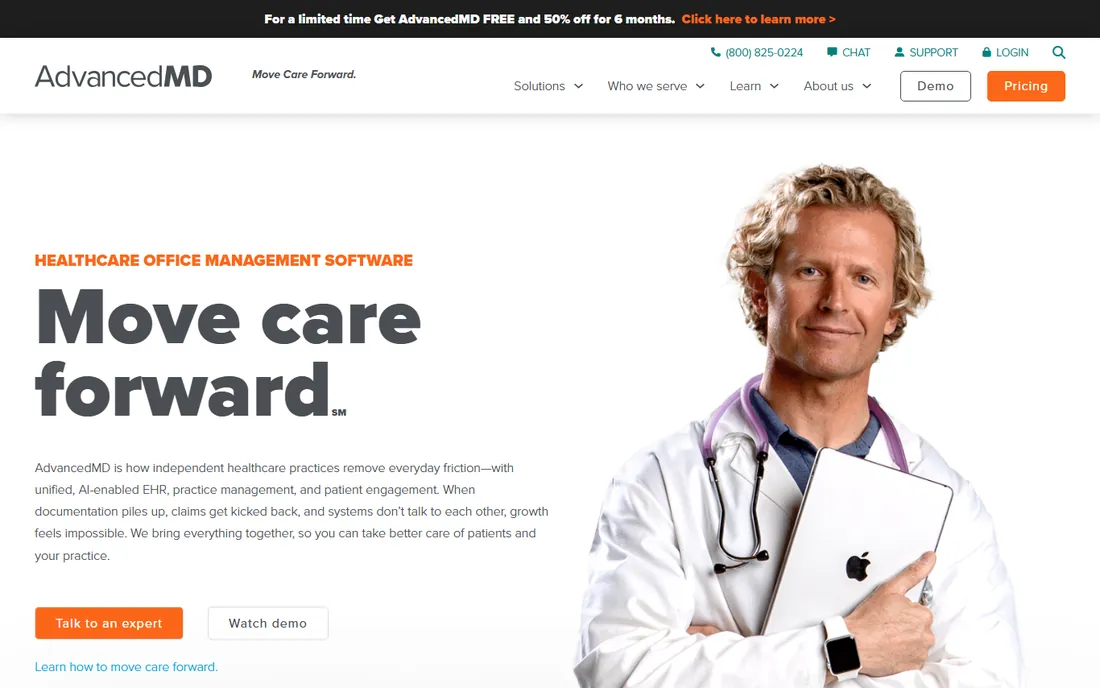
AdvancedMD positions itself as the complete operating system for independent practices, combining EHR, practice management, patient engagement, and billing in one cloud platform. Its billing story is backed by hard numbers on its own site: more than 13,000 practices and 850 billing companies use the platform, processing over 9.5 million claims per month, and the company guarantees a 95% first-pass acceptance rate.
For practices that would rather outsource billing entirely, AdvancedMD offers full revenue cycle management services with transparent reporting. The company also advertises AI-enabled clinical documentation and automated claim scrubbing on every submission. The honest catch is buying friction: pricing is quote-based, and prospects go through demos and consultations rather than self-serve signup. Practices that want one vendor accountable for both software and billing outcomes will find that tradeoff acceptable.
What we like- Unified EHR, practice management, and billing on one platform
- 95% first-pass acceptance rate guarantee
- Strong support with 90-second average response time
Watch out for- Quote-based pricing means no public starting price
- Implementation can be involved for very small practices
#2
Tebra (formerly Kareo)
Best for: Small practices needing EHR plus billing
Visit tebra.com
Starting priceSee website
Free planNo

Tebra is the company formed by the merger of Kareo and PatientPop, and kareo.com now redirects to tebra.com. The combined platform covers clinical documentation, billing, scheduling, and practice growth tools like online reputation management. Wikipedia reports the platform serves more than 140,000 healthcare providers, which puts it among the largest in the independent-practice segment.
The billing workflow emphasizes getting claims paid faster, with eligibility checks and claims management built into the same system as the EHR. Tebra's own site stresses transparent pricing with no surprise fees, though actual numbers require talking to sales. The honest catch is transition noise: years of Kareo reviews and branding still float around online, so buyers should make sure they are evaluating the current Tebra platform. For small practices that also need help attracting patients, the PatientPop-derived growth tools are a genuine differentiator.
What we like- All-in-one EHR, billing, scheduling, and patient engagement
- Transparent pricing claims
- Strong reputation and review tools from the PatientPop merger
Watch out for- Rebrand from Kareo still causes confusion in reviews
- Pricing requires a demo request
Starting priceSee website
Free planNo
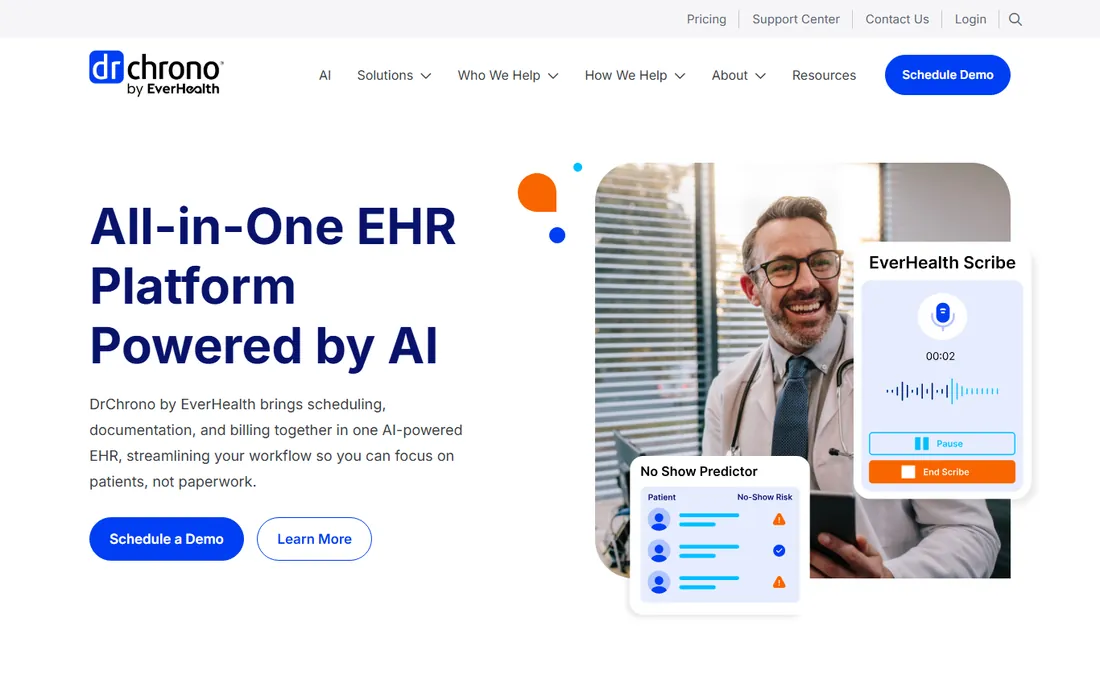
DrChrono built its reputation as the mobile EHR, and its homepage still leads with that identity: Black Book's number one mobile EHR from 2013 through 2026, and the first mobile EHR to become an Apple Mobility Partner. For physicians who chart on an iPad between exam rooms, that native mobile experience remains unmatched.
The billing side is fully integrated rather than bolted on. One customer quoted on DrChrono's site describes billing profiles that auto-fill charges for common visit types, cutting billing work by about a third. The platform also offers revenue cycle management services for practices that want to hand off collections. The honest catch is fit: practices with large back-office billing teams doing heavy desktop work may find the mobile-first philosophy less natural. DrChrono, now part of EverHealth, suits independent practices where the physician does much of the documentation personally.
What we like- Best-in-class iPad and iPhone EHR experience
- Integrated billing with customizable billing profiles
- Open API and app marketplace
Watch out for- Mobile-first design can feel limiting for heavy desktop billing workflows
- Pricing not published
Starting priceSee website
Free planNo
athenahealth takes a fundamentally different approach from most vendors on this list. Instead of selling software that your staff operates, athenaOne combines the platform with back-office services: athenahealth's own teams work denials, follow up on claims, and keep up with payer rule changes across its network. The company says practices that switch often see up to a 6% increase in collections with a similar decrease in overhead.
That network effect is the core pitch. Because athenahealth processes claims for thousands of practices, its rules engine sees payer behavior patterns that a single practice never would, and every customer benefits. athenahealth also notes it was rated Best in KLAS Overall Independent Physician Practice Suite for the third straight year. The honest catch is the business model: pricing is typically tied to a percentage of collections, which aligns incentives but means the vendor earns more as you do. Practices comfortable outsourcing revenue cycle operations tend to love it; control-oriented billers may chafe.
What we like- Network-based billing that learns from millions of transactions
- Reported 2-6% increase in collections for switching practices
- Best in KLAS recognition
Watch out for- Percentage-of-collections pricing can cost more as revenue grows
- Less flexibility for practices wanting full control
Starting priceSee website
Free planNo
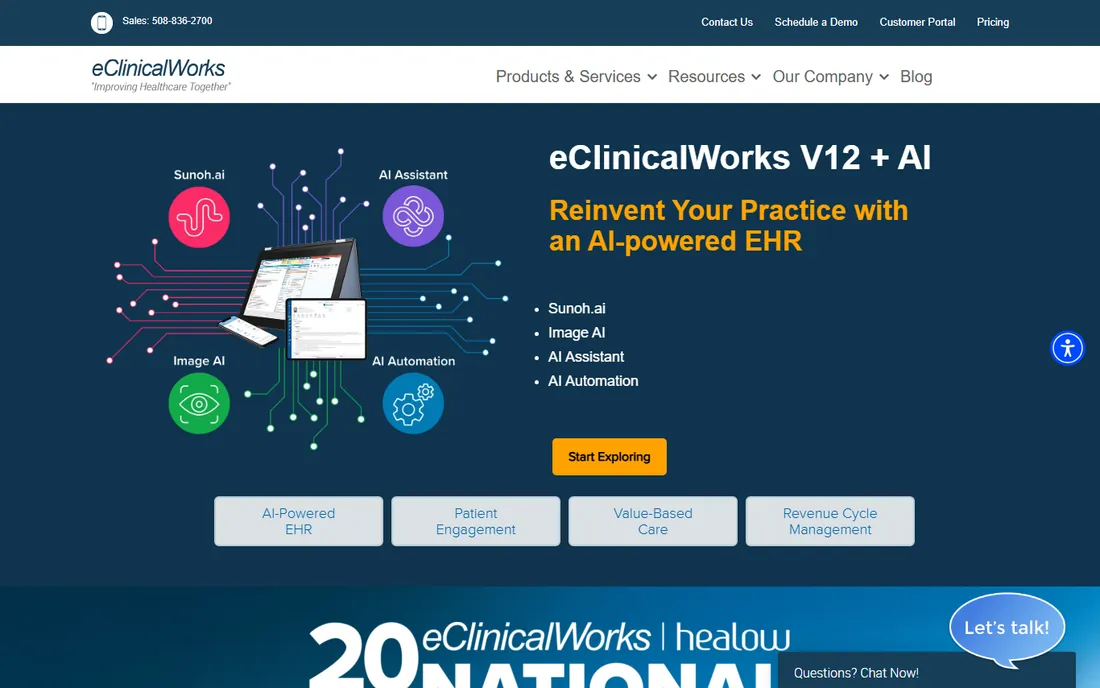
Few health IT companies match eClinicalWorks' footprint. Its own homepage reports more than 180,000 physicians and nurse practitioners, over 850,000 healthcare professionals, and 110,000-plus facilities running on the platform. That scale makes it a default consideration for large ambulatory groups, health centers, and urgent care networks.
The billing capabilities lean on automation. eClinicalWorks highlights robotic process automation driving more efficient billing, alongside revenue cycle management services, patient engagement through its healow platform, and an AI scribe partnership with Sunoh.ai for documentation. The honest catch is the enterprise reality: deployments of this size take time, training, and change management, and the interface reflects two decades of accumulated features rather than a fresh design. For organizations that need a proven platform at national scale, that maturity is exactly the point.
What we like- Massive scale with proven multi-site deployments
- Robotic process automation for billing tasks
- Integrated telehealth through healow
Watch out for- Interface can feel dated in places
- Implementation timelines run long for large organizations
Starting priceSee website
Free planNo
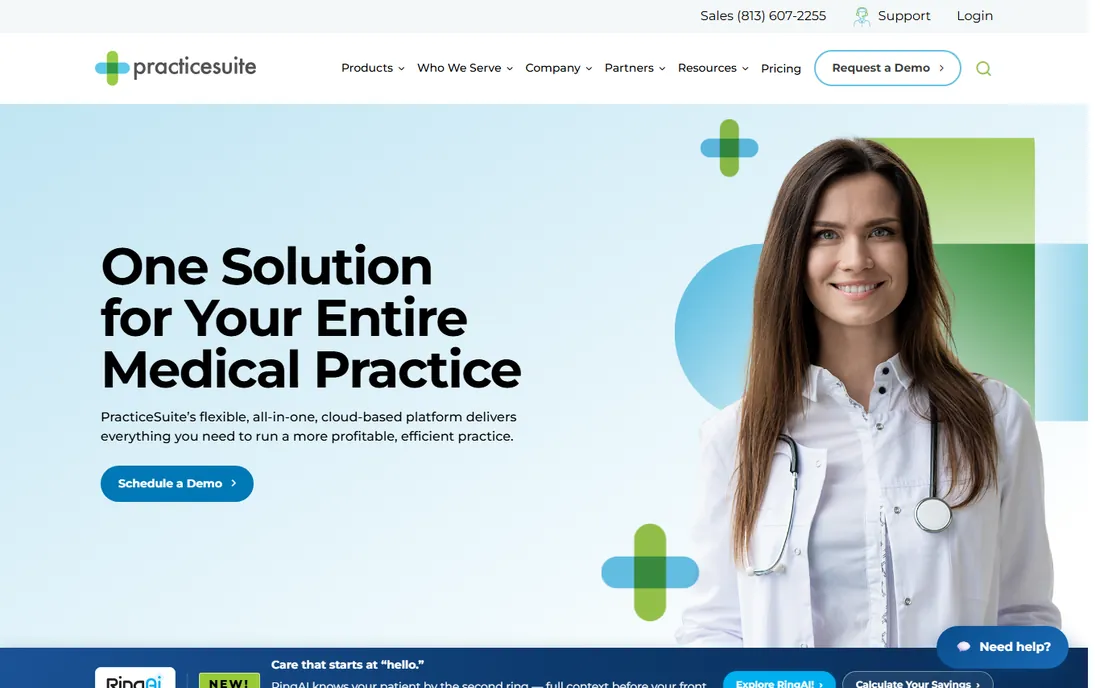
PracticeSuite has carved out a loyal following among medical billing companies and multi-specialty practices. Its platform covers practice management, EHR, billing, patient engagement, and telehealth, with multi-tenant workflows designed for billing services that manage many practices from one system. Third-party profiles report usage across 150 billing specialties and dozens of clinical EHR specialties.
Customer reviews quoted on its site consistently praise the support team and the billing workflow's fit for high-volume operations. The company emphasizes that practices only pay for what they use, with hands-on onboarding. The honest catch is scale of vendor: PracticeSuite is a smaller company than athenahealth or eClinicalWorks, which matters for buyers who weight vendor longevity and R&D budgets heavily. For billing companies that want a responsive partner rather than a giant platform, that smaller size is often the appeal.
What we like- Strong multi-tenant workflows built for billing companies
- Broad specialty coverage
- Responsive US-based support frequently praised in reviews
Watch out for- Smaller vendor than the enterprise names here
- Interface prioritizes function over polish
Starting priceSee website
Free planNo
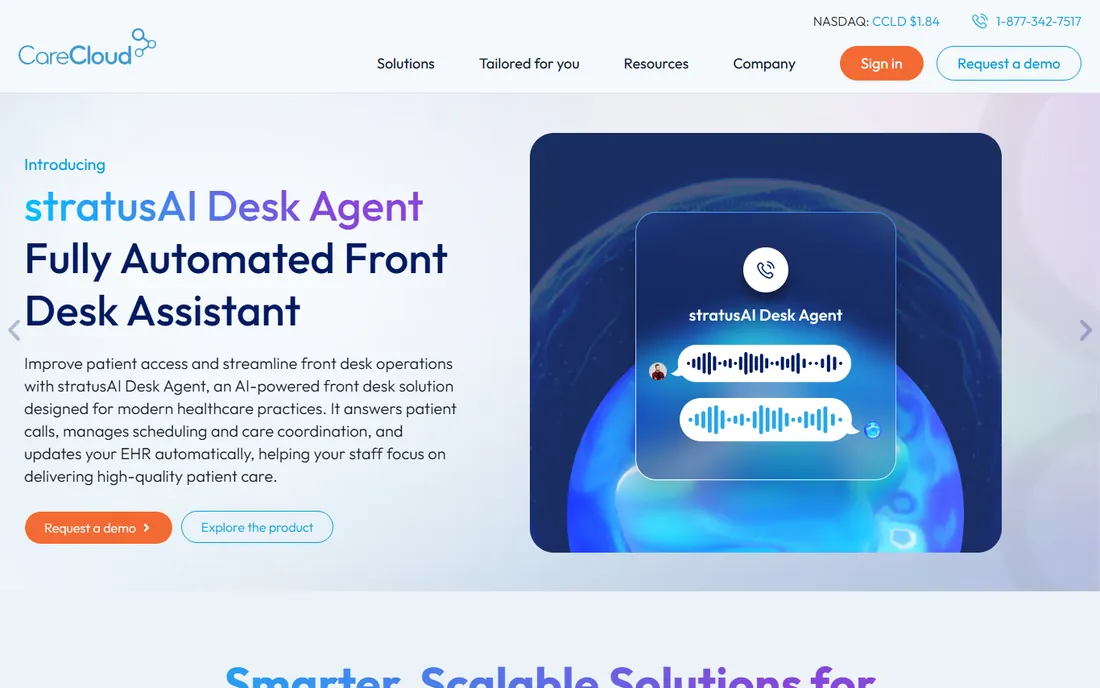
CareCloud, formerly MTBC, offers a cloud suite spanning EHR, practice management, billing, telehealth, and patient experience management, plus full revenue cycle management services. The company leans into AI branding with cirrusAI and an AI call agent for patient communications, and its homepage features customer stories citing faster payments and reduced days in accounts receivable.
As a publicly traded company on Nasdaq, CareCloud's financials are visible in a way private competitors' are not, which some buyers find reassuring. Wikipedia notes the company traces to 1999 and renamed itself CareCloud after acquiring the Miami-based company of the same name in 2020. The honest catch is product-line complexity from that acquisition history; prospects should confirm exactly which platform and service bundle they are buying. For practices that want modern AI touches on a full-service billing relationship, CareCloud deserves a demo.
What we like- AI-powered features including a call agent and cirrusAI
- Full RCM services available
- Publicly traded with transparent financials
Watch out for- Corporate history through acquisitions can complicate product line clarity
- Pricing requires sales engagement
#8
NextGen Healthcare
Best for: Specialty practices with complex documentation
Visit nextgen.com
Starting priceSee website
Free planNo
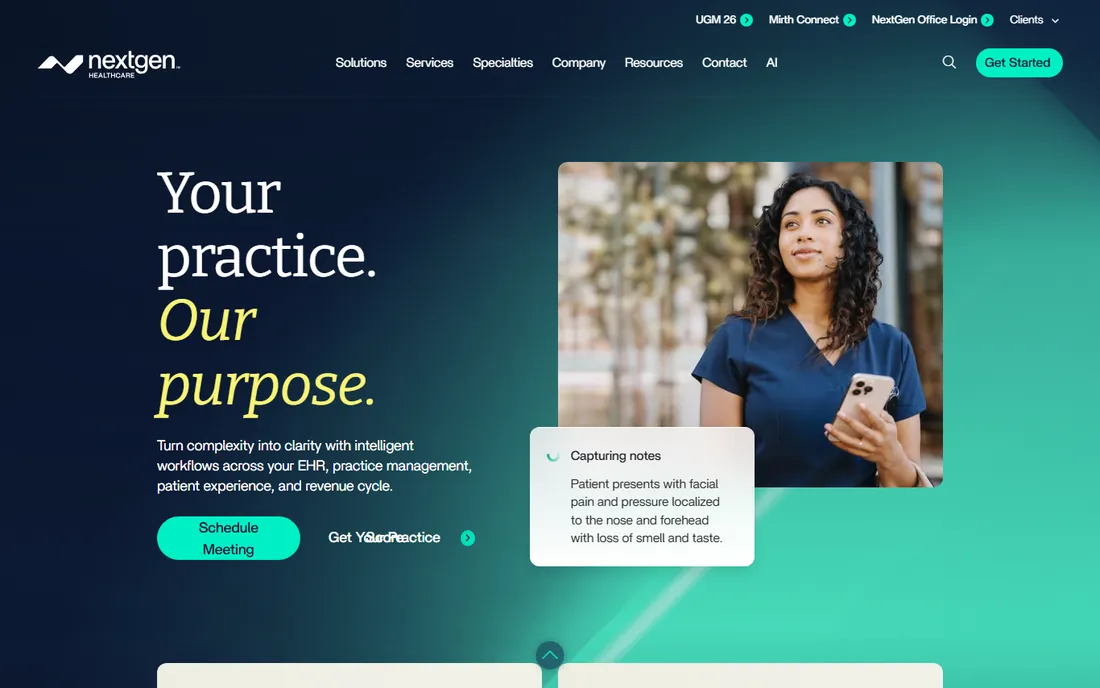
NextGen Healthcare, formerly Quality Systems and acquired by Thoma Bravo in 2023, serves ambulatory practices with EHR, practice management, revenue cycle management, and patient engagement. Its strength is specialty depth: templates and workflows tailored to how specialists actually document, plus population health and interoperability tools for connected care.
The company offers two tracks: NextGen Enterprise for larger groups and NextGen Office aimed at practices with one to ten doctors, which gives smaller practices a defined entry point. Its developer program and FHIR APIs also suit organizations that need integrations. The honest catch is implementation weight on the Enterprise side, where configuration and training are significant projects. Specialty practices with complex documentation needs will get the most value; very small general practices may find simpler suites easier.
What we like- Deep specialty-specific templates and workflows
- Strong interoperability and API program
- Separate NextGen Office product for small practices
Watch out for- Enterprise product can be complex to implement
- Pricing is quote-based with setup fees reported by third parties
Starting priceSee website
Free planNo
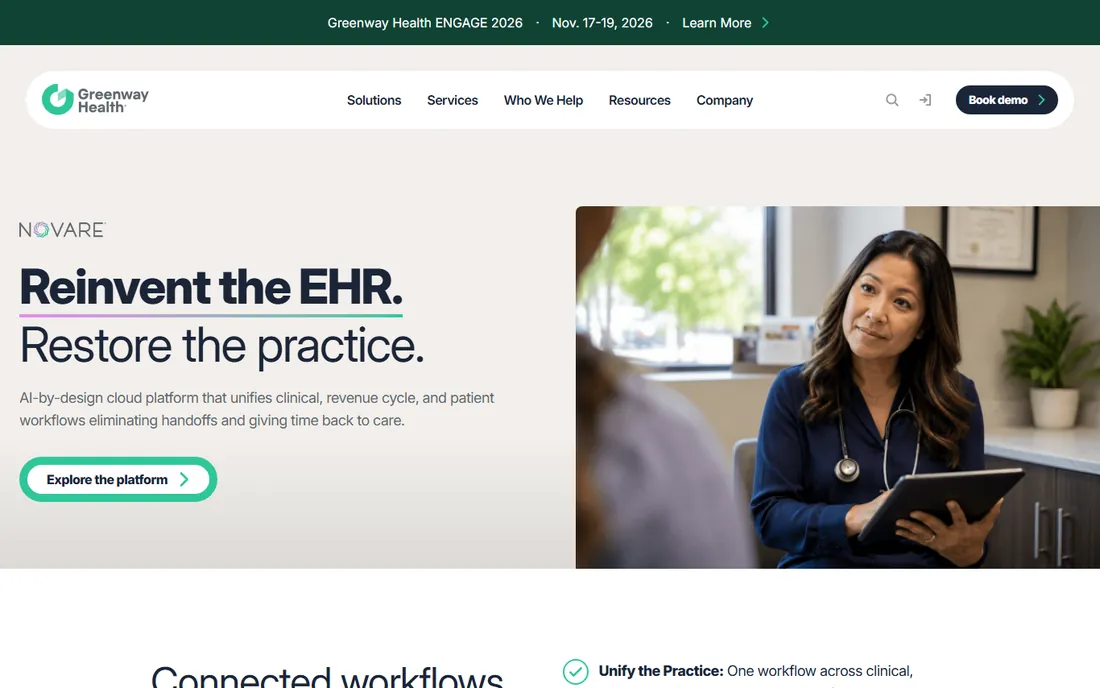
Greenway Health is in the middle of a platform reinvention. Its new Novare platform is described as AI-by-design, unifying clinical, revenue cycle, and patient workflows to eliminate handoffs, and the company displays 2026 KLAS Most Improved and Black Book badges on its homepage. With roots going back to the Medical Manager practice management software of the 1970s, Greenway brings deep ambulatory experience.
The revenue story centers on workflow automation during the visit: embedded intelligence that helps complete documentation, coding, and next steps while clinical context is fresh, which directly affects clean claims and revenue capture. The honest catch is timing: with a new platform rolling out, prospects should ask pointed questions about which product they would implement and the migration path from legacy Greenway products. For ambulatory practices that want a modernized, AI-forward revenue cycle, it is worth evaluating.
What we like- New AI-by-design platform (Novare) unifying clinical and revenue workflows
- KLAS Most Improved 2026 recognition
- 40-plus years of ambulatory focus
Watch out for- Platform transition means buyers should clarify which product they are getting
- Quote-based pricing
#10
CureMD
Best for: Practices wanting specialty-specific billing
Visit curemd.com
Starting priceSee website
Free planNo
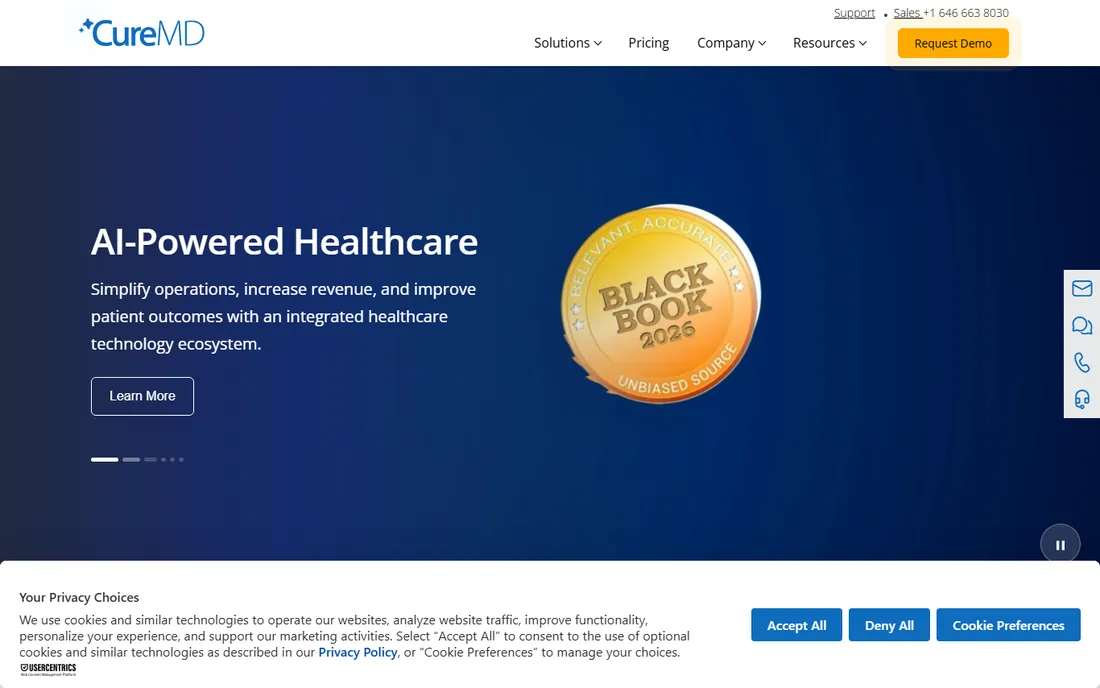
CureMD offers an all-in-one platform for clinical, financial, and administrative work, with specialty-specific workflows across more than 30 specialties. Its own homepage reports over 28,000 providers, 500 million encounters, and 50 million patients, plus 29 years in healthcare IT. The company emphasizes fair pricing that grows with the practice and quick onboarding for solo and small practices.
The billing pitch is integration: specialty-specific documentation flows directly into specialty-aware billing, with integrated revenue cycle management for practices that want to outsource collections. CureMD displays KLAS, Black Book, and Surescripts recognition on its site. The honest catch is visibility: CureMD is less discussed in US buyer communities than the biggest names, so reference checks take more effort. For specialty practices that want templates built for their workflow rather than generic ones, that specialty depth is the reason to look.
What we like- Specialty-specific templates across 30-plus specialties
- Integrated billing with RCM services
- KLAS and Black Book recognition
Watch out for- Smaller marketing footprint means fewer independent reviews
- Pricing not published
Software comparisons tend to fixate on feature checklists, but billing performance comes down to a shorter list of operational factors. Clean claim rate is the headline metric: the percentage of claims accepted on first submission determines how much rework your team does. Denial management is next: every payer denies differently, and the speed and intelligence of follow-up separates good billing operations from bad ones. Eligibility verification before the visit prevents the largest category of avoidable denials.
When evaluating vendors, ask for their clients' median days in accounts receivable and first-pass acceptance rates, not just feature demos. Ask how payer rule updates reach your claims: the best platforms update scrubbing rules centrally across their network, so one practice's denial becomes every practice's prevention. Ask about the split between software and service: several vendors on this list will run your billing for you, which changes staffing math completely. Finally, confirm specialty fit. A platform tuned for primary care may handle orthopedic or behavioral health billing poorly, and specialty-specific templates, code sets, and denial workflows are worth more than generic feature breadth.
How we chose
We selected established medical billing and revenue cycle platforms serving US ambulatory practices, verifying each vendor's official homepage through the browser and reviewing product pages, press releases, and company-published statistics. We included both pure billing software and all-in-one platforms where billing and revenue cycle management are core offerings, since that reflects how practices actually buy.
We weighted independent-practice fit, billing-specific capabilities like claims scrubbing and denial management, specialty coverage, and the availability of outsourced RCM services. Pricing in this category is quote-based, so where vendors do not publish prices we say so instead of repeating third-party estimates. We did not perform hands-on testing; our assessments reflect vendor-published information and widely reported buyer feedback from review platforms.
Frequently asked questions
How much does medical billing software cost?
Most vendors on this list use quote-based pricing tied to practice size, specialty, provider count, and claim volume. All-in-one EHR plus billing suites for small practices commonly fall in the low hundreds of dollars per provider per month, while outsourced revenue cycle services are often priced as a percentage of collections. Always get at least three quotes and ask what is included.
Should we buy billing software or outsource to a billing service?
It depends on your in-house expertise. If you have experienced billers and steady volume, software plus your team keeps more control and often costs less. If billing expertise is hard to hire, or denials are climbing, several vendors here (AdvancedMD, athenahealth, CareCloud, DrChrono, CureMD) will run revenue cycle operations for you. Many practices start with software and move to services as they grow.
What is a good clean claim rate?
Industry benchmarks generally treat 90% plus first-pass acceptance as good and 95% plus as excellent. AdvancedMD publicly guarantees 95%, which tells you where the top of the market sits. If your current rate is below 90%, the problem is usually front-end processes like eligibility verification and coding accuracy rather than the software alone.
Do these platforms work for our specialty?
Most vendors on this list support dozens of specialties with tailored templates and workflows, but depth varies. Specialty-focused practices in orthopedics, behavioral health, dermatology, or physical therapy should ask for a demo using their own visit types and codes. Generic platforms can usually handle any specialty, but specialty-tuned ones reduce documentation and coding friction.
How long does implementation take?
For cloud suites at small practices, typical go-live timelines run from a few weeks to a few months, depending on data migration and training needs. Larger multi-site deployments on platforms like eClinicalWorks or NextGen Enterprise can take several months. Ask each vendor for a written implementation plan with milestones before signing.
Is our patient data safe with cloud billing software?
Reputable vendors maintain HIPAA compliance, encryption, and security certifications such as SOC 2 and HITRUST. Several vendors on this list advertise these credentials on their homepages. Always confirm that the vendor will sign a Business Associate Agreement and ask about their data center and backup practices during evaluation.
Sources we checked (10)
- https://advancedmd.com/
- https://www.tebra.com/
- https://www.drchrono.com
- https://athenahealth.com/
- https://eclinicalworks.com/
- https://practicesuite.com/
- https://carecloud.com/
- https://www.nextgen.com/
- https://greenwayhealth.com/
- https://curemd.com/
Is your product missing or out of date?
We review this list regularly. Vendors can request a listing, send updated pricing or ask about featured placement.

Shihab Mia · Founder, Rankite
Shihab has spent more than a decade helping SaaS and e-commerce brands grow through search. He writes Rankite's software buying guides from pricing pages, documentation and public user reviews. More about Shihab.