How we make this list: we compare pricing pages, product documentation and public user reviews. Rankite is independent; if a vendor ever pays for a featured spot, that listing is clearly labeled Partner.
Key takeaways
- SimplePractice is the most approachable pick for solo and small practices, with published pricing from $49 a month and a 30-day trial.
- Practice Fusion gives small medical practices a full cloud EHR with published pricing from $199 per provider per month.
- athenahealth, eClinicalWorks, NextGen, Tebra, DrChrono, RXNT and Elation all price by quote, so expect a sales call and compare the total contract, not the headline.
- The best medical practice management software for a two-provider clinic is rarely the best one for a 20-provider group; match the platform to your size and specialty.
- Data migration, claim filing fees and per-message charges can dwarf the monthly license, so get every fee in writing before signing.
Quick comparison
| Tool | Best for | Starting price | Free plan |
|---|
 SimplePractice SimplePractice | Solo and small therapy and wellness practices | From $49/month | 30-day free trial |
 Practice Fusion Practice Fusion | Small practices wanting a full cloud EHR | From $199/provider/month | Free trial |
 athenahealth athenahealth | Practices that want billing handled for them | See website | No (demo available) |
 DrChrono DrChrono | Independent practices on iPad and mobile | See website | No (demo available) |
 Tebra Tebra | Private practices wanting EHR plus growth tools | See website | No (demo available) |
 eClinicalWorks eClinicalWorks | Large ambulatory practices on the cloud | See website | No (demo available) |
 NextGen Healthcare NextGen Healthcare | Specialty practices needing deep customization | See website | No (demo available) |
 RXNT RXNT | Budget-conscious practices wanting integrated modules | See website | No (demo available) |
 Elation Health Elation Health | Primary care practices, AI-first charting | See website | No (demo available) |
Is your product missing or out of date?
We review this list regularly. Vendors can request a listing, send updated pricing or ask about featured placement.
The best patient management software
Starting priceFrom $49/month
Free plan30-day free trial
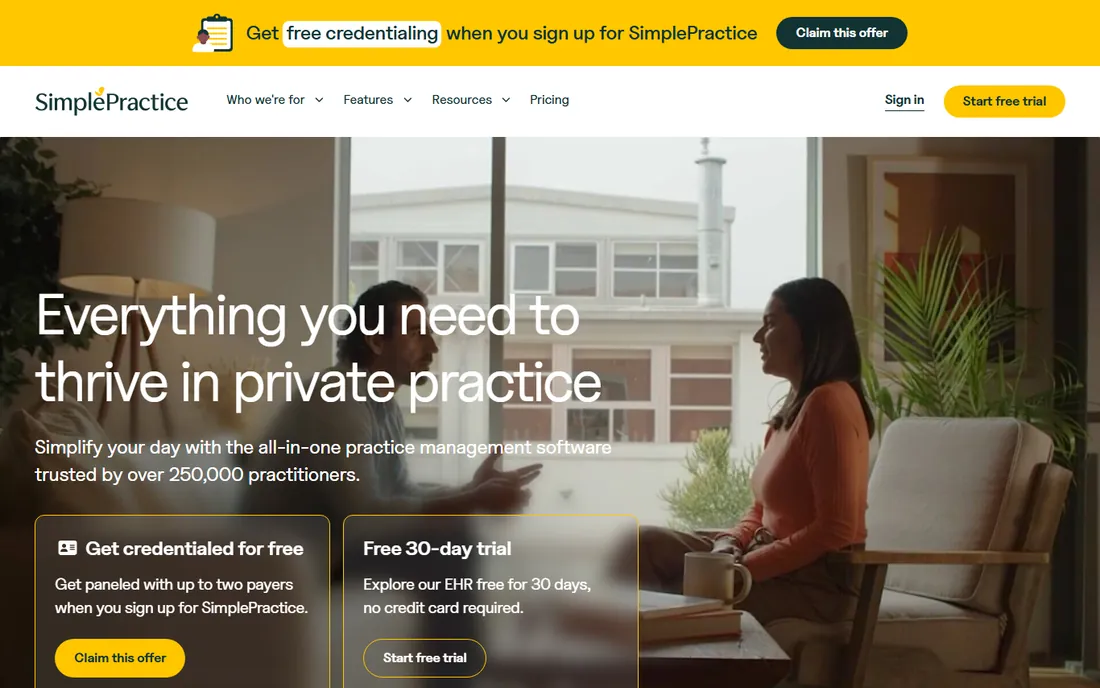
Picture a solo therapist or a small wellness practice that needs scheduling, notes, billing and telehealth without an IT department. SimplePractice is built exactly for that buyer, and it publishes its pricing, which is unusual in this market: Starter at $49 a month, Essential at $79 and Plus at $99 per clinician. The 30-day trial needs no credit card, and new accounts can get half off the first three months. Free insurance credentialing for up to two payers is a genuine perk competitors charge for.
The headline price is not the whole story. Electronic claim filing beyond the included allowance, ePrescribe at $49 a month plus a setup fee, AI note-taking at $35 a month per clinician, and per-claim and per-message fees all stack on top. Practices outside the US are out of luck entirely, since the workflows are US-only. Still, for American therapy and wellness practices that want one vendor and one predictable bill, this is the easiest starting point in the category.
What we like- Published, transparent pricing
- Strong telehealth and client portal
- Free insurance credentialing on signup
Watch out for- Add-ons (ePrescribe, AI notes, extra claims) raise the real cost
- US-only workflows
Starting priceFrom $199/provider/month
Free planFree trial

Practice Fusion took the small-practice EHR market by storm a decade ago by being cloud-native and affordable, and it still plays that role. The vendor publishes pricing starting at $199 per provider per month with an annual commitment, and the license covers unlimited non-signing staff. Charting templates, e-prescribing, lab ordering and billing sit in one browser-based system, which keeps IT costs near zero for a small clinic.
Reviewers keep circling the same two complaints. The interface, while functional, looks and feels older than the competition, and customer support responsiveness is the most criticized part of the product across review sites. If your priority is low upfront cost and a system that runs on any device with a browser, those tradeoffs may be acceptable, but plan the demo carefully and ask specifically about support response times.
What we like- Full cloud EHR with e-prescribing and billing
- Published starting price
- No hardware to buy or maintain
Watch out for- Interface feels dated next to newer rivals
- Support quality is a common complaint in reviews
Starting priceSee website
Free planNo (demo available)
athenahealth sells an outcome more than software: its athenaOne network combines the EHR, revenue cycle management and patient engagement, and the company claims practices see collections increases of up to 6 percent after switching. Thousands of independent practices run on it, and it has been rated best overall independent physician practice suite by KLAS for three years running. The specialty-specific workflows are deep, and the embedded AI documentation tools cut charting time.
The price you pay is opacity plus process discipline. athenahealth publishes no pricing; everything is quoted, and the model is typically a percentage of collections rather than a flat fee. Practices also have to run their billing the athena way, which improves results for many but frustrates offices with established processes. If your billing is the bottleneck in the practice, this is the strongest contender here.
What we like- AthenaOne combines EHR, billing and engagement in one network
- Strong collections performance
- Best in KLAS recognition
Watch out for- Quote-based pricing with no published rates
- Practices give up some workflow control to athena's processes
Starting priceSee website
Free planNo (demo available)

DrChrono was the first EHR built mobile-first, and that DNA still shows. Providers can chart, prescribe and check patients in from an iPad at the point of care, which suits independent practices where the physician is also the IT department. The platform combines clinical workflows, patient engagement and revenue management in one subscription, with AI-assisted documentation to cut after-hours charting.
Being a smaller independent vendor cuts both ways. The product moves fast and the mobile experience is better than the enterprise suites, but the integration ecosystem and third-party app marketplace are thinner than what athenahealth or eClinicalWorks offer. Pricing is quote-based, so budget-conscious buyers should get the full proposal, including implementation and migration, before comparing.
What we like- Genuinely mobile-first EHR built for iPad
- All-in-one platform with billing
- AI-powered documentation
Watch out for- No published pricing
- Smaller vendor with less ecosystem depth than the giants
#5
Tebra
Best for: Private practices wanting EHR plus growth tools
Visit tebra.com
Starting priceSee website
Free planNo (demo available)

Tebra, formed from the merger of Kareo and PatientPop, pitches itself as the platform that runs the whole private practice, clinical and commercial. The cloud EHR covers charting, e-prescribing, telehealth and scheduling, while the growth side handles billing, online reviews and patient acquisition. AI Note Assist drafts clinical notes from the visit, and the onboarding team migrates data and trains staff in days rather than months.
The bundled model is the selling point and the risk. A practice that wants the full stack gets genuine consolidation, one login for charting, billing and marketing. A practice that only needs an EHR pays for growth tooling it may never use. Tebra publishes no pricing, so the only honest advice is to get a quote that breaks out the clinical and growth components separately.
What we like- EHR, billing, scheduling and reputation management in one platform
- AI note assist
- Strong onboarding support
Watch out for- Pricing is not published
- The marketing and review tools add cost if you only need clinical software
Starting priceSee website
Free planNo (demo available)
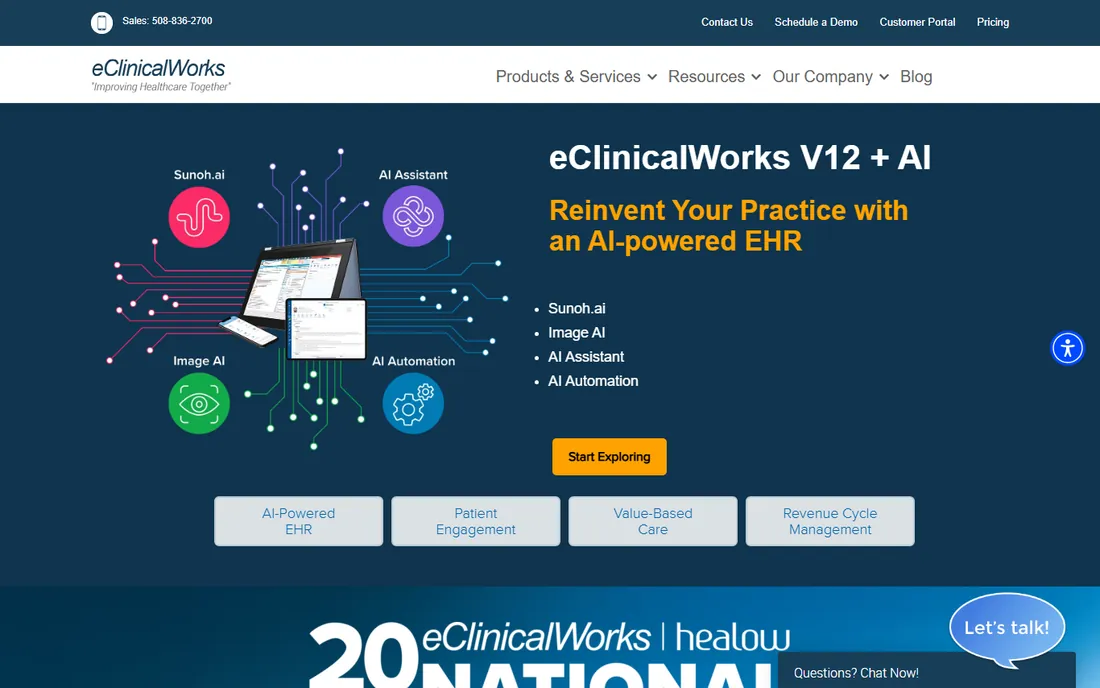
eClinicalWorks is the largest cloud-based EHR in the US by footprint, with over 180,000 physicians and 850,000 healthcare professionals on the platform. That scale funds deep specialty templates, an integrated telehealth platform, patient engagement tools and the Sunoh AI scribe for documentation. For mid-size and large ambulatory groups that need proven reliability across many providers and locations, the track record is the argument.
Scale is also the warning label. Pricing is quoted per deal, implementations are projects rather than signups, and small practices sometimes find the system more than they need at a price that reflects enterprise sales. If you are a two-provider clinic, ask hard questions about implementation timelines and what the first-year total really costs.
What we like- Massive installed base with 180,000-plus physicians
- Deep specialty content
- Integrated telehealth and AI scribe
Watch out for- Quote-based enterprise pricing
- Implementation can be long and disruptive for smaller practices
#7
NextGen Healthcare
Best for: Specialty practices needing deep customization
Visit nextgen.com
Starting priceSee website
Free planNo (demo available)

NextGen Healthcare targets ambulatory and specialty practices that need the EHR to match unusual workflows rather than the other way around. The platform covers EHR and practice management with strong population health, patient engagement and mobile extensions, and it runs on AWS-hosted infrastructure. Practices with complex specialty documentation or value-based care contracts get tooling the simpler platforms lack.
That flexibility comes through professional services, and professional services cost money. Every quote is custom, and the total project price depends heavily on how much configuration and integration your practice needs. NextGen fits best when a practice has specific workflow requirements that simpler platforms cannot meet; for standard primary care, the lighter options above usually close the gap faster.
What we like- Strong specialty workflows and population health tools
- Mobile EHR extension
- Secure cloud hosting on AWS
Watch out for- Custom pricing with no public numbers
- Customization projects can get expensive and slow
#8
RXNT
Best for: Budget-conscious practices wanting integrated modules
Visit rxnt.com
Starting priceSee website
Free planNo (demo available)
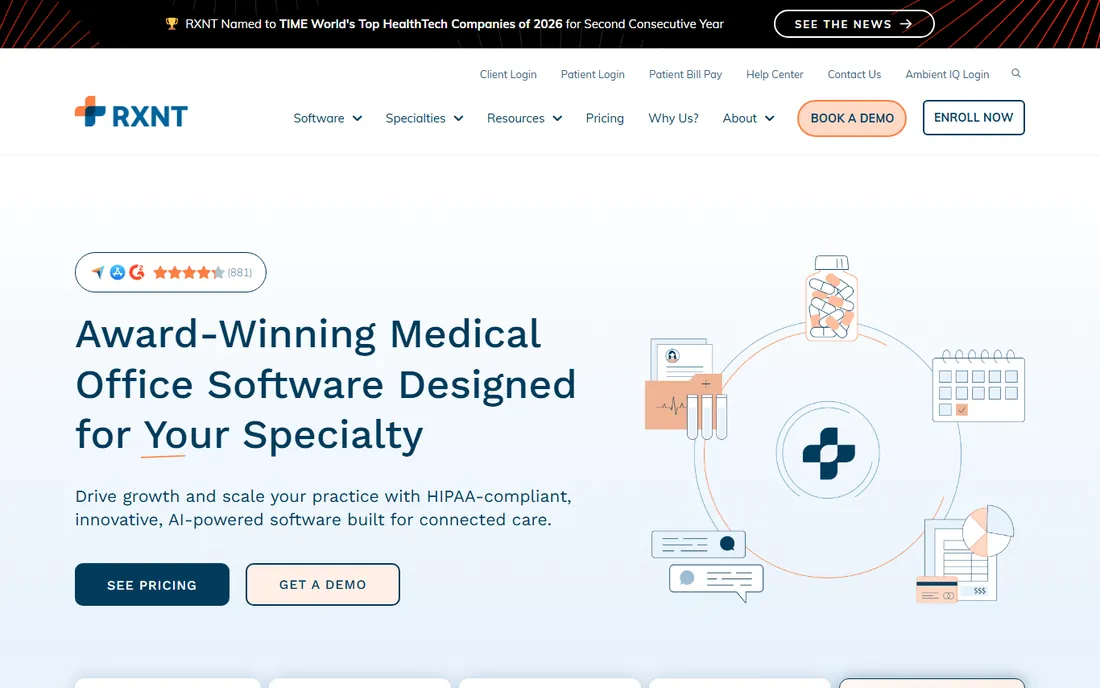
RXNT sells the full stack, EHR, e-prescribing, practice management, billing and an AI scribe, as integrated modules from a single vendor. That matters because many budget EHRs make you assemble the pieces yourself or pay third parties for billing. Independent analysts consistently place RXNT among the lower-cost integrated options, and Black Book has ranked it as a leading integrated EHR-PM system two years running.
The catch is the same as most of this category: no published pricing, so you are negotiating blind until the quote arrives. The integration ecosystem is narrower than athenahealth or eClinicalWorks, which matters if you need niche third-party connections. For a small practice that wants one vendor, one login and a manageable bill, RXNT belongs on the shortlist.
What we like- Integrated EHR, e-prescribing, practice management and billing from one vendor
- Competitive for small budgets
- Regular product updates
Watch out for- No published pricing on the site
- Fewer enterprise integrations than the biggest suites
Starting priceSee website
Free planNo (demo available)
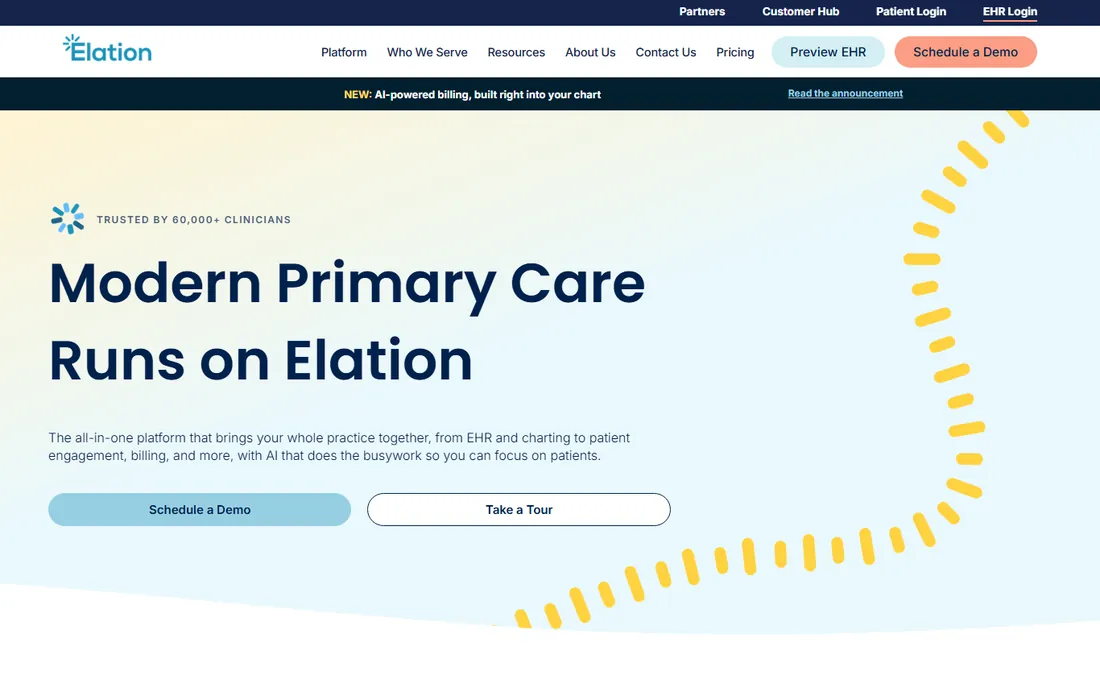
Elation Health builds its EHR around primary care rather than trying to serve every specialty at once. The clinical workflows reflect how primary care physicians actually work, longitudinal charts, preventive care tracking and care coordination, and the AI-powered Note Assist scribe drafts notes from the visit to cut documentation time. The interface feels modern next to legacy EHRs, which shortens training.
The specialization is a filter. If you run a primary care practice, the focus is an advantage; every feature dollar goes toward your workflow. If you run a surgical or procedural specialty, the depth will not match NextGen or eClinicalWorks. Pricing is quote-based, so compare the proposal against the flatter-priced options here and make sure the primary-care fit justifies any premium.
What we like- EHR designed specifically for primary care workflows
- AI-powered Note Assist scribe
- Modern interface
Watch out for- Primary-care focus means thinner specialty depth
- Quote-based pricing with no public tiers
What patient management software actually includes
The category name covers more than the name suggests. At minimum, patient management software handles scheduling, patient registration, insurance verification and the front-desk workflow. Most products in this list go further: clinical charting (the EHR itself), e-prescribing, lab ordering, telehealth, a patient portal, and billing or revenue cycle management. The best medical practice management software for your clinic is the one that covers the functions you currently patch together with spreadsheets and phone calls.
The distinction that matters most is EHR versus practice management. The EHR is the clinical record: notes, orders, prescriptions and results. Practice management is the business: scheduling, eligibility checks, claims and collections. SimplePractice leans toward practice management with solid clinical tools for therapy. Practice Fusion, athenahealth, eClinicalWorks and the rest lead with the clinical record and attach the business side. Figure out which half hurts more in your practice before you shop.
Questions to ask before you sign
Get the full fee schedule in writing
Only two products here publish prices. For the rest, demand an itemized quote: license fees per provider, implementation, data migration, training, e-prescribing, per-claim filing fees, per-message reminder charges and any AI scribe add-ons. Ask what happens to each fee at renewal, because introductory pricing that jumps in year two is common.
Check the contract terms, not just the monthly number
Annual commitments are standard, and some vendors charge for early termination. Ask how data export works if you leave: what format, how complete, how fast, and whether there is a fee. A cheap monthly rate paired with a painful exit is not cheap.
Match the product to your specialty and size
A behavioral health practice and a cardiology group need different templates, different billing rules and different integrations. Ask each vendor for reference customers in your specialty and your size band, and actually call them. Specialty depth is the difference between a system that fits and a system you fight daily.
Test the workflows that break practices
Demo the exact tasks that cause pain today: documenting a complex visit, refilling a prescription, submitting a claim, posting a payment, and sending a patient reminder. Use realistic test data and bring the staff who will do the work. A polished sales demo of the dashboard tells you nothing about claim scrubbing at 6 pm.
How we chose
We reviewed vendor pricing pages, documentation and feature lists, then cross-checked against public reviews on G2, Capterra and Reddit and independent analyst rankings. We included only products that exist today and serve small to mid-size US practices, and we favored vendors with transparent pricing where it exists. We did not claim hands-on testing; our method is document review plus buyer-pattern analysis, which is how most practices should evaluate this category anyway.
Frequently asked questions
What is patient management software?
It is software that runs the operational side of a medical practice: scheduling, patient registration, insurance verification, clinical charting, e-prescribing, billing and patient communication. Many products combine the clinical record (EHR) with the business functions in one platform.
How much does patient management software cost?
Published prices range from $49 a month for SimplePractice to $199 per provider per month for Practice Fusion. Most enterprise EHRs price by quote, and total costs for a small practice typically run into the hundreds per provider per month once implementation, claims fees and add-ons are included.
Is there free patient management software?
There is no serious free option for a real practice. Open-source EHRs exist, but the hosting, setup, compliance and maintenance costs usually exceed a commercial subscription. Free trials are common, including 30 days at SimplePractice and a trial at Practice Fusion.
What is the difference between an EHR and practice management software?
The EHR is the clinical record: visit notes, orders, prescriptions and lab results. Practice management software handles the business side: scheduling, eligibility verification, claims submission and collections. Most modern products bundle both, but the strength of each half varies by vendor.
Which is best for a solo practice?
SimplePractice is the most approachable for solo therapy and wellness practices, with published pricing and a fast setup. Solo physicians in medical specialties should look at Practice Fusion for published pricing or DrChrono for a mobile-first experience.
How long does implementation take?
Cloud products aimed at small practices can go live in days to weeks. Enterprise EHR implementations for larger groups take months and involve data migration, workflow redesign and staff training. Ask each vendor for a timeline tied to your practice size before signing.
Sources we checked (10)
- https://www.simplepractice.com/
- https://www.simplepractice.com/ec/insurance-update-2026/
- https://www.practicefusion.com/
- https://athenahealth.com/
- https://www.drchrono.com/
- https://www.tebra.com/
- https://eclinicalworks.com/
- https://www.nextgen.com/
- https://rxnt.com/
- https://www.elationhealth.com/
Is your product missing or out of date?
We review this list regularly. Vendors can request a listing, send updated pricing or ask about featured placement.

Shihab Mia · Founder, Rankite
Shihab has spent more than a decade helping SaaS and e-commerce brands grow through search. He writes Rankite's software buying guides from pricing pages, documentation and public user reviews. More about Shihab.