How we make this list: we compare pricing pages, product documentation and public user reviews. Rankite is independent; if a vendor ever pays for a featured spot, that listing is clearly labeled Partner.
Key takeaways
- Informatica and Qlik Talend lead on breadth: integration, quality, governance and MDM in one platform.
- Collibra, Ataccama and Stibo Systems are the governance and master data specialists, each with a different center of gravity.
- Microsoft Purview is the natural pick for organizations already committed to Azure, Microsoft 365 and Fabric.
- SAP, Oracle and IBM make most sense when your core systems already run on their stacks.
- Profisee is the Microsoft-centric MDM option that smaller enterprises can actually implement without an army of consultants.
Quick comparison
| Tool | Best for | Starting price | Free plan |
|---|
 Informatica Informatica | end-to-end data management at enterprise scale | See website | See website |
 Qlik Talend Qlik Talend | data integration and quality with flexible deployment | See website | Free trial |
 Microsoft Purview Microsoft Purview | data governance inside the Microsoft ecosystem | See website | Yes (free version) |
 Collibra Collibra | data and AI governance for large enterprises | See website | See website |
 IBM IBM | data management tied to IBM cloud and AI stacks | See website | See website |
 SAP Master Data Governance SAP Master Data Governance | master data inside SAP-centric operations | See website | See website |
 Oracle Oracle | data management on Oracle databases and cloud | See website | See website |
 Stibo Systems Stibo Systems | multidomain MDM for complex product data | See website | See website |
 Ataccama Ataccama | unified data quality, catalog and observability | See website | See website |
 Profisee Profisee | MDM for Microsoft-centric mid-size enterprises | See website | See website |
Is your product missing or out of date?
We review this list regularly. Vendors can request a listing, send updated pricing or ask about featured placement.
Starting priceSee website
Free planSee website
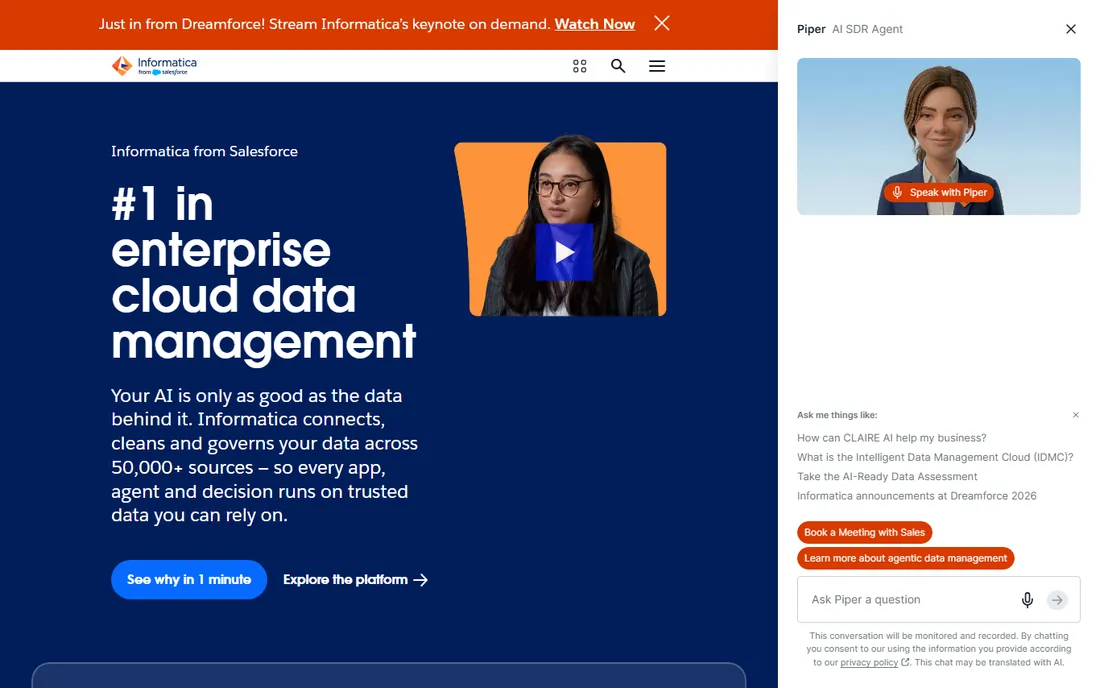
Informatica has been the default answer in data management for years, and the platform keeps expanding. One suite covers data integration, data quality, master data management, governance and cataloging, with hundreds of connectors for clouds, apps and databases. For a large organization that wants a single vendor for the whole data stack, the breadth is unmatched.
Two things to know. First, Informatica is now part of Salesforce, so expect the roadmap and packaging to reflect that ownership over time. Second, this is enterprise software in every sense: pricing is quote-based, implementations need experienced people, and small teams will find it overwhelming. Check the vendor site for current packaging before building a business case.
What we like- Broadest platform coverage, from integration to MDM to governance
- 300+ connectors
- Strong AI-ready positioning
Watch out for- Enterprise pricing and sales process
- Complexity needs skilled staff
#2
Qlik Talend
Best for: data integration and quality with flexible deployment
Visit talend.com
Starting priceSee website
Free planFree trial
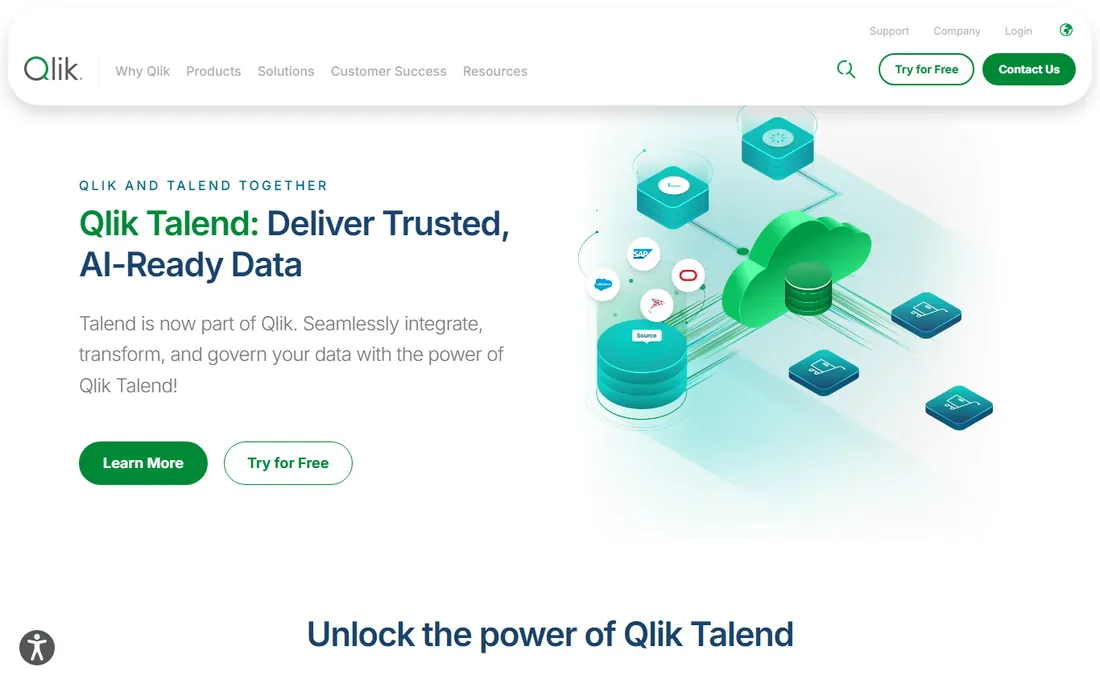
Talend built its name on open, flexible data integration, and under Qlik it now sits inside a larger analytics and data platform. Qlik Talend Cloud covers integration, transformation, quality and governance, and you can deploy it in the cloud, on-premises or hybrid, which matters for regulated industries that cannot move everything to SaaS.
The acquisition brings advantages and a caveat. Existing Talend customers continue without disruption, and the combined portfolio is stronger for analytics-driven companies. But product naming and packaging are still evolving post-acquisition, so confirm exactly which edition you are evaluating. A free trial is available on the vendor site.
What we like- Strong integration and data quality tooling
- Runs in cloud, on-premises or hybrid
- Trial available
Watch out for- Brand transition to Qlik Talend is still settling
- UI consistency across the suite varies
Starting priceSee website
Free planYes (free version)
Purview is Microsoft's answer to data governance, and for Microsoft shops it is hard to ignore. The portal provides a unified catalog, data map, lineage and compliance tooling that reaches across Azure, Microsoft 365, Fabric and Power BI. Microsoft also offers a free version of the governance solutions to qualifying customers, which lowers the barrier to getting started.
The honest limitation is ecosystem dependence. Purview shines when your data lives in Microsoft services; connecting and governing outside the stack works but is not where the product is strongest. If your company is standardized on Azure and Microsoft 365, start here before shopping elsewhere.
What we like- Free governance tier for Microsoft customers
- Unified catalog and data map
- Native to Fabric, Azure and Microsoft 365
Watch out for- Full value needs the Microsoft stack
- Enterprise features need the paid account
Starting priceSee website
Free planSee website
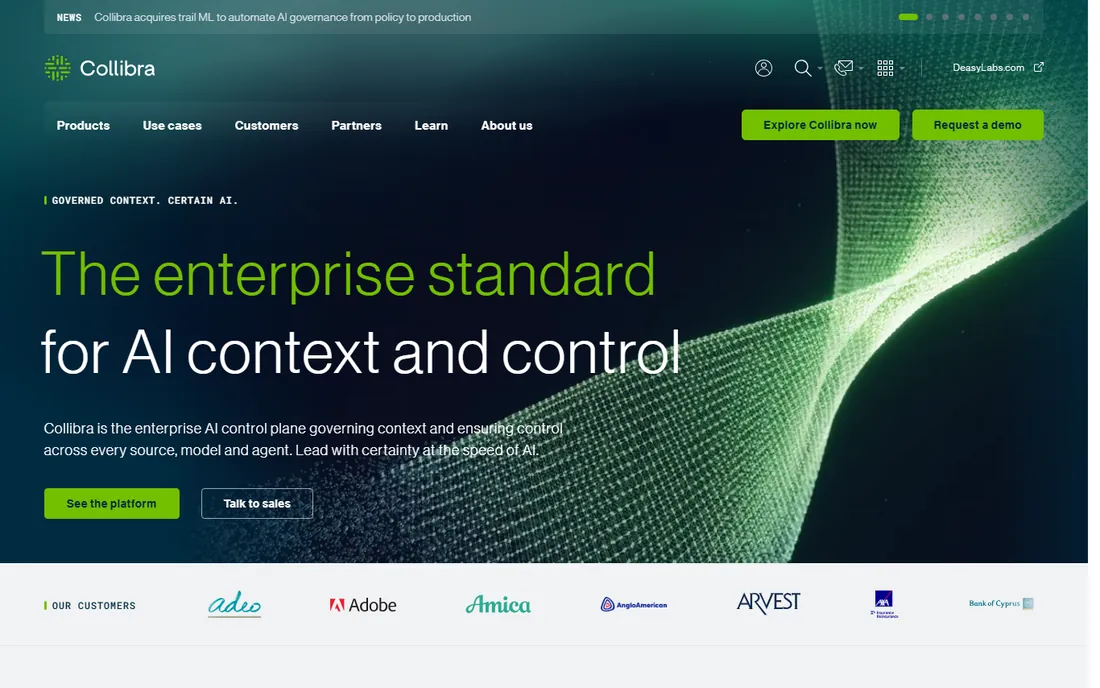
Collibra has positioned itself as the governance layer for the AI era, and the analyst recognition backs it up. The platform combines data catalog, lineage, quality and policy management with newer AI governance capabilities, letting organizations certify the context that models and agents consume. The customer list is heavily Fortune 500.
This is not a tool you adopt casually. Pricing is enterprise-grade and implementations involve real change management around data ownership and stewardship. For a large organization that needs defensible governance for both analytics and AI, Collibra belongs on the shortlist. Smaller companies will find the cost and effort hard to justify.
What we like- Recognized leader in data governance by major analysts
- Strong on AI governance and data products
- Deep lineage and catalog
Watch out for- Enterprise pricing and implementation effort
- Best suited to large, mature data organizations
#5
IBM
Best for: data management tied to IBM cloud and AI stacks
Visit ibm.com
Starting priceSee website
Free planSee website
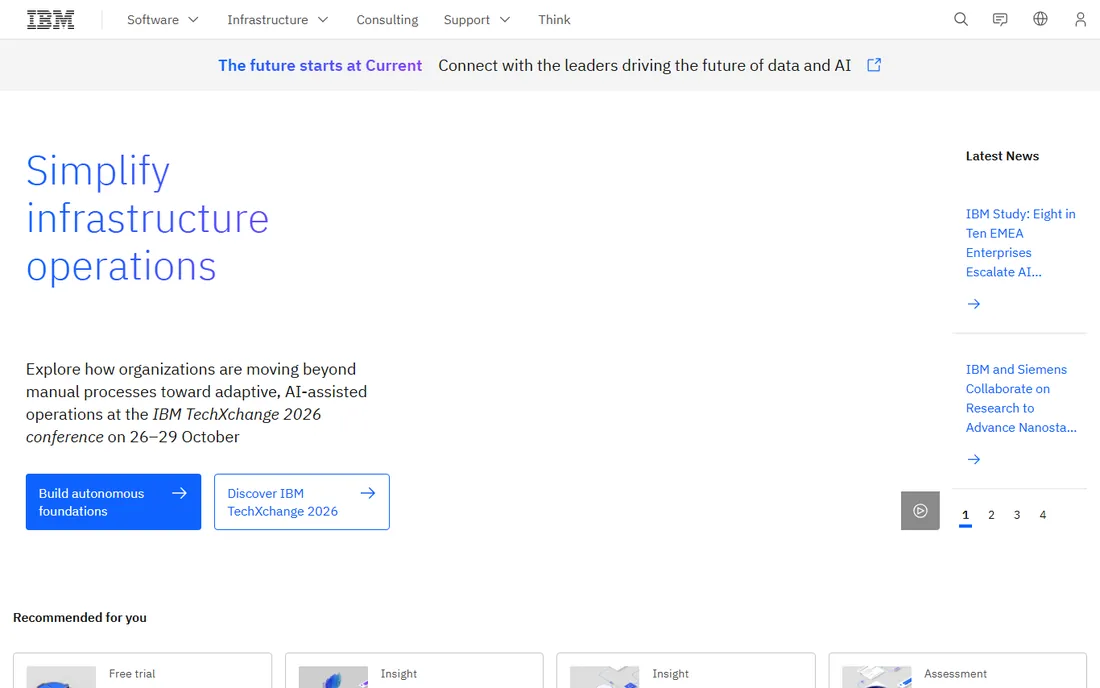
IBM's data management story spans decades of products, from Db2 and InfoSphere lineage through Cloud Pak for Data to watsonx-powered governance. For organizations already running IBM infrastructure, especially in banking, insurance and government, the integrated story around trusted data for AI is coherent.
The challenge is navigation. IBM's portfolio has overlapping products and renaming history that makes it hard to know which exact offering fits your need. Work with an IBM rep or partner to map your requirements to the current lineup, and check ibm.com for the latest packaging. This is a vendor for enterprises with existing IBM relationships, not for greenfield shoppers.
What we like- Deep portfolio from databases to governance to AI
- Strong for regulated industries
- Watsonx integration
Watch out for- Product sprawl makes evaluation confusing
- Sales-led buying process
#6
SAP Master Data Governance
Best for: master data inside SAP-centric operations
Visit sap.com
Starting priceSee website
Free planSee website
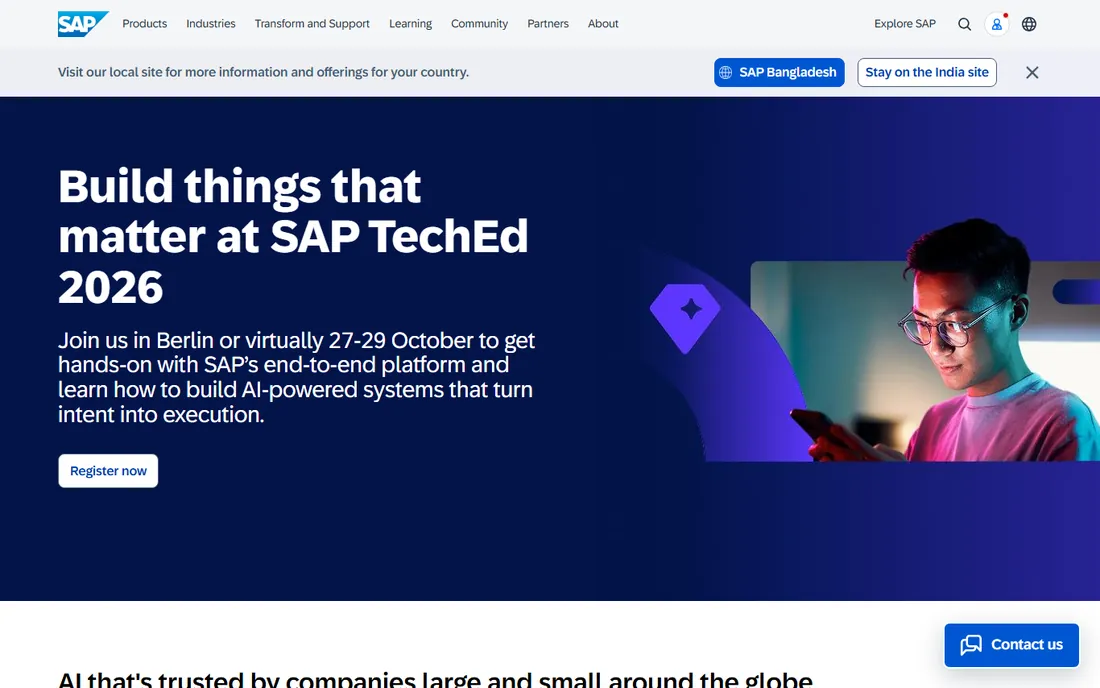
SAP Master Data Governance is the master data solution for companies that run on SAP. It governs customer, supplier, material and financial master data with workflows that match how S/4HANA operates, so data quality is enforced at the point of creation rather than cleaned up afterward. For manufacturers and distributors with complex product data in SAP, it is the natural choice.
Outside SAP, there is no reason to consider it. The product assumes S/4HANA or ECC as the system of record, and implementations are substantial projects. If your ERP is SAP and your master data is a mess, this is the fix. If your ERP is anything else, skip it.
What we like- Native to S/4HANA processes
- Strong for material, customer and supplier domains
- Governed workflows out of the box
Watch out for- Only makes sense with SAP ERP
- Complex and consultant-heavy
#7
Oracle
Best for: data management on Oracle databases and cloud
Visit oracle.com
Starting priceSee website
Free planSee website
Oracle's data management strengths start with the database itself. The Autonomous Database, AI Data Platform and multicloud offerings let Oracle shops run governed data and AI workloads across AWS, Azure, Google Cloud and OCI. For enterprises with decades of data in Oracle systems, the continuity argument is powerful.
The catch is the same one Oracle has always had: the best experience and pricing assume you stay in the Oracle world, and licensing takes expertise to navigate. Evaluate the total cost including database licenses, not just the management tooling. Oracle-first enterprises should absolutely consider it; everyone else should compare carefully.
What we like- Unmatched depth on Oracle Database
- AI Data Platform unifies governed data for agents
- Strong multicloud story
Watch out for- Best value locked to Oracle infrastructure
- Licensing complexity is legendary
Starting priceSee website
Free planSee website
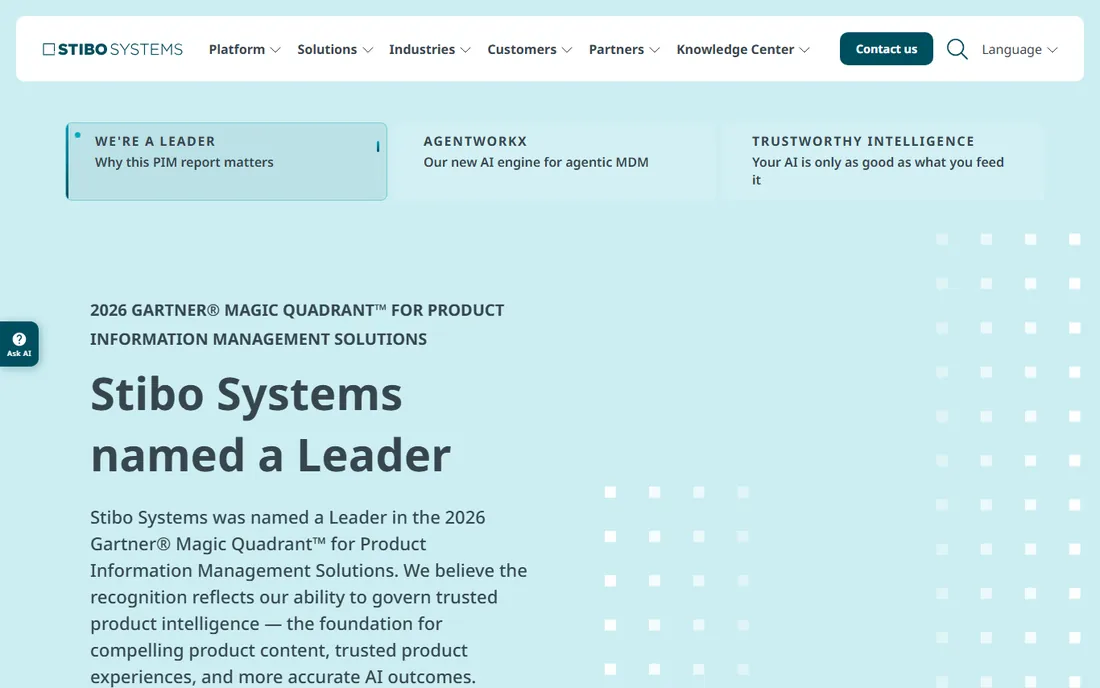
Stibo Systems is a pure-play MDM vendor with deep roots in product information management. Retailers, manufacturers and distributors with hundreds of thousands of SKUs use it to maintain one governed source of product truth, and the platform extends to customer, supplier and location domains. The analyst recognition as a Leader is consistent.
Like all enterprise MDM, this is a project, not a purchase. Expect months of modeling, data cleansing and integration work, plus quote-based pricing that reflects enterprise budgets. For complex product data at scale, it is one of the best options available. For simpler needs, it is more than you need.
What we like- Strong multidomain MDM across product, customer and supplier
- Proven at huge catalogs
- Recognized by Gartner and Forrester
Watch out for- Enterprise implementation effort
- Pricing is quote-based and substantial
Starting priceSee website
Free planSee website
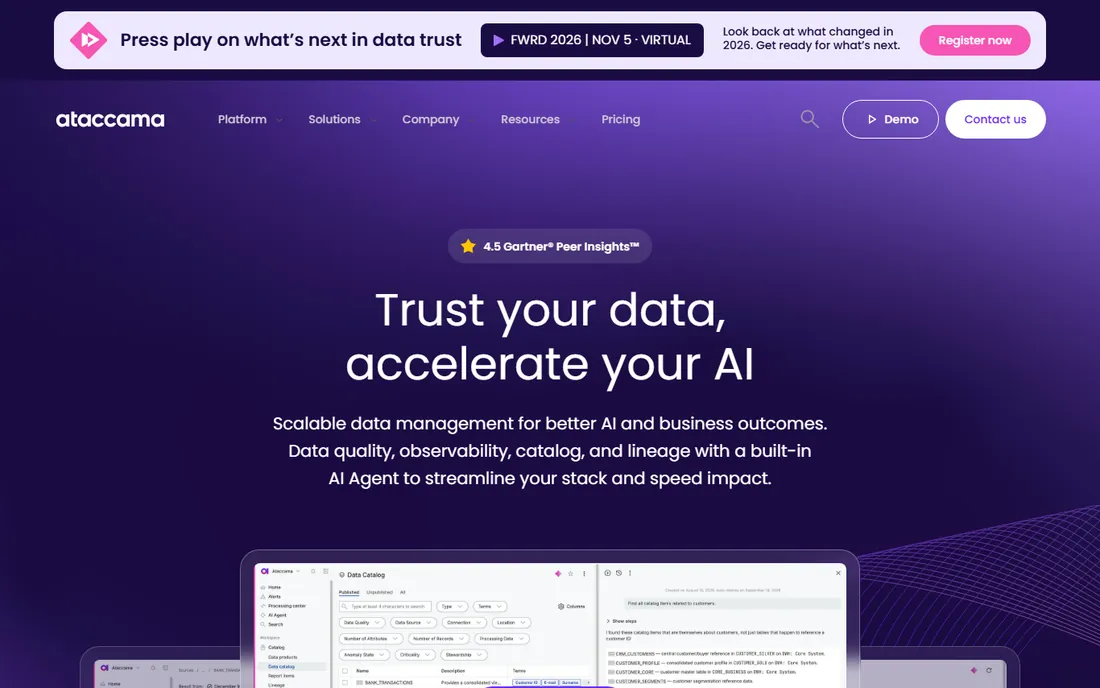
Ataccama takes the unified-platform approach to data trust: data quality, observability, catalog, lineage and master data in one environment, with an AI agent that helps data stewards work faster. It has earned Leader recognition from Forrester in data quality and built strong partnerships with Snowflake, Databricks and Deloitte.
The platform suits organizations modernizing their data stack on cloud lakehouses who need quality and governance without assembling five separate tools. The tradeoff is vendor size: Ataccama is smaller than Informatica or IBM, so buyers who require a giant vendor behind their data platform may hesitate. On product merit, it competes well.
What we like- Quality, catalog, lineage and observability in one platform
- Strong AI agent for data stewards
- Good partner ecosystem
Watch out for- Less brand recognition than the giants
- Enterprise sales motion
Starting priceSee website
Free planSee website
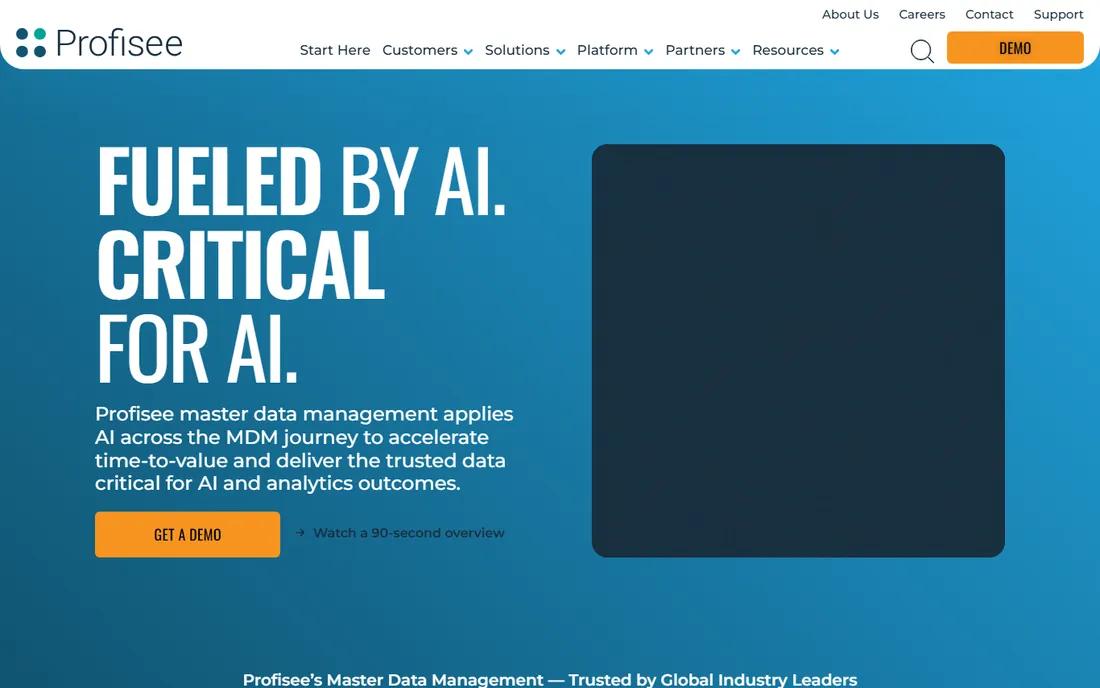
Profisee focuses on one thing: master data management that mid-size enterprises can actually implement. Its tight Microsoft alignment, spanning Copilot, Fabric and Azure, makes it the default MDM pick for Microsoft-centric organizations that find Informatica or Stibo too heavy. AI-assisted modeling and matching shorten the notoriously long MDM timeline.
The positioning is also the limit. If your stack is not Microsoft-based, the integration advantage fades and the field opens up. Pricing details sit behind the sales process, so talk to the vendor for numbers. For a Microsoft shop that needs trusted customer or product data without a two-year project, Profisee is worth a demo.
What we like- Microsoft's preferred MDM partner
- Faster time to value than traditional MDM
- AI-assisted matching and stewardship
Watch out for- Microsoft-centric positioning limits appeal elsewhere
- Smaller vendor than the platform giants
How this list was built
We started from the vendors that appear on enterprise data management shortlists: analyst reports from Gartner and Forrester, buyer discussions on Reddit and review sites like G2. For each vendor we opened the homepage to confirm the current product name and positioning, which caught two important facts: Informatica is now a Salesforce company, and Talend operates as Qlik Talend. Pricing in this category is almost entirely quote-based, so we list starting prices as available on vendor sites rather than guessing. We did not run hands-on evaluations; this is a research-based comparison.
Choosing between data management vendors
Start with your existing stack, because data management tools are stickiest where they integrate natively. Microsoft shops should evaluate Purview and Profisee first. SAP shops should look at SAP Master Data Governance. Oracle shops should look at Oracle's platform. Only after exhausting the native options does it make sense to evaluate the independent vendors.
Then define the actual problem. Data integration, data quality, master data management, data governance and data cataloging are different disciplines, and vendors lead in different ones. Informatica and Qlik Talend lead on integration breadth. Collibra leads on governance. Stibo and Profisee lead on MDM. Ataccama leads on unified quality. Buying the wrong specialty is the most common expensive mistake in this category.
Finally, assess your team's capacity honestly. Enterprise data management needs data stewards, engineers and executive sponsorship. A platform is only as good as the operating model around it. If you cannot staff the program, a narrower tool you will actually use beats a comprehensive platform you will not.
Why data management projects fail
The technology rarely fails first. Projects fail when nobody owns the data: no named stewards, no agreed definitions, no authority to resolve conflicts between departments. A catalog with no curation becomes a graveyard. An MDM hub with no governance process just moves the mess.
The second failure mode is boiling the ocean. Trying to govern every domain and source at once guarantees a multi-year project that loses executive attention. The vendors that succeed in practice start with one domain, usually customer or product data, prove value, then expand.
The third is underestimating change management. Data quality work tells people their data is wrong, which is politically uncomfortable. Successful programs pair the tooling with clear communication about why it matters and who decides. Budget for the people and process work, not just the licenses.
Frequently asked questions
What is data management software?
Data management software covers the tools that integrate, clean, govern and organize enterprise data. The main disciplines are data integration, data quality, master data management (MDM), data governance and data cataloging. Some vendors cover all of them; others specialize.
Which is the best data management tool for a large enterprise?
Informatica has the broadest platform, Collibra leads in governance, and Stibo Systems leads in multidomain MDM. The right choice depends on your existing stack and which discipline matters most to you.
Is Informatica still independent?
No. Informatica is now a Salesforce company, as shown on its homepage. The Informatica platform and brand continue, but roadmap and packaging will reflect Salesforce ownership over time.
What happened to Talend?
Talend was acquired by Qlik and now operates as Qlik Talend, with Qlik Talend Cloud as the flagship offering. Existing Talend products continue, and talend.com remains the web presence.
Do I need MDM or just data quality tools?
If your problem is duplicate customers or conflicting product records across systems, you need MDM. If your problem is bad values, missing fields or broken pipelines, data quality and observability tools are enough. Many organizations need both eventually.
How much does data management software cost?
Almost all enterprise data management pricing is quote-based and depends on data volume, users and modules. Expect six-figure annual contracts for the major platforms. Microsoft Purview offers a free governance tier for qualifying Microsoft customers, which is the cheapest entry point on this list.
Sources we checked (10)
- https://www.informatica.com
- https://talend.com
- https://purview.microsoft.com
- https://www.collibra.com
- https://www.ibm.com
- https://www.sap.com
- https://www.oracle.com
- https://stibosystems.com
- https://ataccama.com
- https://profisee.com
Is your product missing or out of date?
We review this list regularly. Vendors can request a listing, send updated pricing or ask about featured placement.

Shihab Mia · Founder, Rankite
Shihab has spent more than a decade helping SaaS and e-commerce brands grow through search. He writes Rankite's software buying guides from pricing pages, documentation and public user reviews. More about Shihab.