How we make this list: we compare pricing pages, product documentation and public user reviews. Rankite is independent; if a vendor ever pays for a featured spot, that listing is clearly labeled Partner.
Key takeaways
- Consolidation changed the field: Salesforce completed its Informatica acquisition in November 2025 and SAP closed its Reltio deal in May 2026, so two of the biggest names are no longer independent.
- Almost nobody publishes prices. Expect custom quotes everywhere except Pimcore, whose Community Edition is free to self-host.
- Mid-market buyers should shortlist Semarchy xDM, Profisee and Ataccama ONE: faster deployments and simpler licensing than the enterprise suites.
- Trials are rare in this category. Informatica offers a 30-day trial of IDMC modules and Semarchy offers a free trial; most others start with a guided demo.
Quick comparison
| Tool | Best for | Starting price | Free plan |
|---|
 Informatica Informatica | Large enterprises needing multi-domain MDM at scale | See website (consumption-based IPU pricing) | Free trial (30 days) |
 Reltio Reltio | Cloud-native customer 360 and real-time unification | See website | No |
 Stibo Systems STEP Stibo Systems STEP | Retailers and manufacturers mastering product data | See website | No |
 Ataccama ONE Ataccama ONE | Teams consolidating data quality, governance and MDM | See website | No |
 Semarchy xDM Semarchy xDM | Mid-market teams wanting fast multi-domain deployment | See website | Free trial |
 Profisee Profisee | Microsoft-centric organizations running on Azure | See website | No |
 Pimcore Pimcore | Developer-led teams wanting an open-core platform | $0 (Community Edition, self-hosted) | Yes |
 Syndigo Syndigo | CPG brands and retailers syndicating product content | See website | No |
 Tamr Tamr | Large organizations using ML to master messy data fast | See website | No |
Is your product missing or out of date?
We review this list regularly. Vendors can request a listing, send updated pricing or ask about featured placement.
Master data management is the least glamorous software category in this program, and it may be the most expensive to get wrong. When customer, product and supplier records disagree across systems, every report, every AI pilot and every compliance filing inherits the mess. The nine platforms below create the golden record: one trusted version of each master entity, governed and distributed to every downstream system. Prices are quote-based across nearly the whole category, so the comparison below focuses on fit, deployment and honest trade-offs, checked against vendor pages and public reviews in October 2026.
Starting priceSee website (consumption-based IPU pricing)
Free planFree trial (30 days)
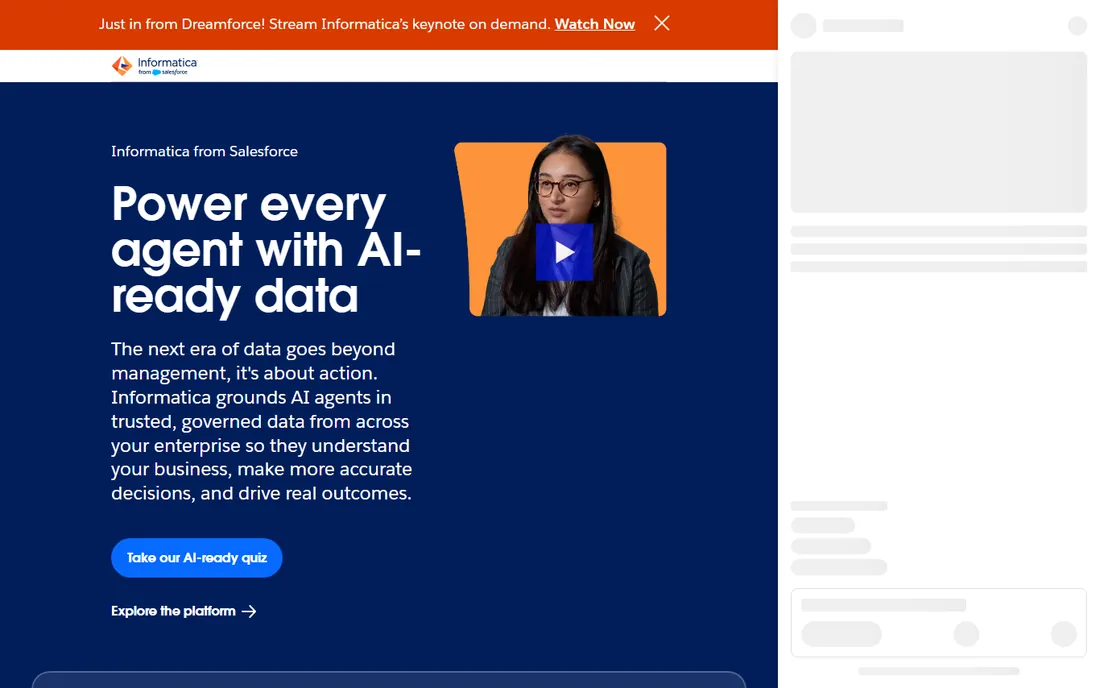
Informatica remains the default enterprise answer for master data management, and the context changed in November 2025 when Salesforce completed its roughly $8 billion acquisition. The product still sells under the Informatica name as part of the Intelligent Data Management Cloud, covering MDM, data integration, data quality, governance and catalog in one platform. Pricing runs on consumption-based Informatica Processing Units rather than flat seats, and a 30-day trial of IDMC modules is available.
The honest catch is uncertainty. Salesforce is folding Informatica into its Data 360 and Agentforce strategy, and while existing contracts continue, buyers should ask directly about roadmap commitments for non-Salesforce environments during evaluation. If your estate is huge, multi-domain and needs the deepest matching engine available, Informatica is still the safest capability bet. Budget for implementation services; this is not self-serve software.
What we like- Deepest MDM feature set in the category with CLAIRE AI for matching and cleansing
- Part of a full data management cloud (integration, quality, governance, catalog)
- 30-day trial of IDMC modules
Watch out for- Consumption-based IPU pricing is hard to forecast
- Post-acquisition roadmap with Salesforce is still settling
#2
Reltio
Best for: Cloud-native customer 360 and real-time unification
Visit reltio.com
Starting priceSee website
Free planNo
Reltio built its name as the cloud-native alternative to on-premise MDM suites, and in May 2026 SAP completed its acquisition, making it "Reltio, an SAP company." The platform unifies data from SAP and non-SAP sources into real-time profiles with a graph model that handles complex relationships between customers, products, suppliers and locations. It works in both SAP and non-SAP environments and is being embedded into the SAP Business Data Cloud.
For non-SAP buyers the acquisition is a question mark worth raising on the first call: ask about contractual guarantees for the non-SAP roadmap and support. For SAP-centric enterprises, the strategic fit just got stronger. Either way, expect an enterprise sales process with custom quotes and no trial. Reltio suits organizations that need always-on, API-accessible golden records rather than batch-updated ones.
What we like- Cloud-native SaaS with real-time APIs and a graph-based data model
- Strong entity resolution for customer and multidomain use cases
- Now embedded in SAP's data strategy
Watch out for- No published pricing and no self-serve trial
- Enterprise deal sizes only
Starting priceSee website
Free planNo
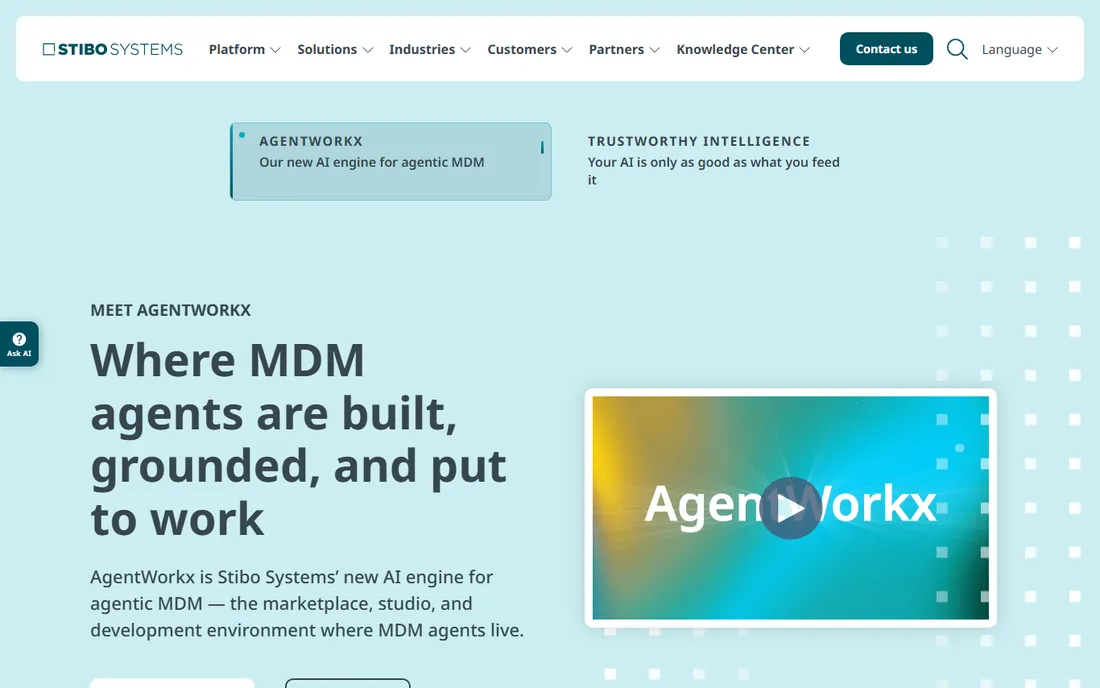
Stibo Systems has been doing master data management since before most competitors existed, and its STEP platform remains the reference choice when product data is the core problem. Retailers and manufacturers use it to govern product, customer, supplier and location domains on one platform, then syndicate consistent product information across every sales channel. The company is a subsidiary of the privately held Stibo A/S group, which means no acquisition overhang in a consolidating market.
The trade is speed for depth. STEP implementations are measured in months and run through partners or professional services, and pricing is entirely custom. Smaller organizations will find it heavy. But if your catalog has hundreds of thousands of SKUs, complex variants and channel-specific requirements, few platforms match its product-domain depth. Ask for reference customers in your exact vertical before signing.
What we like- Multi-domain MDM with genuinely deep PIM capabilities
- Long track record with large retailers and manufacturers
- Privately held, so no acquisition drama
Watch out for- Quote-only pricing with enterprise deal sizes
- Implementation is a serious project, not a quick deployment
#4
Ataccama ONE
Best for: Teams consolidating data quality, governance and MDM
Visit ataccama.com
Starting priceSee website
Free planNo
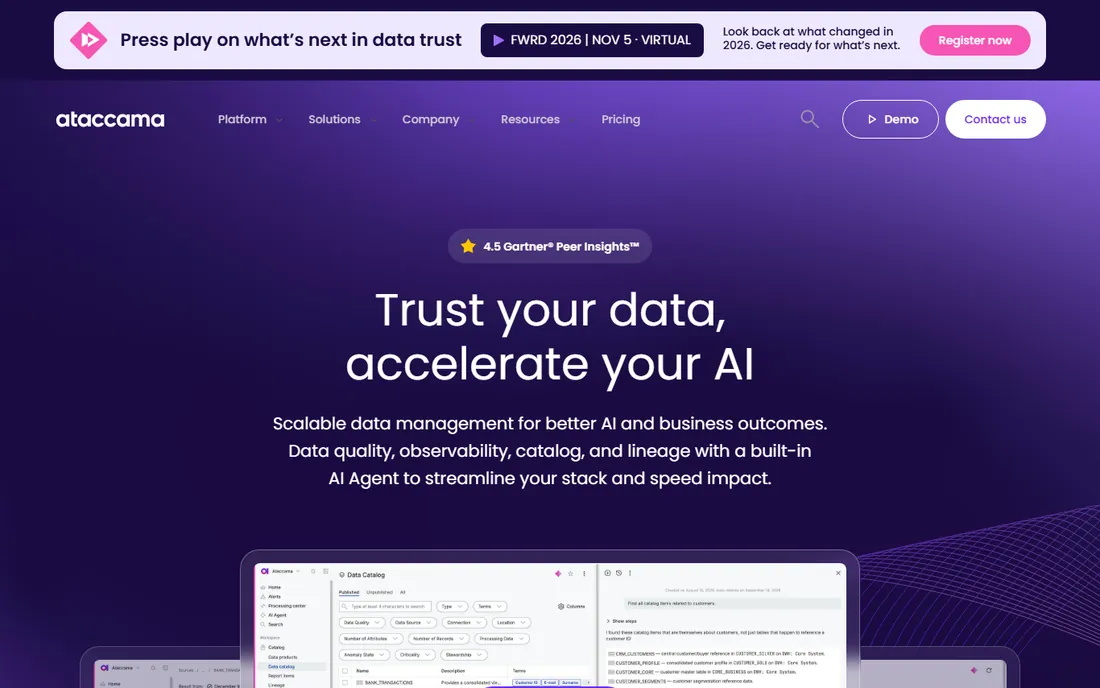
Ataccama ONE appeals to buyers who are tired of buying three separate tools for quality, governance and mastering. The platform combines them with AI-assisted matching, automated data quality rules and self-service interfaces that let business stewards fix records without filing IT tickets. Deployment is flexible across cloud, on-premise and hybrid estates, and integrations cover Snowflake, Databricks, major cloud platforms and common databases.
Pricing is modular and quote-based, built around users and managed objects, so get the full model in writing early. Reviewers consistently praise the profiling and the interface while noting that advanced scenarios still need experienced implementers. If your data team is consolidating vendors and wants one platform for the whole data trust layer, Ataccama belongs on the shortlist next to Informatica.
What we like- MDM, data quality and data governance in one AI-assisted platform
- Strong data profiling and self-service stewardship
- Cloud, on-premise and hybrid deployment
Watch out for- No published pricing
- Evaluations run through guided demos and sandbox access rather than a trial
#5
Semarchy xDM
Best for: Mid-market teams wanting fast multi-domain deployment
Visit semarchy.com
Starting priceSee website
Free planFree trial
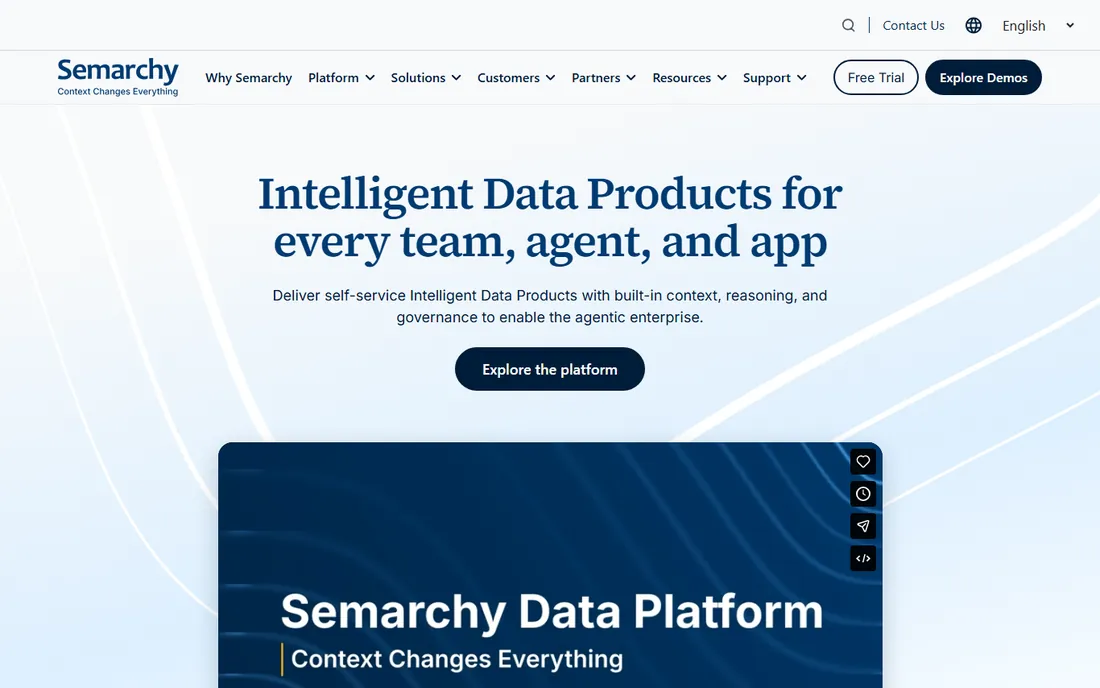
Semarchy xDM is the agile pick in a category known for heavyweight implementations. Its Intelligent Data Hub approach lets teams model domains, build stewardship workflows and stand up governed data applications in weeks rather than quarters, with interfaces that business users can actually operate. The platform covers master data management, reference data, data quality and governance, and runs on major clouds, on-premise or hybrid.
It is also one of the few MDM vendors that offers a real free trial, which says something about deployment confidence. The catch is scale of ecosystem: fewer pre-built industry accelerators and a smaller SI partner bench than Informatica or Stibo. For mid-market companies and enterprise departments that want MDM without a two-year program, Semarchy is usually the fastest path to a working golden record.
What we like- Rapid deployment with an agile, business-user-friendly design
- True multi-domain MDM plus data governance in one platform
- Free trial available
Watch out for- Pricing not published, quote required
- Smaller partner ecosystem than the giants
Starting priceSee website
Free planNo
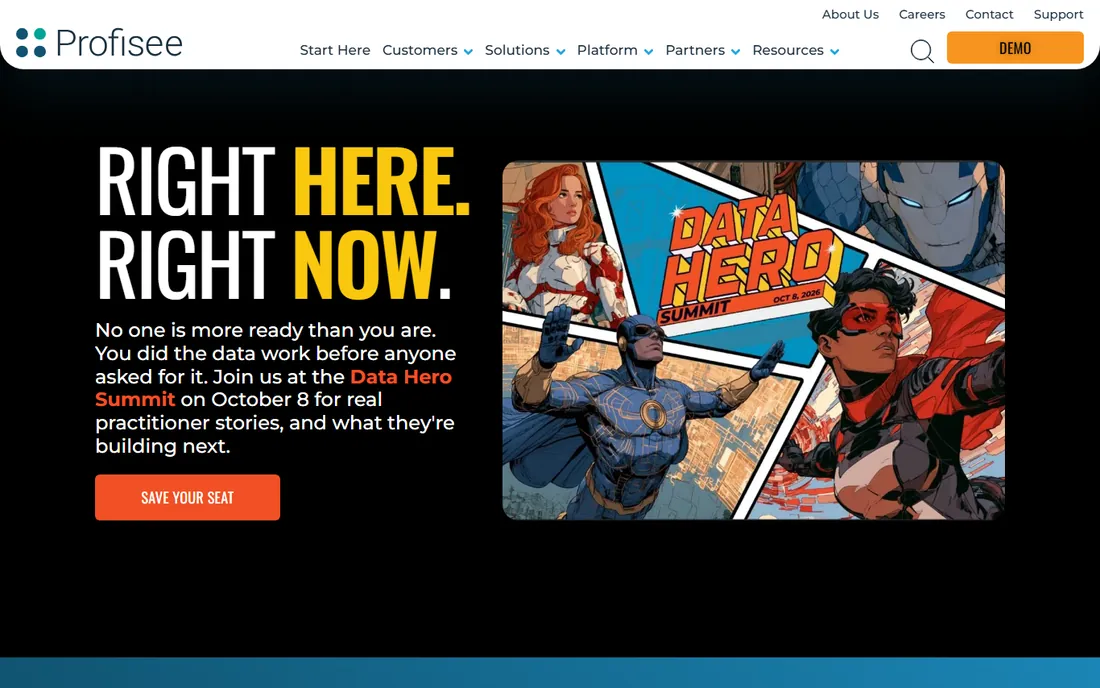
Profisee grew out of Microsoft Master Data Services heritage, and it shows in the best way. The platform is built for organizations standardized on Microsoft: deployment on Azure, integration with the Microsoft data stack, and a stewardship UI that business users pick up quickly. Licensing is tiered by record volume and domains rather than the labyrinthine models of older vendors, and customers consistently report faster implementations.
Outside a Microsoft shop, much of the advantage evaporates, so be honest about your stack before shortlisting it. Pricing requires a quote, and while it positions as the affordable enterprise option, "affordable" in MDM still means a serious annual contract. If your data lives in Azure and your team lives in Microsoft tools, Profisee is the most natural MDM fit available.
What we like- Native fit for the Microsoft stack with Azure and Fabric deployment options
- Fast time-to-value with golden record mastering
- Simpler licensing than legacy suites
Watch out for- Quote-based pricing tiered by record volume and domains
- Less compelling outside the Microsoft ecosystem
#7
Pimcore
Best for: Developer-led teams wanting an open-core platform
Visit pimcore.com
Starting price$0 (Community Edition, self-hosted)
Free planYes
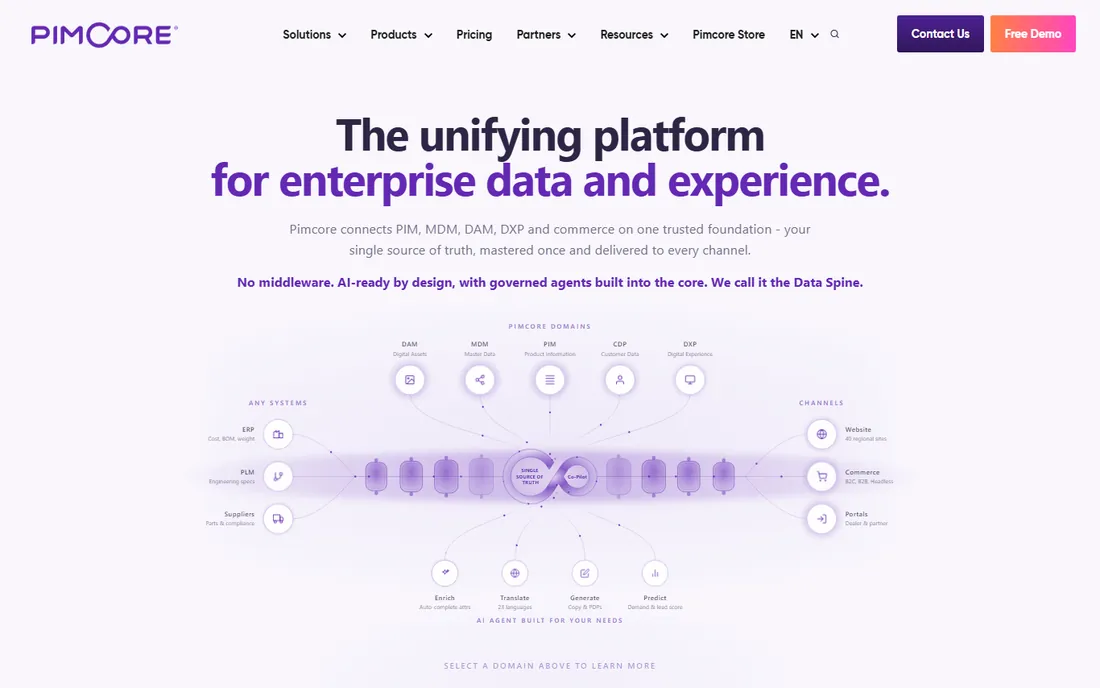
Pimcore is the only credible free starting point in MDM. The Community Edition is free to download and self-host under its open-core license, combining master data management with product information management, digital asset management and CMS in one Symfony/PHP platform. Paid Professional and Enterprise editions add modules, support and managed cloud hosting. For developer-heavy organizations that want full architectural control and zero license cost, nothing else on this list comes close.
The cost is operational, not licensed: you need PHP developers, infrastructure and a plan for upgrades. Companies above a revenue threshold must buy a commercial edition rather than using Community free, so read the license terms. And integrations with SAP or Dynamics typically run through its APIs or an iPaaS layer rather than certified connectors. If you have the engineering capacity, Pimcore can deliver enterprise-grade MDM at a fraction of the license cost.
What we like- Free Community Edition to self-host with PIM, MDM, DAM and CMS in one codebase
- API-first with REST and GraphQL
- No per-record licensing on the free tier
Watch out for- You host and maintain it yourself on the free tier
- Enterprise features, support and PaaS hosting are paid
#8
Syndigo
Best for: CPG brands and retailers syndicating product content
Visit syndigo.com
Starting priceSee website
Free planNo
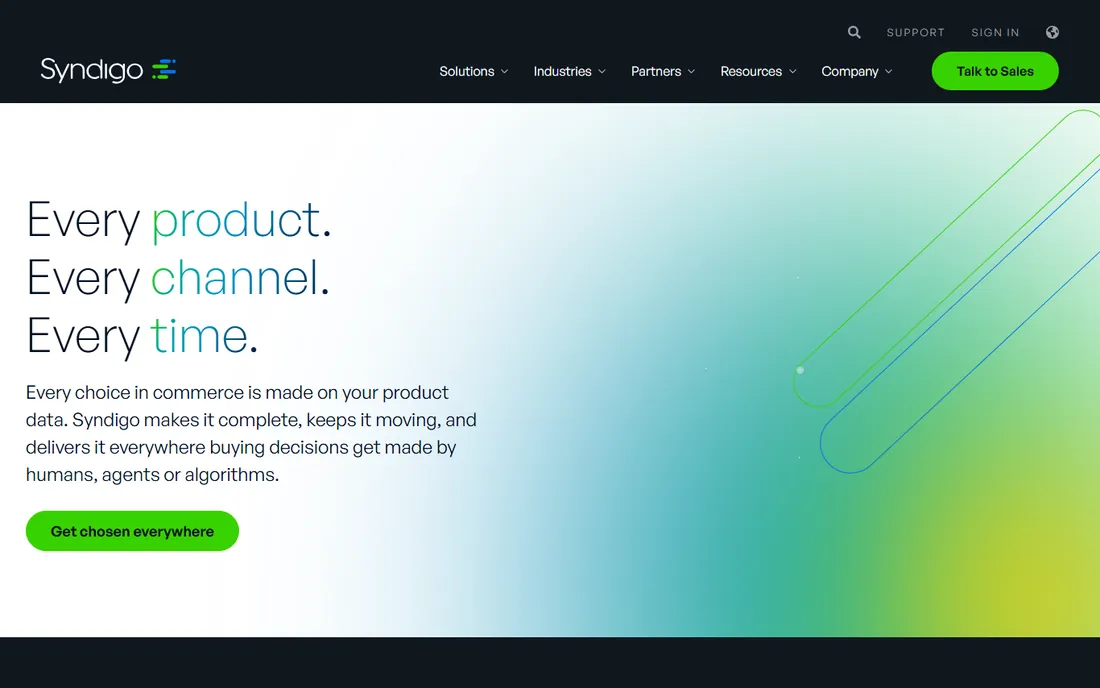
Syndigo is MDM for the specific world of consumer products. Its platform combines product master data management with a commerce data pool that connects brands to retailers, so governed product data flows straight into syndication, enhanced content and digital shelf analytics. If you sell through Kroger, AutoZone, Target or similar chains, the network effect is the product: your golden record is already formatted for the channels that matter.
Do not evaluate it as a general MDM suite. Customer, supplier and location mastering are not its center, and organizations outside CPG, grocery, hardlines and adjacent retail verticals will find the fit awkward. Pricing is custom and enterprise-grade. For a brand whose revenue depends on accurate product content across dozens of retailer portals, though, Syndigo is purpose-built in a way the generalists are not.
What we like- Product MDM wired into a commerce data pool connecting thousands of brands and retailers
- Built-in syndication to retail channels
- AI-powered content insights
Watch out for- Product-data centric, not a general multi-domain MDM
- Quote-only enterprise pricing
#9
Tamr
Best for: Large organizations using ML to master messy data fast
Visit tamr.com
Starting priceSee website
Free planNo
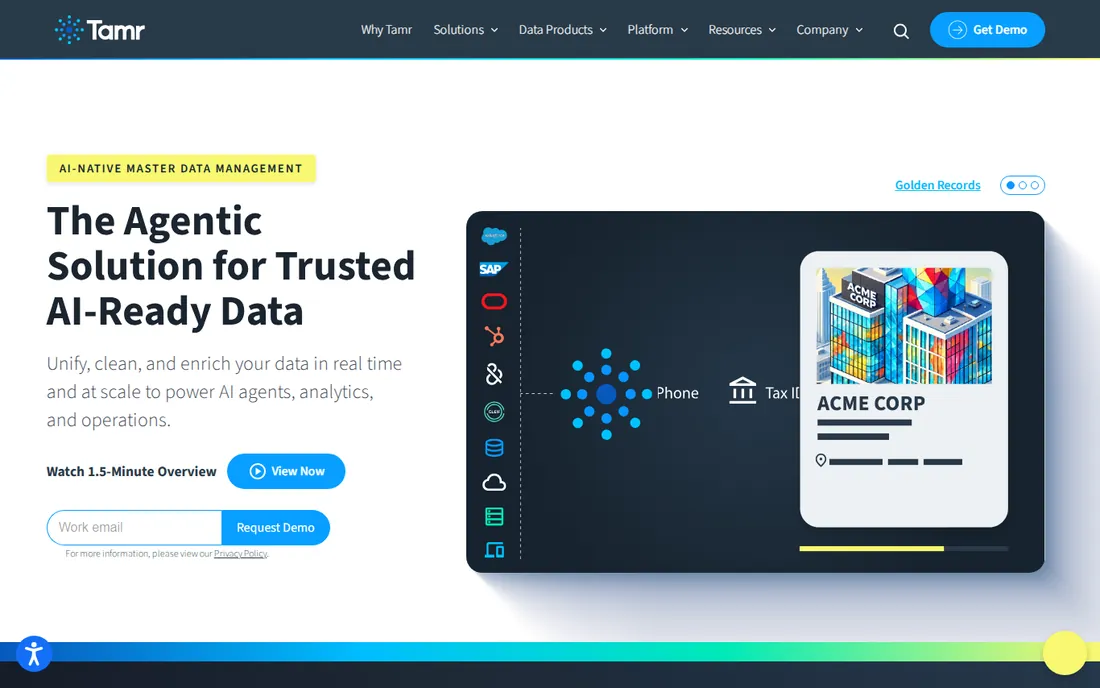
Tamr takes a different technical bet from the rest of this list: instead of hand-tuned matching rules, it uses human-guided machine learning to consolidate messy source data into clean, curated datasets. The result is faster time to value on ugly, real-world data estates, delivered as cloud-native data products with templates for common domains. Customers include large enterprises and public sector agencies dealing with exactly the kind of fragmented data that breaks rule-based matching.
The platform is lighter on the governance and stewardship workflow depth that suites like Stibo or Informatica provide, so pair it with clear expectations about who owns ongoing data quality. Pricing is quote-based with enterprise deal sizes. If your core problem is "our data is too messy for rules" rather than "we need a governance platform," Tamr's ML-first approach is worth a serious look.
What we like- Machine learning does the heavy lifting on matching, with human-guided curation
- Cloud-native with data product templates for fast starts
- Strong in public sector and large enterprises
Watch out for- No published pricing and no trial
- Narrower governance tooling than full MDM suites
The price question in MDM
Nobody in this category wants to tell you the price, and that is information in itself. With one exception, every platform here sells through custom quotes, which means your final number depends on domains, record volumes, users, deployment model and how badly the vendor wants your logo. Published third-party estimates put mid-market entries around $25,000 to $50,000 a year and enterprise suites well into six figures before services, but treat those as rumors, not quotes.
Get three things in writing before you compare. First, the full pricing model: per-record, per-user, per-domain, consumption units or flat platform fee, and what happens when volumes grow 30 percent. Second, what is metered on top: matching compute, API calls, syndication transactions and AI features can all carry usage charges. Third, the services number: MDM implementations commonly cost as much as the first year of license, sometimes more, and partners quote separately.
Use the free and trial options strategically. Pimcore's Community Edition lets your engineers validate the data model approach at zero license cost. Semarchy's trial and Informatica's 30-day IDMC trial let you test matching quality on your own sample data. Run the same dirty dataset through two vendors and compare match rates, steward effort and time to golden record. That afternoon of work is worth more than a month of slide decks.
How we chose
We started from analyst coverage (Gartner, Forrester) and buyer reviews on G2, Capterra, TrustRadius and Reddit to build the longlist, then checked each vendor's own site for current product scope, deployment options and pricing transparency in October 2026. We favored platforms with real multi-domain MDM (not just PIM or just matching), current product development, and verifiable customer bases. We excluded pure data quality tools without mastering and legacy products in maintenance mode. No vendor paid for placement, and we did not run hands-on trials; the write-ups reflect published facts, reviewer consensus and the current ownership picture after the Salesforce/Informatica and SAP/Reltio deals.
Frequently asked questions
What is master data management software?
MDM software creates and governs a single trusted version of your core business entities: customers, products, suppliers, locations and reference data. It ingests records from every source system, matches and merges duplicates using rules or machine learning, applies governance workflows and stewardship, then distributes the golden record back to every downstream system. Without it, each application keeps its own version of the truth and they disagree.
How much does MDM software cost?
Most enterprise MDM platforms cost from roughly $25,000 a year for mid-market entries to six figures annually for enterprise suites, plus implementation services that often match the first-year license. Almost no vendor publishes prices, so every number you see online is an estimate. Pimcore is the exception: its Community Edition is free to self-host. Always get the full pricing model in writing, including what is metered by volume.
Which MDM tool is best for a mid-size company?
Semarchy xDM and Profisee are the usual mid-market shortlist: faster deployments, simpler licensing and lower services burden than Informatica or Stibo. Ataccama ONE fits if you also want data quality and governance consolidated. Pimcore fits if you have developers and want to avoid license costs entirely. All four can be evaluated without an enterprise procurement cycle.
Do I need MDM if I already have a data warehouse?
Probably yes, because they solve different problems. A warehouse stores history for analytics; it does not fix the fact that three systems spell the same customer three ways. MDM creates the trusted golden record upstream, and the warehouse then reports on clean data instead of reconciling dirty data. Many organizations run MDM feeds into their warehouse or lakehouse as the governed source.
How long does MDM implementation take?
It ranges from weeks to over a year. Semarchy and Tamr commonly show value in weeks on a single domain. Profisee and Ataccama typically run a few months for the first domains. Informatica, Stibo and Reltio enterprise programs often run 6 to 18 months across multiple domains with partner-led implementation. Start with one domain, prove the match quality, then expand.
Is Pimcore really free?
The Community Edition is free to download and self-host, and it includes MDM and PIM capabilities. But free means you supply the developers, servers and upgrade labor, and companies above a revenue threshold must buy a commercial edition. For a developer-led team with infrastructure already in place, the total cost can still be far below a commercial MDM license.
Sources we checked (9)
- https://investor.salesforce.com/news/news-details/2025/Salesforce-Completes-Acquisition-of-Informatica/
- https://www.srmtoday.com/sap-completes-reltio-deal-to-make-fragmented-enterprise-data-ai-ready/
- https://github.com/ishandutta2007/awesome-master-data-management
- https://www.ovaledge.com/blog/master-data-management-tools
- https://en.wikipedia.org/wiki/Pimcore
- https://www.getapp.ca/software/2062448/ataccama-one
- https://www.g2.com/products/semarchy-xdm/pricing
- https://www.trustradius.com/compare-products/plytix-pim-vs-reltio-connected-data-platform
- https://www.scmgalaxy.com/tutorials/top-10-master-data-management-tools-in-2025-features-pros-cons-comparison/
Is your product missing or out of date?
We review this list regularly. Vendors can request a listing, send updated pricing or ask about featured placement.

Shihab Mia · Founder, Rankite
Shihab has spent more than a decade helping SaaS and e-commerce brands grow through search. He writes Rankite's software buying guides from pricing pages, documentation and public user reviews. More about Shihab.