How we make this list: we compare pricing pages, product documentation and public user reviews. Rankite is independent; if a vendor ever pays for a featured spot, that listing is clearly labeled Partner.
Key takeaways
- Apollo.io at $49/user/month billed annually is the default all-in-one: contact data plus sequences and a dialer, with a genuinely usable free plan.
- Credit math decides the real bill: a $39 Snov.io plan and a $49 Kaspr plan buy very different contact volumes, because phone numbers cost far more credits than emails.
- ZoomInfo and Cognism remain the enterprise picks with quote-only pricing; everyone else publishes prices, which tells you who wants your business faster.
- Clay ($149/month) is not a database but a data-workflow layer: it buys from other providers, so budget it on top of a sending tool, not instead of one.
Quick comparison
| Tool | Best for | Starting price | Free plan |
|---|
 Apollo.io Apollo.io | All-in-one prospecting plus sequencing | $49/user/month (Basic, billed annually) | Yes |
 ZoomInfo ZoomInfo | Enterprise-grade data depth and intent | See website | Yes (ZoomInfo Lite, limited monthly credits) |
 Cognism Cognism | EMEA-focused compliant prospecting | See website | No |
 Lusha Lusha | Quick LinkedIn contact reveals | $22.45/user/month (Pro, billed annually) | Yes |
 Clay Clay | Waterfall enrichment and list building | $149/month (Starter) | Yes |
 Seamless.AI Seamless.AI | Real-time contact search for solo reps | $147/month (Basic, billed annually) | Yes |
 UpLead UpLead | Verified data with quality guarantees | $74/month (Essentials, billed annually) | Free trial (7 days) |
 Kaspr Kaspr | LinkedIn-first phone number finding | $49/user/month (Starter, billed annually) | Yes |
 Snov.io Snov.io | Budget all-in-one finder plus outreach | $39/month (Starter) | Yes |
Is your product missing or out of date?
We review this list regularly. Vendors can request a listing, send updated pricing or ask about featured placement.
The best sales prospecting software
Apollo shows up in the buying data of nearly 4 in 10 businesses purchasing sales data tools, according to Ramp's 2026 spend analysis. That statistic explains the shape of this market: one affordable all-in-one that most teams start with, a handful of specialists that beat it on specific data types, and two enterprise platforms that cost ten times more. The right pick depends less on database size claims and more on which contacts you actually need, emails or phone numbers, and how many per month. Nine tools, with the credit math spelled out.
#1
Apollo.io
Best for: All-in-one prospecting plus sequencing
Visit apollo.io
Starting price$49/user/month (Basic, billed annually)
Free planYes
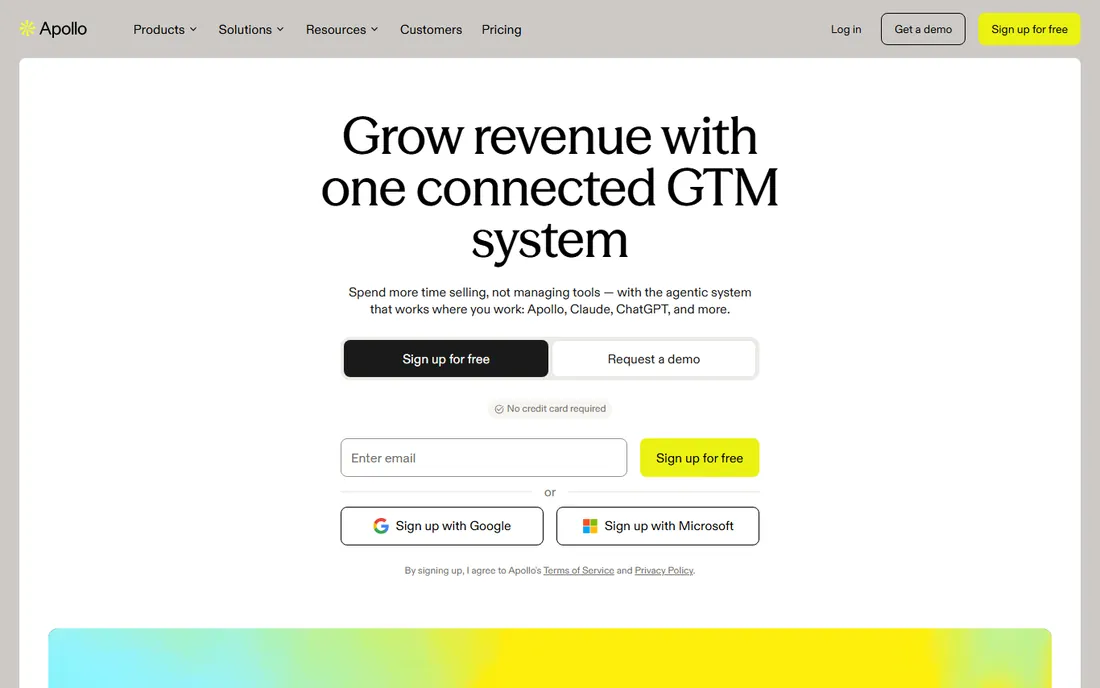
Apollo is the default starting point for B2B prospecting because it collapses three subscriptions into one: the contact database, the email sequences and the dialer. Basic at $49 per user per month billed annually includes unlimited email credits with 30,000 annual credits for other actions; Professional at $79 adds the dialer, AI assistance and API access. The free plan is genuinely useful for evaluation, with monthly credits and two active sequences.
The honest weaknesses are data depth and credit expiry. Independent accuracy tests put Apollo's real-world contact accuracy at 65 to 80 percent, with phone numbers the weakest point, particularly in Europe and APAC. Credits expire without rollover, and mobile numbers cost 8 credits each, so phone-heavy teams burn through allocations fast. Test a sample of your actual target market before committing, and price Professional if your reps call as well as email.
What we like- Contact database, sequences, dialer and enrichment in one subscription
- Published per-seat pricing with a real free plan
- 200-plus native integrations
Watch out for- Phone data accuracy lags email accuracy, especially outside North America
- Credits do not roll over and overages add up
Starting priceSee website
Free planYes (ZoomInfo Lite, limited monthly credits)
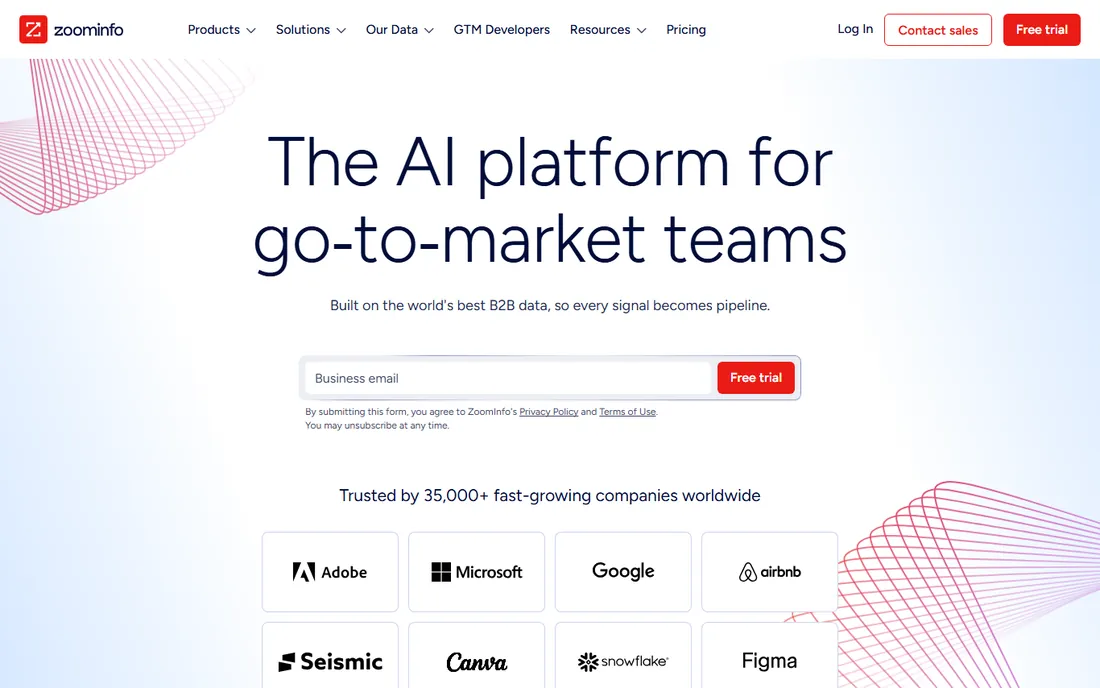
ZoomInfo is the product the rest of the market is measured against. The database depth, buyer intent signals, org charts and technographics are best in class, and the platform now spans sales, marketing and talent workflows. Large outbound organizations with dedicated operations teams get value that justifies the price: better targeting means fewer wasted touches across hundreds of reps.
The price is the whole conversation. ZoomInfo publishes no prices; third-party purchase data puts the median deal around $33,500 per year, with a wide spread. Contracts auto-renew, and the company is moving toward consumption-based pricing, so get credit costs and renewal terms in writing. ZoomInfo Lite offers a permanent free tier with limited monthly credits for evaluation. This is the pick for enterprises running serious outbound at scale, and overkill for a five-person team.
What we like- The deepest B2B database with strong intent and technographic data
- Mature integrations across the go-to-market stack
- Dedicated support and onboarding
Watch out for- Quote-only pricing with multi-thousand-dollar minimums
- Contracts and renewals are famously hard to negotiate down
Starting priceSee website
Free planNo
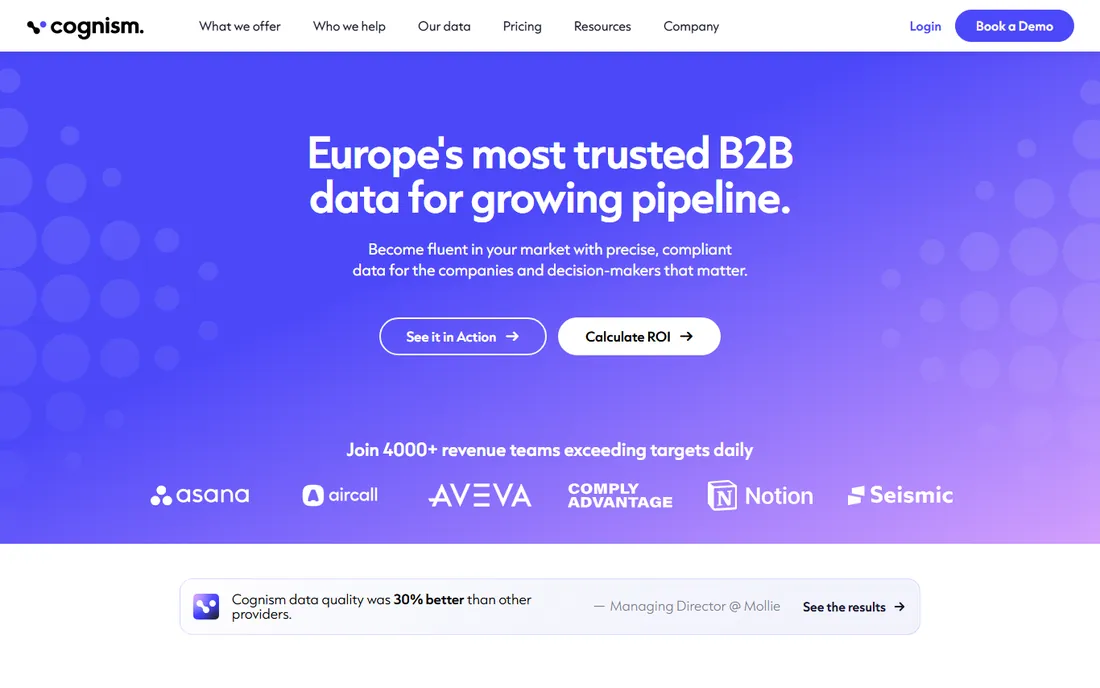
Cognism built its reputation on doing prospecting data the compliant way, with GDPR-aligned sourcing and phone-verified mobile numbers. For teams prospecting in the UK and Europe, its mobile coverage is the reason to choose it over US-centric databases: Diamond Data means numbers are phone-verified rather than scraped and guessed. Intent data and sales trigger events round out the higher tiers.
Like ZoomInfo, Cognism prices by quote, and the sales process is consultative rather than self-serve. US buyers should test domestic coverage against Apollo before assuming parity. The natural buyer is a European or global team that needs compliant mobile data and can justify enterprise pricing; US-only teams usually get more contacts per dollar elsewhere.
What we like- Strong European contact and mobile coverage with compliance-first positioning
- Diamond Data verification on mobiles
- Intent data included on higher tiers
Watch out for- Quote-only pricing
- US data depth trails ZoomInfo and Apollo
Starting price$22.45/user/month (Pro, billed annually)
Free planYes
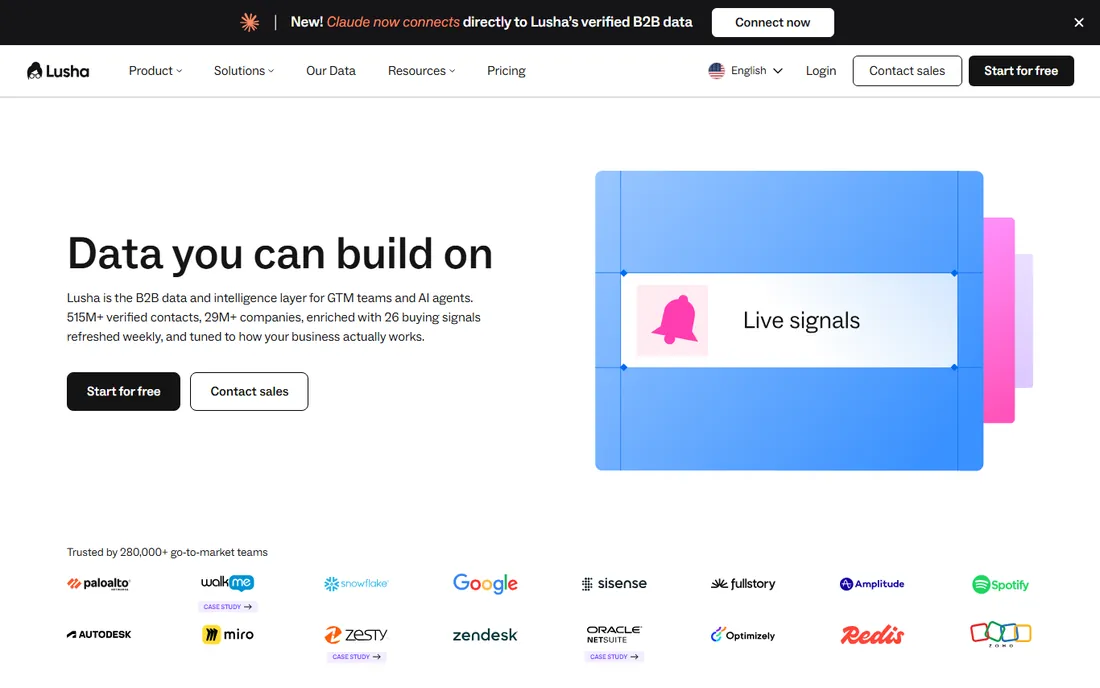
Lusha lives in the browser. The Chrome extension reveals emails and phone numbers directly on LinkedIn profiles and Sales Navigator searches, which matches how most SDRs actually prospect: find the person, click, get the number. Pro at $22.45 per user per month billed annually includes 3,000 annual credits and three seats, making it one of the cheapest entries on this list.
The credit math needs attention. One credit reveals one email, but five credits reveal one phone number, so a phone-heavy rep exhausts the Pro pool quickly. Premium at $52.45 per user per month raises the ceiling, but Salesforce and HubSpot integrations, intent data and API access require the custom-quoted Scale plan. Lusha is excellent as a quick-reveal layer for LinkedIn prospecting; it is not a full outbound platform.
What we like- Fast Chrome extension workflow on LinkedIn and Sales Navigator
- Low entry price with published plans
- Simple credit model
Watch out for- Phone numbers cost 5 credits each, so credit pools drain fast
- CRM integrations and intent data sit behind the custom Scale tier
#5
Clay
Best for: Waterfall enrichment and list building
Visit clay.com
Starting price$149/month (Starter)
Free planYes
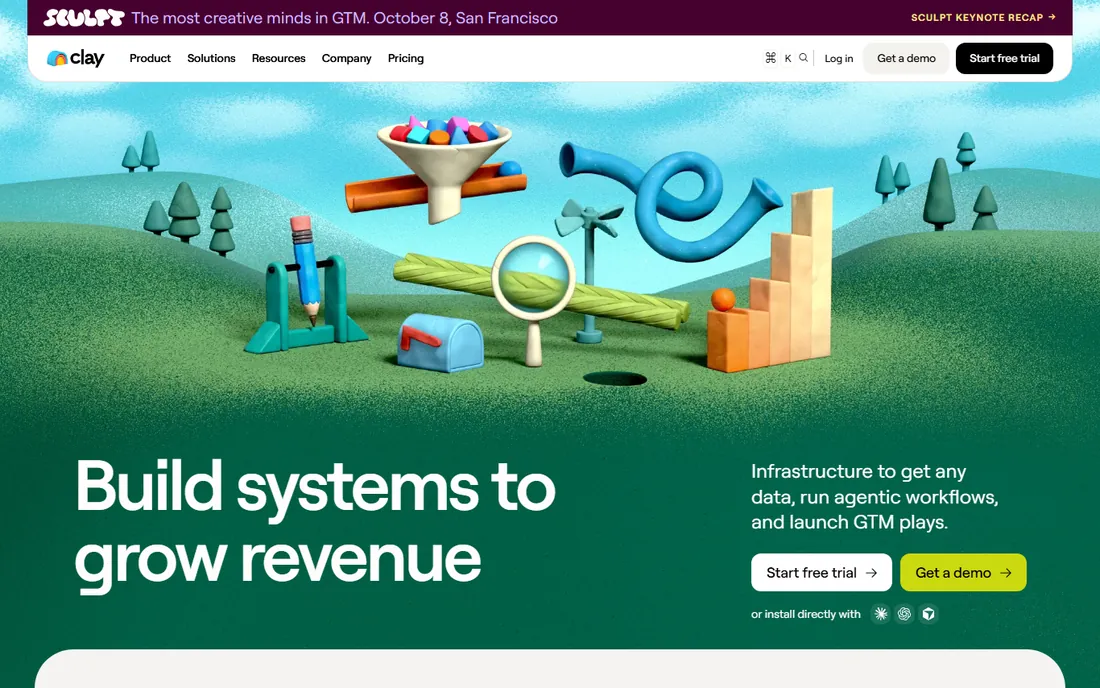
Clay is not a database; it is the layer that queries databases. You build a table of target companies, then waterfall through providers, Apollo, Clearbit, ZoomInfo and dozens more, until each row has a verified email and phone. Starter at $149 per month includes 2,000 monthly credits, Explorer at $349 raises that to 10,000, and Pro at $800 adds CRM sync with 50,000 credits. All plans include unlimited users sharing one credit pool.
Two things buyers miss. First, a fully enriched contact can consume 30 to 75 credits across providers, so the headline credit count buys fewer contacts than it suggests. Second, Clay does not send emails or make calls, so budget another $80 to $150 per month for a sending tool like Instantly or Smartlead. For teams that live on list quality and personalization at scale, Clay is the standard; for simple list pulls, it is more machine than you need.
What we like- Waterfalls across dozens of data providers to maximize match rates
- Unlimited users on every plan with a shared credit pool
- AI agents for research and personalization
Watch out for- Does not send emails, so you still need a sequencing tool
- Credit consumption per enriched contact runs higher than it looks
Starting price$147/month (Basic, billed annually)
Free planYes
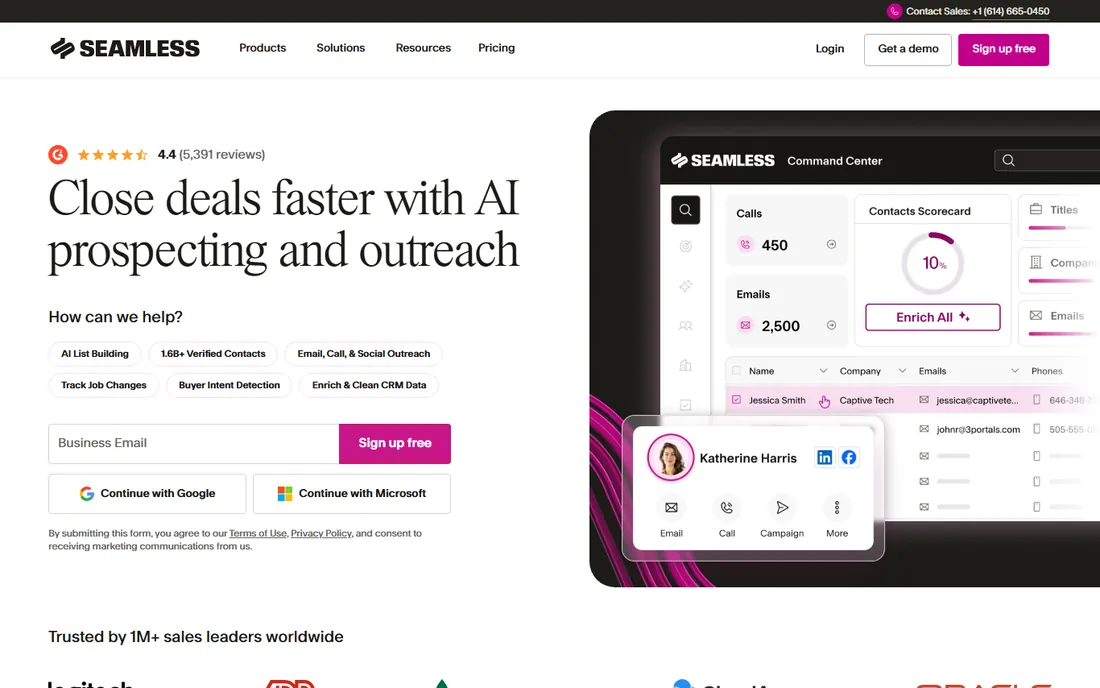
Seamless.AI pitches real-time data: instead of selling access to a stored database, its engine finds contact info live at search time. Basic at $147 per month billed annually includes 250 monthly credits, and every reveal costs one credit whether it is an email or a phone number, which is simpler than Lusha's 5-credit phone pricing. Pro and Enterprise are quote-only with daily credit refreshes.
The reputation is mixed. Users praise the speed of lookups and criticize accuracy, with bounce-rate complaints appearing regularly in reviews. The cancellation process also draws fire: contracts auto-renew annually and require advance notice, so calendar the renewal date the day you sign. Test the free plan against your own list and measure bounce rates before committing to a year.
What we like- Real-time search engine rather than a static database
- Flat 1-credit-per-contact model
- Free plan with 50 lifetime credits for testing
Watch out for- Data accuracy complaints are common, with users reporting high bounce rates
- Cancellation and auto-renewal terms draw consistent criticism
Starting price$74/month (Essentials, billed annually)
Free planFree trial (7 days)
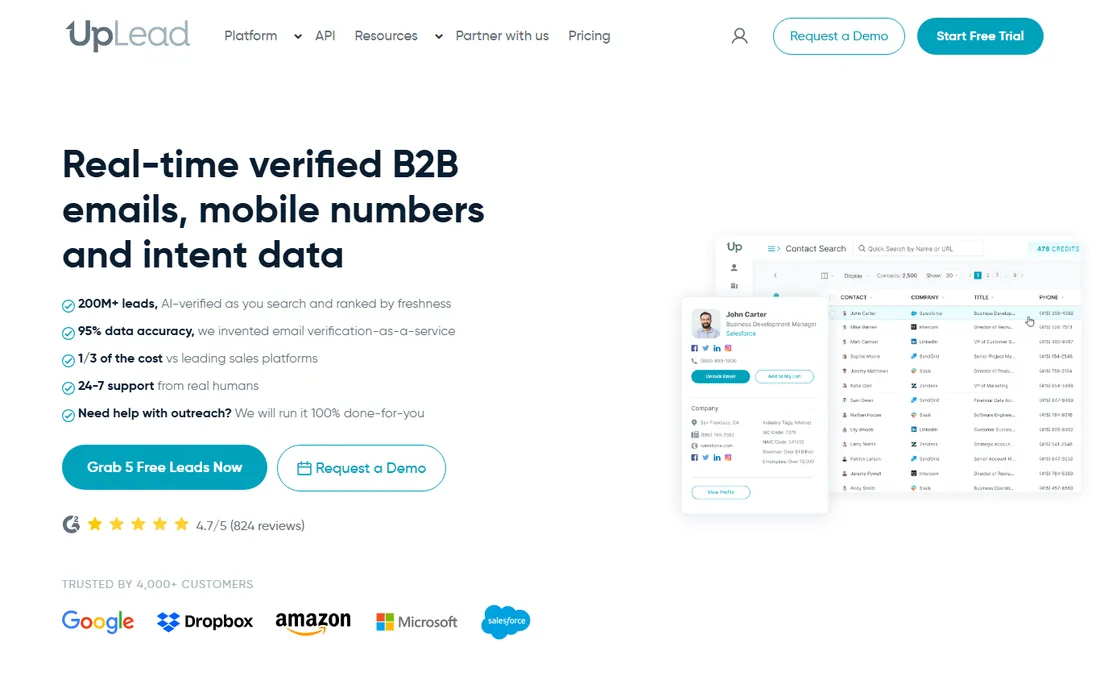
UpLead's entire pitch is accuracy over volume. The platform claims 95 percent data accuracy and backs it with a simple policy: bad data does not cost you credits. Essentials at $74 per month billed annually includes 2,040 annual credits, and one credit reveals a contact with both email and mobile, which makes the credit math friendlier than Lusha's for phone-heavy users. Real-time verification runs before you export.
The database is smaller than the giants, so niche industries and non-US markets deserve a coverage test during the trial. The 7-day free trial is genuinely short; push for an extension or run your test list on day one. For teams burned by bounce rates elsewhere, UpLead's accuracy guarantee is the most buyer-friendly policy in this category.
What we like- 95 percent data accuracy guarantee with credits refunded for bad data
- One credit reveals email plus phone together
- Real-time email verification
Watch out for- Smaller database than Apollo or ZoomInfo
- 7-day trial is short for a real evaluation
Starting price$49/user/month (Starter, billed annually)
Free planYes
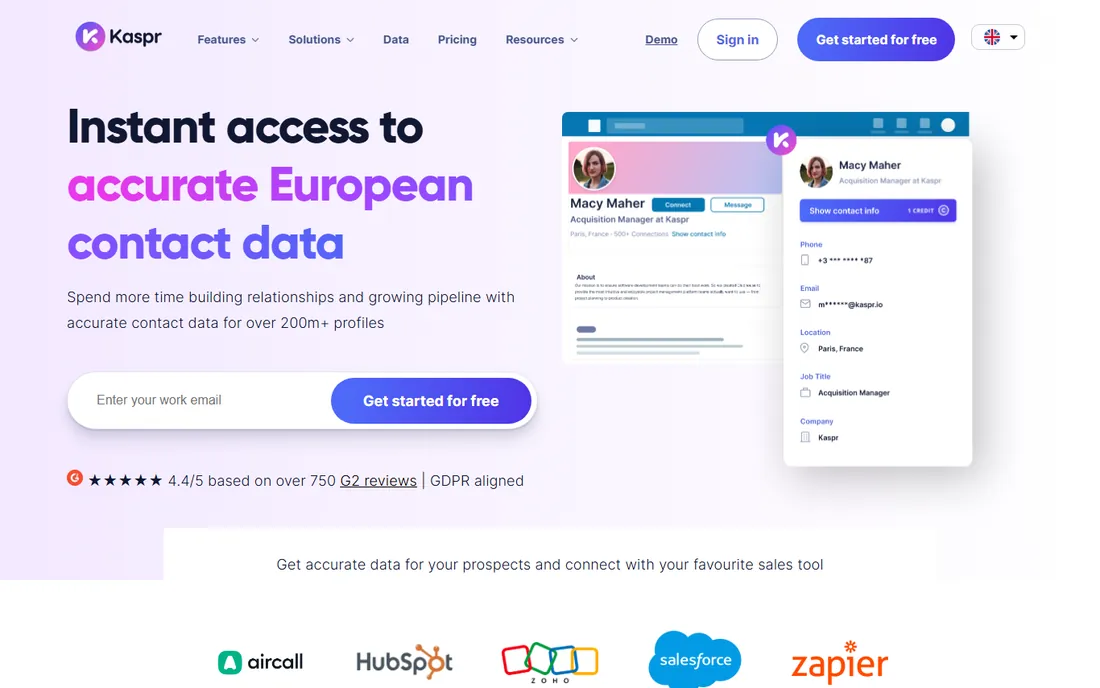
Kaspr, now part of Cognism, is the LinkedIn-native phone finder. The Chrome extension pulls emails and direct dials from LinkedIn profiles, and paid plans include unlimited B2B emails, which removes the meter from half your prospecting. Starter at $49 per user per month billed annually includes 100 phone credits per month; Business at $79 doubles that to 200. The free plan offers a small monthly allowance for testing.
The limit that matters is the phone credit pool: 100 numbers a month lasts an active SDR about two weeks, and add-on packs run $0.21 to $0.36 per credit at volume. European coverage is the standout strength, inherited from Cognism's data assets. For LinkedIn-heavy prospectors who call as well as email, Kaspr's workflow is among the fastest; for pure list building, a database tool is more efficient.
What we like- Unlimited B2B emails on paid plans with a fair-use cap
- Strong European phone coverage as part of Cognism
- Transparent published pricing
Watch out for- Phone credits cap at 100 per month on Starter
- Heavy phone prospectors will need add-on packs fast
#9
Snov.io
Best for: Budget all-in-one finder plus outreach
Visit snov.io
Starting price$39/month (Starter)
Free planYes
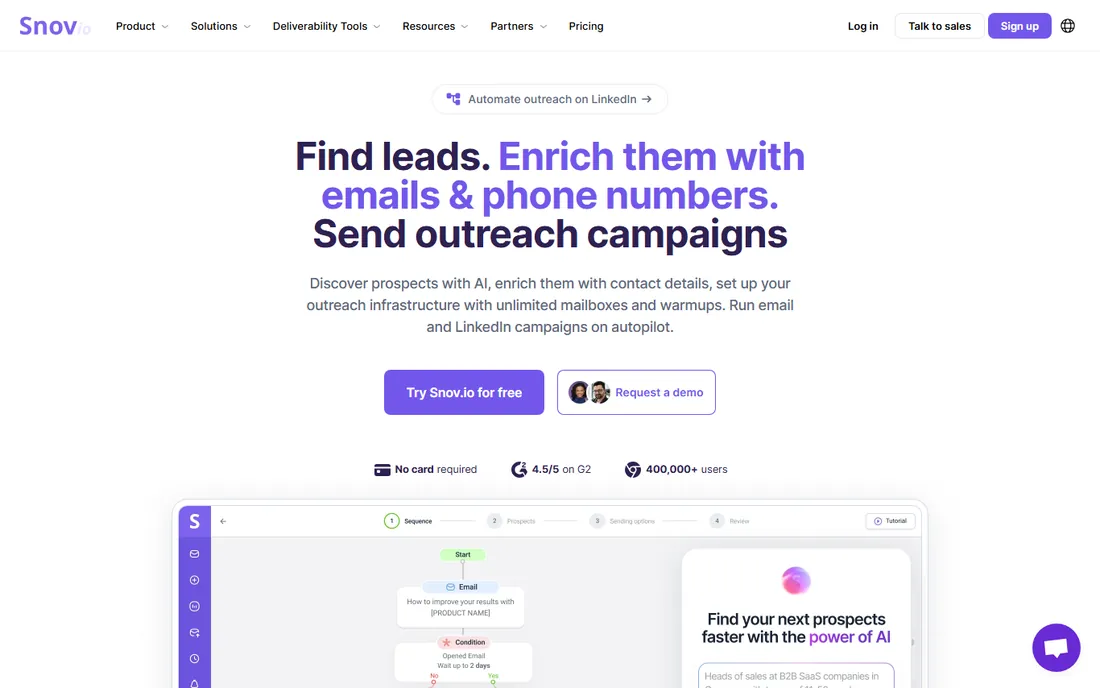
Snov.io is the value bundle of this list. Starter at $39 per month, or $29.25 on annual billing, includes the email finder, verifier, drip campaigns, mailbox warm-up and a built-in CRM, which would be three or four subscriptions elsewhere. Team seats are unlimited on all plans, so a five-person team pays $39 total where Apollo would charge per seat. The free trial plan includes 50 monthly credits with no credit card.
The credit math has a catch: the finder and the verifier draw from the same pool, so finding and verifying one contact costs two credits, cutting the 1,000-credit Starter plan to roughly 500 real contacts. LinkedIn automation is a separate add-on at around $62 to $69 per month per slot. For solo founders and small teams that want one tool for finding and emailing, Snov.io is the cheapest credible answer; for data quality at scale, pair a dedicated finder with it.
What we like- Email finder, verifier, drip campaigns, warm-up and CRM in one cheap bundle
- Unlimited team seats on every plan
- Generous free trial plan
Watch out for- Finding and verifying the same contact spends two credits, halving real capacity
- LinkedIn automation is a separate paid add-on
How credits actually work
Every prospecting tool except ZoomInfo and Cognism rations usage through credits, and the credit is not a standard unit. On Apollo, an email costs 1 credit and a phone number costs 8. On Lusha, an email costs 1 and a phone costs 5. On Clay, a fully enriched contact can cost 30 to 75 credits across waterfall providers. On Snov.io, finding and verifying the same contact costs 2 credits from one shared pool. Comparing plan prices without comparing credit costs is meaningless: a $39 plan can be more expensive per contact than a $74 plan.
Three rules keep the math honest. First, compute your monthly contact target and the email-to-phone ratio before comparing plans. Second, check whether credits roll over; most expire monthly or annually, and unused credits are lost money. Third, watch the add-ons: AI features, intent data, LinkedIn automation and API access are frequently separate meters. Ask every vendor for the cost per verified contact at your volume, in writing, before you sign.
Picking prospecting data without getting burned
Start with a coverage test, not a demo. Give every finalist the same 100 target contacts from your actual market and measure three things: match rate, email validity and phone accuracy. Database size claims are marketing; your list is the only benchmark that matters. Run this test on the free plan or trial before any sales call.
Then match the tool to the motion. Email-only outbound at volume favors Apollo or Snov.io. Phone-heavy prospecting favors Kaspr, Lusha or UpLead, with the credit math done carefully. European markets favor Cognism or Kaspr. List-building and enrichment workflows favor Clay paired with a sending tool. Enterprise scale with intent data favors ZoomInfo or Cognism.
Finally, read the contract terms that are not on the pricing page. Auto-renewal windows, cancellation notice periods and credit expiry policies cause more buyer regret than the sticker price. Seamless.AI's renewal terms are the cautionary tale of the category. Calendar every renewal date the day you sign, and never assume a trial converts to monthly billing.
How we chose
We treated this as a buying problem, not a feature checklist. We verified starting prices on vendor pricing pages and recent pricing analyses, marking ZoomInfo and Cognism as "See website" because they publish no prices. We compared credit systems on equal terms, cost per email and cost per phone number, because that is the number that decides real bills. We read public reviews on G2, Capterra and TrustRadius and practitioner discussions on Reddit for accuracy complaints and contract grievances, and we favored tools with published pricing and free tiers where they exist. The result mixes the all-in-one default, the enterprise standards, and the specialists that beat the default on specific jobs.
Frequently asked questions
What is the difference between a prospecting tool and a sales engagement platform?
A prospecting tool finds contact data: verified emails, phone numbers and company info. A sales engagement platform sends the outreach: sequences, dialers and task management. Apollo and Snov.io bundle both; Clay, Lusha, Kaspr and Seamless.AI find data and need a separate sending tool like Smartlead, Instantly or Outreach.
How many credits do I actually need per month?
Multiply your monthly new-contact target by your verification steps. Finding and verifying 500 contacts on Snov.io costs about 1,000 credits; the same 500 phone numbers on Apollo Basic costs 4,000 credits. Start from your contact target and email-to-phone ratio, then size the plan to the credit math, not the seat price.
Are free plans enough for real prospecting?
For testing, yes; for production, no. Apollo's free plan, Lusha's free plan and Snov.io's trial plan all let you run a real coverage test on your market. But monthly credit allowances on free tiers cover dozens of contacts, not hundreds. Budget a paid plan from the first month you prospect seriously.
Which prospecting tool has the most accurate data?
No vendor wins this universally, and anyone claiming otherwise is selling. Independent tests put Apollo at 65 to 80 percent real-world accuracy; UpLead guarantees 95 percent and refunds credits for bad data; Cognism phone-verifies its Diamond Data mobiles. Accuracy varies by region and industry, which is why the 100-contact coverage test on your own list matters more than any claim.
Do I need intent data?
Intent data, signals that a company is researching your category, helps only if you can act on it: enough outbound volume to prioritize accounts and messaging that changes with the signal. ZoomInfo, Cognism and Apollo all sell it. Small teams usually get more pipeline from better targeting and more at-bats than from intent feeds they lack the capacity to work.
Can I get in trouble for cold outreach with these tools?
Cold email is regulated in most markets: CAN-SPAM in the US, GDPR and the ePrivacy rules in Europe, CASL in Canada. These tools provide data; compliance is your responsibility. Use verified opt-out handling, honor do-not-contact requests, and note that Cognism positions itself specifically for GDPR-aligned European prospecting. When in doubt, have counsel review your sequence before scaling.
Sources we checked (33)
- https://fullenrich.com/content/apollo-pricing
- https://www.saleshandy.com/blog/apolloio-pricing/
- https://www.layer3labs.io/guides/is-apollo-worth-it
- https://syncgtm.com/blog/apollo-io-vs-zoominfo
- https://salesintel.io/blog/how-much-does-apollo-cost/
- https://fullenrich.com/content/lusha-pricing
- https://www.uplead.com/lusha-pricing/
- https://www.uplead.com/lusha-vs-apollo/
- https://overloop.com/blog/lusha-vs-zoominfo
- https://overloop.com/blog/lusha-alternatives
- https://lagrowthmachine.com/clay-pricing/
- https://www.uplead.com/clay-pricing/
- https://www.vendr.com/marketplace/clay
- https://lagrowthmachine.com/apollo-vs-clay/
- https://www.lindy.ai/blog/seamless-ai-pricing
- https://www.uplead.com/seamless-ai-pricing/
- https://fullenrich.com/content/seamless-ai-pricing
- https://www.lemlist.com/blog/snov-io-review
- https://www.uplead.com/snov-io-pricing/
- https://www.saleshandy.com/blog/snovio-pricing/
- https://overloop.com/blog/kaspr-vs-lusha
- https://overloop.com/blog/kaspr-alternatives
- https://lagrowthmachine.com/kaspr-review/
- https://pipeline.zoominfo.com/sales/kaspr-vs-seamless-ai
- https://www.apollo.io
- https://www.zoominfo.com
- https://www.cognism.com
- https://www.lusha.com
- https://www.clay.com
- https://www.seamless.ai
- https://www.uplead.com
- https://kaspr.io
- https://www.snov.io
Is your product missing or out of date?
We review this list regularly. Vendors can request a listing, send updated pricing or ask about featured placement.

Shihab Mia · Founder, Rankite
Shihab has spent more than a decade helping SaaS and e-commerce brands grow through search. He writes Rankite's software buying guides from pricing pages, documentation and public user reviews. More about Shihab.