How we make this list: we compare pricing pages, product documentation and public user reviews. Rankite is independent; if a vendor ever pays for a featured spot, that listing is clearly labeled Partner.
Key takeaways
- QuotaPath is the only tool in this group with fully published pricing: $35 per user a month plus a $525 monthly platform fee (Growth), with a 14-day free trial, and it is the sensible starting point for teams that want transparency before a sales call.
- Spiff by Salesforce publishes its price too: $75 per user a month billed annually. If your deals already live in Salesforce, the fit is hard to argue with.
- CaptivateIQ, Xactly Incent, Varicent, Performio, Everstage and Anaplan are all quote-only. Treat the demo as the start of a negotiation, not a price list, and ask for implementation and support costs in writing.
- QCommission (by CellarStone) is the veteran of the category and the one most likely to fit small and mid-size teams, while Varicent, Xactly and Anaplan are built for global enterprises with complex compensation structures.
Quick comparison
| Tool | Best for | Starting price | Free plan |
|---|
 CaptivateIQ CaptivateIQ | Mid-market teams that think in spreadsheets | See website (custom quote) | No |
 Spiff by Salesforce Spiff by Salesforce | Sales teams already living in Salesforce | $75/user/month (billed annually) | No |
 Varicent Varicent | Large enterprises with complex, global compensation | See website (custom quote) | No |
 Xactly Incent Xactly Incent | Finance teams that need the strongest audit controls | See website (custom quote) | No |
 Performio Performio | Companies with highly custom compensation structures | See website (custom quote) | No |
 Everstage Everstage | Modern sales teams that want speed and rep engagement | See website (custom quote) | No |
 QuotaPath QuotaPath | Teams that want published pricing and a self-serve start | $35/user/month + $525/month platform fee (Growth; billed annually) | Free trial (14 days) |
 Anaplan Anaplan | Enterprises that model comp inside a connected planning platform | See website (custom quote) | No |
 QCommission QCommission | SMBs that want a proven commission engine without enterprise overhead | See website | No |
Is your product missing or out of date?
We review this list regularly. Vendors can request a listing, send updated pricing or ask about featured placement.
Commission disputes are the fastest way to erode trust between finance and sales. Reps spend hours shadow-accounting in spreadsheets, finance recalculates payouts by hand, and nobody believes the statement at the end of the month. The nine platforms below replace that cycle with automated incentive compensation management: automated calculations, rep-facing dashboards, audit trails and CRM-driven payouts. They span modern self-serve tools and enterprise suites, with prices verified where vendors publish them.
Starting priceSee website (custom quote)
Free planNo
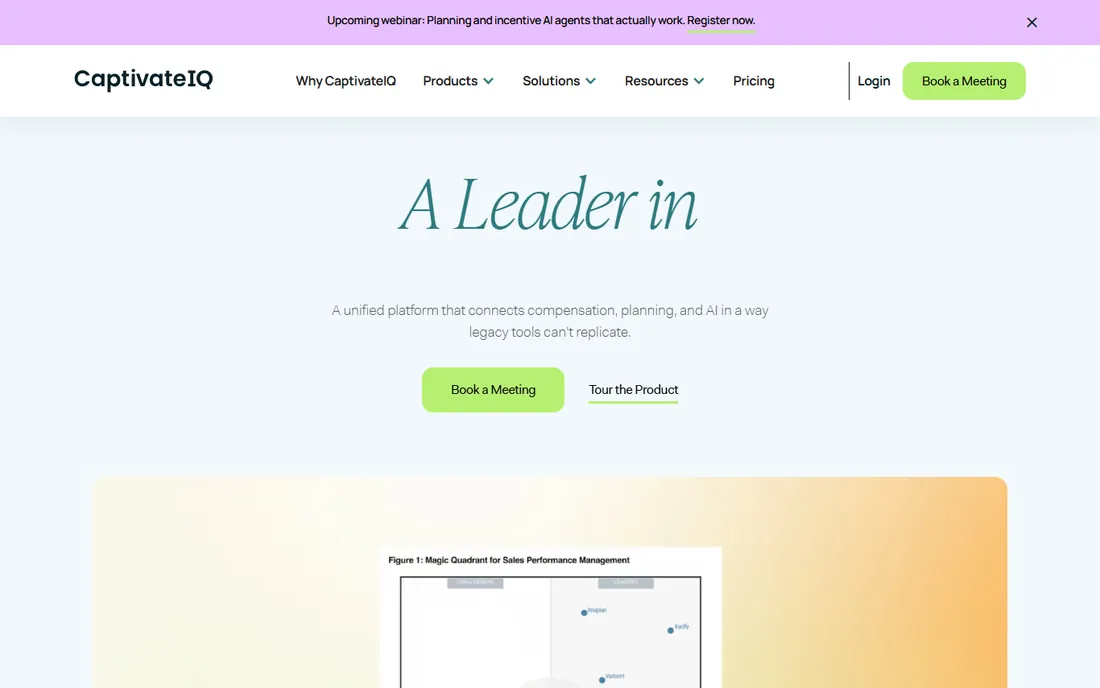
CaptivateIQ sells familiarity: your admins build compensation logic in formulas that look like Excel, but the results flow through approvals, audit logs and rep statements instead of a shared workbook. Third-party benchmarks put list pricing near $55 per payee a month with median annual contracts around $35,000, though CaptivateIQ itself publishes nothing. The differentiator is the combination of flexibility and controls: complex crediting, draws and clawbacks without heavy IT involvement, plus the audit trail finance needs.
The catch is time and opacity. Implementations are routinely quoted at 8 to 12 weeks with five-figure services costs, and without published pricing every buyer negotiates blind. Ask for the implementation quote, the renewal terms and the per-payee economics in the same email. Teams with under 25 reps may find QuotaPath gets them live faster for less.
What we like- Spreadsheet-style formula editor lets admins model plans without code
- SOX-friendly controls with statement history
- Strong reputation for implementation support among mid-market buyers
Watch out for- Quote-only pricing, so the true annual cost stays hidden until late in the sales process
- Reported implementation runs 8 to 12 weeks, longer than the modern alternatives
#2
Spiff by Salesforce
Best for: Sales teams already living in Salesforce
Visit spiff.com
Starting price$75/user/month (billed annually)
Free planNo
Spiff is the transparency pick after QuotaPath, and the only enterprise-grade name with a headline price: $75 per user a month on an annual contract. Because Salesforce owns it, compensation calculations read straight from the CRM, so crediting rules, splits and accelerators apply to the same opportunity data reps already see. The rep estimator shows what a deal is worth before it closes, which is exactly the trust-building feature that kills shadow spreadsheets.
Spiff was built for Salesforce-first orgs, and it shows outside that world. Companies on HubSpot or a mixed stack pay for connectors and get a thinner version of the integration story. There is also no free trial, so negotiate a paid pilot on your real plan data before signing a full year. If Salesforce is your CRM, start the shortlist here.
What we like- Publishes a real price, rare in this category
- Native Salesforce integration means comp runs on live CRM data with no sync project
- Rep estimator and mobile dashboards cut shadow accounting
Watch out for- Best value is for Salesforce customers
- Non-Salesforce data sources connect through a paid connector (reported at $250 a month each)
- Annual contract with no free trial to test on your own plans first
#3
Varicent
Best for: Large enterprises with complex, global compensation
Visit varicent.com
Starting priceSee website (custom quote)
Free planNo
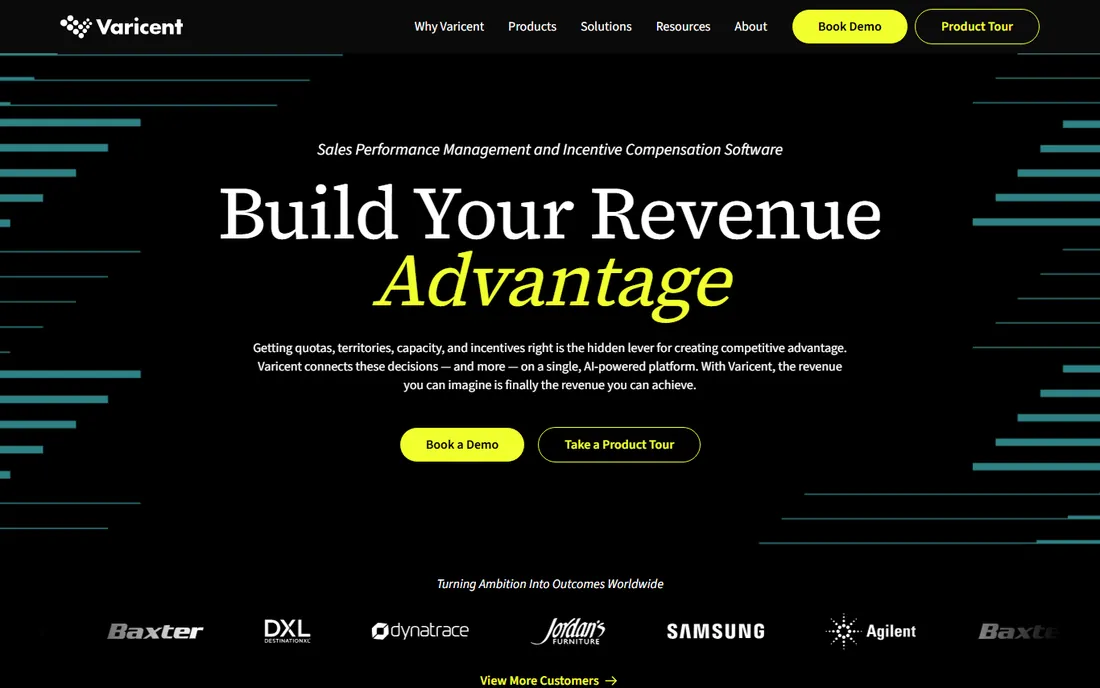
Varicent is the heavy lifter of this list. It handles the compensation programs that break smaller tools: thousands of payees, dozens of entities, layered MBOs and SPIFs, currency conversions and regulatory reporting across regions. Benchmark data suggests entry licensing near $56 per user a month, but real contracts vary widely by modules and integrations, and implementations commonly run through partners like OpenSymmetry or Canidium, which adds services cost on top of the license.
That scale is the trade-off. Varicent is not self-serve and is not meant to be. Plan changes that take an admin an hour in CaptivateIQ can take a ticket in Varicent. Buy it when your compensation program is genuinely complex and global, with a RevOps or finance operations team to run it. Smaller teams should not pay enterprise prices for enterprise problems they do not have.
What we like- Purpose-built for enterprise complexity: multi-currency, multi-entity, territories, quotas and plan modeling at scale
- Full audit trail that satisfies finance and compliance
- Deep integration layer for ERP, CRM and payroll
Watch out for- Enterprise pricing and implementation timelines, often requiring systems integrator partners
- Administrative changes can need technical or vendor help rather than being self-serve
Starting priceSee website (custom quote)
Free planNo
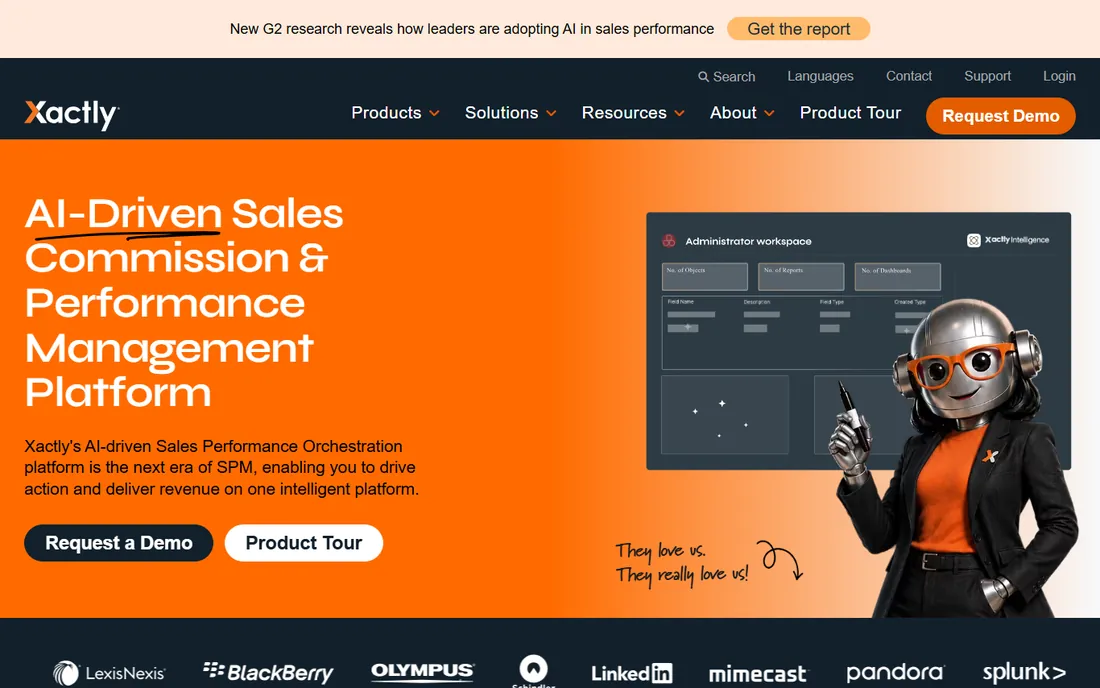
Xactly Incent is the incumbent that finance teams trust and sales ops teams tolerate. Its concrete strengths are controls and history: complete audit trails, ASC 606 expense treatment, and the longest-running dataset of real compensation plan benchmarks, which is genuinely useful when designing plans from scratch. Integrations cover the major payroll, HRIS and ERP systems, and multi-country payout support is mature.
The price of that maturity is momentum. Reviewers consistently describe longer implementations and heavier administration than the modern alternatives, and G2 scores trail CaptivateIQ and Spiff on usability. Xactly fits regulated industries and public companies where audit evidence matters more than speed. Growth-stage teams usually get better value from QuotaPath or Everstage.
What we like- The strongest audit and compliance story in the category, with ASC 606 support built in
- 15-plus years of compensation benchmarking data for plan design
- Broad payroll, HRIS and ERP integration paths
Watch out for- Reported implementations of up to six months, the longest here
- Quote-only pricing with per-user benchmarks around $40 to $60 a month before services
- Reviewer sentiment lags the newer tools on ease of use
#5
Performio
Best for: Companies with highly custom compensation structures
Visit performio.co
Starting priceSee website (custom quote)
Free planNo
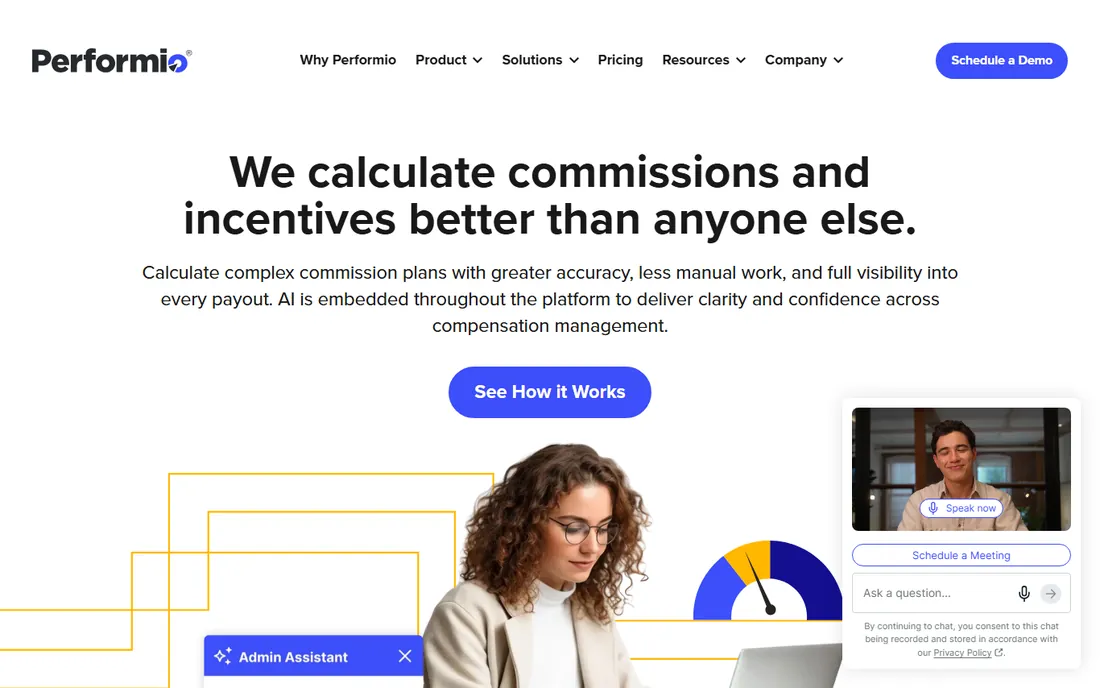
Performio positions itself as enterprise-grade power with business-admin usability, and the reporting depth is what buyers cite most. If your plans have unusual crediting rules, layered bonuses or KPIs that do not map to standard commission math, Performio's admin tooling handles them without vendor professional services. The statements and dashboards are clear enough that reps stop emailing finance for explanations, which is the real ROI metric.
The catch is cost structure. Published benchmarks put per-user pricing at $60 to $120 a month depending on band, plus implementation services commonly quoted at $15,000 to $75,000. That makes Performio a poor fit for simple plans: if your comp is mostly base plus a single commission rate, you are paying for flexibility you will never use. Shortlist it when plan complexity is the actual problem.
What we like- Reporting flexibility is the standout
- Admins can model unusual plan logic without waiting on the vendor
- Audit trails with SOC 1 and SOC 2 coverage satisfy enterprise security reviews
Watch out for- Quote-only pricing with median annual contracts reported near $50,000
- Per-user benchmarks of $60 to $120 a month make it one of the pricier mid-market options
- Implementation often billed as separate services work
#6
Everstage
Best for: Modern sales teams that want speed and rep engagement
Visit everstage.com
Starting priceSee website (custom quote)
Free planNo
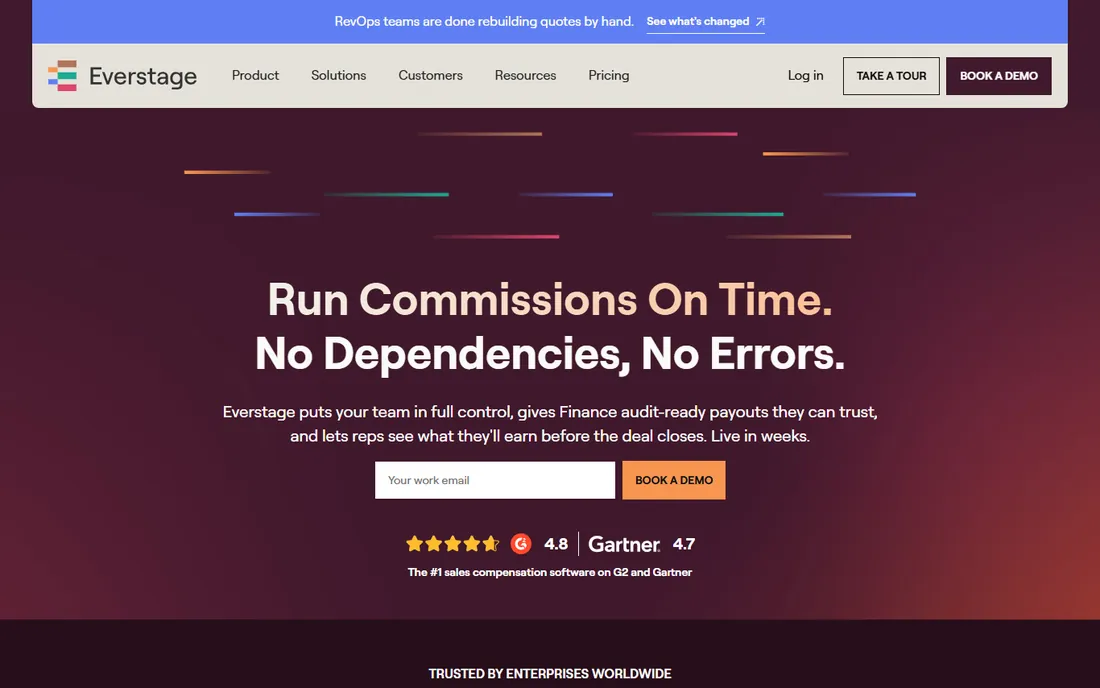
Everstage is the modern answer to Xactly and Varicent: same category, but built for the way teams buy software now. Admins configure plans without code, reps see earnings in dashboards and Slack alerts, and implementation is measured in weeks rather than quarters (services fees commonly reported at $5,000 to $15,000). The per-payee model scales cleanly as the team grows.
The honest limitation is entry cost. Despite the modern packaging, Everstage is quote-only with annual contracts, and the reported entry floor of about $30,000 a year puts it out of reach for a ten-rep startup. There is also no free trial, which is a strange gap for a product that markets ease of use. Negotiate a paid pilot on your plan data, and confirm what happens to the contract if headcount drops.
What we like- No-code plan setup that admins can run without IT
- Dashboards, Slack and Teams alerts plus gamification keep reps engaged with their numbers
- ASC 606 add-on available for finance
Watch out for- Quote-only pricing with median annual contracts reported around $41,000
- Entry floor reported near $30,000 a year, which prices out small teams
- No free trial, so testing requires a demo or paid pilot
#7
QuotaPath
Best for: Teams that want published pricing and a self-serve start
Visit quotapath.com
Starting price$35/user/month + $525/month platform fee (Growth; billed annually)
Free planFree trial (14 days)
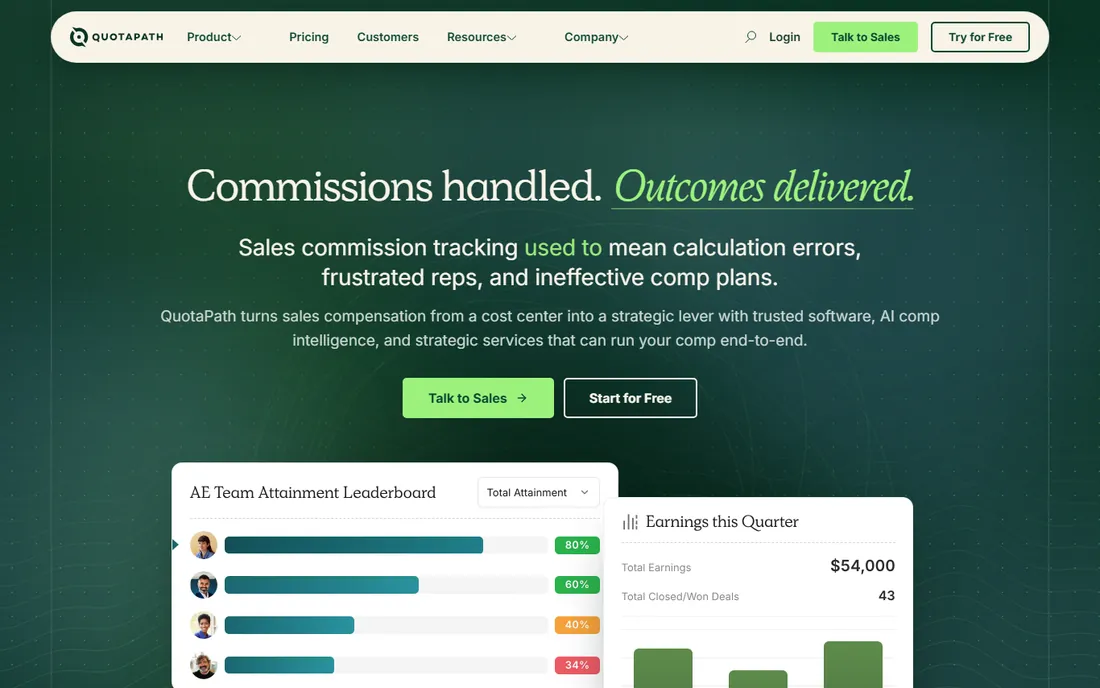
QuotaPath wins the transparency game outright. The Growth tier is $35 per user a month plus a $525 monthly platform fee that covers the first 5 users, implementation, account management and support. Premium moves to $50 per user with an $800 platform fee and adds plan modeling, multi-level approvals, custom reporting and automated payroll sync. A 14-day free trial exists, and implementation typically completes in 45 to 90 days without hiring a systems integrator.
For a team of 25 reps, first-year Growth costs about $14,700, which is less than half the reported entry floor for Everstage or CaptivateIQ. The trade-off is ceiling: enterprises with global multi-entity complexity will eventually need Varicent or Xactly. But for SMB through upper mid-market teams with CRM-based deal data, QuotaPath is the rational default.
What we like- The only fully published pricing in the incentive compensation space
- Platform fee covers the first 5 users plus implementation and support, so the total cost is knowable
- 45-to-90-day implementations with no external consultants required
Watch out for- The platform fee makes the true entry cost higher than the $35 headline (Growth starts around $6,300 a year)
- Advanced payroll sync and multi-source payouts sit on the $50 Premium tier
- AI add-on Atlas is priced separately from $5,000 a year
#8
Anaplan
Best for: Enterprises that model comp inside a connected planning platform
Visit anaplan.com
Starting priceSee website (custom quote)
Free planNo
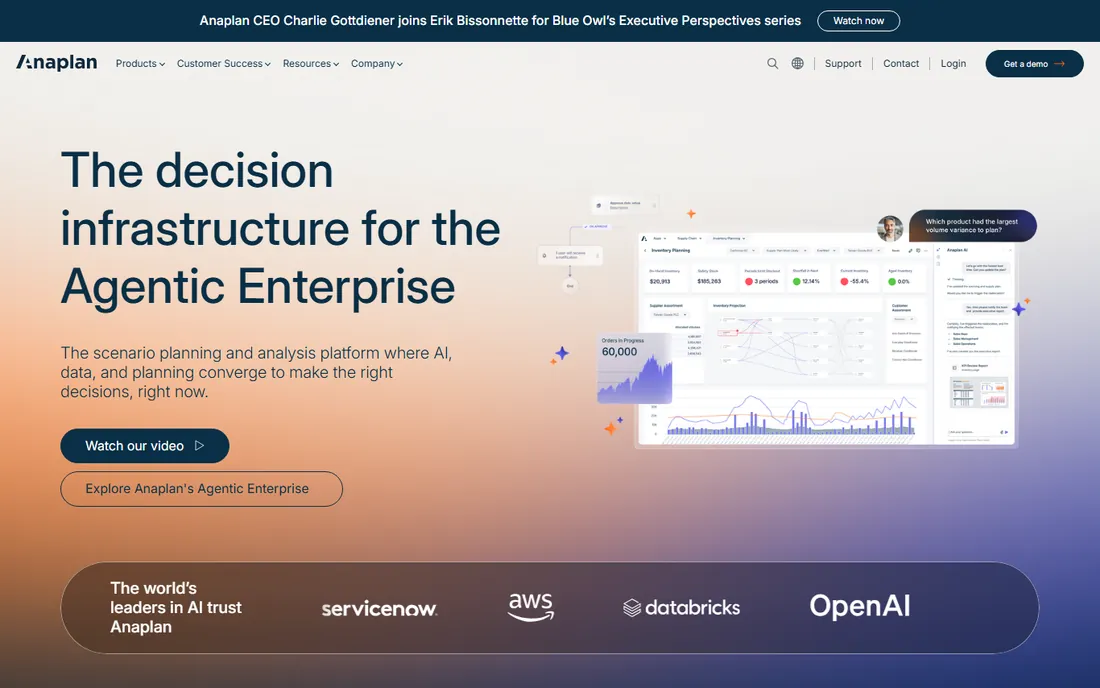
Anaplan is the adjacent-category entry: a connected planning platform whose sales performance management module models incentive compensation alongside quotas, territories and revenue plans. The advantage is consistency. When finance changes a quota assumption, the compensation plan updates from the same model rather than from a spreadsheet somebody emailed. For enterprises already on Anaplan for financial planning, adding SPM is a natural extension with shared data and governance.
For everyone else, it is too much platform. Buying Anaplan purely for commission tracking means paying enterprise planning prices and running a months-long implementation for a problem QuotaPath solves in weeks. Shortlist Anaplan only if your company already plans in it, or if you are buying a unified planning suite and comp is one module among several.
What we like- Sales compensation modeled in the same platform as financial planning, headcount planning and quota setting
- Connected models mean quota changes flow through to comp plans without re-entry
- Strong scenario modeling for plan changes
Watch out for- Quote-only enterprise pricing
- Anaplan is a full planning platform, so buying it for commission tracking alone is overkill
- Implementations are measured in months, not weeks
#9
QCommission
Best for: SMBs that want a proven commission engine without enterprise overhead
Visit qcommission.com
Starting priceSee website
Free planNo

QCommission is the veteran that refuses to retire. CellarStone's product has been calculating commissions since 2000, and the installed base is deep across industries from automotive to healthcare to SaaS. It handles complex compensation plans, multi-currency payouts and financial reconciliation without the enterprise implementation apparatus of Xactly or Varicent. Integrations cover Salesforce, Oracle, QuickBooks, Xero and the major accounting systems.
The pricing situation is murky: third-party directories cite figures around $15 to $17 per user a month, but they disagree with each other, so get the current number from CellarStone directly. The interface is functional rather than modern, and reviewers note that large report generation takes minutes. But if your priority is a battle-tested calculation engine at SMB-friendly economics rather than a beautiful dashboard, QCommission deserves a demo.
What we like- Twenty-five-plus years in commission software with hundreds of reference customers
- Handles complex plans across SMB and mid-market without the enterprise implementation burden
- Direct integrations with Salesforce, NetSuite, QuickBooks and Xero
Watch out for- No published pricing, and third-party sources disagree on the current numbers, so verify with the vendor
- The interface shows its age next to CaptivateIQ and Everstage
- Report generation can be slow by reviewer accounts
What to ask every SPM vendor before you sign
Price is only the first question, and most vendors in this category will not answer it on their website. Ask these six before you compare quotes. First, what is the all-in first-year cost including implementation, onboarding and support? License quotes routinely exclude five-figure services. Second, how is pricing calculated: per payee, per user, per admin, or a platform fee plus users? The model changes the renewal math when headcount moves. Third, can our admin change a crediting rule mid-quarter without filing a ticket? The answer separates self-serve tools from services-dependent ones. Fourth, what does the audit trail record, and does it satisfy your finance team's controls? Ask to see who changed a payout, when and why. Fifth, is the CRM sync real time or scheduled, and which fields does it read? A nightly sync means reps see yesterday's numbers. Sixth, what happens if headcount drops 30 percent? Some contracts reprice down, some do not. Get every answer in writing and make them part of the order form.
When a spreadsheet is still enough
A commission platform is not always the answer. If you have fewer than 10 reps, one commission rate and monthly payouts, a well-built spreadsheet with locked formulas costs nothing and breaks nothing. The signal to switch is pain, not headcount: disputes about payouts happening more than once a quarter, finance spending more than a day a month on calculations, reps maintaining their own shadow spreadsheets, or plan changes that take weeks to model. When two or more of those are true, the platform pays for itself in recovered admin time and rep trust. Migrating from spreadsheets takes planning: freeze the plan rules before implementation starts, run the new system in parallel with the spreadsheet for one full pay cycle, and let reps compare statements side by side so they trust the numbers on day one.
How we chose
We worked from vendor pricing pages for the two tools that publish prices (QuotaPath and Spiff), and marked the rest as custom-quote where the vendors do not publish. We checked product documentation for what the compensation engines actually do: plan modeling, crediting rules, approval workflows, audit trails, payroll exports and CRM integrations. We weighed public review data from G2 and Capterra, FeaturedCustomers award data and buyer discussions on Reddit, and we filtered for fit with US small and mid-size companies: implementation time, admin self-service, pricing transparency and rep-facing usability. No tool on this list was tested hands-on; the ranking reflects documented capabilities, verified prices and realistic buyer fit.
Frequently asked questions
How much does sales performance management software cost?
It ranges widely. QuotaPath publishes its pricing: Growth is $35 per user a month plus a $525 monthly platform fee, and Spiff is $75 per user a month billed annually. Everything else here is quote-only, with third-party benchmarks suggesting $40 to $120 per user a month before implementation, which commonly adds $5,000 to $75,000.
What is the difference between SPM software and commission tracking software?
Commission tracking calculates payouts. Sales performance management is the broader category: it adds plan modeling, quota and territory management, rep dashboards, audit controls and analytics on top of the calculations. Most tools on this list cover both, but enterprise suites like Varicent and Anaplan go further into planning.
Can SPM software replace our commission spreadsheets?
Yes, once the pain justifies it. Spreadsheets break when plans get complex, headcount grows or disputes recur. SPM tools automate the calculations, give reps real-time earnings visibility and keep an audit trail finance can defend. Run both in parallel for one pay cycle before switching over.
Which SPM tool is best for a small sales team?
QuotaPath is the strongest fit for teams under about 50 reps: published pricing, a 14-day trial, no external consultants and fast implementation. Spiff fits Salesforce-native teams at $75 per user a month. QCommission is worth a look for budget-conscious SMBs with complex plans.
How long does it take to implement SPM software?
Modern tools like QuotaPath and Everstage typically go live in 45 to 90 days. CaptivateIQ implementations commonly run 8 to 12 weeks. Enterprise platforms like Xactly, Varicent and Anaplan can take three to six months, especially when systems integrators are involved. Ask the vendor to put a go-live date in the contract.
Do reps actually use the dashboards?
They do when the numbers are accurate and current. Rep-facing transparency is the highest-ROI feature in this category: it kills shadow accounting, cuts payout disputes and frees reps to sell instead of auditing their own statements. A nightly CRM sync is the minimum; real-time sync is better.
Sources we checked (13)
- https://www.quotapath.com/pricing/
- https://www.salesforce.com/products/spiff/pricing/
- https://www.captivateiq.com/pricing
- https://www.varicent.com/
- https://www.xactlycorp.com/
- https://www.performio.co/
- https://www.everstage.com/
- https://www.anaplan.com/
- https://www.qcommission.com/
- https://www.qobra.co/blog/best-spiff-software
- https://www.qobra.co/blog/everstage-vs-quotapath
- https://www.visdum.com/blog/best-commission-software-for-mid-market-companies
- https://www.g2.com/products/varicent-varicent/competitors/alternatives
Is your product missing or out of date?
We review this list regularly. Vendors can request a listing, send updated pricing or ask about featured placement.

Shihab Mia · Founder, Rankite
Shihab has spent more than a decade helping SaaS and e-commerce brands grow through search. He writes Rankite's software buying guides from pricing pages, documentation and public user reviews. More about Shihab.