How we make this list: we compare pricing pages, product documentation and public user reviews. Rankite is independent; if a vendor ever pays for a featured spot, that listing is clearly labeled Partner.
Key takeaways
- Enterprise risk suites (Archer, MetricStream, ServiceNow) are quote-based and built for regulated industries with dedicated risk teams; expect five-figure annual contracts per 2026 analyst pricing guides.
- LogicGate Risk Cloud is the configurable middle ground for teams that want real GRC workflows without a six-month implementation.
- If your "risk management" is really SOC 2 or ISO 27001 readiness, Vanta and Drata automate evidence collection for a fraction of an enterprise GRC contract.
- Nobody publishes honest pricing in this category, so the buying guide below matters more than the comparison table.
Quick comparison
| Tool | Best for | Starting price | Free plan |
|---|
 Archer IRM Archer IRM | Large regulated enterprises with complex risk programs | See website | No |
 MetricStream MetricStream | Global banks and heavily regulated industries | See website | No |
 LogicGate Risk Cloud LogicGate Risk Cloud | Teams that want configurable GRC without heavy IT | See website | No |
 ServiceNow IRM ServiceNow IRM | Companies already running on the ServiceNow platform | See website | No |
 NAVEX One NAVEX One | Ethics, compliance and policy programs | See website | No |
 Riskonnect Riskonnect | Integrated enterprise risk and business resilience | See website | No |
 Vanta Vanta | Startups automating SOC 2 and ISO 27001 | See website | No |
 Drata Drata | Engineering-led teams automating compliance | See website | No |
 LogicManager LogicManager | Mid-size companies formalizing their first risk program | See website | No |
Is your product missing or out of date?
We review this list regularly. Vendors can request a listing, send updated pricing or ask about featured placement.
The best risk management software
Most companies do not have a risk management problem. They have three different problems wearing one name: passing a compliance audit, surviving a regulator, and knowing which risks actually threaten the business. Buying one platform to solve all three is how teams end up with a six-figure contract and a tool nobody opens. The nine platforms below are honest about which job they do.
#1
Archer IRM
Best for: Large regulated enterprises with complex risk programs
Visit archerirm.com
Starting priceSee website
Free planNo
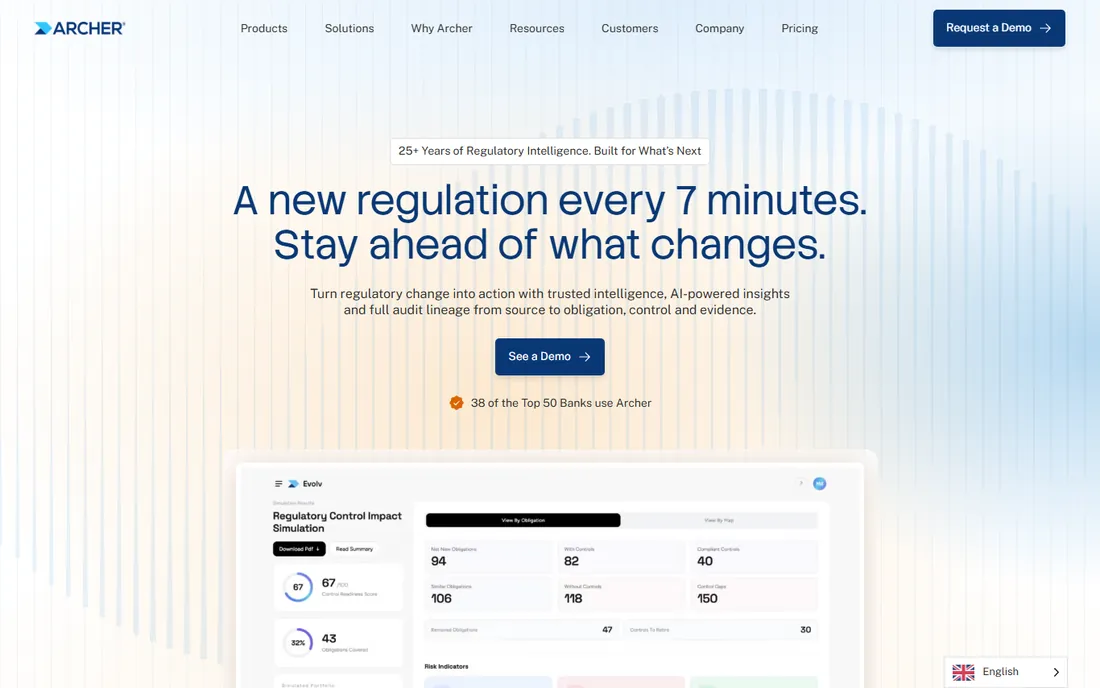
Archer, the former RSA Archer Suite, remains the reference platform for enterprise integrated risk management. It covers operational risk, IT risk, compliance, audit and business continuity in one system, with deployment options that include on-premise for organizations that cannot move risk data to the cloud. Regulated industries with mature risk functions keep buying it for a reason.
Everything about Archer signals enterprise. Pricing is quote-based, with analyst guides placing typical contracts well into five figures annually, and implementations need planning and staff to match. It is the wrong tool for a 200-person company that needs SOC 2. It is the right tool for a bank or insurer that already runs a formal risk program and needs the deepest bench.
What we like- Deepest enterprise risk feature set in the category with on-premise and cloud options
- Strong audit, business continuity and regulatory modules in one suite
- Built for Fortune-scale programs that need granular control
Watch out for- Quote-based pricing and enterprise-only sales motion
- Implementations commonly run long and need specialized expertise
Starting priceSee website
Free planNo
MetricStream competes with Archer for the largest risk programs on earth and leans harder into AI and analytics. The platform's predictive capabilities and federated data model are built for organizations where risk, compliance and audit data span dozens of business units and jurisdictions. Banking and energy reviewers rate its depth highly.
The price of that depth is cost and complexity. Expect a long sales cycle, a long implementation, and a contract that requires real budget authority. Ad-hoc reporting draws consistent reviewer complaints, so test reporting workflows during evaluation if dashboards matter to your board. Shortlist MetricStream when your risk program is already serious and you need analytics, not just registers.
What we like- AI-driven risk analytics and predictive capabilities built in
- Federated data model suits large interconnected risk programs
- Deep banking, energy and healthcare pedigree
Watch out for- Among the priciest platforms here with quote-based enterprise contracts
- Deeper customizations often need specialized IT skills or consultants
#3
LogicGate Risk Cloud
Best for: Teams that want configurable GRC without heavy IT
Visit logicgate.com
Starting priceSee website
Free planNo
LogicGate's Risk Cloud is the pragmatic middle of the market. A no-code builder lets risk managers design their own applications, fields and workflows without waiting on IT, which is why teams with small risk staffs and big ambitions end up here. It handles risk assessments, compliance tracking, incident management and vendor risk in one configurable platform.
The trade-offs are honest ones. You will not get pricing without a sales conversation. Reviewers also flag reporting depth as the weak spot: standard views work, but custom analysis takes effort. For mid-market companies formalizing risk management for the first time, LogicGate usually beats buying Archer and using ten percent of it.
What we like- Drag-and-drop builder lets business users shape workflows, forms and reports
- Faster to value than enterprise suites
- Flexible enough for risk, compliance and third-party use cases
Watch out for- Pricing is quote-based with no public tiers
- Standalone reporting is limited and ad-hoc analysis can frustrate power users
#4
ServiceNow IRM
Best for: Companies already running on the ServiceNow platform
Visit servicenow.com
Starting priceSee website
Free planNo
ServiceNow Integrated Risk Management earns its place on one condition: your company already runs ServiceNow. Inside that ecosystem, risk data flows into the same workflows as IT, security and operations, which removes the integration tax other platforms charge in time and connectors. For IT risk and digital operational resilience, it is genuinely strong.
Outside the ecosystem, the case collapses. You would not buy ServiceNow as a company just to get the GRC module. Pricing is custom and commonly lands in the five-figure to six-figure range depending on modules. If your CIO already standardized on ServiceNow, evaluate IRM before looking anywhere else.
What we like- Native fit inside the ServiceNow ecosystem with shared workflows and data
- Strong IT risk and operational resilience capabilities
- Massive integration catalog
Watch out for- Makes little sense unless you already own ServiceNow
- Enterprise pricing is quote-based and scales with modules and users
#5
NAVEX One
Best for: Ethics, compliance and policy programs
Visit navex.com
Starting priceSee website
Free planNo
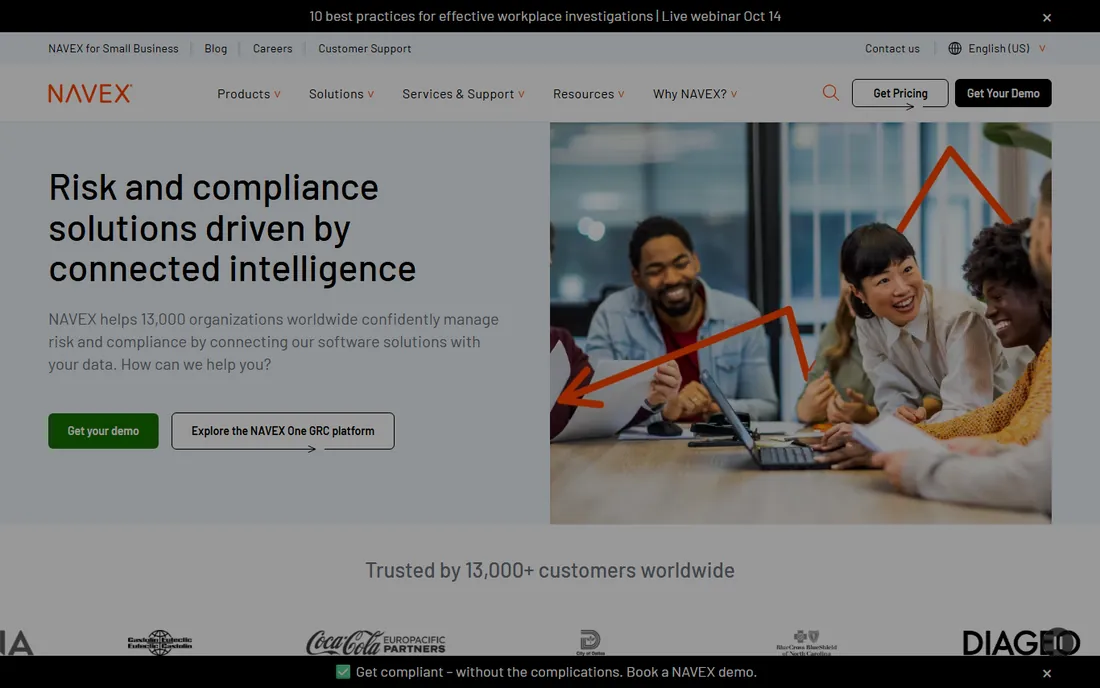
NAVEX One is where compliance programs go to grow up. The platform combines ethics reporting, policy management, third-party risk and training, built on NAVEX's long history in corporate compliance. Companies under regulatory pressure to show a real compliance culture, not just a risk register, tend to start here.
Be clear about scope. NAVEX is compliance-first; if your primary need is quantitative enterprise risk modeling, Archer or MetricStream fit better. Pricing is quote-based and enterprise-oriented. It belongs on the shortlist when the board's question is about ethics and compliance posture rather than risk analytics.
What we like- Market-leading ethics and compliance heritage with hotline and case management
- Strong policy management and employee training in the same suite
- Trusted by compliance officers for decades
Watch out for- Risk management is one module among many, not the core identity
- Quote-based pricing with an enterprise sales motion
Starting priceSee website
Free planNo
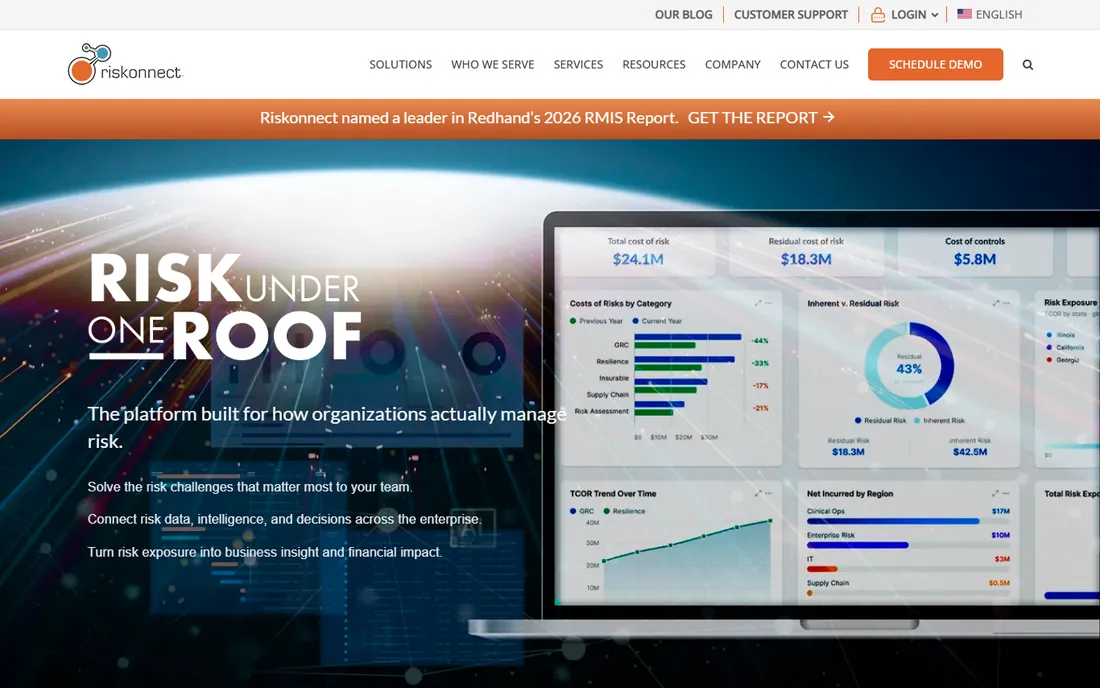
Riskonnect's pitch is that risk, claims and resilience belong in one system instead of three. For companies where operational incidents, insurance claims and business continuity planning overlap, that integration saves real reconciliation work. The platform covers enterprise risk, business continuity, claims administration and third-party risk with shared data.
It sits a tier below Archer and MetricStream in market presence, which cuts both ways: often more flexible in sales conversations, but with fewer public case studies to validate against. Pricing is custom. Evaluate Riskonnect when resilience and continuity matter as much as compliance.
What we like- Native connection between risk, claims, business continuity and resilience data
- Strong fit for insurance-adjacent and operationally complex companies
- Configurable without heavy development
Watch out for- Quote-based enterprise pricing
- Narrower brand recognition means fewer peer references than Archer or MetricStream
Starting priceSee website
Free planNo
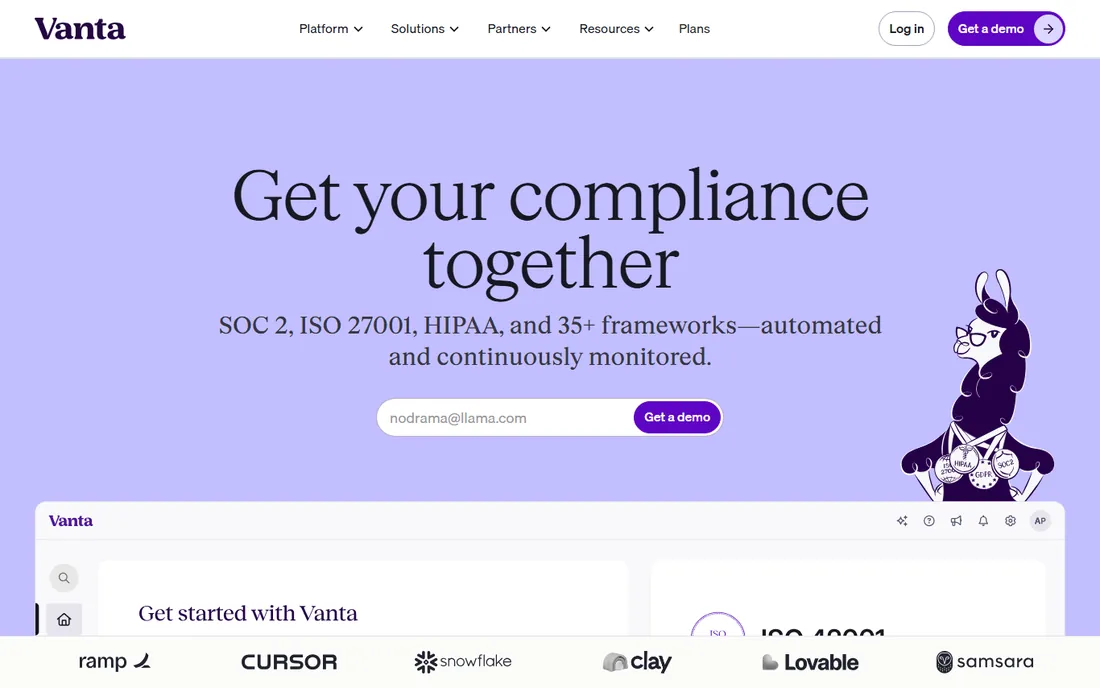
Vanta is not enterprise risk management, and that is the point. It automates the evidence collection, control monitoring and auditor coordination for SOC 2, ISO 27001, HIPAA and other frameworks, which is what most growing companies actually mean by risk management. With the largest customer base in compliance automation, it is the default choice for SaaS startups facing their first enterprise security review.
Cost is the honest catch. Vanta rarely publishes prices, and buyer data puts entry around $10,000 a year for a small team, climbing fast with frameworks and headcount. Renewal increases of 10 to 50 percent are reported, so get a renewal cap in writing. For a startup that needs a SOC 2 report this year, Vanta remains the fastest path.
What we like- Largest integration library and auditor marketplace in compliance automation
- Fastest out-of-the-box setup for a first SOC 2
- Trust Center feature helps close enterprise deals
Watch out for- Pricing is quote-based and commonly the highest of the automation trio
- Renewal increases are widely reported, so negotiate a cap
#8
Drata
Best for: Engineering-led teams automating compliance
Visit drata.com
Starting priceSee website
Free planNo
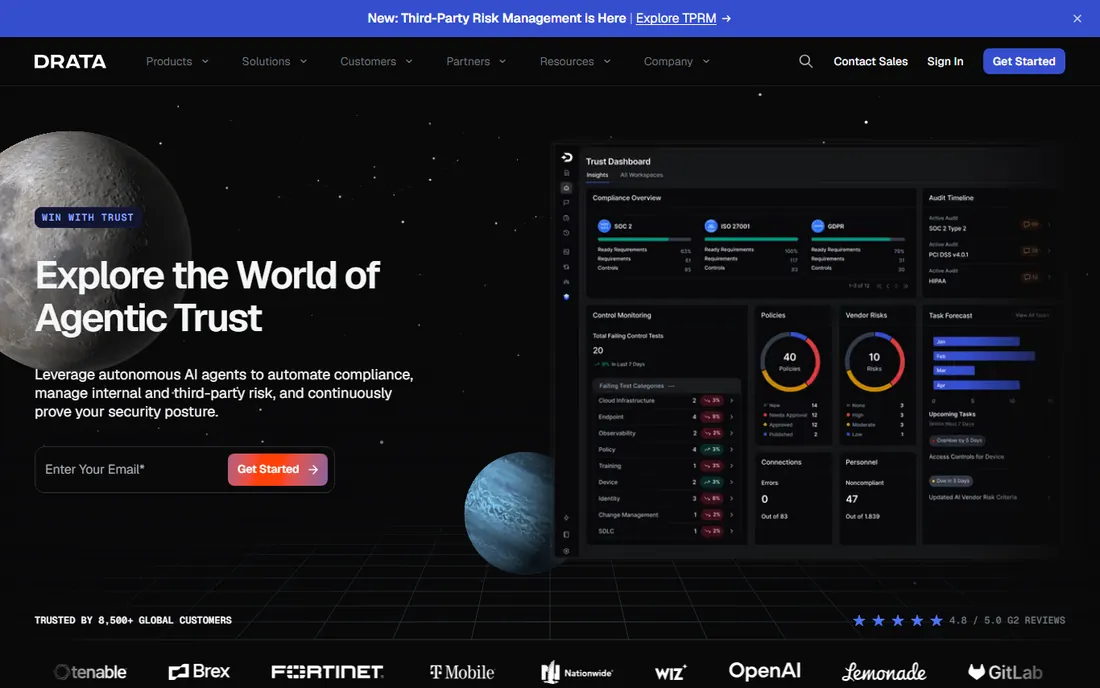
Drata takes the same compliance automation job as Vanta and aims it at DevOps-heavy teams. Evidence collection ties into code pipelines and cloud infrastructure, the Drata Agent checks endpoint posture, and every tier includes unlimited users, which removes the per-seat anxiety as you grow. Multi-framework buyers often find it the cheapest of the three at comparable scope.
It shares the category's pricing opacity: no public price list, with buyer-reported ranges starting around $7,500 a year. Drata added AI risk classification features in late 2025, but it remains a compliance automation platform, not enterprise risk management. Pick it when your team lives in the engineering stack and wants automation that respects that.
What we like- Engineering-first automation with deep CI/CD and infrastructure hooks
- Unlimited users at every tier removes per-seat surprise
- Commonly the most cost-effective of the big three at mid-size
Watch out for- Quote-based pricing with reported ranges from $7,500 to six figures
- Adds AI governance and risk features but is not a full ERM suite
Starting priceSee website
Free planNo
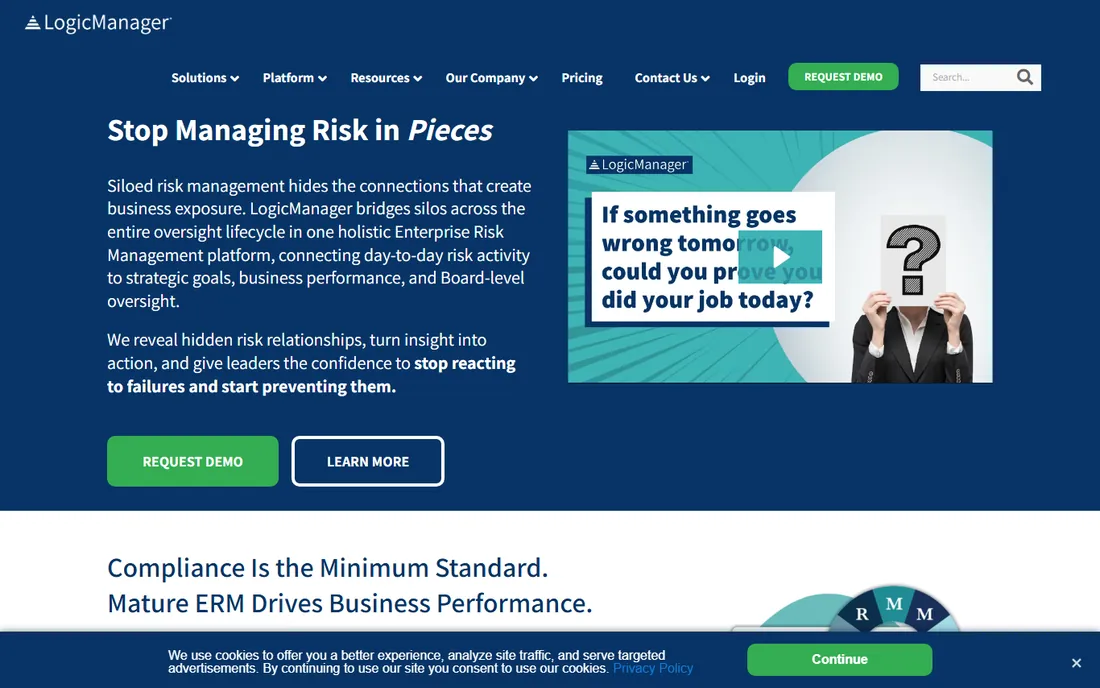
LogicManager is the on-ramp the enterprise suites forgot to build. It gives mid-size companies structured risk assessments, control libraries, incident tracking and reporting without the enterprise sales gauntlet. Companies moving off spreadsheets find the learning curve manageable and the advisory support genuinely useful.
It will not replace Archer for a global bank, and it does not pretend to. The integration catalog is narrower and advanced modeling is thinner. For a 200 to 2,000 person company that needs to show auditors and the board a real risk program, LogicManager is often the right-sized buy.
What we like- Built for companies moving from spreadsheets to a real risk program
- Includes risk assessments, controls and incident tracking at a mid-market price point
- Advisory support helps first-time risk teams
Watch out for- Less depth than enterprise suites for complex quantitative modeling
- Smaller vendor with a narrower integration catalog
How to scope risk software without buying twice
Start by naming the actual job. If an auditor will arrive within twelve months asking for SOC 2 or ISO 27001, buy compliance automation (Vanta, Drata) and skip the GRC suites entirely. If a regulator already supervises you, or your board runs a risk committee, buy a real GRC platform (Archer, MetricStream, LogicGate) sized to your program's maturity. If the mandate is ethics and compliance culture, NAVEX One fits better than any risk analytics tool.
Then size the implementation honestly. Enterprise GRC platforms commonly need three to nine months, dedicated internal staff, and sometimes consultants before they produce value. Compliance automation tools can run in weeks. The most expensive failure in this category is buying Archer-class software for a Vanta-class problem, then paying consultants to simplify what you bought. Write down the three outcomes the purchase must deliver in year one, and make the vendor show you each one in a demo with your data, not theirs.
The implementation cost nobody quotes
License fees are the smaller half of enterprise risk software. The larger half is the work: mapping controls across frameworks, migrating risk registers, training control owners, and re-doing assessments every cycle. Analyst pricing guides routinely show total first-year costs running well above the license quote once services are included. Before signing, ask each vendor for a written implementation plan with hours, owner names and a go-live date. Ask which tasks require their consultants versus your staff. And ask for two reference customers at your headcount who went live in the last year, then call them. In this category, the vendor's services team is the product as much as the software.
How we chose
We built this list from vendor documentation, 2026 analyst pricing guides, G2 and Capterra review profiles, and GRC comparison coverage published this year. A tool made the cut only if it is actively sold today and serves a real risk management job: enterprise risk, compliance automation, or ethics and compliance. Prices are not published by any vendor on this list, so every starting price reads See website rather than a guessed figure. We did not run hands-on trials. The trade-offs reflect consistent reviewer feedback and the documented structure of each vendor's sales and implementation model.
Frequently asked questions
What is risk management software?
Software that helps organizations identify, assess, monitor and report on risks. Enterprise platforms cover operational risk, IT risk, compliance, audit and business continuity in one system. A separate category, compliance automation, focuses on collecting evidence for frameworks like SOC 2 and ISO 27001. The right category depends on whether you answer to a regulator, an auditor, or an enterprise customer's security review.
How much does risk management software cost?
None of the major vendors publish list prices. Analyst pricing guides in 2026 place enterprise GRC platforms (Archer, MetricStream, ServiceNow) in the five-figure to six-figure annual range, with implementation services on top. Compliance automation tools (Vanta, Drata) are quote-based with buyer-reported entry points around $7,500 to $15,000 a year. Treat every figure as negotiable and get renewal caps in writing.
Do small companies need risk management software?
Most do not need enterprise GRC. A startup that needs SOC 2 for enterprise deals should buy compliance automation, which runs in weeks. A 200-person company formalizing risk for the first time fits LogicGate or LogicManager. Enterprise suites earn their price only when a dedicated risk team and a regulator are both in the picture.
What is the difference between GRC and compliance automation?
GRC (governance, risk and compliance) platforms manage the full risk lifecycle: assessments, controls, incidents, audits and reporting across the enterprise. Compliance automation tools do one job well: continuously collect evidence that your controls work, mapped to frameworks like SOC 2 or ISO 27001. Many companies eventually need both, but buying GRC before you need it is the classic overspend.
How long does implementation take?
Compliance automation: weeks. Mid-market GRC like LogicGate: one to three months. Enterprise suites like Archer or MetricStream: three to nine months is common, sometimes longer with data migration. Ask for a written timeline tied to your headcount and framework list before signing.
Can one platform handle SOC 2 and enterprise risk together?
Not well. Vanta and Drata automate SOC 2 evidence but do not run enterprise risk programs. Archer and MetricStream run risk programs but are overkill for a first SOC 2. Companies that need both usually run compliance automation for audits and a GRC platform for risk, with the GRC tool consuming evidence from the automation layer.
Sources we checked (9)
- https://www.selecthub.com/c/risk-management-software/
- https://www.6clicks.com/resources/blog/governance-risk-compliance-grc-software-pricing-guide-and-vendor-comparison
- https://www.selecthub.com/grc-software-tools/logicgate-vs-metricstream/
- https://www.v-comply.com/blog/top-grc-software/
- https://www.itechguides.com/best/grc-software/
- https://tech-insider.org/vanta-vs-drata-vs-delve-compliance-automation-2026/
- https://tech-insider.org/vanta-vs-drata-vs-secureframe-2026/
- https://kanopylabs.com/blog/vanta-vs-drata-vs-secureframe-compliance
- https://agent.mue.app/articles/vanta-vs-drata-vs-secureframe-which-soc2-platform
Is your product missing or out of date?
We review this list regularly. Vendors can request a listing, send updated pricing or ask about featured placement.

Shihab Mia · Founder, Rankite
Shihab has spent more than a decade helping SaaS and e-commerce brands grow through search. He writes Rankite's software buying guides from pricing pages, documentation and public user reviews. More about Shihab.