How we make this list: we compare pricing pages, product documentation and public user reviews. Rankite is independent; if a vendor ever pays for a featured spot, that listing is clearly labeled Partner.
Key takeaways
- Dock (free plan; Standard from $350/month) is the most complete platform here, extending deal rooms into onboarding, content and learning.
- Trumpet (free plan; from $45/user/month) and Aligned (from $29/user/month) are the most accessible entries for teams new to digital sales rooms.
- GetAccept (from $25/user/month) is the pick when proposals, contracts and e-signatures matter as much as the room itself.
- DealHub and Accord sit at the enterprise end with quote-based or high-ticket pricing, built for complex deal execution rather than simple sharing.
Quick comparison
| Tool | Best for | Starting price | Free plan |
|---|
 Dock Dock | Full-journey workspaces from deal to onboarding | $350/month (Standard plan, 5 seats) | Yes |
 Trumpet Trumpet | Collaborative microsites for complex deals | $45/user/month | Yes |
 Aligned Aligned | Simple shared spaces for first-time DSR teams | $29/user/month | Yes |
 GetAccept GetAccept | Proposals, contracts and e-sign in one room | $25/user/month (eSign plan) | Free trial (14 days) |
 Flowla Flowla | Growing teams wanting guided deal flows | $49/user/month | Free trial |
 DealHub DealHub | Enterprise deal playbooks and CPQ | See website (custom quote) | No |
 Accord Accord | Standardized mutual action plans at scale | $899/month | Yes |
Is your product missing or out of date?
We review this list regularly. Vendors can request a listing, send updated pricing or ask about featured placement.
The best digital sales room software
An account executive sends a proposal to her champion on a Tuesday. The champion forwards it to finance, who forwards it to legal, who asks a question nobody can answer because the context died three forwards ago. By Friday the deal has gone quiet. The AE has no idea who opened the proposal, which pages they read, or whether the economic buyer has even seen it. She follows up blind, and the deal slips another quarter.
A digital sales room fixes that blind spot. Instead of email threads, the seller creates one shared online space per deal: the proposal, the pricing, the demo recording, the mutual action plan, the security docs, all in one trackable hub the buying committee can visit. The seller sees exactly who engaged with what. The seven platforms below are the strongest options in 2026.
#1
Dock
Best for: Full-journey workspaces from deal to onboarding
Visit dock.us
Starting price$350/month (Standard plan, 5 seats)
Free planYes
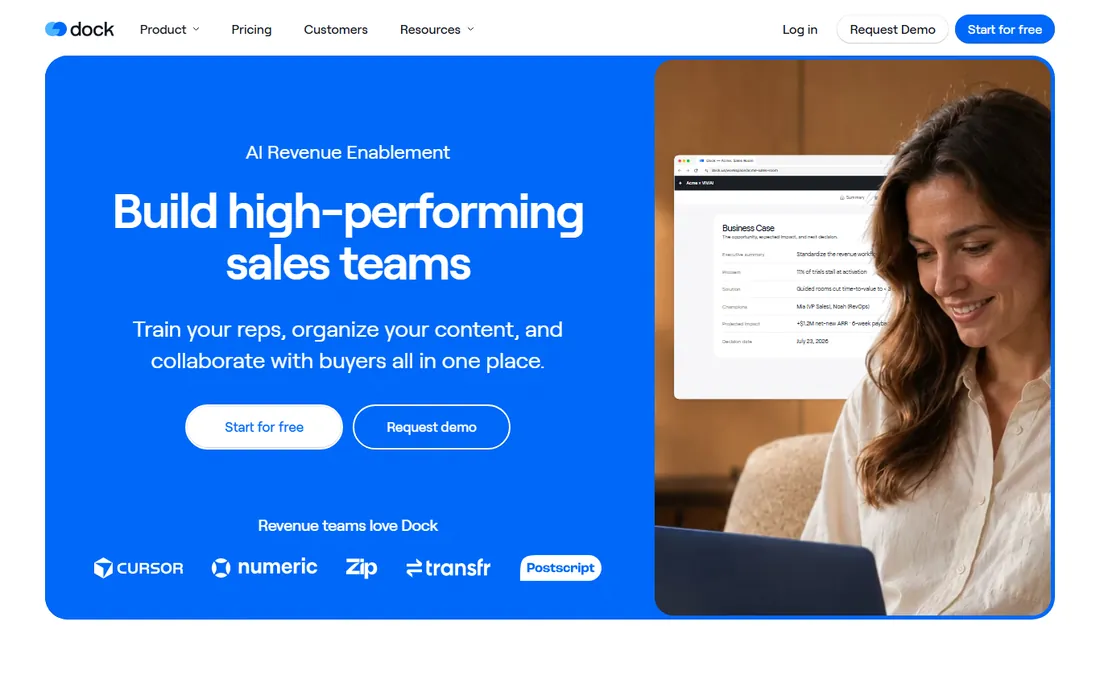
Dock is the most complete platform on this list. It starts with digital sales rooms (mutual action plans, embedded videos, messaging, timelines) and keeps going: the same workspace becomes the customer onboarding hub after the deal closes, with a content management system and learning modules layered on top. For mid-market B2B teams running complex, multi-stakeholder deals, that continuity from first demo through renewal is the core argument.
The pricing reflects the ambition. The free plan covers individuals and small teams with up to 50 workspaces, but Standard starts at $350 a month for 5 seats and Premium at $1,000 for 10. External collaborators never pay, which matters for buyer adoption. If you want one platform for the whole buyer journey rather than a point solution, Dock is the default shortlist pick.
What we like- Free plan with up to 50 workspaces is genuinely usable
- Deal rooms convert into onboarding hubs without losing context
- AI features generate business cases and surface deal guidance
Watch out for- Paid plans start at $350 a month, which prices out tiny teams
- Engagement analytics are basic compared to specialists
- Breadth means some features feel lighter than focused rivals
Starting price$45/user/month
Free planYes
Trumpet calls its rooms "pods," and the microsite metaphor is apt: each deal gets a personalized, branded hub with videos, documents, mutual action plans and messaging that feels built for that buyer, not templated. The free plan with up to 10 pods lets a small team run real deals before paying, which is rare in this category. Stakeholder tracking shows who in the buying committee is engaging and who has gone dark.
The honest catch is the climb. Paid plans start around $45 per user per month, with Scale near $60 and Enterprise higher, and the best analytics and integrations sit upstairs. Pricing is natively in pounds, which adds friction for US finance teams. For teams that win on buyer experience and want rooms that feel bespoke, Trumpet is the craft pick.
What we like- Free plan includes up to 10 pods for real evaluation
- Pods act as personalized microsites that buyers actually enjoy opening
- Strong stakeholder tracking and engagement signals
Watch out for- Paid tiers climb quickly (Scale around $60/user/month)
- UK-rooted pricing in pounds can confuse US buyers
- Enterprise features need the top tiers
Starting price$29/user/month
Free planYes
Aligned is the on-ramp to digital sales rooms. At $29 per user per month with a free plan to start, it gives teams their first shared deal spaces in days: content sharing, mutual action plans, stakeholder tracking and CRM integrations with Salesforce, HubSpot, Close and Pipedrive. The interface is deliberately simple, which is exactly what teams adopting their first DSR need.
The tradeoff is ceiling. Aligned does not try to be a full revenue platform like Dock or an enterprise playbook engine like DealHub. Complex deal orchestration, deep analytics and advanced automation live elsewhere. For SMB and mid-market teams that want the core DSR value (one shared space, visible engagement) without a big project, Aligned is the easiest yes.
What we like- Lowest paid entry among the dedicated DSR tools
- Fast deployment with an intuitive interface
- AI assistance without enterprise complexity
Watch out for- Fewer advanced features than Dock or DealHub
- Smaller integration list
- Best for straightforward deals rather than complex enterprise cycles
Starting price$25/user/month (eSign plan)
Free planFree trial (14 days)
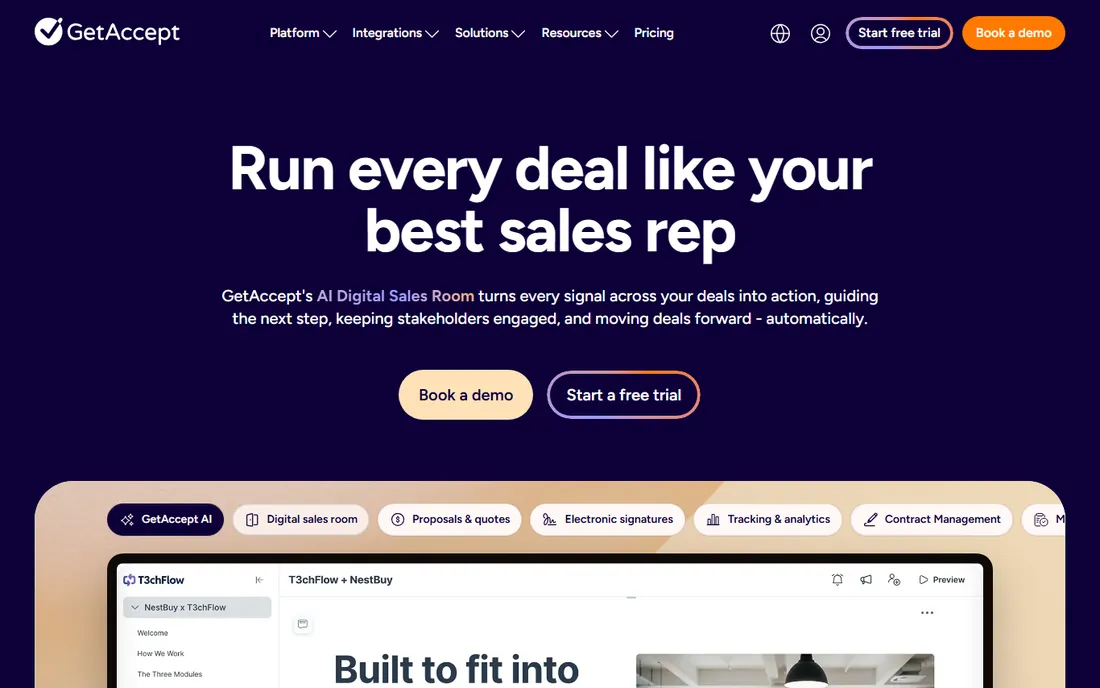
GetAccept approaches the sales room from the document side. Where others start with a shared space and add files, GetAccept starts with proposals and contracts: interactive quotes, native e-signatures, contract rooms and deal rooms in one platform. The eSign plan at $25 per user per month is the cheapest entry here, with Deal Room from $39 and Contract Room from $49.
The honest catch is that the full DSR experience costs more than the headline price suggests, and there is no free tier to test with. The platform's breadth can also feel heavy for teams that just want simple rooms. But when the deal hinges on proposals and signatures, which is most B2B deals, GetAccept's document-native approach closes the loop that pure sharing tools leave open.
What we like- Native e-signatures and contract rooms no competitor matches at this price
- Modular pricing lets you buy only what you need
- Deep CRM integrations across Salesforce, HubSpot and Dynamics
Watch out for- Full digital sales room needs the $49+ tiers
- No free plan, only a 14-day trial
- Interface carries the weight of its many modules
Starting price$49/user/month
Free planFree trial
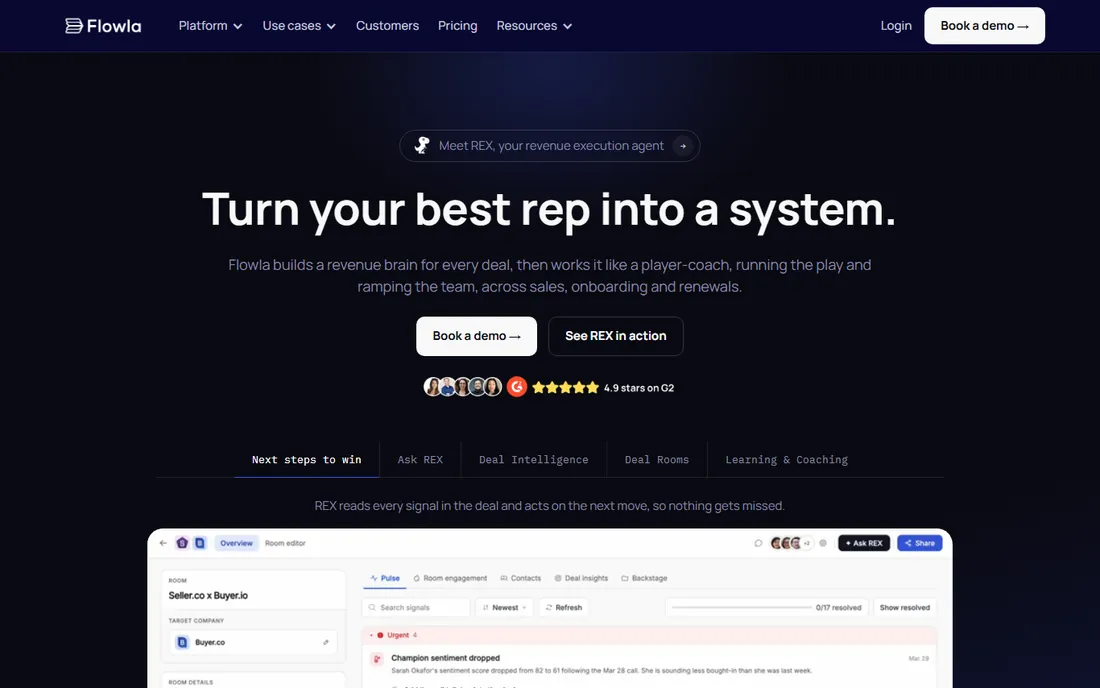
Flowla builds digital sales rooms as guided journeys rather than static hubs. Buyers move through structured flows: watch the demo, review the pricing, complete the security review, sign the order form, with the seller seeing progress at each step. For SaaS and product-led companies with repeatable evaluation processes, that structure turns tribal knowledge into a system.
The tradeoffs are price and maturity. At $49 per user per month with no confirmed free tier, it costs more than Aligned to start, and the integration ecosystem is smaller than the established players. But the guided-flow concept is genuinely differentiated: if your deals follow a repeatable path and reps keep reinventing it, Flowla productizes the path.
What we like- Guided flows walk buyers through evaluation steps
- Clean modern interface
- Good fit for product-led and SaaS sales motions
Watch out for- Higher entry price than Aligned or Trumpet
- Younger company with a smaller ecosystem
- No free plan confirmed
Starting priceSee website (custom quote)
Free planNo
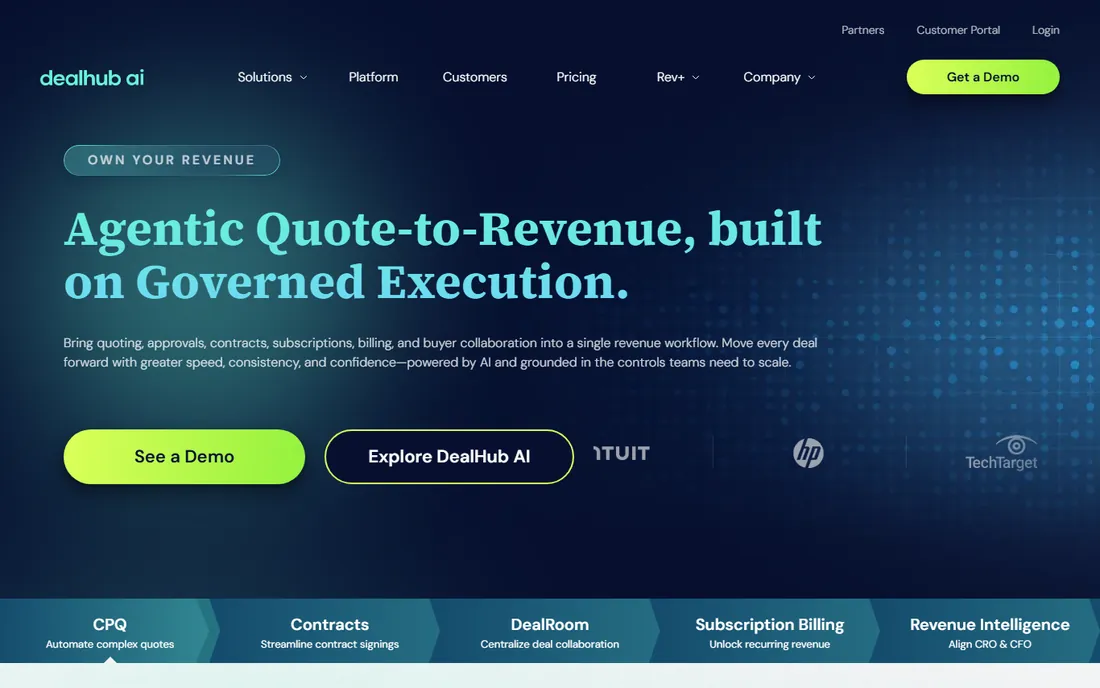
DealHub is the enterprise end of this category. It merges the digital sales room with configure-price-quote, contract lifecycle management and billing, so a complex deal can move from playbook to quote to signed contract inside one system. For large revenue organizations with complicated pricing, approvals and subscription structures, that consolidation replaces several tools.
The honest catch is everything enterprise: custom quotes, implementation projects, and a platform whose power is wasted on simple deals. There is no free plan and no published price. If your deals involve CPQ, legal redlines and multi-level approvals, DealHub is built for exactly that. If you need a shared space for a five-person buying committee, it is ten times the tool you need.
What we like- Combines DSR with CPQ, contract management and subscription billing
- Interactive deal playbooks guide complex enterprise cycles
- Deep customization for large revenue orgs
Watch out for- Quote-only pricing aimed at enterprise budgets
- Implementation is a project, not a signup
- Overkill for teams that just need shared deal spaces
Starting price$899/month
Free planYes
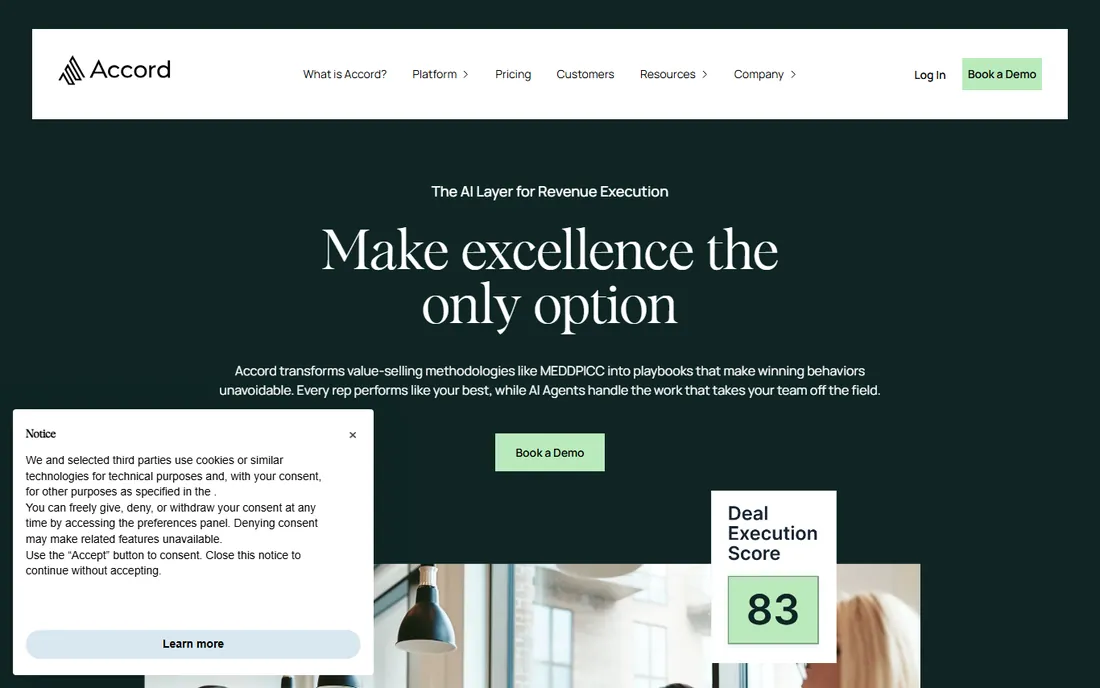
Accord focuses on the least glamorous and most valuable part of the sales room: the mutual action plan. It standardizes how reps run evaluations, with shared checklists, stakeholder mapping and forecast-friendly structure that gives managers real visibility into deal health. For revenue leaders trying to make every rep execute like the top rep, that standardization is the product.
The tradeoff is price and breadth. Starting at $899 a month, Accord is priced for teams, not individuals, and it does not try to match Dock's onboarding hubs or GetAccept's contracts. It is a discipline tool for process-driven sales orgs. If your problem is inconsistent execution across the team rather than buyer engagement, Accord addresses the actual disease.
What we like- Mutual action plans and standardized sales execution are the core specialty
- Free plan available for evaluation
- Strong fit for teams standardizing rep behavior
Watch out for- $899 a month entry prices out small teams
- Narrower feature set than full DSR platforms
- Best for process-driven orgs, not freeform collaboration
What makes a digital sales room worth paying for
Start with engagement visibility, because it is the one thing email cannot give you. Every platform here should show who opened the room, what they viewed, and for how long. Demo that with a test room before buying: send it to a colleague, have them click around, and check what the seller sees. Weak analytics is the first sign of a glorified file share.
Then check the mutual action plan. The rooms that move deals have shared checklists with owners and dates, not just document lists. Ask how plans handle slipped dates, how stakeholders get notified, and whether the plan data reaches your CRM. A room without accountability features is a prettier inbox.
Finally, price the buyer side at zero. Every platform here lets external buyers in free, but check the friction: do buyers need accounts, do email invites work cleanly, does it render well on a phone? The room only works if the buying committee actually opens it. The best technology in this category is the one your champion forwards without being asked.
How this shortlist was built
This list was built from vendor pricing pages, published comparisons and practitioner reviews, with prices verified in October 2026. Dock's pricing comes from its own site; Trumpet, Aligned, GetAccept and Flowla figures come from current published comparisons. DealHub does not publish pricing and is listed as custom quote. Every tool here is an active digital sales room product.
No hands-on testing was involved and no vendor paid for placement. The selection weights buyer-facing collaboration quality, engagement analytics, mutual action plan depth, CRM integration and pricing accessibility. Both accessible entries (Trumpet, Aligned) and enterprise platforms (DealHub, Accord) are included because deal complexity varies enormously across buyers.
The buyer-adoption problem
The dirty secret of digital sales rooms is that the software is rarely the failure point; buyer adoption is. A beautiful room that the champion never opens is worse than useless, because the seller assumes engagement that is not happening. The platforms that win here obsess over the buyer experience: no-login access, mobile-friendly layouts, email notifications that do not feel like spam.
Before rolling out any of these tools, pilot with five reps and measure one thing: what percentage of rooms get opened by more than one stakeholder? If the number is low, the problem is usually the invite, not the platform. The best implementations treat the room link like a product launch: personalized, contextual, and sent at the moment the buyer asked for the materials inside it.
Frequently asked questions
What is a digital sales room?
It is a shared online workspace for a single B2B deal, where the seller and the buying committee collaborate. It typically holds the proposal, pricing, demo recordings, case studies, security documents and a mutual action plan, with analytics showing the seller who engaged with what. It replaces scattered email threads with one trackable hub.
How is a digital sales room different from a data room?
A data room (like those used in M&A) is a secure repository for due diligence documents. A digital sales room is a collaborative selling space: it includes mutual action plans, messaging, engagement tracking and often proposals and e-signatures. Data rooms are about secure storage; sales rooms are about moving the deal forward.
Do buyers need to pay or create accounts?
No. Every platform on this list lets external buyers access rooms for free, and most support no-login or lightweight access. This is table stakes for the category: if buyers had to buy seats, nobody would open the room. Check the guest experience during your trial, because friction there kills adoption.
How much does digital sales room software cost?
It ranges from free tiers (Dock, Trumpet, Aligned, Accord) to $29-$49 per user per month for the accessible tools, $350+/month platform pricing for Dock's paid tiers, and custom enterprise quotes for DealHub. Accord starts at $899/month. Most teams land between $30 and $70 per user per month for a serious deployment.
Can a digital sales room replace my CRM?
No. The room is where the deal happens; the CRM is where the business records it. Every platform here integrates with Salesforce or HubSpot to sync engagement data, stakeholders and mutual action plan progress back to the opportunity. Buy the room for buyer collaboration and keep the CRM as the system of record.
How do I get buyers to actually use the room?
Personalize it, time it right, and keep it current. Send the room link at the moment the buyer asks for materials, not as a cold follow-up. Put their company name and logo on it, keep the mutual action plan updated, and reference the room on every call. Rooms that feel maintained get opened; rooms that feel abandoned do not.
Sources we checked (7)
- https://www.getaccept.com/blog/best-digital-sales-room-software
- https://www.flowla.com/blog/trumpet-vs-getaccept
- http://www.storylane.io/blog/get-accept-alternatives
- https://croclub.com/tools/best-digital-sales-room-software/
- https://www.dock.us/library/sales-enablement-software
- https://www.dock.us/library/highspot-alternatives
- https://slashdot.org/software/comparison/Adobe-Document-Cloud-vs-GetAccept/
Is your product missing or out of date?
We review this list regularly. Vendors can request a listing, send updated pricing or ask about featured placement.

Shihab Mia · Founder, Rankite
Shihab has spent more than a decade helping SaaS and e-commerce brands grow through search. He writes Rankite's software buying guides from pricing pages, documentation and public user reviews. More about Shihab.