How we make this list: we compare pricing pages, product documentation and public user reviews. Rankite is independent; if a vendor ever pays for a featured spot, that listing is clearly labeled Partner.
Key takeaways
- CrowdStrike Falcon and SentinelOne Singularity publish per-endpoint pricing ($59.99 and $69.99/year), which is rare transparency in XDR.
- Microsoft Defender XDR is the cheapest credible option for Microsoft 365 shops, starting at $5.20/device/month standalone.
- Palo Alto, Trend Micro, Sophos, and Cisco all require quotes, so budget a sales cycle and negotiate hard on renewals.
- Cynet is the best fit for lean IT teams that want XDR plus built-in 24/7 MDR without hiring analysts.
- Your existing stack decides the shortlist: Microsoft shops should start with Defender, CrowdStrike or SentinelOne shops should stay put.
Quick comparison
Is your product missing or out of date?
We review this list regularly. Vendors can request a listing, send updated pricing or ask about featured placement.
Extended detection and response is the security category where marketing runs furthest ahead of reality. Every vendor promises a single pane of glass, AI-driven everything, and autonomous response. What you actually get varies from genuinely impressive correlation engines to a rebranded EDR with a new logo. The difference matters because XDR is priced like infrastructure, not software: per endpoint, per year, with multi-year terms.
Here is the practical way to think about it. XDR earns its keep when it correlates signals across endpoints, email, identity, and cloud so your team investigates one incident instead of four alerts. If you only have endpoints, you need EDR, not XDR, and half the tools below will happily sell you the bigger box anyway. If you run Microsoft 365, you may already own a credible XDR in Defender and not know it.
We checked pricing against what vendors actually publish, which is less than you would hope: only CrowdStrike, SentinelOne, and Microsoft put numbers on their sites. The rest are quote-only, and we say so instead of inventing figures.
Starting price$59.99/device/year (billed annually)
Free planFree trial (15 days)
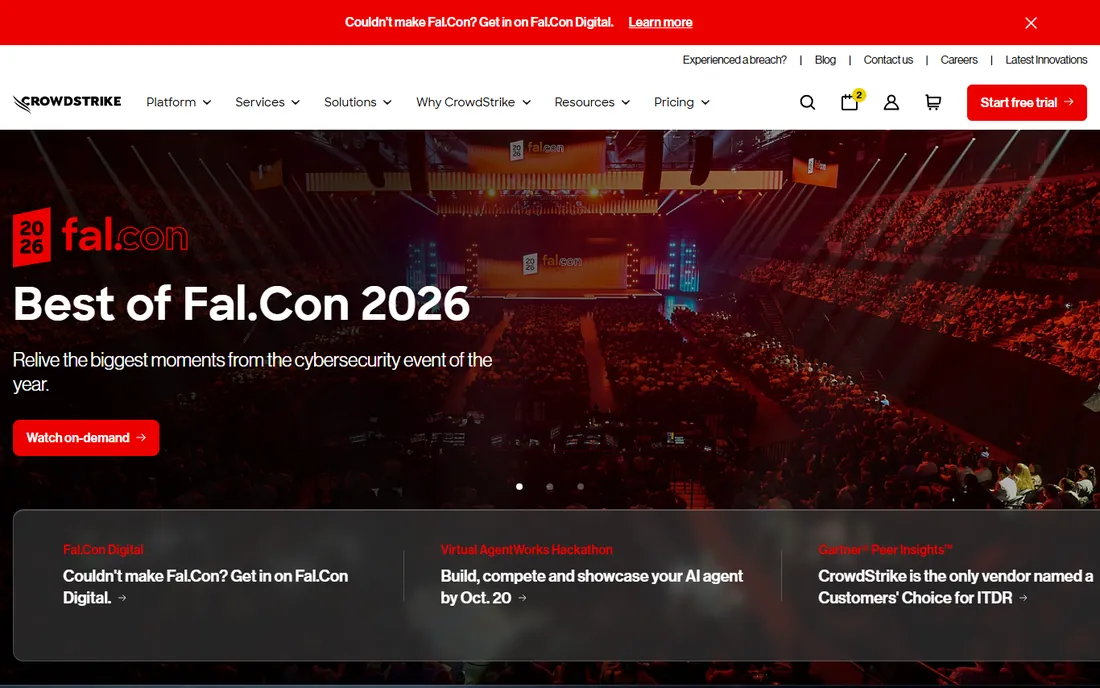
CrowdStrike built the modern EDR market and its XDR extends the same cloud-native architecture across identity, cloud, and third-party telemetry through the Threat Graph. The agent is famously lightweight, the threat intelligence is genuinely best in class, and Falcon Complete gives you a managed SOC without building one. For organizations that want one vendor from prevention to response, this is the reference platform.
Pricing is published, which deserves credit: Go at $59.99 per device per year, Pro at $99.99, Enterprise at $184.99, all billed annually, with monthly options at higher rates. But read carefully: real XDR functionality concentrates in Enterprise, and Falcon Complete is custom-quoted on top. A 15-day free trial covers the basics. If you are already a CrowdStrike shop, the XDR upsell is natural. If you are choosing fresh, compare the Enterprise tier against SentinelOne Complete, not the Go price.
What we like- Publishes pricing, rare in this category
- Lightweight cloud-native agent with strong threat intelligence
- Falcon Complete adds fully managed MDR
Watch out for- Full XDR value needs the Enterprise tier at $184.99/device/year
- Premium pricing versus Microsoft and Sophos
- 15-day trial covers antivirus, not the full platform
Starting price$69.99/endpoint/year
Free planNo
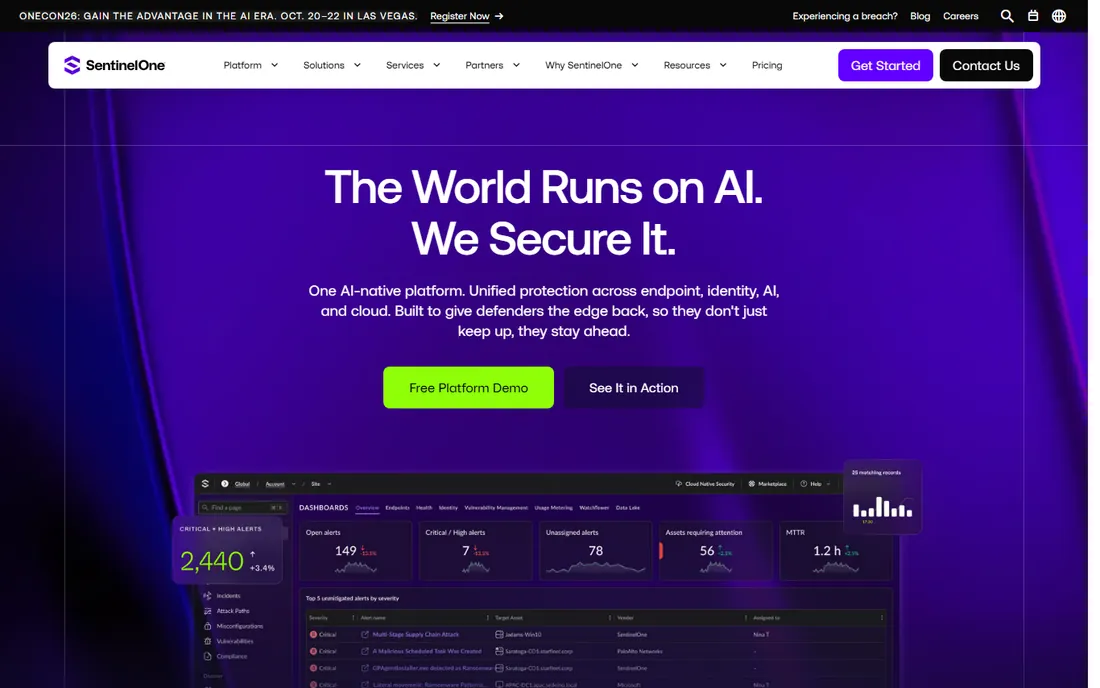
SentinelOne's differentiator is autonomy. The on-device AI detects and responds without waiting for the cloud, which means protection keeps working offline, and the one-click ransomware rollback reverses encryption without a backup restore. For organizations with remote endpoints on unreliable connections, that architecture is a real advantage over cloud-dependent rivals.
The pricing page lists four of five tiers: Core $69.99, Control $79.99, Complete $179.99, and Commercial $229.99 per endpoint per year, with Enterprise quoted. Note the trap: SentinelOne's own MDR is only available on Commercial and Enterprise, so buyers who want managed detection pay the step up from Complete. Purchases go through partners, whose pricing takes precedence over web figures at any real scale. No free trial is published, so negotiate a proof of concept instead.
What we like- Published tier pricing from $69.99/endpoint/year
- On-device AI works fully offline
- One-click ransomware rollback without restoring from backup
Watch out for- No free trial listed
- MDR requires the Commercial tier at $229.99, a jump from Complete
- Partner-quoted pricing beyond small deployments
Starting price$5.20/device/month
Free planFree trial (30 days)
If your company runs on Microsoft 365, start here before you look anywhere else. Defender XDR correlates signals across endpoints, identity, email, and cloud apps with the kind of native integration third parties cannot match, and automated investigation and remediation handles the routine incidents. Many organizations already own most of it inside Microsoft 365 E5 without realizing it.
The pricing paths are published: Microsoft 365 E5 at $57 per user per month includes the full Defender stack, the E3 plus Security add-on route runs about $22 per user, and Defender for Endpoint Plan 2 standalone is $5.20 per device per month. A 30-day free trial lets you validate it. The honest limitation is ecosystem: outside Microsoft-heavy environments, the correlation advantage fades, and CrowdStrike or SentinelOne usually win the bake-off.
What we like- Cheapest credible XDR for Microsoft shops
- Correlates endpoint, identity, email, and cloud apps natively
- Defender for Endpoint P2 standalone at $5.20/device/month
Watch out for- Best value requires Microsoft 365 E5 at $57/user/month
- Weaker outside the Microsoft ecosystem
- Some reviewers note slow email attachment scanning
Starting priceSee website
Free planFree trial (30 days)
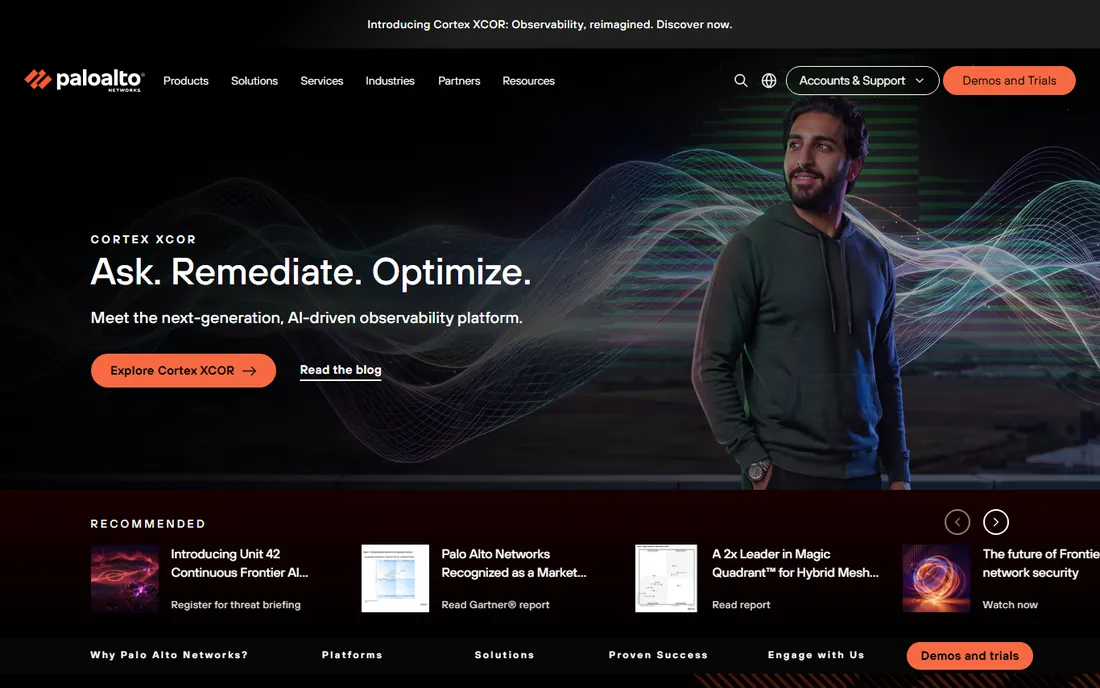
Palo Alto Networks practically invented XDR as a category, and Cortex XDR remains one of the deepest platforms for correlating endpoint data with network telemetry. If your firewalls are already Palo Alto, the network-side visibility this adds is something endpoint-only vendors cannot replicate: lateral movement and exfiltration show up in the firewall data first.
Everything about buying it is enterprise. Pricing is quote-only, with per-endpoint or per-GB licensing plus add-ons for data retention and integrations, so get the full bill of materials in writing. A 30-day trial is available on request. Outside the Palo Alto ecosystem, the premium is harder to justify against CrowdStrike or Microsoft. Inside it, Cortex is usually the right answer.
What we like- Pioneered the XDR category
- Fuses endpoint, firewall network telemetry, cloud, and identity
- Strong fit if you already run Palo Alto NGFWs
Watch out for- No public pricing, quote only
- Licensing plus add-ons for retention and data ingestion get complex
- Heaviest value inside the Palo Alto ecosystem
Starting priceSee website
Free planFree trial (30 days)
Trend Micro Vision One is the breadth play: endpoint protection, email security, server and cloud workload protection, OT security, and attack surface risk management under one roof. For organizations that want a single vendor across the whole estate, including operational technology, that coverage is genuinely hard to match.
Third-party transaction data puts Vision One bundles around $35 to $60 per endpoint annually at mid-market scale, but Trend Micro publishes no prices, so treat those as negotiation context, not quotes. Reviewers note the platform can be heavy on endpoints and the initial tuning takes work. The 30-day trial covers up to 50 endpoints, which is enough for a real pilot. Negotiate aggressively: first-time buyers reportedly achieve 20 to 35% off list.
What we like- Covers endpoints, email, servers, OT, and hybrid cloud in one platform
- Strong vulnerability and attack surface management
- 30-day trial for up to 50 endpoints
Watch out for- No published pricing, quote only
- Can be resource-heavy on endpoints
- Setup and tuning demand more effort than simpler rivals

#6
Sophos Intercept X with XDR
Best for: SMBs on the Sophos stack
Visit sophos.com
Starting priceSee website
Free planFree trial (30 days)
Sophos is the pragmatic pick for small and mid-size businesses that already run Sophos firewalls or endpoint protection. Intercept X Advanced with XDR adds extended detection and response with 90-day telemetry retention, and Synchronized Security means the firewall and endpoint share intelligence in real time: an infected endpoint gets isolated automatically. Third-party sources cite roughly $48 per user per year for the XDR tier, but Sophos does not publish pricing.
The honest tradeoff is depth. This is not the platform for a sophisticated SOC doing advanced threat hunting; it is the platform for a three-person IT team that needs strong protection without a dedicated security hire. A 30-day free trial covers the full endpoint product. If you are standardized on Sophos, the XDR add-on is an easy yes. If you are choosing a stack fresh, compare it against Microsoft Defender before committing.
What we like- Strong anti-ransomware with CryptoGuard rollback
- Synchronized Security links endpoint and firewall automatically
- Manageable for lean IT teams
Watch out for- No published pricing, quote only
- XDR depth trails CrowdStrike and SentinelOne
- Best value requires the broader Sophos estate
Starting priceSee website
Free planFree trial
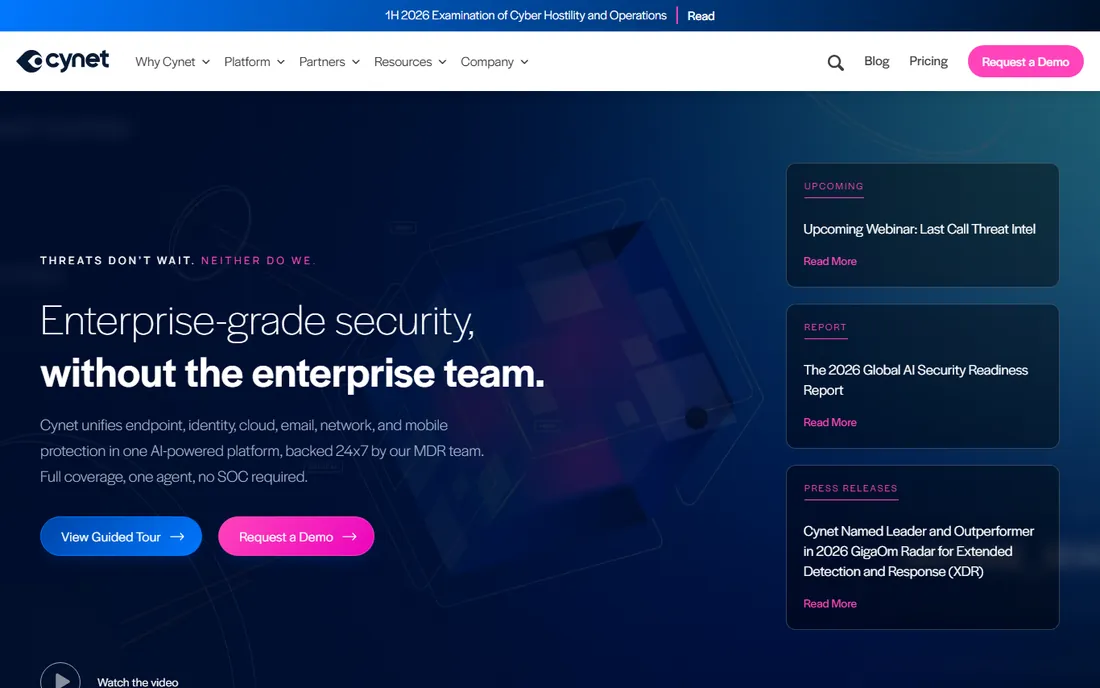
Cynet's pitch is aimed at the most underserved buyer in security: the company with real threats and no SOC. The all-in-one platform bundles XDR, security orchestration and automation, and 24/7 managed detection and response, so a lean IT team gets analyst-backed protection without hiring analysts. Deployment is famously fast, with the company claiming thousands of endpoints in under two hours.
Pricing is quote-only, though third-party sources consistently cite around $9 per endpoint per month, which would make it one of the cheaper ways to get MDR included. A free trial is available. The tradeoffs are vendor size and ecosystem: fewer third-party integrations and less reporting depth than the enterprise platforms. For a 50 to 500 person company without security staff, that tradeoff usually favors Cynet.
What we like- XDR, SOAR, and 24/7 MDR in one platform and one price
- Deploys across thousands of endpoints in hours
- Built for teams without dedicated analysts
Watch out for- No published pricing, quote only
- Smaller vendor with a narrower integration ecosystem
- Reporting depth trails enterprise platforms
Starting priceSee website
Free planNo
Trellix XDR exists because McAfee Enterprise and FireEye merged, and its value proposition is consolidation: one XDR across the combined portfolio for enterprises already invested in those tools. If your estate runs Trellix endpoint, email, and network products, the XDR layer ties them together with a single console and correlated detection.
As a fresh evaluation against CrowdStrike or SentinelOne, it is a harder sell; this is a platform you arrive at through existing investment, not one you typically choose on capabilities alone. Pricing is quote-only with no free trial published. If you are a Trellix shop, evaluate the XDR as part of your renewal. If you are not, the rest of this list deserves your attention first.
What we like- Unifies the former McAfee Enterprise and FireEye portfolios
- Strong for organizations standardizing on Trellix
- Broad product integration within the suite
Watch out for- No published pricing
- Primarily a consolidation play rather than a best-of-breed pick
- Migration complexity for mixed estates
Starting priceSee website
Free planFree trial (30 days)
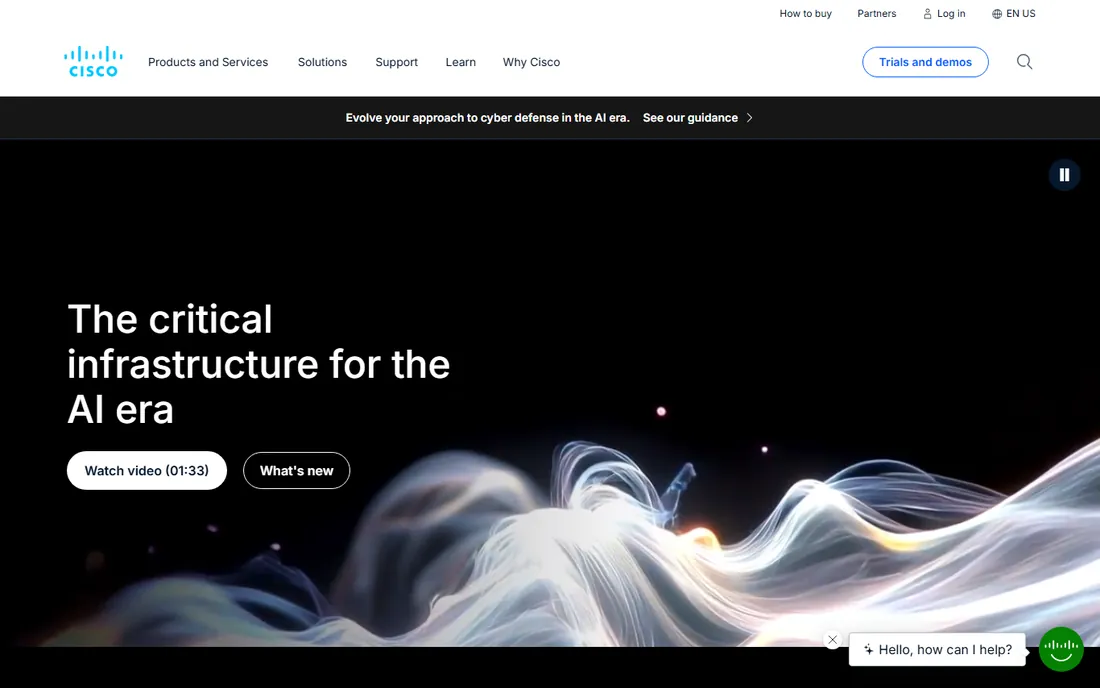
Cisco XDR's advantage is the network. For organizations running Cisco security infrastructure, it unifies network telemetry with endpoint data and third-party security integrations in a way that gives the SOC visibility no endpoint-only tool can match. The platform story has matured considerably as Cisco consolidated its security portfolio.
Pricing is quote-only, with third-party sources citing roughly $69 per endpoint annually, so budget a sales cycle. A 30-day trial with full platform access lets you validate the correlation before committing. Like Palo Alto's Cortex, this is a platform whose value concentrates inside its own ecosystem. Cisco network shops should absolutely evaluate it; everyone else will find simpler buying elsewhere.
What we like- Unifies network telemetry, endpoint data, and third-party integrations
- Natural fit for Cisco-heavy networks
- 30-day full-feature trial
Watch out for- No published pricing
- Strongest inside the Cisco security suite
- Third-party integration story is good but not best in class
Starting priceSee website
Free planFree trial (30 days)
Bitdefender's GravityZone has long been the value pick in endpoint protection, and its XDR extends that across email and cloud workloads. The protection engines consistently score well in independent tests, and the platform is manageable without a large security team. For cost-conscious organizations that want multi-layer protection without enterprise pricing, it belongs on the shortlist.
Bitdefender does not publish XDR pricing, so you will need a quote; third-party sources suggest competitive per-endpoint annual rates. A 30-day free trial is available. Be realistic about the ceiling: threat hunting depth, automation, and ecosystem integrations trail CrowdStrike, SentinelOne, and Microsoft. But if your alternative is renewing an EDR that does less for more money, GravityZone XDR is worth the evaluation.
What we like- Strong protection engines at a competitive price point
- Covers endpoint, email, and cloud workloads
- Manageable for mid-size IT teams
Watch out for- No published pricing
- XDR correlation depth trails the category leaders
- Brand recognition lags in the enterprise XDR conversation
We started from each vendor's own pricing page and product documentation, checked in October 2026, and marked pricing as "See website" wherever the vendor does not publish numbers. In XDR, that is most of the category: only CrowdStrike, SentinelOne, and Microsoft put real figures on their sites. We cross-referenced plan structures, trial terms, and tier limitations against third-party procurement data, analyst comparisons, and practitioner reviews to catch what vendor pages omit, like MDR tier jumps and partner-pricing precedence. We weighted detection breadth across endpoint, identity, email, and cloud, response automation quality, pricing transparency, and fit for small-to-mid-size US companies. We did not run hands-on trials or a lab bake-off, so treat this as a research-backed shortlist to take into proof-of-concept testing.
What to check before you buy
Start with your existing stack, because XDR value concentrates in ecosystems. Microsoft shops get the most from Defender XDR. CrowdStrike, SentinelOne, and Palo Alto customers should evaluate their incumbent's XDR before inviting competitors. Switching XDR vendors means redeploying agents across the estate, retraining the SOC, and rebuilding integrations; the switching cost is real, so the challenger has to be clearly better, not marginally cheaper.
Then verify what "XDR" includes at the tier you are quoted. Vendors slice the platform aggressively: CrowdStrike's full XDR needs Enterprise, SentinelOne's MDR needs Commercial, and several platforms charge extra for data retention, ingestion volume, or SOAR features. Get the quote itemized by tier and add-on, and ask what a renewal costs in year two and three. Procurement data shows first-time buyers achieving 20 to 35% off list with competitive pressure in play; never accept the first number.
Trials, deployment, and the MDR question
Most vendors offer 15 to 30-day trials, which is enough to test agent deployment and basic detection but not enough to evaluate detection quality against real threats. Push for a proof of concept on your own estate instead of a canned demo. Deployment ranges from hours (Cynet, Microsoft in Microsoft shops) to weeks for complex multi-site rollouts.
The MDR question deserves its own line. If you have no SOC analysts, an XDR without managed detection is a sports car without a driver: the alerts still need humans. Cynet bundles 24/7 MDR, CrowdStrike offers Falcon Complete, SentinelOne has Vigilance, and Microsoft has Defender Experts. Price the managed option alongside the platform, because for lean teams it is the actual product.
The per-endpoint pricing trap
XDR pricing looks simple (a number times endpoints) and behaves badly in practice. Vendors count servers, cloud workloads, and sometimes mobile devices as endpoints, often at different rates. SentinelOne charges $36 per VM or Kubernetes worker node per month for cloud, far above the endpoint rate. Data ingestion and retention add-ons bill separately at several vendors. And multi-year terms with annual uplifts are standard.
Before you sign, get a written definition of what counts as a billable endpoint, the rates for each type, and the renewal pricing for years two and three. Model the cost at your actual estate size, not the 25-endpoint example on the pricing page. The cheapest per-endpoint quote often loses once servers, retention, and the MDR add-on are included.
Frequently asked questions
What is the difference between EDR and XDR?
EDR (endpoint detection and response) protects endpoints: laptops, servers, and workstations. XDR (extended detection and response) correlates signals across endpoints plus email, identity, network, and cloud workloads into unified incidents. If you only need endpoint protection, buy EDR and save money. XDR earns its price when threats cross those boundaries, which most modern attacks do.
How much does XDR cost per endpoint?
Published prices range from $5.20 per device per month (Microsoft Defender for Endpoint P2) to $59.99 to $69.99 per endpoint per year (CrowdStrike Go, SentinelOne Core), with full XDR tiers running $180 to $230 per endpoint per year. Most enterprise vendors are quote-only. Always model servers, retention, and MDR add-ons, not just the headline endpoint rate.
Do I need XDR if I already have Microsoft 365 E5?
Possibly not. Microsoft 365 E5 includes the full Defender XDR stack: endpoint, identity, email, and cloud app protection with correlated incidents. Many organizations pay for a third-party XDR while sitting on Defender licenses they already own. Audit what you have before buying anything; the best XDR platform is sometimes the one already in your licensing.
What is MDR and do I need it with XDR?
MDR (managed detection and response) is a human-staffed SOC that monitors your XDR alerts 24/7, investigates, and responds. If you have no dedicated security analysts, yes, you need it; otherwise alerts pile up unanswered. Cynet bundles it, CrowdStrike and SentinelOne sell it as an add-on, and Microsoft offers Defender Experts. Price it with the platform from the start.
Can small businesses use XDR?
Yes, with caveats. Sophos, Cynet, and Microsoft Defender for Business bring XDR-style protection to smaller estates, and CrowdStrike's Go tier targets small business explicitly. But a 20-person company without security staff gets more from an XDR with bundled MDR (like Cynet) than from an enterprise platform whose alerts nobody reads. Match the platform to your team's capacity.
How long does XDR deployment take?
Cloud-native platforms like CrowdStrike, SentinelOne, and Cynet deploy agents in hours to days across typical estates. Full XDR value (tuned detections, integrated email and identity, automated playbooks) takes weeks of configuration. Complex multi-site or OT environments can take months. Ask every vendor for a realistic time-to-value timeline with references at your size.
Sources we checked (11)
- https://www.crowdstrike.com/products/
- https://www.sentinelone.com/platform/
- https://www.microsoft.com/en-us/security/business/threat-protection/microsoft-defender-xdr
- https://www.paloaltonetworks.com/cortex/cortex-xdr
- https://www.trendmicro.com/en_us/business/products/one-platform.html
- https://www.sophos.com/en-us/products/sophos-edr
- https://www.cynet.com
- https://www.trellix.com
- https://www.cisco.com/site/us/en/products/security/xdr/index.html
- https://www.bitdefender.com/business/
- https://www.selecthub.com/c/xdr-software/
Is your product missing or out of date?
We review this list regularly. Vendors can request a listing, send updated pricing or ask about featured placement.

Shihab Mia · Founder, Rankite
Shihab has spent more than a decade helping SaaS and e-commerce brands grow through search. He writes Rankite's software buying guides from pricing pages, documentation and public user reviews. More about Shihab.
 CrowdStrike Falcon
 SentinelOne Singularity
 Microsoft Defender XDR
 Palo Alto Cortex XDR
 Trend Micro Vision One
 Cynet
Cynet Trellix XDR
 Cisco XDR
 Bitdefender GravityZone XDR