How we make this list: we compare pricing pages, product documentation and public user reviews. Rankite is independent; if a vendor ever pays for a featured spot, that listing is clearly labeled Partner.
Key takeaways
- QuickBooks Enterprise Platinum is the most common step up for small manufacturers, but Intuit no longer publishes flat prices, so get a quote.
- Acumatica and Odoo break the per-seat pricing model, with Acumatica charging by usage and Odoo starting at $31.10/user/month.
- Microsoft Dynamics 365 Business Central is the only mid-market ERP with fully published pricing: $80/user/month for Essentials, $110 for Premium.
- NetSuite, Epicor Kinetic, and SYSPRO are quote-only, so budget one sales cycle and watch implementation costs.
- Fishbowl and Cetec ERP suit shops that want manufacturing depth without replacing QuickBooks or buying a full ERP.
Quick comparison
| Tool | Best for | Starting price | Free plan |
|---|
 QuickBooks Enterprise QuickBooks Enterprise | small manufacturers outgrowing Pro or Premier | See website | No |
 Acumatica Acumatica | growing manufacturers avoiding per-seat fees | See website | No |
 NetSuite NetSuite | mid-market multi-site manufacturers | See website | No |
 Odoo Odoo | modular ERP on a startup budget | $31.10/user/month (billed annually) | Yes |
 Microsoft Dynamics 365 Business Central Microsoft Dynamics 365 Business Central | Microsoft shops wanting published pricing | $80/user/month | Free trial |
 Sage 100 Sage 100 | small manufacturers needing strong financials | See website | No |
 SYSPRO SYSPRO | make-to-order and mixed-mode manufacturers | See website | No |
 Epicor Kinetic Epicor Kinetic | discrete manufacturers with deep operational needs | See website | No |
 Fishbowl Fishbowl | QuickBooks users adding manufacturing depth | See website | No |
 Cetec ERP Cetec ERP | small shops wanting cloud manufacturing ERP | See website | No |
Is your product missing or out of date?
We review this list regularly. Vendors can request a listing, send updated pricing or ask about featured placement.
The best accounting software for manufacturing business
Manufacturing accounting is not regular accounting with extra inventory fields. You need bills of materials, work orders, routing, work-in-progress tracking, landed costs, lot and serial traceability, and job costing that survives contact with an actual shop floor. Generic small-business accounting tools fall over at about the point you hire your tenth employee.
Here is the uncomfortable part: the best manufacturing systems are almost all quote-priced. NetSuite, Acumatica, Epicor, and SYSPRO will not show you a number until you talk to sales, and implementation often costs as much as the first year of licenses. That does not mean you should skip them. It means you should know which tier you belong in before you start the sales calls, because buying Epicor when you needed QuickBooks Enterprise wastes six figures, and buying QuickBooks when you needed Epicor wastes two years.
This list runs from the entry level up to full ERP, with verified pricing where vendors publish it and honest "See website" where they do not.
Starting priceSee website
Free planNo
QuickBooks Enterprise is where most small manufacturers land first, and usually for good reason. The Platinum edition is the one built for this audience: Advanced Inventory with bin location and barcode tracking, Advanced Pricing rules, workflow approvals for bills and purchase orders, and industry-specific editions including manufacturing. Gold adds payroll and job costing if that is your gap instead.
The pricing reality changed. Intuit no longer publishes flat annual prices on its own pricing page; third-party sources put Silver around $1,700 to $1,900 a year per user and Platinum around $2,700, but confirm your quote directly. And budget the full stack: most multi-user shops land between $3,000 and $10,000 a year once seats, payroll, and cloud hosting are counted. For a 5 to 30 person manufacturer, it remains the path of least resistance, just go in with the total cost, not the sticker.
What we like- Platinum edition adds Advanced Inventory, Advanced Pricing, and bin tracking
- Scales to 30 users with priority support
- Huge ecosystem of manufacturing add-ons
Watch out for- Intuit no longer publishes flat annual prices, everything is quoted
- Desktop software that many teams pay extra to host in the cloud
- Payroll and hosting push the real cost well above the base license
Starting priceSee website
Free planNo
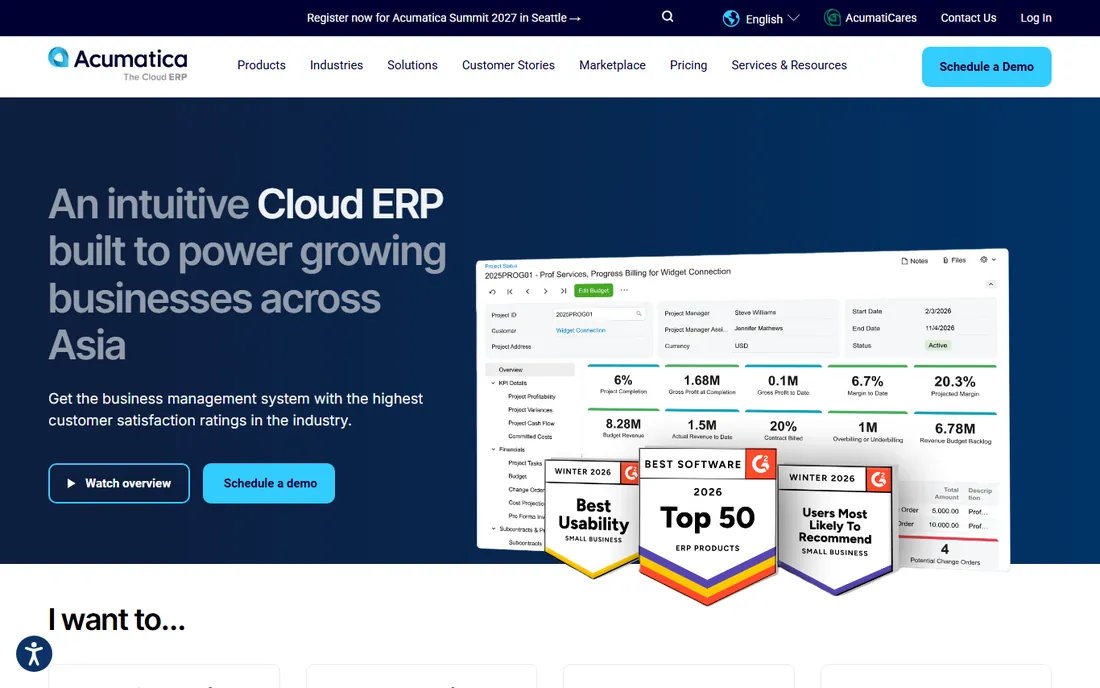
Acumatica's pitch is simple and it lands hard with manufacturers: stop paying per seat. Most editions license by transaction volume, so your warehouse staff, contractors, and auditors can all log in without each head adding to the bill. The Manufacturing Edition includes bills of materials, production orders, MRP, shop floor control, advanced planning and scheduling, and CAD/PLM integration in one platform.
That model shines for growing teams and seasonal spikes, since adding people does not add license cost. The tradeoff is opacity at the buying stage: pricing is quoted by edition and volume tier through partners, and implementation typically runs a 30/60/90-day plan with training and change management. Also worth knowing: Acumatica includes solid project accounting with budgeting, cost tracking, and revenue recognition, so project-based manufacturers get that without a second system.
What we like- No per-user licensing, unlimited users on most editions
- Manufacturing Edition covers make-to-stock, make-to-order, and engineer-to-order
- Real-time dashboards across finance and operations
Watch out for- Quote-based pricing by transaction volume, no published numbers
- Implementation is a real project with a partner
- Entry General Business edition has user limits
Starting priceSee website
Free planNo
NetSuite is the default cloud ERP for mid-market manufacturers scaling from one site to many. The manufacturing functionality covers work orders, assemblies, demand planning, routing, and WIP tracking, and the financial side (multi-entity consolidation, revenue recognition, real-time reporting) is arguably the strongest in this price band. SuiteScript customization and the integration ecosystem mean it bends to unusual processes.
The cost structure demands respect. Third-party estimates put the base platform around $999 a month plus $99 to $150 per user per month, with manufacturing modules adding more, and implementation commonly doubling the first-year bill. Every person who needs a login counts, so map shop floor supervisors, quality inspectors, and procurement staff before you budget. If you are a $10M to $500M manufacturer unifying fragmented systems, it is the smoothest growth path. Below that, it is a lot of ERP for the money.
What we like- Cloud-native ERP with best-in-class financials and multi-entity consolidation
- SuiteSuccess templates speed up manufacturing implementations
- Huge customization and integration ecosystem
Watch out for- No published pricing, everything through sales
- Per-user fees compound fast as headcount grows
- First-year total with implementation often runs $50,000 to $250,000
Starting price$31.10/user/month (billed annually)
Free planYes
Odoo is the open-source-rooted ERP that undercuts everyone on license cost. The Standard plan lists at $31.10 per user per month billed annually for the first 12 months (then $38.90), covering all apps: accounting, inventory, manufacturing with BOMs and production orders, purchase, sales, and more. The One App Free plan gives you a single app for unlimited users at no cost, which is a legitimate way to test-drive the system.
Two caveats before you celebrate the price. First, budget the renewal-year price, not the first-year discount. Second, the real cost of Odoo is implementation: expect $10,000 to $80,000 depending on scope, and choose your partner carefully, because a bad one erases the license savings. For small manufacturers comfortable with a modular rollout, one app at a time, it is the best value ERP on this list by a wide margin.
What we like- Publishes pricing, rare in ERP
- One subscription covers 40+ apps including manufacturing, inventory, and accounting
- One App Free plan is genuinely free for unlimited users
Watch out for- The advertised price is a first-year discount, renewal runs higher
- Integrations and API access need the Custom plan
- Implementation quality depends heavily on your partner
#5
Microsoft Dynamics 365 Business Central
Best for: Microsoft shops wanting published pricing
Visit microsoft.com
Starting price$80/user/month
Free planFree trial
Business Central is the only serious mid-market manufacturing ERP that lets you reach a number without a sales call. Essentials at $80 per user per month covers financials, inventory, and sales; Premium at $110 adds manufacturing, service management, and advanced warehousing. If your company already lives in Microsoft 365, the familiarity and integration value is real.
Be honest about what you are buying, though. The license is the cheapest part of a Business Central project; implementation, data migration, and partner services commonly run six to fourteen months and deep into six figures. Manufacturing functionality is solid for light to mid complexity but does not match Epicor or SYSPRO for deep discrete or process needs. Price the whole project, not the $80 headline, and it remains a strong pick for the Microsoft-committed middle market.
What we like- Fully published pricing: Essentials $80, Premium $110 per user per month
- Premium adds manufacturing and service management
- Deep Microsoft 365 and Power Platform integration
Watch out for- Manufacturing depth trails Epicor and SYSPRO
- Implementations commonly run $150,000 to over $1 million
- The wider Microsoft stack adds costs beyond the ERP license
#6
Sage 100
Best for: small manufacturers needing strong financials
Visit sage.com
Starting priceSee website
Free planNo
Sage 100 (the current name for what was long called Sage 100cloud) is the quiet workhorse of smaller US manufacturers. It pairs genuine manufacturing functionality (bills of materials, work orders, material requirements planning) with financial depth that small-business tools cannot match. Decades of partners and add-ons mean almost any manufacturing workflow has been built before.
The buying experience is old-school: quoted pricing, partner-led implementation, and a product whose cloud story is less native than Acumatica or NetSuite. For a 10 to 50 person manufacturer that wants proven financials and manufacturing basics without a six-figure ERP project, it deserves a look. Just get the implementation scope in writing, because partner costs are where the budget surprises live.
What we like- Long-established manufacturing and distribution functionality
- Strong financial rigor for the lower mid-market
- Wide partner and add-on ecosystem
Watch out for- Quote-based pricing with no published tiers
- On-premise heritage shows in the cloud story
- Customization can get expensive through partners
Starting priceSee website
Free planNo
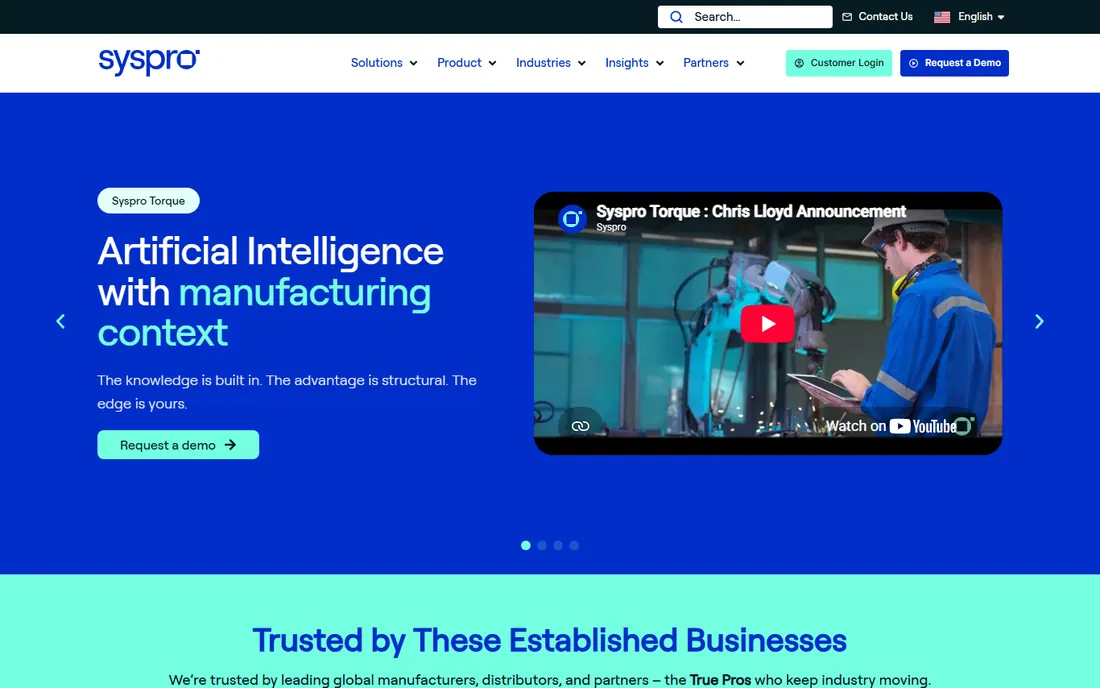
SYSPRO has spent decades focused on one thing: manufacturers, especially make-to-order, engineer-to-order, and mixed-mode shops where every job is different. The depth shows in areas generic ERPs treat as afterthoughts: traceability, quality management, and engineering change control. It is a frequent pick for food, electronics, and industrial equipment makers with complex BOMs.
You will not find pricing without a sales conversation, and third-party estimates vary widely, which is normal for this tier. The ecosystem is smaller than NetSuite's or Microsoft's, so vet integration needs early. But if your manufacturing is the complicated kind, depth beats breadth, and SYSPRO's depth is the reason it keeps winning those evaluations.
What we like- Deep manufacturing functionality for make-to-order and mixed-mode
- Strong traceability and quality management
- Deployment flexibility including cloud and on-premise
Watch out for- Quote-based pricing with wide variance
- Smaller ecosystem than NetSuite or Microsoft
- Implementation timelines reflect the depth
#8
Epicor Kinetic
Best for: discrete manufacturers with deep operational needs
Visit epicor.com
Starting priceSee website
Free planNo
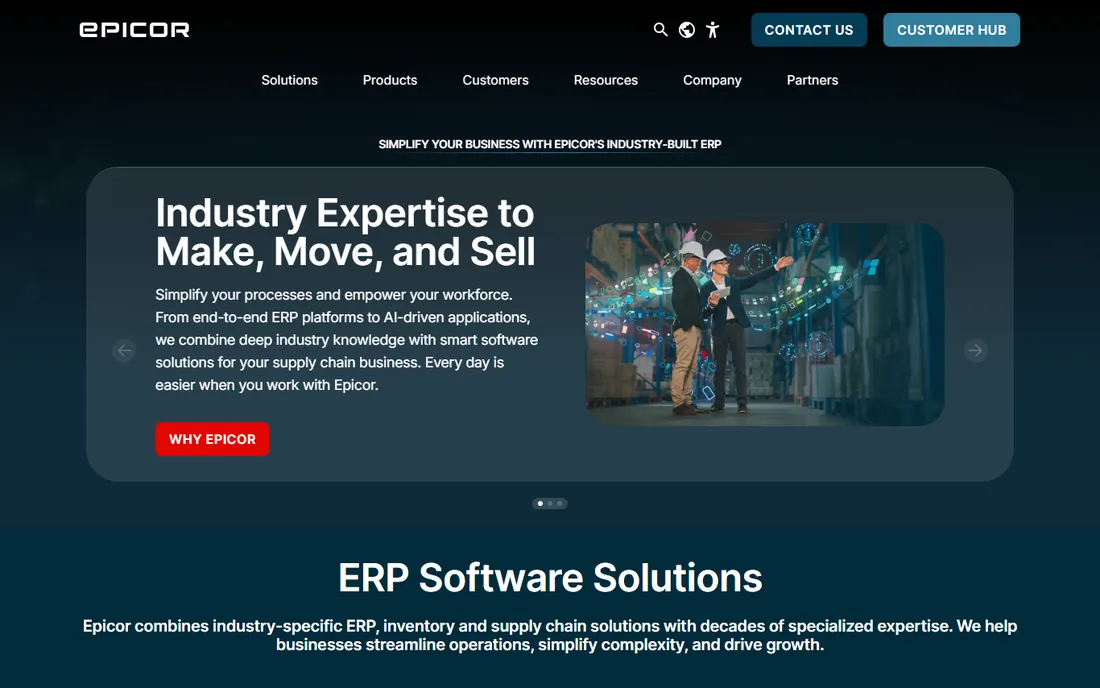
Epicor Kinetic (the current name for what older lists call Epicor ERP) is the heavyweight for discrete manufacturers. If you run complex routings, advanced scheduling, quality systems, and multi-plant operations, this is the depth tier. It is a common pick in automotive supply, fabricated metals, and industrial machinery, where the manufacturing module is the whole point of the purchase.
Everything about it is enterprise: quoted pricing, implementation measured in months with specialist partners, and total costs that dwarf the options above it. For a simple assembly shop, that weight is pure overhead. For a manufacturer whose processes genuinely need it, nothing cheaper does the job. Match the tool to the complexity or pay for capability you will never switch on.
What we like- Deepest discrete manufacturing functionality on this list
- Strong for regulated industries needing traceability
- Mature multi-site and multi-company support
Watch out for- Enterprise pricing and significant implementation weight
- Overkill for simple assembly operations
- Upgrades and customization need specialist partners
Starting priceSee website
Free planNo
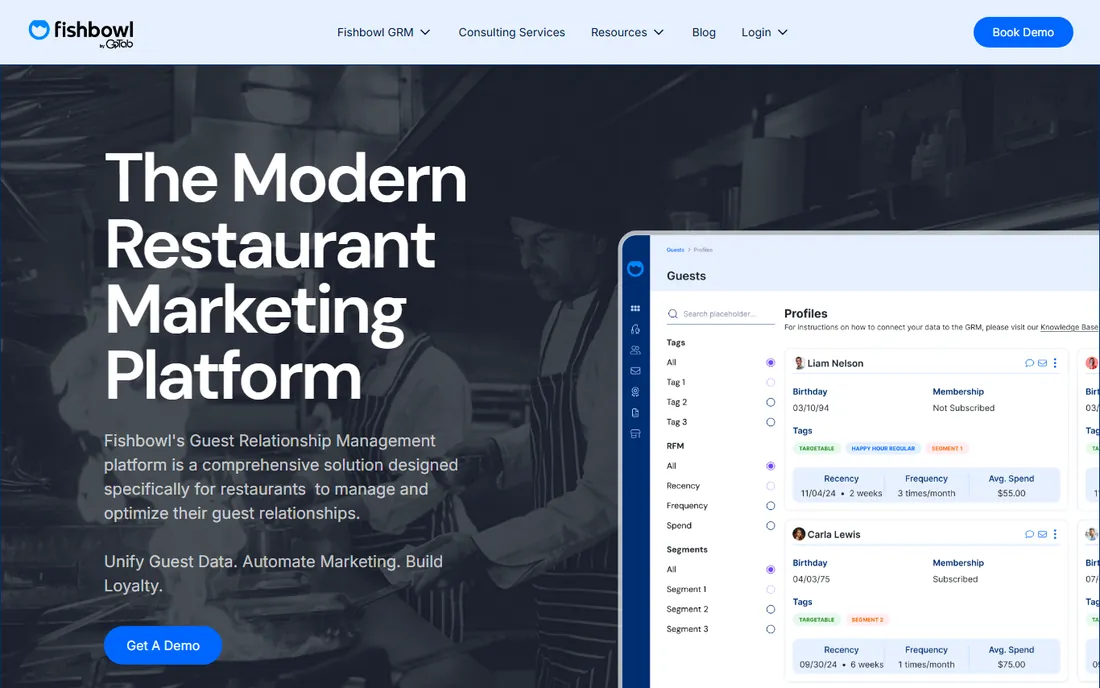
Fishbowl exists for the most common manufacturing software situation in America: the company runs QuickBooks, likes QuickBooks, and has outgrown QuickBooks' inventory. Fishbowl bolts on multi-location inventory, bills of materials, work orders, and manufacturing execution while QuickBooks keeps doing the accounting. Third-party sources cite starting prices around $4,395 per license, but the vendor does not publish pricing, so verify.
The two-system reality is the tradeoff. Data syncs between Fishbowl and QuickBooks, but you are still administering two products and paying for both. For shops that are not ready, culturally or financially, for an ERP migration, that is a reasonable price. When Fishbowl itself starts feeling small, that is your signal to evaluate the ERP tier above.
What we like- Adds real manufacturing, BOMs, and work orders on top of QuickBooks
- Keeps the accounting system your team already knows
- Lower cost than a full ERP migration
Watch out for- Pricing not published on the vendor site
- It is an add-on, so you maintain two systems
- Advanced financials still live in QuickBooks
Starting priceSee website
Free planNo
Cetec ERP targets the gap between QuickBooks-with-add-ons and the big ERPs: small manufacturers that need a real cloud system without a real enterprise project. It covers the full order-to-cash flow for a job shop, from quoting and BOMs through purchasing, inventory, production, and accounting, in one browser-based system.
It will not match NetSuite's financials or Epicor's manufacturing depth, and the partner ecosystem is thinner, so complex integrations need scrutiny. But for a 10 to 50 person shop that has outgrown spreadsheets and QuickBooks workarounds, Cetec offers the shortest path to a unified system. Get a scoped quote early, since published pricing is not available.
What we like- Cloud-native ERP built specifically for small manufacturers
- Covers quoting, BOMs, purchasing, inventory, and accounting in one system
- Gentler learning curve than tier-one ERPs
Watch out for- Pricing not published on the vendor site
- Smaller vendor with a narrower partner network
- Less financial depth than NetSuite or Sage at the top end
How we assembled this manufacturing shortlist
We started from each vendor's own pricing page and product documentation, checked in October 2026, and marked pricing as "See website" wherever the vendor does not publish numbers rather than repeating third-party guesses as fact. That distinction matters in this category, where most ERP vendors are quote-only and aggregator figures go stale fast. We cross-checked plan structures, user limits, and trial terms against manufacturing ERP comparisons, G2 and Capterra reviews, and practitioner discussions to catch what vendor pages omit, like implementation ranges and renewal pricing behavior. We weighted manufacturing depth (BOMs, MRP, shop floor, costing), financial strength, pricing transparency, and fit for small-to-mid-size US manufacturers. We did not run hands-on trials, so treat this as a research-backed shortlist to take into demos.
What to check before you buy
Start with manufacturing depth, not the accounting. Every tool here does debits and credits; the difference is BOMs, routings, work orders, MRP, WIP tracking, lot and serial traceability, and landed cost. Write down your five hardest manufacturing requirements (multi-level BOMs, outside processing, consigned inventory, whatever applies) and make each vendor demonstrate them live. Brochure claims about "manufacturing functionality" range from deep to decorative.
Then count every user. Per-seat pricing punishes manufacturers because the shop floor needs logins too: supervisors logging completions, quality entering test results, warehouse staff receiving POs. Acumatica's usage-based model and Odoo's low per-seat price exist precisely because of this math. With NetSuite or Business Central, list every role that touches the system before you budget, or the user fees will surprise you in year one.
Implementation is the real price
For every ERP on this list except Odoo and QuickBooks Enterprise, assume implementation costs roughly one to two times the first-year subscription. Data migration, process redesign, integrations, and training are where the money goes, and the vendors' published numbers never include them. Get fixed-scope implementation quotes from partners, not just license quotes from sales reps, and ask for two reference customers in manufacturing at your size. A vendor that cannot produce them is telling you something.
Project accounting deserves its own line
Many manufacturers also run project or job-based work, and project accounting quality varies wildly here. Acumatica includes project budgeting, cost tracking, and revenue recognition natively. QuickBooks Enterprise handles job costing well at the small end. NetSuite and Business Central cover it as part of the suite. If project profitability is how you actually run the business, evaluate this module with the same rigor as the manufacturing one, because the best project accounting software for your shop might be the ERP you were already buying.
The quote-only problem in manufacturing software
Seven of the ten tools on this list do not publish pricing. That is the norm in manufacturing ERP, not an exception, and it puts buyers at a disadvantage: you cannot budget, cannot compare, and only learn the number after investing in a sales process. The vendors that do publish (Odoo, Microsoft) deserve credit, and their transparency is itself a buying signal about how the relationship will work.
Protect yourself the same way every time. Get the quote in writing with the edition, user count or volume tier, term length, and implementation scope stated separately. Ask what the renewal price will be and whether increases are capped. Ask what happens to your data if you leave. And never let a salesperson bundle the license and implementation into one number; you need to see both to compare vendors honestly.
Frequently asked questions
What is the best accounting software for a small manufacturing business?
QuickBooks Enterprise Platinum is the most common answer for shops under 30 people, with Advanced Inventory and manufacturing editions built in. If per-seat costs or QuickBooks' limits chafe, Odoo and Cetec ERP are the next steps up. The right choice depends on your BOM complexity and whether you need MRP or just better inventory.
How much does manufacturing ERP software cost?
Small-business options run $2,000 to $10,000 a year all-in. Mid-market ERP licenses run $20,000 to $100,000+ annually, with implementation often doubling the first-year total. Enterprise deployments like Epicor or NetSuite at scale can exceed $250,000 in year one. Always budget licenses plus implementation plus the internal time your team will spend.
Can QuickBooks handle manufacturing accounting?
QuickBooks Enterprise Platinum handles light manufacturing: bills of materials, work orders, assemblies, Advanced Inventory, and job costing. It struggles with complex routings, MRP-driven planning, multi-plant operations, and deep traceability. Many shops pair it with Fishbowl for manufacturing depth and migrate to a real ERP when that stack runs out of room.
What is the difference between MRP and ERP for manufacturers?
MRP (material requirements planning) focuses on production: what to build, what to buy, and when. ERP covers the whole business: accounting, inventory, purchasing, sales, and manufacturing in one system. Most modern manufacturing software is ERP with MRP inside it; standalone MRP tools still exist but are fading as ERP pricing comes down.
Do I need project accounting in manufacturing software?
If you build to order, run custom jobs, or need profitability by project, yes. Project accounting tracks budgets, costs, and revenue per job or project, which standard cost accounting does not do well. Acumatica, NetSuite, and Business Central include it; QuickBooks Enterprise covers job costing at the smaller end. Evaluate it as its own module during demos.
How long does manufacturing ERP implementation take?
QuickBooks Enterprise or Odoo can go live in weeks to a few months. Acumatica and Cetec ERP typically run 30 to 90 days with a partner. NetSuite, Business Central, SYSPRO, and Epicor commonly take six to fourteen months depending on complexity, sites, and customization. Phased rollouts (finance first, operations second) reduce risk on the longer projects.
Sources we checked (12)
- https://quickbooks.intuit.com
- https://www.acumatica.com
- https://www.netsuite.com
- https://www.odoo.com/pricing
- https://www.microsoft.com/en-us/dynamics-365/products/business-central
- https://www.sage.com
- https://www.syspro.com
- https://www.epicor.com
- https://www.fishbowl.com
- https://www.cetec-erp.com
- https://www.erp-information.com/acumatica-erp-reviews
- https://www.houseblend.io/articles/netsuite-pricing-2026-license-costs
Is your product missing or out of date?
We review this list regularly. Vendors can request a listing, send updated pricing or ask about featured placement.

Shihab Mia · Founder, Rankite
Shihab has spent more than a decade helping SaaS and e-commerce brands grow through search. He writes Rankite's software buying guides from pricing pages, documentation and public user reviews. More about Shihab.