How we make this list: we compare pricing pages, product documentation and public user reviews. Rankite is independent; if a vendor ever pays for a featured spot, that listing is clearly labeled Partner.
Key takeaways
- Stessa remains the best free starting point for rental property accounting, with per-property tracking and tax-ready reports at no cost.
- Baselane pairs free bookkeeping with landlord banking, which removes the spreadsheet step of reconciling rent deposits.
- Buildium and DoorLoop are full property management suites where accounting is one module; they make sense above roughly ten units, not below it.
- Short-term rental owners should look at REI Hub, which imports Airbnb and VRBO payouts instead of forcing manual entry.
- QuickBooks Online works for landlords but needs property-level setup to match what rental-specific tools do out of the box.
Quick comparison
| Tool | Best for | Starting price | Free plan |
|---|
 Stessa Stessa | Free rental accounting for beginners | Free; paid from $12/month | Yes |
 Baselane Baselane | Banking plus bookkeeping in one place | Free; Smart plan $20/month | Yes |
 Innago Innago | Truly free property management | Free | Yes |
 Landlord Studio Landlord Studio | Small portfolios and mobile bookkeeping | Free; PRO from $12/month | Yes |
 REI Hub REI Hub | Short-term and mixed rental portfolios | Free tier; paid plans vary | Yes |
 TenantCloud TenantCloud | Budget landlords wanting rent collection too | From $15/month | Yes |
 QuickBooks Online QuickBooks Online | General accounting with rental workarounds | $38/month | Free trial (30 days) |
 Buildium Buildium | Growing portfolios needing full accounting | $62/month | Free trial (14 days) |
 DoorLoop DoorLoop | All-in-one management with strong accounting | $69/month (billed annually) | No |
 AppFolio AppFolio | Large portfolios and management companies | From $1.49/unit/month ($298 minimum) | No |
Is your product missing or out of date?
We review this list regularly. Vendors can request a listing, send updated pricing or ask about featured placement.
The best accounting software for landlords
The common belief is that serious landlords use QuickBooks and the free rental apps are toys for hobbyists with one duplex. That gets it backwards. QuickBooks was built for generic small business accounting, which means every rental-specific task, from per-property profit tracking to Schedule E categorization, has to be built by hand with classes and custom reports. The rental-specific tools do all of that natively, and several of them are free.
The real divide is not free versus paid. It is rental-native versus general-purpose. A rental-native tool thinks in properties, units, tenants and leases. It knows that a roof replacement is a capital expense and a faucet repair is not. It produces the reports your CPA actually wants in April. General accounting software can be bent into that shape, but you will spend hours each quarter doing the bending.
There is also a size question hiding inside the price question. One to four units is a bookkeeping problem that free tools solve completely. Ten to fifty units is a management problem where rent collection, maintenance and owner reporting matter as much as the ledger. Match the tool to your unit count and the right choice is usually obvious.
Starting priceFree; paid from $12/month
Free planYes
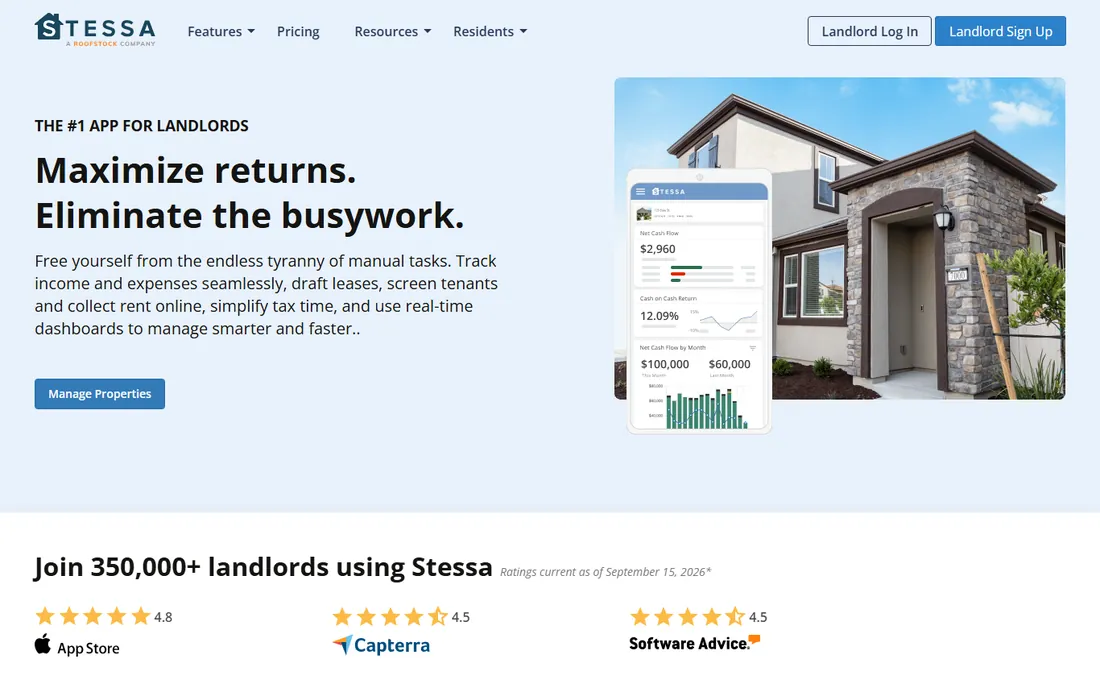
Stessa is the reason free stopped meaning limited in this category. Connect your bank accounts and it pulls in transactions, suggests rental-specific categories, and tracks performance property by property. The dashboards show cash flow, net operating income and equity at a glance, and the tax reports package everything your CPA needs. For a landlord with a handful of long-term rentals, the free tier genuinely covers the job.
The paid tiers, Manage from $12 a month and Pro from $28 a month on annual billing, add rent collection, tenant screening and portfolio-level analytics. The honest catch is that Stessa is an accounting tool first and a management platform second. If you need maintenance tickets and lease workflows, pair it with something else or step up to a suite. For pure rental property accounting, it is the default recommendation.
What we like- Free tier covers income and expense tracking with real depth
- Automatic bank transaction import with rental categories
- Tax-ready financial reports including Schedule E
Watch out for- Paid tiers add features casual landlords may never need
- Rent collection is not its strength
- Support is thinner than paid competitors
Starting priceFree; Smart plan $20/month
Free planYes

Baselane attacks the most annoying part of landlord accounting: reconciliation. Because the banking and the bookkeeping live in one system, rent deposits, mortgage payments and expense transactions categorize themselves with far less manual cleanup. The free Core plan covers banking, rent collection and basic bookkeeping, which is a strong package for the price of nothing.
The tradeoff is ecosystem lock-in. The magic works best when your rental money actually flows through Baselane accounts, and moving banking relationships is more friction than switching an app. The Smart plan at $20 a month adds deeper automation and reporting. Landlords who dread the monthly reconcile will find it worth a serious look.
What we like- Integrated banking means rent lands in an account the software already sees
- Automated bookkeeping and categorization
- Free Core plan is genuinely useful
Watch out for- Banking features tie you to their ecosystem
- Advanced reporting sits behind the paid tier
- Newer company than the established suites
Starting priceFree
Free planYes
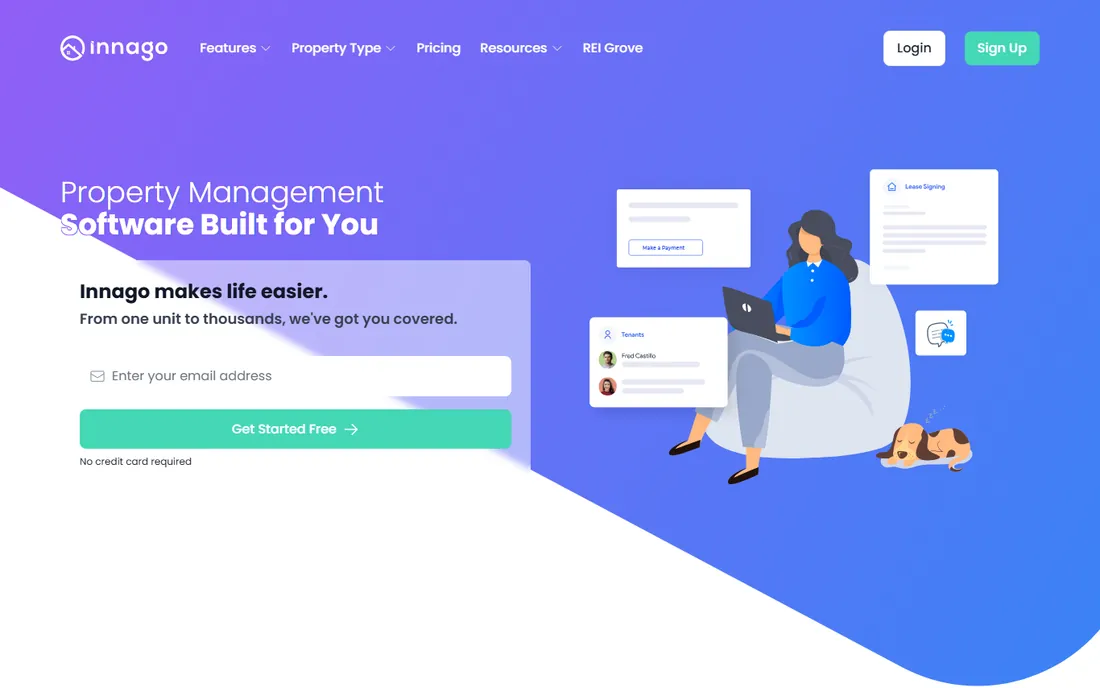
Innago's pitch is simple: the software is free, full stop. Rent collection, online leases, tenant screening, maintenance requests and basic financial tracking cost nothing for the landlord. Revenue comes from optional services tenants can choose, like credit reporting. For a small landlord who wants one free app instead of three, it is compelling.
The accounting is serviceable rather than deep. You get income and expense tracking and usable reports, but not the analytical richness of Stessa or a full general ledger like Buildium. Think of Innago as free property management with accounting included, not free accounting software. Used that way, it is one of the best deals in the category.
What we like- Core platform is free with no unit caps on the basics
- Includes rent collection, leases and maintenance
- Clean interface that tenants actually use
Watch out for- Makes money on optional tenant-paid fees, which some landlords dislike
- Accounting depth is lighter than Stessa
- Fewer integrations than paid suites
Starting priceFree; PRO from $12/month
Free planYes
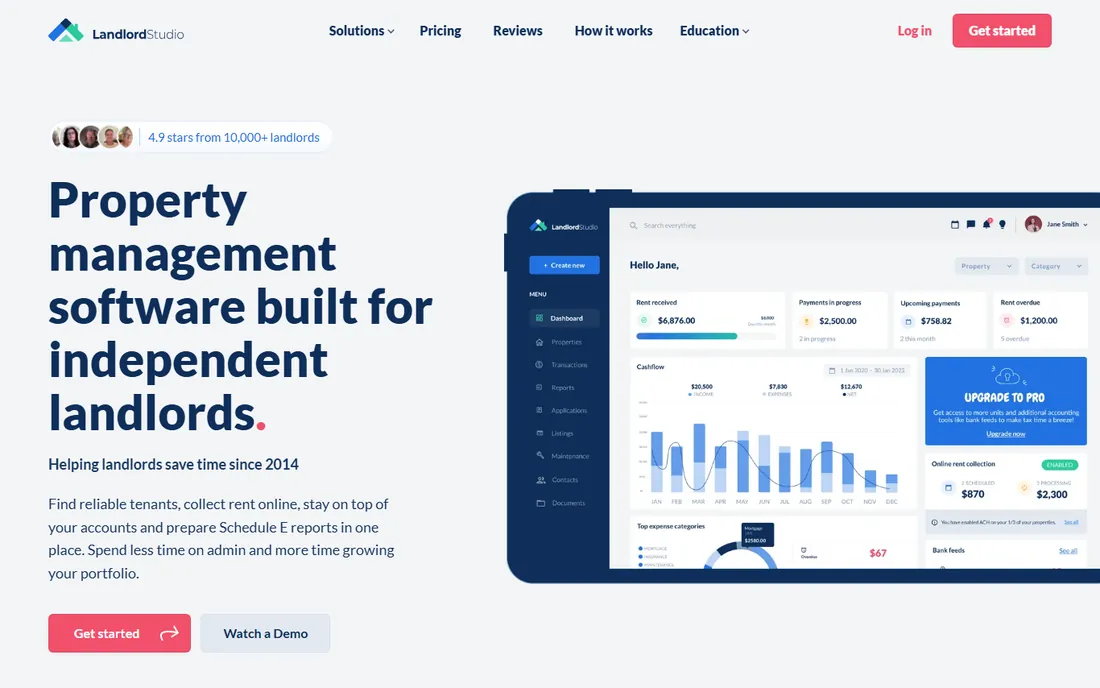
Landlord Studio is built for the landlord who does books from the truck between properties. The mobile app makes it painless to photograph a receipt at the hardware store and file it against the right property before you drive away. Mileage tracking, expense logging and rent reminders all work well on a phone, and the Schedule E report speaks your CPA's language.
The free tier is generous for one or two properties. PRO starts at $12 a month billed annually and covers three units, with each additional unit adding about a dollar. That per-unit creep is worth modeling if you are growing past ten doors. For the one-to-five-unit landlord who lives on a phone, this is the most natural fit in the list.
What we like- Excellent mobile app for logging expenses on the go
- Schedule E reports built for US tax filing
- Free tier covers up to a small portfolio
Watch out for- PRO pricing scales per extra unit past the included three
- Rent collection features are basic
- Desktop experience lags the mobile app
Starting priceFree tier; paid plans vary
Free planYes
Short-term rentals break normal landlord accounting. Payouts arrive net of platform fees, cleaning fees blur the line between income and expense, and occupancy taxes add another layer. REI Hub is built for exactly this mess, importing Airbnb and VRBO transactions so you are not hand-entering dozens of payouts a month. It also handles mixed portfolios where some units are long-term and some are short-term.
For pure long-term landlords, the specialty features add little over Stessa. But if you run vacation rentals, or you are converting units between strategies, REI Hub's property-based accounting saves real hours. The free tier lets you test it on your actual portfolio before committing, which is the right way to evaluate any accounting tool.
What we like- Imports Airbnb and VRBO payouts automatically
- Handles mixed portfolios of short and long-term rentals
- Schedule E reporting designed for investors
Watch out for- Smaller user community than the big names
- Paid plan details require checking current pricing
- Overkill for pure long-term portfolios
Starting priceFrom $15/month
Free planYes
TenantCloud occupies the middle ground between free apps and full suites. The free plan handles rent collection, basic accounting and listings for a small portfolio, and paid plans starting around $15 a month add room to grow without the jump to Buildium-level pricing. It is a practical choice for landlords who want one login for money in, money out and tenant communication.
The compromises are polish and support. The interface is functional rather than delightful, and help can be slow if you are not on a higher tier. But the price-to-feature ratio is strong, and landlords who outgrow the free apps without needing enterprise software land here comfortably.
What we like- Free plan covers the basics for small landlords
- Paid plans stay affordable as you grow
- Combines accounting with listings and maintenance
Watch out for- Free plan limits are tighter than Innago's
- Customer support can be slow on lower tiers
- Interface feels dated next to newer apps
Starting price$38/month
Free planFree trial (30 days)
QuickBooks Online is the best general accounting software in this list and a mediocre landlord tool out of the box. Nothing about it understands properties, units or tenants natively. Getting per-property profit and loss requires setting up classes for each property and training yourself to tag every transaction. Done carefully, it works, and the reporting power exceeds any rental app.
The reason to choose it is usually external: your CPA demands QuickBooks, or your portfolio includes non-rental businesses that need real double-entry accounting. At $38 a month to start with only a 30-day trial, it is also the priciest way to do simple rental bookkeeping. Landlords who pick it for the brand name alone are paying more for a worse fit.
What we like- The most capable general accounting engine available to small businesses
- Enormous integration ecosystem
- Every CPA on earth knows how to read its reports
Watch out for- No rental-native concepts, so property tracking needs manual class setup
- Starts at $38 a month with no free tier
- Payroll and extras cost more
Starting price$62/month
Free planFree trial (14 days)
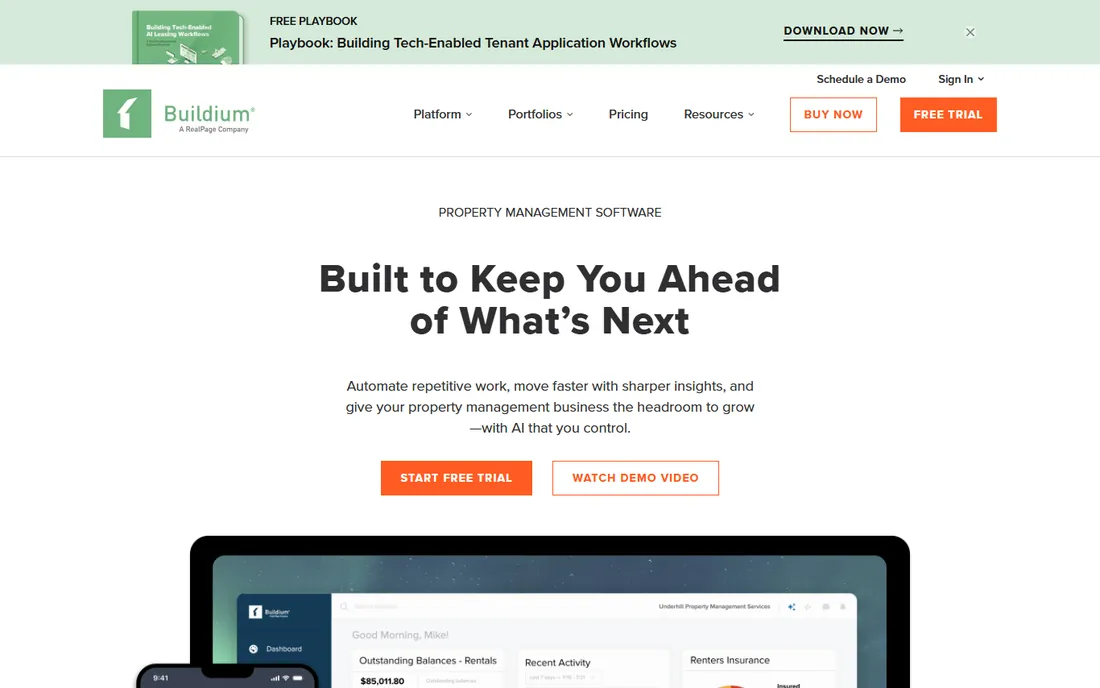
Buildium is where landlords graduate when spreadsheets and simple apps stop being enough. It is a full property management platform with a genuine accounting core: general ledger, bank reconciliation, owner distributions, vendor bills and 1099 e-filing. The Essential plan starts at $62 a month, with Growth at $192 and Premium at $400 adding automation, analytics and API access.
This is professional-grade software with professional-grade onboarding. Expect to spend real time on setup, chart of accounts and data import, especially on Growth and Premium with their customized onboarding. Below about ten units it is overkill; above that, or if you manage for other owners, it is the most complete accounting-plus-management package in the rental space.
What we like- True property management accounting with trust accounting and 1099 e-filing
- Scales from small managers to large firms
- Strong owner reporting and portals
Watch out for- $62 a month starting price is steep under ten units
- Advanced automation reserved for higher tiers
- Implementation takes real setup time
Starting price$69/month (billed annually)
Free planNo
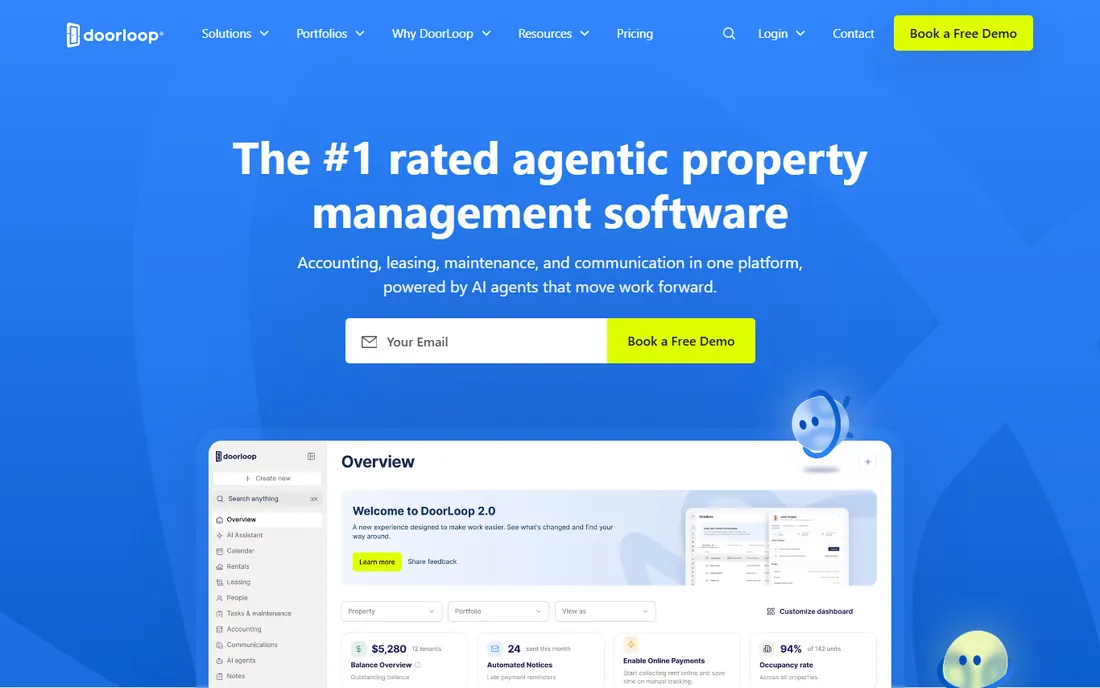
DoorLoop is Buildium's modern rival and the reviewers' favorite for ease of use. The Starter plan at $69 a month billed annually covers up to ten units with accounting, rent collection, tenant screening and basic reporting. Pro and Premium add team management, vendor portals, integrations and priority support for larger operations.
The buying decision usually comes down to feel. DoorLoop's interface is cleaner and its onboarding faster, while Buildium offers deeper accounting at the top end. DoorLoop's lack of a free trial means judging it from the demo, so come prepared with your actual workflows. For managers who want one system without a steep learning curve, it earns its reputation.
What we like- Modern interface that staff learn quickly
- Accounting, CRM, leasing and maintenance in one login
- Transparent per-plan pricing with annual discounts
Watch out for- No free tier and no trial, demo only
- Starter caps at smaller portfolios
- Costs scale as unit counts push you up tiers
Starting priceFrom $1.49/unit/month ($298 minimum)
Free planNo
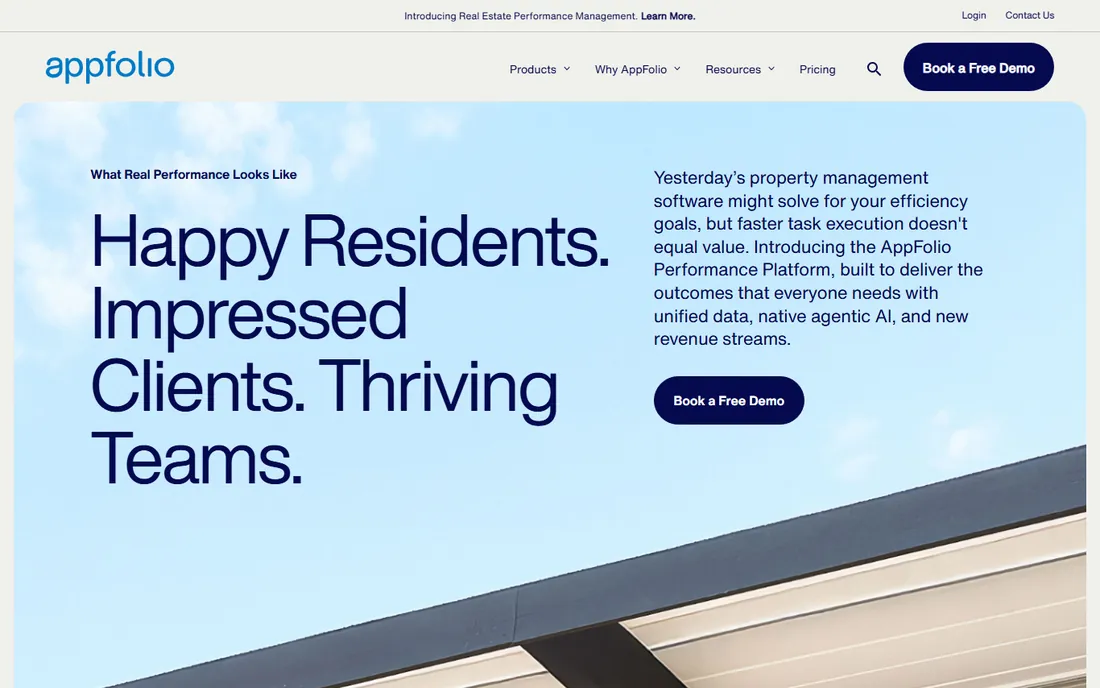
AppFolio is the enterprise answer. At $1.49 per unit per month with a $298 monthly minimum and a 50-unit floor, it does not pretend to serve small landlords. What it offers management companies is automation depth nobody else matches: AI-assisted leasing workflows, bulk operations, advanced owner reporting and a mobile experience that field staff actually use.
For the landlord reading this with eight units, AppFolio is a curiosity, not an option. For the management company with five hundred doors, it is the shortlist. The quote-only pricing means budgeting requires a sales conversation, so treat the published floor as the starting point and expect the real number to depend on modules and unit count.
What we like- Deepest automation in the category, from leasing to maintenance
- Strong mobile apps for staff and residents
- Built for companies managing hundreds of units
Watch out for- 50-unit minimum and $298 monthly floor price out small landlords
- Pricing is quote-only
- Implementation is a project, not an afternoon
What actually matters in rental accounting software
Start with the tax report. Every tool in this list should produce a Schedule E-ready summary that splits income and expenses by property, because that is the document your CPA will ask for every April. If a tool cannot do that cleanly, nothing else about it matters. Ask for a sample report before you commit, and show it to your accountant.
Next, check the bank connection. Automatic transaction import with rental-aware categories is the difference between fifteen minutes a month and three hours. The free tools have largely caught up here, so do not pay for software whose main selling point is something Stessa does free. Pay for what the free tier cannot do: trust accounting, owner distributions, 1099 filing or multi-user workflows.
Finally, match the tool to your unit count honestly. One to four units is a bookkeeping problem. Five to twenty is a management problem where rent collection and maintenance matter. Fifty plus is an operations problem that needs a suite. Buying Buildium for three units is like buying a tractor to mow a lawn: impressive, expensive and slower than the right tool.
How we picked these ten
We started from vendor pricing pages and documentation, then cross-checked against public reviews on G2, Capterra and landlord communities on Reddit. Every price above reflects published 2026 plan pricing, and anything we could not confirm on a vendor page is marked as varying. We weighted rental-specific accounting features over general accounting power: per-property tracking, Schedule E reporting, rent collection, bank reconciliation and 1099 support.
We did not claim hands-on testing of any product. We excluded enterprise-only platforms without public pricing and general invoicing tools with no rental features. Where a vendor changed pricing tiers in 2026, we used the current structure and noted the unit minimums that actually determine the bill.
Tax season is the feature that pays for itself
Most landlords judge accounting software in December and suffer for it in April. The right time to evaluate is tax season, when the quality of your reports determines whether your CPA breezes through the return or bills you for cleanup hours. A clean Schedule E export with every expense categorized by property can save more in accountant fees than the software costs all year.
Set up the categories correctly in your first month. The tools that auto-categorize bank transactions are only as good as the rules you teach them, so spend an hour in month one confirming categories. Come April, that hour returns itself many times over. And keep digital receipts attached to transactions all year; the IRS does not accept "I remember what that Home Depot trip was for" as documentation.
Frequently asked questions
Do I really need special software, or is a spreadsheet enough?
A spreadsheet works until about three units, then the hours creep up. Bank reconciliation, per-property splits and tax reports are where dedicated software earns its keep. The free tools in this list beat a spreadsheet on day one.
What is Schedule E and why does every tool mention it?
Schedule E is the IRS form where you report rental income and expenses per property. Rental accounting tools categorize transactions to match its lines, so your tax prep becomes exporting a report instead of rebuilding your books each spring.
Can free landlord software handle security deposits correctly?
Mostly yes for tracking, with a caveat. Security deposits are liabilities, not income, and the better tools categorize them properly. If your state requires deposits in separate escrow accounts, check that the tool supports trust accounting before relying on it.
Should short-term rental owners use different software?
It helps a lot. Airbnb and VRBO payouts arrive net of fees with their own tax quirks, and tools like REI Hub import them directly. A long-term rental tool can work, but expect manual entry for every payout.
When should I switch from a free tool to Buildium or AppFolio?
Around ten to twenty units, or the moment you manage property for other owners. Trust accounting, owner distributions and 1099 filing are the triggers. Before that, the suites cost more than the problems they solve.
Does my CPA need access to the software?
It helps but is not required. Most tools export clean reports your CPA can work from. Giving view-only access saves back-and-forth in tax season, and every CPA prefers a tidy export over a shoebox of receipts.
Sources we checked (12)
- https://www.stessa.com/pricing
- https://www.baselane.com/pricing
- https://www.innago.com/pricing
- https://www.landlordstudio.com/pricing
- https://www.reihub.com/pricing
- https://www.tenantcloud.com/pricing
- https://quickbooks.intuit.com/pricing
- https://www.buildium.com/pricing
- https://www.doorloop.com/pricing
- https://www.appfolio.com/pricing
- https://lula.life/articles/best-property-management-software
- https://ramp.com/blog/accounting-software-for-real-estate
Is your product missing or out of date?
We review this list regularly. Vendors can request a listing, send updated pricing or ask about featured placement.

Shihab Mia · Founder, Rankite
Shihab has spent more than a decade helping SaaS and e-commerce brands grow through search. He writes Rankite's software buying guides from pricing pages, documentation and public user reviews. More about Shihab.