How we make this list: we compare pricing pages, product documentation and public user reviews. Rankite is independent; if a vendor ever pays for a featured spot, that listing is clearly labeled Partner.
Key takeaways
- Ramp's free core tier brings intake-to-pay workflows to companies of any size, with Plus at $15 per user per month for advanced controls.
- Precoro at $499 a month and Procurify at $1,000 a month flat give mid-market teams real procurement without enterprise implementations.
- Tipalti's $99-a-month Starter tier covers global mass payouts and tax compliance that domestic tools cannot touch.
- Coupa, SAP Ariba, Oracle and Basware serve enterprises on quote-based contracts; budget for implementations measured in quarters.
- Airbase, now Paylocity for Finance after the 2025 acquisition, carries roadmap uncertainty worth asking about directly.
Quick comparison
| Tool | Best for | Starting price | Free plan |
|---|
 Ramp Ramp | Free intake-to-pay for any size | Free; Plus $15/user/month | Yes |
 Precoro Precoro | Mid-market procurement, fast setup | $499/month | Free trial |
 Procurify Procurify | Flat-rate purchasing control | $1,000/month | No |
 Tipalti Tipalti | Global payouts and tax compliance | $99/month | No |
 Airbase Airbase | Full spend management, mid-market | See website | No |
 Zip Zip | Modern intake and procurement orchestration | See website | No |
 Coupa Coupa | Enterprise spend management suite | See website | No |
 SAP Ariba SAP Ariba | SAP-centric enterprise procurement | See website | No |
 Oracle Procurement Oracle Procurement | Oracle ERP estates | See website | No |
 Basware Basware | AP-heavy global enterprises | See website | No |
Is your product missing or out of date?
We review this list regularly. Vendors can request a listing, send updated pricing or ask about featured placement.
The best procure to pay software
The myth is that procure-to-pay software is an enterprise luxury, something a company buys after it hires a procurement department. The reality runs the other way. Maverick spend, employees buying off-contract on personal cards and expensing it later, costs mid-size companies far more relative to revenue than it costs enterprises. The enterprise at least has a procurement team catching it. The fifty-person company has nobody catching anything.
The correction is that P2P software pays for itself by controlling spend before it happens, not by negotiating better prices after. Intake workflows route every request through approval and budget checks. Purchase orders lock in the agreed price. Three-way matching catches the invoice that does not match the PO and the receipt. Each control is boring. Together they routinely cut processing costs by more than half and pull five to ten percent of rogue spend back into policy.
The second misconception is that the AP side and the procurement side are separate purchases. The modern platforms merge them: the request becomes the PO, the PO becomes the receipt, the receipt becomes the matched invoice, the invoice becomes the payment. Buying them separately recreates the manual handoffs the software was supposed to eliminate. Judge every platform below on how completely it closes that loop.
Starting priceFree; Plus $15/user/month
Free planYes
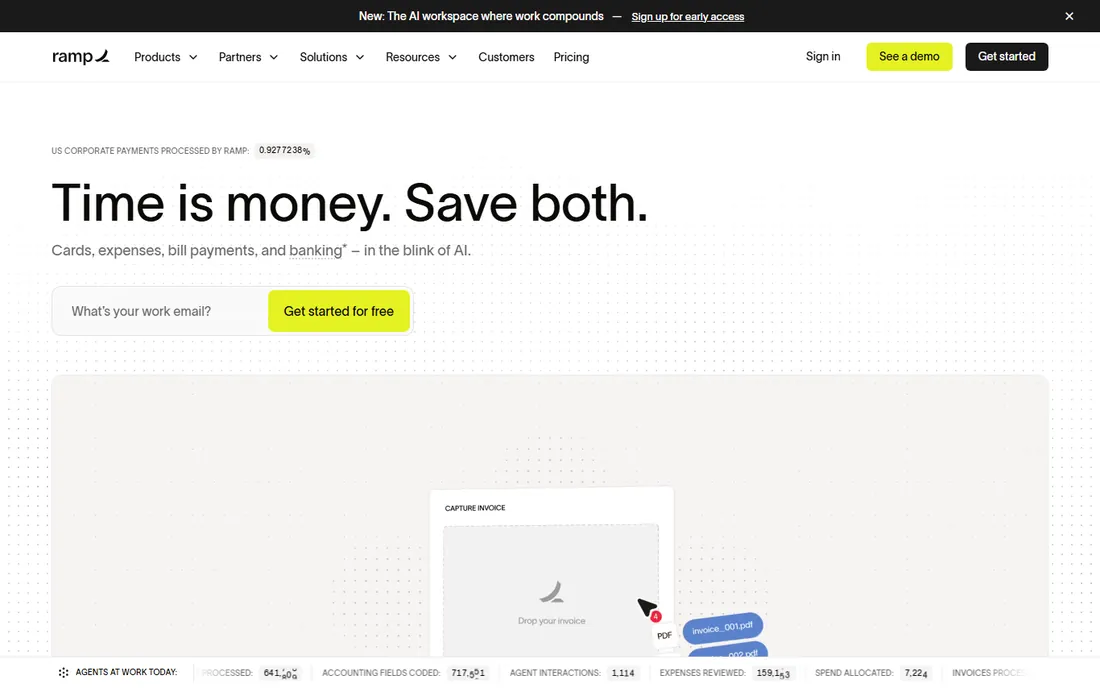
Ramp did to procurement software what it did to expense management: made the core product free. Corporate cards, bill payments, procurement intake, travel booking and accounting automation run on one platform at no subscription cost, with revenue coming from card interchange. For startups and small businesses, that removes the budget objection entirely.
The honest limits show up with complexity. Invoice processing depth trails dedicated AP tools, international payments and multi-currency support are weaker than Tipalti's, and the free economics work best for domestic card-heavy spend. Ramp Plus at $15 per user per month adds the controls growing companies need. For the company buying its first real procurement workflow, Ramp is the obvious starting point.
What we like- Core platform free with corporate cards, bill pay, procurement and travel
- $15 per user per month for Plus adds advanced controls
- Fastest setup in the category
Watch out for- AP automation is shallower than dedicated tools
- International and FX capabilities trail Tipalti
- Free tier economics depend on card interchange
Starting price$499/month
Free planFree trial
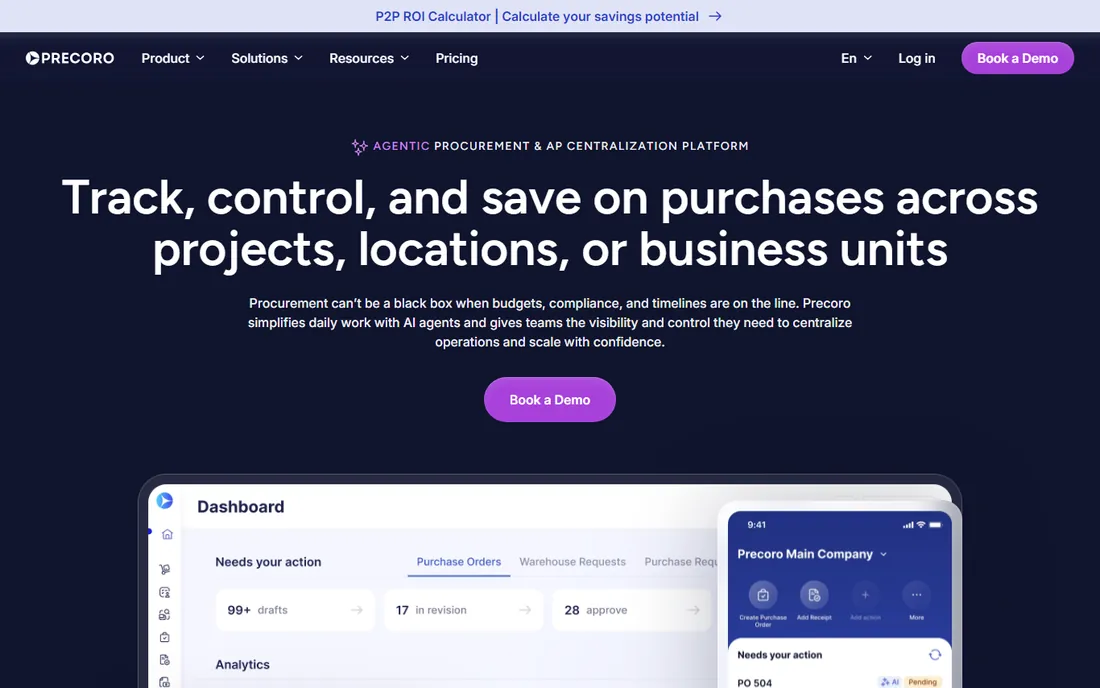
Precoro is the mid-market procurement platform that does not require an enterprise implementation. Purchase requests, approvals, purchase orders, receiving, three-way matching, invoicing and vendor payments run in one cloud system starting at $499 a month for the Core plan. Users praise the responsive support and clean approval flows, and integrations cover NetSuite, QuickBooks, Xero and Sage.
The SelectHub comparison notes per-user pricing around $35 a month on some configurations, so confirm which model your quote uses. Users also flag clunky PO search and data import as rough edges. But for the decentralized team that needs enterprise-grade procurement discipline without enterprise timelines, Precoro's six-week onboarding is a genuine advantage over the suites below.
What we like- Full procure-to-pay from request to payment at $499 a month
- Three-way matching and supplier portals included
- Onboarding in weeks without IT
Watch out for- $499 monthly floor prices out very small teams
- PO search and data import draw user complaints
- Advanced analytics trail enterprise suites
Starting price$1,000/month
Free planNo
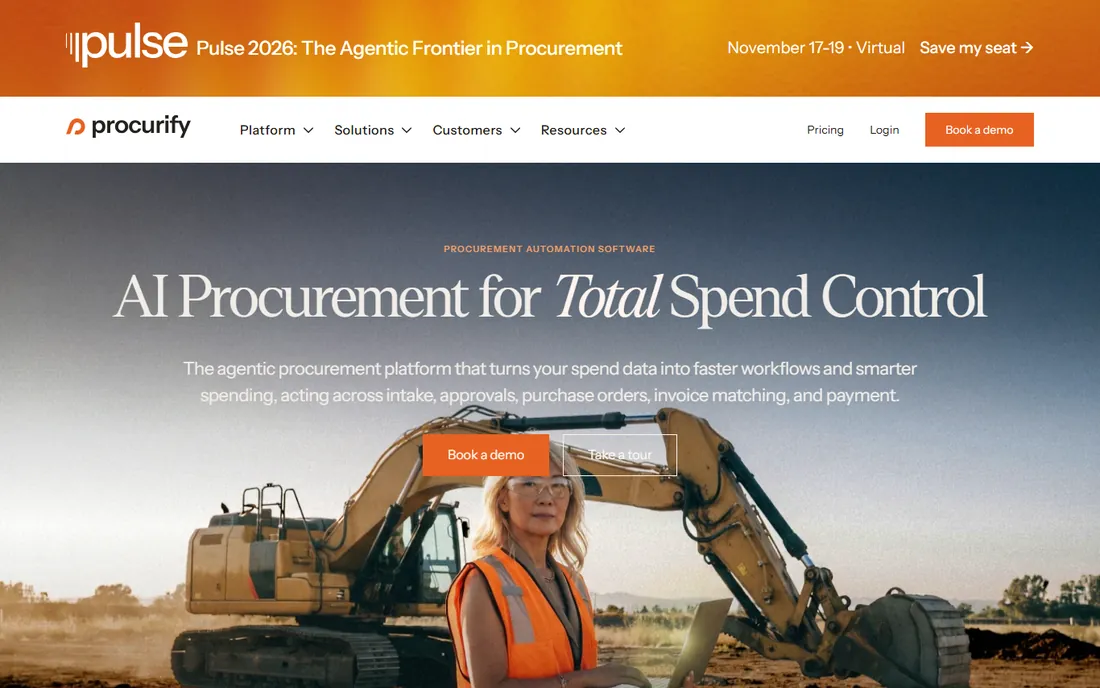
Procurify's flat $1,000-a-month pricing is either its best or worst feature depending on your headcount. For a company with dozens of requestors and approvers, one flat fee beats per-user math decisively and makes budgeting trivial. The platform focuses tightly on the purchasing core: requests, approvals, purchase orders, budgets and expenses, with clean audit logs for compliance.
Small teams will find $1,000 a month steep against Precoro's $499 or Ramp's free tier. Reviewers also report a slow interface and thin integrations, particularly around QuickBooks. Procurify fits the mid-size company with many casual buyers where per-user pricing would explode. If your buying population is small, the flat rate works against you.
What we like- $1,000 flat monthly rate is predictable at any headcount
- Strong request-to-PO workflows with audit trails
- Amazon PunchOut and NetSuite integrations
Watch out for- Flat rate is expensive for small teams
- Interface draws slow-and-buggy complaints
- Integration list is thinner than Precoro's
Starting price$99/month
Free planNo
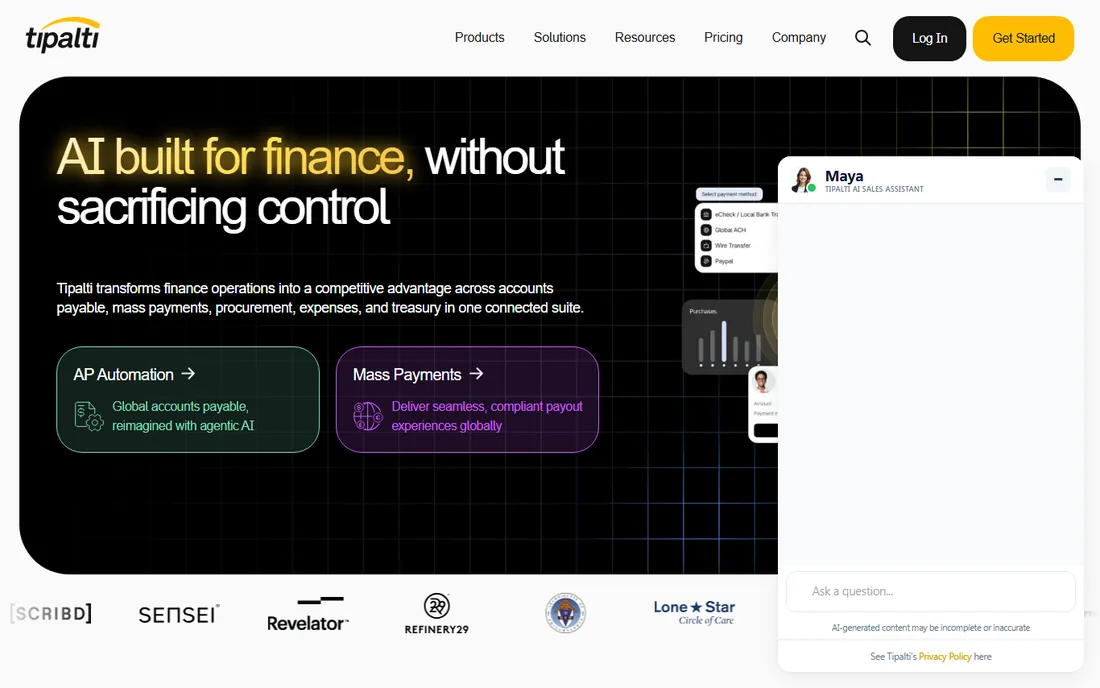
Tipalti owns the global payouts problem. Paying hundreds of suppliers, creators or partners across dozens of countries means collecting tax forms, validating banking details, handling 1099s and 1042s, and navigating currency controls. Tipalti automates all of it, with supplier self-onboarding that pushes the paperwork burden to the payee. The $99-a-month Starter tier makes it reachable for smaller companies going global.
Domestic-only companies should look elsewhere. The platform's depth is wasted on fifty US vendors paid by ACH, and the higher tiers carry premium enterprise pricing with a heavier implementation. But the moment your payee list crosses borders, Tipalti goes from optional to essential, because manual global payouts do not scale and tax mistakes are expensive.
What we like- Payments in 196 countries with tax compliance automation
- Supplier self-onboarding at scale
- $99 Starter tier is accessible
Watch out for- Premium pricing on higher tiers
- Heavier implementation than domestic tools
- More platform than purely domestic companies need
Starting priceSee website
Free planNo
Airbase built one of the best-regarded procure-to-pay workflows in the mid-market: every dollar requested, approved, ordered, received and paid inside one system with real-time budget enforcement. Corporate cards, bill payments, purchase orders and amortization live together, which gives finance genuine control over spend before it happens rather than reporting on it after.
The 2025 acquisition by Paylocity, which rebranded it Paylocity for Finance, introduces the standard acquisition uncertainty. Roadmaps, pricing and support structures can all shift post-acquisition, so ask direct questions about all three during evaluation. On product merits it remains excellent. On corporate-stability merits, do your diligence.
What we like- True intake-to-pay with purchase requests, POs and three-way matching
- Corporate cards and FX payments in one system
- Real-time budget visibility
Watch out for- Acquired by Paylocity in 2025, so roadmap questions are fair
- Quote-based pricing
- Heavier training needs than Ramp
#6
Zip
Best for: Modern intake and procurement orchestration
Visit ziphq.com
Starting priceSee website
Free planNo
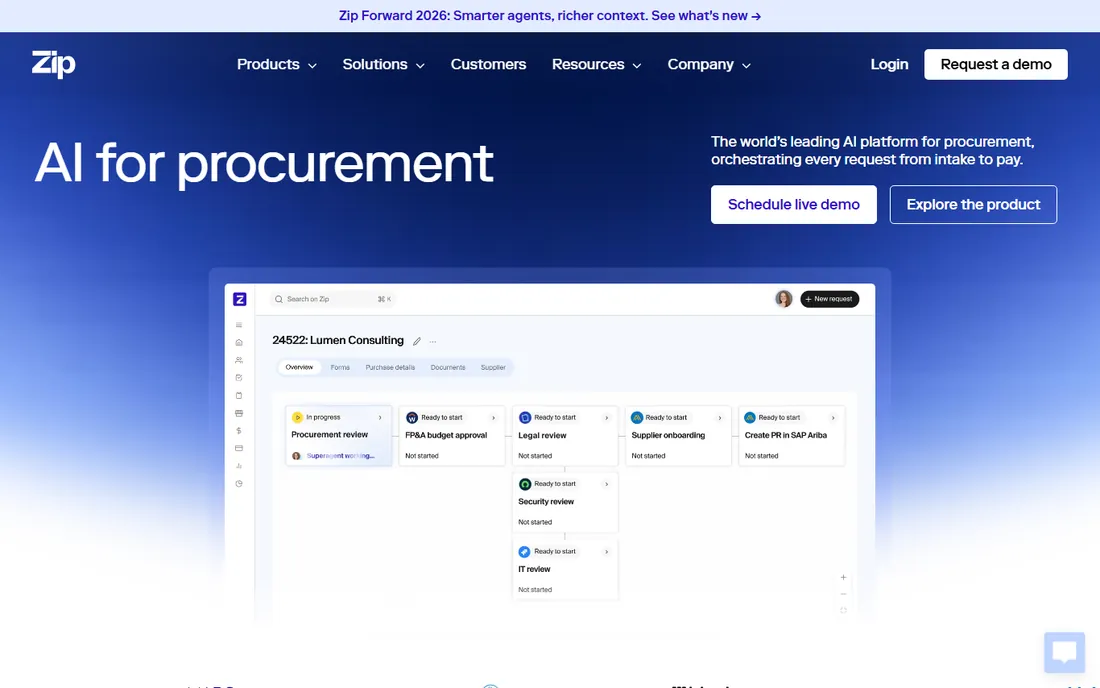
Zip attacks procurement's adoption problem. Traditional procurement software fails because employees route around it; Zip's intake feels like modern consumer software, so requests actually flow through the system instead of around it. Underneath, it orchestrates approvals, vendor onboarding and purchase workflows across the existing stack.
The youth shows in two ways: a shorter track record than Coupa or SAP, and AP automation depth that trails the full suites. Pricing is quoted. Zip fits the tech-forward company where procurement adoption, not procurement features, is the binding constraint. If your problem is employees ignoring the process, Zip's UX-first approach is the right medicine.
What we like- Consumer-grade intake experience employees actually use
- Strong approval orchestration across systems
- Modern API-first architecture
Watch out for- Quote-based pricing
- Newer vendor with a shorter track record
- AP depth trails the established suites
Starting priceSee website
Free planNo
Coupa is the enterprise standard for business spend management. Procurement, invoicing, expenses, payments and contract management run on one platform with analytics that show the CFO exactly where every dollar goes. Global enterprises with complex approval hierarchies, multi-entity structures and serious compliance needs get a platform built for their scale.
Everything about it is enterprise-grade, including the pain. Modules are priced separately, implementations run quarters, and casual users face a learning curve. This is the platform you buy when spend under management is measured in hundreds of millions. Below that scale, the mid-market options above deliver eighty percent of the value at a fraction of the cost and effort.
What we like- End-to-end procurement, AP, expenses and analytics in one suite
- Deepest spend analytics in the category
- Proven at global enterprise scale
Watch out for- Costly with modules priced separately
- Long complex implementations
- Steep learning curve for casual users
#8
SAP Ariba
Best for: SAP-centric enterprise procurement
Visit sap.com
Starting priceSee website
Free planNo
SAP Ariba makes sense in exactly one context: the enterprise already runs SAP. In that context it is formidable, with the supplier network, sourcing depth and ERP integration that SAP-centric procurement demands. Source-to-pay coverage spans everything from supplier discovery through payment.
Outside SAP, there is little reason to choose it. Pricing is quoted and steep, implementations are measured in quarters with consulting firms attached, and the platform assumes SAP data models throughout. Evaluate Ariba as part of an SAP strategy, not as a standalone procurement purchase. Non-SAP enterprises get better value from Coupa.
What we like- Deepest integration with SAP ERP environments
- Massive supplier network
- Full source-to-pay coverage for complex enterprises
Watch out for- Quote-based pricing that trends very expensive
- Implementations are major programs
- Best value only inside SAP estates
Starting priceSee website
Free planNo
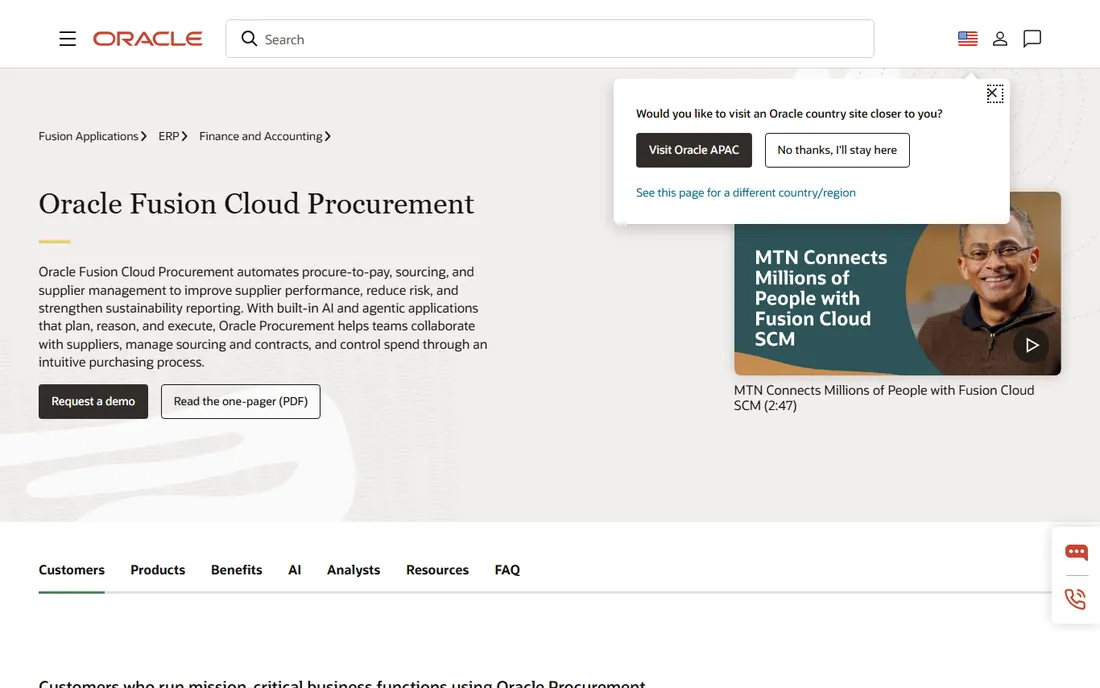
Oracle's procurement story mirrors SAP's: superb inside the ecosystem, questionable outside it. Running on Oracle Fusion Cloud ERP, procurement shares the same data model as financials, projects and supply chain, which eliminates integration middleware and gives finance one version of the truth from requisition through payment.
Nobody buys Oracle ERP for the procurement module alone, and the procurement decision rides along with the ERP program. For Oracle-standardized enterprises, turning on the procurement suite beats bolting on a third party. For everyone else, the independent platforms offer faster time to value without the ERP commitment.
What we like- Native procurement inside Oracle Fusion Cloud ERP
- Single data model from requisition to payment
- Strong for Oracle-standardized enterprises
Watch out for- Quote-based enterprise pricing
- Implementation tied to ERP programs
- Weak fit outside Oracle environments
Starting priceSee website
Free planNo
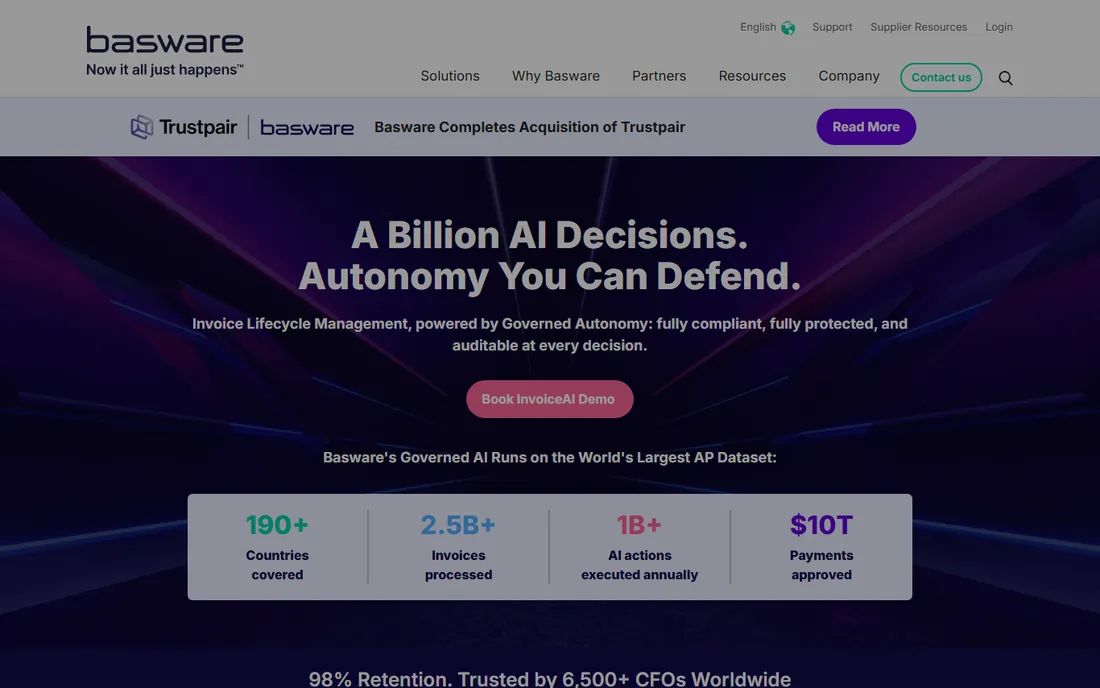
Basware comes from the AP side of the procure-to-pay equation and it shows. Invoice capture, matching, exception handling and global e-invoicing compliance are the platform's native strengths, built over decades serving large enterprises with gnarly payables. The ERP connector library is extensive, which matters when the invoice formats vary by country.
Procurement-side depth is thinner than Coupa's or Zip's, so evaluate Basware when the pain centers on invoice processing rather than purchasing control. Pricing is enterprise and quoted. For the global enterprise drowning in invoices across thirty countries, Basware's AP engine is the right tool. For purchasing-led transformations, look up this list.
What we like- Deepest AP automation heritage with touchless processing
- Strong in complex global invoice scenarios
- Extensive ERP connector library
Watch out for- Enterprise quote-based pricing
- Procurement depth trails Coupa
- Interface modernization lags newer rivals
The maverick-spend audit
Before you buy anything, measure the problem. Pull three months of card transactions and expense reports, and flag every purchase that bypassed any approval or preferred supplier. Most mid-size companies find fifteen to thirty percent of addressable spend going around the process. Multiply that by your annual spend to get the prize pool.
Then map where the leakage happens. Software subscriptions bought on personal cards are the classic. So are facilities supplies, contractor payments and rush orders. The pattern tells you which workflows to automate first: if subscriptions are the leak, you need intake plus virtual cards; if it is services, you need contractor onboarding plus milestone payments. Buy the platform that fixes your actual leaks, not the one with the longest feature list.
How we selected these ten
We started from vendor pricing pages and documentation, then cross-checked against 2026 buyer guides and public reviews on G2 and Capterra. Every published price above reflects 2026 plan pricing, including Ramp's free core tier, Precoro's $499 Core plan, Procurify's $1,000 flat rate and Tipalti's $99 Starter. Where vendors keep pricing quote-only, which is standard for enterprise procurement, we say so instead of repeating estimates.
We did not claim hands-on testing of any platform. We weighted procure-to-pay completeness over point features: intake, approvals, purchase orders, receiving, invoice matching, payments and supplier management decided the list. Pure expense tools and AP-only point solutions did not make the cut.
Implementation: the cost nobody advertises
The subscription is the smallest line in year one for every enterprise platform here. Implementations run $50,000 to $500,000-plus depending on entity count, approval complexity and integration scope. Data migration, supplier onboarding, catalog setup and training are separate workstreams with separate bills. Ask every vendor for a written year-one total including services.
The mid-market platforms change this math dramatically. Ramp and Precoro go live in weeks with minimal services; Procurify and Tipalti take longer but stay in the services-light category. When comparing a $499-a-month platform against a quoted enterprise suite, compare the three-year total cost including implementation, not the monthly rates. The enterprise suite routinely costs twenty times more all-in, which is fine if your spend under management justifies it and painful if it does not.
Frequently asked questions
What is the difference between P2P and AP automation?
AP automation handles invoices after the purchase: capture, coding, approval, payment. Procure-to-pay starts earlier, at the request and approval stage, and controls the purchase before money is committed. P2P includes AP; AP does not include P2P.
How much should a mid-size company budget for P2P software?
From free (Ramp) to $500-$1,000 a month (Precoro, Procurify) for the platform, plus implementation services ranging from minimal to six figures at the enterprise end. Most mid-size companies land between $6,000 and $30,000 a year all-in before enterprise suites.
Can P2P software really reduce maverick spend?
Yes, when the intake workflow is easier than going around it. That is the critical condition. Platforms with painful intake get bypassed exactly like the old email process. This is why UX-first tools like Zip and Ramp often outperform feature-rich suites on actual compliance.
Do we need three-way matching?
If you receive physical goods, yes. Matching the purchase order, the receiving record and the invoice catches price changes, short shipments and billing errors automatically. Service-heavy companies can often work with two-way matching. The feature matters most where goods and invoices diverge.
How long does implementation take?
Ramp and Precoro: weeks. Procurify and Tipalti: one to three months. Coupa, SAP Ariba, Oracle and Basware: three to nine months with consulting support. Plan the cutover away from year-end close and budget internal project time, not just vendor fees.
Should procurement and expenses be on one platform?
Usually yes for companies under 500 employees. One system means one approval workflow, one budget view and one integration to accounting. Larger enterprises sometimes separate them for depth. The deciding factor is whether your expense policy and procurement policy are actually different documents.
Sources we checked (12)
- https://www.coupa.com/pricing
- https://www.sap.com/products/ariba/pricing
- https://www.oracle.com/erp/procurement/pricing
- https://www.basware.com/pricing
- https://www.tipalti.com/pricing
- https://www.precoro.com/pricing
- https://www.procurify.com/pricing
- https://www.ramp.com/pricing
- https://www.airbase.com/pricing
- https://www.ziphq.com/pricing
- https://ramp.com/blog/best-spend-management-software
- https://www.centerpointgroup.com/blog/how-to-pick-the-best-procurement-software
Is your product missing or out of date?
We review this list regularly. Vendors can request a listing, send updated pricing or ask about featured placement.

Shihab Mia · Founder, Rankite
Shihab has spent more than a decade helping SaaS and e-commerce brands grow through search. He writes Rankite's software buying guides from pricing pages, documentation and public user reviews. More about Shihab.