How we make this list: we compare pricing pages, product documentation and public user reviews. Rankite is independent; if a vendor ever pays for a featured spot, that listing is clearly labeled Partner.
Key takeaways
- QuickBooks Online ($38/month) and Xero ($29/month) remain the two anchors of the category, with the deepest automation around bank feeds, reconciliation and invoicing.
- Wave, Zoho Books, Puzzle and Ramp all offer genuinely free tiers, so cost is no reason to keep doing the books in a spreadsheet.
- Intuit raised QuickBooks prices again in 2026, which makes Xero and Zoho Books look materially cheaper for teams with several users.
- The newest value is AI-assisted: Puzzle automates month-end close for startups, while Ramp and Brex eliminate expense reports at the source.
Quick comparison
| Tool | Best for | Starting price | Free plan |
|---|
 QuickBooks Online QuickBooks Online | US small businesses wanting the deepest feature set | $38/month (Simple Start plan) | Free trial (30 days) |
 Xero Xero | Growing teams wanting unlimited users | $29/month (Starter plan) | Free trial (30 days) |
 FreshBooks FreshBooks | Service businesses billing by time and project | $21/month (Lite plan) | Free trial (30 days) |
 Zoho Books Zoho Books | Automation and customization on a budget | $15/month (Standard plan) | Yes |
 Wave Wave | Freelancers wanting free core accounting | $0 (Starter plan) | Yes |
 Sage Accounting Sage Accounting | Small businesses wanting a veteran brand with AI help | $24/month (Accounting Start plan) | Free trial |
 Puzzle Puzzle | Startups wanting AI-driven books and fast close | $0 (free plan) | Yes |
 Ramp Ramp | Companies wanting to automate spend and AP | $0 | Yes |
 Brex Brex | Startups wanting cards, expenses and accounting in one | $0 | Yes |
Is your product missing or out of date?
We review this list regularly. Vendors can request a listing, send updated pricing or ask about featured placement.
The best automated accounting software
A bakery owner closes up on Sunday night and opens her laptop to three hours of bookkeeping: matching bank transactions to invoices, typing in receipts from a shoebox, and trying to remember what that $340 charge at a wholesaler was for. She does this every week. Her accountant gets a messy export at tax time and charges extra to untangle it. Nothing about this is a good use of her time, and she knows it.
Automated accounting software exists to make that Sunday night disappear. Bank feeds pull transactions in and categorize them, invoices go out and chase themselves, receipts get scanned and matched, and reconciliation that used to take hours happens in minutes. The nine platforms below are the strongest options for US small and mid-size businesses in 2026, from full accounting suites to automation-first newcomers that rethink the whole job.
Starting price$38/month (Simple Start plan)
Free planFree trial (30 days)
QuickBooks Online is the default accounting software for American small business, and the automation is the reason it stays there. Bank feeds import and suggest categories, invoices can be scheduled and auto-reminded, receipts are captured by phone, and mileage, sales tax and 1099s are handled inside the same system. No competitor matches the integration list or the number of accountants who know it cold.
The honest catch is cost creep. Intuit raised prices in 2026: Simple Start is now $38 a month for one user, Essentials $85 for three, Plus $140 for five, and Advanced $340 for 25. Payroll and card processing sit on top. QuickBooks still earns its position for US-focused businesses, but price it against Xero at your actual headcount before assuming it is the cheapest familiar option.
What we like- Unmatched depth of US tax features, integrations and accountant support
- Automated bank feeds, receipt capture and invoicing are mature
- Free tier now exists for very light use
Watch out for- Prices rose again in 2026 (Essentials $85, Plus $140, Advanced $340)
- Per-user caps force plan upgrades as teams grow
- Payroll and payments cost extra
Starting price$29/month (Starter plan)
Free planFree trial (30 days)
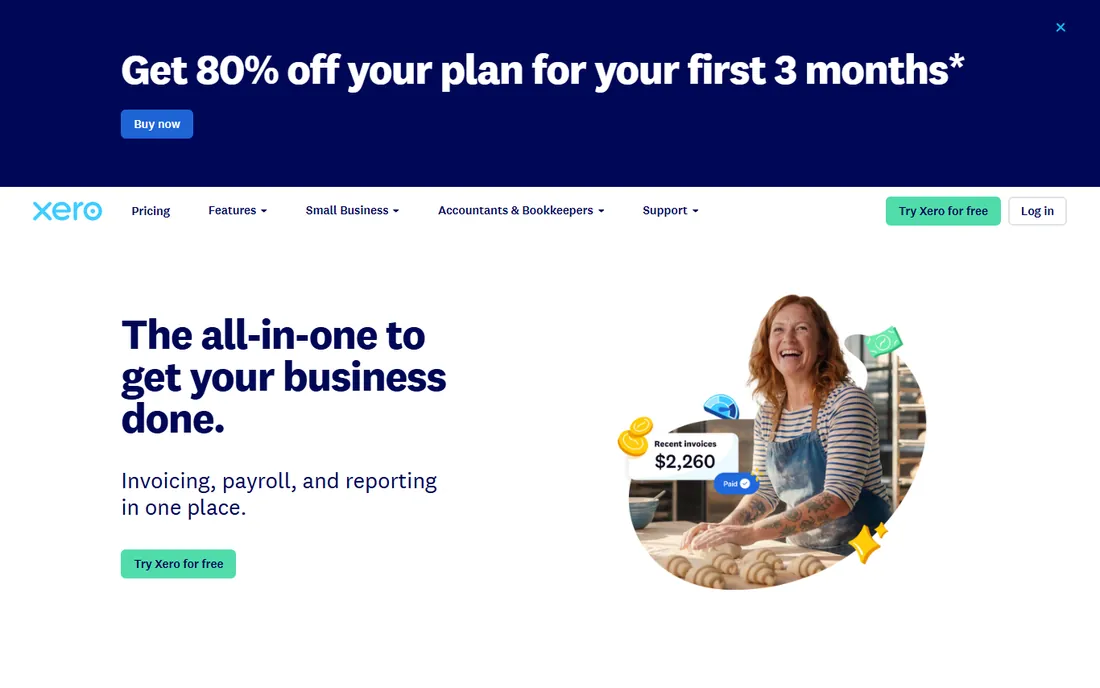
Xero's headline advantage is simple: every plan includes unlimited users. A ten-person team that would need QuickBooks Plus at $140 a month fits on Xero's mid tier for far less, because seats are not the pricing lever. The bank reconciliation is genuinely the fastest in the category, multi-currency works without an upgrade, and the interface is cleaner than QuickBooks' aging layout.
The gaps are American ones. Native US payroll does not exist, so you will integrate Gusto or similar, and the tax depth around US specifics is thinner. Lower plans cap the number of invoices and bills, so high-volume businesses need to check those limits. For growing teams, especially ones with international customers or remote staff, Xero is the value pick of the top tier.
What we like- Unlimited users on every plan, which destroys QuickBooks' per-seat math
- Fast, reliable bank reconciliation
- 1,000+ integrations and clean multi-currency
Watch out for- US payroll is not native and needs a partner like Gusto
- Lower tiers cap invoice and bill volumes
- Slightly less US tax depth than QuickBooks
Starting price$21/month (Lite plan)
Free planFree trial (30 days)
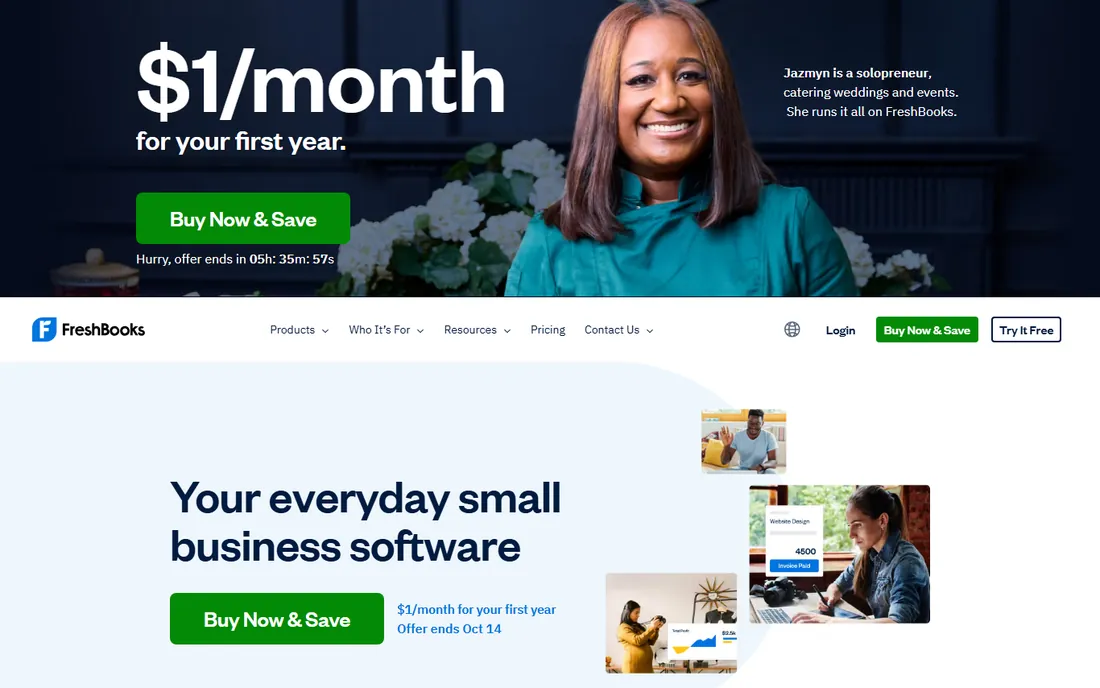
FreshBooks is built for people who bill their hours. Time tracking feeds straight into invoices, projects track profitability, estimates convert to invoices in a click, and clients get a polished portal where they can view, pay and comment. For consultants, agencies, designers and tradespeople, the billing workflow is smoother than anything in the generalist accounting tools.
The limits are structural. Lite at $21 a month caps billable clients, which pushes growing firms up the tiers fast, and the underlying accounting is simpler than QuickBooks or Xero: fine for services, thin for inventory or complex books. If your business is selling time and expertise, FreshBooks automates the money part better than anyone. If you sell products, look elsewhere.
What we like- Best-in-class time tracking tied directly to invoicing
- Estimates, proposals and client portals feel built for agencies
- Receipt capture and expense automation are simple
Watch out for- Billable-client caps on lower plans force upgrades
- Accounting depth is lighter than QuickBooks or Xero
- Double-entry purists will find it thin
#4
Zoho Books
Best for: Automation and customization on a budget
Visit zoho.com
Starting price$15/month (Standard plan)
Free planYes
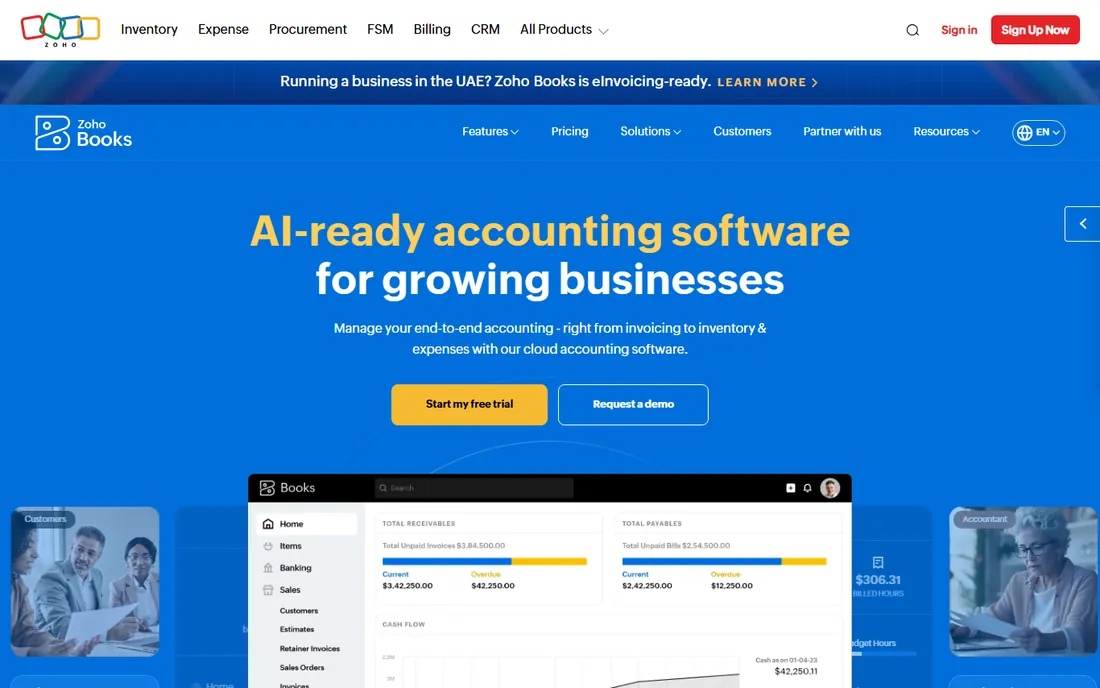
Zoho Books is the quiet overachiever of this list. Standard costs $15 a month, supports multiple users, includes inventory, projects and 70+ reports, and the workflow automation (custom rules, webhooks, scheduled actions) is deeper than platforms charging three times more. Businesses under $50K in revenue can use the free tier indefinitely, which no other full accounting suite matches.
The tradeoff is approachability. The settings run deep and the interface can overwhelm a first-time user, and the experience is smoothest if you already live in Zoho's ecosystem. US payroll comes through integration rather than natively. For the price, though, nothing else automates this much: scheduled invoice runs, payment reminders, approval workflows and bank rules that learn your categories.
What we like- Free tier for businesses under $50K revenue
- Custom workflows, webhooks and automation rival tools costing triple
- Extra users cost only $2.50 each
Watch out for- Interface can feel dense for beginners
- US payroll needs an integration
- Best value unlocks inside the wider Zoho suite
Starting price$0 (Starter plan)
Free planYes
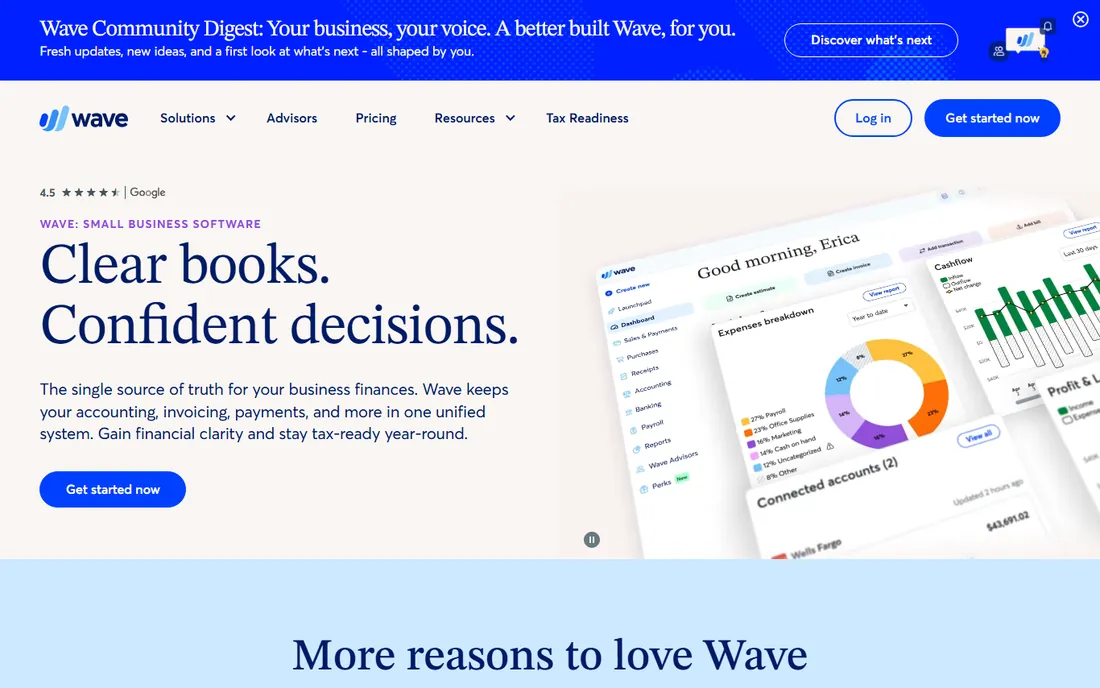
Wave's pitch has not changed in years: real accounting software, free. Invoicing is unlimited, bank transactions import automatically, receipts can be scanned, and the reports cover what a freelancer or microbusiness needs. The Pro plan at $19 a month adds automation features like receipt scanning upgrades and bank imports depth, but most solo users never need it.
The limits are honest ones. Payroll costs extra, the automation is basic compared to QuickBooks or Zoho, and multi-entity or inventory needs will outgrow it. But for a freelancer or side business, Wave replaces the spreadsheet at zero cost, and the books it produces are clean enough to hand straight to a tax preparer. That is a remarkable deal.
What we like- Core accounting, invoicing and receipt scanning are genuinely free
- Bank transaction imports automate the basics
- Clean mobile app rated well by users
Watch out for- Payroll is a paid add-on
- Automation depth is lighter than paid rivals
- Best suited to simple books, not growing companies
#6
Sage Accounting
Best for: Small businesses wanting a veteran brand with AI help
Visit sage.com
Starting price$24/month (Accounting Start plan)
Free planFree trial
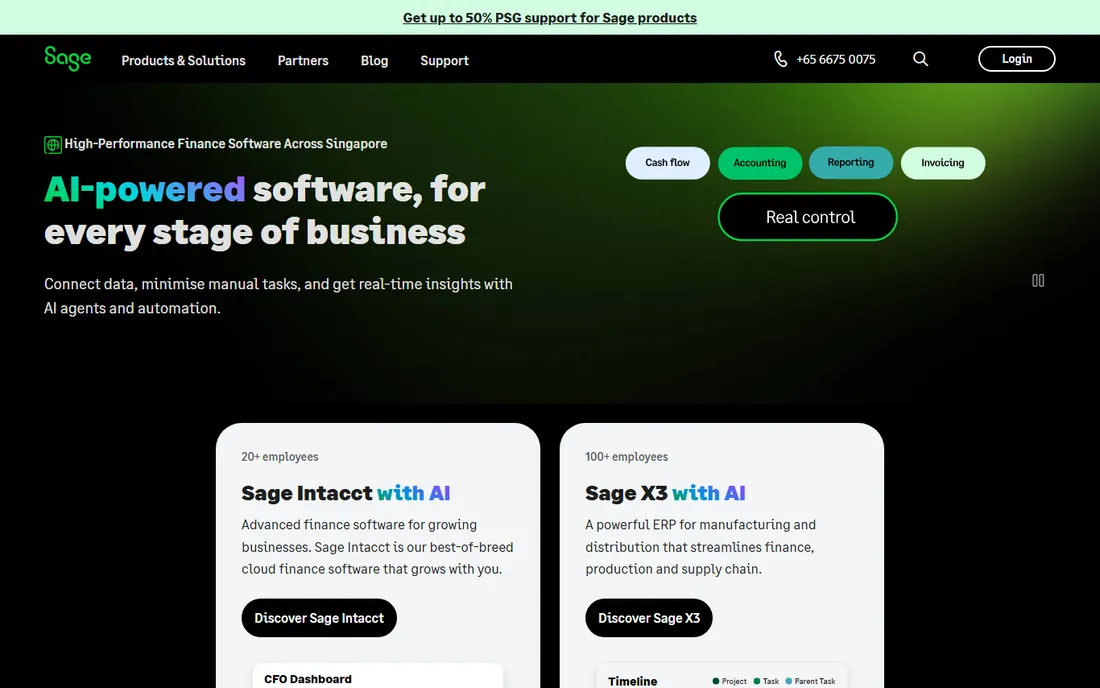
Sage has been doing accounting software since before most of this list existed, and Sage Accounting brings that heritage to the cloud with modern automation layered on top. Bank reconciliation, invoicing, receipt capture and cash flow forecasting are all here, and Sage Copilot adds AI assistance for categorization and insights. Plans run from Start at $24 a month up through Standard and Plus for larger teams.
The honest catch is regional inconsistency: Sage's pricing and feature lineup vary by country and change frequently, so the US page deserves a careful read. The integration marketplace is smaller than QuickBooks' or Xero's, and the interface carries some legacy weight. For businesses that trust the Sage name and want AI-assisted bookkeeping without startup risk, it is a solid middle path.
What we like- Decades of accounting credibility behind it
- Sage Copilot AI features assist with reconciliation and insights
- Receipt capture automation on higher tiers
Watch out for- US pricing and plan lineup shift often, so confirm before buying
- Smaller integration ecosystem than QuickBooks or Xero
- Interface feels dated in places
#7
Puzzle
Best for: Startups wanting AI-driven books and fast close
Visit puzzle.io
Starting price$0 (free plan)
Free planYes
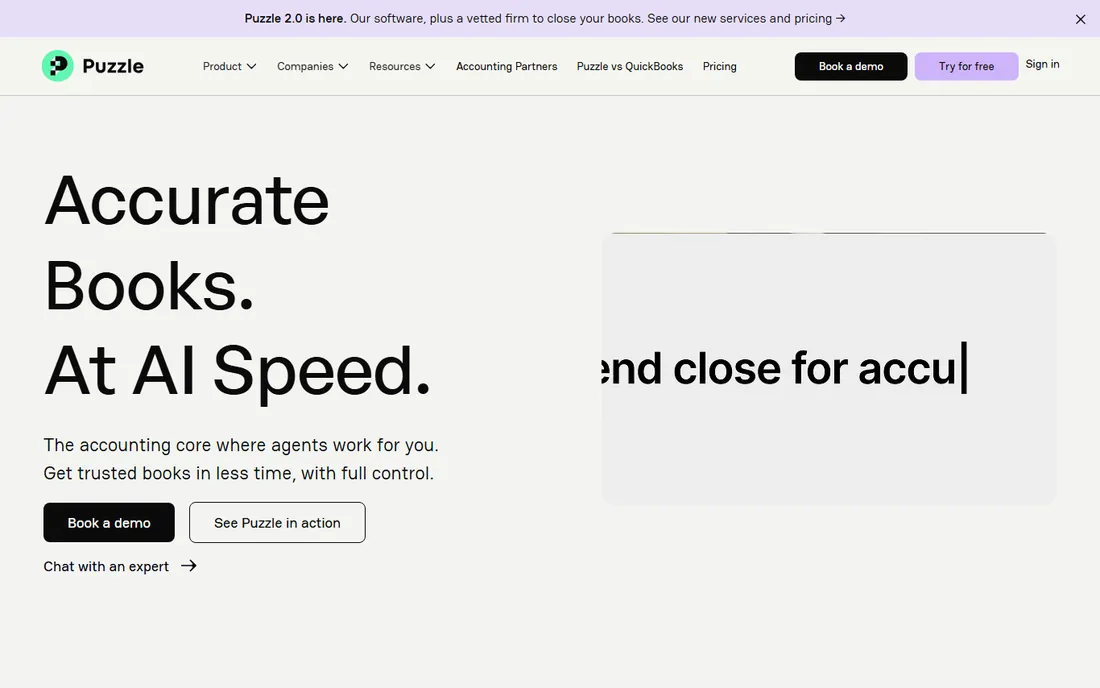
Puzzle is what accounting software looks like when it is designed in the AI era rather than retrofitted. It connects to Stripe, Brex, Ramp and Gusto, auto-categorizes transactions, and its Advanced Automation tier at $85 a month runs AI month-end close reviews, flux analysis and continuous accuracy monitoring. The free Basics plan covers pre-revenue startups until $20K in cumulative transactions, and every plan includes unlimited users.
The catch is fit. Puzzle is built for venture-backed startups and tech companies, with GAAP revenue recognition and burn-rate dashboards that a bakery does not need. Traditional small businesses will find QuickBooks or Xero more familiar. But for a startup founder who wants investor-ready books without hiring a controller, Puzzle automates more of the close than anything else at this price.
What we like- Free plan for pre-revenue startups under $20K in transactions
- AI month-end close and continuous accuracy monitoring on paid tiers
- Unlimited users on every plan
Watch out for- Built for startups, not traditional small businesses
- Paid tiers from $42.50 add up with volume
- Young company with a shorter track record
#8
Ramp
Best for: Companies wanting to automate spend and AP
Visit ramp.com
Starting price$0
Free planYes
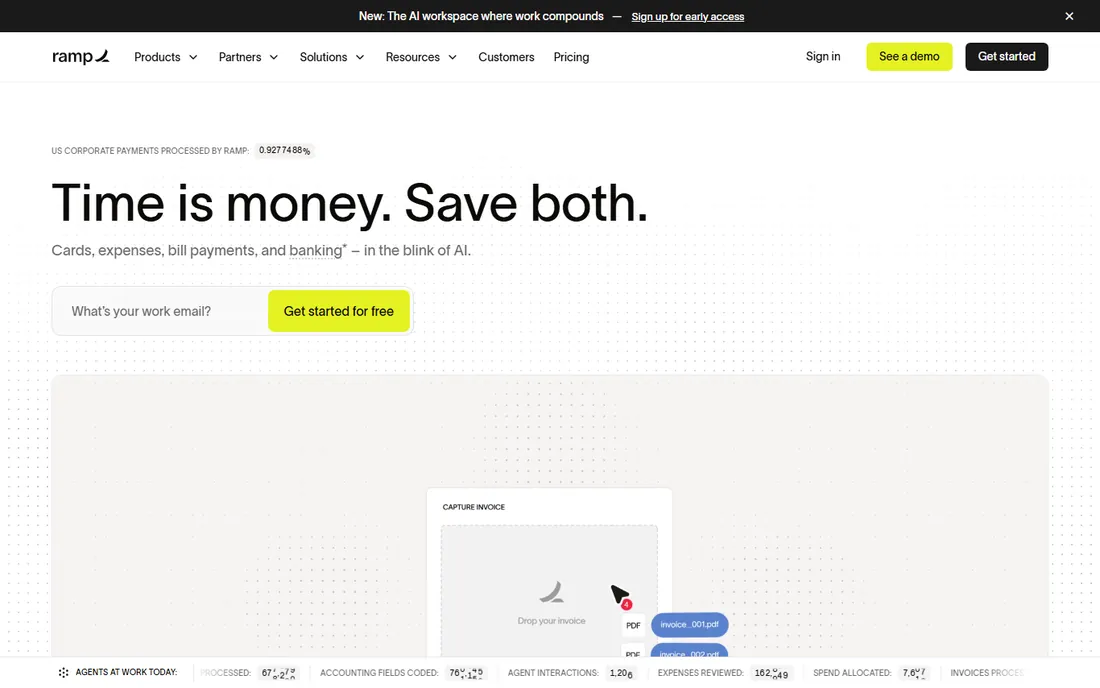
Ramp attacks bookkeeping from the spending side. Issue corporate cards with per-employee limits, and every transaction arrives pre-categorized, receipt-matched and synced to QuickBooks, Xero or NetSuite. Bill pay automates approvals and scheduling, and the whole platform is free: Ramp makes money on card interchange, not subscriptions. For companies where expense reports and AP eat hours, it removes the work at the source.
The honest framing is that Ramp is not accounting software. You still need a ledger. But paired with QuickBooks or Xero, it automates the messiest half of bookkeeping (who spent what, where is the receipt, who approved it) better than any feature inside the accounting tools themselves. If your team spends on cards, Ramp is close to a must-have.
What we like- Free corporate cards with built-in spend controls
- Bill pay and AP automation included at no cost
- Accounting integrations sync categorized expenses automatically
Watch out for- Not a full general ledger, it complements accounting software
- Underwriting decides your credit limit
- Best for companies with real card spend
#9
Brex
Best for: Startups wanting cards, expenses and accounting in one
Visit brex.com
Starting price$0
Free planYes
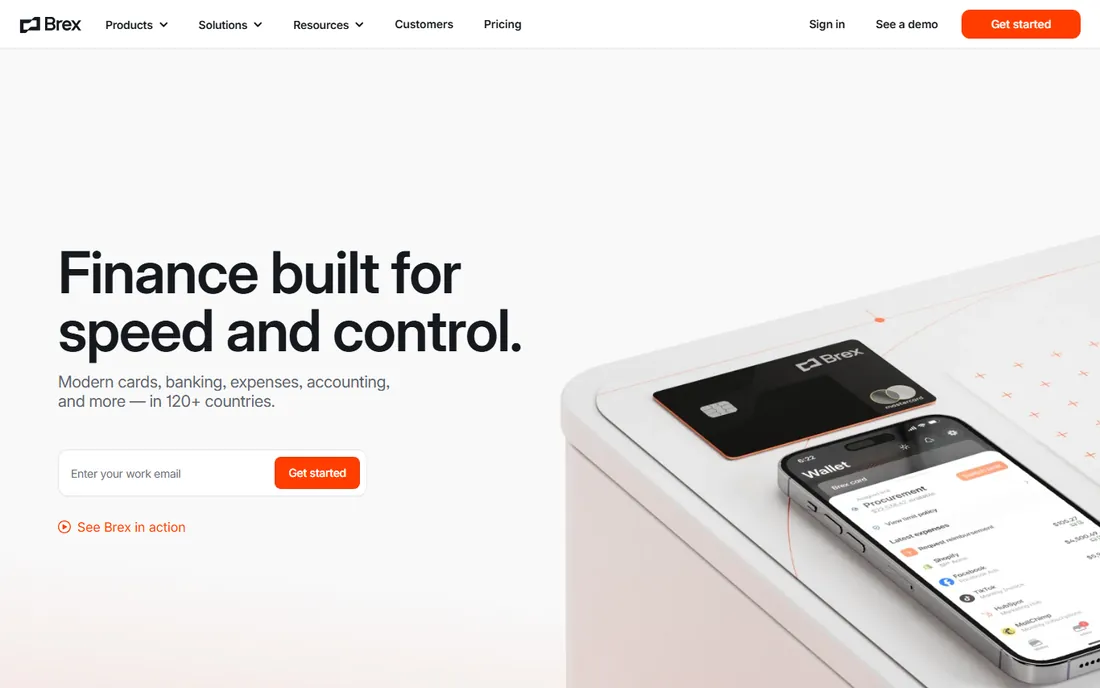
Brex plays the same game as Ramp with a startup-native flavor. Corporate cards, expense management, bill pay and travel booking live in one free platform, with AI handling receipt collection and categorization before anything reaches your books. Integrations push clean, coded transactions into QuickBooks, Xero or NetSuite. Funded startups get generous limits and a rewards structure tuned to startup spending.
The same caveat applies: Brex organizes spending, it does not replace the general ledger. And since Ramp and Brex now overlap heavily, most companies should evaluate both and pick one rather than running both. Brex tends to win with venture-backed startups that want the ecosystem; Ramp tends to win on pure AP automation depth. Either one, paired with real accounting software, automates away the expense-report era.
What we like- Free platform combining corporate cards, expenses, bill pay and travel
- AI-powered receipt matching and categorization
- Strong startup ecosystem with high limits for funded companies
Watch out for- Like Ramp, it needs a real accounting system behind it
- Qualification favors startups with funding or revenue
- Feature overlap with Ramp means picking one, not both
Picking automation that actually saves you time
Start by naming the hours you want back. If bank reconciliation and invoicing eat your week, a full suite like QuickBooks, Xero or Zoho Books is the answer. If expense reports and card chaos are the pain, Ramp or Brex fixes it without replacing your ledger. If month-end close takes two weeks, Puzzle's AI close is built for exactly that. Buying a general ledger when your problem is expense reports is the classic mismatch.
Then count users honestly, because pricing models differ wildly. QuickBooks charges per seat with hard caps per tier, so a growing team climbs plans fast. Xero, Puzzle and Zoho Books include unlimited or cheap additional users, which can cut the bill in half at ten-plus people. Run your actual headcount through two or three options before committing.
Finally, test the bank feed on day one of the trial. Every platform promises automatic categorization, but feed reliability and category accuracy vary by bank and by business. Connect your real accounts, import a month of history, and see how much you have to fix by hand. The platform that categorizes 90% correctly will save you more than any feature list ever will.
How this shortlist came together
This list was built from vendor pricing pages, published plan comparisons and review data from G2, Capterra and practitioner discussions, with prices verified in October 2026. QuickBooks' 2026 price increases are reflected in the figures above. Every tool here is an active product sold to US businesses today. Free tiers are listed only where the vendor genuinely offers one.
No hands-on testing was involved and no vendor paid for placement. The selection weights automation depth, pricing transparency, fit for different business sizes and the strength of the integration ecosystem. Newer AI-native tools like Puzzle sit alongside the established suites because automation, not brand age, is what this category is now judged on.
Where the automation stops (and what still needs a human)
No software on this list replaces judgment. Automated categorization still miscodes the ambiguous transactions, AI close reviews still need a human sign-off, and tax strategy still needs a professional. The realistic promise is narrower and still valuable: the software does 80 to 90% of the mechanical work, and you or your bookkeeper handle the exceptions.
That division of labor is also the business case. A bookkeeper reviewing AI-categorized transactions costs far less than one doing data entry, and clean books delivered monthly cost less at tax time than a shoebox delivered in April. Budget for a few hours of professional help per month even with the best automation here. The software makes those hours cheap; it does not make them zero.
Frequently asked questions
What is the cheapest automated accounting software?
Wave and Puzzle both offer genuinely free tiers, and Ramp and Brex are free platforms. Among full accounting suites, Zoho Books has a free tier for businesses under $50K in revenue, and its paid Standard plan starts at $15 a month. The right cheap option depends on whether you need a full ledger or just want spending automated.
Is QuickBooks still worth it after the 2026 price increases?
For many US businesses, yes, because of the ecosystem: the most integrations, the most accountants who know it, and the deepest US tax features. But the increases (Simple Start $38, Essentials $85, Plus $140) make the comparison real. A team of five that fits on QuickBooks Plus at $140 may fit on Xero or Zoho Books for far less, so run your headcount through both.
Can accounting software replace my bookkeeper?
It replaces the data entry, not the judgment. Bank feeds, receipt capture and auto-categorization handle the mechanical work, but someone still needs to review exceptions, reconcile oddities and plan for taxes. Most small businesses end up with software plus a few hours of bookkeeper time a month, which costs much less than full-service bookkeeping.
Do I still need QuickBooks if I use Ramp or Brex?
Yes. Ramp and Brex automate spending, expenses and bill pay, but they are not general ledgers. They sit in front of your accounting software, feeding it clean categorized transactions. The common stack is Ramp or Brex for spend plus QuickBooks, Xero or Zoho Books for the actual books.
What is the best accounting software for startups?
Puzzle is built specifically for startups, with AI month-end close, burn-rate tracking and a free tier for pre-revenue companies. Brex pairs well with it for cards and expenses. Xero is the strong generalist pick for startups that want a conventional ledger with unlimited users and good integrations.
How long does it take to switch accounting software?
For a small business, one to four weeks is typical: exporting the chart of accounts and history, connecting bank feeds, and running the old and new systems in parallel for one close. Most platforms offer migration help or guided imports. The slow part is usually cleaning up the old books, not learning the new tool.
Sources we checked (9)
- https://fitsmallbusiness.com/quickbooks-online-comparison/
- https://costbench.com/software/accounting/quickbooks-online/
- https://www.spotsaas.com/blog/best-quickbooks-alternatives-2026
- https://fitsmallbusiness.com/best-quickbooks-alternative/
- https://adtools.org/buyers-guide/quickbooks-online-vs-xero-vs-freshbooks-vs-zoho-books-accounting-buyer-s-guide
- https://www.fahimai.com/zoho-books-vs-wave
- https://www.fahimai.com/zoho-books-vs-freshbooks
- https://www.fahimai.com/how-to-use-puzzle-io
- https://www.spotsaas.com/product/sage-accounting--sage-one-/pricing
Is your product missing or out of date?
We review this list regularly. Vendors can request a listing, send updated pricing or ask about featured placement.

Shihab Mia · Founder, Rankite
Shihab has spent more than a decade helping SaaS and e-commerce brands grow through search. He writes Rankite's software buying guides from pricing pages, documentation and public user reviews. More about Shihab.