How we make this list: we compare pricing pages, product documentation and public user reviews. Rankite is independent; if a vendor ever pays for a featured spot, that listing is clearly labeled Partner.
Key takeaways
- Harvey and CoCounsel are the enterprise benchmarks, but both hide pricing behind sales calls and multi-seat minimums.
- LawDroid Copilot is the cheapest real AI legal assistant at $25/user/month with a 10-day free trial, built for solos and small firms.
- StrongSuit publishes its price ($249/user/month) and vLex Vincent AI covers 100+ countries for cross-border research.
- Spellbook wins for contract drafting inside Microsoft Word, with a 7-day free trial before you talk to sales.
- Half of this category does not publish pricing, so budget one sales cycle and always ask about seat minimums and renewal uplifts.
Quick comparison
| Tool | Best for | Starting price | Free plan |
|---|
 Harvey Harvey | large firms and corporate legal teams | See website | No |
 CoCounsel CoCounsel | Westlaw firms wanting AI research | See website | No |
 Lexis+ AI Lexis+ AI | research on the LexisNexis stack | See website | No |
 vLex Vincent AI vLex Vincent AI | multi-jurisdiction legal research | See website | Free trial (7 days) |
 Luminance Luminance | M&A due diligence at scale | See website | No |
 Spellbook Spellbook | contract drafting inside Microsoft Word | See website | Free trial (7 days) |
 Robin AI Robin AI | contract review with a free tier | See website | Yes |
 StrongSuit StrongSuit | US litigation firms wanting transparent pricing | $249/user/month | Free trial |
 Ironclad Ironclad | in-house contract lifecycle management | See website | No |
 LawDroid Copilot LawDroid Copilot | solo and small-firm AI assistant | $25/user/month | Free trial (10 days) |
Is your product missing or out of date?
We review this list regularly. Vendors can request a listing, send updated pricing or ask about featured placement.
The best legal ai software
Here is the blunt truth about legal AI in 2026: the best tools are expensive, the cheap tools are narrow, and most vendors will not tell you the price until you sit through a demo. That is not a conspiracy. These are enterprise products with seat minimums, annual contracts, and renewal uplifts that make the sticker price only the opening bid.
What changed this year is real. Lexis+ AI rebranded around its Protégé assistant. MyInterview-style consolidation hit legal too, with Casetext fully absorbed into CoCounsel and Leya rebranded as Legora. And a genuinely useful tier of sub-$300/month tools (LawDroid, StrongSuit, Robin AI) now exists for solos and small firms who were locked out two years ago.
The right pick depends on what you actually do all day. Research-heavy litigators need a different tool than transactional lawyers living in Word. In-house teams need a different tool than firms. This list covers both sides, with verified pricing where it exists and "See website" where the vendor hides it, because guessing would be worse than honesty.
Starting priceSee website
Free planNo
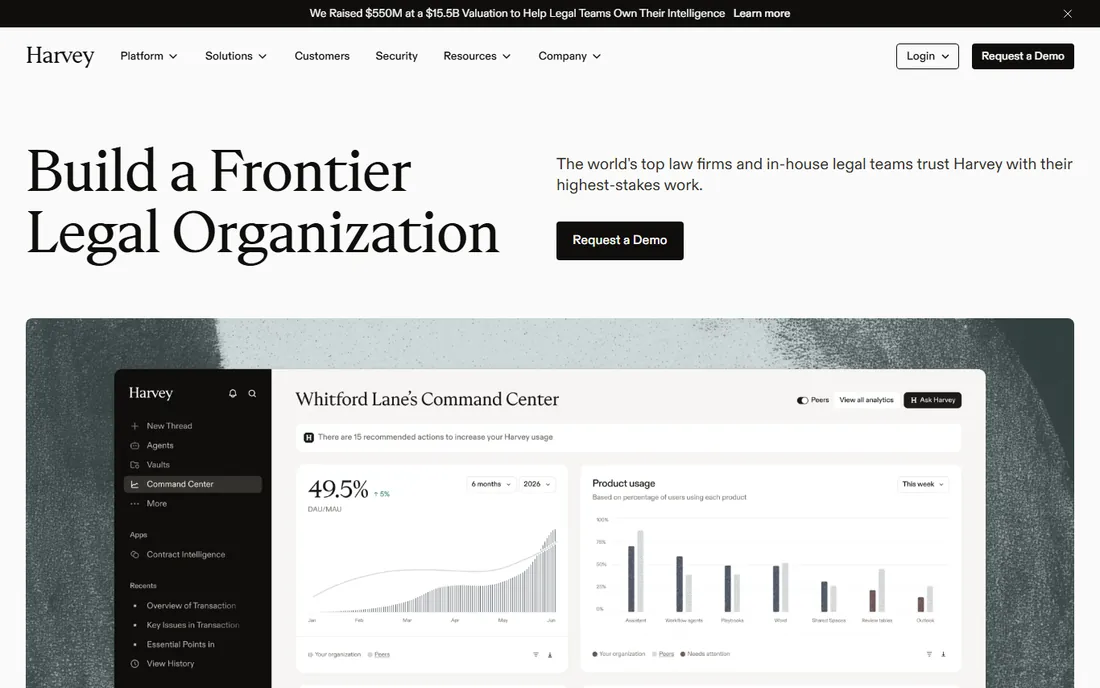
Harvey is the benchmark everything else gets measured against. The platform combines an AI assistant for research and drafting, Vault for reviewing thousands of documents at once, Workflows for repeatable legal tasks, and a Deep Research mode for agentic multi-step work. When a firm runs diligence across a deal room of hundreds of contracts, Vault is the feature that earns the subscription.
The honest filter is cost and scale. Harvey publishes no pricing at all; third-party reporting consistently puts mid-market contracts around $1,200 per seat per month with 20-seat minimums and 12-month commitments, while Am Law 100 firms negotiate much lower per-seat rates at volume. If you are under about 50 lawyers, this is the wrong article section for you. If you are not, Harvey is the platform to beat, just negotiate hard, because reported initial quotes often drop substantially.
What we like- Purpose-built legal platform with research, drafting, and Vault document review
- Used across Am Law 100 firms and Big Four
- Agentic workflows for multi-step matters
Watch out for- No public pricing, demo-and-quote only
- Seat minimums of 20 to 50 make it unreachable for small firms
- Reported 10 to 25% renewal uplifts each year
Starting priceSee website
Free planNo
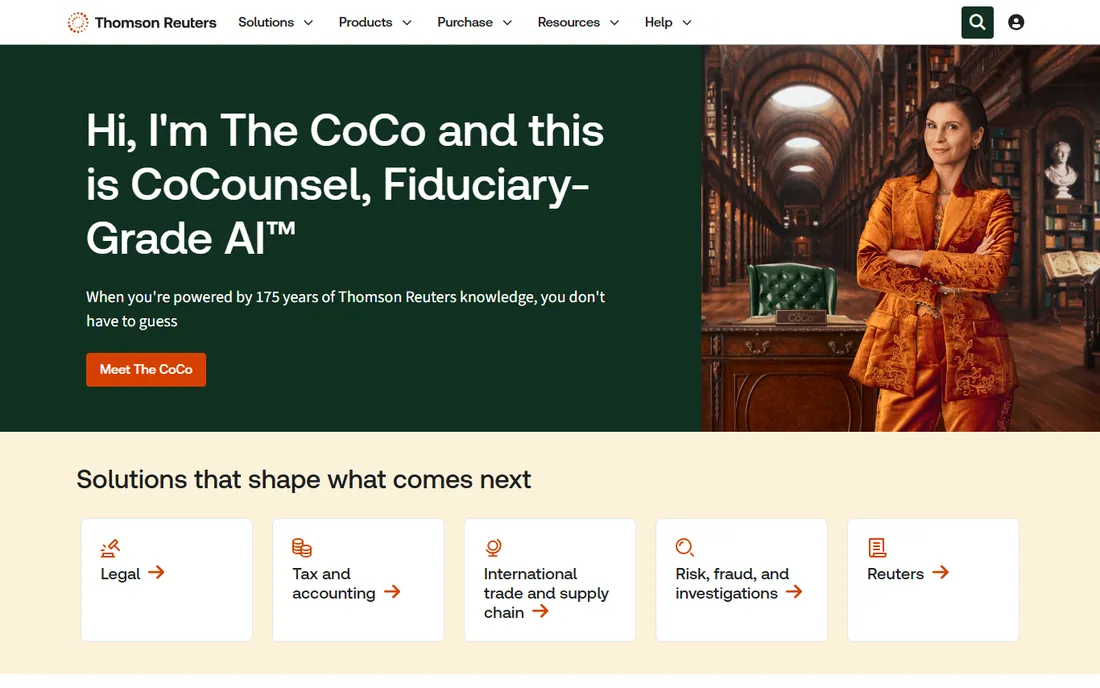
CoCounsel started life as Casetext's AI assistant, the first of its kind, and Thomson Reuters bought the company for $650 million to fold it into Westlaw. The current generation works less like a chatbot and more like a junior colleague: you describe a matter, it plans the work, pulls from your precedents plus Westlaw and Practical Law, and drafts with citations you can verify.
The catch is the ecosystem lock-in. You cannot buy CoCounsel without Westlaw, so the real cost is the combined Thomson Reuters bill, which industry estimates put at $300 to $600 per seat per month for firms already on Westlaw. For litigation firms doing heavy case-law research, the verified citations and KeyCite integration justify it. For firms on Lexis or no research platform at all, switching stacks for one AI feature is rarely worth it.
What we like- AI grounded in Westlaw and Practical Law content with KeyCite citation support
- Document review, drafting, and deposition prep in one assistant
- Deep Thomson Reuters integration
Watch out for- Not available standalone, it requires the Westlaw ecosystem
- Pricing is bundled and quote-based
- Total Thomson Reuters spend can reach several hundred per seat monthly
Starting priceSee website
Free planNo
Lexis+ AI, now built around the Protégé assistant, is LexisNexis's answer to CoCounsel. It handles conversational legal research, document drafting, contract analysis, and citation-verified summarization across the Lexis database. Its edge is coverage: Shepard's validation, international legal databases, and deep regulatory and secondary-source content that outpaces Westlaw outside the US.
Pricing follows the same bundled logic as its rival. Third-party sources cite plan tiers from roughly $128 to $494 per user per month, but LexisNexis routes every real quote through sales, and out-of-plan usage charges (reported around $99 per AI query) punish anyone who uses it casually. The decision rule is simple: if your firm already pays for Lexis, the AI layer upgrades what you own. If not, compare the full stack cost, not the AI feature alone.
What we like- Conversational research grounded in LexisNexis content
- Shepard's citation validation in real time
- Strong international and regulatory coverage
Watch out for- Quote-based pricing with no published per-user price
- Out-of-plan per-query charges are steep
- Only makes sense on top of a Lexis subscription
#4
vLex Vincent AI
Best for: multi-jurisdiction legal research
Visit vlex.com
Starting priceSee website
Free planFree trial (7 days)
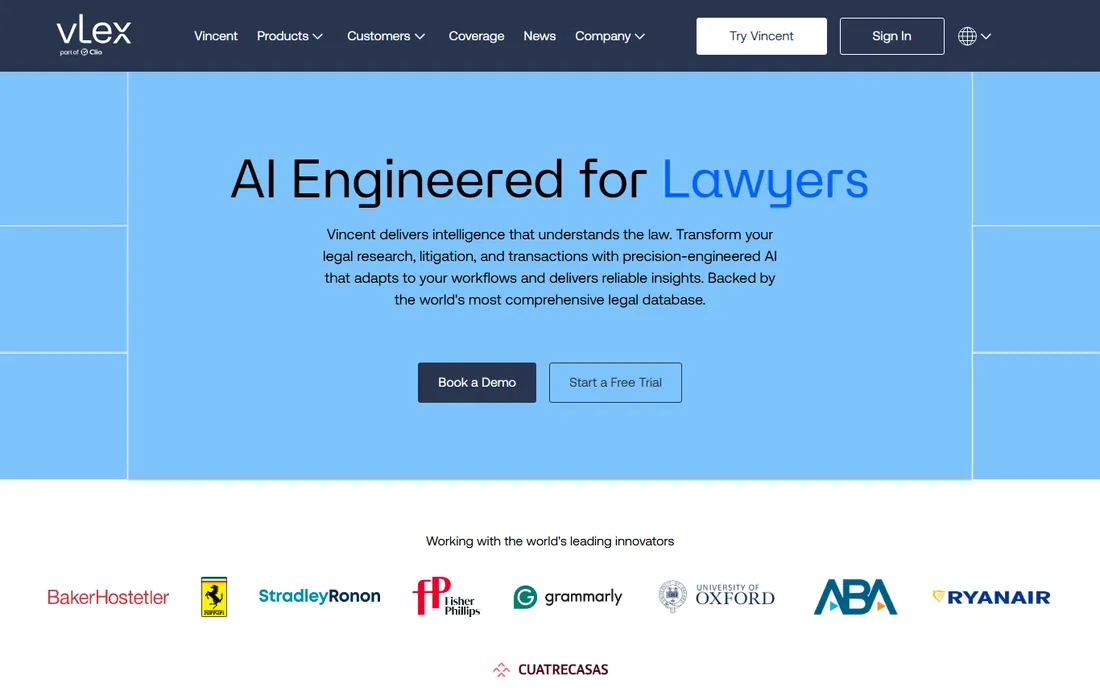
If your practice crosses borders, vLex Vincent AI is the strongest research option most US lawyers have never tried. The platform spans more than 100 countries with over a billion documents, and the Vincent AI assistant handles contract analysis, pleading analysis, and multi-jurisdiction research with 20+ prebuilt workflows. The 50-state survey feature alone saves days on compliance questions.
US depth is the tradeoff. For domestic case law, Westlaw and Lexis remain deeper. But vLex Fastcase's core plan is free to many bar members, which makes the paid Vincent AI upgrade a reasonable add rather than a full-stack replacement. A 7-day trial lets you test the workflows, and firms doing cross-border or regulatory work get the best accuracy-to-cost ratio in the category.
What we like- Over one billion legal documents across 100+ countries
- 50-state survey workflow built in
- Vincent answers in natural language with citations
Watch out for- Quote-only pricing with no public figure
- US case-law depth trails Westlaw and Lexis
- Free core access mostly helps bar members, not the AI tier
Starting priceSee website
Free planNo
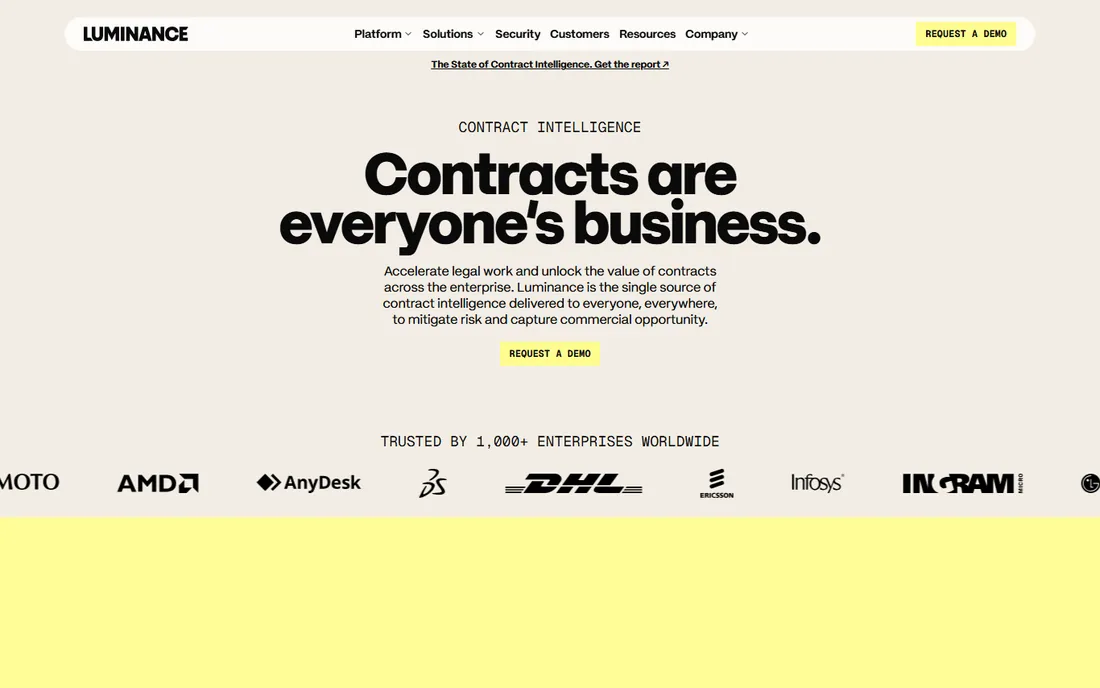
Luminance is the specialist's specialist: an AI-native contract intelligence platform built for the deals where thousands of documents land on a compressed timeline. Its pattern-recognition AI flags anomalies, clusters documents, and learns from each correction, so review quality compounds across matters. M&A due diligence is its home turf, and nothing in the sub-$1,000 tier touches it there.
Everything about buying it is enterprise. No public pricing, no self-serve trial, and third-party estimates land in the mid-five-figures annually at minimum. Setup demands playbook training and document management integration. Teams reviewing 5 to 20 contracts a month are paying for capacity they will never use. But if your deal team bills hundreds of dollars an hour, the ROI math on cutting review time by the reported 70 to 90% closes fast.
What we like- Purpose-built AI that learns from your edits over time
- Batch-processes thousands of documents for due diligence
- Language-agnostic contract analysis
Watch out for- Enterprise-only with fully undisclosed pricing
- Steep learning curve and playbook training required
- No self-serve trial or free tier
Starting priceSee website
Free planFree trial (7 days)
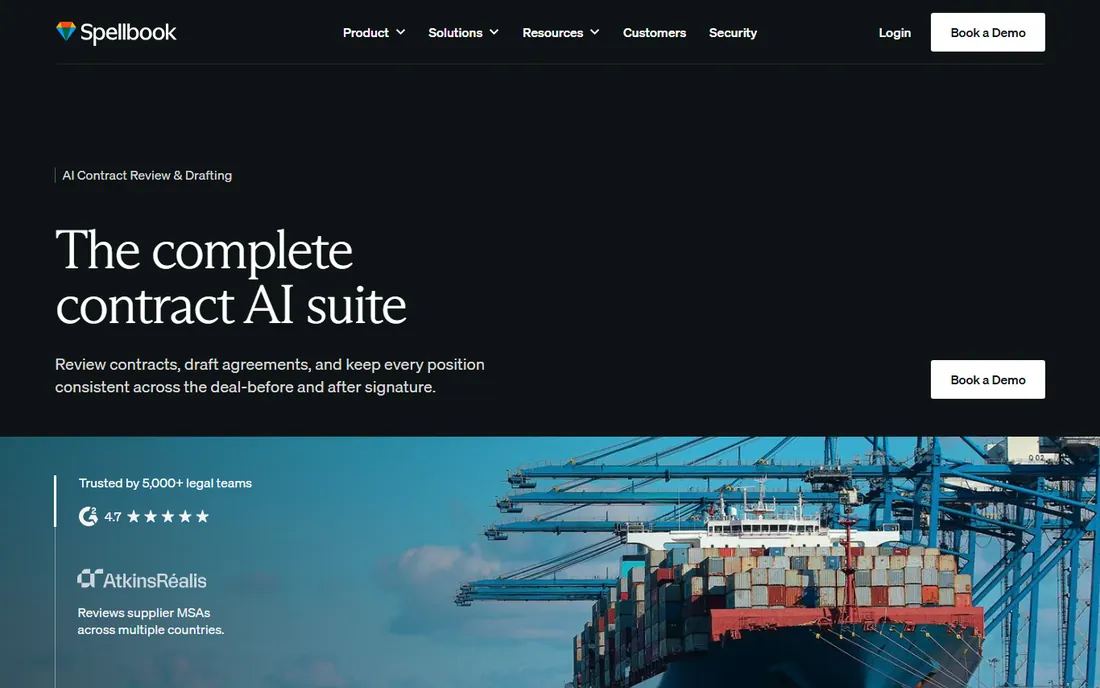
Spellbook made one smart bet: lawyers live in Microsoft Word, so the AI should too. The add-in drafts clauses from plain descriptions, flags risky language, suggests missing provisions, and applies your playbooks during live negotiation, all inline as you type. For transactional and in-house lawyers who redline contracts all day, that placement is the entire value proposition.
Pricing used to be transparent and now is not. The current pricing page offers custom per-user quotes, with third-party reporting putting plans in the roughly $99 to $199 per user per month range and larger plans carrying seat minimums. There is a 7-day free trial you can start without a sales call, which is more than most enterprise legal AI offers. Just know what it is not: a research platform. Do not expect case law or litigation support.
What we like- Native Word add-in, so lawyers never leave their workflow
- Inline clause drafting, redlines, and playbook checks
- Trained on legal contract data
Watch out for- Moved to custom quote-based pricing with no published rates
- Word-centric, not a research platform
- Suggestions still need attorney review
Starting priceSee website
Free planYes
Robin AI is the rare legal AI tool you can actually try for free. The free tier offers a limited number of daily messages for a single user, which is enough to run a real contract through the review engine before spending anything. Paid tiers add unlimited messages and uploads, monthly reports, bespoke playbooks, SSO, and dedicated support up to enterprise.
The frustration is that Robin AI no longer publishes paid pricing on its website; you schedule a demo or call to get numbers. Third-party sources suggest the paid Pro tier sits around $100 per user per month, but treat that as a rumor, not a quote. For contract-heavy teams that want to validate the AI on their own documents first, the free tier makes Robin the lowest-risk evaluation on this list.
What we like- Free tier with daily messages for trying real work
- Contract review, reports, and playbooks scale to enterprise
- Microsoft Word integration
Watch out for- Paid pricing not published on the site
- Advanced features like clause comparison are enterprise-only
- Setup takes effort at larger scale
Starting price$249/user/month
Free planFree trial
StrongSuit earns its spot by doing the thing almost nobody else in legal AI does: publishing the price. At $249 per user per month with a custom-quoted firm plan, it positions itself directly against the opaque enterprise vendors. The platform covers research, drafting, contract redlining, and discovery, engineered on top of frontier models for US litigation workflows.
It is deliberately US-focused, so cross-border teams should look at vLex instead. And $249 a seat is not cheap; it is just honest. But for small and mid-size litigation firms that want serious legal AI without a six-month sales cycle, the combination of published pricing and a self-serve trial is a genuine differentiator. You can be running research in minutes, which is more than Harvey or CoCounsel can say.
What we like- Published pricing, rare in this category
- Runs on leading frontier models with legal-domain engineering
- Self-serve free trial, live in minutes
Watch out for- Built for US litigation, less global coverage than vLex
- Smaller vendor with fewer enterprise references
- $249 per seat adds up for larger teams
Starting priceSee website
Free planNo
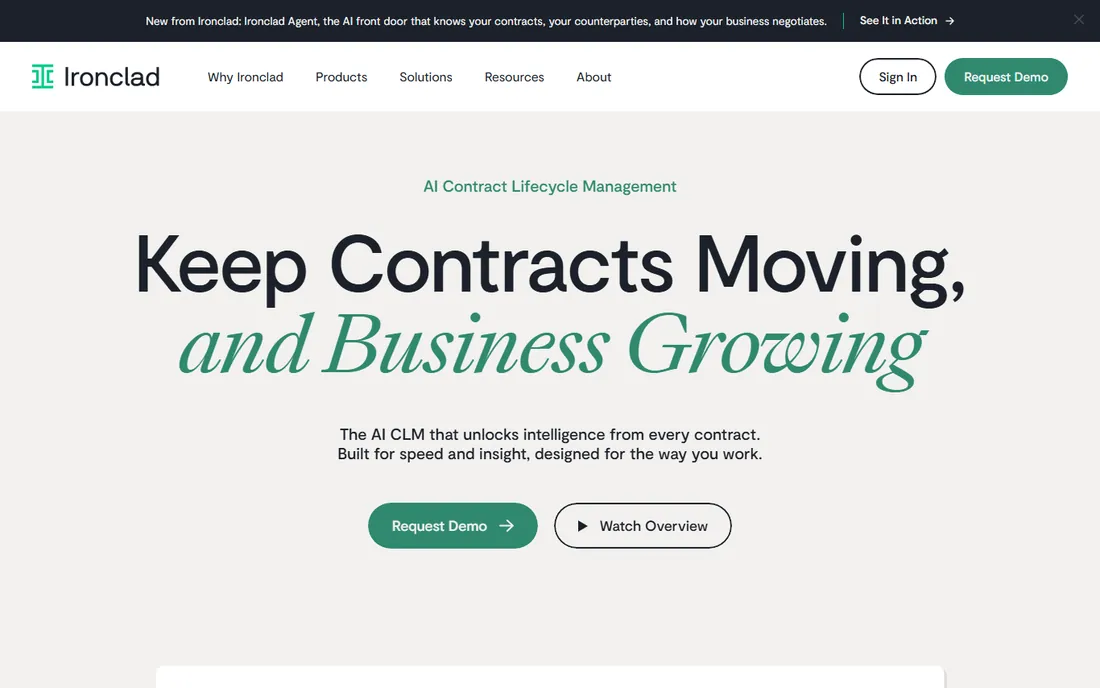
Ironclad is the enterprise standard for contract lifecycle management with AI woven through it. Drafting, approval workflows, negotiation with a live redline editor, native e-signature, a searchable repository, and post-signature obligation tracking all live in one platform. Jurist, its legal AI layer, drafts, summarizes, redlines against your playbooks, and answers questions across the contract portfolio.
This is infrastructure, not an app. Third-party data puts deployments in the $50,000 to $120,000+ annual range with implementation fees on top, and standing it up properly takes dedicated legal operations effort. For in-house teams processing 50+ contracts a month with multi-department approvals, it pays for itself in cycle time. For a five-person firm, it is the wrong tool at the wrong price.
What we like- Full contract lifecycle from drafting to signature to obligation tracking
- No-code workflow builder for approvals
- Jurist AI for drafting, redlining, and review
Watch out for- Custom enterprise pricing only, no public tiers
- Implementation is a real project, not an afternoon
- Overkill below 50+ contracts a month
Starting price$25/user/month
Free planFree trial (10 days)
LawDroid Copilot is the most accessible AI legal assistant on this list. For $25 per user per month, month-to-month with no annual contract, you get an AI that researches new laws, drafts documents, summarizes files, and helps with client communications. The vendor offers a 10-day free trial, and a launch plan at $15 a month has appeared for early adopters.
Set expectations correctly. This is not Westlaw with a chat box; the case-law research is basic and the source coverage is not spelled out. It connects to practice management tools through Zapier rather than natively. But for a solo practitioner who wants AI help with drafting, research starting points, and intake without a second mortgage, it is the best value in legal AI right now. Verify every citation before it goes anywhere near a filing.
What we like- Cheapest credible legal AI at $25 a month, no annual contract
- 10-day free trial on the vendor's own site
- Handles research, drafting, summaries, and intake
Watch out for- Basic case-law research without Westlaw-grade depth
- Works via Zapier rather than native practice-management integrations
- Outputs need attorney verification
How we chose the legal AI shortlist
We built this list from the vendors' own pricing pages, feature documentation, and public plan pages, checked in October 2026. That timing mattered: Lexis+ AI had rebranded around Protégé, Casetext had fully become CoCounsel, and several vendors had moved from published pricing to quote-only models. Where vendors hide pricing, we say so instead of inventing numbers; third-party estimates are labeled as estimates, never presented as fact. We cross-referenced plan details and trial terms against legal-tech publications, bar association resources, and public reviews to catch what marketing pages omit, like seat minimums and renewal uplifts. We weighted coverage of research, drafting, and contract review, pricing transparency, and fit for both large firms and smaller practices. We did not run hands-on trials of any product, so use this as a research-backed starting point for demos, not a verdict from a test lab.
What to verify before you sign anything
Seat minimums are the number that kills most small-firm deals. Harvey reportedly requires 20 to 50 seats; several enterprise plans carry 10-seat minimums. Always ask for the minimum in writing before you invest weeks in evaluation. Then ask about the renewal uplift. Cost databases report 10 to 25% annual increases on enterprise legal AI contracts, which turns a $100,000 contract into $125,000 faster than most budgets expect.
Contract term and auto-renewal come next. Multi-year commitments are common at the enterprise end, sometimes with modest discounts for two-year terms. Know your termination rights and the notice window. For in-house teams, check data handling with the same rigor you apply to any vendor: where matter data is processed, whether it trains shared models, and what SOC 2 or ISO certifications exist. Thomson Reuters built its own model partly to keep client data off third-party APIs, which tells you how seriously large firms take this.
Match the tool to the actual work
Research-heavy litigators should start with CoCounsel, Lexis+ AI, or vLex Vincent AI, depending on whether their stack is Westlaw, Lexis, or cross-border. Transactional lawyers who live in Word should look at Spellbook or Robin AI first. In-house teams with contract volume belong in the Ironclad conversation, and M&A teams with deal-driven spikes should evaluate Luminance. Solos and small firms get the most for the least from LawDroid Copilot, StrongSuit, or Robin AI's free tier. The wrong category match wastes more money than the wrong vendor within the right category.
The pricing transparency problem
Legal AI has a pricing problem that most software categories solved a decade ago. Six of the ten tools on this list publish no pricing at all. The justifications are familiar: enterprise deals are complex, discounts are negotiated, competitors watch. The effect is that buyers cannot budget, cannot compare, and discover the real number only after investing in a sales process designed to make walking away harder.
There are signs of pressure. StrongSuit publishes its price as a competitive weapon. CoCounsel's per-seat figures circulate publicly. Bar associations keep pushing affordable options like vLex Fastcase. Until transparency becomes the norm, protect yourself: get every quote in writing with the seat count and term stated, ask what the renewal price will be, and treat any number a salesperson calls "standard" as the starting bid. The reported 40 to 60% negotiation drops on enterprise legal AI suggest the list price is mostly theater.
Frequently asked questions
Is legal AI accurate enough to trust in real matters?
Modern legal AI grounded in verified databases is far more reliable than general chatbots, but independent studies show even the leaders produce wrong answers on a meaningful share of queries, especially complex multi-jurisdictional ones. Never rely on an AI-generated citation without verifying it in the underlying database. Build that verification step into your workflow and keep a licensed attorney reviewing everything.
What is the cheapest good legal AI software?
LawDroid Copilot at $25 per user per month is the cheapest credible option, with a 10-day free trial. Robin AI's free tier lets you test contract review at no cost. StrongSuit at $249 per user per month is the cheapest transparent option aimed at real litigation work. All three beat paying enterprise prices for features a small practice will never use.
Do I need Westlaw or LexisNexis to use legal AI?
Not necessarily. CoCounsel requires the Westlaw ecosystem and Lexis+ AI requires Lexis, but tools like Harvey, StrongSuit, vLex Vincent AI, Spellbook, Robin AI, and LawDroid Copilot are standalone. If you already pay for a research platform, its AI layer is usually the cheapest upgrade. If you do not, a standalone tool plus bar-provided resources like vLex Fastcase can cover a lot.
Can legal AI replace junior associates?
No, and vendors that imply otherwise are selling. AI handles first drafts, document review passes, research starting points, and summarization well. It does not exercise judgment, catch every nuance, or take responsibility for the work product. Firms using it best treat it as added capacity for their lawyers, not a replacement for them, with review gates before anything reaches a client or court.
What should I ask about data privacy before buying?
Ask where your matter data is processed, whether it is used to train shared models, how long it is retained, and how you export or delete it. Look for SOC 2 Type II and ISO 27001 certifications, and check whether the vendor keeps data off third-party model APIs. Get the answers in the contract or a data processing addendum, not just a sales deck.
How long does implementation take?
Self-serve tools like LawDroid Copilot, StrongSuit, and Robin AI can be running the same day. Mid-market tools like Spellbook and vLex Vincent AI typically take days to weeks including playbook setup. Enterprise platforms like Harvey, Luminance, and Ironclad quote weeks to months with dedicated onboarding. If you need AI help on an active matter next week, that timeline decides the shortlist for you.
Sources we checked (11)
- https://www.harvey.ai
- https://sales.legalsolutions.thomsonreuters.com/en-us/products/cocounsel-legal/300/plans-pricing
- https://www.lexisnexis.com
- https://www.vlex.com
- https://www.luminance.com
- https://www.spellbook.legal
- https://www.robinai.com
- https://strongsuit.com/why-strongsuit/strongsuit-legal-ai-vs-vlex-vincent-ai/
- https://www.ironcladapp.com
- https://lawdroid.com/subscriptions/lawdroid-copilot-10-day-free-trial-vibe-plan/
- https://kurums.com/best-legal-research-software-2026-comparison/
Is your product missing or out of date?
We review this list regularly. Vendors can request a listing, send updated pricing or ask about featured placement.

Shihab Mia · Founder, Rankite
Shihab has spent more than a decade helping SaaS and e-commerce brands grow through search. He writes Rankite's software buying guides from pricing pages, documentation and public user reviews. More about Shihab.