How we make this list: we compare pricing pages, product documentation and public user reviews. Rankite is independent; if a vendor ever pays for a featured spot, that listing is clearly labeled Partner.
Key takeaways
- Rose Rocket and Alvys are the modern cloud choices, with Rose Rocket winning on network effects and Alvys on an all-in-one operating platform for brokers.
- Tai TMS is the automation specialist for brokers whose margins depend on doing more loads per head.
- McLeod PowerBroker and Descartes (including Aljex and MercuryGate) serve larger brokerages with deep EDI and enterprise requirements.
- AscendTMS is the only genuinely free entry point, while Revenova suits brokers already living in Salesforce.
Quick comparison
| Tool | Best for | Starting price | Free plan |
|---|
 Rose Rocket Rose Rocket | Modern brokers that want a networked TMS | See website | No |
 Alvys Alvys | Brokers wanting one system for everything | See website | No |
 Tai TMS Tai TMS | Brokerages optimizing for loads per employee | See website | No |
 Revenova Revenova | Brokerages standardized on Salesforce | See website | No |
 Turvo Turvo | Multi-party collaborative logistics | See website | No |
 McLeod PowerBroker McLeod PowerBroker | Large brokerages with complex operations | See website | No |
 AscendTMS AscendTMS | Small brokers getting started | See website | Yes |
 Descartes Aljex Descartes Aljex | Brokers needing proven EDI and integrations | See website | No |
 FreightPath FreightPath | Brokerages wanting a straightforward modern TMS | See website | No |
Is your product missing or out of date?
We review this list regularly. Vendors can request a listing, send updated pricing or ask about featured placement.
The best TMS software for brokers
Starting priceSee website
Free planNo

Rose Rocket rebuilt the broker TMS around how brokers actually work today: messaging-first communication, quick load building and a network where customers can find capacity beyond their own carrier list. The interface is the cleanest in the category, which matters when your team lives in it ten hours a day.
The platform has moved toward usage-based pricing conversations, so expect a quote tied to your volume. Back-office accounting depth is improving but still trails the legacy enterprise systems for complex settlement scenarios. For brokers that want a modern system their team will actually enjoy using, Rose Rocket is the standard recommendation.
What we like- Clean modern interface
- Network effects across customers
- Strong carrier communication tools
Watch out for- Quote-based pricing
- Some advanced accounting stays lighter than legacy systems
#2
Alvys
Best for: Brokers wanting one system for everything
Visit alvys.com
Starting priceSee website
Free planNo
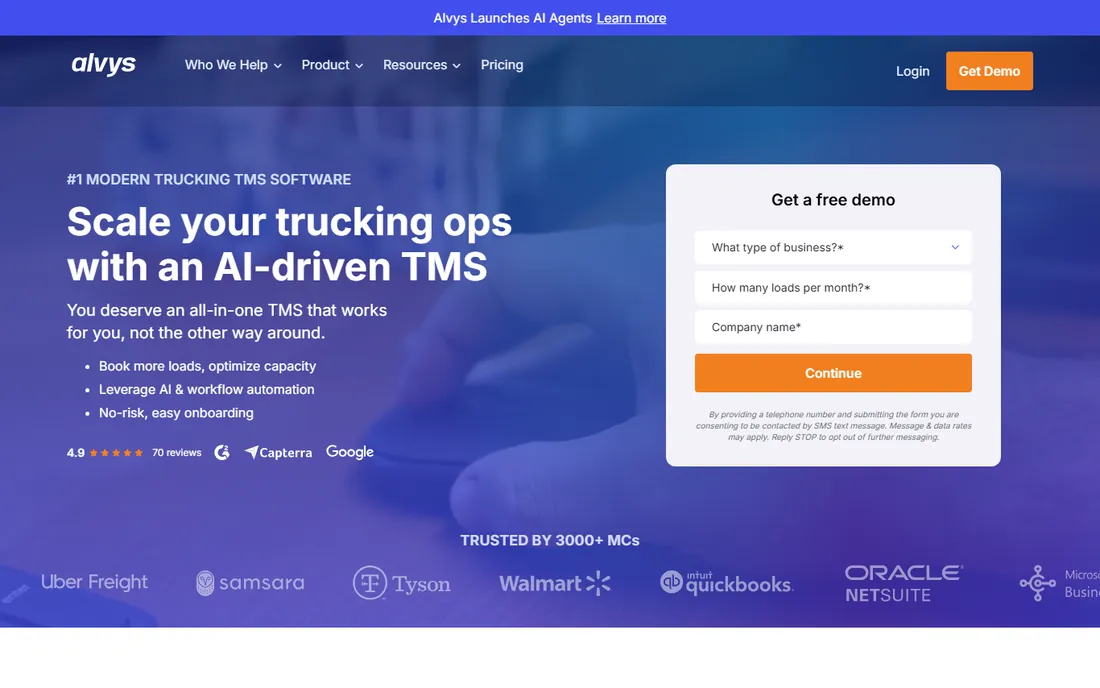
Alvys pitches the complete brokerage operating system: dispatch, accounting, document management, driver settlements and analytics in a single platform instead of a TMS plus a separate accounting tool. For brokers tired of reconciling two systems, that consolidation is the whole argument. Implementation is fast by industry standards.
The company is younger than the legacy players, so the reference customer list is shorter. Pricing is quoted. Brokers should verify the accounting depth against their actual settlement complexity in a demo. For small and mid-size brokerages that want one modern system, Alvys is a compelling choice.
What we like- TMS, accounting and driver management in one
- Modern UX
- Fast implementation
Watch out for- Newer vendor with a shorter track record
- Quote-only pricing
Starting priceSee website
Free planNo
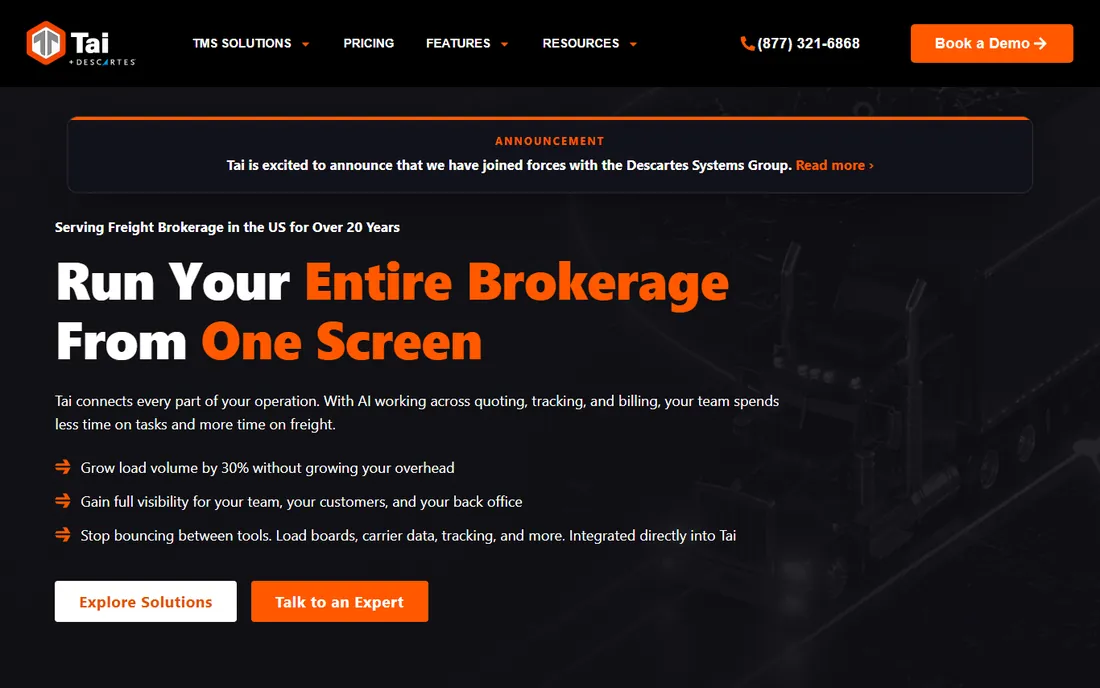
Tai built its reputation on automation: rating, dispatch, tracking, invoicing and settlement with minimal manual touches. Brokerages that measure loads per head tend to measure Tai well, because the platform is designed to let a small team move serious volume. The LTL rating and execution capabilities are particularly strong.
The interface prioritizes function over form. This is a tool for operators, not a beauty contest, and its users generally prefer it that way. Pricing is quoted based on volume and modules. If your strategy is using automation to squeeze more out of your operation, Tai deserves a serious look.
What we like- Deep freight automation
- Strong LTL capabilities
- Excellent integrations
Watch out for- Interface is functional rather than beautiful
- Pricing by quote
Starting priceSee website
Free planNo
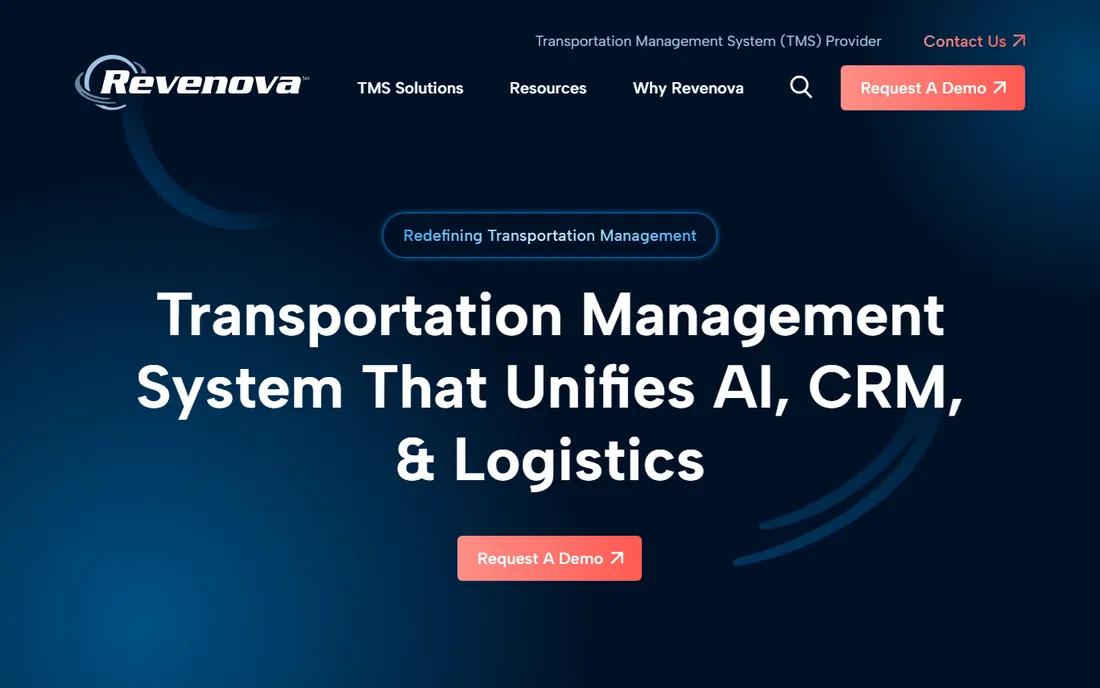
Revenova is the TMS for brokerages that already run on Salesforce. Built on the platform, it connects the CRM pipeline directly to dispatch, tracking and settlement, so the customer relationship and the load data never diverge. Multimodal support covers truckload, LTL, intermodal and ocean.
There is no point evaluating it without a Salesforce commitment; the platform license and the TMS subscription together put it in enterprise territory. For brokerages already paying the Salesforce bill, though, Revenova turns that CRM into a genuine transportation platform instead of a sales tool with a TMS bolted on.
What we like- Native to Salesforce
- Multimodal support
- Strong CRM-to-dispatch flow
Watch out for- Requires Salesforce
- Enterprise pricing
Starting priceSee website
Free planNo
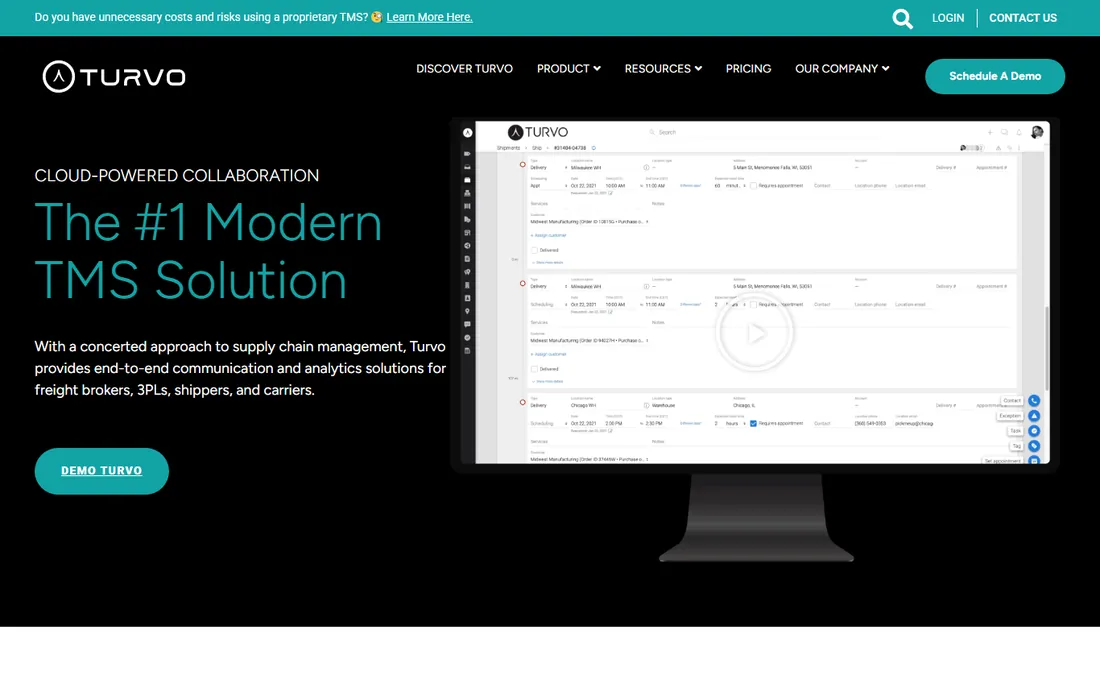
Turvo's pitch is collaboration: shippers, brokers and carriers working in shared workspaces with real-time visibility instead of status-call ping pong. For brokerages whose customers demand transparency and whose carrier relationships are strategic, that shared view reduces friction across the whole chain.
The platform is priced for mid-market and enterprise operations. A straightforward truckload brokerage moving spot freight may find it heavier than necessary. But brokers competing on service and visibility rather than just rate find Turvo's collaborative model a genuine differentiator.
What we like- Collaboration across shippers, brokers and carriers
- Real-time visibility
- Modern platform
Watch out for- Enterprise pricing
- Can be more platform than a simple brokerage needs
Starting priceSee website
Free planNo

McLeod's PowerBroker is the enterprise workhorse of freight brokerage software. Decades of development show in the depth: complex rating, EDI, multi-branch operations, detailed accounting and reporting that auditors respect. Large brokerages with hundreds of users run their entire business on it.
That depth comes with weight. Implementation is a project, training is substantial and the interface shows its age next to cloud-native rivals. Pricing is quoted and enterprise-level. For large established brokerages, though, PowerBroker remains the safest long-term bet in the category.
What we like- Deepest feature set in the industry
- Proven at scale
- Extensive EDI capabilities
Watch out for- Significant implementation
- Dated interface in places
- Enterprise pricing
Starting priceSee website
Free planYes
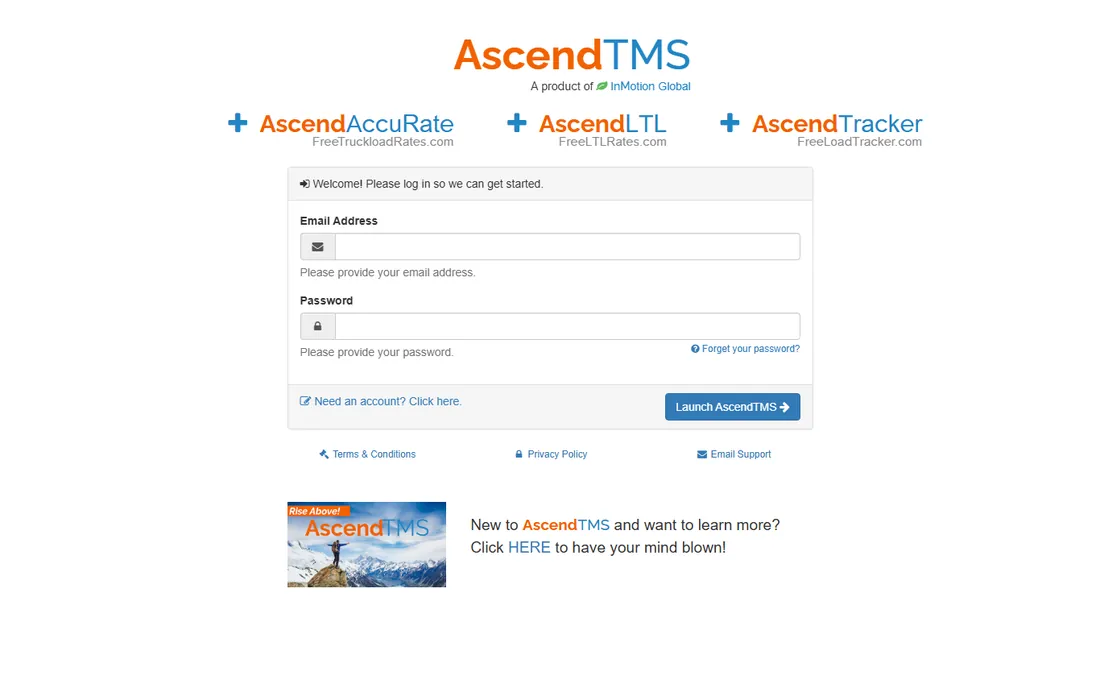
AscendTMS is the on-ramp to the category. The free basic plan handles dispatch, load management and broker accounting fundamentals, which is enough for a new brokerage to operate professionally. Paid tiers add automation, integrations and advanced features as the business grows.
It will not match McLeod or Descartes on enterprise EDI or multi-branch complexity. But for owner-operators and small brokerages, the free plan removes the biggest barrier to running on real software instead of spreadsheets. Start here, upgrade when the business demands it.
What we like- Free basic plan
- Full-featured paid tiers
- No long contract on entry plans
Watch out for- Advanced features trail the enterprise platforms
- Support tiers vary
Starting priceSee website
Free planNo
Aljex, now part of Descartes, is the connectivity specialist. Its strength is EDI: exchanging load tenders, status updates and invoices electronically with shippers and carriers at scale. Backed by Descartes' global logistics network, it offers integration depth that smaller vendors cannot match.
The interface reflects its long history. This is infrastructure software, not a design showcase, and its users value reliability over looks. Pricing is quoted. Brokers whose shipper relationships depend on EDI compliance will find Aljex one of the most dependable options available.
What we like- Strong EDI connectivity
- Backed by Descartes' global network
- Reliable at scale
Watch out for- Interface feels dated
- Pricing is quote-based
Starting priceSee website
Free planNo
FreightPath is the straightforward choice: a modern broker TMS covering load management, carrier sourcing, dispatch, tracking and accounting without enterprise complexity. Small and mid-size brokerages can get their teams productive quickly, and the pricing conversations are refreshingly direct for the category.
The trade-off is scale of vendor and feature depth. Advanced automation and the deepest EDI scenarios belong to the bigger platforms. But many brokerages never need those, and for them FreightPath delivers the core job, moving loads and getting paid, with less overhead than the enterprise alternatives.
What we like- Simple to learn
- Solid load and carrier management
- Reasonable pricing conversations
Watch out for- Smaller vendor
- Fewer advanced automation features
How we chose
We focused on TMS products built for freight brokers, not shipper TMS or carrier dispatch tools. We reviewed vendor documentation, industry coverage and broker discussions, prioritizing tools with real adoption among US brokerages in 2026. Pricing in this category is almost entirely quote-based, so we compared on workflow fit: load management, capacity sourcing, automation depth and accounting. Products that could not be verified as currently offered were excluded.
What to evaluate in a broker TMS
Start with your load lifecycle. Map how a load moves through your operation today, from posting to proof of delivery to invoicing, and make the vendor walk that exact path in the demo. The gaps between their workflow and yours are where the implementation pain lives.
Check carrier sourcing honestly. A TMS with a built-in capacity network helps spot freight; a TMS without one means you keep using load boards separately. Neither is wrong, but know which you are buying. Ask how tracking data flows back: automated ELD and macro-point pings, or driver check calls your team still makes.
Then look at the money. How do rate confirmations, accessorials, carrier pay and shipper invoicing connect? The TMS earns its keep when the financial chain is automatic and auditable. Finally, ask about the accounting integration: which systems, which direction, and who supports the sync.
The automation question
Every broker TMS now claims automation, but the depth varies enormously. Basic automation means load posting and document templates. Deep automation means rated quotes, auto-dispatch rules, exception-only tracking and touchless invoicing. Ask vendors which steps still require a human click in their reference customers.
The right level depends on your freight mix. Contract freight with regular lanes automates well. Spot freight with unusual requirements resists it. Be skeptical of any vendor that promises the same automation for both. And remember that automation only pays when the underlying data is clean: carrier records, customer rates and lane histories have to be accurate first.
Frequently asked questions
What is a TMS for freight brokers?
It is software that manages a brokerage's core workflow: posting loads, sourcing carriers, dispatching, tracking shipments, handling documents, billing shippers and paying carriers. It differs from shipper TMS (built for companies moving their own freight) and carrier dispatch software (built for asset owners).
How much does broker TMS software cost?
Nearly all vendors price by quote based on users, volume and modules. AscendTMS offers a free basic plan, which makes it the cheapest entry point. Expect annual contracts for the established platforms, with implementation fees for the enterprise systems.
Do I need EDI for my brokerage?
It depends on your shippers. Large shippers often require EDI for load tenders, status updates and invoicing. If your customer base includes enterprise shippers, prioritize platforms with proven EDI like McLeod or Descartes Aljex. Spot-market brokerages can operate without it.
Can a small brokerage use a TMS?
Yes. AscendTMS's free plan is built for exactly this, and FreightPath, Alvys and Rose Rocket all serve small brokerages. The mistake is staying on spreadsheets too long: once you pass a handful of loads a day, the error rate and time cost exceed the software cost.
What is the difference between a TMS and a load board?
A load board (like DAT) is a marketplace for posting and finding freight. A TMS is your operating system for managing the freight once you have it. Most brokers use both: the load board for capacity, the TMS for execution, documentation and money.
How long does TMS implementation take?
Cloud platforms like Rose Rocket, Alvys and AscendTMS can go live in weeks. Enterprise systems like McLeod PowerBroker typically take several months including data migration, EDI setup and training. The timeline depends on your carrier data cleanliness and integration requirements.
Sources we checked (9)
- https://www.roserocket.com
- https://alvys.com
- https://tai-software.com
- https://revenova.com
- https://turvo.com
- https://www.mcleodsoftware.com
- https://www.ascendtms.com
- https://www.descartes.com
- https://www.freightpath.com
Is your product missing or out of date?
We review this list regularly. Vendors can request a listing, send updated pricing or ask about featured placement.

Shihab Mia · Founder, Rankite
Shihab has spent more than a decade helping SaaS and e-commerce brands grow through search. He writes Rankite's software buying guides from pricing pages, documentation and public user reviews. More about Shihab.