How we make this list: we compare pricing pages, product documentation and public user reviews. Rankite is independent; if a vendor ever pays for a featured spot, that listing is clearly labeled Partner.
Key takeaways
- Playwright has become the default choice for new web test automation projects, with speed and reliability that older tools struggle to match.
- Selenium remains the enterprise standard with the largest ecosystem, especially where legacy browser support matters.
- Cypress offers the best developer experience for frontend teams testing modern web apps.
- TestMu AI, Katalon, BrowserStack, TestComplete, and Postman cover cloud testing, codeless automation, device clouds, and API testing.
Quick comparison
| Tool | Best for | Starting price | Free plan |
|---|
 Playwright Playwright | modern web test automation | Free | Yes |
 Selenium Selenium | enterprise web automation standard | Free | Yes |
 Cypress Cypress | developer-friendly frontend testing | Free | Yes |
 TestMu AI TestMu AI | cloud test automation platform | See website | Free trial |
 Katalon Katalon | codeless and coded testing | See website | Free trial |
 BrowserStack BrowserStack | cross-browser and device cloud | See website | Free trial |
 TestComplete TestComplete | codeless UI testing for teams | See website | Free trial |
 Postman Postman | API testing and automation | See website | Free trial |
Is your product missing or out of date?
We review this list regularly. Vendors can request a listing, send updated pricing or ask about featured placement.
The best test automation software
Starting priceFree
Free planYes
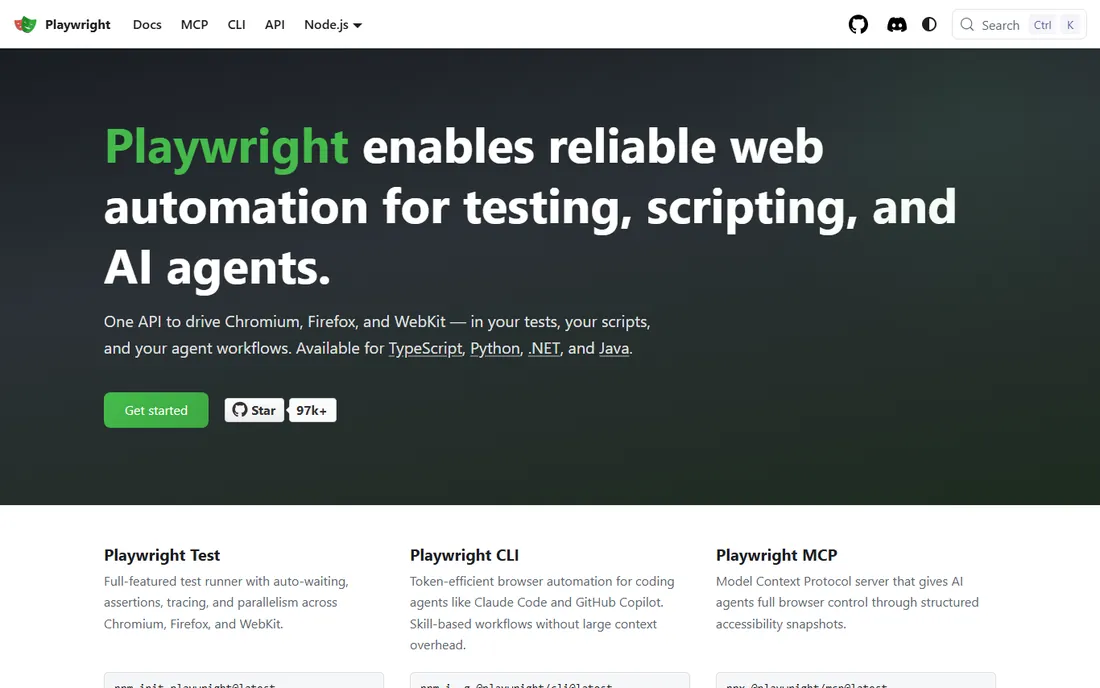
Playwright, from Microsoft, has rapidly become the tool new test automation projects reach for first. It drives Chromium, Firefox, and WebKit with a single API, handles modern web patterns like SPAs and iframes gracefully, and its auto-waiting dramatically reduces the flaky tests that plague automation.
The developer experience is excellent: codegen records interactions into code, the trace viewer makes debugging failures visual, and parallel execution is built in. Tests run fast enough that teams actually run them on every commit.
It requires programming skill; there is no record-and-playback for non-technical testers. The ecosystem is younger than Selenium's, though growing fast. For teams with developers doing test automation, Playwright is currently the best default choice.
What we like- Free and open source
- Fast and reliable
- Tests across all major browsers
Watch out for- Code-based, needs developers
- Newer ecosystem than Selenium
Starting priceFree
Free planYes
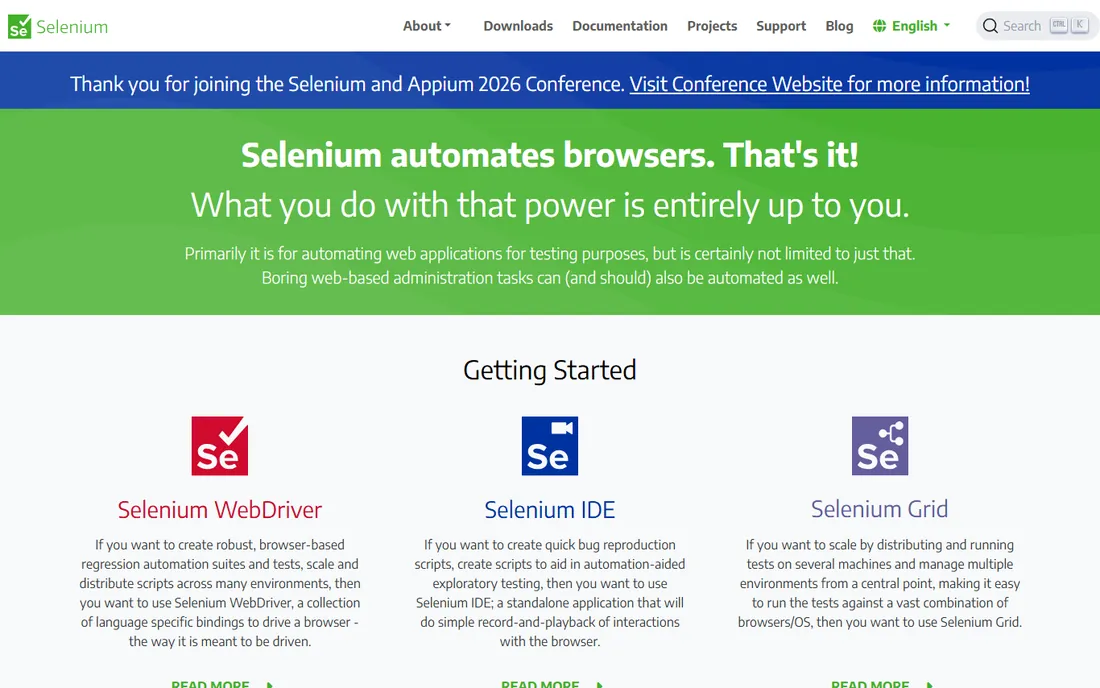
Selenium is the grandparent of web test automation, and its ubiquity is unmatched. Two decades of use mean every language binding, every CI system, and every testing framework integrates with it. Enterprise test suites with thousands of Selenium tests run the world's software.
That maturity comes with baggage. Selenium tests are more prone to timing-related flakiness than Playwright or Cypress, and maintaining large suites demands real engineering discipline. The WebDriver protocol adds moving parts that occasionally break.
Organizations with huge existing Selenium investments rarely rip them out, and the talent pool is the largest in testing. New projects increasingly choose Playwright, but Selenium's ecosystem and legacy browser support keep it essential.
What we like- Free and open source
- Massive ecosystem
- Every language and framework supported
Watch out for- Flakier than modern tools
- Setup and maintenance overhead
Starting priceFree
Free planYes
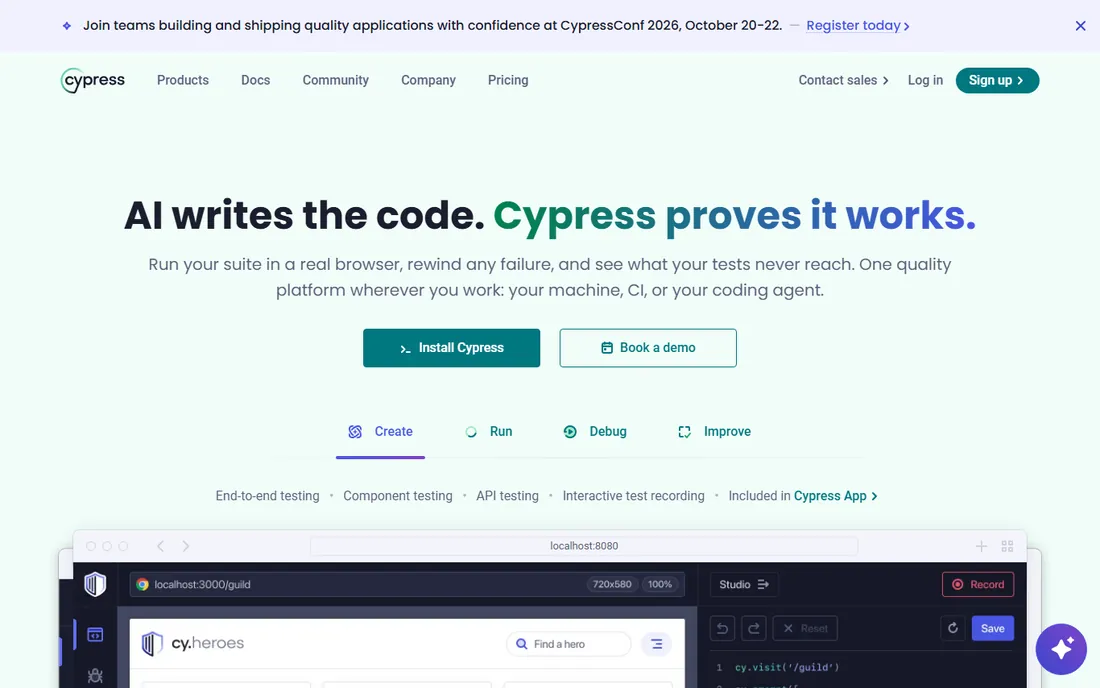
Cypress reimagined web testing around the developer workflow. Tests run in the same run-loop as the application, giving real-time reloading, time-travel debugging through each command, and automatic waiting that eliminates whole categories of flakiness.
Frontend teams love it because it feels like a development tool, not a testing burden. Setup takes minutes, the documentation is superb, and component testing brings the same experience to individual UI pieces.
The architecture imposes limits: historically Chromium-focused (Firefox and WebKit support exist but lag), no multi-tab testing, and JavaScript/TypeScript only. Teams needing broad browser coverage pair it with other tools. But for developer-driven testing of modern web apps, the experience is unmatched.
What we like- Excellent developer experience
- Time-travel debugging
- Easy setup
Watch out for- Limited cross-browser and multi-tab support
- JavaScript only
Starting priceSee website
Free planFree trial
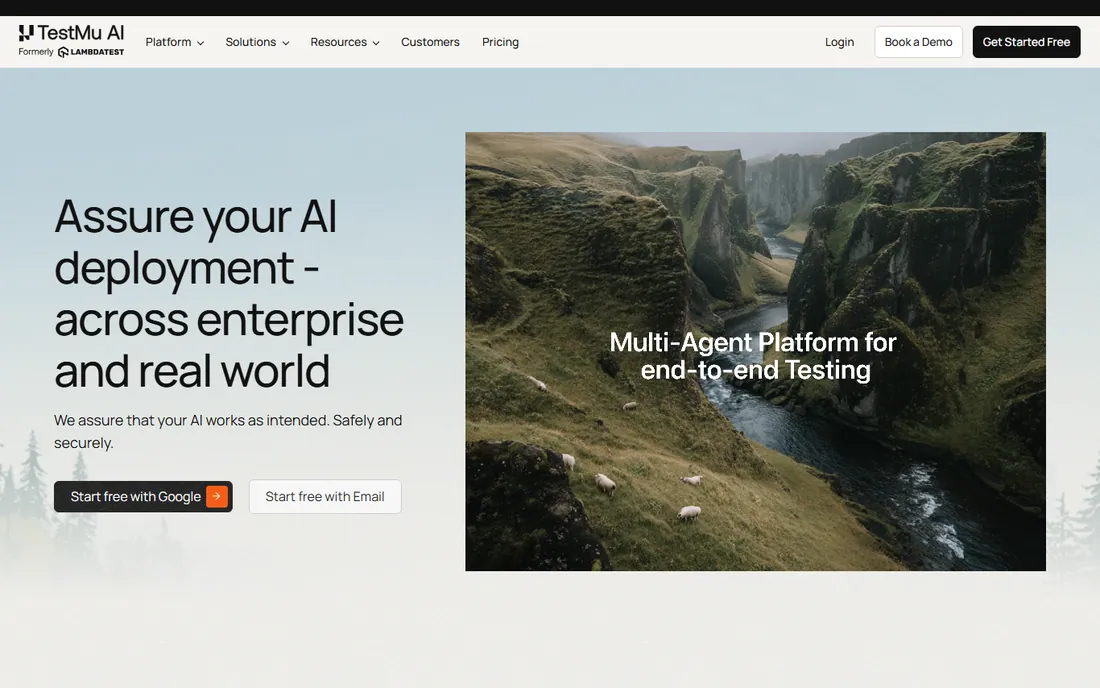
TestMu AI is the current name of the platform formerly known as LambdaTest, a cloud testing platform for running automated tests across browsers, devices, and operating systems. The rebrand reflects an AI-forward direction, with intelligent features layered over the core cloud grid.
The value proposition is infrastructure you do not manage. Instead of maintaining browser farms and device labs, teams run Selenium, Playwright, or Cypress tests on TestMu AI's cloud, parallelized across hundreds of combinations. Smart testing features aim to reduce flaky failures and speed up debugging.
Longtime LambdaTest users are adjusting to the new name, and cloud execution costs scale with usage, so heavy suites need budget planning. But for teams that need broad coverage without infrastructure, the cloud grid model remains compelling.
What we like- Cloud test execution at scale
- AI-assisted testing features
- Broad framework support
Watch out for- Rebrand from LambdaTest causes confusion
- Costs scale with usage
Starting priceSee website
Free planFree trial
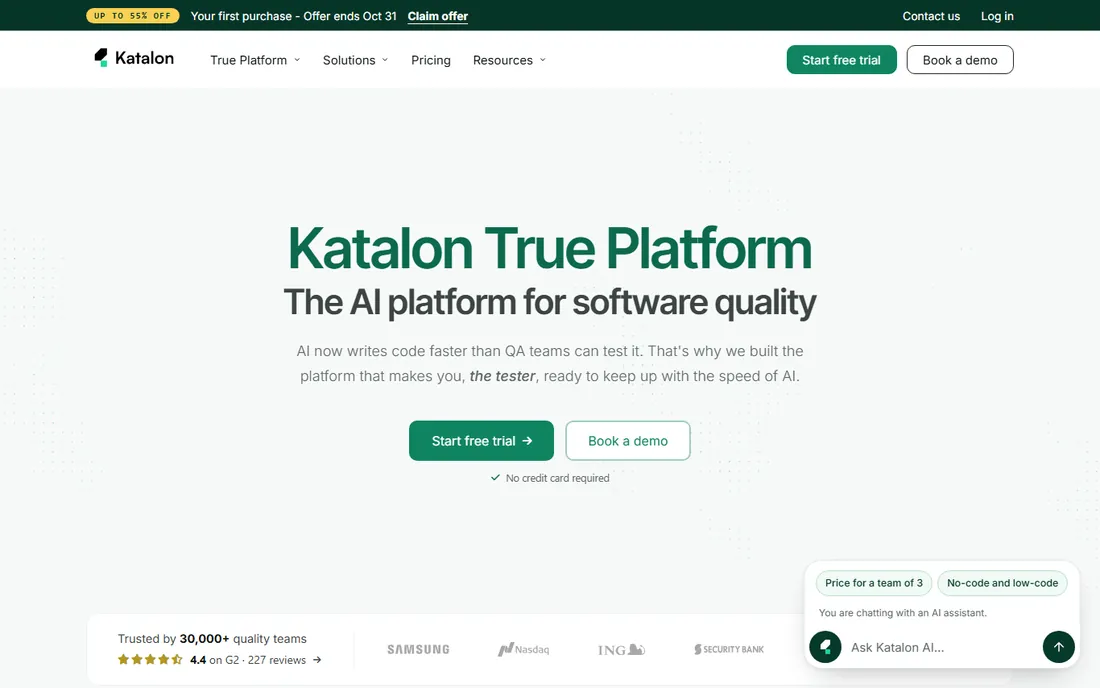
Katalon bridges the gap between codeless test recorders and full programming frameworks. Testers can record and build tests visually, then drop into Groovy scripting when they need more power. One platform covers web, API, mobile, and desktop testing.
That breadth suits QA teams with mixed skill levels. Manual testers automate without learning to code from scratch, while engineers extend tests programmatically. The built-in object repository and reporting reduce the framework-building that code-first tools require.
Power users sometimes find it constraining compared to pure code frameworks, and the free tier has limits that growing teams outgrow. But for QA teams transitioning from manual to automated testing, Katalon's gentle on-ramp is well designed.
What we like- Low-code recording plus scripting
- Web, API, mobile, desktop
- Affordable entry
Watch out for- Heavier than code-first tools
- Advanced features need paid tiers
Starting priceSee website
Free planFree trial
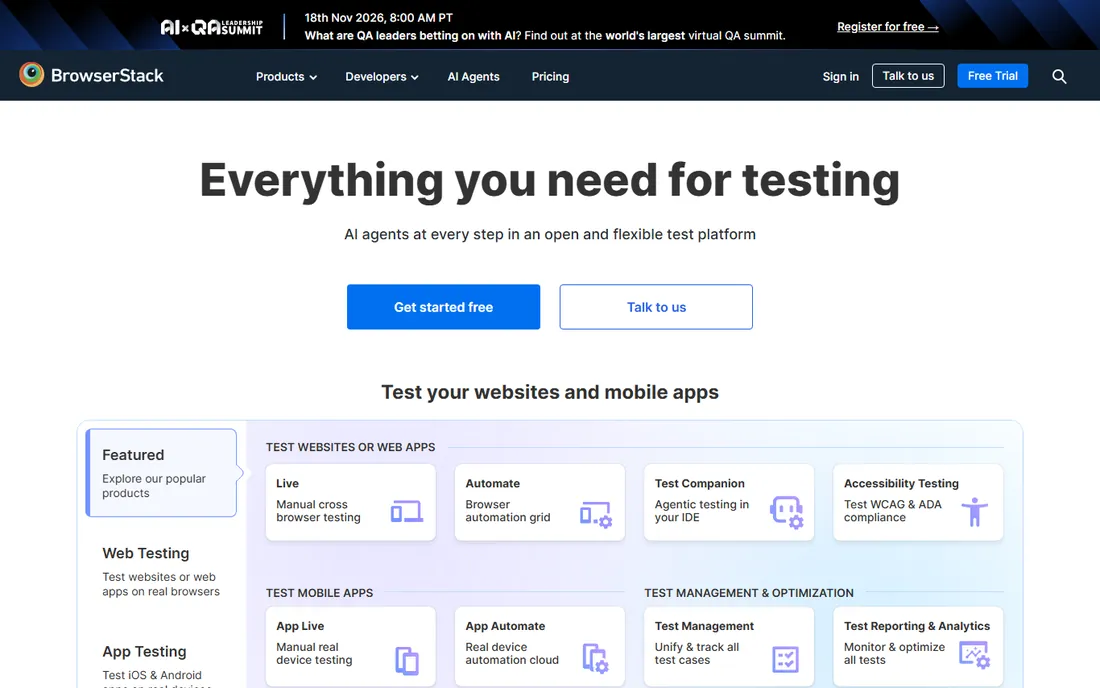
BrowserStack provides instant access to thousands of real browsers and mobile devices in the cloud. Need to check your site on a specific Android version or an old Safari? Spin it up in seconds instead of maintaining a device lab.
Test teams use it two ways: manual interactive testing on real devices, and automated test execution across the device cloud. Integrations with every major test framework and CI system make it a drop-in part of existing pipelines.
Costs add up with heavy parallel usage, and interactive sessions depend on your connection quality. But the alternative, buying and maintaining device labs, costs far more. For cross-browser and cross-device confidence, BrowserStack is the standard answer.
What we like- Huge real device cloud
- Instant browser access
- Good integrations
Watch out for- Can be pricey at scale
- Interactive sessions occasionally laggy
Starting priceSee website
Free planFree trial
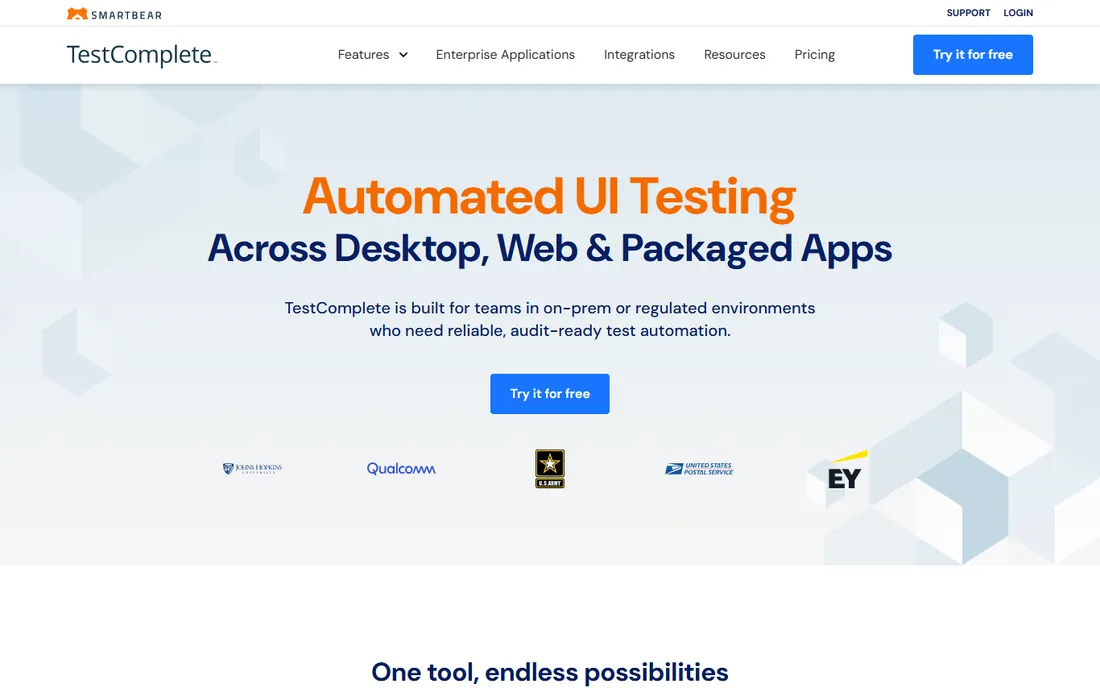
TestComplete, from SmartBear, is the codeless UI testing tool that actually delivers on record-and-playback. Its object recognition handles desktop Windows applications particularly well, a niche where web-focused tools offer nothing.
QA teams without deep programming skills build reliable automated suites through recording, keyword-driven tests, and script extensions when needed. Support for web, mobile, and desktop in one tool simplifies mixed-application environments.
The Windows focus limits Mac-based teams, and per-seat licensing gets expensive as teams grow. But for organizations testing desktop applications alongside web, with testers who are not full-time programmers, TestComplete's balance of power and accessibility is proven.
What we like- Record and playback that works
- Desktop plus web plus mobile
- Strong object recognition
Watch out for- Windows-centric
- Licensing costs add up
Starting priceSee website
Free planFree trial
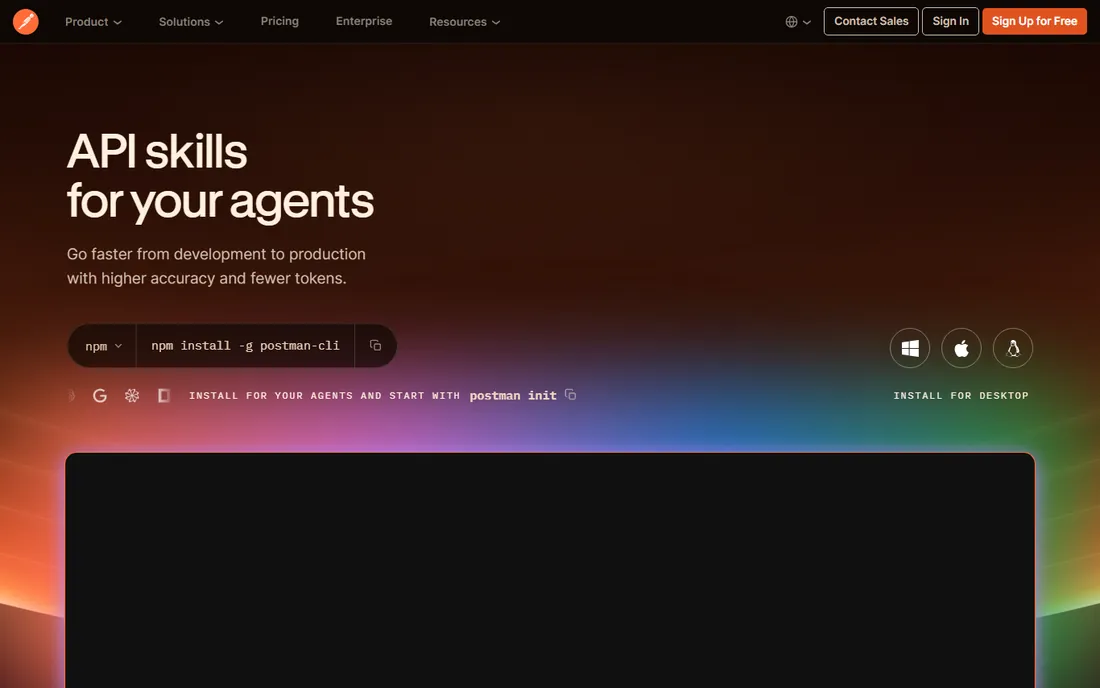
Postman started as an API client and grew into the platform where API development and testing happen. Teams design, mock, test, and monitor APIs in one collaborative workspace, with collections that serve as executable documentation.
For test automation, Postman's test scripts, collection runner, and Newman CLI integrate API tests into CI pipelines easily. Contract testing and monitors catch breaking changes before they reach production. The collaboration features keep API tests aligned with development.
It tests APIs, not user interfaces; UI coverage needs a companion tool. And while the free tier is generous, team features cost money. But as the foundation of API test automation, Postman is as close to a standard as the industry has.
What we like- The standard for API testing
- Great collaboration
- Strong automation and CI integration
Watch out for- UI testing needs other tools
- Advanced features are paid
Building a sane test automation strategy
The tool matters less than the strategy. Automate the tests that run often and break often: smoke tests, critical user journeys, and regression suites for stable features. Do not automate tests for UI that changes weekly; the maintenance will eat you.
Follow the testing pyramid. Most automated tests should be fast unit and API tests; fewer should be slow UI tests. Teams that invert the pyramid end up with suites that take hours and fail randomly, which everyone learns to ignore.
Treat test code as production code. Version control, code review, and refactoring apply. The number one killer of test automation is not tool choice but unmaintained tests that everyone stops trusting.
The flaky test problem
Flaky tests, tests that pass and fail without code changes, destroy confidence in automation. The main causes are timing issues, test interdependence, and external dependencies. Modern tools like Playwright and Cypress reduce timing flakiness with auto-waiting, but discipline matters more.
Make tests independent: each test sets up its own data and cleans up after itself. Mock external services rather than depending on them. Retry logic hides flakiness rather than fixing it; investigate failures instead of rerunning.
Track flakiness as a metric. Quarantine consistently flaky tests until fixed, and never let the suite's pass rate become background noise that everyone ignores.
Shifting left: testing earlier
The cheapest bug is the one caught before it is written. Modern teams push testing earlier: developers run component tests as they code, API contracts are tested on every commit, and UI automation guards the critical paths. The tools on this list support every stage of that shift.
Start with the testing pyramid in mind. Unit tests at the base (fast, many), API tests in the middle, UI tests at the top (slow, few). Teams that automate UI heavily while neglecting API coverage build slow, brittle suites. Balance the layers and the whole system gets faster and more reliable.
How we chose
We compared tools that teams use to automate software testing, based on documentation, community adoption, and practitioner discussion on developer forums and review sites. We covered web UI automation (Playwright, Selenium, Cypress), cloud execution (TestMu AI, BrowserStack), codeless options (Katalon, TestComplete), and API testing (Postman). We used current product names, noting TestMu AI's rebrand from LambdaTest. The list mixes free open-source tools with commercial platforms because real test strategies use both.
Frequently asked questions
Should we choose Playwright or Selenium for a new project?
Playwright, in most cases. It is faster, less flaky, and easier to maintain for modern web apps. Choose Selenium if you need legacy browser support, have an existing Selenium investment, or need its unmatched ecosystem integrations.
Can non-programmers do test automation?
Yes, with the right tools. Katalon and TestComplete let manual testers build automated tests visually. The trade-off is flexibility; complex scenarios eventually need scripting. Many teams pair codeless tools for smoke tests with coded frameworks for depth.
How do we test mobile apps?
Appium is the open-source standard for native mobile automation. Cloud device platforms like BrowserStack and TestMu AI run those tests across real devices. For mobile web, the web tools on this list work fine.
What is a good automation coverage target?
There is no magic number. Cover critical user journeys and high-risk areas thoroughly; do not chase 100 percent. Coverage metrics measure what is tested, not what matters. Focus automation where failures cost the most.
How do we keep automated tests from becoming a maintenance burden?
Test stable features, not churning UI. Use page objects or component abstractions so UI changes require edits in one place. Delete tests for removed features promptly. And assign ownership; unowned test suites rot.
Sources we checked (8)
- https://playwright.dev/
- https://www.selenium.dev/
- https://www.cypress.io/
- https://www.testmuai.com/
- https://www.katalon.com/
- https://www.browserstack.com/
- https://www.smartbear.com/product/testcomplete/overview
- https://www.postman.com/
Is your product missing or out of date?
We review this list regularly. Vendors can request a listing, send updated pricing or ask about featured placement.

Shihab Mia · Founder, Rankite
Shihab has spent more than a decade helping SaaS and e-commerce brands grow through search. He writes Rankite's software buying guides from pricing pages, documentation and public user reviews. More about Shihab.