How we make this list: we compare pricing pages, product documentation and public user reviews. Rankite is independent; if a vendor ever pays for a featured spot, that listing is clearly labeled Partner.
Key takeaways
- PostgreSQL is the default choice for new applications: free, powerful, and trusted everywhere.
- MySQL remains the web's workhorse, especially in the WordPress and PHP ecosystems.
- SQL Server and Oracle dominate enterprise environments with deep tooling and support.
- SQLite, MariaDB, Db2, and TiDB cover embedded, MySQL-compatible, IBM, and distributed needs.
Quick comparison
| Tool | Best for | Starting price | Free plan |
|---|
 PostgreSQL PostgreSQL | general-purpose open source | Free | Yes |
 MySQL MySQL | web applications | Free | Yes |
 SQL Server SQL Server | Microsoft enterprise environments | See website | Free trial |
 Oracle Database Oracle Database | large enterprise systems | See website | Free trial |
 SQLite SQLite | embedded and mobile | Free | Yes |
 MariaDB MariaDB | MySQL-compatible open source | Free | Yes |
 IBM Db2 IBM Db2 | IBM enterprise environments | See website | Free trial |
 TiDB TiDB | distributed SQL at scale | Free | Yes |
Is your product missing or out of date?
We review this list regularly. Vendors can request a listing, send updated pricing or ask about featured placement.
The best RDBMS software
Starting priceFree
Free planYes
PostgreSQL is the database developers recommend to each other: free, open source, and capable enough for nearly anything. Advanced data types (JSONB, arrays, ranges), full-text search, and rock-solid reliability make it the default for new applications.
The extension ecosystem extends it further: PostGIS for geospatial, TimescaleDB for time series, and countless others. The community is knowledgeable and the documentation excellent.
You manage it yourself or pay for managed hosting; there is no vendor holding your hand included. But for teams with database skills, PostgreSQL's combination of free, powerful, and trustworthy is unmatched.
What we like- Free and incredibly capable
- Excellent data types
- Huge community
Watch out for- Managed hosting costs
- Less hand-holding than commercial tools
Starting priceFree
Free planYes
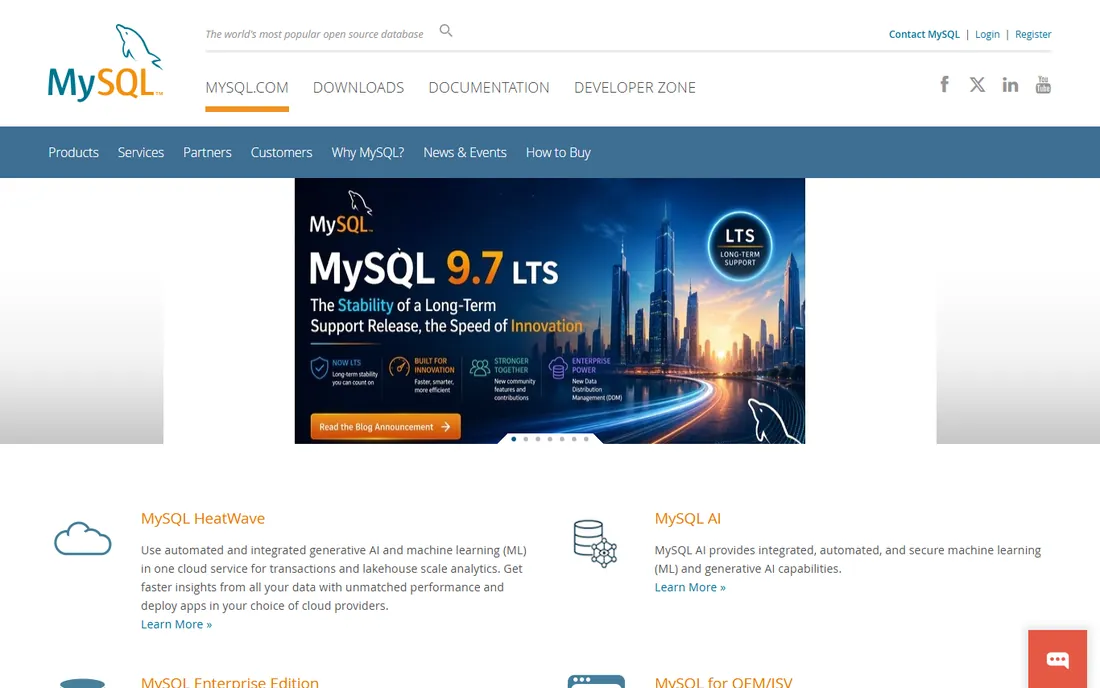
MySQL powers an enormous share of the web: WordPress, Drupal, and countless PHP applications run on it. The community edition is free, the ecosystem is vast, and every hosting provider supports it.
Simplicity is the virtue. MySQL does the common relational jobs well without the complexity of more advanced systems. Replication is straightforward, and the tooling is mature.
Oracle's stewardship worries some, driving MariaDB's existence. Advanced features trail PostgreSQL. But for standard web applications, MySQL's ubiquity means answers, hosting, and talent are always available.
What we like- Free
- The web's default database
- Huge ecosystem
Watch out for- Oracle ownership concerns
- Fewer advanced features than PostgreSQL
Starting priceSee website
Free planFree trial
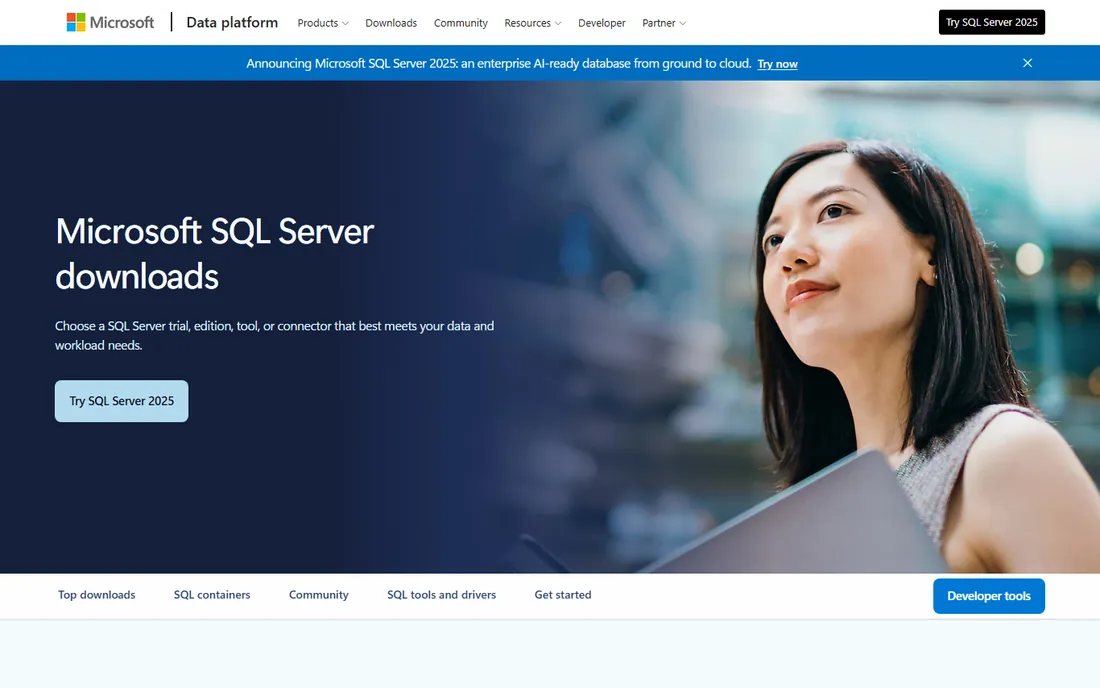
SQL Server is the enterprise database of the Microsoft world: deep integration with .NET, Azure, and the Microsoft BI stack, with tooling (SSMS) that administrators love. The enterprise features, high availability, security, and performance, are proven at scale.
The Developer and Express editions are free, which helps development and small deployments. Linux support opened new deployment options beyond the Windows heritage.
Licensing for production enterprise use is significant, and the costs surprise the unprepared. But for organizations standardized on Microsoft, SQL Server's integration makes it the natural choice.
What we like- Deep Microsoft integration
- Excellent tooling
- Strong enterprise features
Watch out for- Licensing costs
- Windows heritage (Linux now supported)
Starting priceSee website
Free planFree trial
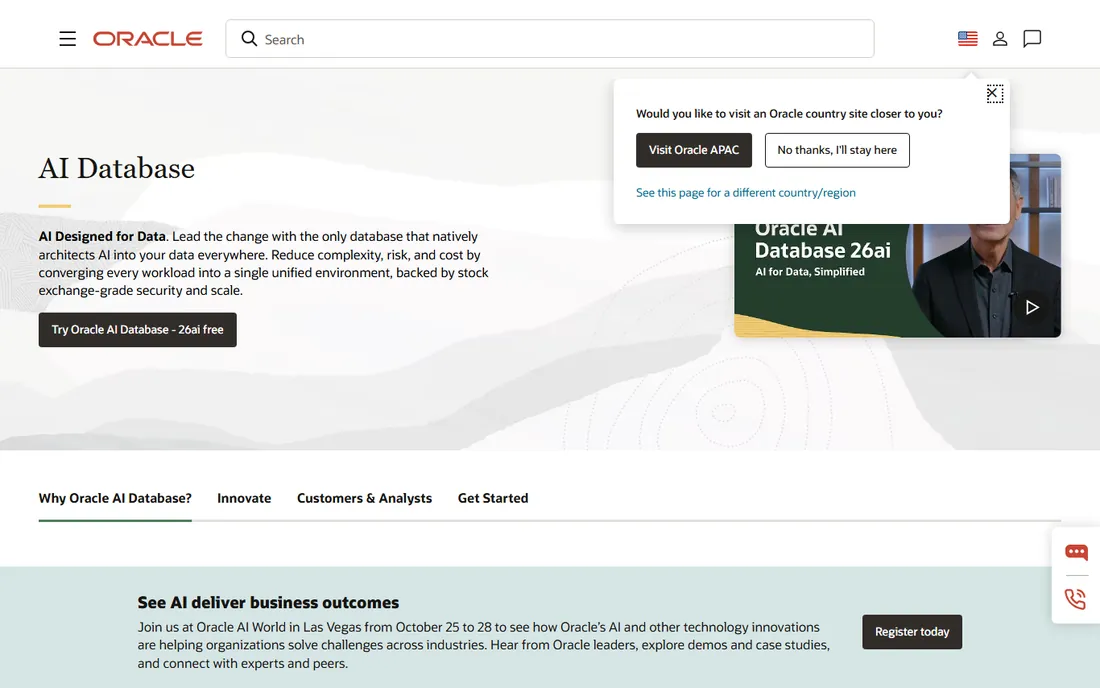
Oracle Database is the system that runs the world's most critical data: banks, telecoms, and governments trust it where failure is not an option. The feature depth, Real Application Clusters, partitioning, advanced security, exceeds every competitor.
That capability comes at the industry's highest prices and most complex licensing. Oracle audits are legendary, and the total cost surprises even prepared buyers.
For systems where the database absolutely cannot fail and the budget matches, Oracle remains the choice. Everyone else should look at PostgreSQL first and confirm Oracle is truly necessary.
What we like- The most capable enterprise database
- Unmatched for critical systems
- Deep features
Watch out for- Very expensive
- Complex licensing
Starting priceFree
Free planYes
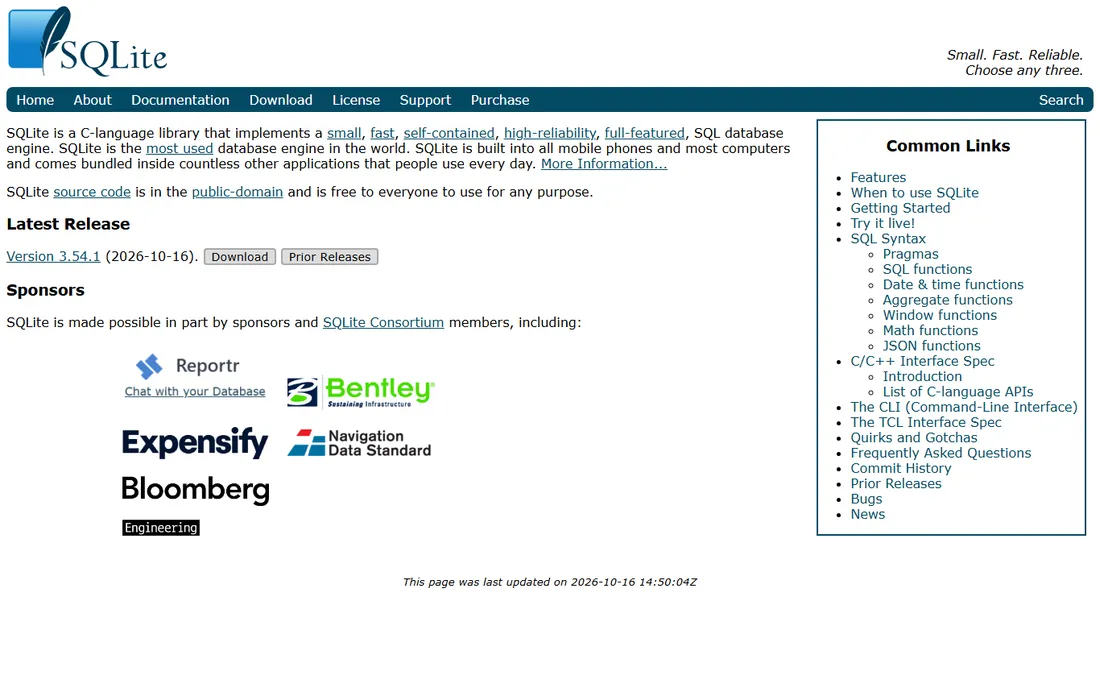
SQLite is the most deployed database in the world: every smartphone, every browser, countless applications embed it. The entire database is a single file, requiring zero configuration or administration.
For embedded use, local storage, testing, and small applications, it is perfect. The reliability is extraordinary, and the simplicity means it just works.
It is not a server database; concurrent write-heavy multi-user applications need PostgreSQL or MySQL. But for its domain, local relational storage, SQLite is essentially perfect and free.
What we like- Free
- Zero configuration
- Everywhere
Watch out for- Not for multi-user server use
- Limited concurrency
Starting priceFree
Free planYes
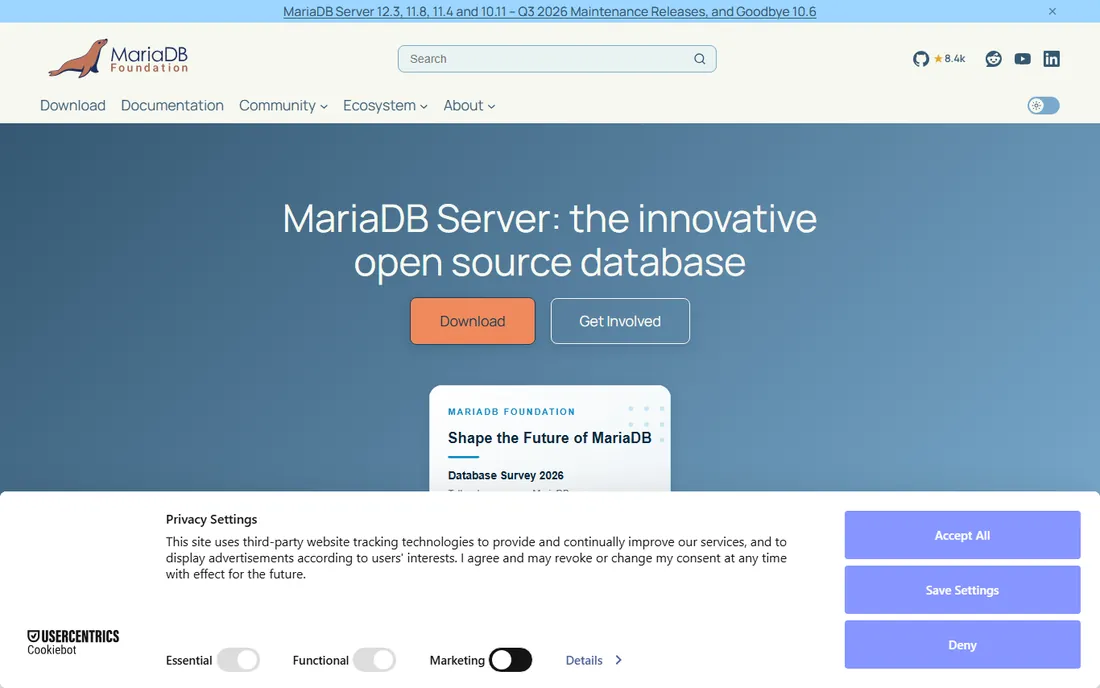
MariaDB began as the community fork of MySQL and has grown into its own database with MySQL compatibility. Organizations wanting MySQL without Oracle choose MariaDB, often as a drop-in replacement.
The community governance appeals to open-source purists, and development has added features beyond MySQL's. Major Linux distributions ship MariaDB as the default MySQL.
Divergence from MySQL grows over time, so "drop-in" needs verification for complex uses. But for MySQL-compatible open-source relational data, MariaDB is the principled choice.
What we like- Free
- MySQL-compatible
- Community-driven
Watch out for- Diverges from MySQL over time
- Smaller ecosystem
Starting priceSee website
Free planFree trial
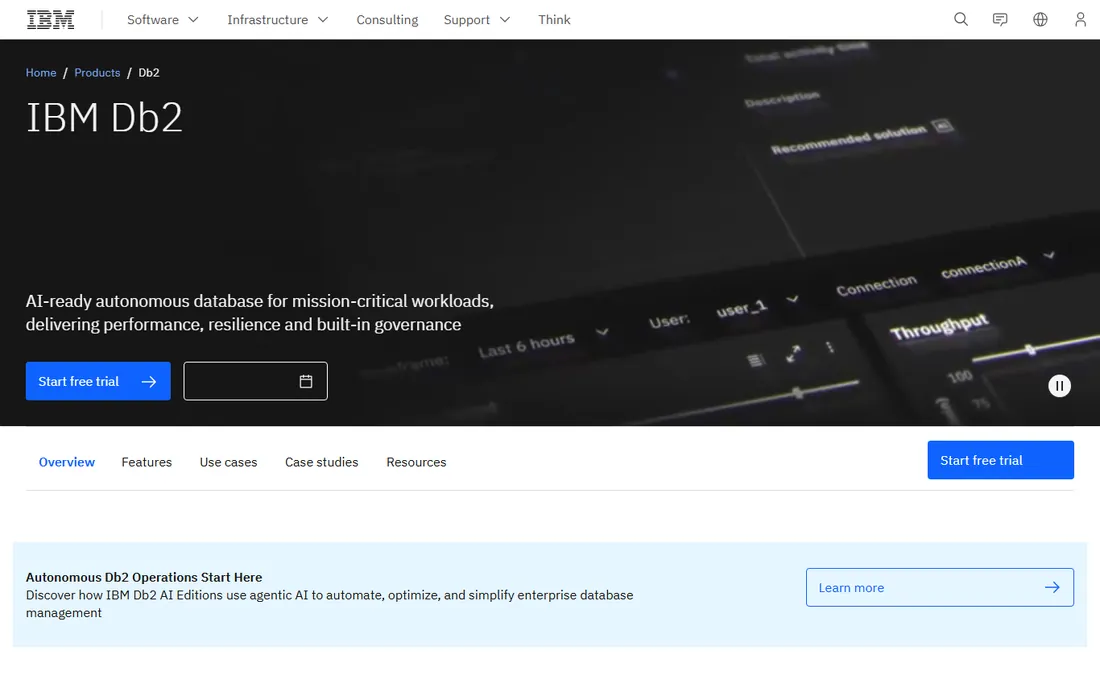
Db2 is IBM's enterprise database, trusted for decades in banking, insurance, and large enterprises. The reliability and the integration with IBM's data and AI platforms suit organizations in that ecosystem.
Recent versions added cloud-native deployment and improved the developer experience. The analytics capabilities, including the warehouse features, serve enterprises consolidating data platforms.
The community is smaller than the open-source databases', and IBM pricing applies. But for IBM-centric enterprises, Db2's proven reliability keeps it central.
What we like- Proven enterprise reliability
- IBM ecosystem integration
- Strong for analytics
Watch out for- Smaller community
- IBM pricing
Starting priceFree
Free planYes
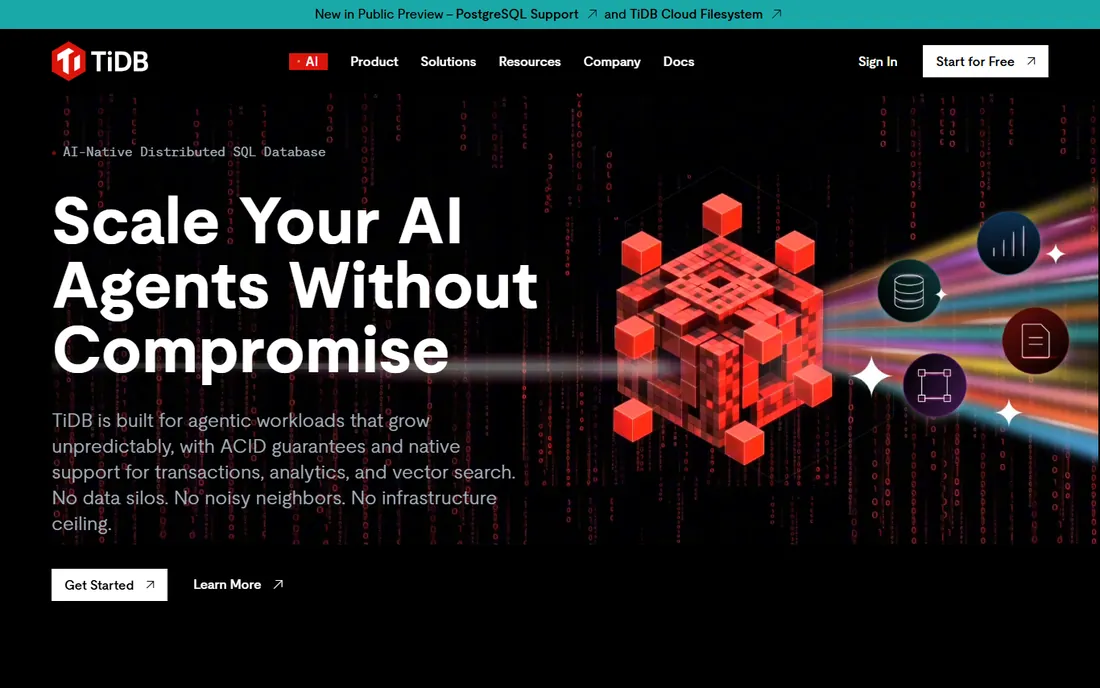
TiDB is distributed SQL: MySQL-compatible on the outside, horizontally scalable on the inside. Applications written for MySQL run unchanged while the database scales across machines transparently.
The HTAP design handles both transactional and analytical workloads, reducing the need for separate systems. The open-source core with managed cloud options fits modern deployment preferences.
Distributed systems bring operational complexity, and the ecosystem is younger than the established players. But for MySQL applications outgrowing single servers, TiDB offers scale without rewrites.
What we like- MySQL-compatible distributed SQL
- Scales horizontally
- Open source
Watch out for- Operational complexity
- Newer ecosystem
Choosing the right database
New applications: start with PostgreSQL unless you have a specific reason otherwise. It handles the broadest range of needs for free, and the skills transfer everywhere.
Web applications in PHP ecosystems: MySQL or MariaDB fit the hosting and community norms. WordPress sites belong on MySQL/MariaDB.
Enterprise Microsoft shops: SQL Server integrates best. Oracle shops with critical systems: Oracle Database, budgeted accordingly. IBM shops: Db2.
Embedded and mobile: SQLite, always. Distributed scale with MySQL compatibility: TiDB.
The managed question
Running databases yourself teaches much and costs time. Managed services (RDS, Cloud SQL, Azure Database) handle backups, patching, and failover for a premium. Most teams should use managed services in production and self-host only with good reason.
The premium is worth it for the 3 AM test: when the database fails overnight, managed services recover while you sleep. Self-hosted databases need your on-call rotation to do the same.
Whatever you choose, verify backups regularly. Untested backups are not backups; they are hopes.
Most database performance problems come from missing indexes, not from the choice of database. Learn to read query plans (EXPLAIN is your friend), index the columns you filter and join on, and avoid the N+1 queries that ORMs generate silently.
Connection management matters at scale. Pool connections rather than opening new ones per request, and size pools to your actual workload. The defaults work for development; production needs tuning.
Monitor before you optimize. Slow query logs, pg_stat_statements, or the equivalent show where time actually goes. The instinct to blame the database is usually wrong; the data shows whether it is a bad query, a missing index, or genuine load.
High availability and disaster recovery
Every production database needs a recovery story. At minimum: automated backups with point-in-time recovery, tested restores, and a documented runbook. The teams that survive outages are the ones who practiced.
Replication serves two masters: read scaling and failover. Understand which you need. Read replicas distribute load; synchronous standby enables fast failover. The configuration differs, and confusing the two causes disappointment during incidents.
Test failover regularly. The failover you have never tested is a hope, not a plan. Scheduled drills reveal the gaps in runbooks, monitoring, and team readiness before a real incident does.
Schema design that ages well
Design for the queries you will run, not just the data you store. Normalize sensibly, but do not fear pragmatic denormalization for read-heavy patterns. The perfect schema on paper that requires twelve joins per page view is not perfect.
Use constraints. Foreign keys, not-null constraints, and check constraints protect data integrity better than application code alone. The database is the last line of defense for your data's correctness.
Version your schema changes with migration tools. Every change reviewed, tested, and reversible. The teams that treat schema changes casually are the teams with 3 AM data incidents.
How we chose
We compared relational database systems used in production today, based on documentation, community adoption, and practitioner discussion on developer forums. We covered the open-source standards, enterprise incumbents, and specialized options, noting the practical selection criteria for different environments. Licensing varies widely, so we link to vendors for current details.
Frequently asked questions
PostgreSQL vs. MySQL: which should we choose?
PostgreSQL for new applications in most cases: more features, better standards compliance, stronger community momentum. MySQL where the ecosystem demands it (WordPress, existing MySQL expertise). Both are free and excellent.
When do we need Oracle or SQL Server?
When the organization standardizes on them, when specific enterprise features are required, or when vendor support contracts are mandatory. Technical necessity is rarer than organizational reality suggests; evaluate honestly.
Can we migrate between databases later?
With effort. Schema differences, SQL dialect variations, and application dependencies make migration a project, not an afternoon. The choice deserves care upfront, but it is not permanent.
What about NoSQL?
Different tools for different jobs. Relational databases handle structured data with relationships and transactions. NoSQL suits specific patterns: document stores, key-value caches, wide-column analytics. Most applications need relational first.
How do we handle database backups?
Automated daily backups with point-in-time recovery, stored offsite, tested regularly. Managed services provide this; self-hosted setups need explicit configuration. Test restores quarterly at minimum.
Should developers know SQL?
Yes. ORMs handle the routine, but debugging, optimization, and data analysis all require real SQL. It is the most valuable database skill and transfers across every system on this list.
How do we choose a managed database provider?
Evaluate on your cloud: RDS for AWS, Cloud SQL for GCP, Azure Database for Azure. Compare backup, failover, and monitoring features against your requirements, and test the migration path before committing production data.
Choosing open source vs. commercial databases
Open-source databases (PostgreSQL, MySQL, MariaDB, SQLite) cost nothing in licenses and have enormous communities. The trade is support: you rely on community help, documentation, and your own expertise, or you pay a third party for support contracts.
Commercial databases (Oracle, SQL Server, Db2) bundle vendor support, advanced tooling, and accountability. When the database fails at 3 AM, someone answers the phone. That assurance has real value for critical systems.
Many organizations blend both: open source for most workloads, commercial where the risk or ecosystem demands it. The decision is about risk tolerance and team capability, not ideology.
Sources we checked (8)
- https://www.postgresql.org/
- https://www.mysql.com/
- https://www.microsoft.com/en-us/sql-server/sql-server-downloads
- https://www.oracle.com/database
- https://www.sqlite.org/
- https://mariadb.org/
- https://www.ibm.com/products/db2
- https://www.pingcap.com/
Is your product missing or out of date?
We review this list regularly. Vendors can request a listing, send updated pricing or ask about featured placement.

Shihab Mia · Founder, Rankite
Shihab has spent more than a decade helping SaaS and e-commerce brands grow through search. He writes Rankite's software buying guides from pricing pages, documentation and public user reviews. More about Shihab.