How we make this list: we compare pricing pages, product documentation and public user reviews. Rankite is independent; if a vendor ever pays for a featured spot, that listing is clearly labeled Partner.
Key takeaways
- CrowdStrike and SentinelOne lead endpoint security with AI-driven protection and minimal performance impact.
- Palo Alto's Cortex and Microsoft Defender suit organizations standardized on those ecosystems.
- Wiz changed cloud security with agentless visibility that shows what actually matters.
- Darktrace, Trend Micro, and Check Point cover AI anomaly detection, broad protection, and network security.
Quick comparison
Is your product missing or out of date?
We review this list regularly. Vendors can request a listing, send updated pricing or ask about featured placement.
Starting priceSee website
Free planFree trial
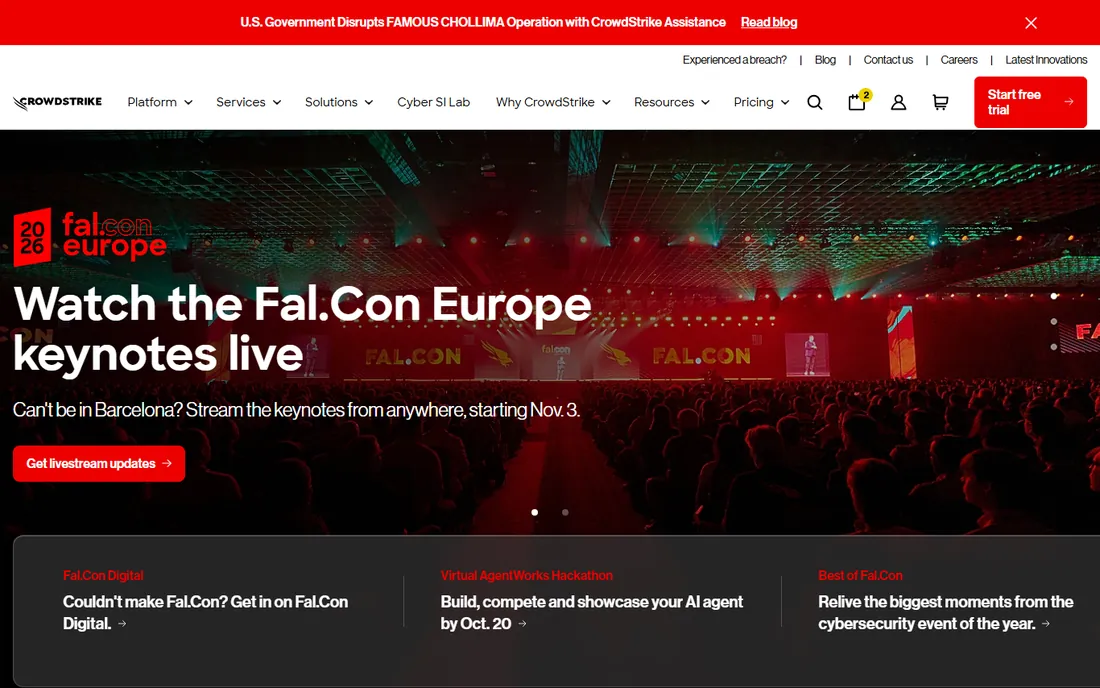
CrowdStrike's Falcon platform is the endpoint security standard by which others are judged. The lightweight agent detects and stops breaches with behavioral AI, and the cloud platform correlates signals across every endpoint to catch coordinated attacks.
The threat intelligence operation is the differentiator: visibility into real-world adversary activity feeds detections that signature-based tools miss. When major incidents make headlines, CrowdStrike's analysts are usually already tracking the actors.
Premium pricing reflects the positioning, and the platform's full value comes from stacking modules for identity, cloud, and managed hunting. But for organizations where endpoint breaches are the top risk, Falcon's detection record justifies the investment.
What we like- Best-in-class detection
- Lightweight agent
- Elite threat intelligence
Watch out for- Premium pricing
- Full value needs multiple modules
Starting priceSee website
Free planNo

Cortex is Palo Alto Networks' security operations platform: XDR that correlates endpoint, network, and cloud data, plus SOAR for automated response. Organizations standardized on Palo Alto firewalls get detection and response deeply integrated with their network security.
The XDR approach shows its value in complex attacks: signals from endpoints, firewalls, and cloud combine into incidents with context, reducing the alert fatigue of point tools. Automation playbooks handle routine response without analyst intervention.
Outside the Palo Alto ecosystem, some integration advantages fade, and pricing is enterprise-grade. But for Palo Alto shops, Cortex turns the firewall investment into a full detection and response platform.
What we like- Deep Palo Alto integration
- Strong XDR
- Proven enterprise scale
Watch out for- Best inside Palo Alto stack
- Enterprise pricing
Starting priceSee website
Free planFree trial
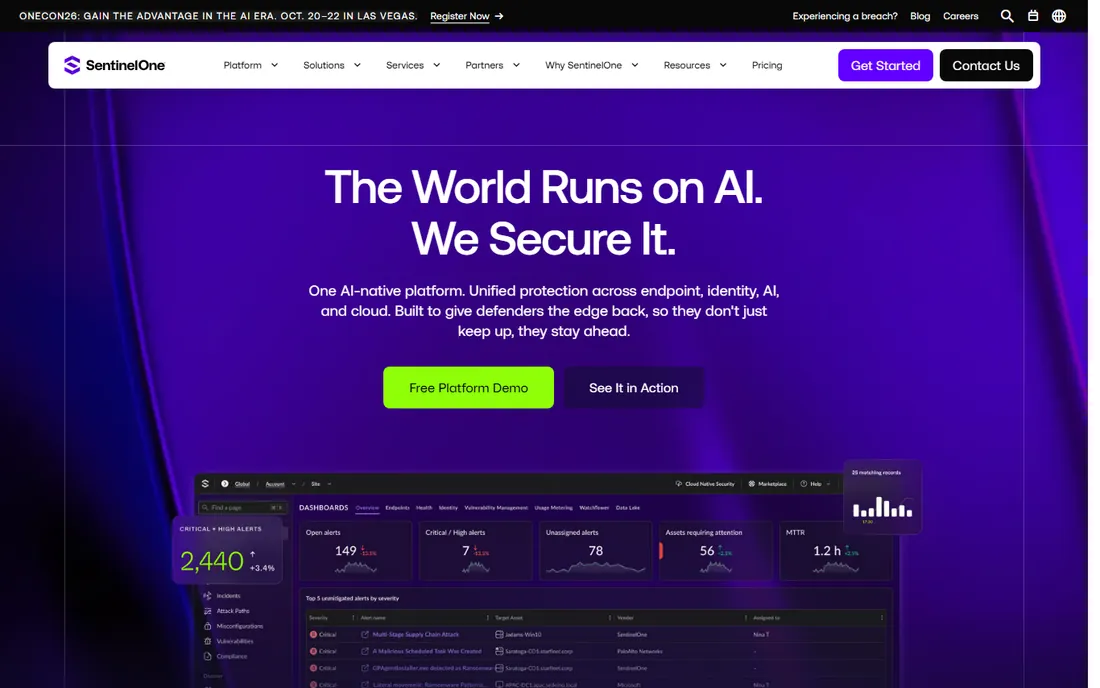
SentinelOne's pitch is autonomy: the agent not only detects threats but rolls back ransomware encryption automatically, restoring files without analyst intervention. That autonomous response differentiates it in a crowded endpoint market.
The AI-driven detection performs well in independent tests, and pricing typically undercuts CrowdStrike while delivering comparable protection. The Singularity platform extends into cloud and identity, building toward full XDR.
The ecosystem and threat intelligence operation are smaller than CrowdStrike's. But for organizations wanting top-tier endpoint protection with autonomous remediation at a fairer price, SentinelOne is the leading alternative.
What we like- Autonomous rollback
- Strong AI detection
- Good value vs. CrowdStrike
Watch out for- Smaller ecosystem
- Less brand recognition
Starting priceSee website
Free planFree trial
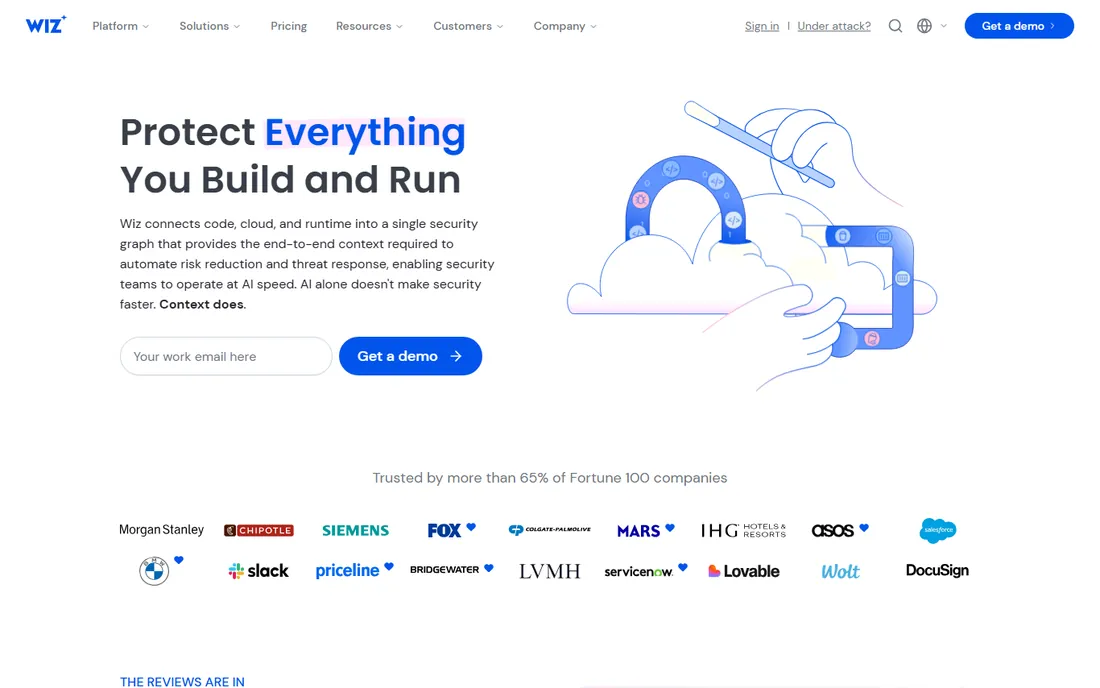
Wiz transformed cloud security by showing everything without agents: connect your cloud accounts, and within minutes see misconfigurations, vulnerabilities, exposed data, and attack paths across AWS, Azure, and GCP. The agentless approach removed the deployment friction that stalled earlier tools.
The risk prioritization is the breakthrough. Instead of thousands of undifferentiated findings, Wiz shows which issues are actually exploitable, correlated across the attack path. Security teams fix what matters instead of drowning in alerts.
It covers cloud, not endpoints or networks; pair it with endpoint protection for full coverage. Pricing reflects the premium positioning. But for cloud security posture, Wiz's clarity made it the standard fast.
What we like- Agentless cloud visibility
- Prioritizes real risks
- Fast deployment
Watch out for- Cloud-only
- Premium pricing
Starting priceSee website
Free planFree trial
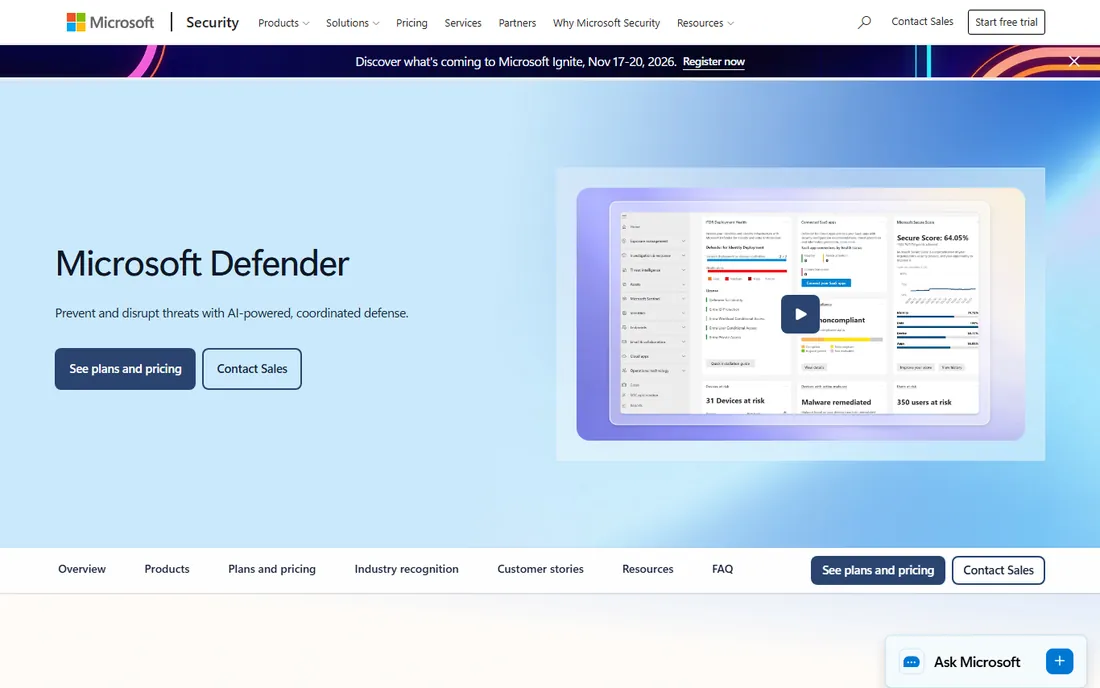
Microsoft Defender (the business suite, formerly Defender for Endpoint plus) gives Microsoft 365 organizations serious security without another vendor. Endpoint protection, email security, identity protection, and cloud app security integrate natively with Windows and the Microsoft stack.
The improvement trajectory matters: Defender went from baseline to genuinely competitive, and the OS-level integration gives it visibility advantages. For organizations already paying for Microsoft 365 E5, the incremental cost is compelling.
Outside the Microsoft ecosystem, the value drops, and the most advanced features require premium tiers. But the "good enough plus integrated plus already paid for" equation wins many evaluations.
What we like- Bundled with Microsoft 365
- Deep OS integration
- Improving rapidly
Watch out for- Best inside Microsoft stack
- Advanced features need higher tiers
Starting priceSee website
Free planNo
Darktrace's AI learns what normal looks like on your network, then flags deviations: the insider exfiltrating data at 3 AM, the compromised device behaving oddly, the novel attack no signature knows. That anomaly approach catches threats that pattern-matching misses.
The Antigena autonomous response can contain threats automatically, buying time for analysts. For novel attacks and insider threats, the behavioral approach covers gaps in traditional defenses.
Pricing is premium, and the AI needs tuning to the environment to avoid noise. But for organizations worried about the threats nobody has seen before, Darktrace's learning approach offers unique coverage.
What we like- Learns normal behavior
- Catches novel threats
- Autonomous response option
Watch out for- Expensive
- Needs tuning to reduce noise
Starting priceSee website
Free planFree trial

Trend Micro protects businesses broadly: endpoints, email, web, cloud workloads, and networks in one platform. The comprehensiveness suits IT teams wanting fewer vendors without sacrificing coverage.
The value proposition is solid: capable protection at prices below the premium leaders, with particular strength in Asia-Pacific markets. The Vision One platform unifies the components with XDR-style correlation.
It lacks the trend-setting reputation of CrowdStrike or Wiz, and the interface can feel complex. But for businesses wanting broad, reliable protection from an established vendor, Trend Micro delivers.
What we like- Comprehensive coverage
- Good value
- Strong in Asia-Pacific
Watch out for- Less modern image
- Interface complexity
Starting priceSee website
Free planNo
Check Point built its name on firewalls and extended into a full security platform: network, endpoint, cloud, and mobile with unified management. The threat prevention technology, honed over decades, remains excellent.
Organizations with Check Point network security get natural extension into endpoint and cloud with consistent policy. The management platform handles complexity well for large deployments.
The architecture reflects its heritage more than cloud-native upstarts, and pricing is premium. But for network-centric security strategies, Check Point's prevention-first approach is proven.
What we like- Firewall heritage
- Comprehensive threat prevention
- Strong management
Watch out for- Traditional architecture
- Premium pricing
The industry pushes platform consolidation: one vendor for endpoint, cloud, identity, and network. The benefits are real: unified visibility, correlated alerts, simpler procurement, and often better pricing.
Best-of-breed argues that no vendor leads everywhere. CrowdStrike for endpoints plus Wiz for cloud plus Okta for identity gives top capability in each domain, at the cost of integration effort and alert fragmentation.
The pragmatic path: consolidate where the platform is genuinely good, keep best-of-breed where it matters most. Most organizations end up with two to three vendors, not one and not ten.
The fundamentals still matter
Platforms do not replace hygiene. Patch promptly, enforce MFA everywhere, back up reliably, and train users against phishing. The majority of breaches exploit these basics, not zero-days.
Asset inventory is the unglamorous prerequisite: you cannot protect what you do not know exists. Cloud sprawl and shadow IT defeat the best platforms.
Incident response planning matters more than tool choice. Know who does what when the alert fires at 2 AM. Tabletop exercises reveal gaps that no platform fills.
Building the security program
Tools are components; the program is the system. Define what you are protecting, from whom, and what happens when defenses fail. The risk assessment drives every other decision, from tool selection to staffing to insurance.
Staff appropriately for your size. Small businesses need a managed service watching the tools; mid-size companies need at least one dedicated security person; enterprises need teams. The platforms here multiply human capability; they do not replace it.
Measure and improve continuously. Track mean time to detect, mean time to respond, patch compliance, and phishing simulation results. The trends matter more than absolute numbers. A security program that improves quarterly beats one that buys tools annually.
Ransomware readiness
Assume ransomware will target you; preparation determines the outcome. Maintain offline, tested backups that ransomware cannot reach. Segment networks so one compromised machine does not mean total encryption. Practice the recovery, not just the backup.
Prepare the response in advance: who decides whether to pay (almost never advisable), who communicates with stakeholders, who handles legal and regulatory notifications. Decisions made calmly beforehand beat decisions made during a crisis.
Test with simulations. Tabletop exercises walking through a ransomware scenario reveal the gaps in plans, contacts, and capabilities. The hour spent exercising saves days of confusion when it counts.
How we chose
We compared cybersecurity platforms that organizations use for endpoint, cloud, and network protection, based on independent test results, vendor documentation, and practitioner discussion. We covered the endpoint leaders, ecosystem platforms, cloud security, and AI detection, noting the platform consolidation trend. Pricing is typically quote-based, so we link to vendors for current numbers.
Frequently asked questions
Which platform should a small business choose?
Microsoft Defender if on Microsoft 365 (often already paid for), otherwise SentinelOne or Trend Micro for capable protection at fair prices. Add Wiz if cloud-heavy. Keep it simple; small teams need manageable tools.
How do we evaluate detection claims?
Independent tests (MITRE Engenuity, AV-TEST, SE Labs) provide the objective data. Vendor claims all sound excellent. Run proof-of-concept trials with your own attack simulations before committing.
Do we need both EDR and XDR?
EDR (endpoint detection and response) is the foundation; XDR extends correlation across endpoint, network, cloud, and identity. Start with strong EDR, add XDR breadth as the security program matures.
Should we outsource security operations?
If you lack 24/7 security staff, strongly consider MDR (managed detection and response). The platforms here work best with expert eyes on alerts. CrowdStrike, SentinelOne, and others offer managed options.
How do we justify the cost to leadership?
Frame it as risk reduction: the cost of one breach (ransom, downtime, reputation, liability) dwarfs prevention spending. Use industry breach cost data and your own risk assessment. Cyber insurance requirements increasingly mandate these tools anyway.
How often should we review our security stack?
Continuously for threats, quarterly for strategy. Attacker methods shift constantly; your tooling should evolve with them. Annual architecture reviews catch the bigger misalignments.
Do we need cyber insurance?
Increasingly yes, and insurers now require the controls these platforms provide: EDR, MFA, backups, and incident response plans. The right security stack both reduces risk and satisfies underwriters.
What is the first security investment a small business should make?
MFA everywhere, then endpoint protection, then backups. Those three controls prevent the majority of incidents. Add email security next; phishing is the top initial access vector.
Sources we checked (8)
- https://www.crowdstrike.com/en-us/
- https://www.paloaltonetworks.com/cortex
- https://www.sentinelone.com/
- https://www.wiz.io/
- https://www.microsoft.com/en-us/security/business/microsoft-defender
- https://www.darktrace.com/
- https://www.trendmicro.com/en_us/business.html
- https://www.checkpoint.com/
Is your product missing or out of date?
We review this list regularly. Vendors can request a listing, send updated pricing or ask about featured placement.

Shihab Mia · Founder, Rankite
Shihab has spent more than a decade helping SaaS and e-commerce brands grow through search. He writes Rankite's software buying guides from pricing pages, documentation and public user reviews. More about Shihab.
 CrowdStrike Falcon
 Palo Alto Cortex
 SentinelOne
 Wiz
Wiz Microsoft Defender
 Darktrace
 Trend Micro
 Check Point