How we make this list: we compare pricing pages, product documentation and public user reviews. Rankite is independent; if a vendor ever pays for a featured spot, that listing is clearly labeled Partner.
Key takeaways
- SIEM pricing is the most punishing in enterprise software: most vendors bill per gigabyte ingested, so costs scale with your log volume whether or not threats do.
- Microsoft Sentinel publishes its pricing (from about $2.46/GB pay-as-you-go) and ingests Microsoft 365 and Azure data free, which makes it the value pick for Microsoft shops.
- Elastic Security (free self-hosted) and Wazuh (free open source) are the real options for teams with expertise but no enterprise budget.
- Splunk Enterprise Security, IBM QRadar, Exabeam, Securonix, Rapid7 and Sumo Logic are quote-only; expect six-figure annual contracts at serious data volumes.
- CrowdStrike Falcon Next-Gen SIEM ($5.95/GB for third-party data) suits organizations already on the Falcon platform, with 10 GB/day free for Falcon customers.
Quick comparison
| Tool | Best for | Starting price | Free plan |
|---|
 Microsoft Sentinel Microsoft Sentinel | Microsoft-centric organizations | From ~$2.46/GB ingested (pay-as-you-go) | No |
 Elastic Security Elastic Security | Engineering-led teams that want control | Free (self-hosted) | Yes |
 Wazuh Wazuh | Free open-source SIEM and XDR | Free (open source) | Yes |
 Splunk Enterprise Security Splunk Enterprise Security | Large enterprises with deep analytics needs | See website (quote-based) | Free trial |
 IBM QRadar IBM QRadar | Enterprises standardized on IBM | See website (quote-based) | Yes (Community Edition) |
 CrowdStrike Falcon Next-Gen SIEM CrowdStrike Falcon Next-Gen SIEM | Organizations already on Falcon | From $5.95/GB (third-party data, AWS Marketplace) | No |
 Exabeam Exabeam | Behavior analytics and insider threat | See website (quote-based) | No |
 Securonix Securonix | Cloud-scale threat detection | See website (quote-based) | No |
 Sumo Logic Cloud SIEM Sumo Logic Cloud SIEM | Mid-market cloud-native SIEM | See website (credit-based) | Free trial |
Is your product missing or out of date?
We review this list regularly. Vendors can request a listing, send updated pricing or ask about featured placement.
The best SIEM software
A SIEM (security information and event management) collects logs from across your environment, correlates them, and alerts your security team to threats. The technology differences between the leaders are smaller than the pricing differences, which are enormous. The nine tools below range from free open-source options to platforms whose annual contracts exceed most companies' entire security budgets.
Transparent pricing: know what you will pay
Starting priceFrom ~$2.46/GB ingested (pay-as-you-go)
Free planNo
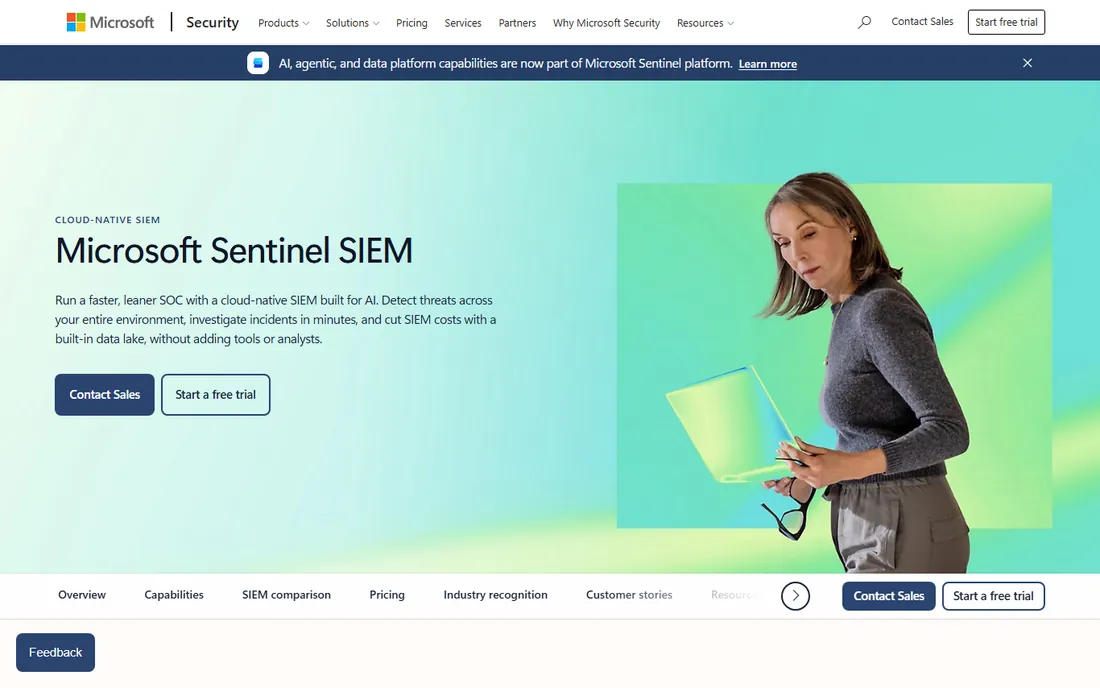
Sentinel's advantage starts with the price list: it is one of the only enterprise SIEMs with fully published pricing. Pay-as-you-go ingestion starts around $2.46 per GB, commitment tiers discount it further, and data from Microsoft sources (M365, Defender, Azure activity logs) costs nothing to ingest. There are no per-analyst license fees, and SOAR playbooks run on included automation.
The catch is volume. At hundreds of gigabytes a day, the bill reaches six figures annually even with commitments, which is why data filtering and retention planning matter more with Sentinel than with flat-priced tools. For organizations already on Microsoft 365 and Azure, the free data ingestion and native integration make it the rational default.
What we like- Fully published consumption pricing with no user license fees
- Microsoft 365, Defender and Azure data ingest free
- SOAR automation included rather than licensed separately
Watch out for- Cloud-only, no on-premises option
- Costs escalate fast at high data volumes
- KQL query language is another thing for analysts to learn
#2
Elastic Security
Best for: Engineering-led teams that want control
Visit elastic.co
Starting priceFree (self-hosted)
Free planYes
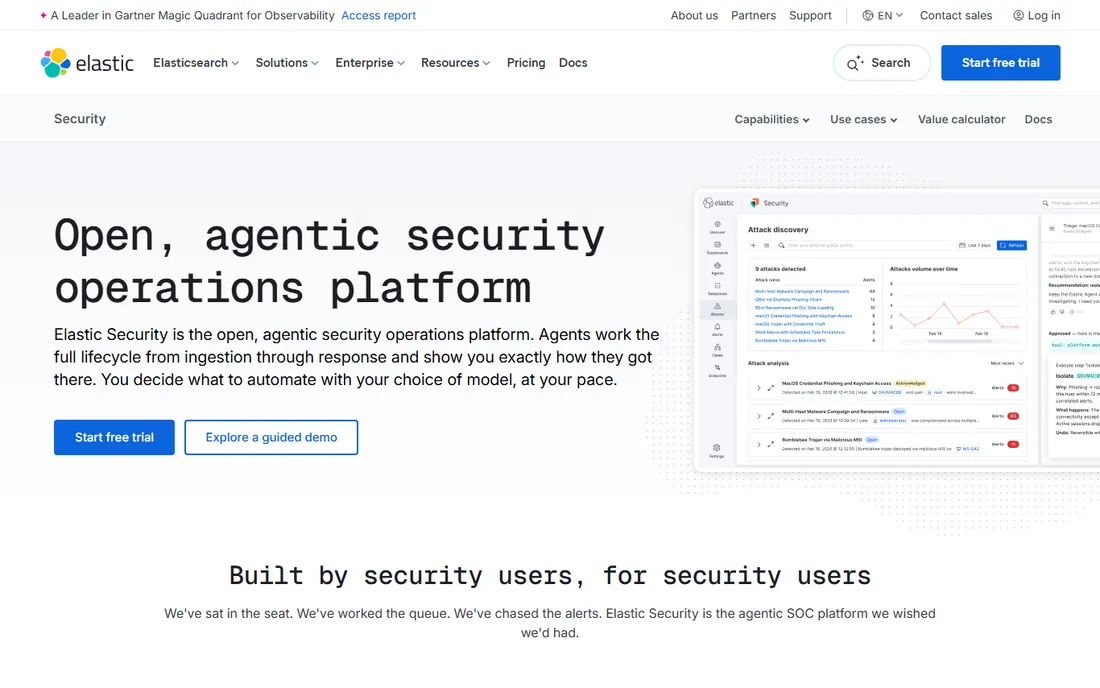
Elastic Security is the SIEM for teams with engineering depth and budget discipline. The self-hosted core is free: you pay for infrastructure, not per-gigabyte ingestion, which breaks the punishing economics of the category. Kibana dashboards are the most flexible visualization in the SIEM market, and the Elastic Common Schema simplifies multi-source correlation.
The honest trade is expertise. Without tuning, detection content is thinner than the commercial platforms, and running Elasticsearch at scale is real operational work. Teams that already run the ELK stack get a SIEM almost for free. Teams without that background should budget for the learning curve or look at Wazuh or Sentinel.
What we like- Free self-hosted core with no ingestion licensing
- The most flexible visualization layer via Kibana
- Elastic Common Schema normalizes diverse log sources
Watch out for- Alert quality out of the box trails Sentinel and Splunk without tuning
- Self-hosting means your team runs the infrastructure
- Needs dedicated Elastic expertise to shine
Starting priceFree (open source)
Free planYes
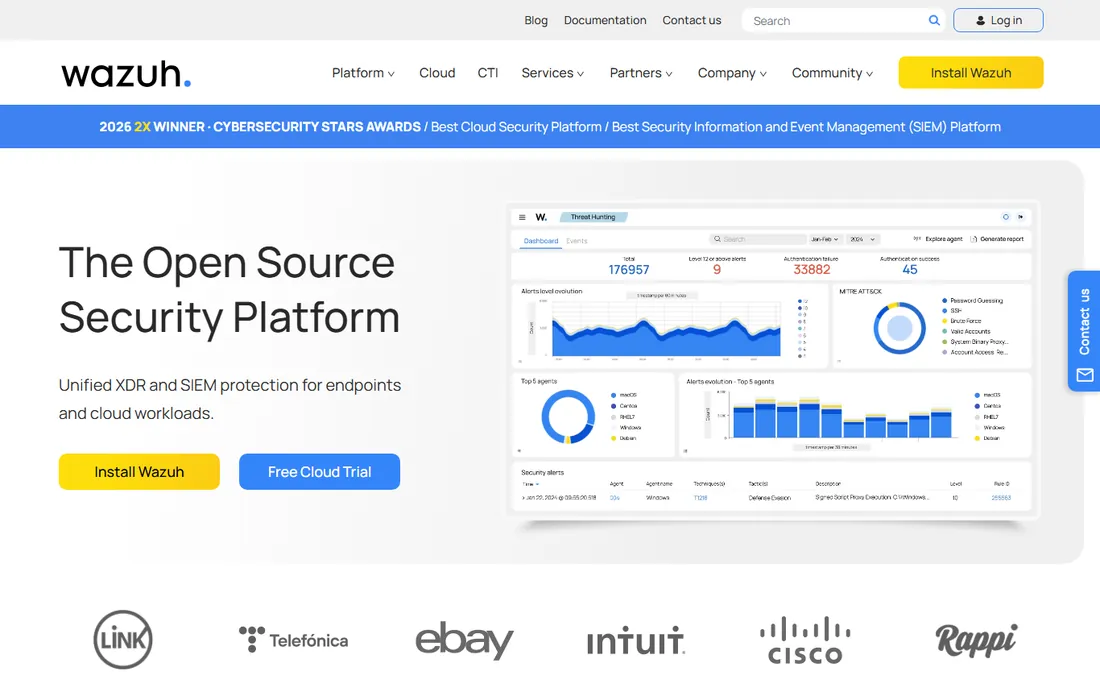
Wazuh is the genuinely free SIEM: open source, no ingestion metering, no feature-gated tiers. It combines SIEM log analysis with endpoint detection (XDR), which covers two security functions in one free platform. For small security teams, MSSPs building on open source, and organizations in regions where enterprise SIEM pricing is prohibitive, it is a legitimate option.
Expectations should be set by the price. Detection content, integrations and polish trail Splunk and Sentinel, and production deployments need tuning and infrastructure work. But the flat economics, zero at any data volume, make it the only SIEM here whose cost cannot surprise you.
What we like- Completely free open-source platform combining SIEM and XDR
- No ingestion-based pricing at any scale
- Active community and regular releases
Watch out for- Community support unless you pay for commercial support
- The interface and detection content trail commercial leaders
- Scaling and tuning are on your team
#4
Splunk Enterprise Security
Best for: Large enterprises with deep analytics needs
Visit splunk.com
Starting priceSee website (quote-based)
Free planFree trial
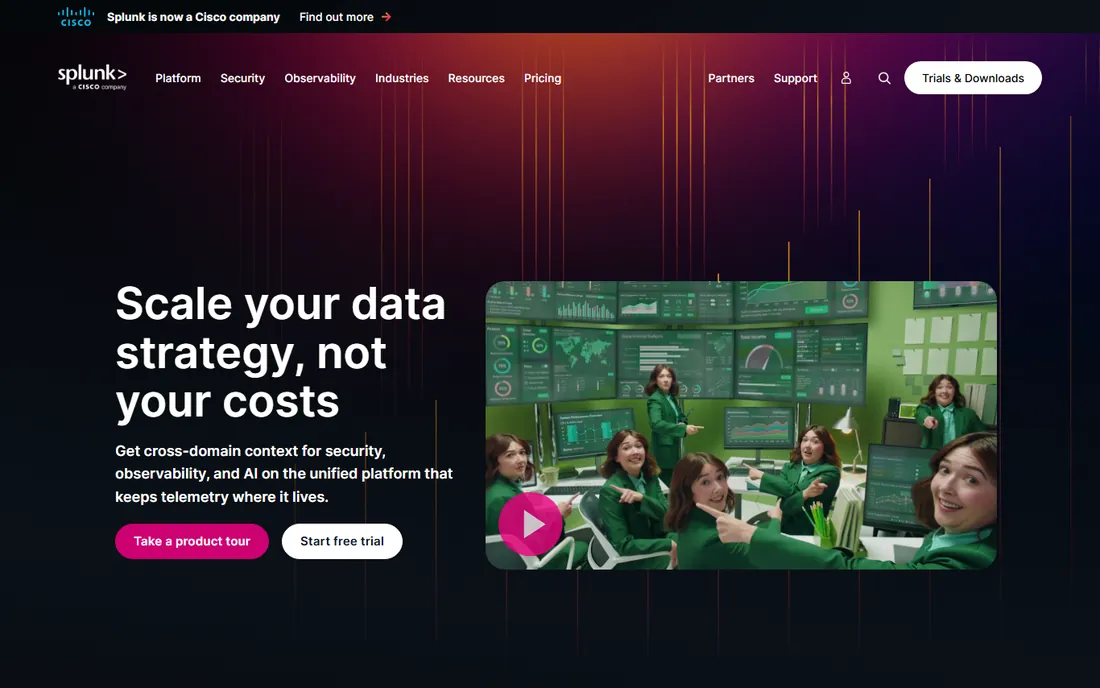
Splunk is the enterprise SIEM standard by adoption. Its search processing language handles investigations other platforms cannot express, the app ecosystem covers nearly every data source, and finding analysts who know Splunk is easier than staffing any alternative. Splunk Cloud removes the infrastructure burden for those who want it.
The pricing is the industry's cautionary tale. Everything is quote-based, and third-party estimates put serious deployments from hundreds of thousands to millions of dollars annually, driven by per-gigabyte ingestion economics. Cost is the most cited reason organizations evaluate alternatives. Buy Splunk when you have the data volume, the staff and the budget of a large enterprise SOC; otherwise the price-to-value math rarely works.
What we like- The deepest search and analytics language (SPL) in the industry
- Massive app and integration ecosystem
- 40 percent-ish enterprise SIEM mindshare means talent is available
Watch out for- Quote-only pricing that reviewers consistently call expensive
- Costs scale brutally with ingestion (estimates reach millions annually at high volumes)
- SOAR needs separate Phantom licensing
#5
IBM QRadar
Best for: Enterprises standardized on IBM
Visit ibm.com
Starting priceSee website (quote-based)
Free planYes (Community Edition)
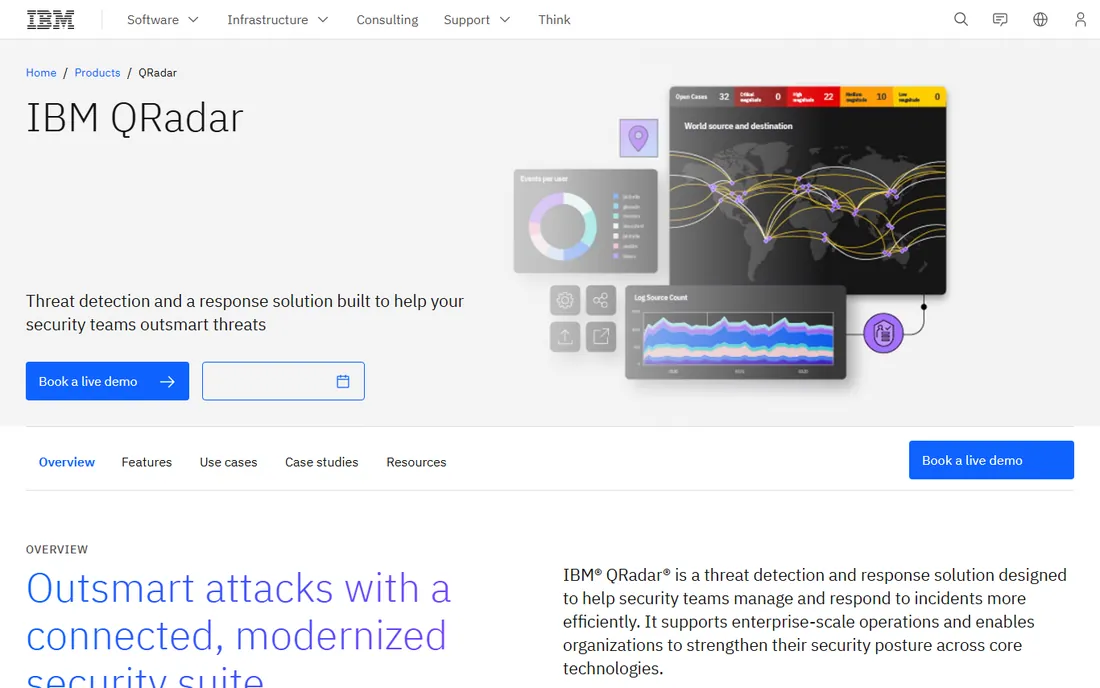
QRadar's differentiator is licensing by events per second (EPS) rather than data volume, which can favor environments with many small events. The correlation engine is battle-tested with years of tuned detection content, and IBM shops get natural integration with the rest of the portfolio.
Commercial pricing is entirely quote-based, so it shows "See website." The Community Edition lets teams evaluate the real product free. Buyers should ask direct questions about roadmap and support in sales conversations, since IBM's security portfolio moves have created uncertainty. For EPS-shaped workloads in IBM environments, it remains a solid technical choice.
What we like- Mature correlation engine with strong out-of-the-box rules
- Licensed by events per second rather than gigabytes, which suits high-event low-volume environments
- Community Edition for evaluation
Watch out for- Quote-only commercial pricing
- The interface and architecture show their age
- IBM's strategic direction for the product has raised questions among buyers
Starting priceFrom $5.95/GB (third-party data, AWS Marketplace)
Free planNo
CrowdStrike's SIEM play builds on its endpoint dominance: Falcon customers already generate the industry's richest endpoint telemetry, and the Next-Gen SIEM unifies it with third-party log sources on the fast LogScale search engine. Falcon Insight XDR customers get 10 GB a day free, which covers meaningful volume.
Third-party data costs $5.95 per GB on AWS Marketplace pay-as-you-go, so non-Falcon data is priced like a premium SIEM. The platform makes most sense as a consolidation move for CrowdStrike shops: one vendor for EDR and SIEM, one data model, one bill. Evaluated standalone against Sentinel or Elastic, the pricing advantage narrows.
What we like- Native integration with Falcon endpoint data, the richest endpoint telemetry in the industry
- 10 GB/day free for Falcon Insight XDR customers
- Fast search on the LogScale engine
Watch out for- Third-party data ingestion at $5.95/GB adds up
- The value concentrates in Falcon shops
- Standalone pricing is less compelling without the endpoint platform
Starting priceSee website (quote-based)
Free planNo
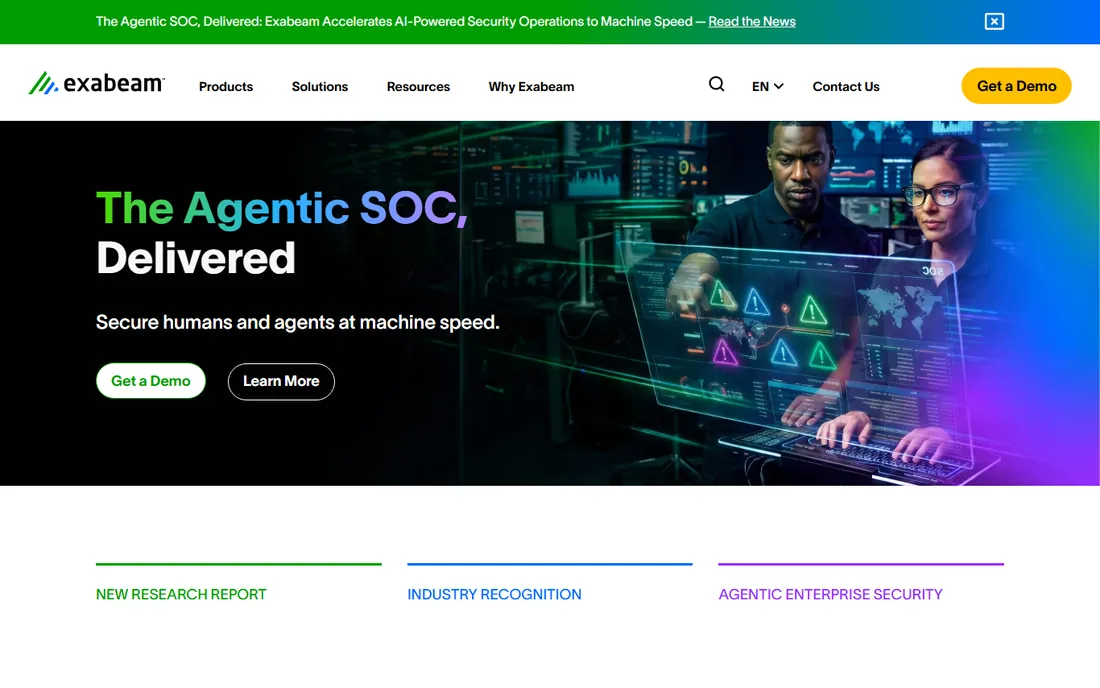
Exabeam built its name on behavior analytics: baselining normal user activity and flagging deviations that indicate compromised accounts or insider threats. The timeline-based investigation view is genuinely well designed, and the New-Scale Fusion platform modernized the architecture for cloud scale.
Pricing is quote-only with no published rate card. The platform's value concentrates in organizations worried about insider threat and credential compromise; teams whose primary need is log aggregation and compliance may find the UEBA premium misaligned. Feed it good identity data and it shines; without it, the behavior models starve.
What we like- Leading user and entity behavior analytics (UEBA) for insider threat and compromised accounts
- Timeline-based investigation interface analysts like
- Strong cloud-native architecture in the New-Scale platform
Watch out for- Fully quote-based pricing
- UEBA strength means core SIEM breadth can feel secondary
- Needs quality identity and HR data feeds to deliver its best value
Starting priceSee website (quote-based)
Free planNo
Securonix's Unified Defense SIEM targets large organizations that need cloud scale without infrastructure management. The UEBA capabilities are well regarded, threat content is strong, and the single bundled license avoids the per-module pricing puzzles some competitors create.
Everything commercial is quote-based. The buyer profile is squarely enterprise: expect a sales-led process and implementation effort to match. For large cloud-forward SOCs evaluating Splunk alternatives, Securonix belongs on the shortlist alongside Sentinel and CrowdStrike.
What we like- Cloud-native SIEM built for massive scale
- Strong UEBA and threat content
- Single bundled license rather than per-component pricing
Watch out for- Quote-only with no published pricing
- Enterprise sales motion and implementation
- Smaller community and talent pool than Splunk or Sentinel
Starting priceSee website (credit-based)
Free planFree trial
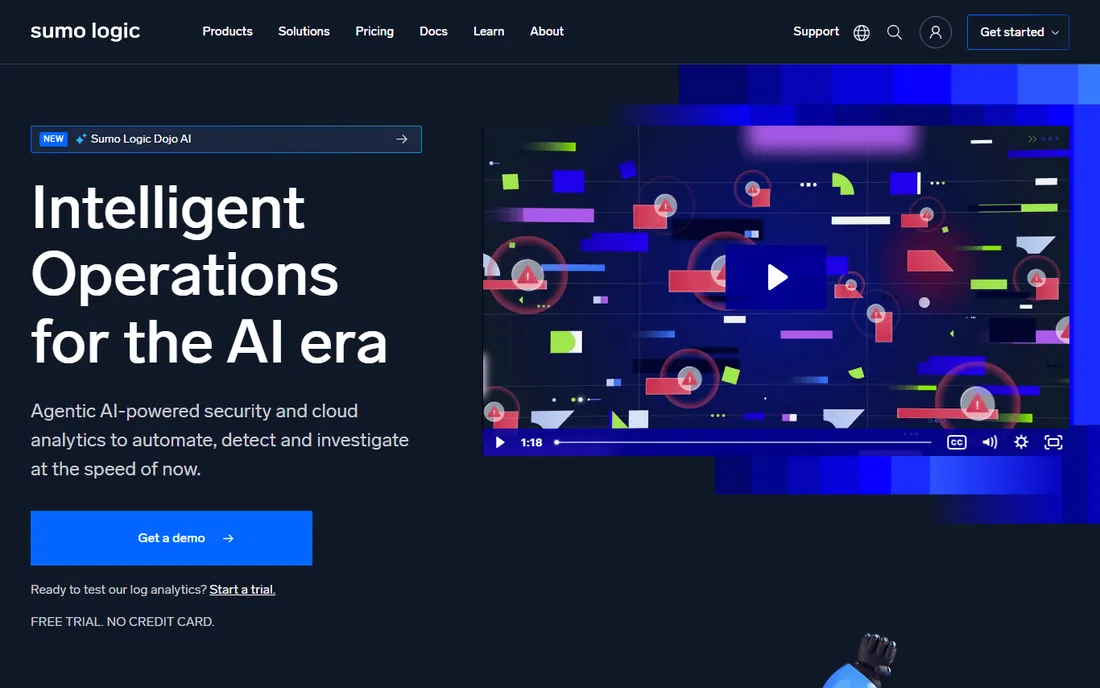
Sumo Logic comes from log analytics rather than security, which shows in the platform's search and data handling strengths. The Cloud SIEM adds detection content and SOC workflows on top of a cloud-native data platform, with credit-based pricing that flexes with usage.
The credit model is the catch: forecasting spend requires understanding credit burn rates across your data mix, and there is no published SIEM price list. A trial capped by credits lets you measure actual consumption before committing. Mid-market teams wanting cloud-native SIEM without Splunk's weight or Sentinel's Microsoft lock-in should evaluate it, but model the credits carefully.
What we like- Cloud-native architecture with no infrastructure to manage
- Credit-based pricing can suit variable workloads
- Strong log analytics heritage beyond security
Watch out for- Credit consumption model is hard to forecast
- No published SIEM pricing
- The security feature set trails the dedicated enterprise SIEMs
Enterprise quote-based: the heavyweights
Starting priceFrom ~$2.46/GB ingested (pay-as-you-go)
Free planNo
Sentinel's advantage starts with the price list: it is one of the only enterprise SIEMs with fully published pricing. Pay-as-you-go ingestion starts around $2.46 per GB, commitment tiers discount it further, and data from Microsoft sources (M365, Defender, Azure activity logs) costs nothing to ingest. There are no per-analyst license fees, and SOAR playbooks run on included automation.
The catch is volume. At hundreds of gigabytes a day, the bill reaches six figures annually even with commitments, which is why data filtering and retention planning matter more with Sentinel than with flat-priced tools. For organizations already on Microsoft 365 and Azure, the free data ingestion and native integration make it the rational default.
What we like- Fully published consumption pricing with no user license fees
- Microsoft 365, Defender and Azure data ingest free
- SOAR automation included rather than licensed separately
Watch out for- Cloud-only, no on-premises option
- Costs escalate fast at high data volumes
- KQL query language is another thing for analysts to learn
#2
Elastic Security
Best for: Engineering-led teams that want control
Visit elastic.co
Starting priceFree (self-hosted)
Free planYes
Elastic Security is the SIEM for teams with engineering depth and budget discipline. The self-hosted core is free: you pay for infrastructure, not per-gigabyte ingestion, which breaks the punishing economics of the category. Kibana dashboards are the most flexible visualization in the SIEM market, and the Elastic Common Schema simplifies multi-source correlation.
The honest trade is expertise. Without tuning, detection content is thinner than the commercial platforms, and running Elasticsearch at scale is real operational work. Teams that already run the ELK stack get a SIEM almost for free. Teams without that background should budget for the learning curve or look at Wazuh or Sentinel.
What we like- Free self-hosted core with no ingestion licensing
- The most flexible visualization layer via Kibana
- Elastic Common Schema normalizes diverse log sources
Watch out for- Alert quality out of the box trails Sentinel and Splunk without tuning
- Self-hosting means your team runs the infrastructure
- Needs dedicated Elastic expertise to shine
Starting priceFree (open source)
Free planYes
Wazuh is the genuinely free SIEM: open source, no ingestion metering, no feature-gated tiers. It combines SIEM log analysis with endpoint detection (XDR), which covers two security functions in one free platform. For small security teams, MSSPs building on open source, and organizations in regions where enterprise SIEM pricing is prohibitive, it is a legitimate option.
Expectations should be set by the price. Detection content, integrations and polish trail Splunk and Sentinel, and production deployments need tuning and infrastructure work. But the flat economics, zero at any data volume, make it the only SIEM here whose cost cannot surprise you.
What we like- Completely free open-source platform combining SIEM and XDR
- No ingestion-based pricing at any scale
- Active community and regular releases
Watch out for- Community support unless you pay for commercial support
- The interface and detection content trail commercial leaders
- Scaling and tuning are on your team
#4
Splunk Enterprise Security
Best for: Large enterprises with deep analytics needs
Visit splunk.com
Starting priceSee website (quote-based)
Free planFree trial
Splunk is the enterprise SIEM standard by adoption. Its search processing language handles investigations other platforms cannot express, the app ecosystem covers nearly every data source, and finding analysts who know Splunk is easier than staffing any alternative. Splunk Cloud removes the infrastructure burden for those who want it.
The pricing is the industry's cautionary tale. Everything is quote-based, and third-party estimates put serious deployments from hundreds of thousands to millions of dollars annually, driven by per-gigabyte ingestion economics. Cost is the most cited reason organizations evaluate alternatives. Buy Splunk when you have the data volume, the staff and the budget of a large enterprise SOC; otherwise the price-to-value math rarely works.
What we like- The deepest search and analytics language (SPL) in the industry
- Massive app and integration ecosystem
- 40 percent-ish enterprise SIEM mindshare means talent is available
Watch out for- Quote-only pricing that reviewers consistently call expensive
- Costs scale brutally with ingestion (estimates reach millions annually at high volumes)
- SOAR needs separate Phantom licensing
#5
IBM QRadar
Best for: Enterprises standardized on IBM
Visit ibm.com
Starting priceSee website (quote-based)
Free planYes (Community Edition)
QRadar's differentiator is licensing by events per second (EPS) rather than data volume, which can favor environments with many small events. The correlation engine is battle-tested with years of tuned detection content, and IBM shops get natural integration with the rest of the portfolio.
Commercial pricing is entirely quote-based, so it shows "See website." The Community Edition lets teams evaluate the real product free. Buyers should ask direct questions about roadmap and support in sales conversations, since IBM's security portfolio moves have created uncertainty. For EPS-shaped workloads in IBM environments, it remains a solid technical choice.
What we like- Mature correlation engine with strong out-of-the-box rules
- Licensed by events per second rather than gigabytes, which suits high-event low-volume environments
- Community Edition for evaluation
Watch out for- Quote-only commercial pricing
- The interface and architecture show their age
- IBM's strategic direction for the product has raised questions among buyers
Starting priceFrom $5.95/GB (third-party data, AWS Marketplace)
Free planNo
CrowdStrike's SIEM play builds on its endpoint dominance: Falcon customers already generate the industry's richest endpoint telemetry, and the Next-Gen SIEM unifies it with third-party log sources on the fast LogScale search engine. Falcon Insight XDR customers get 10 GB a day free, which covers meaningful volume.
Third-party data costs $5.95 per GB on AWS Marketplace pay-as-you-go, so non-Falcon data is priced like a premium SIEM. The platform makes most sense as a consolidation move for CrowdStrike shops: one vendor for EDR and SIEM, one data model, one bill. Evaluated standalone against Sentinel or Elastic, the pricing advantage narrows.
What we like- Native integration with Falcon endpoint data, the richest endpoint telemetry in the industry
- 10 GB/day free for Falcon Insight XDR customers
- Fast search on the LogScale engine
Watch out for- Third-party data ingestion at $5.95/GB adds up
- The value concentrates in Falcon shops
- Standalone pricing is less compelling without the endpoint platform
Starting priceSee website (quote-based)
Free planNo
Exabeam built its name on behavior analytics: baselining normal user activity and flagging deviations that indicate compromised accounts or insider threats. The timeline-based investigation view is genuinely well designed, and the New-Scale Fusion platform modernized the architecture for cloud scale.
Pricing is quote-only with no published rate card. The platform's value concentrates in organizations worried about insider threat and credential compromise; teams whose primary need is log aggregation and compliance may find the UEBA premium misaligned. Feed it good identity data and it shines; without it, the behavior models starve.
What we like- Leading user and entity behavior analytics (UEBA) for insider threat and compromised accounts
- Timeline-based investigation interface analysts like
- Strong cloud-native architecture in the New-Scale platform
Watch out for- Fully quote-based pricing
- UEBA strength means core SIEM breadth can feel secondary
- Needs quality identity and HR data feeds to deliver its best value
Starting priceSee website (quote-based)
Free planNo
Securonix's Unified Defense SIEM targets large organizations that need cloud scale without infrastructure management. The UEBA capabilities are well regarded, threat content is strong, and the single bundled license avoids the per-module pricing puzzles some competitors create.
Everything commercial is quote-based. The buyer profile is squarely enterprise: expect a sales-led process and implementation effort to match. For large cloud-forward SOCs evaluating Splunk alternatives, Securonix belongs on the shortlist alongside Sentinel and CrowdStrike.
What we like- Cloud-native SIEM built for massive scale
- Strong UEBA and threat content
- Single bundled license rather than per-component pricing
Watch out for- Quote-only with no published pricing
- Enterprise sales motion and implementation
- Smaller community and talent pool than Splunk or Sentinel
Starting priceSee website (credit-based)
Free planFree trial
Sumo Logic comes from log analytics rather than security, which shows in the platform's search and data handling strengths. The Cloud SIEM adds detection content and SOC workflows on top of a cloud-native data platform, with credit-based pricing that flexes with usage.
The credit model is the catch: forecasting spend requires understanding credit burn rates across your data mix, and there is no published SIEM price list. A trial capped by credits lets you measure actual consumption before committing. Mid-market teams wanting cloud-native SIEM without Splunk's weight or Sentinel's Microsoft lock-in should evaluate it, but model the credits carefully.
What we like- Cloud-native architecture with no infrastructure to manage
- Credit-based pricing can suit variable workloads
- Strong log analytics heritage beyond security
Watch out for- Credit consumption model is hard to forecast
- No published SIEM pricing
- The security feature set trails the dedicated enterprise SIEMs
The ingestion trap: why SIEM pricing punishes success
Most SIEMs bill per gigabyte ingested. Log volumes grow every year: more cloud services, more endpoints, more telemetry. Security incidents generate more logs, which means the moment you need your SIEM most is the moment its costs spike. Before buying, estimate your daily ingestion honestly, add 50 percent headroom, and model each candidate at that volume. Ask vendors about data filtering, tiered retention and commitment discounts, because the sticker rate is never the whole story. This is the single highest-value exercise in SIEM procurement.
How we chose
SIEM pricing is famously opaque, so we marked the six quote-only vendors honestly with "See website" and gave real numbers only where vendors publish them (Sentinel, Elastic, Wazuh, CrowdStrike's marketplace rate). We compared on what decides SIEM purchases: detection content quality, search and investigation capability, UEBA and behavior analytics, SOAR integration, deployment options, scalability, pricing model transparency and the true cost at 10, 100 and 500 GB per day. We read 2026 comparisons from security publishers, buyer reviews on G2 and peer discussions on Reddit's security communities for the recurring complaints: unpredictable bills, alert fatigue and implementation complexity.
Do small businesses need a SIEM?
Usually not a commercial one. Below roughly 50 employees with a standard SaaS footprint, the combination of endpoint protection, cloud audit logs and a managed detection service covers the real risks at a fraction of the cost and effort. A SIEM earns its keep when you have dedicated security staff, compliance requirements that demand centralized logging, or log volumes no human can review manually. If you do need SIEM capabilities on a small budget, Wazuh or Elastic's free tier plus a part-time analyst is the honest answer, not a six-figure enterprise contract.
Frequently asked questions
What is the best SIEM software for small businesses?
Wazuh (free, open source) or Elastic Security (free self-hosted) for teams with technical depth. Microsoft Sentinel suits small Microsoft-centric shops since M365 and Azure data ingest free. Most small businesses are better served by EDR plus a managed detection service than by any SIEM.
How much does SIEM software cost?
It depends almost entirely on log volume. Microsoft Sentinel publishes from ~$2.46/GB pay-as-you-go. CrowdStrike lists $5.95/GB for third-party data. Splunk, QRadar, Exabeam, Securonix and Sumo Logic are quote-only, with third-party estimates from tens of thousands to millions annually at enterprise volumes. Elastic and Wazuh are free to self-host.
What is the difference between SIEM and XDR?
SIEM aggregates and correlates logs from across the environment for detection and compliance. XDR focuses on detection and response across endpoints, network and cloud workloads with tighter automation. The categories overlap: Wazuh and CrowdStrike both blend SIEM and XDR capabilities.
Is Splunk or Microsoft Sentinel better?
Splunk has deeper analytics and a larger ecosystem; Sentinel has transparent pricing, no user fees and free Microsoft data ingestion. Reviewers rate Sentinel higher on price satisfaction and cite cost as the top reason for leaving Splunk. Microsoft shops usually choose Sentinel; heterogeneous enterprises with big SOCs often stay with Splunk.
What causes SIEM alert fatigue?
Too many detection rules enabled without tuning, thresholds set too low, and no adjustment for known-legitimate behavior. The fix is continuous tuning: track false positive rates per rule, use risk-based alerting that aggregates related events, and disable or retune noisy rules rather than letting analysts drown.
Sources we checked (11)
- https://azure.microsoft.com/en-us/pricing/details/microsoft-sentinel/
- https://www.elastic.co/pricing
- https://wazuh.com
- https://www.splunk.com
- https://www.ibm.com/qradar
- https://www.crowdstrike.com/platform/next-gen-siem/
- https://www.exabeam.com
- https://www.securonix.com
- https://www.sumologic.com
- https://underdefense.com/blog/siem-solutions-comparison/
- https://securityboulevard.com/2026/04/siem-pricing-2026-leading-siem-providers-compared-how-to-reduce-the-price-of-siem-ownership-2/
Is your product missing or out of date?
We review this list regularly. Vendors can request a listing, send updated pricing or ask about featured placement.

Shihab Mia · Founder, Rankite
Shihab has spent more than a decade helping SaaS and e-commerce brands grow through search. He writes Rankite's software buying guides from pricing pages, documentation and public user reviews. More about Shihab.