How we make this list: we compare pricing pages, product documentation and public user reviews. Rankite is independent; if a vendor ever pays for a featured spot, that listing is clearly labeled Partner.

Key takeaways
- TestRail and PractiTest are the two classic test management choices; TestRail wins on ecosystem, PractiTest on flexibility for varied methodologies.
- Zephyr Scale is the natural pick for teams already living in Jira, while Testmo is the modern cloud-native alternative.
- BrowserStack and TestMu AI (formerly LambdaTest) provide the device and browser clouds that make manual and automated execution possible at scale.
- Katalon, TestComplete and Applitools cover automation and visual testing for teams moving beyond manual runs.
Quick comparison
| Tool | Best for | Starting price | Free plan |
|---|
 TestRail TestRail | Teams that need serious test case management | See website | Free trial |
 PractiTest PractiTest | QA teams with varied methodologies | See website | Free trial |
 Zephyr Scale Zephyr Scale | Development teams already in Jira | See website | Free trial |
 Testmo Testmo | Teams wanting modern unified test management | See website | Free trial |
 BrowserStack BrowserStack | Cross-browser and real device testing | See website | Free trial |
 TestMu AI TestMu AI | Teams wanting an AI-native testing cloud | See website | Free trial |
 Katalon Katalon | Teams starting test automation without deep coding | See website | Yes |
 TestComplete TestComplete | Automated UI testing for desktop, web and mobile | See website | Free trial |
 Applitools Applitools | Visual testing powered by AI | See website | Yes |
Is your product missing or out of date?
We review this list regularly. Vendors can request a listing, send updated pricing or ask about featured placement.
The best QA software
Starting priceSee website
Free planFree trial
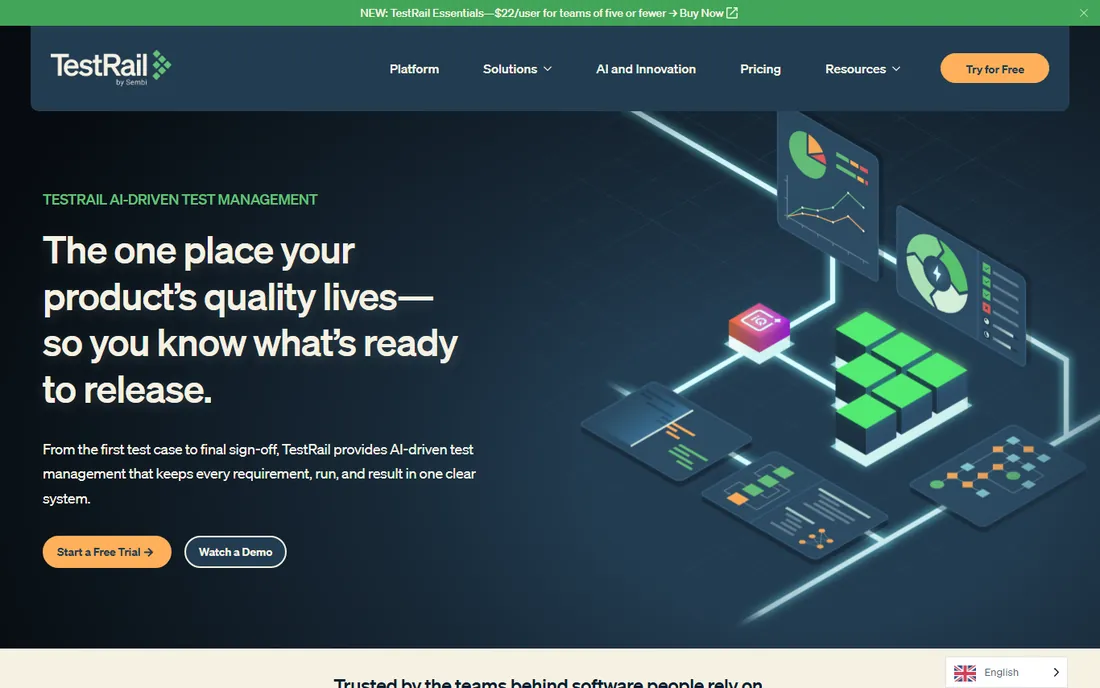
TestRail is the long-standing standard for test case management. QA teams plan suites, assign runs, track results and report coverage in a system built specifically for that job rather than adapted from a project tracker. The reporting is genuinely good: coverage by requirement, defect density by area, tester throughput. Integrations cover Jira, GitHub, Jenkins and the usual CI suspects.
The interface will not excite anyone who has seen newer tools, and the per-user pricing means large QA teams feel the cost. But for the core job of organizing manual and automated testing work across releases, TestRail remains the reference implementation. If your QA process is drowning in spreadsheets, this is the fastest way out.
What we like- Mature test planning and reporting
- Broad integrations
- Proven at enterprise scale
Watch out for- Interface is functional rather than modern
- Per-user pricing adds up
Starting priceSee website
Free planFree trial
PractiTest takes the opposite approach from TestRail's structure: it gives you a flexible framework and lets your methodology shape the tool. Agile, waterfall, exploratory, session-based, it accommodates all of them without fighting you. The custom fields, filters and dashboards are powerful once configured, and the API supports serious automation of the test management layer itself.
That flexibility is also the cost. Out of the box it is less opinionated, so teams need to design their own process rather than adopting the tool's. Organizations with a defined QA methodology they like will appreciate the freedom; teams looking for the tool to impose order may prefer TestRail.
What we like- Adapts to any testing methodology
- Strong custom fields and filters
- Good API
Watch out for- Less prescriptive, so setup takes thought
- Smaller ecosystem than TestRail
Starting priceSee website
Free planFree trial
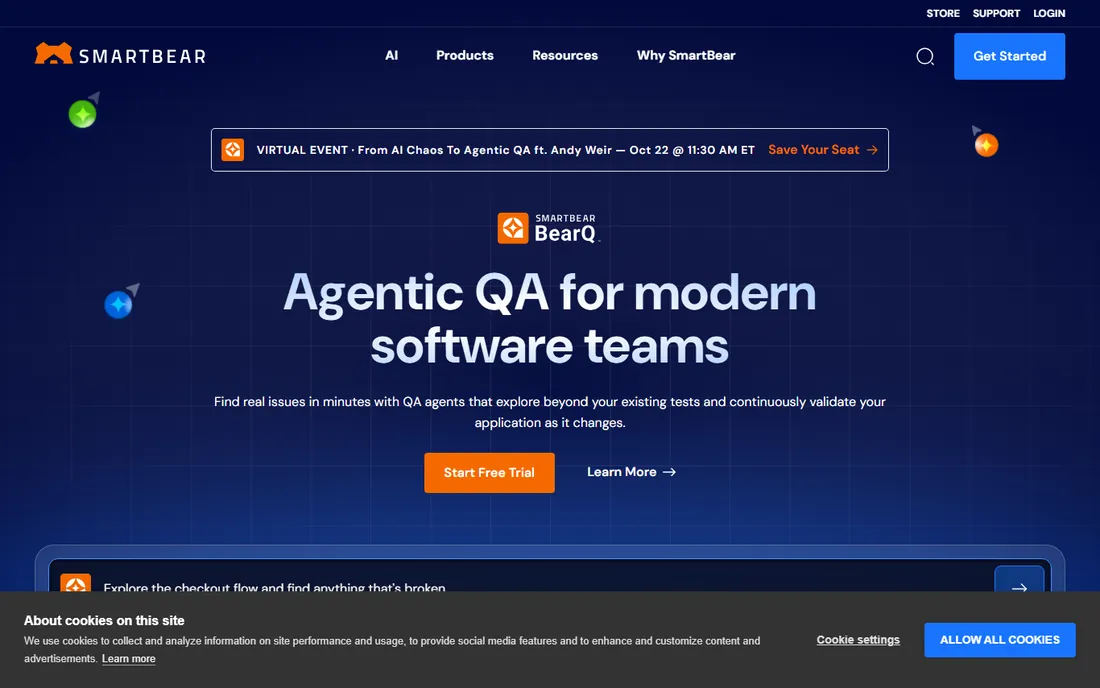
Zephyr Scale, from SmartBear, is the test management choice for teams that live in Jira and want testing to live there too. Test cases, plans and executions sit inside Jira projects, so developers and testers share one view of what is being tested and what is broken. It scales to large suites with reusable test data and parameterized cases.
The Atlassian tie is total: if you are not a Jira shop, there is no reason to be here. Pricing follows Jira's per-user model, which can surprise teams with many Jira users but few testers. For Jira-centric organizations, though, Zephyr Scale removes the tool-switching tax that kills testing momentum.
What we like- Native Jira integration
- Scales to large test suites
- SmartBear backing
Watch out for- Tied to the Atlassian ecosystem
- Pricing per Jira user
#4
Testmo
Best for: Teams wanting modern unified test management
Visit testmo.com
Starting priceSee website
Free planFree trial
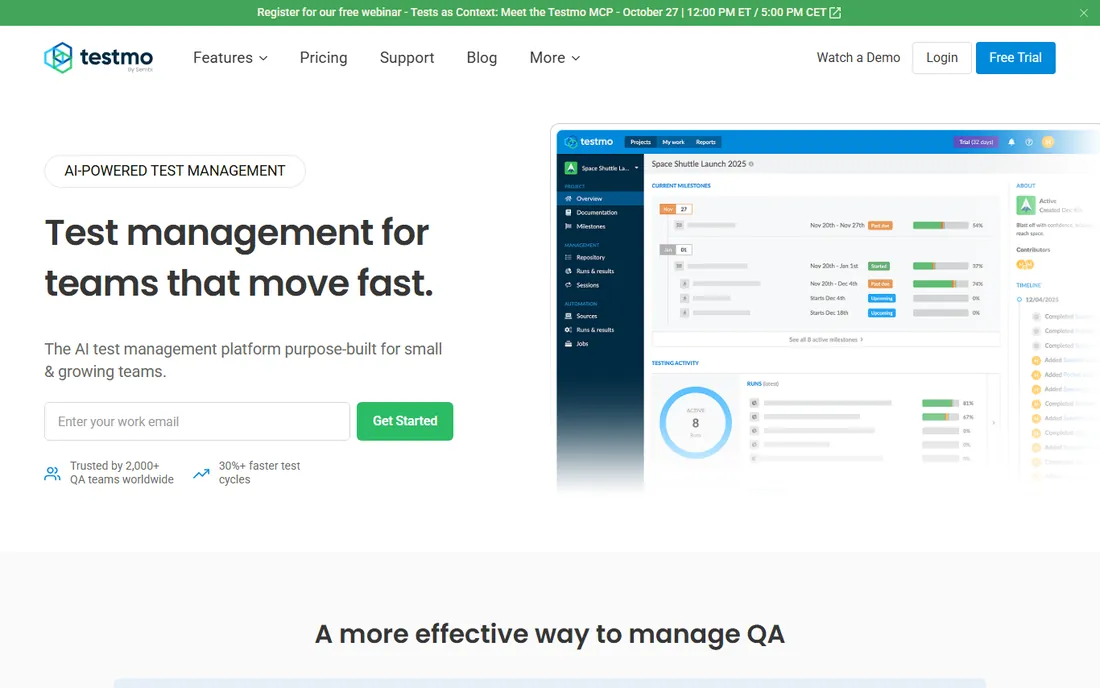
Testmo is the modern answer to TestRail: cloud-native test management with a genuinely pleasant interface, covering manual cases, exploratory sessions and automated test results in one place. Teams adopting it report faster onboarding than with the legacy tools, and the unified view of all testing activity is something older products bolt on rather than design in.
The ecosystem is still growing. Some niche integrations that TestRail has had for a decade are newer or missing here, and the enterprise reference list is shorter. For teams choosing test management fresh in 2026 rather than migrating a decade of TestRail history, Testmo is the strongest modern option.
What we like- Modern interface
- Unifies manual, exploratory and automated testing
- Fast to adopt
Watch out for- Younger product with a smaller integration catalog
- Fewer enterprise references
Starting priceSee website
Free planFree trial
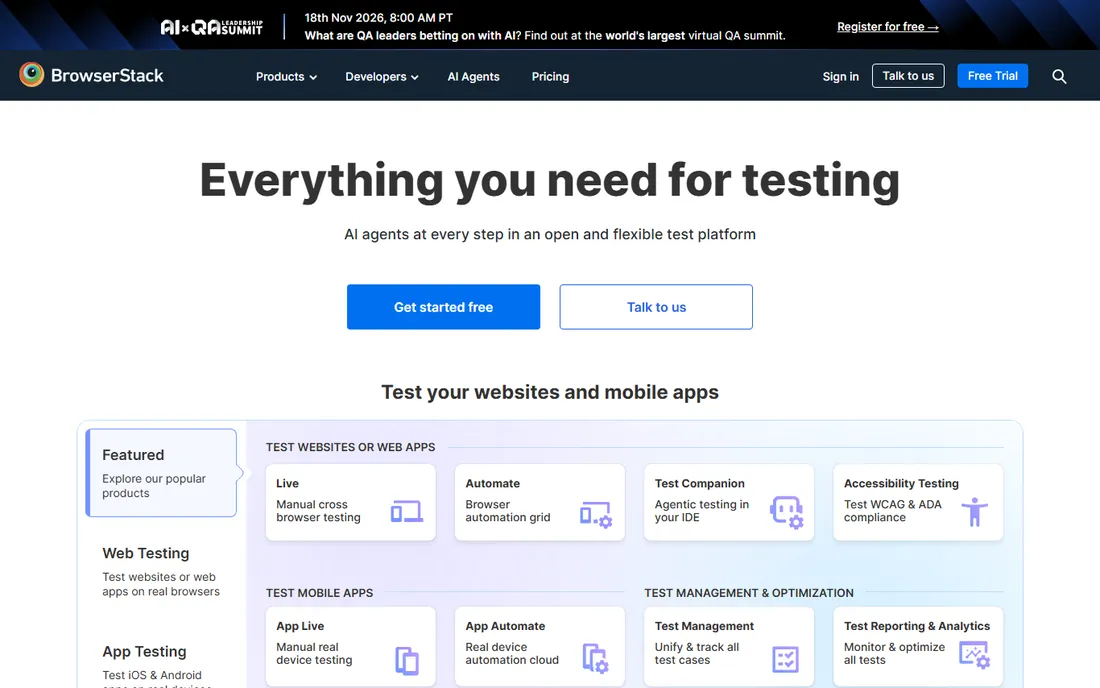
BrowserStack provides the infrastructure that makes web and mobile testing possible at scale: thousands of real browsers and devices in the cloud, available on demand. Manual testers get instant access to the device matrix; automation teams run Selenium, Cypress, Playwright and Appium suites in parallel without maintaining a device lab.
Pricing scales with parallel test sessions, which is where the bills grow for heavy automation users. BrowserStack does not write your tests; it runs them. Paired with a solid automation framework and a test management tool from the top of this list, it completes the execution side of a QA stack.
What we like- Huge real device and browser inventory
- Reliable infrastructure
- Strong automation support
Watch out for- Costs scale with parallel sessions
- UI testing still needs your framework
Starting priceSee website
Free planFree trial
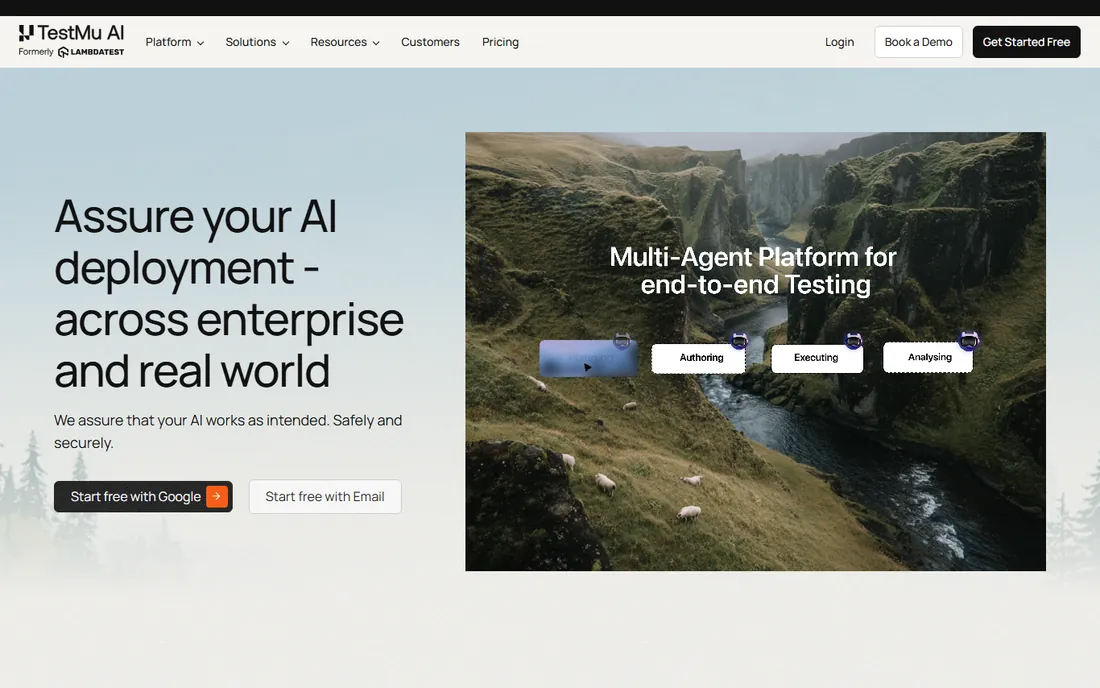
TestMu AI is the new name for LambdaTest, rebranded in January 2026 to reflect its shift toward AI-native testing. The foundation is the familiar one: cross-browser testing, a real device cloud and automation support with over a hundred integrations. What is new is the AI layer, including GenAI testing agents and autonomous test orchestration.
The rebrand means some community content and documentation still reference the old name, which can confuse evaluations. Underneath, it is the same company and platform with the same capabilities. Teams already on LambdaTest continue without migration. For new buyers, it is worth evaluating on the AI testing features rather than just the device cloud.
What we like- Full device and browser cloud plus AI agents
- Autonomous test orchestration
- Familiar LambdaTest foundation
Watch out for- Rebrand is recent, so documentation and community references are in transition
#7
Katalon
Best for: Teams starting test automation without deep coding
Visit katalon.com
Starting priceSee website
Free planYes
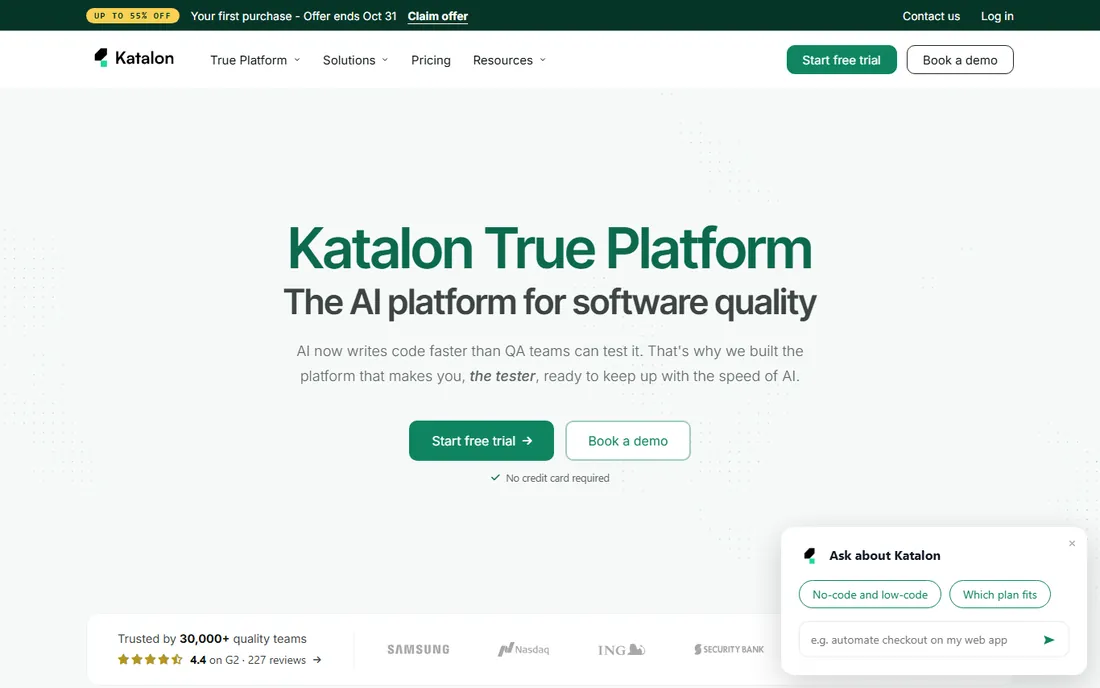
Katalon lowers the barrier to test automation. Its Studio lets testers build automated tests for web, API, mobile and desktop with a mix of record-and-playback, keyword-driven and scripted approaches, so teams without a bench of automation engineers can still automate. The free tier is genuinely usable, not a teaser.
Teams that outgrow the low-code approach can drop into Groovy scripting, though at that point a code-first framework may serve better. The paid tiers add test management, scheduling and reporting depth. For QA teams taking their first real step into automation, Katalon is the most accessible on-ramp.
What we like- Low-code automation for web, API, mobile and desktop
- Free tier
- Active community
Watch out for- Advanced customization needs scripting
- Enterprise features are paid
Starting priceSee website
Free planFree trial
TestComplete, also from SmartBear, is the veteran of automated UI testing. Its object recognition handles the UI changes that break brittle scripts, and it covers desktop applications, a category many newer tools ignore, alongside web and mobile. Keyword-driven tests let non-programmers contribute to automation.
The Windows focus and enterprise pricing put it in a specific lane: established QA organizations with desktop applications to test and budget for commercial tooling. It is not the choice for a startup's first automation. But in regulated industries and desktop-heavy enterprises, TestComplete's depth still wins evaluations.
What we like- Object recognition that survives UI changes
- Covers desktop apps well
- SmartBear ecosystem
Watch out for- Windows-centric
- Pricing is quote-based and enterprise-level
Starting priceSee website
Free planYes
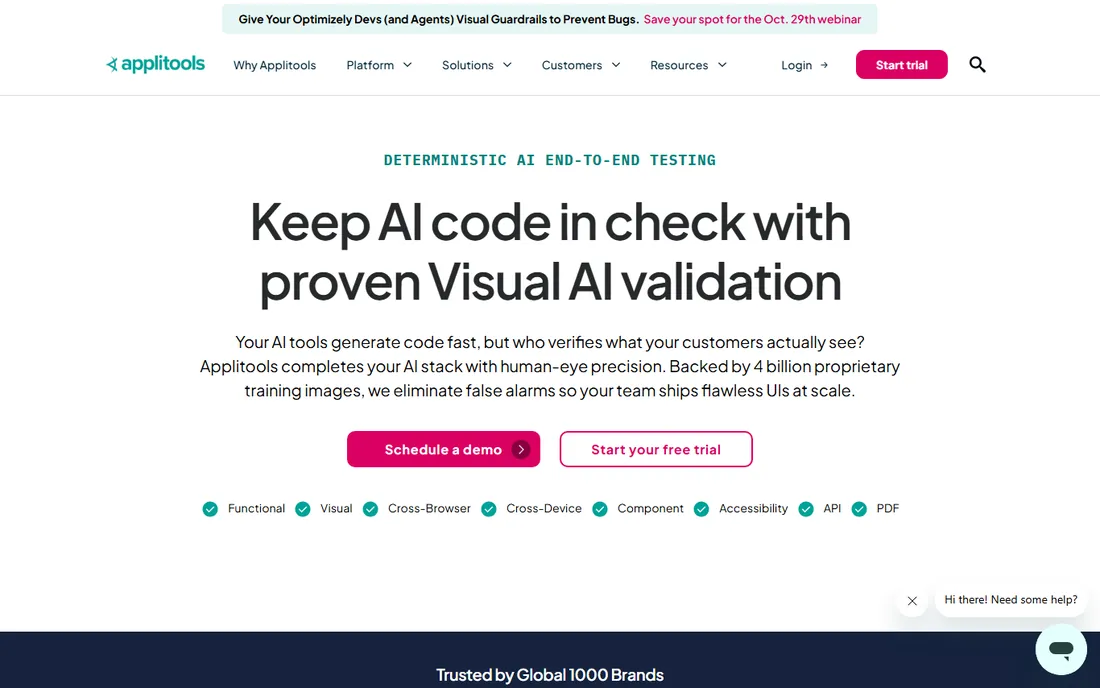
Applitools does one thing with unusual depth: it checks what your application looks like. Its Visual AI compares screenshots across browsers and devices, distinguishing meaningful visual bugs from irrelevant rendering differences that flood traditional pixel-comparison tools with false positives. It plugs into Selenium, Cypress, Playwright and other frameworks you already use.
It is a complement, not a replacement, for functional testing and test management. Pricing scales with the number of visual checkpoints, so heavy users should model costs. The free tier lets teams prove the value on one project first. For applications where the UI is the product, Applitools catches the bugs functional tests miss.
What we like- AI visual testing that ignores irrelevant changes
- Integrates with existing frameworks
- Free tier
Watch out for- Visual testing only, not a full QA suite
- Pricing scales with visual checkpoints
How we chose
We divided QA software the way buyers do: test management, execution infrastructure and automation. We verified each product is actively sold and supported in 2026, checked documentation and public reviews, and favored tools with real adoption. We excluded discontinued products and tools that could not be verified. Pricing changes frequently in this category, so we used See website wherever the vendor's current pricing could not be confirmed directly.
Building a QA stack that fits
Most teams need two or three tools from this list, not one. A common stack is a test management tool (TestRail, PractiTest, Zephyr Scale or Testmo), an execution cloud (BrowserStack or TestMu AI) and an automation approach (Katalon for low-code, TestComplete for desktop, Applitools for visual). Buying them as a stack, with integrations confirmed, beats buying the best individual tools that do not talk to each other.
Match the stack to your release cadence. Teams shipping daily need automation and fast feedback; test management can be lightweight. Teams shipping quarterly releases in regulated industries need traceability and audit trails; invest in the management layer. The wrong stack for your cadence costs more in friction than any license fee.
The AI testing question
AI is reshaping QA faster than most categories. TestMu AI's agentic approach and Applitools' visual AI represent the leading edge, but every vendor on this list now ships AI-assisted features: test generation, self-healing locators, smart reporting.
Treat AI claims the way you treat any vendor claim: test them on your application. Self-healing that works on a demo app may fail on your legacy UI. AI-generated tests still need human review for meaningful assertions. The direction is real, but the maturity varies enormously by product and use case. Pilot before you commit the strategy to it.
Frequently asked questions
What is QA software?
QA software covers tools for planning, executing and reporting software testing. Test management tools organize test cases and track results. Execution tools provide browsers, devices and infrastructure to run tests. Automation tools create and run tests without manual effort. Most teams combine several types.
How much does QA software cost?
Test management tools typically charge per user per month with published tiers and free trials. Device clouds charge by parallel sessions or minutes. Enterprise automation tools are often quote-based. A small team's stack can start under a few hundred dollars a month; enterprise setups run much higher.
Do we still need manual testing?
Yes. Automation handles regression and repetitive checks; manual and exploratory testing find the usability issues, edge cases and visual problems automation misses. The tools on this list support both, and the best QA strategies deliberately combine them.
What is the difference between TestRail and Zephyr?
TestRail is a standalone test management application that integrates with Jira and other tools. Zephyr Scale lives inside Jira as a native app. Choose TestRail if you want testing independent of your project tracker; choose Zephyr if your whole team lives in Jira and you want one system.
Can codeless automation replace automation engineers?
For straightforward web and API testing, low-code tools like Katalon let manual testers automate effectively. Complex scenarios, custom frameworks and CI integration still benefit from engineering skills. Most successful teams use low-code tools to expand who can automate, not to eliminate the role.
How do we choose between BrowserStack and TestMu AI?
Both offer large browser and device clouds. BrowserStack has the longer track record and the largest inventory. TestMu AI adds an AI-native testing layer on top of the same kind of infrastructure. Evaluate both on your actual device matrix needs, automation framework support and parallel session pricing.
Sources we checked (8)
- https://www.testrail.com
- https://www.practitest.com
- https://smartbear.com
- https://www.testmo.com
- https://www.browserstack.com
- https://www.testmuai.com
- https://www.katalon.com
- https://www.applitools.com
Is your product missing or out of date?
We review this list regularly. Vendors can request a listing, send updated pricing or ask about featured placement.

Shihab Mia · Founder, Rankite
Shihab has spent more than a decade helping SaaS and e-commerce brands grow through search. He writes Rankite's software buying guides from pricing pages, documentation and public user reviews. More about Shihab.