How we make this list: we compare pricing pages, product documentation and public user reviews. Rankite is independent; if a vendor ever pays for a featured spot, that listing is clearly labeled Partner.
Key takeaways
- Planview is the category-defining SPM platform for large enterprises that need to connect funding decisions to delivered outcomes.
- ServiceNow SPM makes the most sense if your organization already runs on ServiceNow, since portfolio data stays inside one platform.
- Planisware is the pick for R&D and product development portfolios, with dedicated products for innovation pipelines and capital planning.
- Meisterplan and Smartsheet serve the middle of the market: scenario-based resource planning and spreadsheet-familiar portfolio tracking without enterprise PPM overhead.
- Every serious SPM tool on this list is quote-based except Smartsheet, so budget for a sales cycle and a real implementation project.
Quick comparison
| Tool | Best for | Starting price | Free plan |
|---|
 Planview Planview | large enterprises connecting strategy, funding and outcomes | See website | No |
 ServiceNow SPM ServiceNow SPM | organizations already standardized on ServiceNow | See website | No |
 Broadcom Clarity Broadcom Clarity | large IT organizations with strict governance needs | See website | No |
 Planisware Planisware | R&D, product development and capital-intensive portfolios | See website | No |
 Triskell Triskell | mid-size PMOs moving off spreadsheets or legacy PPM | See website | No |
 OnePlan OnePlan | Microsoft-centric organizations that want a portfolio layer without migration | See website | Free trial |
 Meisterplan Meisterplan | resource-constrained PMOs that plan in scenarios | See website | No |
 Smartsheet Smartsheet | teams that want portfolio visibility in a familiar spreadsheet grid | From $9 per member/month (Pro, billed annually) | No |
Is your product missing or out of date?
We review this list regularly. Vendors can request a listing, send updated pricing or ask about featured placement.
The best strategic portfolio management software
#1
Planview
Best for: large enterprises connecting strategy, funding and outcomes
Visit planview.com
Starting priceSee website
Free planNo
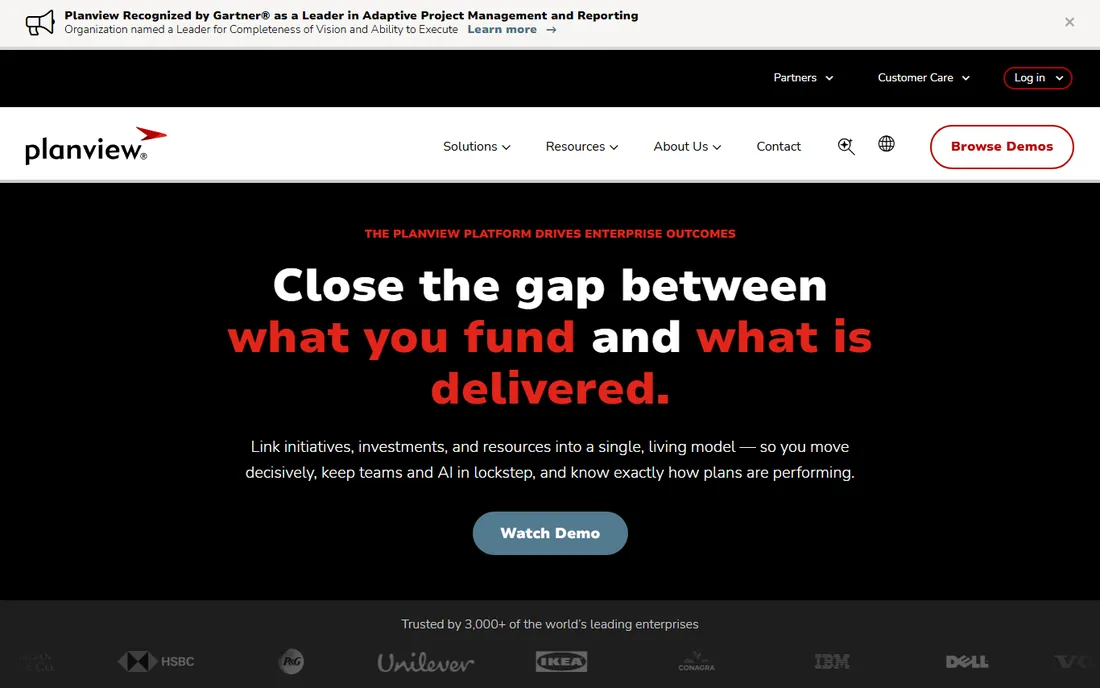
Most SPM tools started as something else: project trackers, IT service desks, spreadsheets with ambition. Planview started as portfolio management, and that focus shows in how the platform links initiatives, investments and resources into one living model. The company reports 3,000+ customers, 3.1 million users and adoption by 45 percent of the Fortune 100.
What separates Planview in practice is the investment-to-outcome thread. Leadership can see not just whether work is on track but whether the right work got funded and what it produced. The platform is methodology-neutral, sitting above whatever execution tools teams already use. The cost of that depth is real: pricing is quote-based, implementations are measured in months, and smaller organizations will find the platform heavier than they need.
What we like- Purpose-built for SPM rather than adapted from project tracking
- 3.1M users and 45% of the Fortune 100
- Methodology-neutral across agile and waterfall
Watch out for- Enterprise pricing with no public numbers
- Implementations are significant projects
Starting priceSee website
Free planNo
ServiceNow Strategic Portfolio Management makes one big bet: that your portfolio data should live where your IT operations already live. For organizations running ITSM, ITOM and HR workflows on ServiceNow, SPM adds investment planning, roadmapping, resource management and demand intake on the same platform with the same data model. That removes the integration tax that standalone PPM tools always carry.
The flip side is the obvious one. If your company is not on ServiceNow, buying SPM means buying into the platform, which is a much bigger decision than buying a portfolio tool. Pricing is quote-based and enterprise-grade. For ServiceNow-native enterprises, though, the fit is hard to beat: one vendor, one data model, one governance layer from idea intake to delivery.
What we like- Portfolio governance lives inside the ServiceNow platform
- Shared data model across IT and business
- Strong analyst recognition
Watch out for- Quote-based enterprise pricing
- Less compelling if you are not already a ServiceNow shop
#3
Broadcom Clarity
Best for: large IT organizations with strict governance needs
Visit broadcom.com
Starting priceSee website
Free planNo
Clarity is the veteran of this list, and in IT portfolio management that history is an asset. The platform handles the unglamorous core of enterprise PPM: demand intake, project financials, resource capacity, timesheets and stage-gate governance, with the audit trails regulated industries require. Organizations that have run Clarity for years tend to keep it because the cost data and resource history are irreplaceable.
New buyers should know what they are getting into. The interface shows its age, configuration typically needs specialists, and pricing is quote-based through Broadcom's enterprise sales. Clarity is not the tool you pick for speed or beauty. It is the tool you pick when the CIO needs defensible numbers on a multi-hundred-million IT portfolio and cannot afford surprises.
What we like- Deep financial and resource management for IT portfolios
- Strong governance and compliance controls
- Long enterprise track record
Watch out for- Quote-based pricing
- Interface and configuration feel dated next to newer rivals
#4
Planisware
Best for: R&D, product development and capital-intensive portfolios
Visit planisware.com
Starting priceSee website
Free planNo
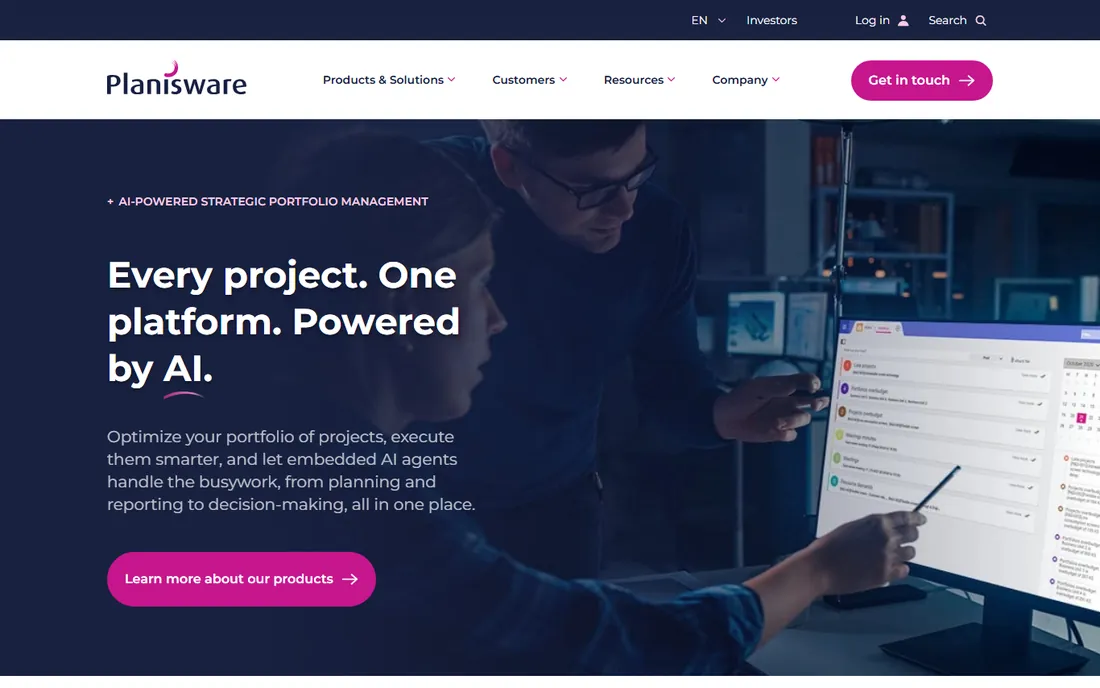
Planisware approaches SPM as a family of products rather than one monolith. Orchestra is the turnkey PPM solution for PMOs, Horizon covers IT strategic portfolio management, Nova targets product development portfolios, Valoris handles CAPEX and asset investment planning, and Planisware Enterprise serves business transformation at scale. That structure lets an R&D organization buy the product shaped for innovation pipelines instead of adapting a generic PPM tool.
The company's strength is portfolio optimization with real financial depth: scenario modeling, resource allocation and budget forecasting built for engineering and manufacturing contexts. Pricing is quote-based and the multi-product lineup can confuse first-time buyers, so get a guided walkthrough of which product matches your portfolio type before engaging deeply.
What we like- Dedicated products for product dev, IT SPM, PMOs and CAPEX planning
- Strong portfolio optimization and financials
- Proven in engineering-driven companies
Watch out for- Quote-based pricing
- Product lineup takes effort to navigate
Starting priceSee website
Free planNo
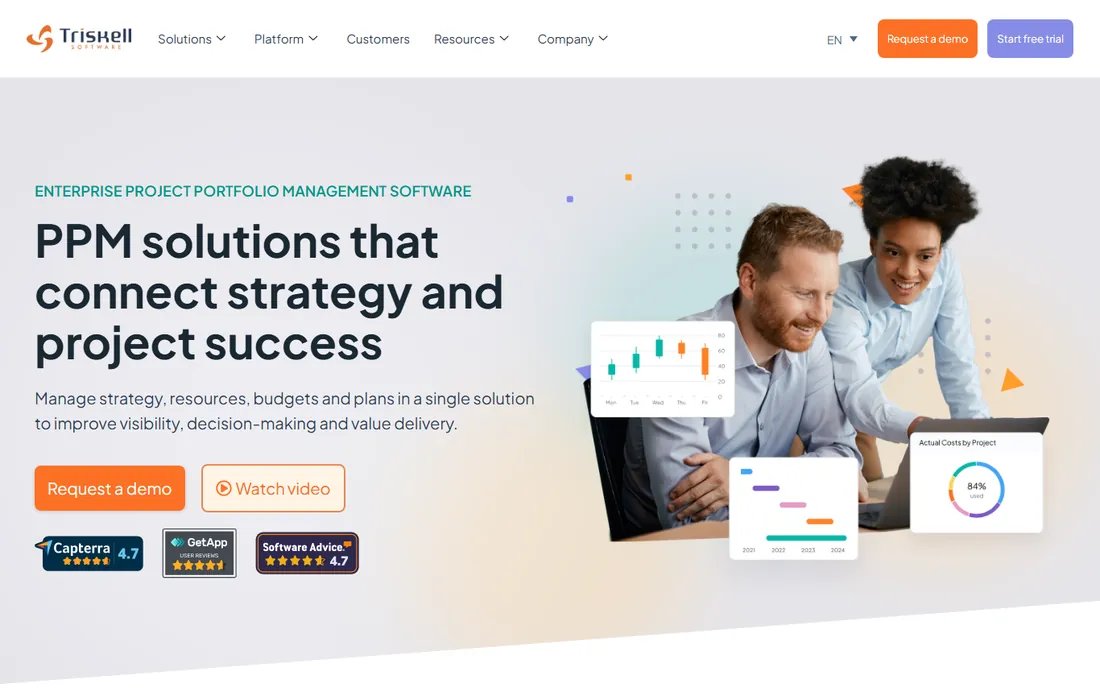
Triskell targets the exact buyer most enterprise SPM tools ignore: the mid-size PMO that has outgrown spreadsheets but cannot justify a Planview-scale investment. The platform covers strategy, demand intake, project scoring, resource management and budgets in one system, with what-if scenario modeling that lets planners test funding shifts before committing.
Its multi-methodology support matters in practice. Teams can run waterfall stage-gates, agile delivery or hybrids side by side while leadership keeps one portfolio view. As a smaller vendor, Triskell lacks the analyst spotlight of the giants, and pricing requires a demo and quote. For organizations that want real portfolio governance without enterprise PPM ceremony, it deserves a shortlist spot.
What we like- What-if scenario planning built in
- Supports agile, waterfall and hybrid in one platform
- No-code configuration for PMO teams
Watch out for- Smaller vendor with less brand recognition
- Quote-based pricing
#6
OnePlan
Best for: Microsoft-centric organizations that want a portfolio layer without migration
Visit oneplan.ai
Starting priceSee website
Free planFree trial
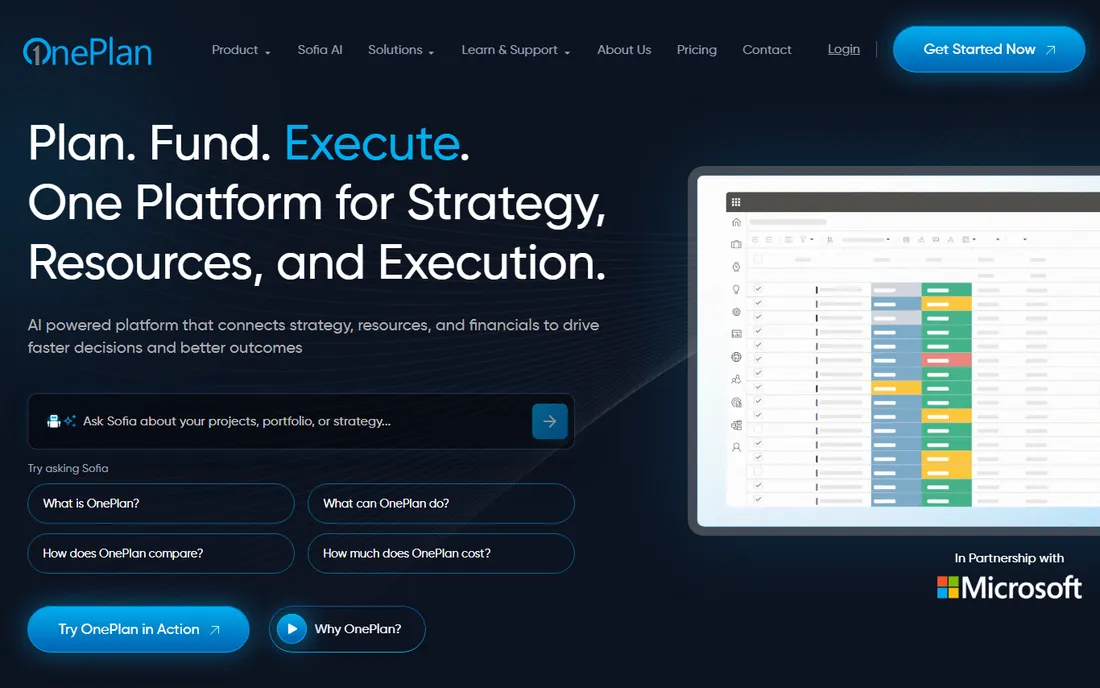
OnePlan's core promise is the portfolio layer without the migration. Teams keep working in Azure DevOps, Jira, Microsoft Project or Planner, and OnePlan pulls execution data up into strategy, resource and financial views. For organizations standardized on Microsoft 365, that means portfolio visibility without asking every team to adopt a second system.
The platform includes Sofia AI for forecasting outcomes, surfacing risks and rebalancing portfolios, plus financial governance tied to program performance. The site invites visitors to sign up for free, though full pricing is not published. The honest limitation is positioning: OnePlan is built for the Microsoft world, and organizations outside it will find less reason to choose it over neutral alternatives.
What we like- Deep integration with Microsoft Project, Planner, Teams and Azure DevOps
- AI-assisted forecasting and rebalancing
- Free signup to start
Watch out for- Public pricing not published
- Microsoft-heavy positioning limits appeal outside that ecosystem
Starting priceSee website
Free planNo
Meisterplan does one thing and does it well: portfolio-level resource management through interactive scenario planning. Planners drag projects between scenarios and immediately see capacity conflicts, overloads and financial impact. The interface is deliberately lean, which is why teams that tried full SPM suites and drowned in configuration often land here.
The company is self-financed, reports more than 400 customers, and was named a market leader in Project Portfolio Resource Management by Research in Action's 2025 vendor matrix. It will not replace Planview for enterprise financial governance, and pricing is quote-based. But for the common real-world problem, too many projects and not enough people, Meisterplan's focused approach beats a bigger tool your team never fully adopts.
What we like- Scenario modeling is the core, not an add-on
- Lean interface without PPM bloat
- Self-financed vendor with 400+ customers
Watch out for- Quote-based pricing
- Narrower feature scope than full SPM suites
#8
Smartsheet
Best for: teams that want portfolio visibility in a familiar spreadsheet grid
Visit smartsheet.com
Starting priceFrom $9 per member/month (Pro, billed annually)
Free planNo
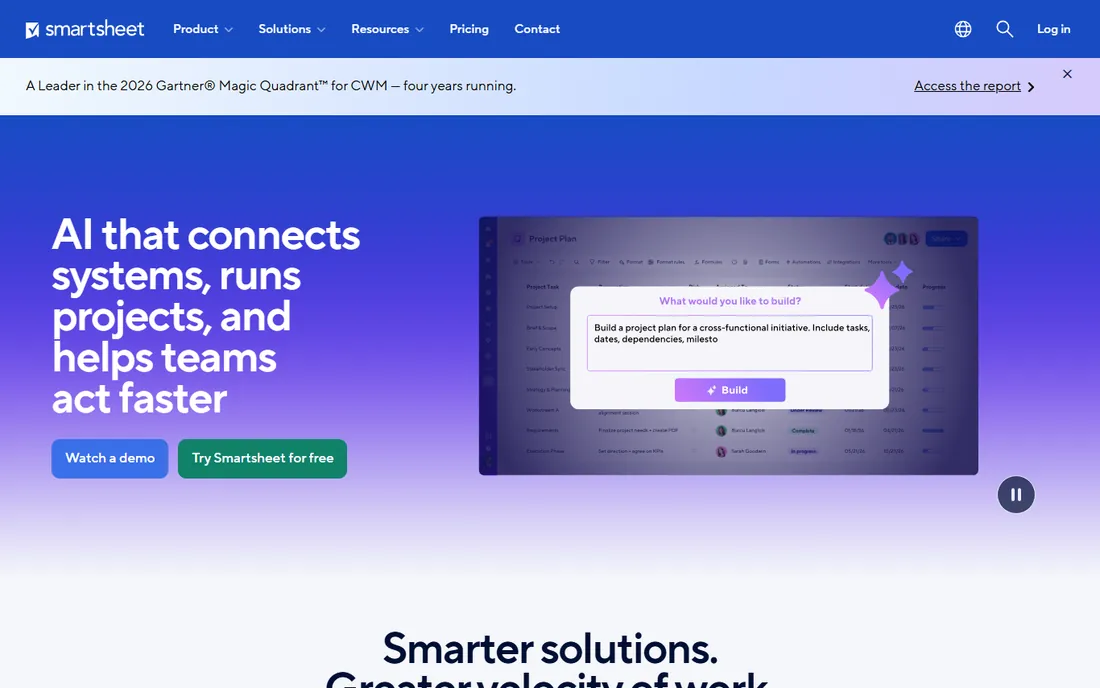
Smartsheet is the accessible entry to portfolio management. The Pro plan is $9 per member per month billed annually ($12 monthly), Business is $19 ($24 monthly), and there is a 30-day free trial with no credit card. The spreadsheet-style grid means finance-literate teams adopt it with almost no training, and Gantt, card and calendar views layer on top.
For SPM specifically, Smartsheet works when the need is visibility and coordination rather than heavy financial governance. Cross-sheet dashboards roll up portfolio KPIs, and automations handle intake and approvals. True portfolio features like baselines and resource management sit in the Business plan or the Advanced Work Management tier. It is not a Planview replacement, but for organizations that need portfolio tracking this quarter rather than next year, the low friction is the point.
What we like- Published pricing starting at $9 per member per month
- Familiar grid interface with Gantt, card and dashboard views
- 30-day free trial
Watch out for- No free tier
- Portfolio depth (baselines, resource management) requires Business plan or add-ons
SPM, PPM and EPM: what is the difference?
Vendors use these terms loosely, so here is the practical distinction. Project portfolio management (PPM) answers whether the work is on track: schedules, resources, budgets per project. Strategic portfolio management (SPM) answers whether the right work is funded: how initiatives connect to strategy, where capital flows, and what each investment delivered. Enterprise performance management (EPM) is the finance view: planning, budgeting and forecasting across the business.
In practice the lines blur. Planview and Planisware span SPM and PPM. ServiceNow SPM leans on the IT operations side. Smartsheet covers the PPM end with light SPM. When evaluating, ignore the label and check the specific questions you need answered: can the tool show every initiative's link to a strategic objective, model a funding shift before you commit, and trace an outcome back to what was funded? If it cannot do all three, it is not really doing SPM.
Enterprise buyers (1,000+ employees, multiple business units) should shortlist Planview, ServiceNow SPM, Broadcom Clarity and Planisware. Your decision will turn on ecosystem fit and financial depth, not feature checklists, since all four cover the core. Plan for a three to nine month implementation and a dedicated internal owner.
Mid-market buyers (100 to 1,000 employees) get the best value from Triskell, OnePlan and Meisterplan. These tools deliver real governance, scenario planning and resource visibility without the enterprise implementation burden. Define your must-have scenarios before demos: intake and scoring, capacity planning, or financial tracking, and weight the demo toward the one that matters most.
Smaller teams that need portfolio visibility rather than portfolio governance should start with Smartsheet. At $9 per member per month with a 30-day trial, you can build a working portfolio view in weeks. Be honest about whether you need SPM at all: if the real problem is project tracking, a lighter tool saves everyone six months.
How we chose
We based this guide on vendor pricing pages, product documentation, public review sites (G2, Capterra, Reddit) and analyst evaluations, not on vendor briefings or sponsored placements. Every tool had to be a live, purchasable product in 2026 with a genuine strategic portfolio management offering: strategy alignment, investment planning, resource capacity and scenario modeling. We checked each vendor's homepage directly for the URL listed, verified pricing against the vendor's own pricing page where published, and wrote "See website" wherever the vendor keeps pricing behind a sales conversation. Company size fit mattered as much as features, since the wrong-sized SPM tool is the most common cause of failed rollouts.
Frequently asked questions
What is strategic portfolio management software?
It is software that connects an organization's strategic objectives to the initiatives, investments and resources meant to deliver them. Unlike project management tools that track individual projects, SPM tools answer portfolio-level questions: are we funding the right work, do we have capacity to deliver it, and what did each investment actually produce.
How much does strategic portfolio management software cost?
Most enterprise SPM tools (Planview, ServiceNow, Clarity, Planisware) are quote-based, with annual contracts typically running into five or six figures depending on users and modules. Mid-market options are also quote-based but land lower. Smartsheet is the exception with public pricing from $9 per member per month. Always get at least two itemized quotes and ask what implementation services cost separately.
What is the difference between SPM and project management software?
Project management software tracks work inside a project: tasks, timelines and assignments. SPM sits above it, linking multiple projects and programs to strategy, funding and outcomes. Many organizations run both: teams execute in tools like Jira or Microsoft Project while leadership manages the portfolio in an SPM platform. OnePlan is built explicitly for this split.
How long does SPM implementation take?
Enterprise SPM rollouts typically take three to nine months, including data migration, configuration, integration with execution tools and training. Mid-market tools like Triskell or Meisterplan can be productive in weeks if the portfolio data is clean. The usual delay is not the software; it is agreeing internally on scoring criteria, governance cadences and who owns the portfolio data.
Can small companies use strategic portfolio management software?
They can, but most should not buy enterprise SPM. A 50-person company rarely needs investment governance across business units. Smartsheet at $9 per member per month or even a well-structured spreadsheet covers the real need: one view of all initiatives, owners and status. Buy SPM when funding decisions get political, not before.
Sources we checked (12)
- https://www.planview.com
- https://www.servicenow.com/
- https://www.broadcom.com
- https://planisware.com/
- https://triskellsoftware.com/
- https://oneplan.ai/
- https://meisterplan.com/
- https://www.smartsheet.com
- https://www.ganttile.com/alternatives/smartsheet-alternatives
- https://www.instagantt.com/compare/smartsheet
- https://www.fahimai.com/smartsheet
- https://www.techrepublic.com/article/microsoft-project-vs-smartsheet/
Is your product missing or out of date?
We review this list regularly. Vendors can request a listing, send updated pricing or ask about featured placement.

Shihab Mia · Founder, Rankite
Shihab has spent more than a decade helping SaaS and e-commerce brands grow through search. He writes Rankite's software buying guides from pricing pages, documentation and public user reviews. More about Shihab.