How we make this list: we compare pricing pages, product documentation and public user reviews. Rankite is independent; if a vendor ever pays for a featured spot, that listing is clearly labeled Partner.
Key takeaways
- Catapult, STATSports and WHOOP lead the wearable side, tracking distance, speed, load and recovery for every player on the roster.
- Hudl and its Wyscout platform cover video analysis and scouting, giving coaches searchable match footage tied to event data.
- Stats Perform, Sportradar and Genius Sports work at the data-feed level, supplying optical tracking and official match data to teams, media and leagues.
- Kitman Labs sits in the middle, pulling wearable, medical and video data into one intelligence platform for performance and medical staff.
- Almost every vendor in this category sells through direct sales with custom quotes, so expect demos and trials rather than public pricing pages.
Coaches once judged players by eye and by the numbers on a scoreboard. That era is over. Training grounds now run on GPS vests, optical tracking cameras, heart rate data and video tagged to every touch of the ball. The problem is no longer a lack of information. It is deciding which system gives you the right numbers, in a format your staff will actually use, without drowning the medical room in dashboards nobody opens. This guide compares nine established platforms across the three main jobs in player data: tracking what bodies do, analyzing what happens on video, and turning official data feeds into decisions. Some sell to elite clubs only. Others scale down to colleges, academies and serious amateur programs. Read on to see which one matches how your team works.
Quick comparison
| Tool | Best for | Starting price | Free plan |
|---|
 Hudl Hudl | Teams that want video capture, analysis, scouting and recruiting in one platform | See website | Free trial |
 Catapult Catapult | Elite teams that need wearable athlete monitoring across many sports | See website | Free trial |
 STATSports STATSports | Teams that want highly accurate GPS tracking with sport-specific software | See website | Free trial |
 Genius Sports Genius Sports | Leagues, teams and media that need official tracking data and analytics | See website | No |
 Stats Perform Stats Perform | Organizations that need Opta data feeds and AI-powered sports intelligence | See website | No |
 Wyscout Wyscout | Football clubs and agents that live on scouting video and player databases | See website | Free trial |
 Sportradar Sportradar | Federations, media and betting operators that need large-scale sports data | See website | No |
 WHOOP WHOOP | Athletes and teams focused on recovery, sleep and daily strain | See website | No |
 Kitman Labs Kitman Labs | Clubs that want all athlete data unified in one intelligence platform | See website | No |
Is your product missing or out of date?
We review this list regularly. Vendors can request a listing, send updated pricing or ask about featured placement.
#1
Hudl
Best for: Teams that want video capture, analysis, scouting and recruiting in one platform
Visit hudl.com
Starting priceSee website
Free planFree trial
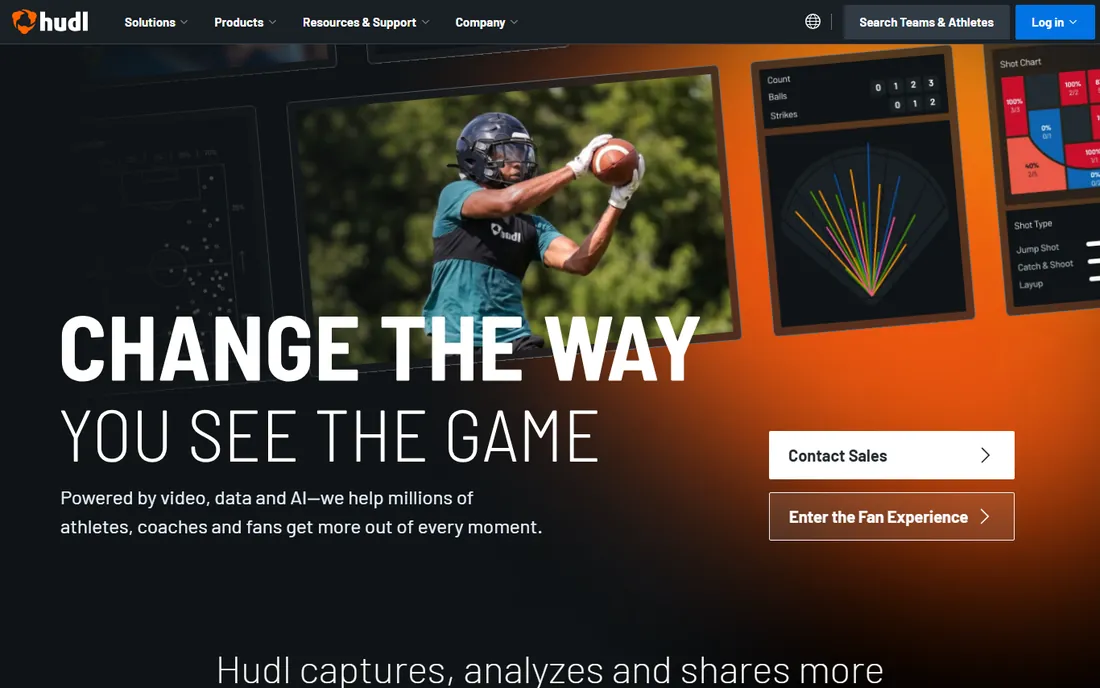
Hudl started with video and grew into the largest sports technology platform in the business. Its core job is simple to describe: capture games, break the footage down, and give coaches tools to review, tag and share clips with players. The company now adds AI-powered cameras that record and livestream without a camera operator, athlete-level tracking for performance and recovery, and a scouting and recruiting library that connects athletes with programs. For a coaching staff, that means one login can cover film review on Monday, opponent scouting on Wednesday and recruiting on Friday.
The scale is the selling point. Because Hudl works with programs at every level worldwide, its video exchange and recruiting database have a network effect that smaller tools cannot copy. A high school coach and a professional analyst use the same underlying platform. The trade-off is that pricing is handled through the sales team, so you will need a demo and a quote rather than a quick online checkout. Teams that want a single vendor for capture, analysis and recruiting tend to find that acceptable.
What we like- Covers every level from youth to professional
- AI-powered cameras record games automatically
- Deep recruiting network
Watch out for- Pricing is quote-based and opaque
- The product suite is broad enough to feel complex at first
#2
Catapult
Best for: Elite teams that need wearable athlete monitoring across many sports
Visit catapult.com
Starting priceSee website
Free planFree trial
Catapult is the name most performance directors reach for when the conversation turns to athlete monitoring. The company builds wearable devices and the software that turns their output into training decisions: total distance, sprint counts, top speed, player load and the workload ratios that medical staffs watch to manage injury risk. Its platform also covers recruiting and scouting plus video analysis, so a club can pair the physical data with what the video shows.
The company reports working with more than 5,500 elite teams across more than 40 sports and over 120 countries. That breadth matters because the metrics are sport-specific, and Catapult has had years to tune them for football, rugby, American football, cricket and the rest. For smaller programs, the cost of vests and a team-wide license can be a stretch, which is why the company also offers simpler tiers. If your staff includes a sports scientist who will actually use the data daily, Catapult is usually the first demo to book.
What we like- Purpose-built athlete monitoring hardware and software
- Covers more than 40 sports
- Trusted by thousands of elite teams
Watch out for- Enterprise-oriented pricing
- Hardware investment required on top of the software
#3
STATSports
Best for: Teams that want highly accurate GPS tracking with sport-specific software
Visit statsports.com
Starting priceSee website
Free planFree trial
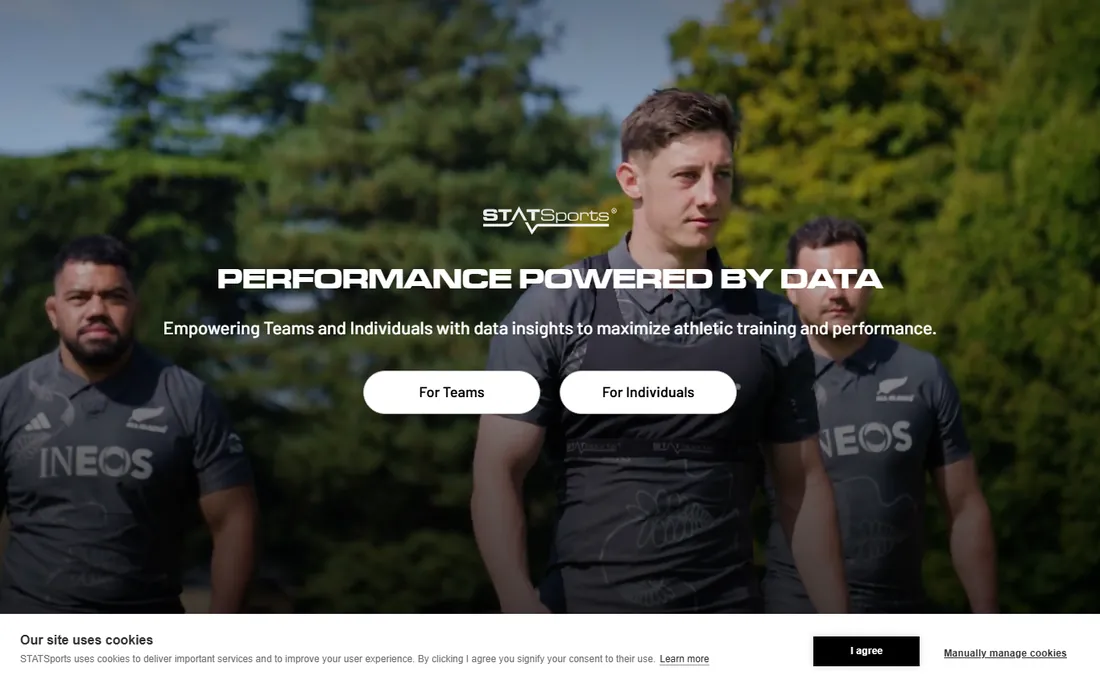
STATSports grew out of Ireland into one of the two dominant names in GPS player tracking. Its Apex system pairs tracking pods with the Sonra software suite, and the company puts unusual emphasis on measurement accuracy, which is exactly what sports scientists argue about when they compare vendors. The software ships with sport-specific setups for football, basketball, American football, rugby and athletics rather than one generic dashboard.
For a performance department, the practical difference is workflow. STATSports designed its interface alongside strength coaches and medics, so the reports map to how training weeks are actually planned: load targets, return-to-play progressions and readiness flags. Individual athletes can also buy into the system, which makes it a fit for academies and development programs as well as first teams. Like Catapult, it sells through its commercial team, so expect a demo and a tailored quote.
What we like- GPS accuracy is a stated design priority
- Sport-specific software for major team sports
- Works for teams and individual athletes
Watch out for- Quote-based pricing
- The ecosystem is narrower than full-suite platforms
#4
Genius Sports
Best for: Leagues, teams and media that need official tracking data and analytics
Visit geniussports.com
Starting priceSee website
Free planNo
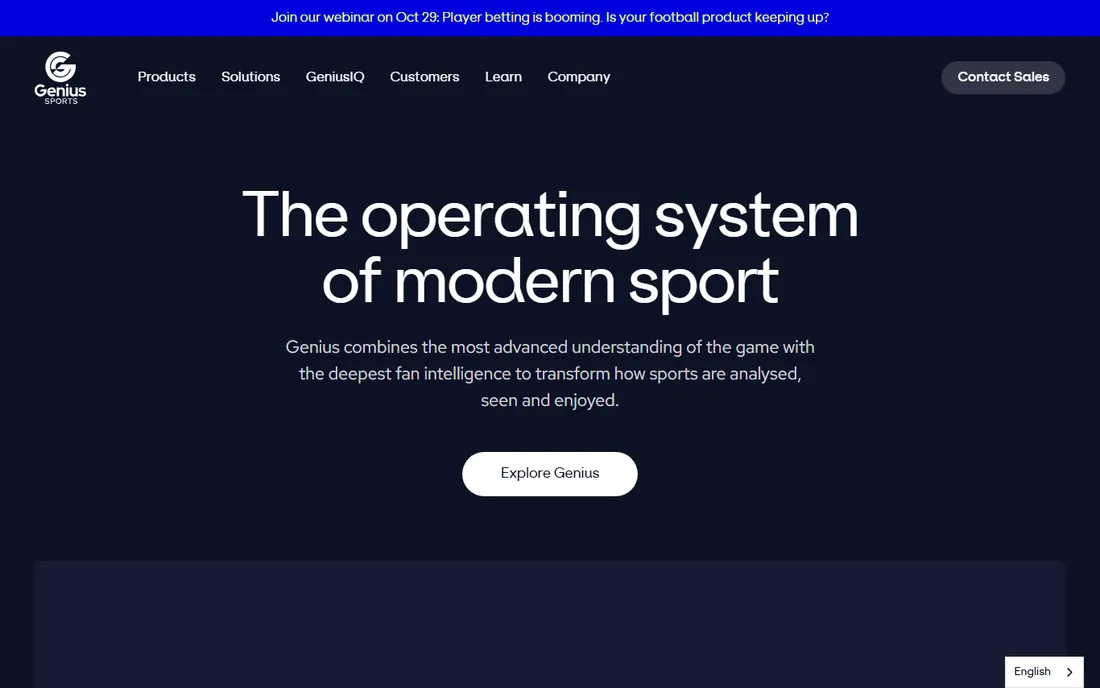
Genius Sports is the official data and technology partner for leagues including the NFL and the English Premier League. Its relevance to player data comes largely through Second Spectrum, the optical tracking company it acquired, whose camera-based systems track every player and the ball without wearables. That technology now powers coaching analytics products, broadcast augmentations and the data feeds that media companies build graphics on.
For a team, the appeal is data without devices: no vests to charge, no pods to assign, just cameras in the stadium producing positional data for every match. For a league or federation, Genius offers the full stack from data capture to integrity services to fan-facing products. This is firmly enterprise territory, sold through direct deals rather than self-serve plans. Smaller clubs will find the wearable vendors more practical, but anyone operating at league level should have Genius on the shortlist.
What we like- Official data partnerships with major leagues
- Second Spectrum optical tracking technology
- Covers data, video and fan engagement
Watch out for- Enterprise and league-level focus
- Not built for small clubs to buy off the shelf
#5
Stats Perform
Best for: Organizations that need Opta data feeds and AI-powered sports intelligence
Visit statsperform.com
Starting priceSee website
Free planNo
Stats Perform owns Opta, the data brand that underpins broadcast graphics, editorial coverage and betting products across world football and beyond. The company collects live data from hundreds of thousands of matches a year and layers AI models on top for predictions, simulations and automated storytelling. Its customers are mostly media companies, broadcasters, sportsbooks, leagues and large teams rather than individual clubs buying athlete monitoring.
Why include it in a player-data guide? Because for analysts, Opta event data is the common language of performance analysis. If your recruitment department benchmarks players across leagues, or your media team produces data-led content, you are probably already consuming Stats Perform data indirectly. Buying it directly makes sense when you need API access, historical depth or the AI products built on top. Pricing is custom and aimed at organizations, not consumers.
What we like- Opta is the most recognized brand in sports data
- Massive historical archive
- AI models trained on proprietary data
Watch out for- Priced for media, betting and enterprise clients
- Overkill if you only need basic team stats
#6
Wyscout
Best for: Football clubs and agents that live on scouting video and player databases
Visit wyscout.com
Starting priceSee website
Free planFree trial
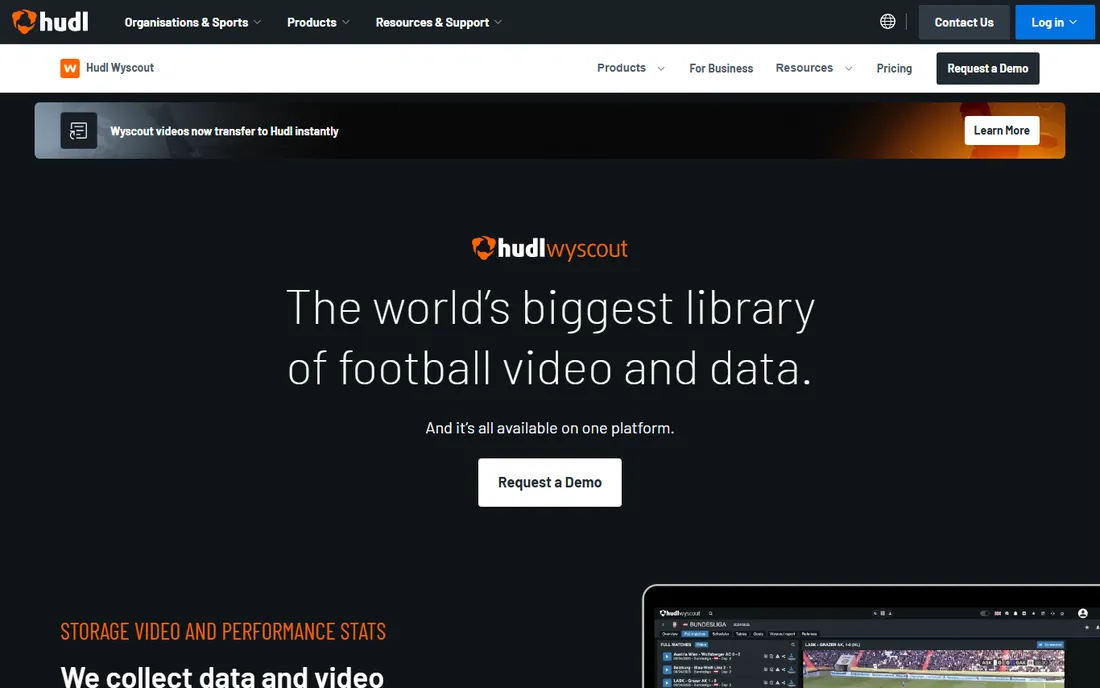
Wyscout is the scouting platform that changed how football recruitment works. Instead of flying to watch a player, a scout can pull up hundreds of matches, filter by position, age, contract status and dozens of performance metrics, and watch video clips of every relevant action. The platform covers more than a thousand competitions worldwide, and its search and reporting tools are built specifically for the way recruitment departments shortlist targets.
Hudl acquired Wyscout in 2019, and the integration now lets analysts send matches, playlists and clips between Wyscout and Hudl with structure preserved. That matters for clubs already on Hudl, since scouting and first-team analysis can share one workflow. The limitation is scope: this is a football product, full stop. Clubs in other sports should look at Hudl itself or the data-feed vendors instead.
What we like- Huge library of matches and player profiles
- Purpose-built scouting workflows
- Now integrated with Hudl
Watch out for- Football-only
- Pricing is quote-based
#7
Sportradar
Best for: Federations, media and betting operators that need large-scale sports data
Visit sportradar.com
Starting priceSee website
Free planNo
Sportradar is a sports technology company built around data at massive scale: live data collection, odds services, streaming distribution, integrity monitoring and digital products for fans. It works with organizations such as the NBA, MLB, UEFA and FIFA, and its data feeds power everything from broadcast graphics to betting markets. For player data specifically, its value is in official, verified event and tracking data delivered as a feed.
This is not the tool a coach opens on the training ground. It is the infrastructure behind the data that analysts, media companies and betting operators consume. Teams and leagues evaluating official data partnerships will compare Sportradar against Genius Sports and Stats Perform on coverage, latency and commercial terms. If your use case is coaching rather than data licensing, the wearable and video vendors above are the better fit.
What we like- Covers more than a million events a year
- Trusted by major leagues
- Integrity services included
Watch out for- Enterprise focus
- Not a coaching or athlete-monitoring tool
#8
WHOOP
Best for: Athletes and teams focused on recovery, sleep and daily strain
Visit whoop.com
Starting priceSee website
Free planNo
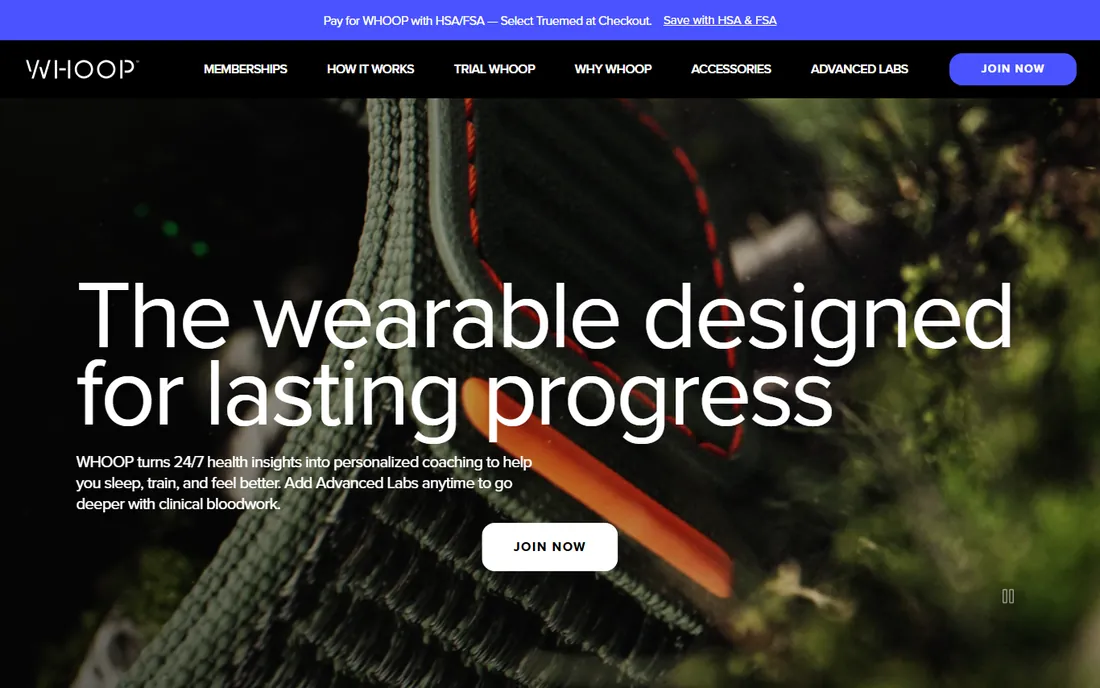
WHOOP takes a different angle from the GPS vest companies: instead of measuring what an athlete does in training, it measures how the body responds. The wrist-worn device tracks sleep, resting heart rate, heart rate variability and daily strain around the clock, then turns those signals into recovery scores and coaching recommendations. Professional teams use it to spot athletes who need lighter sessions before the GPS data shows a problem.
The membership model bundles the hardware with the app, and the company has partnerships across golf, motorsport and football, including work with well-known clubs and athletes. For a performance department, WHOOP works best as a complement to a GPS system rather than a replacement: one tells you the work done, the other tells you the cost to the body. Teams can manage athletes as a group, while individual players can keep their own memberships.
What we like- 24/7 recovery, strain and sleep tracking
- Screen-free wearable athletes actually wear
- Strong adoption in pro sports
Watch out for- Subscription model
- Individual-focused rather than a team analytics suite
#9
Kitman Labs
Best for: Clubs that want all athlete data unified in one intelligence platform
Visit kitmanlabs.com
Starting priceSee website
Free planNo
Kitman Labs solves the problem every performance department complains about: data scattered across the GPS vendor, the medical records system, the video platform and a pile of spreadsheets. Its Intelligence Platform pulls those sources together so coaches, medics and analysts look at the same athlete profile. The company emphasizes injury-risk modeling and squad management, areas where joined-up data actually changes decisions.
The client list spans the NFL, NBA, Premier League, MLS and NCAA programs, and the company has expanded into league-wide deployments. Because the value depends on integrating your existing systems, buying Kitman Labs is a project, not a purchase: expect onboarding work and staff training. For clubs already collecting data from several vendors and struggling to use it, that project is usually worth it.
What we like- Aggregates wearable, medical, video and performance data
- Used by major leagues and clubs
- Strong injury-risk analytics
Watch out for- Enterprise pricing
- Implementation takes real staff time
How to choose sports analytics software for player data
Start with the job, not the vendor. If the question is how hard players are working, you need wearables, which means Catapult, STATSports or WHOOP depending on whether you care about external load, accuracy of GPS metrics or recovery. If the question is what happened on the pitch, you need video and event data, which points to Hudl, Wyscout or the optical tracking from Genius Sports. If the question is how a player compares to the market, you need database products like Wyscout or data feeds from Stats Perform and Sportradar.
Next, be honest about staff capacity. The best platform in this category is the one your people open every day. A GPS system without a sports scientist becomes an expensive drawer of vests. A unified platform like Kitman Labs without buy-in from the medical team becomes another dashboard. Ask vendors for a trial with your own squad data, and judge them on whether the coaching staff understands the reports without a translator.
Finally, check the plumbing. Ask how the system ingests data you already collect, what it exports, and whether it integrates with your video platform and medical records. Wearable vendors differ on accuracy claims, so ask for validation studies rather than marketing slides. Data-feed vendors differ on latency and coverage, so test the leagues you actually care about. And get pricing in writing early, because almost everything here is quote-based and the range between tiers is wide.
What changes when player data actually gets used
Buying the software is the easy part. The clubs that get value from player data share a few habits worth copying. First, they pick a small number of metrics that drive decisions and ignore the rest. A medical team watching acute-to-chronic workload ratios and a coach watching high-speed running distance will get more from the system than a department tracking forty variables. Second, they put one person in charge of data quality. Vests assigned to the wrong player or a camera left uncalibrated will quietly corrupt months of records.
Third, they close the loop with players. Athletes who see their own recovery scores and understand why Tuesday is a light day buy into the system. Athletes who wear a device because they were told to will forget to charge it. WHOOP's individual model works partly because the athlete owns the experience. Team systems need the same psychology: share the insights, not just the demands. Get these habits right and whichever vendor you choose will pay for itself in fewer soft-tissue injuries and better-informed selection calls.
We started by mapping the player-data category into its real jobs: wearable tracking, video analysis, scouting databases, official data feeds and unified intelligence platforms. For each job we looked for vendors with an established customer base among professional or collegiate teams, a public product description detailed enough to evaluate, and a homepage we could verify directly. We read vendor homepages, pricing and product pages, company profiles and press releases about partnerships and acquisitions, and we checked corporate status notes such as Hudl's acquisition of Wyscout and Genius Sports' acquisition of Second Spectrum so the names and URLs reflect the current reality. We did not run hands-on tests with team hardware, and we did not invent pricing, customer counts or performance claims. Where pricing was not published on the vendor's own site, we wrote See website.
Frequently asked questions
What is the best sports analytics tool for player tracking data?
For GPS-based tracking, Catapult and STATSports are the two established choices among professional teams, with STATSports emphasizing measurement accuracy and Catapult covering the widest range of sports. For camera-based tracking without wearables, Genius Sports' Second Spectrum technology is the leading option. The right pick depends on your sport, squad size and whether your staff will use the data daily.
Do these tools work for amateur or youth teams?
Some do. Hudl was built to serve every level from youth to professional, and WHOOP sells individual memberships any athlete can buy. The enterprise wearable systems and data feeds are priced for clubs and organizations, but several vendors offer academy or small-team tiers, so it is worth asking for a quote rather than assuming you are priced out.
How much does sports analytics software cost?
Almost every vendor in this category sells through direct sales with custom quotes, so public pricing is rare. Expect the cost to scale with squad size, sports covered and data depth. Individual products like WHOOP use a consumer subscription model, while team platforms typically combine software licenses with hardware or onboarding services.
Can player data really reduce injuries?
It helps when it is used well. Workload monitoring lets medical staffs spot dangerous spikes in training load, and recovery tracking flags athletes who need rest before problems show up. The evidence supports data-informed load management as one part of injury prevention, alongside coaching, medical care and plain common sense. No software prevents injuries on its own.
What is the difference between Catapult and STATSports?
Both sell GPS-based athlete monitoring to professional teams. Catapult offers the broader platform, covering more than 40 sports with additional products for video analysis and recruiting. STATSports focuses more narrowly on tracking accuracy and sport-specific software, and also serves individual athletes. Teams often trial both with their own squad before deciding.
Should our club buy wearables or use optical tracking?
Wearables give you detailed physical data wherever you train, including sessions without cameras, but require managing devices and charging. Optical tracking captures every player automatically during matches but only where cameras are installed. Many professional clubs use both: wearables for training load and optical tracking for match data.
Sources we checked (17)
- https://hudl.com/
- https://catapult.com/
- https://statsports.com/
- https://geniussports.com
- https://www.statsperform.com/
- https://wyscout.com/
- https://sportradar.com/
- https://whoop.com
- https://kitmanlabs.com/
- https://en.wikipedia.org/wiki/Hudl
- https://www.zoominfo.com/c/statsports-group-ltd/370029164
- https://digitalproducer.com/new-official-premier-league-insights-feed-powered-by-stats-perform-second-spectrum/
- https://en.wikipedia.org/wiki/Stats_Perform
- https://en.wikipedia.org/wiki/Wyscout
- https://en.wikipedia.org/wiki/Sportradar
- https://en.wikipedia.org/wiki/Whoop_(company
- https://www.zoominfo.com/c/kitman-labs-inc/357726080
Is your product missing or out of date?
We review this list regularly. Vendors can request a listing, send updated pricing or ask about featured placement.

Shihab Mia · Founder, Rankite
Shihab has spent more than a decade helping SaaS and e-commerce brands grow through search. He writes Rankite's software buying guides from pricing pages, documentation and public user reviews. More about Shihab.