How we make this list: we compare pricing pages, product documentation and public user reviews. Rankite is independent; if a vendor ever pays for a featured spot, that listing is clearly labeled Partner.
Introduction
Expense management used to mean collecting paper receipts and filling out reports at month end. The modern version looks nothing like that: corporate cards with built-in spend limits, receipts scanned by phone cameras, policies enforced before money leaves the account, and expense data flowing straight into the accounting system.
The shift matters because expense management software has merged with corporate cards and bill pay. Vendors like Ramp, Brex and Navan sell finance platforms where the card and the expense software are one product, while Expensify built its name on receipt scanning and reimbursements. Comparing them means looking at the whole workflow, not just the report screen.
This guide compares nine of the most widely used expense management platforms, covering how each one handles cards, receipts, approvals and accounting, and where each one fits best.
9 Top Expense Management Software

#1
Ramp
Best for: Companies that want cards, expenses, bill pay and procurement in one platform
Visit ramp.com
Starting priceSee website
Free planNo
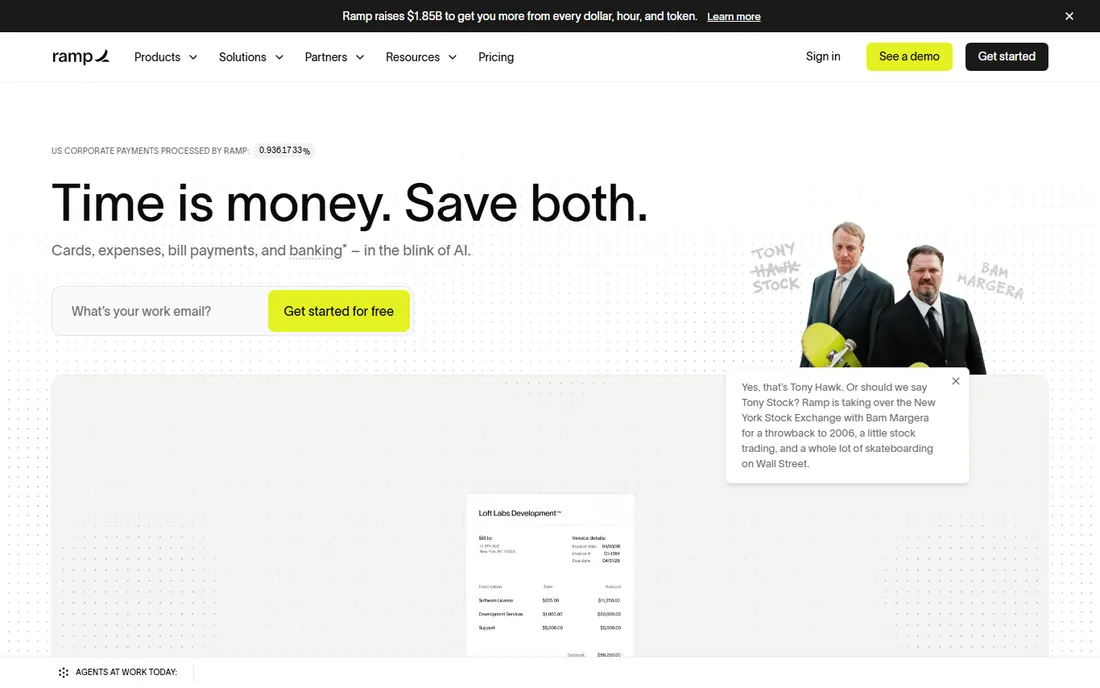
Ramp started as a corporate card that helped companies spend less and has grown into a full financial operations platform. The pitch is consolidation: cards, expense management, bill pay, procurement and travel booking in one place, with AI agents that enforce expense policies automatically and review transactions in real time.
The company's pricing model is a differentiator. Rather than charging per user for the software, Ramp earns from card interchange, which keeps the platform accessible to smaller teams while the product competes on depth. Agents for Controllers, launched recently, claim to automate a large share of expense reviews and catch out-of-policy spend that rule-based checks miss.
Where Ramp is weaker is standalone expense management. Companies that only want receipt scanning without switching cards will find the platform built around card spend. It shines brightest for finance teams ready to move cards and expenses onto one system.
What we like- Unified finance platform, AI agents for policy enforcement, corporate cards with cashback
Watch out for- Quote-based pricing, some advanced features skew toward larger teams

#2
Brex
Best for: Startups and global teams that need cards, banking and expenses together
Visit brex.com
Starting priceSee website
Free planNo
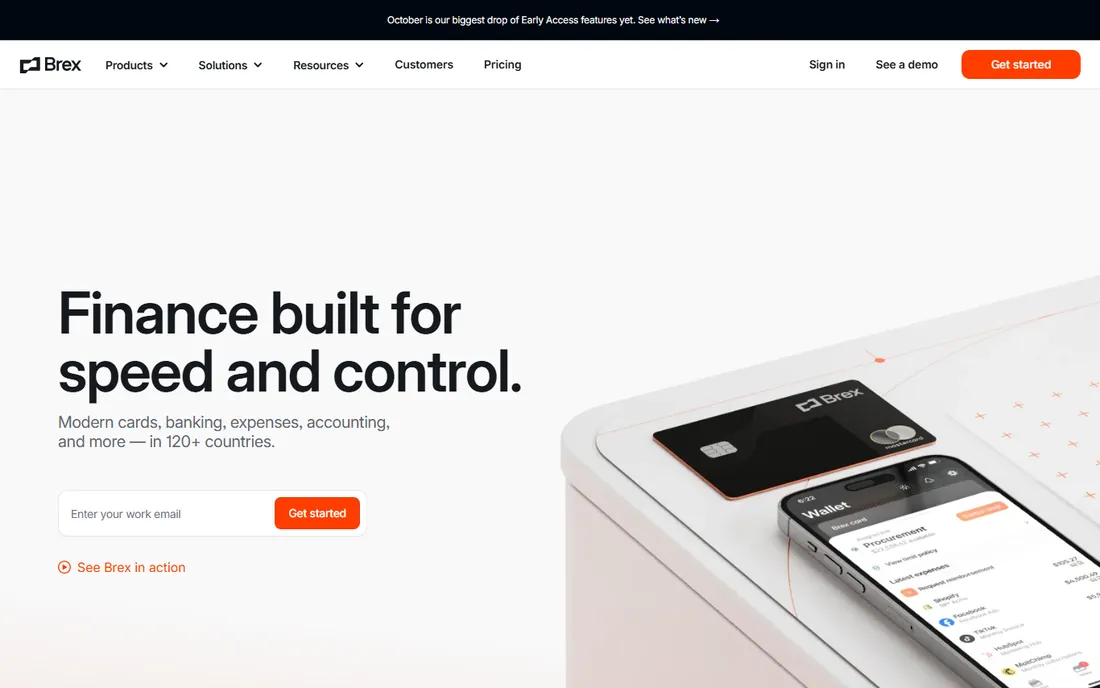
Brex built its name serving startups with corporate cards, then expanded into a full finance platform with banking, expense management, travel, bill pay and treasury. The homepage advertises cards, banking, expenses and accounting in more than 120 countries, which makes it a natural fit for companies with international teams.
Automation is the headline feature set: AI-powered approvals, automated receipts, an expense assistant, in-app travel booking and thousands of two-way ERP integrations. The company publishes internal metrics on hours saved and the share of expenses handled by automations, which gives finance leaders concrete numbers to model.
The caveat is that Brex works best as a stack, not a single tool. Teams that only want expense reporting may find the banking and treasury features unnecessary, and card limits depend on the company's financial profile. It also now sits under Capital One ownership, so enterprise buyers should confirm how that relationship affects their contracts. Evaluate it when you want cards and expenses unified globally.
What we like- Global coverage in 120+ countries, strong automation stats, integrated banking and treasury
Watch out for- Card-centric model, banking features may exceed what some teams need

#3
Navan
Best for: Companies where travel and expense are one workflow
Visit navan.com
Starting priceSee website
Free planNo
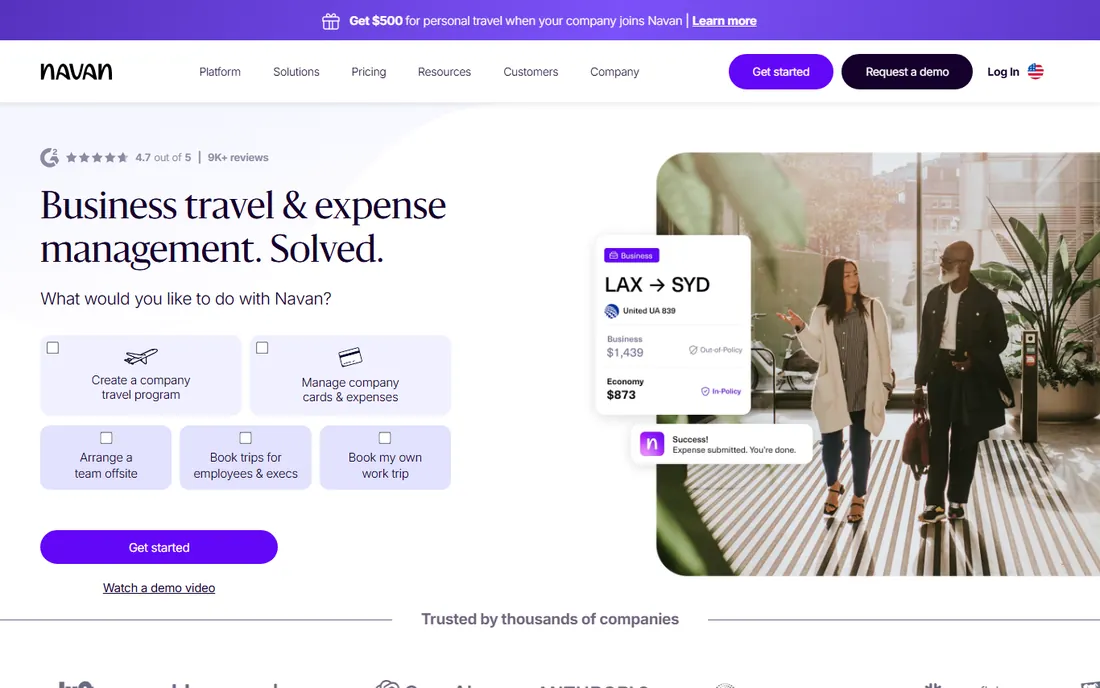
Navan, formerly known as TripActions, is the travel-first entry on this list. Its core idea is that booking travel and expensing travel should be the same system: employees book flights and hotels in the app, expenses flow automatically, and policies apply at booking time instead of at reimbursement time.
Navan Connect is the interesting wrinkle for expense teams. It links the platform to existing Mastercard, Visa or American Express corporate cards, so companies can automate reconciliation without switching card providers. Navan Expense then handles categorization, reports and reimbursements, and the newer Navan Edge assistant helps travelers with bookings around the clock.
The trade-off is focus. Companies with little travel spend will not use half the platform, and the pricing is enterprise-oriented. But for organizations where T&E is a major budget line, having booking, cards and expenses in one system removes the reconciliation gaps that standalone tools leave behind.
What we like- Combined travel booking and expense, Navan Connect works with existing cards, AI travel assistant
Watch out for- Travel-heavy positioning, pricing is quote-based

#4
Expensify
Best for: Teams that want fast receipt scanning and simple reimbursements
Visit expensify.com
Starting price$5 per member
Free planYes
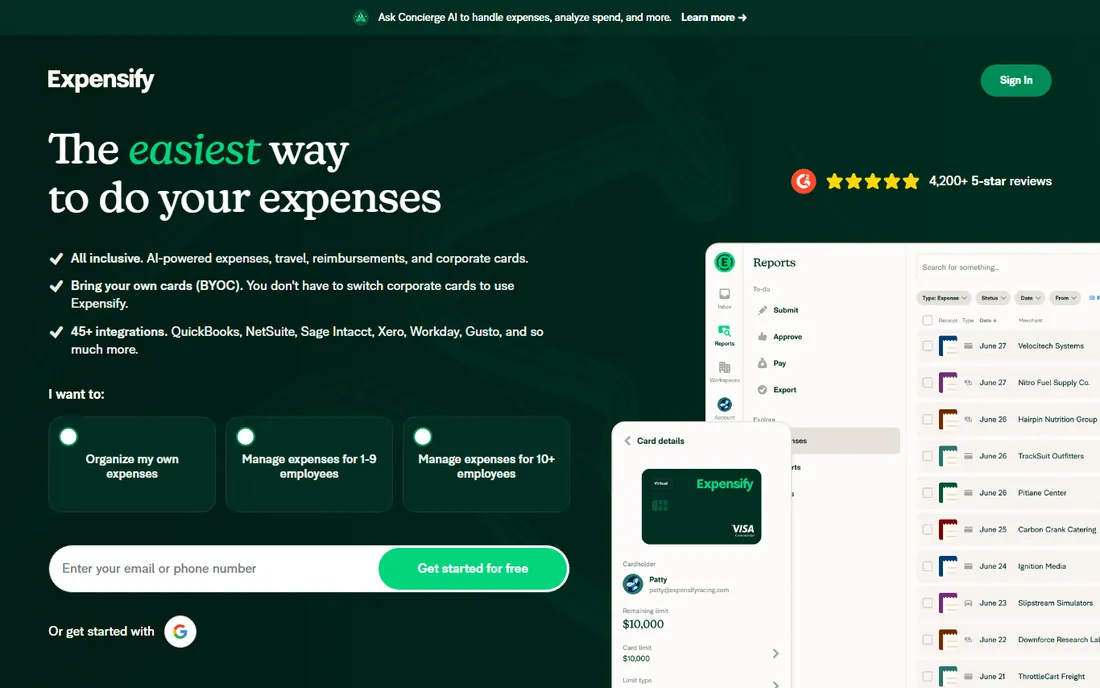
Expensify is the veteran of this category, and its core strength has not changed: scan a receipt and the expense is captured, categorized and submitted. The company reports more than 15 million members, and the free individual tier means employees can start tracking expenses without waiting for their employer to adopt it.
For companies, plans start at $5 per member according to the vendor's own pricing page, and the Expensify Card earns cashback that can offset the subscription. The platform now covers travel booking, bill pay, invoicing, virtual cards and global reimbursements, with integrations to QuickBooks, Xero, NetSuite, Sage Intacct and dozens more.
The criticism is that Expensify grew up as an expense tool rather than a card-first finance platform, so its spend controls arrive after purchase rather than before it. Still, for straightforward reimbursement workflows and teams that need to get running in minutes, it remains one of the easiest choices.
What we like- Free for individuals, fast SmartScan receipts, wide accounting integrations
Watch out for- Company pricing adds up at scale, interface divides opinion

#5
Airbase
Best for: Mid-market companies that want procure-to-pay plus expenses
Visit airbase.com
Starting priceSee website
Free planNo
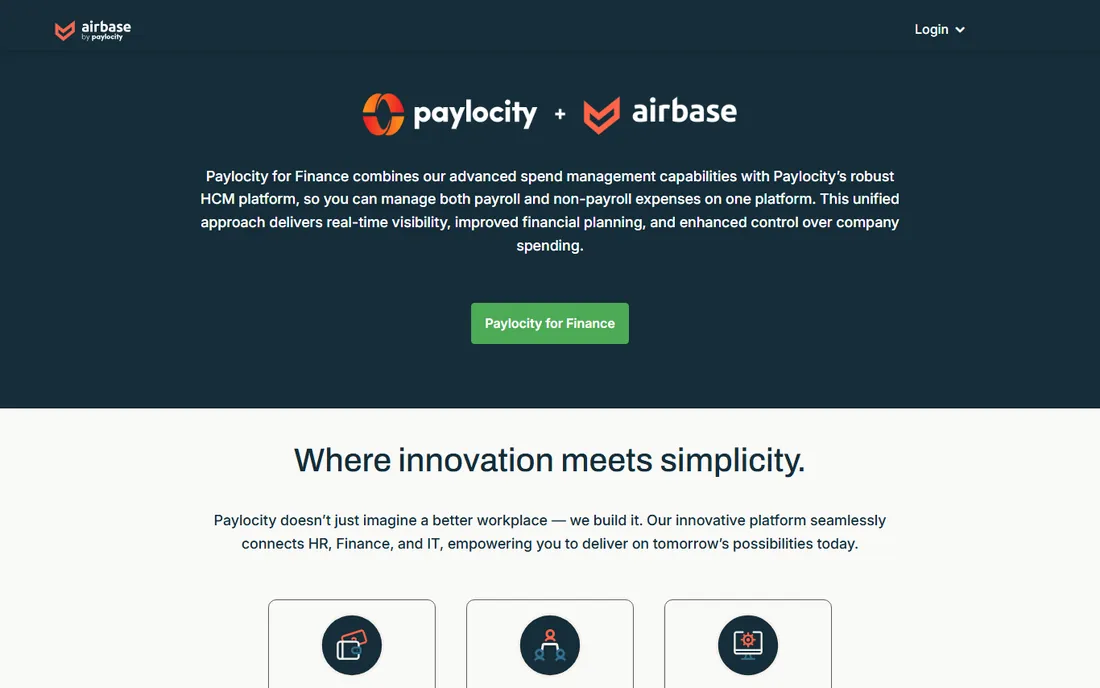
Airbase combines guided procurement, accounts payable automation, expense management and corporate cards on one platform, positioning itself as a procure-to-pay solution rather than a pure expense tool. Purchase requests, bills, cards and reimbursements all run through the same approval workflows and sync to the general ledger in real time.
That breadth is the appeal for mid-market finance teams. Instead of running separate tools for procurement intake, bill pay and expense reports, Airbase routes everything through one system, which simplifies the month-end close. A Forrester Total Economic Impact study cited by the company reported strong ROI and a short payback period.
One important note: Airbase now operates as a Paylocity company, and its homepage presents the combined "Paylocity for Finance" offering with the Paylocity HCM platform. Existing and prospective customers should confirm the roadmap and contract terms under the new ownership. It fits teams that want procurement discipline baked into expense workflows.
What we like- Guided procurement and AP automation alongside expenses, real-time GL sync, strong approval workflows
Watch out for- Geared toward mid-market complexity, quote-based pricing
Starting priceSee website
Free planYes
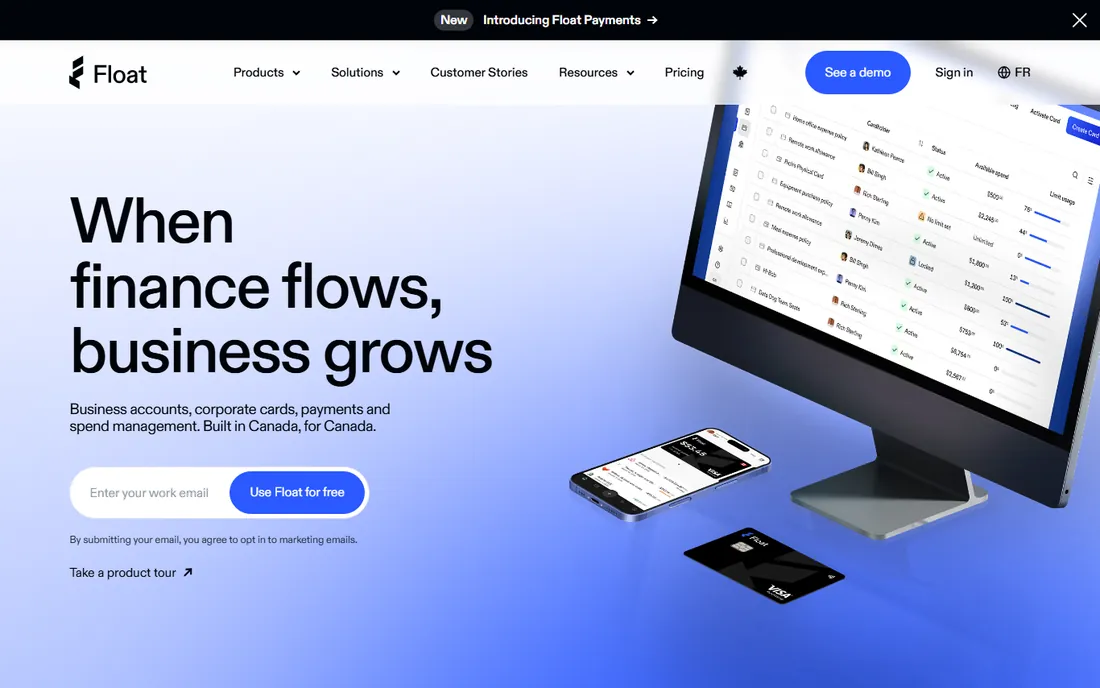
Float is the Canadian specialist on this list, built specifically for Canadian companies with CAD and USD corporate cards, CRA-ready software, and local bilingual support. The platform combines cards, expense management, bill pay, reimbursements, foreign exchange and high-yield business accounts.
The vendor offers a Free Essentials plan described as a $0 solution for spend control and payments, which makes it easy for small Canadian teams to start. Cards can be issued with built-in controls, expenses auto-code through AI, and transactions export directly to QuickBooks, Xero or NetSuite. Foreign exchange fees run well below typical bank rates, a real advantage for companies paying US vendors.
The limitation is geography. Float is designed for Canadian headquarters, so US or multinational companies should look elsewhere. But for Canadian businesses frustrated by US-centric tools, the local compliance, currencies and support make it a strong default.
What we like- Free Essentials plan, built for Canadian compliance and currencies, high-yield business accounts
Watch out for- Canada-only focus, card limits and credit depend on approval

#7
Mesh Payments
Best for: Global enterprises that want T&E automation layered over existing systems
Visit meshpayments.com
Starting priceSee website
Free planNo
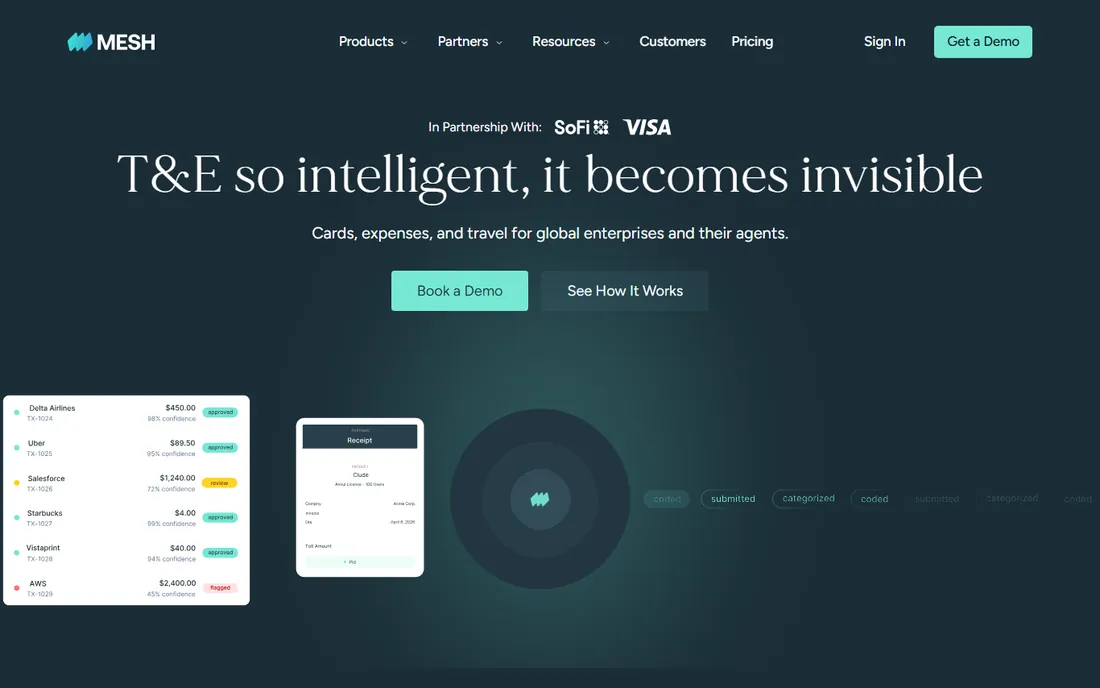
Mesh Payments takes an unusual approach: instead of asking companies to migrate onto its platform, it works as an orchestration layer over the existing stack. Employees can book through a travel management company, an airline site or an AI agent, and Mesh picks up the transaction, checks policy, categorizes it and reconciles it.
The platform covers cards, expenses and travel for global enterprises, with local-currency Visa cards in more than 40 countries, AI-powered receipt processing, automatic GL coding and a live ERP connection. An AI assistant handles receipts, card requests and policy questions inside WhatsApp, Slack or email, where employees already work.
The trade-off is that Mesh is newer and positioned at the enterprise end of the market. Smaller companies may find the sales process heavier than self-serve alternatives. It fits global finance teams that want automation without ripping out their current travel and card setup.
What we like- Orchestration layer with no migration required, global local-currency cards, AI assistant in chat tools
Watch out for- Enterprise positioning, newer vendor than legacy competitors

#8
Rho
Best for: Startups and scale-ups that want banking, cards and expenses with no fees
Visit rho.co
Starting priceSee website
Free planYes
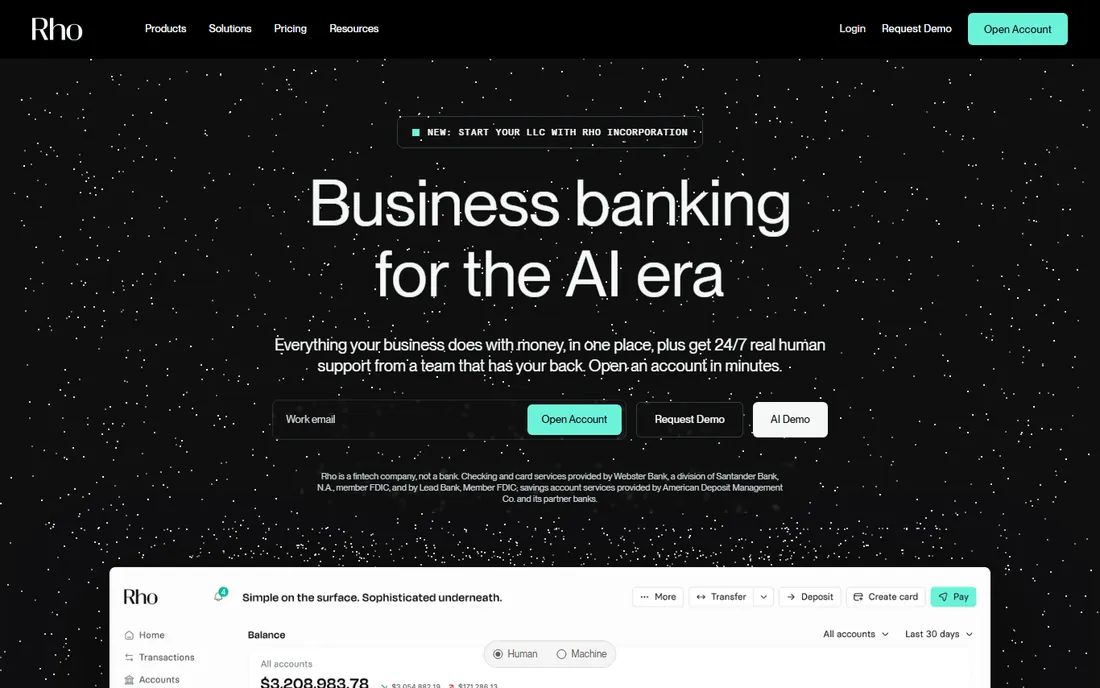
Rho bundles business banking, corporate cards, expense management, accounts payable and treasury into one platform, and its pricing stands out: the vendor states there are no per-seat fees or subscription costs. Banking services run through partner banks, while Rho provides the software layer and support.
For startups, that combination is attractive. Same-day ACH transfers, domestic wires, built-in bill pay and invoicing come without the fee schedules of traditional business banking, and cards include cashback. The platform syncs with QuickBooks, NetSuite and other accounting systems, and implementation support helps teams get live quickly.
The caveat is that Rho is a fintech company, not a bank, with services provided by partner banks, so buyers should read the fine print on deposits and credit. It is also US-focused, which limits international teams. For American startups that want banking and expenses in one free package, it is worth a serious look.
What we like- No per-seat or subscription fees, business banking plus cards and expenses, same-day ACH
Watch out for- Fintech rather than a bank, US-focused offering

#9
BILL Spend & Expense
Best for: Businesses that want AP, bill pay and expenses on one platform
Visit bill.com
Starting priceSee website
Free planNo
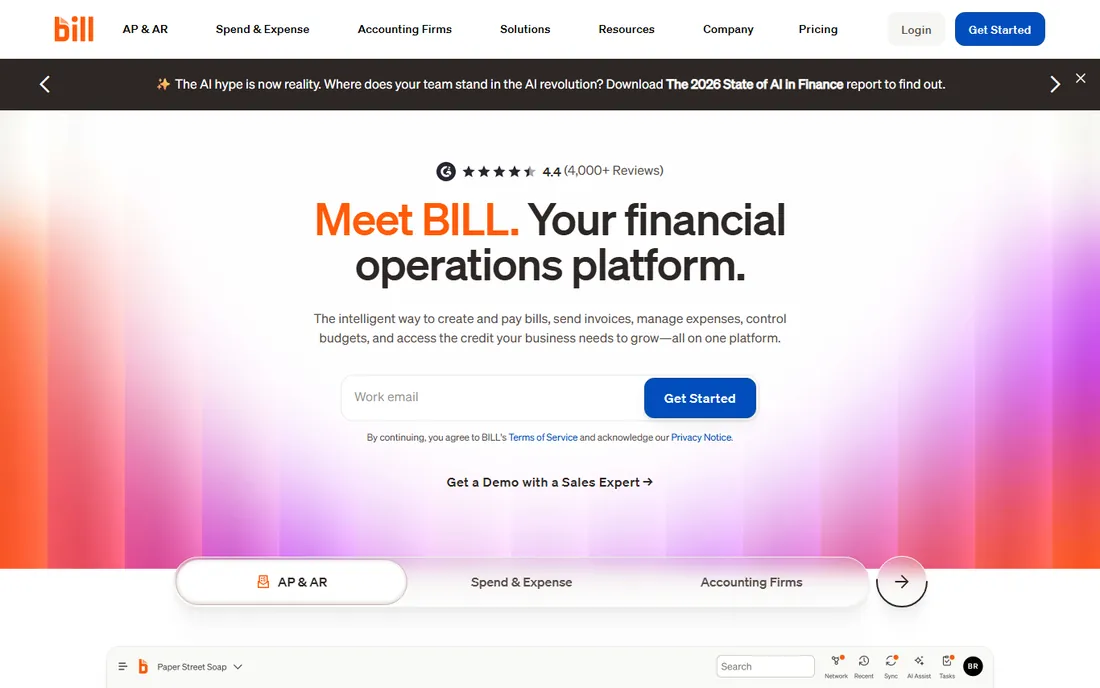
BILL, formerly known for accounts payable automation, added spend management through its acquisition of Divvy, now called BILL Spend & Expense. The result is a financial operations platform that unifies bill creation and payment, invoicing, expense management, budget controls and business credit.
The spend product offers company cards with department-level budgets, virtual cards, live transaction visibility and two-way sync with QuickBooks, NetSuite and Intacct. Credit lines range from $1,000 to $5 million subject to approval, and the broader BILL network processes hundreds of billions in payment volume annually.
The strength here is the AP connection. Companies that already pay vendors through BILL get expense management in the same system with the same approval logic. The weakness is that the spend product is still the Divvy acquisition rather than a homegrown build, so depth varies. It fits businesses that want bill pay and expenses consolidated.
What we like- Combines AP, AR, spend and expense, credit lines from $1K to $5M, deep accounting sync
Watch out for- Spend & Expense grew from the Divvy acquisition, credit lines depend on approval
Key takeaways
- Card-first platforms like Ramp, Brex and Rho control spend before it happens, while receipt-first tools like Expensify excel at reimbursements after the fact.
- Navan is the travel-and-expense pick, Mesh suits global enterprises that will not migrate, and Float is the Canadian specialist.
- Expensify, Float and Rho all offer free tiers or free plans, so small teams can start without budget approval.
- Airbase now sits inside Paylocity and Brex inside Capital One, so confirm ownership implications in enterprise contracts.
- Quote-based pricing dominates, so always price the full stack including cards, bill pay and procurement.
Quick comparison
| Tool | Best for | Starting price | Free plan |
|---|
| Ramp | Companies that want cards, expenses, bill pay and procurement in one platform | See website | No |
| Brex | Startups and global teams that need cards, banking and expenses together | See website | No |
| Navan | Companies where travel and expense are one workflow | See website | No |
| Expensify | Teams that want fast receipt scanning and simple reimbursements | $5 per member | Yes |
| Airbase | Mid-market companies that want procure-to-pay plus expenses | See website | No |
 Float Float | Canadian businesses that need cards, expenses and bill pay in CAD and USD | See website | Yes |
| Mesh Payments | Global enterprises that want T&E automation layered over existing systems | See website | No |
| Rho | Startups and scale-ups that want banking, cards and expenses with no fees | See website | Yes |
| BILL Spend & Expense | Businesses that want AP, bill pay and expenses on one platform | See website | No |
Is your product missing or out of date?
We review this list regularly. Vendors can request a listing, send updated pricing or ask about featured placement.
How to choose expense management software
Start with how money leaves your company. If most spend goes on corporate cards, a card-first platform like Ramp, Brex or BILL controls it before purchase. If employees mostly pay out of pocket and get reimbursed, a receipt-first tool like Expensify matches the workflow better.
Second, decide what else needs consolidating. Many teams run separate tools for bill pay, travel booking and procurement. Platforms like Airbase and Ramp absorb those workflows, which cuts integration work but raises switching costs. Map your current stack before deciding how much to merge.
Third, check the accounting sync. Expense software earns its keep by removing month-end reconciliation. Confirm two-way sync with your ERP, how GL coding works, and whether multi-entity or multi-currency support matches your structure. A demo with your actual chart of accounts is worth more than a feature list.
Finally, model total cost including card revenue. Several vendors fund free software through card interchange, which is genuinely free for the buyer but means the vendor's incentives sit with card spend. That is fine for most teams, but read the card agreement, cashback terms and foreign transaction fees before committing.
How we chose
We selected platforms with broad adoption in expense management, from card-first finance platforms to receipt-scanning veterans and regional specialists. We checked each vendor's own site for current positioning and pricing, listed published per-member pricing only where the vendor states it, and used See website everywhere else. Acquisitions and renames are noted under current branding, with the old name mentioned once.
Frequently asked questions
What is the best expense management software?
It depends on the workflow. Ramp and Brex lead for card-based spend control, Expensify leads for receipt scanning and reimbursements, Navan leads for travel-heavy teams, and Float is the pick for Canadian businesses.
Is there free expense management software?
Yes. Expensify is free for individuals, Float offers a free Essentials plan, and Rho charges no per-seat or subscription fees. Most full platforms are funded through card interchange or paid tiers, so confirm what is included before relying on the free option.
What is the difference between expense management and spend management?
Expense management focuses on employee expenses: receipts, reports, approvals and reimbursements. Spend management is broader, covering corporate cards, bill pay, procurement and budgets across all company spending. Many modern platforms do both.
How much does expense management software cost?
Pricing varies widely. Expensify publishes company plans starting at $5 per member, while most card-based platforms price by quote or fund the software through interchange. Enterprise deals are negotiated, so request quotes for your headcount and volume.
Should we switch corporate cards when adopting new expense software?
Not necessarily. Platforms like Navan Connect and Expensify's bring-your-own-card features work with cards you already have. Card-first platforms like Ramp and Brex are designed around their own cards, so switching activates their full control features.
How long does implementation take?
Self-serve tools like Expensify can be live the same day. Card-based platforms typically take one to two weeks for card issuance and accounting integration. Enterprise rollouts with procurement workflows, like Airbase or Mesh, can take a month or more.
Sources we checked (16)
- https://ramp.com
- https://www.brex.com/
- https://navan.com/
- https://expensify.com/
- https://airbase.com/
- https://floatfinancial.com/
- https://meshpayments.com/
- https://www.rho.co/
- https://www.bill.com
- https://en.wikipedia.org/wiki/Ramp_(company
- https://en.wikipedia.org/wiki/Brex
- https://leadiq.com/c/expensify/5a1d86472400002400609498
- https://leadiq.com/c/divvy-from-bill/5a1d9d7123000059008d493e
- https://www.businesswire.com/news/home/20250113579768/en/Float-Financial-Announces-70-Million-Investment-Round-Led-by-Growth-Equity-at-Goldman-Sachs-Alternatives-to-Build-Canada%E2%80%99s-Most-Complete-Business-Finance-Solution/
- https://www.businesswire.com/news/home/20211115005952/en/Mesh-Payments-Introduces-SaaS-Payment-Management-for-Financial-Optimization
- https://www.businesswire.com/news/home/20260507810102/en/Expensify-Announces-Q1-2026-Results
Is your product missing or out of date?
We review this list regularly. Vendors can request a listing, send updated pricing or ask about featured placement.

Shihab Mia · Founder, Rankite
Shihab has spent more than a decade helping SaaS and e-commerce brands grow through search. He writes Rankite's software buying guides from pricing pages, documentation and public user reviews. More about Shihab.