How we make this list: we compare pricing pages, product documentation and public user reviews. Rankite is independent; if a vendor ever pays for a featured spot, that listing is clearly labeled Partner.
Key takeaways
- Fivetran remains the safest managed choice for teams that want hundreds of maintained connectors and are comfortable with usage-based pricing.
- Airbyte is the open-source answer: free to self-host, with a large connector catalog and no per-row metering.
- Hevo Data and Skyvia give small and mid-size teams transparent pricing and genuine free plans, with Hevo's paid plans starting at $265 a month.
- Informatica, Qlik Talend, and Matillion serve enterprises and data teams that need governance, transformation depth, and platform breadth beyond simple extraction.
Quick comparison
| Tool | Best for | Starting price | Free plan |
|---|
 Fivetran Fivetran | Teams wanting managed pipelines at scale | See website | Free trial |
 Airbyte Airbyte | Open-source data movement without metering | Free ($0) | Yes |
 Hevo Data Hevo Data | Transparent pricing for growing teams | From $265/month | Yes |
 Matillion Matillion | Data teams standardizing on cloud warehouses | See website | Free trial |
 Qlik Talend Qlik Talend | Enterprises needing integration plus governance | See website | Free trial |
 Informatica Informatica | Large organizations with complex data estates | See website | Free trial |
 Skyvia Skyvia | No-code integration with a free tier | See website | Yes |
 Integrate.io Integrate.io | Low-code pipelines with predictable pricing | See website | Free trial |
 Rivery Rivery | ELT with value-based, not row-based, pricing | See website | Free trial |
Is your product missing or out of date?
We review this list regularly. Vendors can request a listing, send updated pricing or ask about featured placement.
Starting priceSee website
Free planFree trial
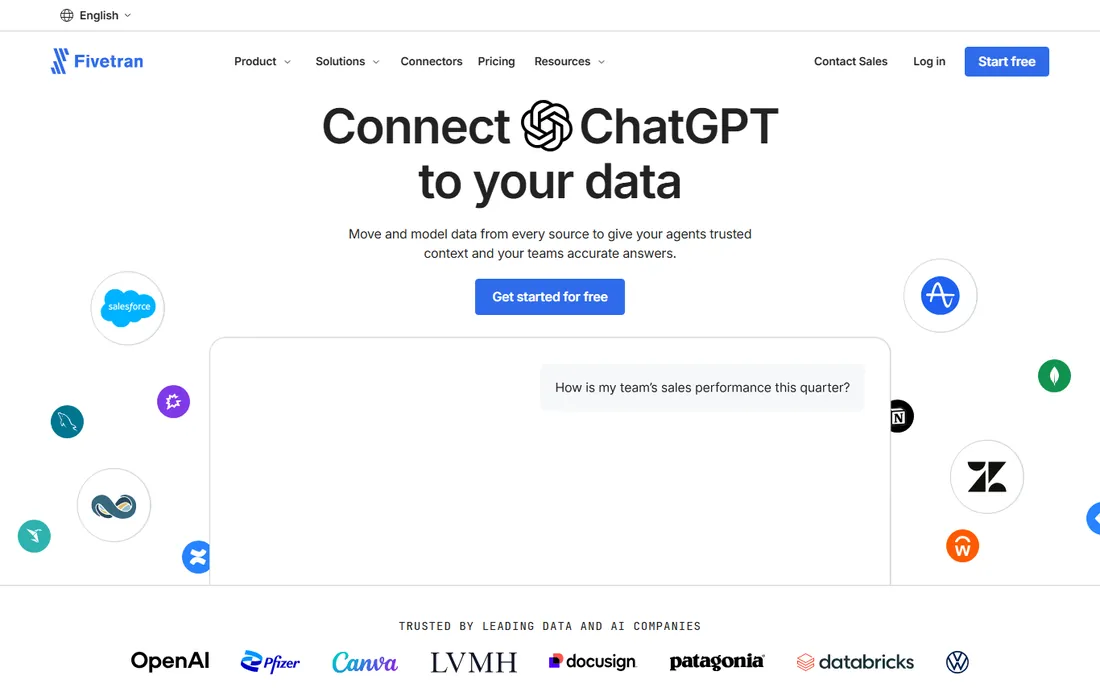
Fivetran's promise is simple: you should never think about your pipelines. Connectors are fully managed, which means when a source API changes, Fivetran's team fixes the connector, not yours. Schema changes in the source get handled automatically instead of breaking your warehouse loads. For a data team that would rather analyze data than maintain plumbing, that offloading is the product.
The tradeoff is cost structure and control. Pricing is usage-based, tied to the volume your pipelines move, so bills grow with data growth in ways that need monitoring. You also give up the control that comes with running your own infrastructure. Teams with strict data residency needs or very spiky volumes should model costs carefully. Everyone else gets the most boring, in the best sense, pipelines in the business.
What we like- Hundreds of fully managed connectors
- Automatic schema migration handling
- Strong security certifications
Watch out for- Usage-based pricing can surprise
- Less control than self-hosted options
Starting priceFree ($0)
Free planYes
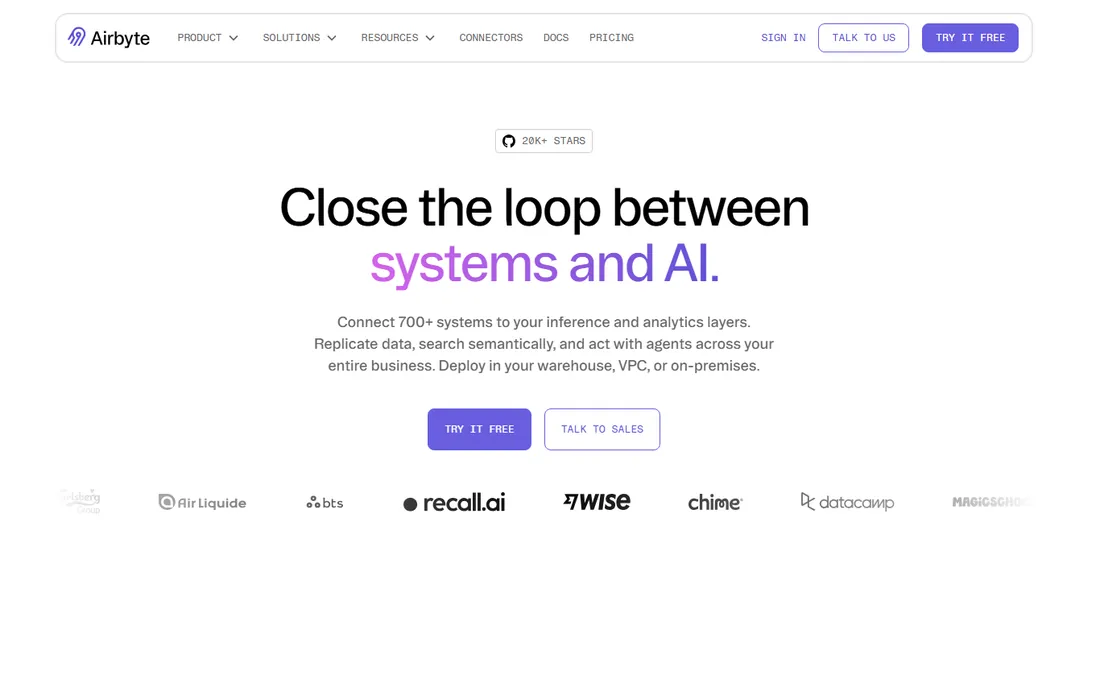
Airbyte took the opposite bet from Fivetran: the core software is open source and free to run yourself, with hundreds of connectors maintained by the company and the community. There is no metering on rows moved when you self-host. For teams with engineering capacity and cost sensitivity, that combination is hard to argue with, and the connector catalog keeps growing because anyone can contribute one.
Self-hosting is also the catch. You provision the infrastructure, you monitor the jobs, and you fix what breaks. Airbyte's managed cloud removes that burden but reintroduces per-use pricing. The sweet spot is a team that wants open-source flexibility, has someone to run it, and would rather spend engineering time than subscription budget. For that buyer, nothing else on this list is free.
What we like- Free self-hosted open-source core
- Large connector catalog
- No per-row pricing on self-hosted
Watch out for- Self-hosting means you operate it
- Managed cloud costs extra
Starting priceFrom $265/month
Free planYes
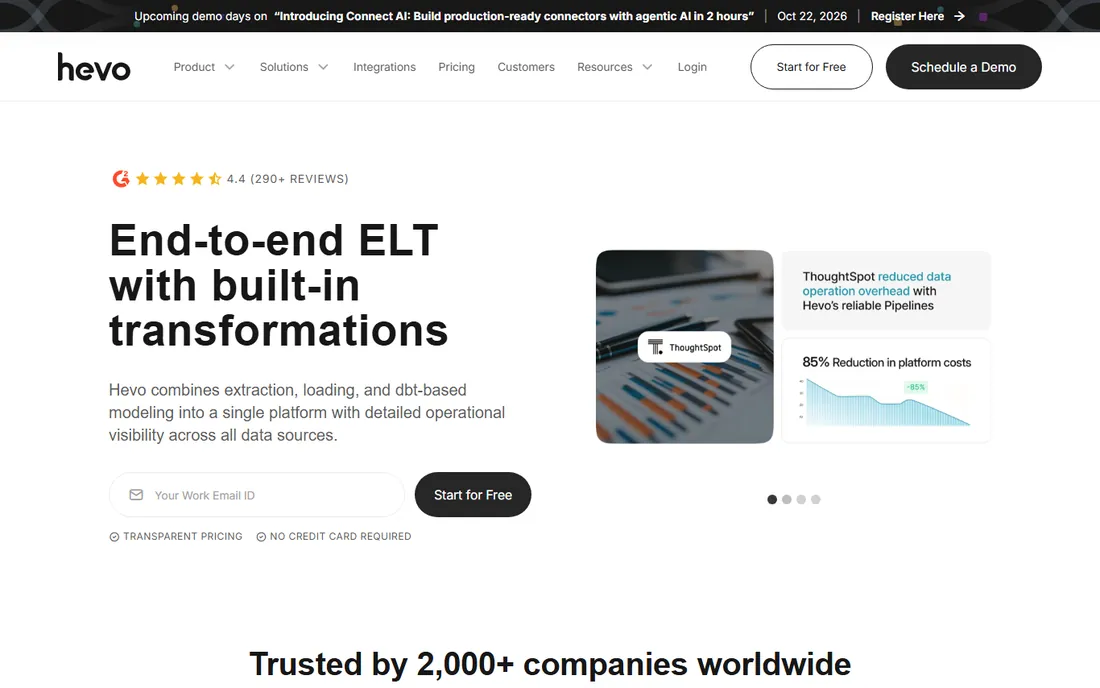
Hevo Data prints its pricing on the website, which already distinguishes it in a category fond of "contact sales." The free plan costs $0 and covers light use with up to 5 users. Paid plans start at $265 a month for Starter and $750 for Professional, with a 14-day trial that does not require a credit card. Event-based pricing means you can forecast costs from your data volume instead of guessing.
The platform covers the standard ELT loop across 150+ sources with schema drift handling and failure recovery built in. It is not the cheapest paid entry on this list, and real-time streaming pipelines sit on the higher tiers. But for a growing team that wants managed pipelines with predictable, published pricing, Hevo is one of the easiest evaluations to run.
What we like- Published pricing with a real free plan
- 150+ connectors
- 14-day free trial with no card
Watch out for- Paid entry is higher than some rivals
- Streaming features need the upper tiers
Starting priceSee website
Free planFree trial
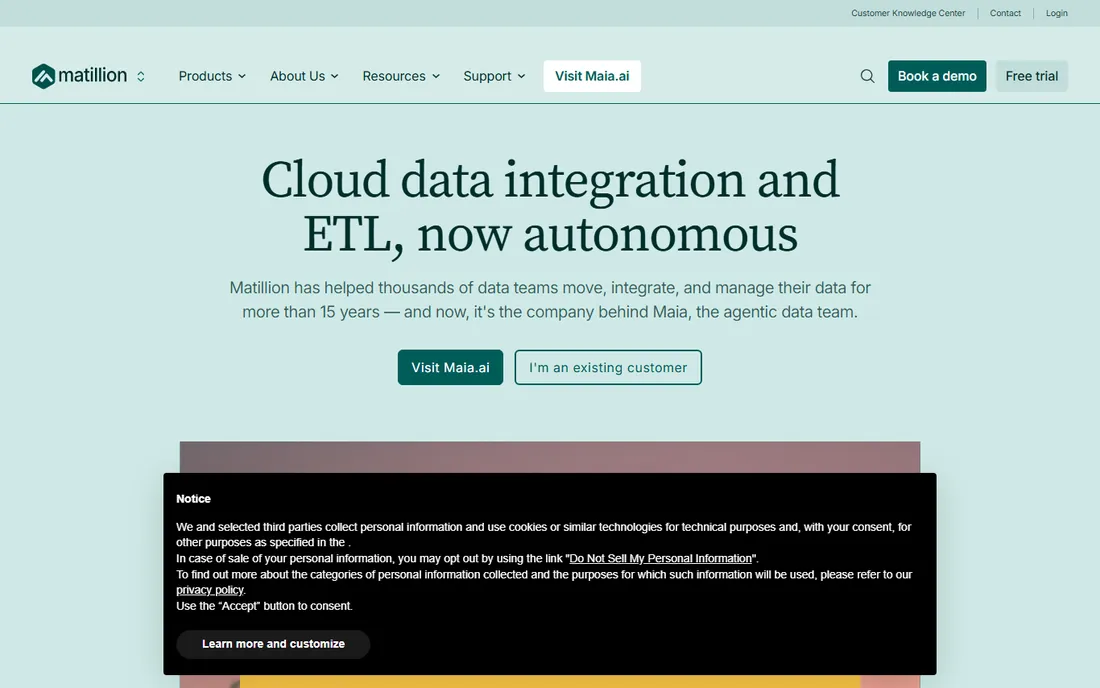
Matillion spent over a decade as the ETL tool built specifically for cloud data warehouses, and it shows in the depth of the Snowflake, Databricks, and BigQuery integrations. Pipelines are built visually but run inside your warehouse, which keeps data gravity where it belongs. The company has now layered AI agents on top that help build and manage pipelines, under the Maia branding.
Pricing is not published, so budget planning starts with a conversation. Matillion is also warehouse-centric by design; if your integration needs center on SaaS-to-SaaS sync rather than warehouse loading, the generalist tools fit better. For data teams whose warehouse is the center of the universe, the native feel is worth the quote-based buying process.
What we like- Deep integration with Snowflake, BigQuery, and Databricks
- Visual pipeline builder
- New AI agent layer
Watch out for- Pricing is not published
- Warehouse-centric, less broad as a general integrator
#5
Qlik Talend
Best for: Enterprises needing integration plus governance
Visit talend.com
Starting priceSee website
Free planFree trial
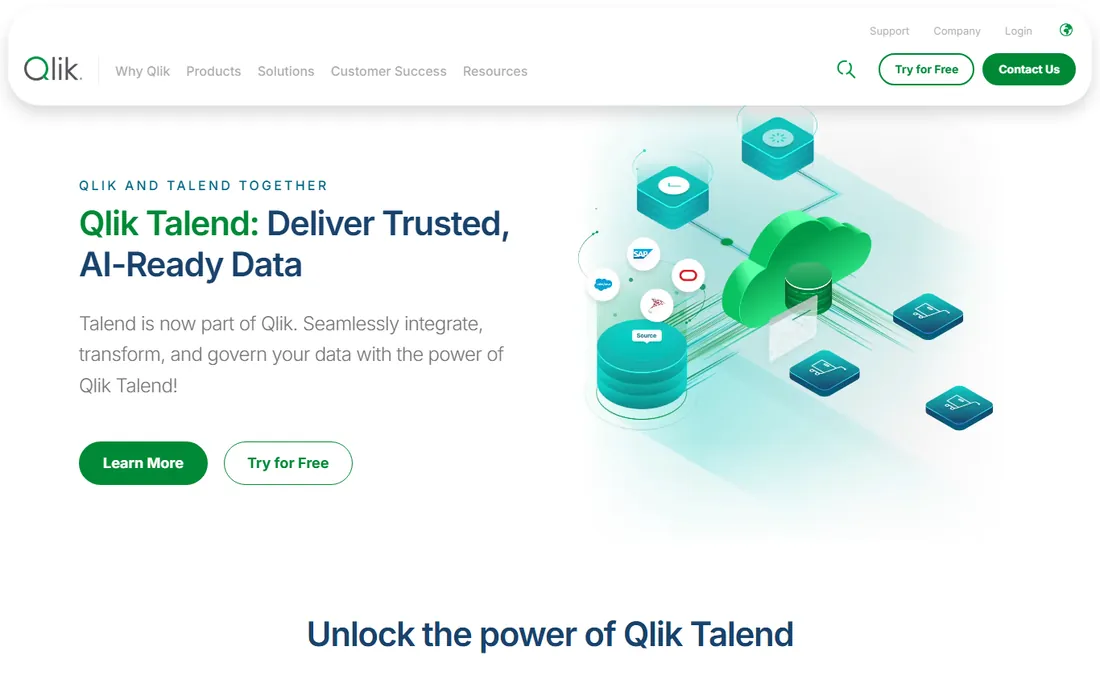
Talend is now part of Qlik, and the combined product is sold as Qlik Talend Cloud. The acquisition folded Talend's integration engine into Qlik's analytics and governance stack, so buyers get data integration, data quality, and governance in one platform rather than three vendors. Deployment stays flexible across cloud, on-premises, and hybrid, which matters to enterprises that cannot move everything at once.
This is enterprise software in the full sense: quote-based pricing, a sales-led evaluation, and implementation that rewards planning. The old standalone Stitch product is being absorbed into this platform, so new buyers should evaluate Qlik Talend Cloud directly rather than hunting for the legacy tools. Teams that need governance alongside integration will find the breadth worth it. Teams that just need pipelines will find it heavy.
What we like- Unified integration, quality, and governance
- Cloud, on-premises, and hybrid deployment
- Mature tooling
Watch out for- Enterprise sales process
- Heavier than pure-play ELT tools
Starting priceSee website
Free planFree trial
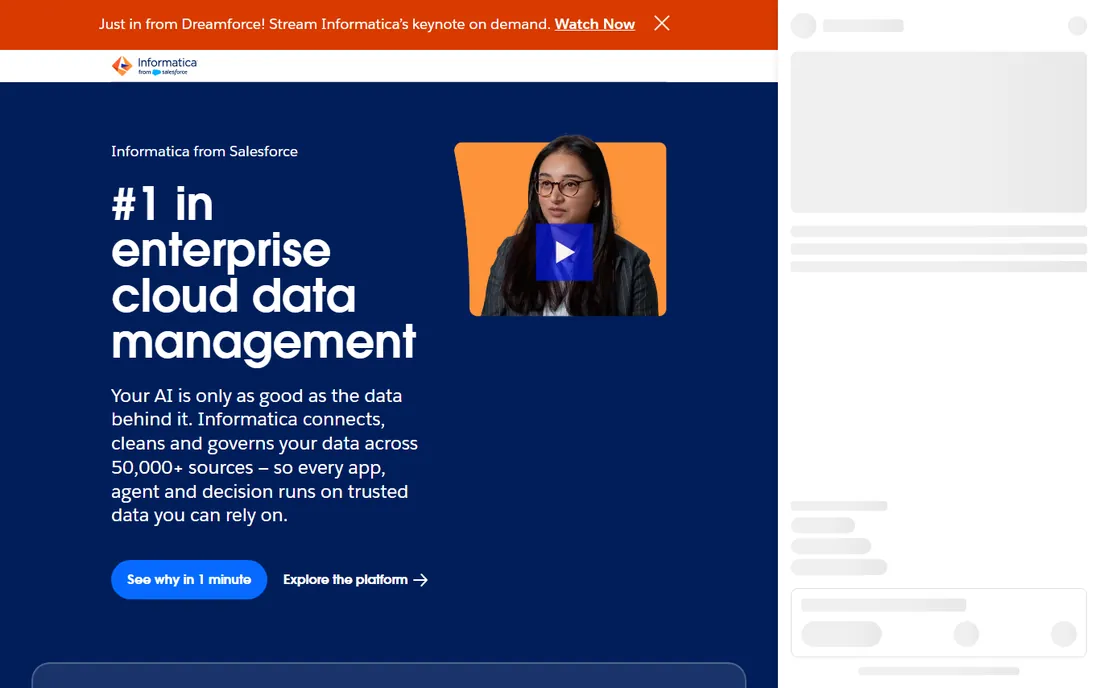
Informatica is the incumbent that the rest of this list is measured against. The platform covers data integration alongside data quality, master data management, governance, and cataloging, with 300+ connectors for moving data across clouds, apps, and databases. The company now sits under Salesforce ownership, which has sharpened the AI-ready data pitch without changing the product's enterprise character.
Nobody evaluates Informatica casually. Pricing is quote-based, sales cycles are real, and the platform rewards organizations with dedicated data teams. For a mid-size company that just needs pipelines, this is too much software. For a large enterprise consolidating data management vendors or modernizing a legacy Informatica footprint, the breadth is exactly the point.
What we like- Broadest enterprise data management platform
- 300+ connectors
- AI-ready governance story
Watch out for- Quote-based enterprise pricing
- Complexity exceeds what small teams need
Starting priceSee website
Free planYes
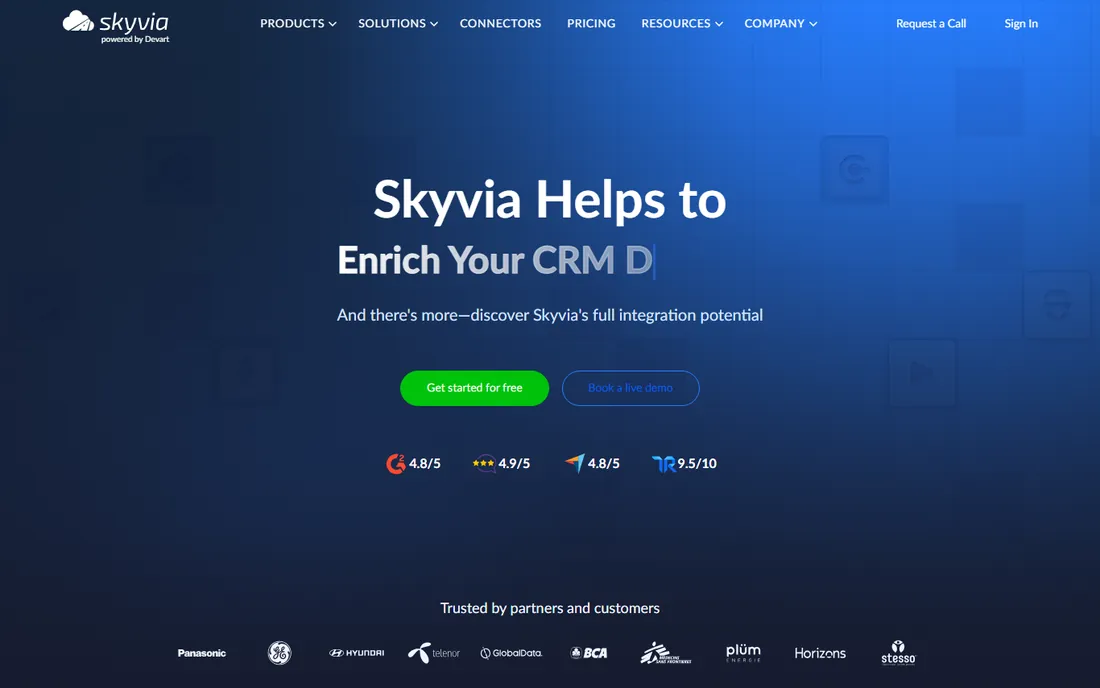
Skyvia bundles data integration with backup, data access, and management tools in one no-code platform, and it lets you start free. With 200+ connectors spanning cloud apps, databases, and warehouses, a non-technical user can set up syncs and ETL flows without writing code. The Salesforce tooling is a particular strength, including backup with one-click restore.
Pricing is usage-based and not published as a simple per-seat number, so heavier workloads need a careful look at the pricing page. Complex transformations are also thinner than the developer-oriented tools. But for business users and small teams that want integration without engineering, the combination of a free start and no-code operation is compelling.
What we like- Genuine free tier to start
- No-code setup across 200+ connectors
- Backup and data management included
Watch out for- Usage-based pricing needs watching at scale
- Less depth for complex transformations
Starting priceSee website
Free planFree trial
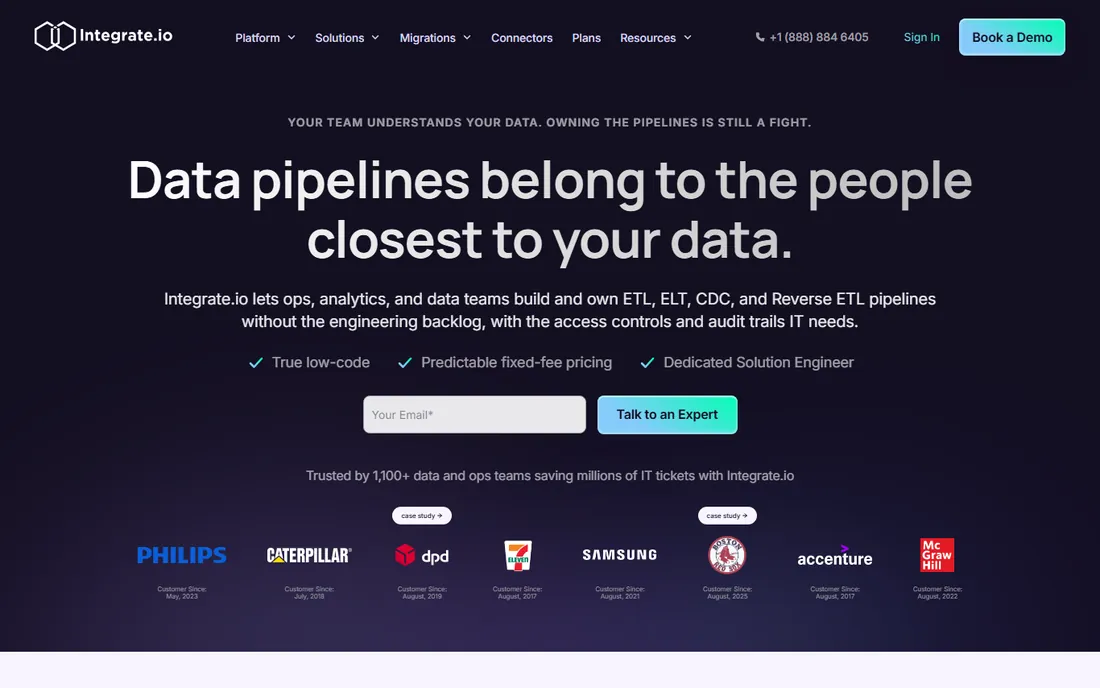
Integrate.io's headline differentiator is fixed-fee pricing in a category that mostly meters usage. Teams can scale data volume, client count, and connectors without the bill scaling in lockstep, which makes budgeting refreshingly simple. The platform covers ETL, ELT, change data capture, and reverse ETL in one place, with a low-code builder aimed at the people closest to the data.
The company leans into service, pairing customers with solution engineers from pilot through production. Exact pricing still comes through a conversation rather than a page, which blunts the transparency story somewhat. For operations and analytics teams that want pipeline ownership without engineering tickets or usage anxiety, the model is worth a serious look.
What we like- Fixed-fee pricing instead of usage metering
- ETL, ELT, CDC, and reverse ETL in one platform
- Hands-on support
Watch out for- Pricing details need a sales conversation
- Smaller connector mindshare than the giants
#9
Rivery
Best for: ELT with value-based, not row-based, pricing
Visit rivery.io
Starting priceSee website
Free planFree trial
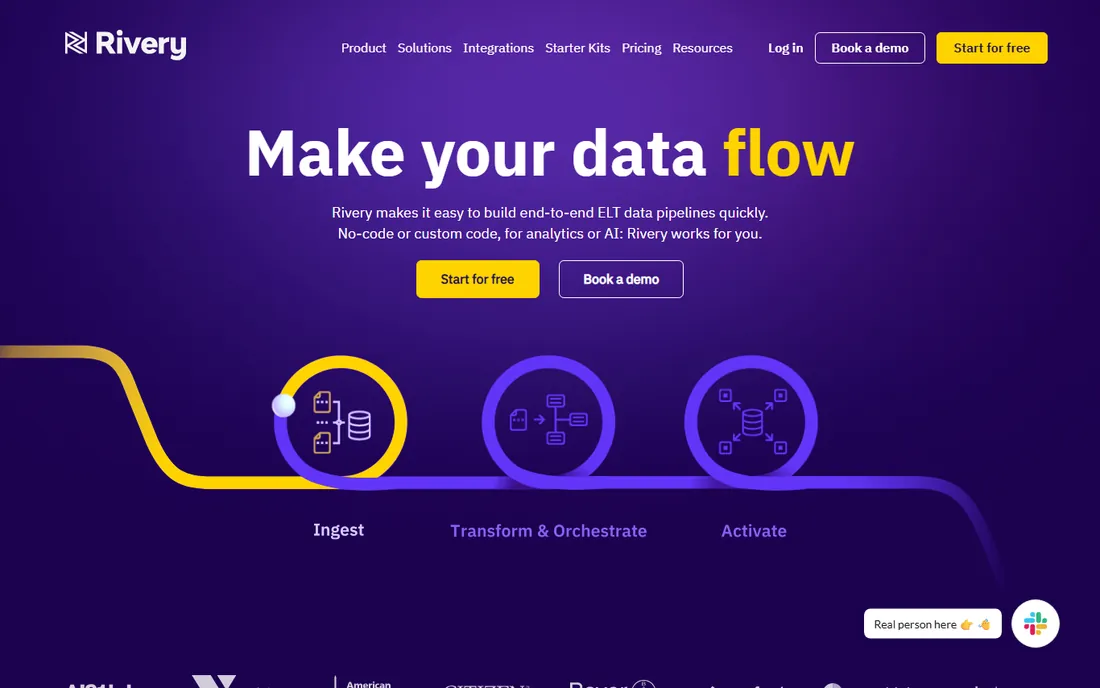
Rivery positions itself against the row-metered pricing of the big managed platforms, charging on value-based consumption instead of counting every record. The SaaS platform covers ingestion, transformation, orchestration, and reverse ETL as a fully managed service, with starter kits meant to get first pipelines running quickly. For teams burned by usage bills that scale with data volume, the pricing philosophy alone earns a demo.
As with several tools here, actual prices live behind a sales conversation. Rivery is also a smaller brand than Fivetran or Informatica, which matters to buyers who want the safety of an incumbent. But the product is complete, the managed experience is genuine, and the pricing model directly answers the most common complaint about this category.
What we like- Pricing based on value rather than rows moved
- Fully managed SaaS
- Reverse ETL included
Watch out for- Pricing not published
- Smaller brand than the category leaders
How we chose
We opened every vendor homepage to confirm each product is current and actively sold, checking for acquisitions and rebrands that changed what buyers actually get. We compared connector breadth, deployment options, pricing transparency, and the availability of free plans or trials from current pricing pages. We read public reviews on G2 and Capterra for recurring themes around reliability, support quality, and billing surprises, and we balanced managed platforms against open-source and enterprise options so different team shapes all get a fit.
Picking the right integration approach
The tools above solve the same problem with different tradeoffs. These questions sort them fast.
Who will operate the pipelines?
If the answer is a dedicated data engineer, Airbyte's self-hosted option or Matillion's warehouse-native builder gives them control. If the answer is an analyst or ops person, favor the managed no-code platforms: Hevo, Skyvia, or Integrate.io. Buying a tool your team will not operate is the most expensive mistake in this category.
How predictable must the bill be?
Usage-based pricing (Fivetran, Hevo's event tiers, Skyvia) rewards accurate forecasting and punishes surprises. Fixed-fee pricing (Integrate.io) and value-based pricing (Rivery) trade some flexibility for budget certainty. Self-hosted open source (Airbyte) trades subscription cost for engineering time. Pick the model your finance team can live with, not just the lowest headline number.
Do you need more than extraction?
Simple extraction and loading is a commodity now. If you also need data quality checks, governance, or master data management, the enterprise suites (Informatica, Qlik Talend) earn their complexity. If you need reverse ETL to push warehouse data back into operational tools, confirm it explicitly: Integrate.io and Rivery include it, while some pure ELT tools treat it as an afterthought.
The pricing models, decoded
Four patterns dominate. Per-usage pricing ties cost to rows, events, or compute, which scales fairly but demands monitoring. Fixed-fee pricing charges for the platform regardless of volume, which suits growing data estates. Open source shifts cost from licenses to engineering time. Enterprise quote pricing bundles everything into a negotiated contract. Whichever you choose, run a 12-month projection on your actual data volumes before signing, and ask what happens to the bill if volume doubles.
Frequently asked questions
What is the difference between ETL and ELT?
In ETL, data is extracted, transformed, then loaded into the destination. In ELT, raw data loads first and transformation happens inside the destination warehouse. ELT dominates modern cloud setups because warehouses are now powerful enough to transform at scale, and it preserves raw data for reprocessing.
How many connectors do I actually need?
Fewer than vendors advertise. Most teams use between five and twenty sources seriously. Check that your specific sources are supported natively rather than counting the catalog total, and test the ones that matter during the trial with your real data shapes.
Can these tools handle real-time data?
Some can, with caveats. Change data capture gets you near-real-time database replication on several platforms here, and Hevo offers streaming pipelines on upper tiers. True sub-second streaming is a different product category; these tools target analytic freshness measured in minutes, not milliseconds.
Is open source actually cheaper?
Sometimes. Airbyte's self-hosted core has no license cost, but you pay in engineering time for setup, monitoring, and upgrades. For teams with spare engineering capacity it is usually cheaper. For teams without it, a managed platform costs less than hiring.
How long does implementation take?
A first pipeline on a managed platform can run the same day you sign up. A production setup with proper monitoring, alerting, and documentation takes weeks. Enterprise suites with governance requirements take months. Ask vendors for a realistic timeline tied to your source count, not their fastest case study.
Sources we checked (10)
- https://www.fivetran.com/
- https://airbyte.com/
- https://hevodata.com/
- https://hevodata.com/pricing/
- https://www.matillion.com/
- https://talend.com/
- https://informatica.com/
- https://skyvia.com/
- https://www.integrate.io/
- https://rivery.io/
Is your product missing or out of date?
We review this list regularly. Vendors can request a listing, send updated pricing or ask about featured placement.

Shihab Mia · Founder, Rankite
Shihab has spent more than a decade helping SaaS and e-commerce brands grow through search. He writes Rankite's software buying guides from pricing pages, documentation and public user reviews. More about Shihab.