How we make this list: we compare pricing pages, product documentation and public user reviews. Rankite is independent; if a vendor ever pays for a featured spot, that listing is clearly labeled Partner.
Key takeaways
- OpenProject is the most complete open-source PM suite, covering Gantt, agile boards and time tracking.
- Taiga, Plane and Leantime offer modern interfaces that teams adopt without training battles.
- Redmine, Kanboard, Wekan and Vikunja are lightweight, proven and free forever.
- Tuleap and YouTrack serve engineering organizations with heavier ALM and workflow needs.
- Self-hosting trades subscription fees for server and maintenance work: budget both honestly.
Quick comparison
| Tool | Best for | Starting price | Free plan |
|---|
 OpenProject OpenProject | Full open-source PM suite | Free | Yes |
 Taiga Taiga | Agile teams wanting simplicity | Free | Yes |
 Redmine Redmine | Flexible issue tracking classic | Free | Yes |
 Leantime Leantime | Lean project management for startups | Free | Yes |
 Plane Plane | Modern open-source alternative to Jira | Free | Yes |
 Wekan Wekan | Simple self-hosted kanban | Free | Yes |
 Vikunja Vikunja | Lightweight tasks and lists | Free | Yes |
 Kanboard Kanboard | Minimal kanban for small teams | Free | Yes |
 Tuleap Tuleap | Engineering ALM and agile at scale | Free | Yes |
 YouTrack YouTrack | JetBrains issue tracking on-premises | See website | Free tier |
Is your product missing or out of date?
We review this list regularly. Vendors can request a listing, send updated pricing or ask about featured placement.
The best self-hosted project management software
Starting priceFree
Free planYes
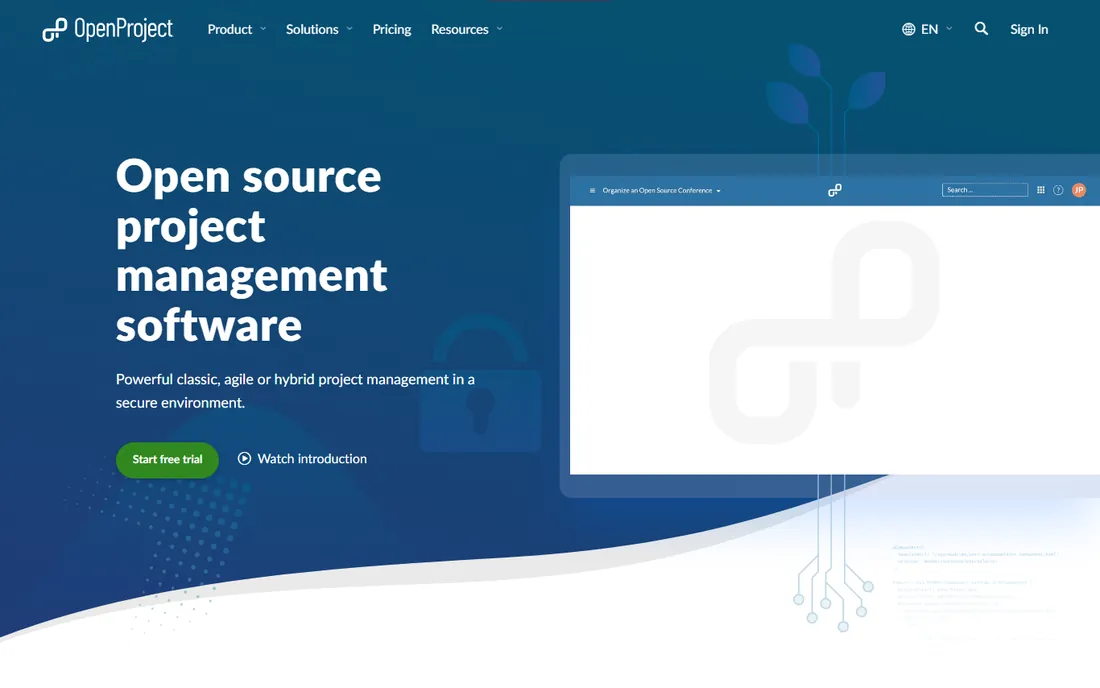
OpenProject is the closest thing open source has to a full Microsoft Project plus Jira replacement. Work packages, Gantt timelines, Scrum and Kanban boards, meeting management, wikis and time tracking all ship in the community edition, which installs on your own server for free. For organizations that cannot put project data in a US cloud, the self-hosted model plus EU-based development is a genuine compliance advantage.
The breadth makes it heavier than the kanban tools. Small teams often find the interface overwhelming, and it wants a proper server rather than a Raspberry Pi. Paid enterprise add-ons cover things like advanced BI integrations. If you need serious project management, Gantt dependencies and portfolio views, under your own control, OpenProject is the default answer.
What we like- Gantt charts, agile boards, wikis and time tracking in one
- Strong data privacy story
- Active development and community
Watch out for- Interface is dense for casual users
- Needs real server resources
- Enterprise features cost extra
Starting priceFree
Free planYes
Taiga feels like what agile tools should have become: fast, clean and opinionated about Scrum and Kanban done right. Epics, user stories, tasks and issues flow through sprints with a minimum of configuration, and the interface stays out of the way. The open-source version self-hosts easily with Docker, while the hosted version offers a paid path for teams that start self-hosted and grow.
It is deliberately narrower than OpenProject or Redmine. Complex portfolio management, heavy custom workflows and deep reporting are not its strengths. For software teams running Scrum or Kanban that want an agile tool without Jira's weight or Atlassian's cloud mandate, Taiga hits the sweet spot of simplicity and capability.
What we like- Clean interface teams actually enjoy
- Scrum and Kanban in one project
- Open source with hosted option
Watch out for- Fewer enterprise features than OpenProject
- Customization is limited
- Smaller plugin ecosystem
Starting priceFree
Free planYes
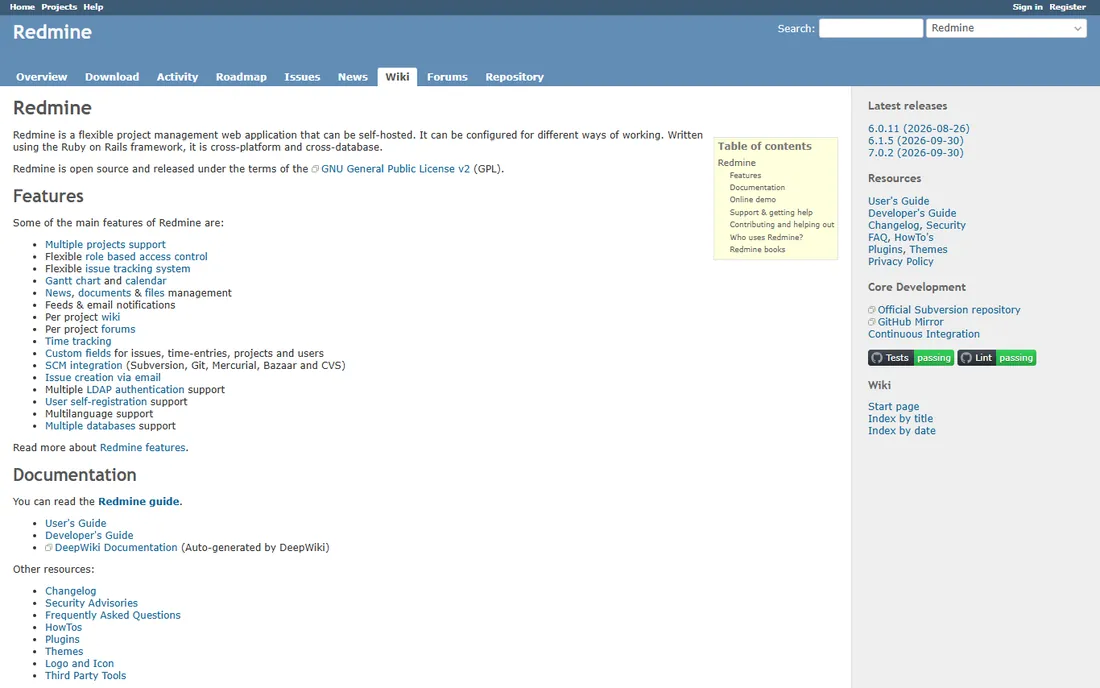
Redmine has been the self-hosted workhorse for nearly two decades, and its flexibility remains unmatched in open source: custom issue types, fields, workflows, roles and trackers bend it to almost any process. The plugin ecosystem adds Gantt improvements, agile boards, CRM features and more. It runs on modest hardware and the data stays entirely yours.
The interface is unapologetically old-school, and new users need orientation. Rails hosting requires someone who knows what they are doing, and a heavily customized Redmine can become its own maintenance burden. But for teams with unusual workflows that SaaS tools will not accommodate, Redmine's adaptability is still the reason it survives every trend cycle.
What we like- Extremely flexible with custom fields and workflows
- Huge plugin ecosystem
- Runs almost anywhere
Watch out for- Dated interface
- Ruby on Rails hosting needs care
- Configuration can become a project itself
Starting priceFree
Free planYes
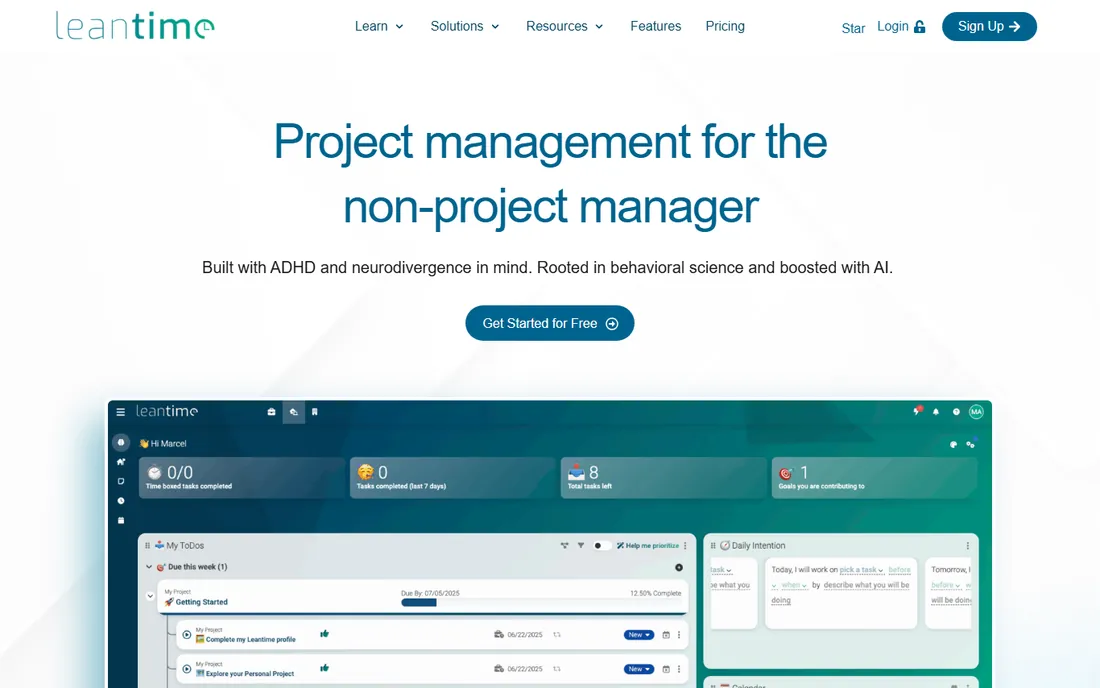
Leantime takes a different angle: project management organized around lean principles, with ideas, goals and projects connected instead of isolated task lists. It suits startups and agencies that think in terms of validated learning and strategic goals rather than ticket queues. The interface is modern and approachable for non-technical users.
The community and integration ecosystem are smaller than the established names, and hardcore engineering teams will miss advanced dev tooling. But for small organizations that want their project tool to reflect how they actually plan, ideas to goals to tasks, Leantime's opinionated structure is refreshing rather than limiting.
What we like- Built around lean startup methodology
- Combines tasks, ideas and goals
- Friendly for non-technical teams
Watch out for- Smaller community than rivals
- Fewer integrations
- Less suited to complex engineering workflows
#5
Plane
Best for: Modern open-source alternative to Jira
Visit plane.so
Starting priceFree
Free planYes
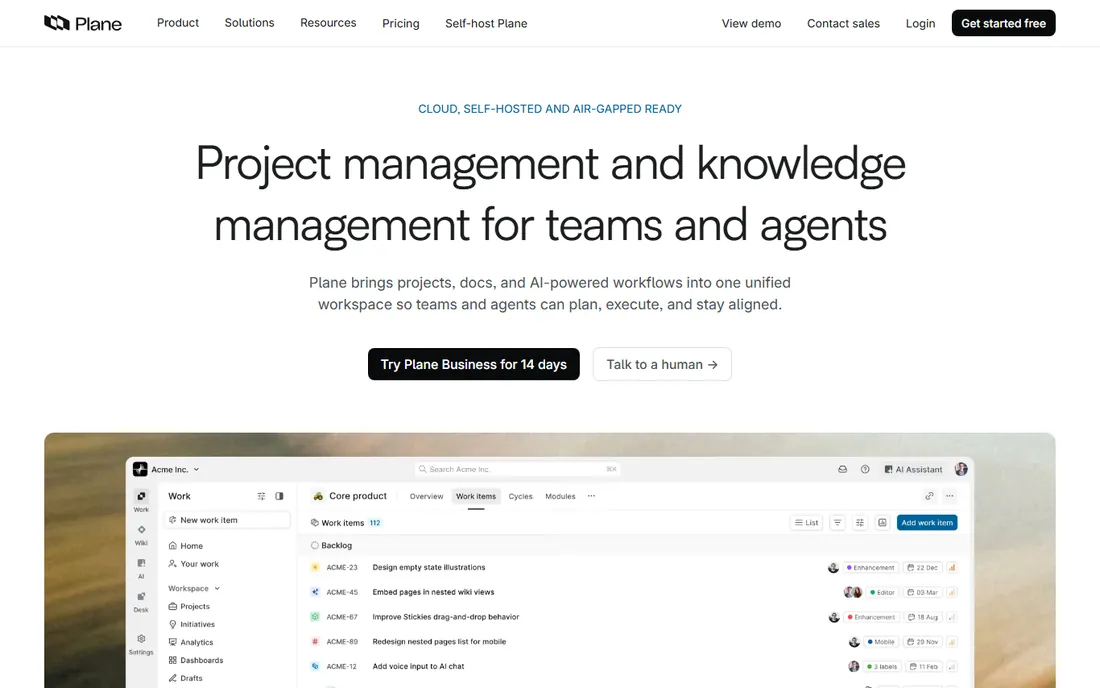
Plane is the open-source tool developers recommend when someone complains about Jira: quick, keyboard-friendly, and built around cycles, modules and views that map to how software teams work. The Docker install is genuinely simple, and the interface feels like a modern SaaS product rather than an open-source compromise.
As a younger project, some advanced features are still maturing and the ecosystem is growing. Paid cloud and enterprise tiers fund development, which is healthy for longevity. For development teams that want Jira-like power on their own infrastructure without the Atlassian tax or cloud requirement, Plane is currently the most exciting option.
What we like- Fast, modern interface developers like
- Open source with straightforward Docker install
- Cycles and modules mirror familiar agile concepts
Watch out for- Younger project with evolving features
- Enterprise features are paid
- Ecosystem is still growing
Starting priceFree
Free planYes
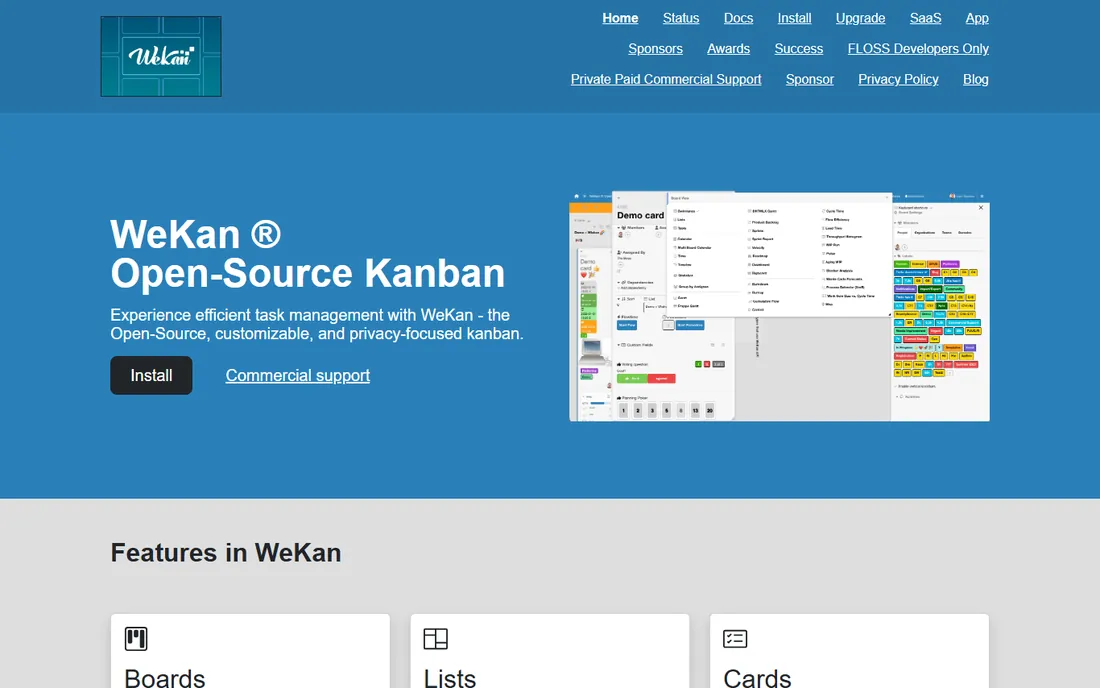
Wekan is the answer to "we just want Trello on our own server." Boards, lists, cards, labels, checklists and attachments work the way Trello users expect, and it runs on minimal hardware with an MIT license. Organizations with strict data residency rules get kanban without any external dependency.
It does not try to be more than kanban. Reporting, time tracking and advanced workflows are absent or basic, and very large boards can strain performance. For teams whose process genuinely fits on a kanban board and whose IT policy forbids cloud tools, Wekan's simplicity is the feature.
What we like- Trello-like kanban that runs anywhere
- Very light on resources
- MIT licensed with no restrictions
Watch out for- Basic feature set
- Interface is functional rather than polished
- Large boards can feel slow
Starting priceFree
Free planYes
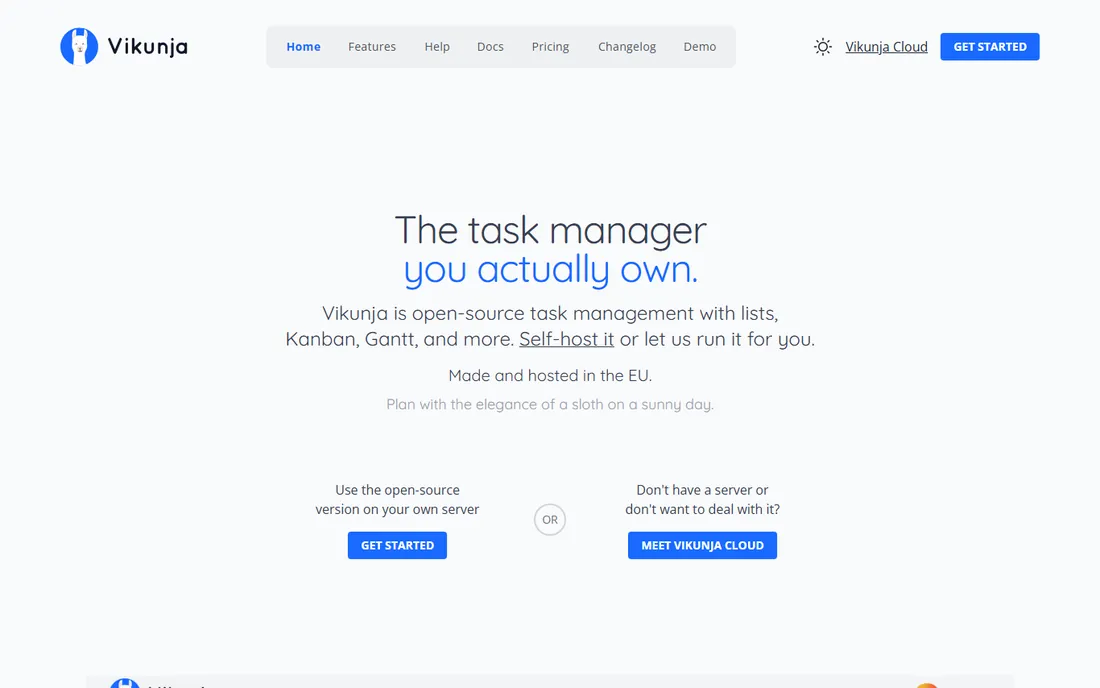
Vikunja brings the polished personal-task-manager experience to self-hosting: the interface feels like Todoist, with lists, kanban boards and Gantt views over the same data. CalDAV support syncs tasks to phone calendars, and the API enables integrations. It is written in Go, which makes deployment a single binary.
Team collaboration features are lighter than the PM suites, and the community is smaller. It shines for individuals and small teams that want a fast, private task manager rather than an enterprise platform. If your needs are "my tasks, our shared lists, deadlines and reminders" on your own server, Vikunja is lovely.
What we like- Clean Todoist-like experience self-hosted
- Lists, kanban and Gantt views
- CalDAV and API support
Watch out for- Smaller community
- Fewer team collaboration features
- Project is younger
Starting priceFree
Free planYes
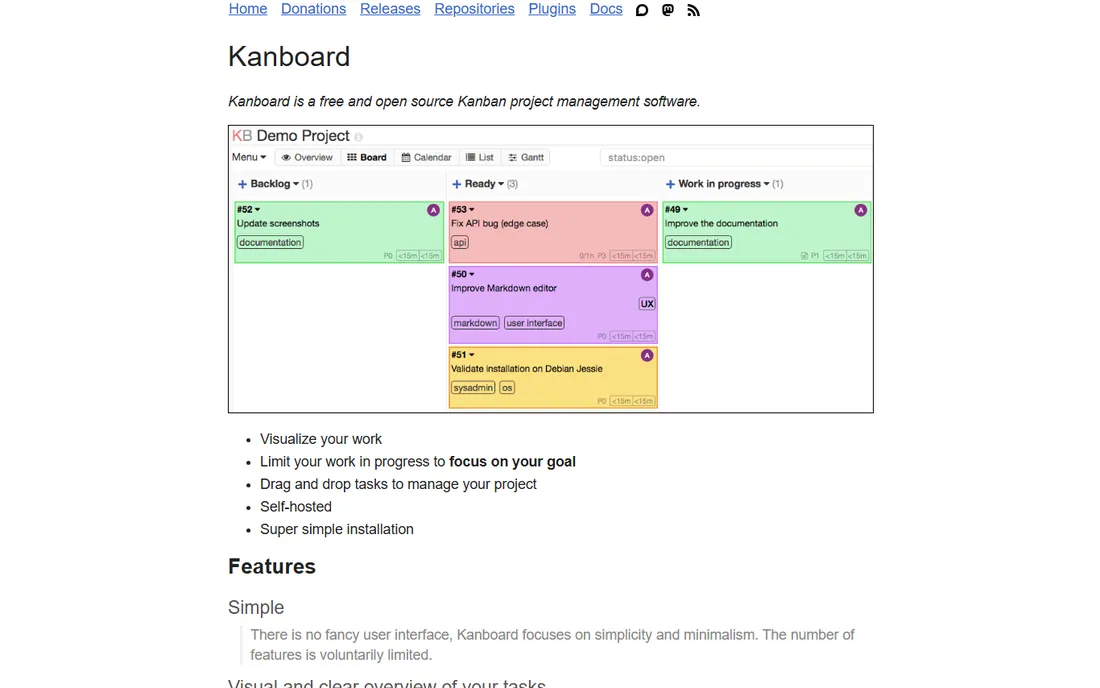
Kanboard is minimalism as a philosophy: a single PHP application that does kanban boards and little else, installable on the cheapest shared hosting. Swimlanes, WIP limits, subtasks and time tracking cover the essentials. There is almost nothing to learn and almost nothing to break.
The design is spartan and the feature ceiling is low by intention. Teams that need more will outgrow it quickly. But for a small team's visual task board on infrastructure you already have, Kanboard's near-zero footprint is unmatched. Sometimes the best tool is the one with nothing extra.
What we like- Extremely lightweight single PHP app
- Dead simple kanban
- Runs on almost any web hosting
Watch out for- Minimal features by design
- Dated look
- No built-in Gantt or reporting depth
Starting priceFree
Free planYes

Tuleap is the heavyweight: an open-source ALM platform covering requirements, agile planning, code repositories, CI integration, test management and documentation. Regulated industries and large engineering organizations choose it when they need traceability from requirement to release on their own infrastructure. The open-source edition is genuinely complete.
With great power comes administration overhead. Tuleap needs a capable admin and real server resources, and the interface prioritizes function over beauty. Simple teams should look elsewhere. Engineering organizations that need an on-premises alternative to the Atlassian suite with stronger governance will find Tuleap worth the investment.
What we like- Full application lifecycle management
- Strong for regulated industries
- Agile, kanban and document management together
Watch out for- Complex to set up and administer
- Interface is utilitarian
- Overkill for simple task tracking
Starting priceSee website
Free planFree tier
YouTrack is JetBrains' issue tracker, and it reflects the company's developer obsession: a powerful query language, customizable workflows, agile boards and tight IDE integration. Crucially for this list, it offers an on-premises version, so teams that love the tool do not have to use the cloud. A free tier covers small teams.
Licenses for larger teams are commercial and priced accordingly. The query syntax takes learning, and it is an issue tracker first rather than a full PM suite. For development teams standardized on JetBrains tools that need issue tracking behind their own firewall, YouTrack is the natural and excellent choice.
What we like- Powerful query language and workflows
- On-premises option for data control
- Great for teams already using JetBrains IDEs
Watch out for- Commercial licenses cost real money
- Learning curve on the query syntax
- Less PM breadth than OpenProject
The hidden cost: maintenance
Self-hosted does not mean free. Every tool on this list needs a server, backups, updates, security patches and someone who notices when something breaks. For a small team, that someone is usually a developer pulled off product work, and their time has a price. Before choosing self-hosted, estimate honestly: a modest VPS plus a few hours monthly of skilled attention.
The calculus favors self-hosting in three cases: regulatory or contractual data control requirements, existing infrastructure and ops skill going spare, and philosophical opposition to subscription lock-in. If none of those apply strongly, a SaaS tool's subscription often costs less than the ops burden. The tools here are excellent; just make sure you are choosing them for the right reasons.
How we chose
We selected actively maintained tools that install on your own infrastructure and cover real project management needs. We verified each project's site and current status, replacing discontinued options: Focalboard's development was archived by Mattermost, so we substituted the actively maintained Wekan. We favored Docker-friendly, documented projects with real user communities.
What to check before you commit
Test the install before you commit the team. Spin up the Docker image, create a real project, and invite two colleagues to use it for a week. Check the upgrade path: how do version upgrades work, and how painful are they historically. Review the backup story, because a project database with no tested restore is a hope, not a plan.
Evaluate the community health too. When was the last release. How fast do security issues get fixed. Is there commercial support available if you need it. OpenProject, Plane and Taiga all offer paid tiers that fund development, which is a good sign for longevity. And confirm the license: most here are GPL or MIT, but enterprise add-ons may carry commercial terms.
Frequently asked questions
What does self-hosted project management software mean?
It means the software runs on your own servers or VPS instead of the vendor's cloud. You control the data, the uptime and the updates, and most options are open source and free to use. The tradeoff is that you handle installation, maintenance and backups.
Is self-hosted really cheaper than SaaS?
Sometimes. The software is usually free, but servers, backups and maintenance time cost money. For a ten-person team, a VPS plus a few ops hours monthly often beats SaaS subscriptions. For a hundred-person team, the ops burden grows and the math gets closer.
Which self-hosted tool is easiest to install?
Vikunja (single Go binary), Kanboard (single PHP app) and Wekan are the simplest. Plane, Taiga and OpenProject offer straightforward Docker installs. Redmine and Tuleap need more care.
Can I migrate from Trello or Asana?
Most tools import CSV at minimum, and several offer Trello importers. Expect to rebuild automations and integrations manually. Migrate one team's boards first as a pilot before moving everyone.
What happened to Focalboard?
Focalboard, Mattermost's kanban tool, had its development archived and is no longer actively maintained. Wekan is the closest actively developed open-source alternative for simple self-hosted kanban.
Do any offer a hosted version too?
Yes. OpenProject, Taiga, Plane and YouTrack all offer paid hosted or cloud versions alongside self-hosting, which gives you a migration path if you later decide you would rather not run servers.
Sources we checked (10)
- https://www.openproject.org/
- https://taiga.io/
- https://www.redmine.org/
- https://leantime.io/
- https://plane.so/
- https://wekan.github.io/
- https://vikunja.io/
- https://kanboard.org/
- https://www.tuleap.com/
- https://www.jetbrains.com/youtrack/
Is your product missing or out of date?
We review this list regularly. Vendors can request a listing, send updated pricing or ask about featured placement.

Shihab Mia · Founder, Rankite
Shihab has spent more than a decade helping SaaS and e-commerce brands grow through search. He writes Rankite's software buying guides from pricing pages, documentation and public user reviews. More about Shihab.