How we make this list: we compare pricing pages, product documentation and public user reviews. Rankite is independent; if a vendor ever pays for a featured spot, that listing is clearly labeled Partner.
Key takeaways
- Anaplan and o9 Solutions lead for flexible enterprise planning that connects S&OP to finance; Kinaxis is the specialist for rapid what-if analysis in manufacturing.
- SAP IBP is the natural fit for SAP shops; Blue Yonder stands out for retail and distribution networks; ToolsGroup delivers inventory-led planning with low manual effort.
- John Galt Solutions and Netstock serve the mid-market: configurable S&OP without enterprise overhead, with Netstock live in 90 days or less on standard ERPs.
- Every vendor sells by quote with no public pricing, so shortlist on ERP fit and planning complexity first, then run a proof of concept with your own data.
- Ask each finalist how their customers run the monthly cycle. Software that matches your meeting rhythm gets adopted; software that fights it gets shelved.
Quick comparison
| Tool | Best for | Starting price | Free plan |
|---|
 Anaplan Anaplan | Large enterprises that need flexible scenario planning across finance and supply chain | See website | No free plan (demo available) |
 o9 Solutions o9 Solutions | Global companies pursuing end-to-end integrated business planning with AI | See website | No free plan (demo available) |
 Kinaxis Kinaxis | Manufacturers that need concurrent scenario planning with instant impact analysis | See website | No free plan (demo available) |
 SAP IBP SAP IBP | Existing SAP customers that want S&OP native to their ERP environment | See website | No free plan (trial available) |
 Blue Yonder Blue Yonder | Retailers and distributors that want AI-driven planning across a multi-tier network | See website | No free plan (demo available) |
 ToolsGroup ToolsGroup | Inventory-intensive businesses that want probabilistic planning with low manual effort | See website | No free plan (demo available) |
 John Galt Solutions John Galt Solutions | Mid-market manufacturers seeking configurable S&OP without enterprise overhead | See website | No free plan (demo available) |
 Logility Logility | Companies that want scenario planning with a digital twin and decision audit trail | See website | No free plan (demo available) |
 Netstock Netstock | SMBs running on an ERP that need supply and demand planning without a big project | See website | No free plan (demo available) |
Is your product missing or out of date?
We review this list regularly. Vendors can request a listing, send updated pricing or ask about featured placement.
The best S&OP software
#1
Anaplan
Best for: Large enterprises that need flexible scenario planning across finance and supply chain
Visit anaplan.com
Starting priceSee website
Free planNo free plan (demo available)
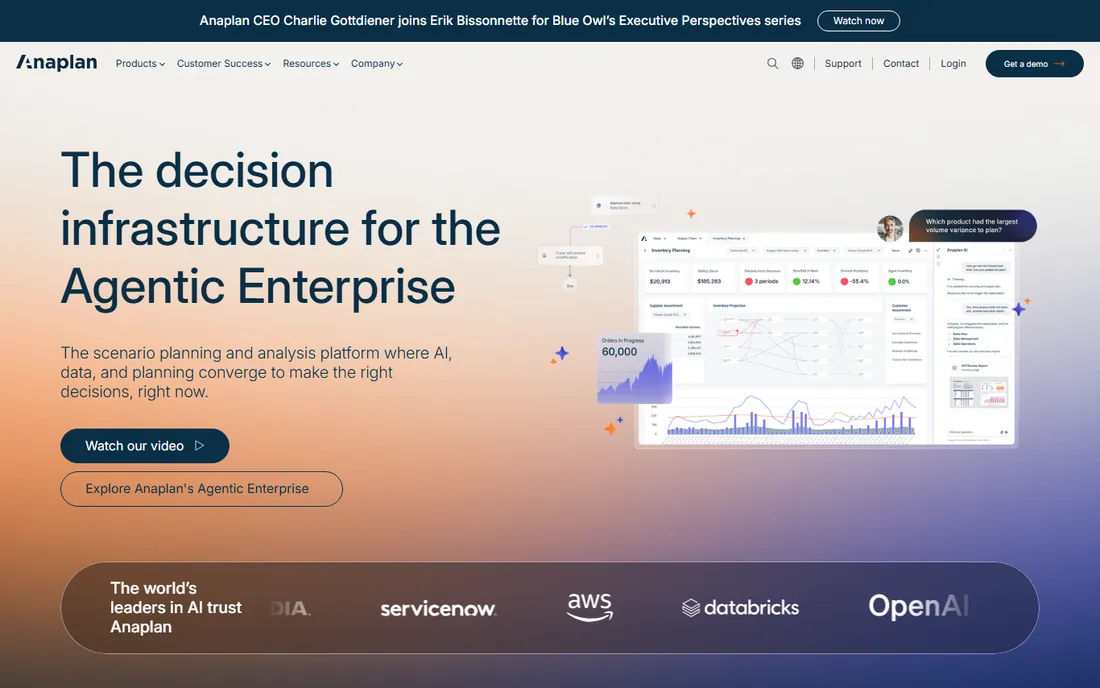
What we like- Connected planning platform linking S&OP to financial and workforce plans
- Strong what-if scenario modeling
- Used by nearly half of the Fortune 50
Watch out for- Implementation is complex and partner-dependent
- Pricing is quote-based and aimed at enterprise budgets
#2
o9 Solutions
Best for: Global companies pursuing end-to-end integrated business planning with AI
Visit o9solutions.com
Starting priceSee website
Free planNo free plan (demo available)

What we like- Digital Brain platform unifies demand, supply and financial planning on one model
- Enterprise knowledge graph drives fast scenario analysis
- Named a leader in 2026 Gartner Magic Quadrant reports
Watch out for- Built for large transformation programs with long sales cycles
- Overkill for mid-market teams
#3
Kinaxis
Best for: Manufacturers that need concurrent scenario planning with instant impact analysis
Visit kinaxis.com
Starting priceSee website
Free planNo free plan (demo available)
What we like- Maestro platform evaluates unlimited scenarios concurrently with instant ripple-effect analysis
- Dedicated S&OP module aligns functions and financial targets
- Positioned highest on execution in the 2026 Gartner Magic Quadrant for discrete industries
Watch out for- Premium pricing for premium capability
- Best value for complex supply chains rather than simple operations
#4
SAP IBP
Best for: Existing SAP customers that want S&OP native to their ERP environment
Visit sap.com
Starting priceSee website
Free planNo free plan (trial available)
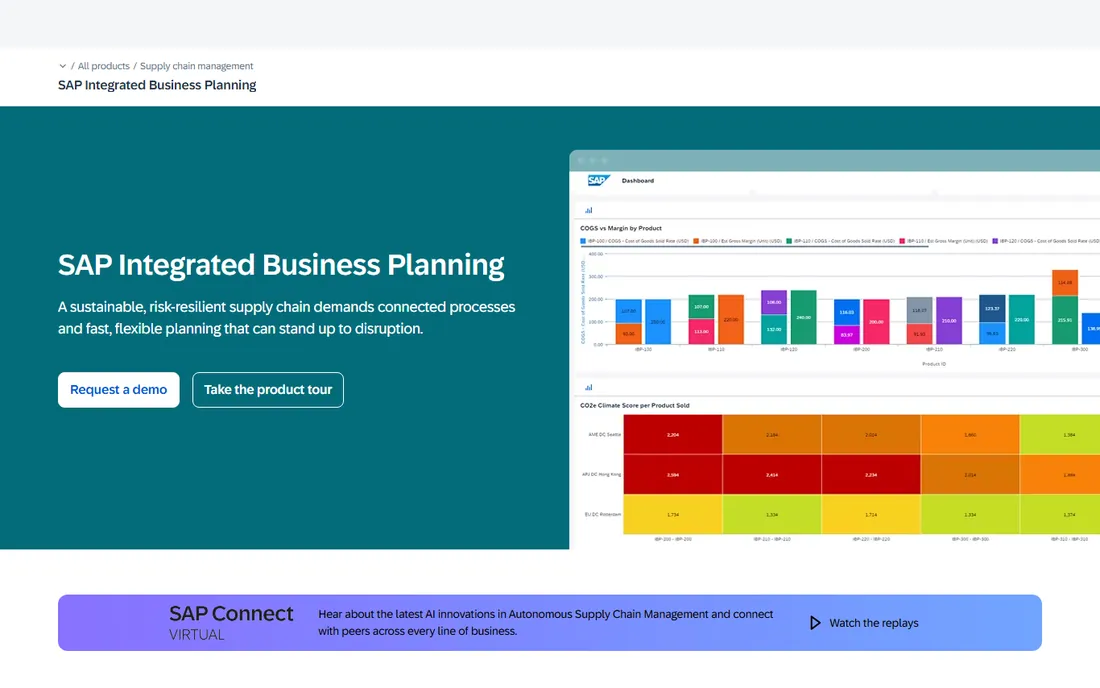
What we like- Unified S&OP process integrating financial and operational planning
- AI-powered demand algorithms with automated outlier correction
- Deep integration with SAP and third-party systems
Watch out for- Tightest fit for companies already on SAP
- Configuration and licensing can be heavy
#5
Blue Yonder
Best for: Retailers and distributors that want AI-driven planning across a multi-tier network
Visit blueyonder.com
Starting priceSee website
Free planNo free plan (demo available)
What we like- Billions of daily ML predictions feed planning decisions
- Common data cloud connects all tiers and trading partners
- Named a leader in four Gartner Magic Quadrant reports
Watch out for- Broad platform means S&OP is one module among many
- Enterprise sales process with no self-serve option
#6
ToolsGroup
Best for: Inventory-intensive businesses that want probabilistic planning with low manual effort
Visit toolsgroup.com
Starting priceSee website
Free planNo free plan (demo available)
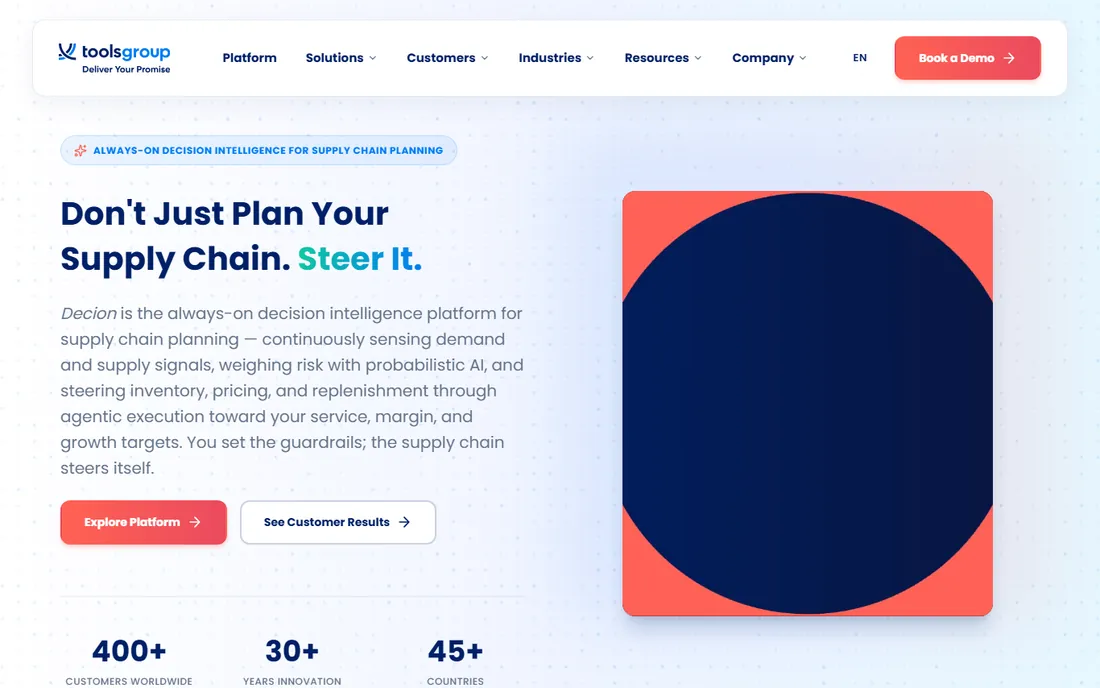
What we like- Always-on decision intelligence continuously senses demand and supply signals
- Probabilistic AI weighs risk in inventory and replenishment
- Customers report 5-10 point forecast accuracy improvements
Watch out for- Strength leans toward inventory optimization more than full financial integration
- Quote-based pricing
#7
John Galt Solutions
Best for: Mid-market manufacturers seeking configurable S&OP without enterprise overhead
Visit johngalt.com
Starting priceSee website
Free planNo free plan (demo available)
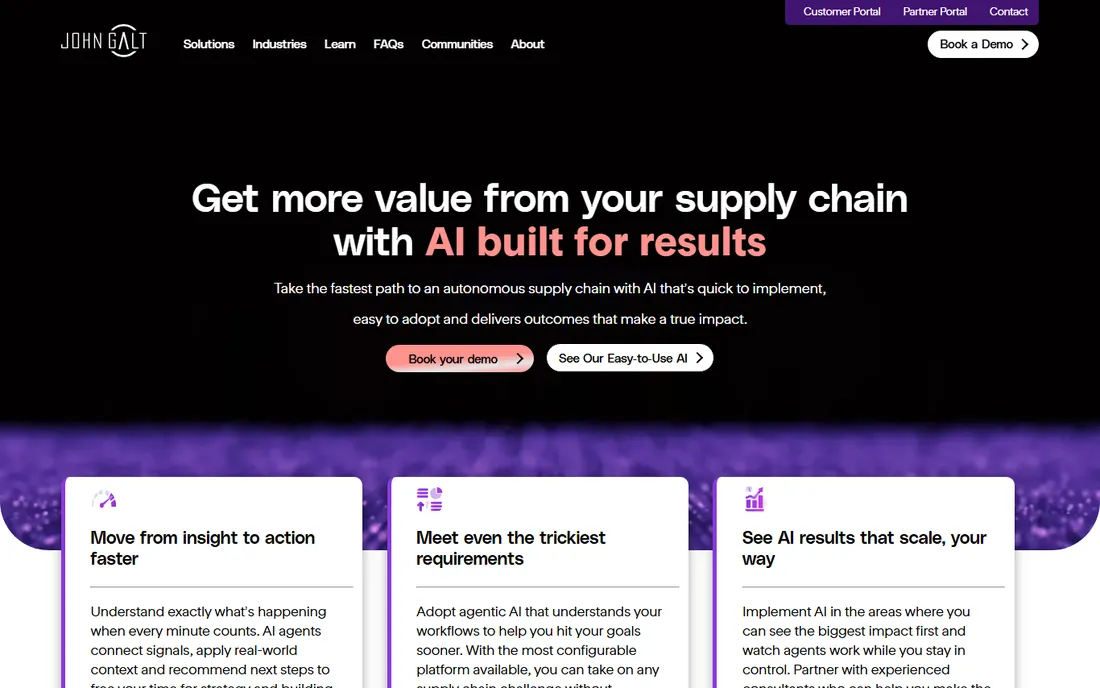
What we like- Atlas platform is highly configurable for tricky supply chain requirements
- Dedicated S&OP/IBP module with AI insights
- Praised for usability and fast implementation by analysts
Watch out for- Smaller vendor ecosystem than the giants
- Advanced features may need consultant configuration
#8
Logility
Best for: Companies that want scenario planning with a digital twin and decision audit trail
Visit logility.com
Starting priceSee website
Free planNo free plan (demo available)
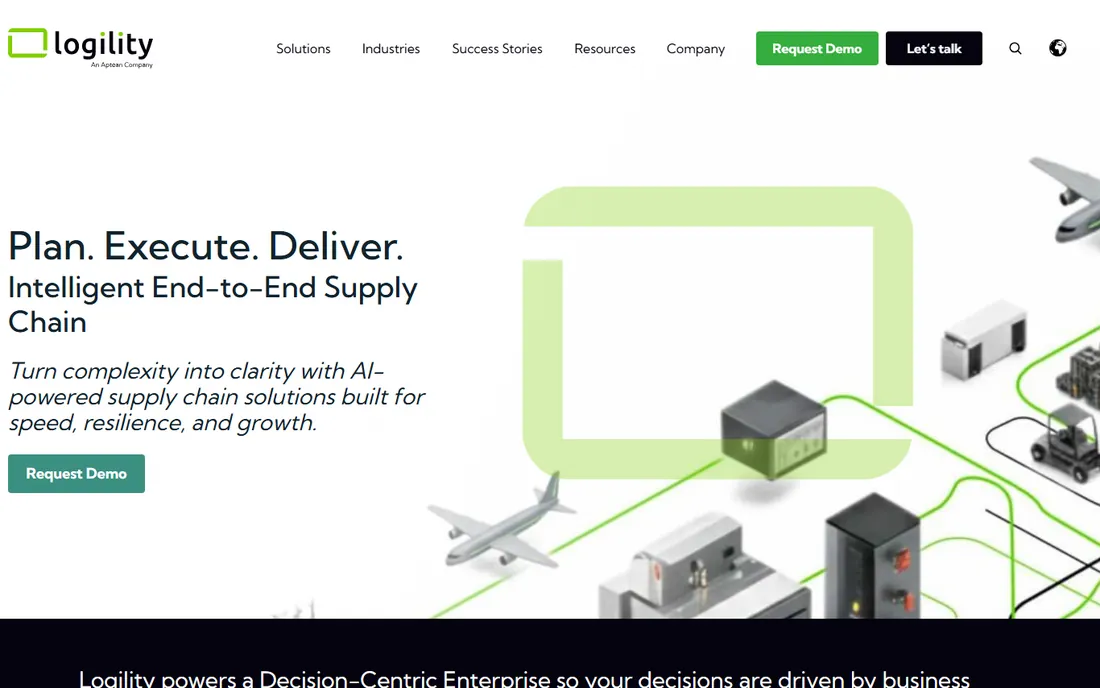
What we like- Decision Command Center orchestrates cross-functional decisions with a full audit trail
- Scenario planning integrated with a digital twin
- Deep CPG and manufacturing expertise
Watch out for- Acquired by Aptean, so roadmap watchers should track integration direction
- Enterprise-focused with no public pricing
#9
Netstock
Best for: SMBs running on an ERP that need supply and demand planning without a big project
Visit netstock.com
Starting priceSee website
Free planNo free plan (demo available)
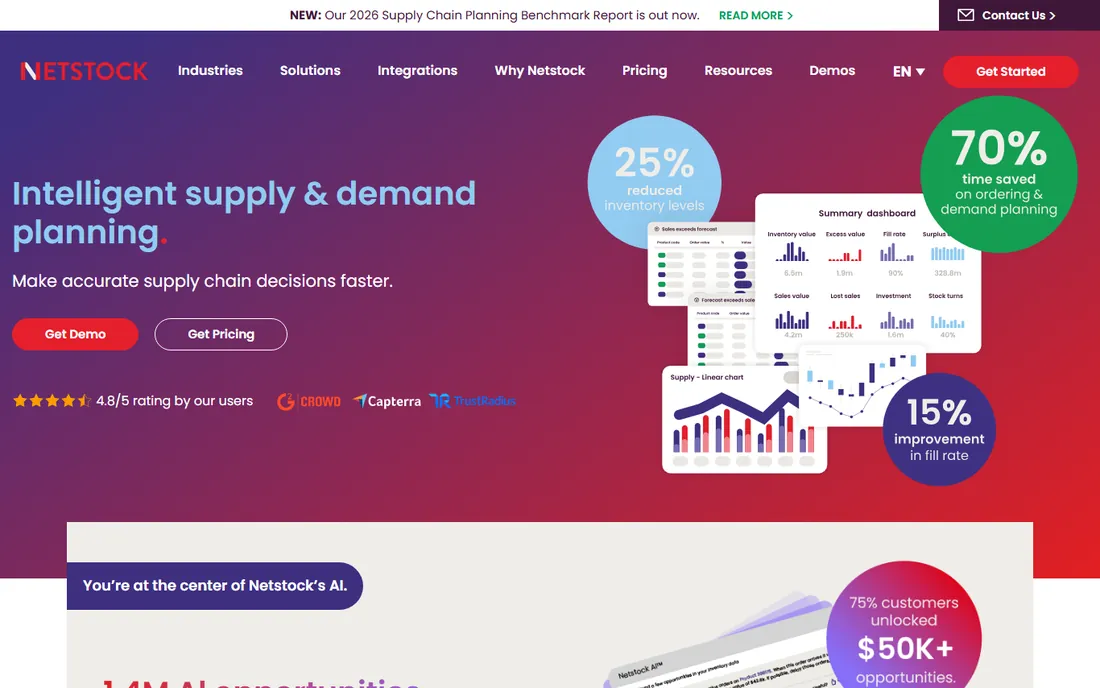
What we like- Widest range of ERP integrations in its class
- Fully operational in 90 days or less
- AI surfaces the critical issues most teams miss
Watch out for- Focused on supply and demand planning rather than full S&OP process management
- Pricing requires a sales conversation
How we chose
We did not evaluate these platforms hands-on for this guide. Instead we compared each vendor's product documentation, checked analyst reports including the 2026 Gartner Magic Quadrant for supply chain planning, and read public reviews on G2, Capterra and Reddit, with special attention to complaints about implementation timelines, forecast accuracy, and ERP integration quality. We favored platforms with proven S&OP process support rather than generic planning tools, and weighted fit for the buying team: planning managers and supply chain directors who need a defensible shortlist.
Because no vendor publishes pricing, we scored on transparency instead: clear module packaging, published implementation timelines, and named reference customers on common ERPs. Platforms that force every answer through a sales call scored lower on value clarity, even when their capability is strong.
How to shortlist in a week
Do not start with demos. Start with three filters. First, your ERP: if you run SAP, SAP IBP deserves a serious look; if you run a mid-market ERP, Netstock and John Galt Solutions will connect faster. Second, your planning complexity: concurrent scenario modeling matters for complex networks, which points to Kinaxis or o9; simpler operations can use ToolsGroup or Netstock. Third, your budget band: enterprise platforms need enterprise budgets, so confirm the ballpark before investing weeks in evaluation. Apply these filters and your list of nine drops to three in a day. Then run a proof of concept with your own data on the finalists before talking pricing, because fit is decided by your numbers, not the vendor's demo script.
When S&OP software is not the answer
Software cannot fix a process problem. If your sales team refuses to commit to a forecast, if finance plans on a different calendar than operations, or if nobody owns the monthly meeting, a platform will just digitize the dysfunction. Fix the meeting cadence and the ownership first, then buy the tool. Start with a written S&OP policy that names who decides when the numbers disagree, and hold the meeting on a fixed monthly rhythm for at least two quarters before layering software on top. Companies that skip this step end up with an expensive system that produces plans nobody follows. The tools on this list amplify a working process; they do not create one.
Red flags in vendor demos
Watch for four warning signs. The first is a demo that never touches your data: every platform looks smart with clean sample data, so insist on a proof of concept with your own SKUs and history. The second is scenario modeling that takes overnight batch runs: if "what if" cannot be answered during the meeting, the tool will not change the meeting. The third is pricing that excludes implementation: license cost is often less than half the first-year spend, so get services, training and integration estimates up front. The fourth is a vendor that will not name reference customers on your ERP: generic case studies mean the integration work will fall on you.
The implementation reality nobody advertises
Software selection gets the attention, but data readiness decides the outcome. Most S&OP projects stall because demand history is incomplete, product hierarchies are inconsistent, or the ERP feeds break on edge cases. Budget as much time for data cleanup as for configuration, and assign an internal data owner before the vendor arrives. The fastest go-lives, like Netstock's 90-day deployments, work because the ERP integration handles the data pipeline. The slowest drag on because nobody owned the data. Also plan for change management: planners who have run the process in spreadsheets for a decade will not adopt a new tool unless the first planning cycle is visibly easier than the old way. Pick an internal champion who attends every cycle, give them real authority to settle forecast arguments, and measure adoption in the first quarter rather than assuming it. A platform that three people use is not an S&OP system; it is an expensive report.
Frequently asked questions
What is S&OP software?
S&OP software supports the sales and operations planning process: building a consensus plan that balances demand and supply, then tracking execution against it. It typically includes demand forecasting, scenario modeling, financial reconciliation and collaboration workflows.
What is the difference between S&OP and IBP?
S&OP aligns sales, operations and finance around one plan, usually monthly. IBP (integrated business planning) extends that to a longer horizon with deeper financial integration and strategic scenario planning. Many vendors use the terms interchangeably, so check what the platform actually does rather than trusting the label.
How much does S&OP software cost?
None of the major vendors publish pricing; it is quote-based and depends on users, modules and implementation scope. Enterprise platforms typically run into six figures annually, while mid-market options like Netstock and John Galt Solutions cost far less. Always get the implementation estimate in writing alongside the license quote.
How long does implementation take?
It varies widely. Netstock advertises full operation in 90 days or less for its ERP-integrated planning. Enterprise platforms like Anaplan, o9 and SAP IBP often take 6 to 18 months depending on scope and data readiness. The biggest variable is your own data quality, not the vendor.
Can S&OP software integrate with our ERP?
Yes, integration is table stakes. Netstock offers the widest ERP integration range for SMBs, SAP IBP is native for SAP shops, and all the enterprise platforms provide APIs and prebuilt connectors. Ask vendors for reference customers on your exact ERP version, not just the ERP brand.
Which S&OP software is best for small businesses?
Most platforms on this list are built for mid-market and enterprise teams, so small businesses should shortlist Netstock first: it integrates with common ERPs and goes live in 90 days or less. John Galt Solutions also serves the mid-market with a configurable platform that does not need enterprise overhead.
Sources we checked (0)
Is your product missing or out of date?
We review this list regularly. Vendors can request a listing, send updated pricing or ask about featured placement.

Shihab Mia · Founder, Rankite
Shihab has spent more than a decade helping SaaS and e-commerce brands grow through search. He writes Rankite's software buying guides from pricing pages, documentation and public user reviews. More about Shihab.