How we make this list: we compare pricing pages, product documentation and public user reviews. Rankite is independent; if a vendor ever pays for a featured spot, that listing is clearly labeled Partner.
Key takeaways
- Inventory-focused forecasting clusters at $199 to $900 a month: StockTrim (from $199) and Netstock (from $900) cover SMB distributors without enterprise projects.
- Your ERP decides the shortlist more than any feature: Netstock's 60-plus native ERP connectors are why it implements in 6 to 10 weeks.
- Enterprise planning (RELEX, Anaplan, ToolsGroup, Slimstock) is quote-based and built for complex networks; expect a real implementation project, not a signup.
- Forecast accuracy claims are marketing until proven on your data: run a backtest on 12 months of your history before committing to any platform.
Quick comparison
| Tool | Best for | Starting price | Free plan |
|---|
 Netstock Netstock | SMB distributors and manufacturers already on an ERP | From $900/month | No |
 StockTrim StockTrim | Growing SMBs that want AI forecasting affordably | See website | No (free trial available) |
 EazyStock EazyStock | Wholesale distributors wanting simple ERP-connected planning | See website | No |
 Lokad Lokad | Technical teams that want programmable forecasting | See website | No |
 Slimstock Slimstock | Mid-to-large distributors needing forecasting depth | See website | No |
 RELEX Solutions RELEX Solutions | Large retailers, wholesalers and manufacturers | See website | No |
 ToolsGroup ToolsGroup | Enterprise supply chain planning and S&OP | See website | No |
 Anaplan Anaplan | Connected enterprise planning across finance and operations | See website | No (free trial available) |
 John Galt Atlas Planning John Galt Atlas Planning | Mid-market demand planning with collaborative S&OP | See website | No |
Is your product missing or out of date?
We review this list regularly. Vendors can request a listing, send updated pricing or ask about featured placement.
The best demand forecasting software
A stockout on your best seller costs the margin on every unit you could not ship. Excess stock on a slow mover costs warehouse space and working capital for a year. Demand forecasting software exists to shrink both errors at once, and the vendors all claim their algorithm is the most accurate. Ignore the claims. The nine platforms below are sorted by the business they actually fit.
#1
Netstock
Best for: SMB distributors and manufacturers already on an ERP
Visit netstock.com
Starting priceFrom $900/month
Free planNo
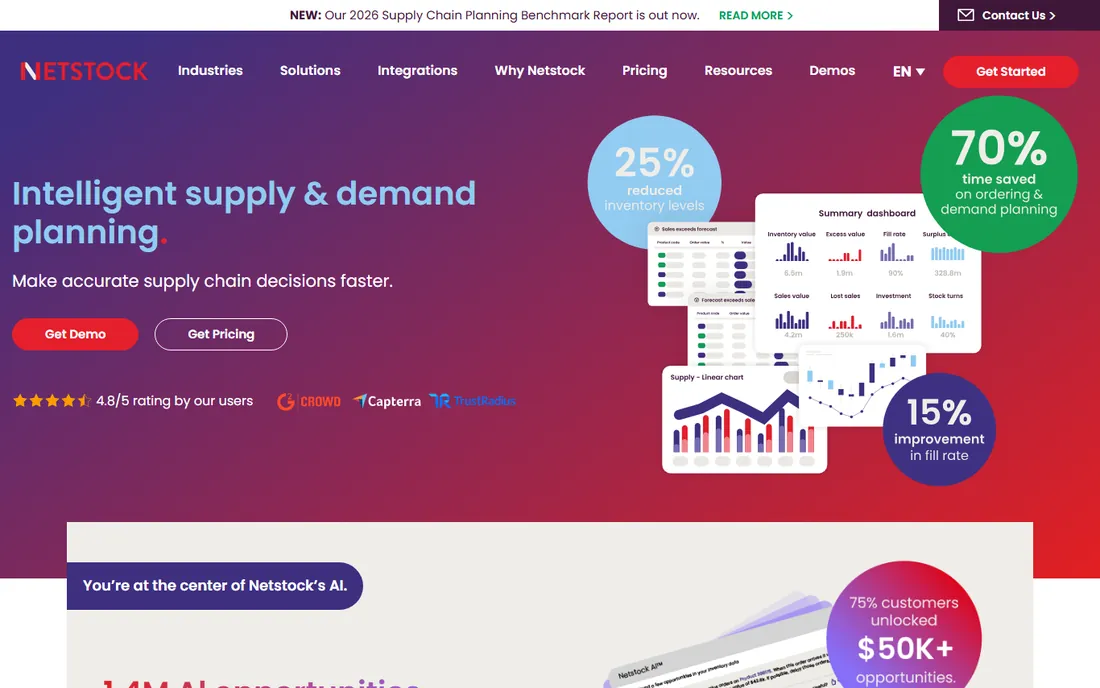
Netstock is the accessible entry to real inventory planning. It pulls data from your ERP, classifies products by value and velocity, recalculates safety stock against demand variability and supplier performance, and generates replenishment orders that respect minimum order quantities. The AI pack adds predictive forecasting on top. For distributors moving off spreadsheets, the 6-to-10-week implementation is the selling point.
The official FAQ puts entry at $900 a month, priced on inventory value rather than seats or locations, which suits small teams. Annual commitment is required, and there is a one-off activation fee. It is the best-documented value in the mid-market tier: formal planning software without the enterprise project.
What we like- Native connectors to 60-plus ERP systems make implementation fast (6 to 10 weeks)
- No per-user or per-location fees, pricing scales with inventory value
- Strong dashboards for demand variability and supplier reliability
Watch out for- Quote-led pricing with an annual commitment and a one-time activation fee
- Some users report needing manual forecast adjustments
- Reporting customization is limited
Starting priceSee website
Free planNo (free trial available)
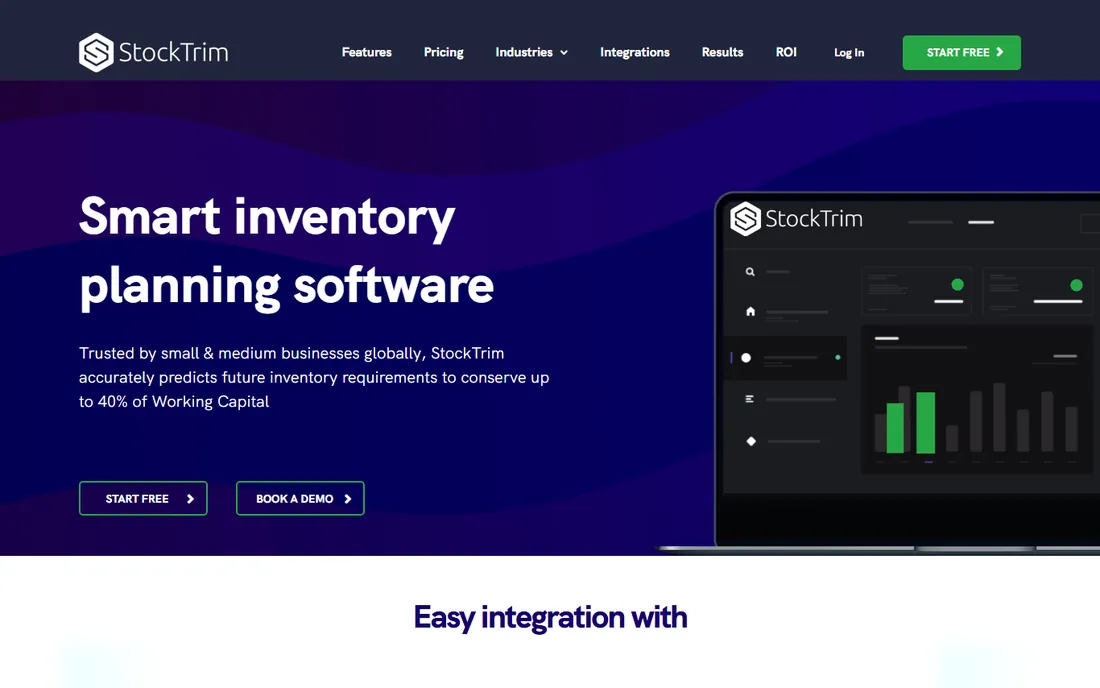
StockTrim sits in the practical middle: more capable than a lightweight app, far cheaper than Netstock or the enterprise tier. Third-party guides list tiers at $199, $299 and $399 a month with enterprise custom, covering AI forecasting, replenishment, manufacturing and multi-location support. For wholesalers and manufacturers that have outgrown spreadsheets but cannot justify $900 a month, it is the natural step.
The limitations are honest ones for the price: no public accuracy benchmarks, and complex multi-echelon networks will strain it. Confirm current pricing directly, since the tiers move. For the broad SMB middle, StockTrim is the value pick.
What we like- Published tiered pricing that SMBs can actually budget
- AI forecasting with order planning, new-product forecasting and multi-location support
- Broader than a basic app but still accessible
Watch out for- Monthly pricing climbs across tiers
- No published forecasting-accuracy figure
- Thinner than enterprise platforms on complex networks
#3
EazyStock
Best for: Wholesale distributors wanting simple ERP-connected planning
Visit eazystock.com
Starting priceSee website
Free planNo
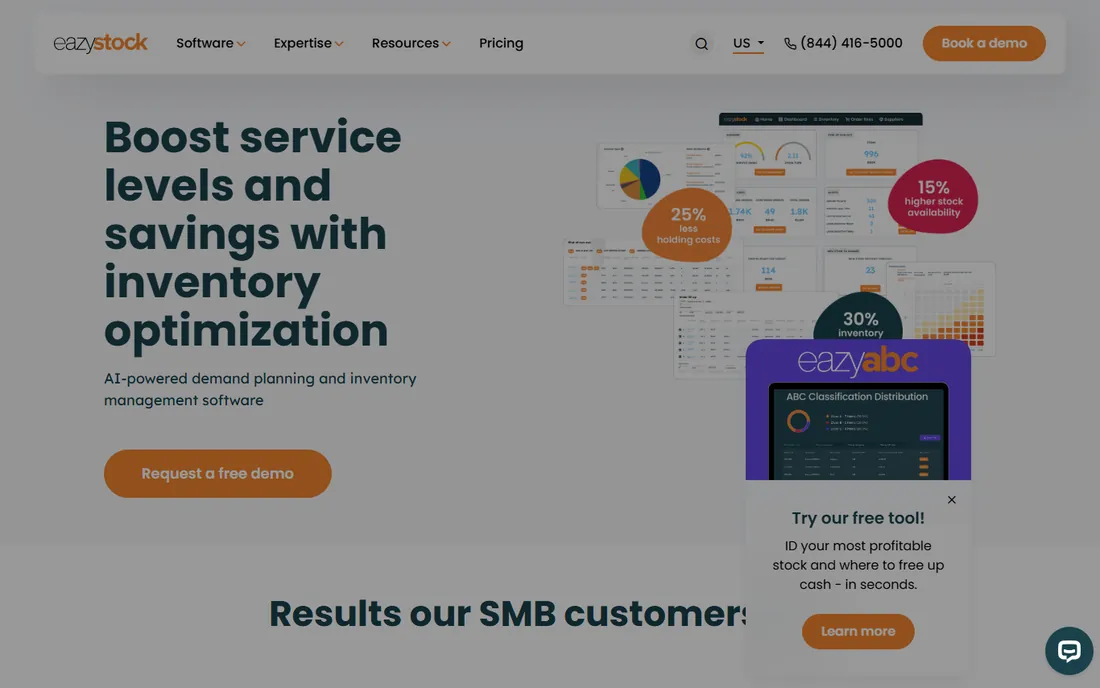
EazyStock, part of Syncron, targets wholesale distributors with a straightforward proposition: connect your ERP, get demand forecasts and order recommendations, pay a monthly subscription. The interface is deliberately approachable for planners who are not data scientists.
Pricing requires a sales conversation; third-party directories place entry near $750 a month. It will not run a multi-echelon network optimization or a full S&OP process. For distributors whose problem is "what should we reorder and when," EazyStock covers it without enterprise overhead.
What we like- Cloud-based with an affordable monthly subscription model
- Connects easily to major ERPs for demand forecasting and purchase recommendations
- User-friendly for non-technical planners
Watch out for- Pricing not published on the vendor site
- Narrower scope than full supply chain suites
#4
Lokad
Best for: Technical teams that want programmable forecasting
Visit lokad.com
Starting priceSee website
Free planNo
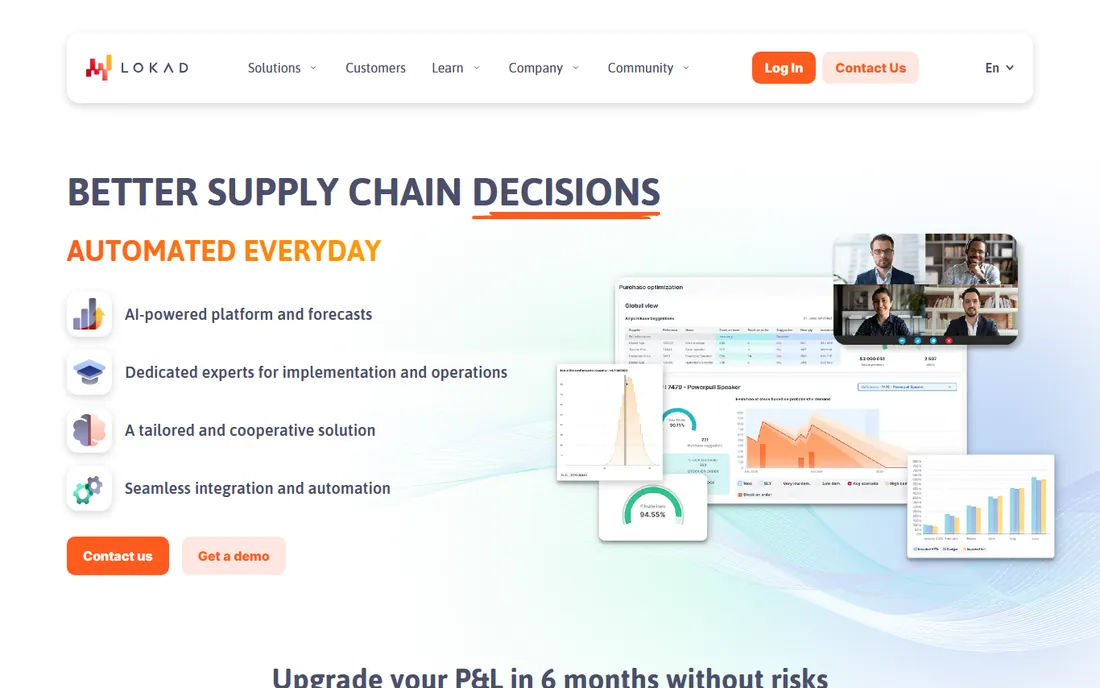
Lokad takes a different philosophical position: instead of a single forecast number, it produces probability distributions, so you can optimize for the service level you actually want. The platform is programmable, which delights data-savvy supply chain teams and excludes everyone else.
This is not software you buy for a planner to click through. It needs technical ownership and a quote-based commercial discussion. Companies with the quantitative talent to use it get forecasting depth the packaged tools cannot match. Companies without that talent should buy Netstock or StockTrim instead.
What we like- Probabilistic forecasting that quantifies uncertainty instead of hiding it
- Programmable platform for teams with data science skills
- Strong on pricing and inventory optimization together
Watch out for- Built for quantitative users, so business-only teams will struggle
- Quote-based pricing
- Implementation needs technical ownership
Starting priceSee website
Free planNo
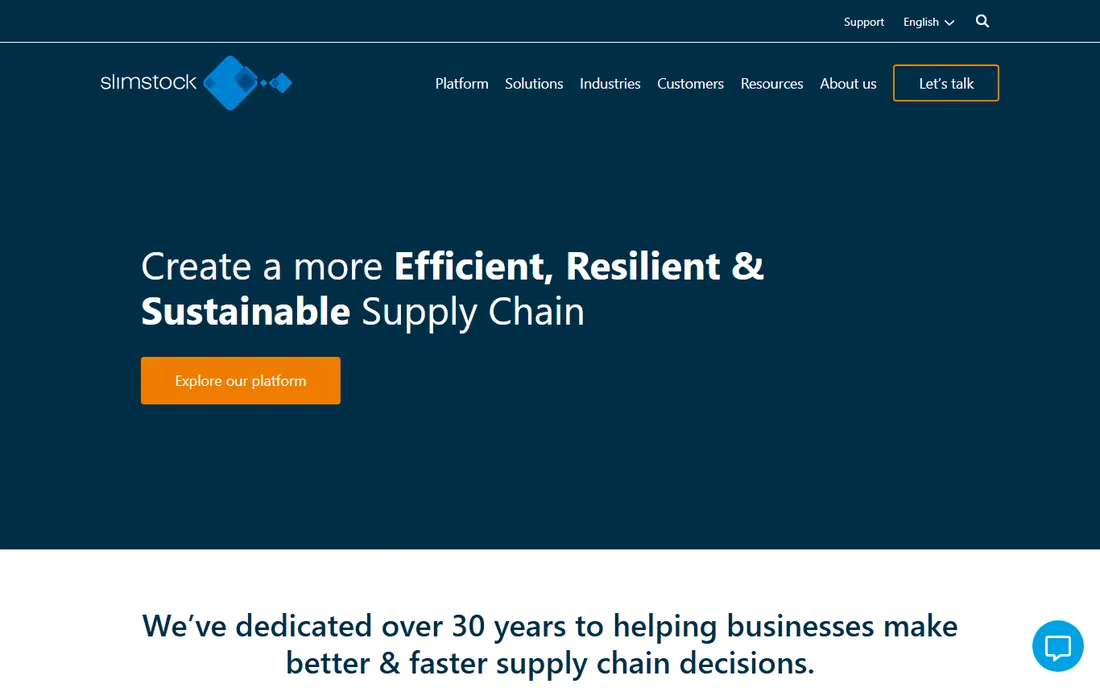
Slimstock's Slim4 goes head-to-head with Netstock for the distribution market and wins on depth: richer statistical models, scenario planning and stronger handling of complex assortments. Distributors with tens of thousands of SKUs and multiple warehouses get the modeling power the SMB tools lack.
The trade is weight. Pricing is quoted, implementations are real projects, and the total cost sits well above the SMB tier. It fits mid-to-large distributors whose planners already think statistically. Smaller operations will find it more platform than they can use.
What we like- Deep statistical modeling with scenario planning
- Strong ERP integrations without heavy manual configuration
- Long European track record in distribution
Watch out for- Quote-based pricing
- Heavier than SMB tools in both cost and implementation
Starting priceSee website
Free planNo
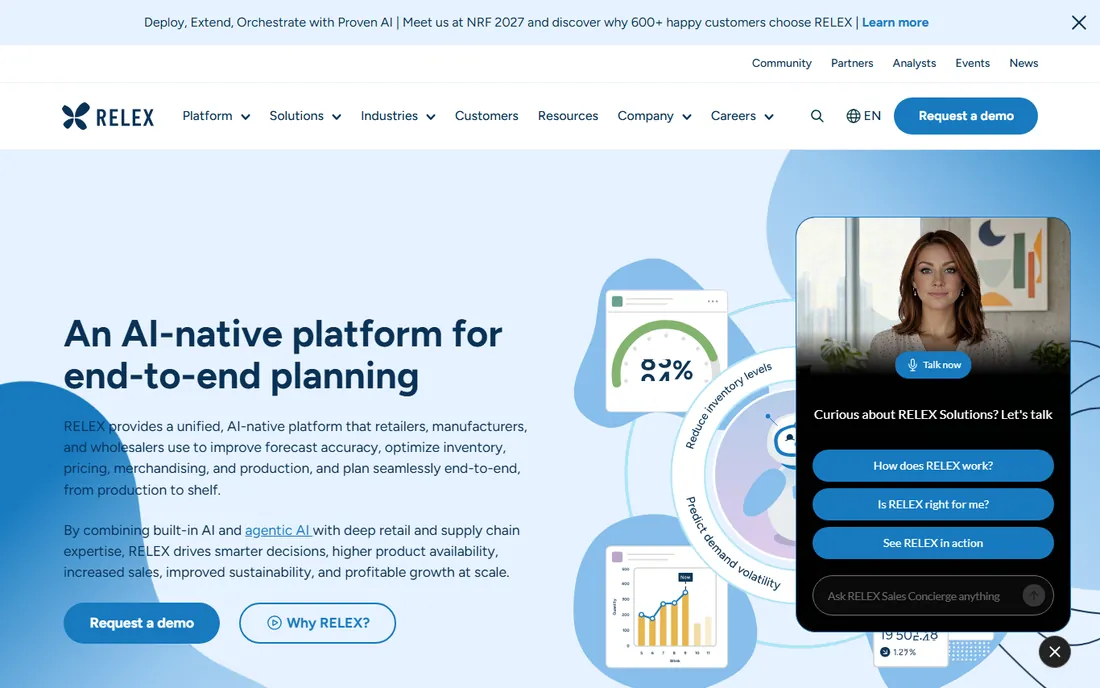
RELEX is what large retailers buy when the problem is network optimization, not reorder points. The platform forecasts demand, optimizes inventory across the entire network, and handles promotions, seasonality and fresh goods with AI-native models. Major grocery and retail chains run on it.
Everything about the commercial model signals enterprise: no public pricing, sales-led evaluation, implementation as a program. If your question is "what should we reorder," you do not need RELEX. If your question is "how do we optimize inventory across 500 stores and 12 distribution centers," it belongs at the top of the shortlist.
What we like- AI-native planning built for massive SKU and network complexity
- End-to-end inventory optimization, not just forecasting
- Strong retail pedigree with major chain references
Watch out for- No public pricing and clearly enterprise-only
- Implementations are major programs
Starting priceSee website
Free planNo
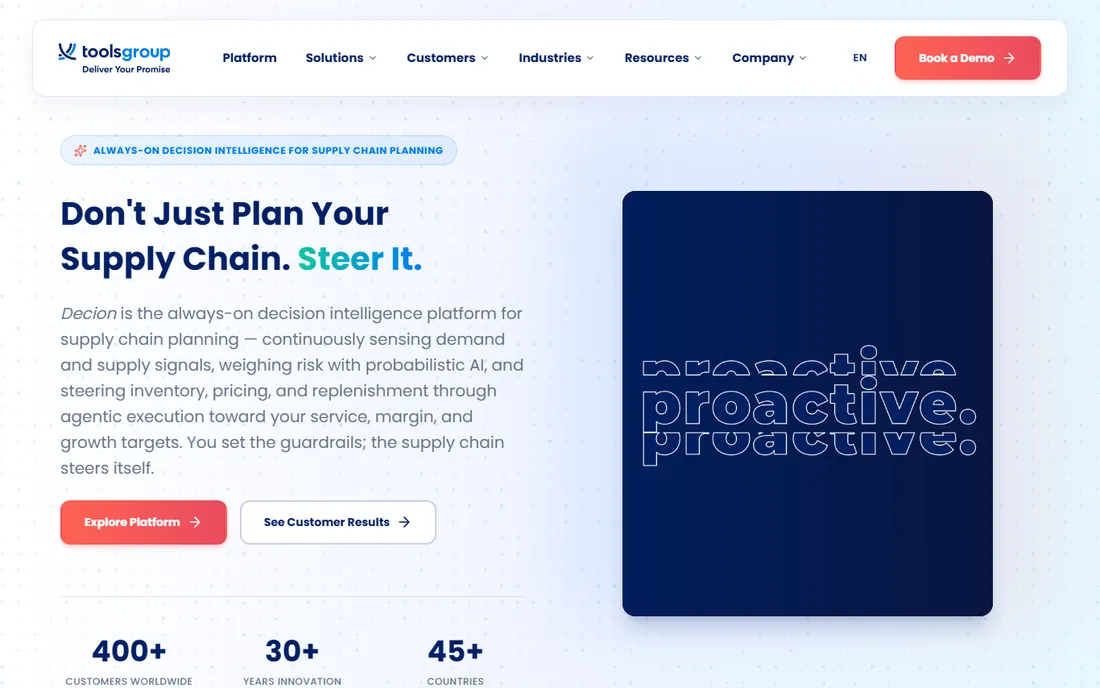
ToolsGroup brings decades of supply chain science to enterprise planning: probabilistic forecasting, inventory optimization, S&OP and replenishment for complex manufacturing and distribution networks. Companies with real supply chain organizations buy it for the depth.
Like RELEX, it is unapologetically enterprise: quoted pricing, significant implementation, dedicated planning staff assumed. Mid-market distributors should look at Slimstock or Netstock. Enterprises with complex networks and planning maturity will find the depth worth the investment.
What we like- Deep probabilistic planning heritage for complex supply chains
- Strong S&OP and multi-echelon capabilities
- Serves demanding manufacturing and distribution enterprises
Watch out for- Enterprise pricing and implementation
- Overkill for straightforward distributor forecasting
#8
Anaplan
Best for: Connected enterprise planning across finance and operations
Visit anaplan.com
Starting priceSee website
Free planNo (free trial available)
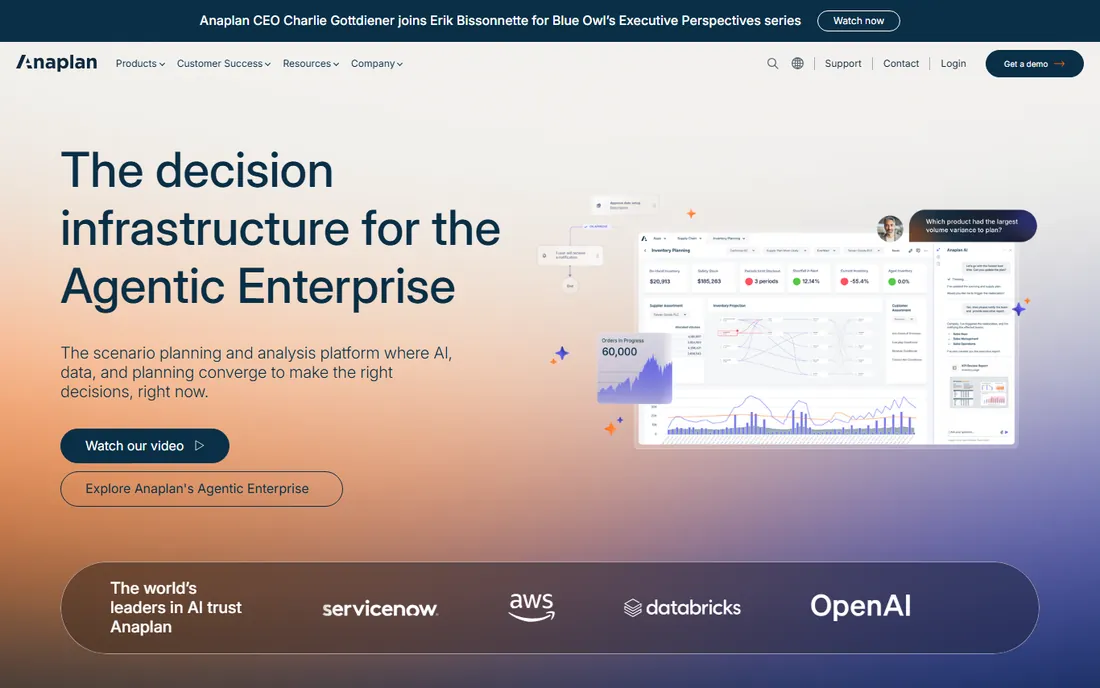
Anaplan earns its place as the adjacent-category pick: it is a connected planning platform, not a demand forecasting specialist, but enterprises use it to link demand plans with financial plans, workforce plans and supply plans in one model. The scenario modeling is the best in the business.
That generality is the trade. Out of the box, Anaplan does not ship the inventory optimization depth of Netstock or RELEX; you build it. Pricing is enterprise and quoted. It fits companies whose forecasting problem is really a connected-planning problem spanning finance and operations.
What we like- Hyperblock engine handles massive multi-dimensional planning models
- Connects demand planning with financial planning in one platform
- Strong what-if scenario modeling
Watch out for- Quote-based enterprise pricing
- A planning platform, not a purpose-built forecasting tool, so inventory depth needs building
#9
John Galt Atlas Planning
Best for: Mid-market demand planning with collaborative S&OP
Visit johngalt.com
Starting priceSee website
Free planNo
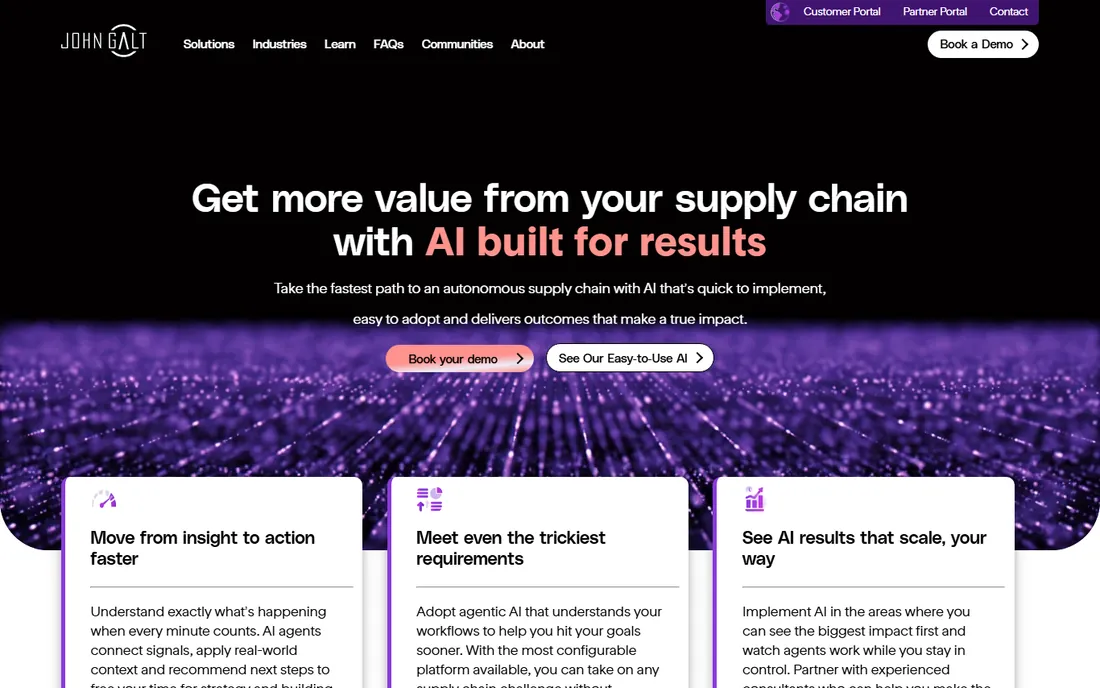
John Galt's Atlas Planning platform serves the mid-market with real demand planning: statistical forecasting, consensus planning, S&OP collaboration and replenishment, without the enterprise-suite weight. Manufacturers and distributors that have outgrown spreadsheets but are not ready for RELEX find it approachable.
Pricing is quoted and the vendor's profile is smaller than the category leaders, so reference checks matter. For mid-market companies wanting collaborative planning with a manageable implementation, it deserves a demo alongside Netstock and Slimstock.
What we like- Purpose-built demand planning with strong S&OP collaboration
- More accessible than enterprise suites
- Good fit for mid-market manufacturers and distributors
Watch out for- Quote-based pricing
- Smaller market presence than the biggest names
Forecast accuracy is not the buying criterion
Every vendor claims superior accuracy, and none of the claims are comparable: different datasets, different horizons, different definitions of error. The honest way to buy is a backtest. Give each finalist 12 months of your sales history, withhold the last 3 months, and ask them to forecast what already happened. Measure the error yourself at the SKU-location level you actually plan at. A vendor that refuses a backtest is telling you something. Beyond accuracy, weight the boring factors that decide success: how the forecast handles promotions and new products, how planners override it, and whether the math is explainable enough that your team trusts it. An accurate black box that planners override is worth less than a slightly worse model they believe.
The ERP connector decides the shortlist
Demand forecasting software is only as good as its data feed, and the feed is your ERP. Before comparing features, list your ERP and version, then ask each vendor three questions: is the connector native or custom-built, which direction does data flow (forecasts out, purchase orders back in), and how often does it sync. Netstock's 60-plus native connectors are a genuine advantage for standard ERPs. Custom or middleware-based integrations add weeks to implementation and break on ERP upgrades. Also confirm the SKU and location limits in your tier: some platforms price by inventory value or SKU count, and a catalog twice the expected size can push you into a higher band. The best forecasting engine with a bad ERP connection loses to a decent engine with a native one.
How we chose
We built this list from vendor documentation, 2026 demand planning comparisons and review profiles, checked in October 2026. A tool made the cut only if it is actively sold today and serves real forecasting work, from SMB inventory planning to enterprise supply chain optimization. Netstock's $900 monthly entry comes from the vendor's own published FAQ. Where vendors do not publish pricing, we write See website instead of repeating third-party estimates as fact. We did not run hands-on trials. The trade-offs reflect consistent reviewer feedback and the documented commercial models.
Frequently asked questions
What is demand forecasting software?
Software that predicts future customer demand using historical sales, trends, seasonality and statistical or AI models. Inventory-focused tools turn forecasts into replenishment orders and safety stock levels. Enterprise platforms extend into S&OP, network optimization and financial planning. The goal is fewer stockouts and less excess inventory.
How much does demand forecasting software cost?
SMB tools run $199 to $900 a month: StockTrim from around $199, Netstock from $900 per its published FAQ. Mid-market and enterprise platforms (EazyStock, Slimstock, John Galt) are quote-based. Enterprise suites (RELEX, ToolsGroup, Anaplan) are quoted with significant implementation costs. Always confirm whether pricing scales with SKUs, inventory value or users.
Can small businesses afford demand forecasting software?
Yes. StockTrim's entry tier and Netstock's $900 starting point are built for SMBs, and both implement in weeks rather than months. Businesses under $5 million in revenue with simple assortments may do fine with spreadsheet forecasting plus reorder point discipline; the software earns its price when SKU count or locations make spreadsheets unreliable.
How accurate is AI demand forecasting?
Accuracy depends on your data quality, SKU velocity and demand stability, not the vendor's marketing. Fast-moving staples forecast well; slow movers, new products and promotion-driven items do not. Run a backtest on your own history before believing any accuracy claim, and budget for planner overrides regardless of the algorithm.
How long does implementation take?
SMB tools like Netstock implement in 6 to 10 weeks with native ERP connectors. Mid-market platforms take two to four months. Enterprise suites like RELEX or Anaplan run three to nine months including data modeling and change management. Clean master data, especially SKU hierarchies and lead times, shortens every timeline.
Do we need this if we already have an ERP?
Most ERPs include basic reorder-point logic but not real forecasting: no demand sensing, no probabilistic safety stock, no promotion modeling. If stockouts and overstocks persist despite ERP reports, dedicated forecasting software adds the statistical layer ERPs lack. If your ERP's basic planning already works, fix the data before buying software.
Sources we checked (8)
- https://sourceforge.net/software/demand-planning/canada/
- https://sourceforge.Net/software/demand-planning/for-enterprise/
- https://www.softwareworld.co/competitors/netstock-alternatives/
- https://www.selecthub.com/supply-chain-planning-software/netstock-vs-stockiq/
- https://www.prediko.io/blog/best-inventory-forecasting-software
- http://datup.ai/en/compare/best-demand-planning-software
- https://www.getapp.com/operations-management-software/demand-planning/f/stock-management/
- https://www.mirrorreview.com/inventory-planning-tools/
Is your product missing or out of date?
We review this list regularly. Vendors can request a listing, send updated pricing or ask about featured placement.

Shihab Mia · Founder, Rankite
Shihab has spent more than a decade helping SaaS and e-commerce brands grow through search. He writes Rankite's software buying guides from pricing pages, documentation and public user reviews. More about Shihab.