How we make this list: we compare pricing pages, product documentation and public user reviews. Rankite is independent; if a vendor ever pays for a featured spot, that listing is clearly labeled Partner.
Key takeaways
- ServiceNow is the enterprise standard and the most expensive path; almost every mid-size team on this list pays less per agent with Jira Service Management ($20/agent/month) or Freshservice ($19/agent/month, billed annually).
- Free and cheap entry points exist: Jira Service Management is free for up to 3 agents, and ManageEngine ServiceDesk Plus is free for up to 5 technicians.
- The real cost driver is tier gating: change management, asset management and audit logs sit on higher tiers at most vendors, so price the plan you actually need, not the entry plan.
- AI features now carry separate meters everywhere: Freshservice's Freddy AI Copilot costs $29/agent/month on top of Pro, and similar add-ons appear across the category.
Quick comparison
| Tool | Best for | Starting price | Free plan |
|---|
 ServiceNow ITSM ServiceNow ITSM | Large enterprises standardizing IT and beyond | See website | No |
 Jira Service Management Jira Service Management | Dev-adjacent IT teams already on Atlassian | $20/agent/month (Standard) | Yes (free for up to 3 agents) |
 Freshservice Freshservice | Mid-size teams wanting fast setup | $19/agent/month (Starter, billed annually) | Free trial (14 days) |
 ManageEngine ServiceDesk Plus ManageEngine ServiceDesk Plus | Budget-conscious IT departments | $13/technician/month (Standard) | Yes (free for up to 5 technicians) |
 SolarWinds Service Desk SolarWinds Service Desk | Mid-market teams wanting transparent pricing | $39/technician/month (Essentials, billed annually) | Free trial |
 HaloITSM HaloITSM | All-inclusive ITIL platform, UK-friendly | See website | Free trial |
 BMC Helix ITSM BMC Helix ITSM | Enterprises invested in BMC tooling | See website | No |
 Ivanti Neurons for ITSM Ivanti Neurons for ITSM | IT teams wanting automation plus endpoint context | See website | No |
 SysAid SysAid | Small IT teams wanting ITSM plus built-in remote support | See website | Free trial |
Is your product missing or out of date?
We review this list regularly. Vendors can request a listing, send updated pricing or ask about featured placement.
The best ITSM software
Here is the uncomfortable truth about IT service management software: the best-known product is the worst fit for most of the companies reading this guide. ServiceNow dominates enterprise shortlists, yet a 40-person company gains little from a platform built for 40,000-person rollouts. The best ITSM tools for small and mid-size teams are the ones agents learn in days, price transparently, and grow without a consulting engagement. Nine of them, ranked by fit rather than fame.
Starting priceSee website
Free planNo
ServiceNow is the platform ITSM careers are built on. Incident, problem, change and configuration management run deep, and the same system stretches into HR onboarding, customer service and security operations, which is why CIOs standardize on it: one workflow engine for every internal service. The ecosystem is unmatched, with integrators in every city and a labor market full of certified admins.
That depth is also the price. Licensing is quote-based and expensive, implementations stretch for months, and customization plus upgrades usually require specialist expertise rather than in-house admins. For organizations with thousands of employees and complex compliance needs, the total cost is defensible. For a mid-size company whose main need is a working service desk, ServiceNow is overkill by a wide margin, and buyers should say so out loud before signing.
What we like- The deepest ITSM feature set with ITOM, HR service delivery and security operations on one platform
- Enormous partner and talent ecosystem
- Strong governance for regulated industries
Watch out for- Quote-only pricing with a high total cost of ownership
- Implementations routinely need specialist consultants and long timelines
#2
Jira Service Management
Best for: Dev-adjacent IT teams already on Atlassian
Visit atlassian.com
Starting price$20/agent/month (Standard)
Free planYes (free for up to 3 agents)
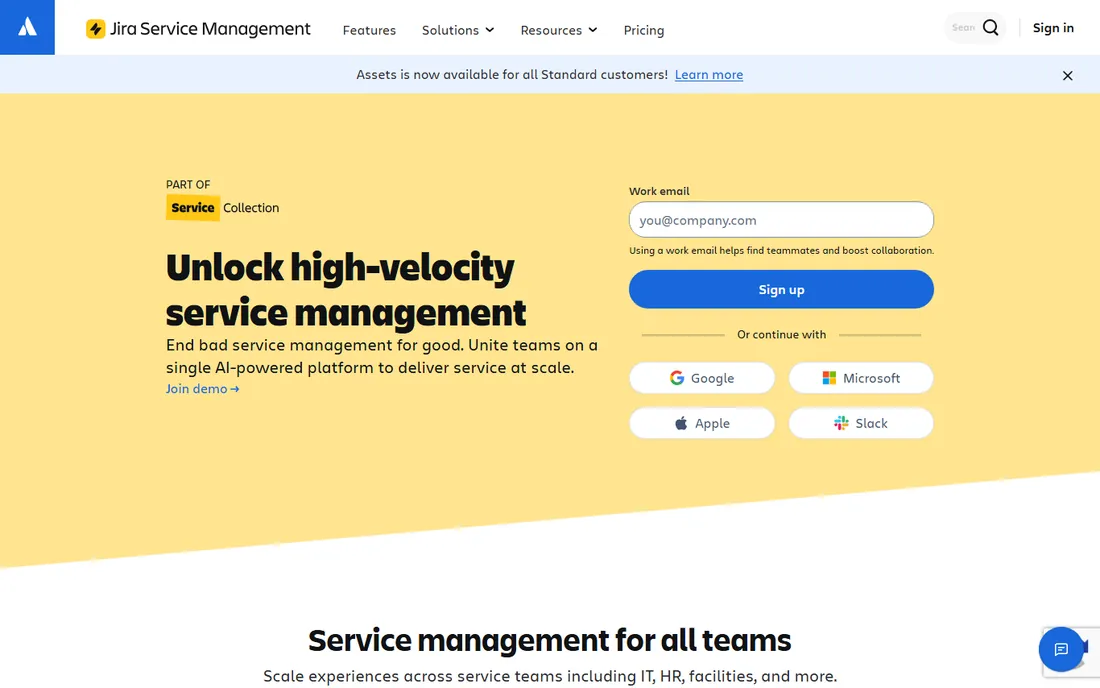
Jira Service Management wins on arithmetic. Standard costs $20 per agent per month, end users who submit tickets are always free, and teams of three agents or fewer pay nothing at all. For IT teams already living in Jira Software and Confluence, the integration is the selling point: an incident can link directly to the bug the developers are fixing, and the knowledge base lives where the docs already are. Rovo AI features now come bundled on paid tiers rather than as separate meters.
The persistent complaint is usability. Reviews consistently say non-technical agents take longer to get productive than on Freshservice or SolarWinds, so budget training time. The Standard tier also omits change management, the virtual service agent and any uptime SLA, which pushes maturing teams to Premium at roughly $47 to $51 per agent per month. Confirm the current tier prices on Atlassian's site, since the company reshuffles its lineup regularly.
What we like- Per-agent pricing that undercuts most rivals at scale
- Native link between IT tickets and Jira Software development work
- Genuinely usable free tier for tiny teams
Watch out for- Non-technical agents face a real learning curve
- Change management and the virtual service agent require the Premium tier
Starting price$19/agent/month (Starter, billed annually)
Free planFree trial (14 days)
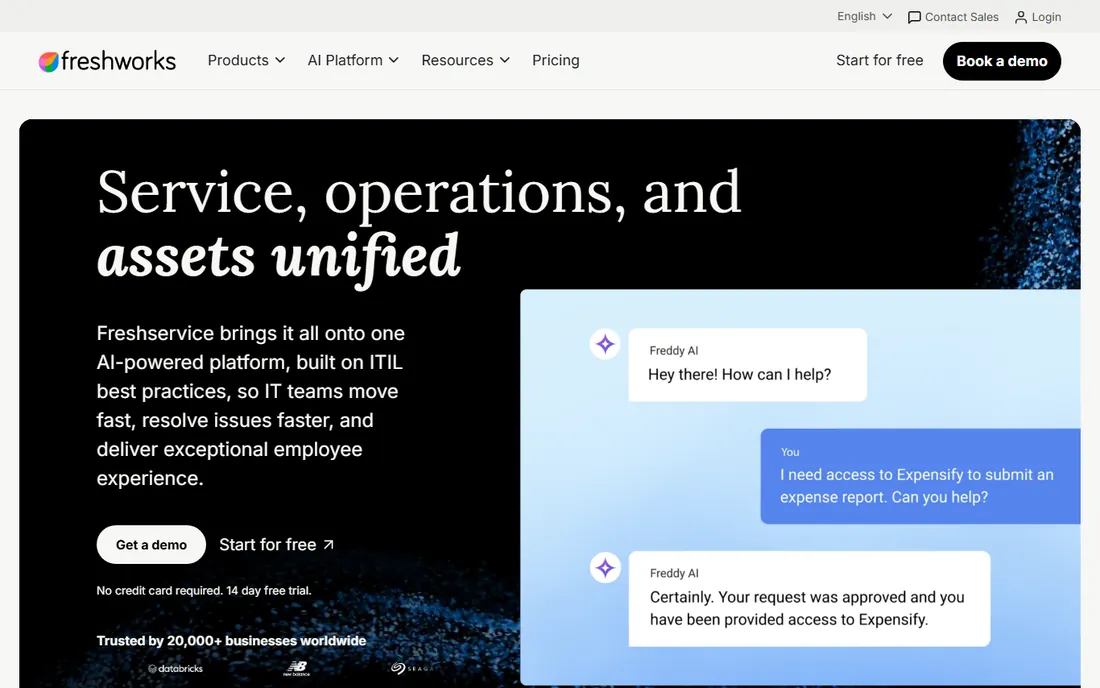
Freshservice is the ease-of-use pick in this category. Where Jira Service Management asks agents to learn Atlassian's way of thinking, Freshservice presents a clean queue, a drag-and-drop workflow automator and a service catalog that non-technical staff actually use. Setup runs days to weeks rather than months, which is why it scores well with teams replacing a shared inbox. Starter at $19 per agent per month billed annually covers incident management, knowledge base and SLA basics.
The budgeting trap is tier gating. Formal change management, problem management and release management are Pro features at $99 per agent per month, more than double the Growth tier, and audit logs plus sandbox are Enterprise-only with quoted pricing. Freddy AI Copilot adds another $29 per agent per month on Pro. Price the tier that matches your ITIL maturity, not the entry price, and Freshservice still compares well; price the entry tier and you will be back for budget approval within a year.
What we like- Clean interface that agents learn in days with no coding
- Strong out-of-the-box ITSM with service catalog and SLAs
- 14-day trial with no credit card
Watch out for- Change, problem and release management require Pro at $99/agent/month
- The AI copilot is a $29/agent/month add-on on top
Starting price$13/technician/month (Standard)
Free planYes (free for up to 5 technicians)
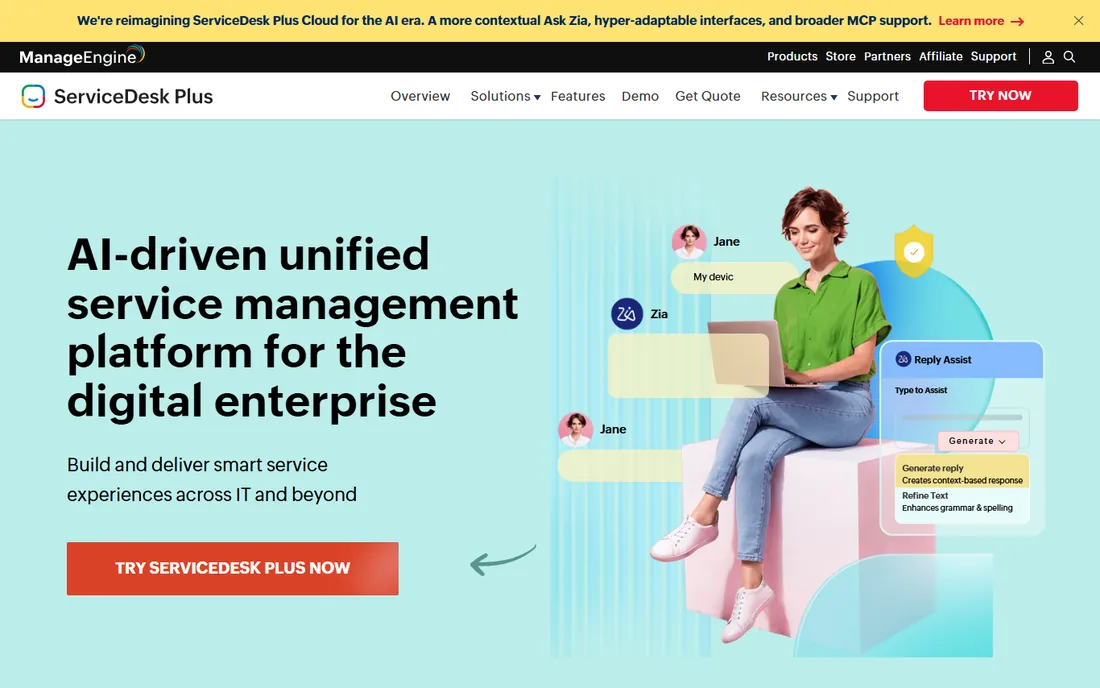
Nobody stretches an IT budget further than ServiceDesk Plus. The Standard edition starts around $13 per technician per month, and the free edition gives teams of up to five technicians full Standard features with unlimited tickets and end users, which is genuinely enough for a small IT department. You also get a deployment choice most SaaS vendors abandoned: cloud or on-premise. Shops already running ManageEngine's Endpoint Central or OpManager get native integrations that would cost extra elsewhere.
The trade-offs are visible in daily use. The admin interface carries its history and takes longer to learn than Freshservice or SolarWinds Service Desk. The edition structure also gates harder than it looks: asset management needs Professional, full ITIL needs Enterprise, and modules like problem management and service catalog can be separate add-ons. For cost-first buyers who can live with the interface, the value is unmatched.
What we like- Free edition covers up to 5 technicians with unlimited tickets
- Cloud and on-premise deployment choice
- Deep native integration with the ManageEngine monitoring stack
Watch out for- The interface feels dated next to cloud-native rivals
- Key modules like problem management are paid add-ons even on higher tiers
#5
SolarWinds Service Desk
Best for: Mid-market teams wanting transparent pricing
Visit solarwinds.com
Starting price$39/technician/month (Essentials, billed annually)
Free planFree trial
Born as Samanage and now a SolarWinds cloud product, Service Desk occupies the sensible middle: published pricing starting at $39 per technician per month billed annually on Essentials, with incident management, knowledge base, service portal, asset management, service catalog and change management included from the start. That last point matters because competitors gate change management two tiers up. Unlimited end users keep the math simple as the company grows.
SolarWinds is candid that this is not a platform for massively customized enterprise workflows; very large organizations with bespoke processes will hit the edges. The Advanced tier at $79 and Premier at $99 add the automation depth, virtual agent and AI incident summaries, so buyers wanting AI should price Premier rather than assume it. For mid-market IT teams that want predictable pricing and a complete ITSM baseline on day one, this is one of the strongest fits on the list.
What we like- Published per-technician pricing with unlimited end users
- Asset management and change management included from the entry tier
- Strong service catalog and SLA tooling
Watch out for- Not built for heavily customized enterprise workflows
- AI features concentrate in the top Premier tier
Starting priceSee website
Free planFree trial
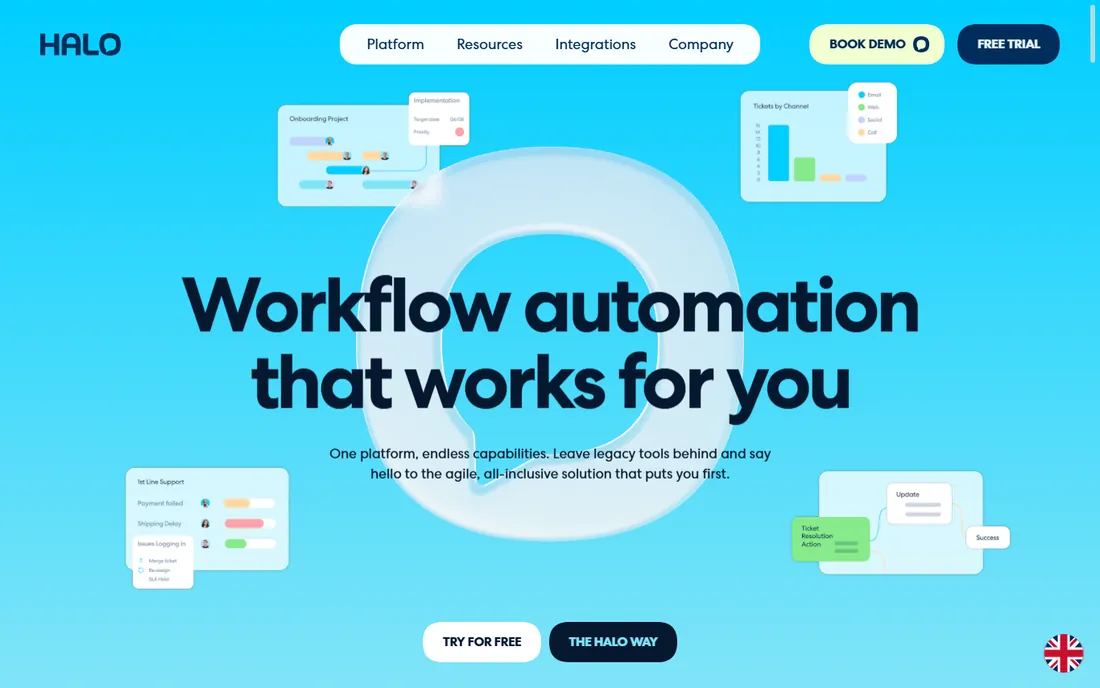
HaloITSM comes from the UK and it shows in the best way: ITIL 4 processes done properly, with incident, problem, change, a real CMDB and asset management under one license instead of scattered across tiers. The company publishes per-agent pricing that decreases as you add agents, and end users are free. For organizations that want the ITIL discipline of ServiceNow without the enterprise sales cycle, HaloITSM is the most direct alternative.
Two things to verify before committing. First, the published pricing is GBP-based and the per-agent rate moves with headcount, so convert carefully and get a written quote in your currency. Second, the product's partner and review footprint is much larger in the UK than in the US, which affects implementation help and community resources. Buyers who value an all-inclusive license and true on-premise options will find the trade worthwhile.
What we like- One all-inclusive license covering ITSM, ESM, CRM and asset management
- Cloud or on-premise deployment
- Strong ITIL 4 alignment with a real CMDB
Watch out for- Published prices are GBP-first and vary by agent count, so US buyers should get a formal quote
- Smaller US presence means fewer local partners
#7
BMC Helix ITSM
Best for: Enterprises invested in BMC tooling
Visit bmc.com
Starting priceSee website
Free planNo
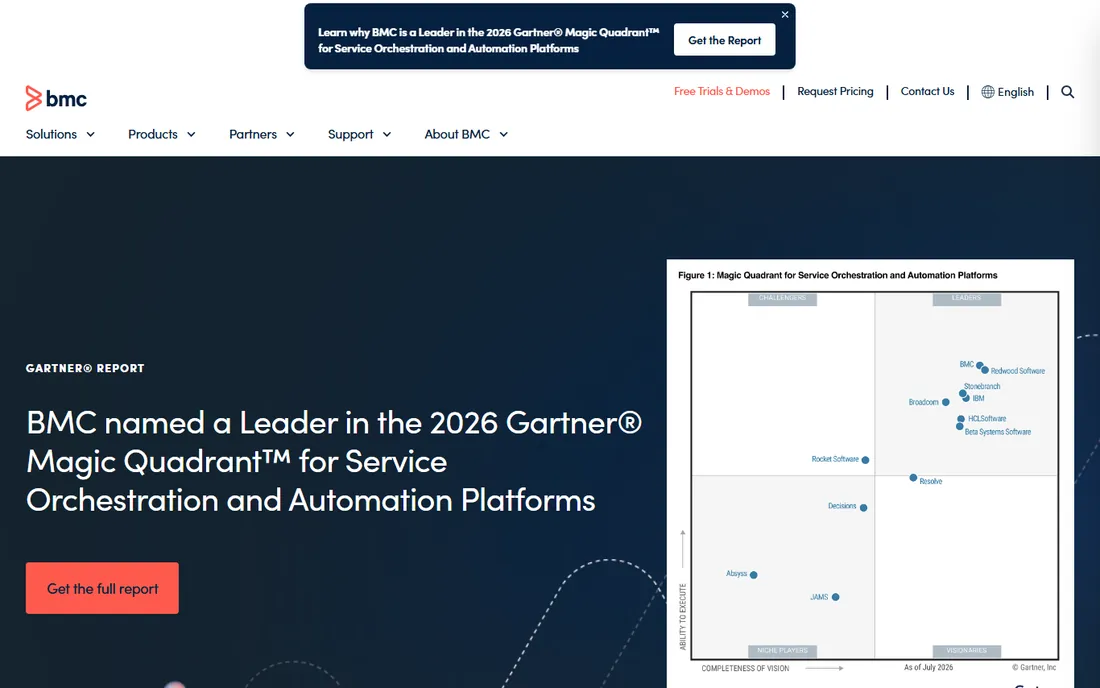
BMC Helix is the other legacy enterprise name on this list alongside ServiceNow, and it earns its place with genuinely strong change, configuration and service-level management. Organizations already running BMC discovery, monitoring or automation tools get a coherent stack, and the AIOps layer does serious work on incident prediction and noise reduction at scale. Regulated enterprises with established BMC relationships renew here for good reasons.
Everyone else should think twice. Pricing is quote-only and enterprise-grade, implementations run through partners, and the administrative overhead suits organizations with dedicated ITSM teams. This is a strong pick for the Fortune 1000 replacing an aging Remedy installation; it is not a pick for a 200-person company buying its first service desk.
What we like- Mature ITIL platform with strong change and configuration management
- SaaS and on-premise options
- Deep AIOps and service prediction capabilities
Watch out for- Quote-only enterprise pricing
- Implementations are heavyweight and partner-dependent
#8
Ivanti Neurons for ITSM
Best for: IT teams wanting automation plus endpoint context
Visit ivanti.com
Starting priceSee website
Free planNo
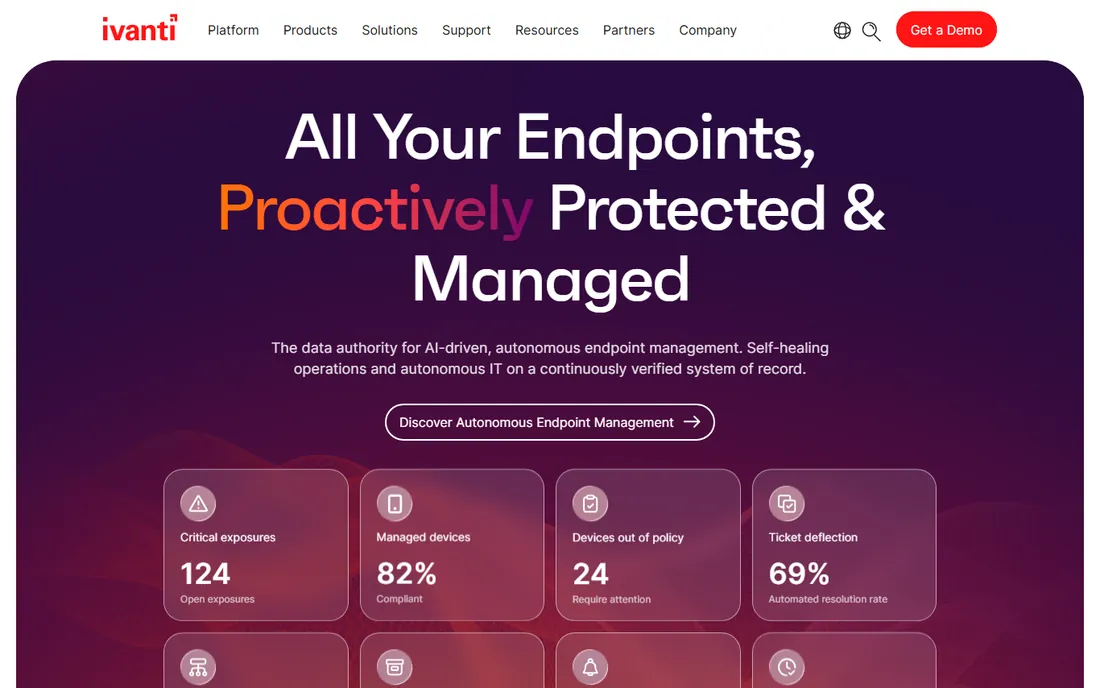
Ivanti's pitch is that tickets should arrive with context. Neurons for ITSM connects the service desk to endpoint management, asset discovery and security data, so an incident about a laptop can surface the device's health, patch state and location without the agent hunting across tools. The automation layer handles self-healing for common issues, which reduces ticket volume rather than just organizing it.
The catch is focus. Ivanti sells a platform spanning ITSM, endpoint management and security, and buyers who only need a service desk can find themselves evaluating far more product than they asked for. Pricing is quote-based. The natural buyer is an organization already invested in Ivanti endpoints that wants the service desk to share the same data; standalone service desk shoppers will find simpler options elsewhere on this list.
What we like- Ties tickets to endpoint and asset data through the Neurons platform
- Strong automation for self-healing common issues
- Good fit for Ivanti endpoint shops
Watch out for- Quote-based pricing with limited public detail
- The platform breadth can overwhelm simple service desk needs
#9
SysAid
Best for: Small IT teams wanting ITSM plus built-in remote support
Visit sysaid.com
Starting priceSee website
Free planFree trial
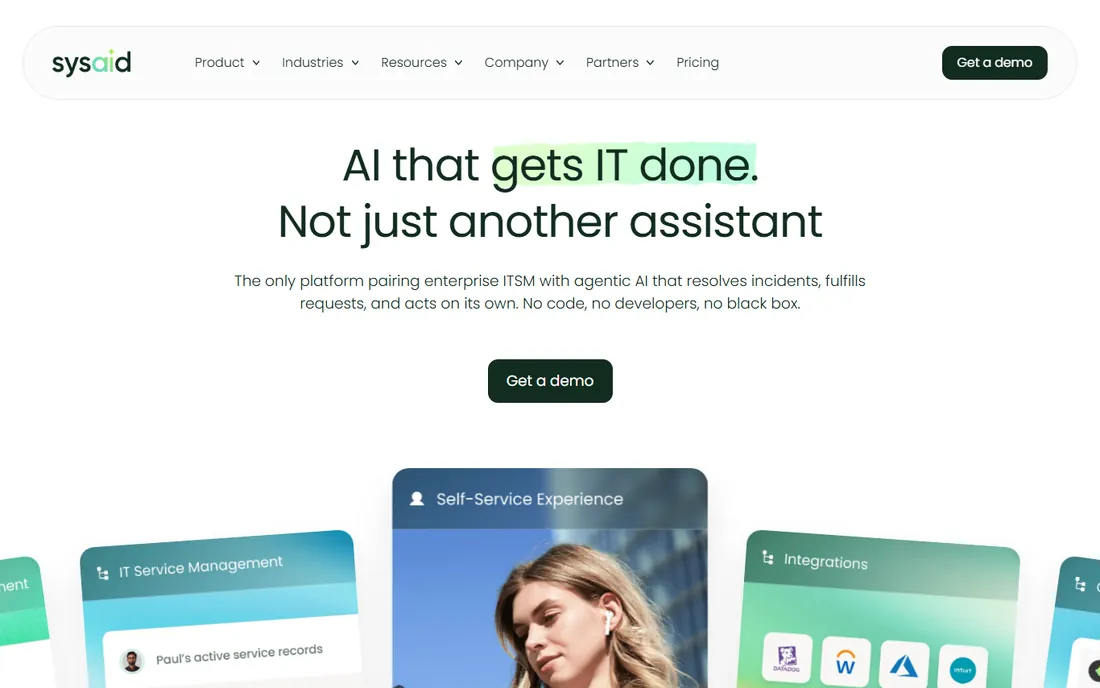
SysAid aims at the small IT team that needs everything in one box: ticketing, asset management, a service catalog and built-in remote desktop support for fixing user machines without a separate tool. That bundling is the whole argument, and for teams of a handful of technicians it removes two or three extra subscriptions. The interface is approachable and the AI capabilities are included rather than metered as add-ons.
The oddity is pricing: despite the small-business positioning, SysAid prices by quote, which slows down exactly the buyers it targets. Depth is also shallower than the ITIL-first platforms; teams running formal change advisory boards will outgrow it. But for a small team that wants ITSM plus remote support from one vendor with one bill, SysAid deserves the demo.
What we like- ITSM with built-in remote desktop and asset management in one product
- Approachable for small teams without dedicated admins
- AI features included in current packaging
Watch out for- Quote-based pricing despite the SMB positioning
- Less depth in change and release management than ITIL-first rivals
Team size predicts the right tier better than feature lists do. Under ten agents, start with the free and entry tiers: Jira Service Management is free to three agents, ServiceDesk Plus is free to five technicians, and Freshservice Starter or SolarWinds Essentials cover the first real service desk at $19 to $39 per agent per month. At this size, ease of setup beats feature depth, because the same people buying the tool will administer it.
From ten to fifty agents, price the middle tiers honestly. This is where tier gating bites: confirm that change management, asset management and the automations you need are actually included in the plan you are pricing, not two tiers up. Freshservice Growth, Jira Service Management Standard and SolarWinds Advanced are the natural comparison set here. Past fifty agents, or with formal ITIL and compliance requirements, the enterprise conversation starts: ServiceNow, BMC Helix, Ivanti or HaloITSM, all quoted, all needing a real evaluation and usually implementation help.
One more sizing factor: count end users separately from agents. Every tool on this list charges per agent or technician while end users are free or unlimited, so a 500-person company with a 5-person IT team pays for 5 seats. Do not let a vendor quote you per-employee pricing for a service desk.
The AI pricing trap in ITSM
Every vendor now advertises AI, and every vendor meters it differently, which makes AI the fastest-growing line item in ITSM budgets. Freshservice charges $29 per agent per month for the Freddy AI Copilot on top of Pro. Jira Service Management bundles Rovo AI into paid tiers but meters virtual service agent conversations beyond the included allowance. ServiceNow's AI licensing is the most elaborate in the category. Before you sign, get three numbers in writing: what AI is included in the base price, what the overage or per-conversation rate is, and whether AI pricing is locked for the contract term or can change at renewal.
How we chose
We built this list from how ITSM is actually bought: per-agent pricing, tier gating and setup effort matter more than feature checklists. We verified starting prices on vendor pricing pages and marked every quote-only enterprise product as "See website" instead of repeating reseller guesses. We read documentation for ITIL coverage and deployment options, and checked public reviews on G2, Capterra and TrustRadius plus practitioner threads on Reddit for the recurring complaints: learning curves, tier traps and AI meters. We deliberately included free tiers and budget options alongside the enterprise standards, because most teams buying their first or second service desk never need the top of the market.
Frequently asked questions
What does ITSM software actually do?
IT service management software organizes how IT supports the business: employees submit incidents and requests through a portal, agents work them through queues with SLAs, and processes like change, problem and asset management keep the infrastructure stable. The best ITSM tools also include a knowledge base, automation and reporting, so the service desk improves instead of just reacting.
How much does ITSM software cost?
For small teams, $13 to $39 per agent or technician per month covers a working service desk: ManageEngine ServiceDesk Plus, Freshservice Starter and SolarWinds Service Desk Essentials sit in this band. Mid-size teams with ITIL processes typically pay $49 to $99 per agent per month. Enterprise platforms like ServiceNow and BMC Helix are quote-only and cost several times more once implementation is included.
Is ServiceNow worth it for a mid-size company?
Usually not. ServiceNow earns its price at enterprise scale, with complex compliance needs, thousands of employees and dedicated ITSM administrators. A mid-size company gets a working service desk faster and cheaper from Freshservice, Jira Service Management, SolarWinds Service Desk or HaloITSM, and avoids the consulting-heavy implementation ServiceNow requires.
What is the difference between an agent and an end user in ITSM pricing?
Agents, also called technicians, are the IT staff who work tickets, and you pay per agent. End users are the employees who submit tickets through the portal, and they are free or unlimited on every product in this guide. Size your license count on the IT team, not the company headcount.
Do I need ITIL processes in my service desk?
Not on day one. Incident management, a knowledge base and SLAs carry most small teams. Formal change, problem and release management matter once infrastructure changes can break the business or auditors ask for change records. Buy the tier that matches your current maturity; most vendors let you upgrade when the need arrives.
Can ITSM software handle HR and facilities requests too?
Yes, and this is a common expansion path. Most platforms on this list support enterprise service management, which means HR, facilities and finance can run their own request types and portals on the same system. Freshservice, ServiceNow, HaloITSM and Jira Service Management all market this explicitly. Start with IT, prove the model, then extend it.
Sources we checked (26)
- https://www.eesel.ai/blog/freshservice-vs-jira-service-management
- https://www.motadata.com/blog/jira-service-management-pricing
- https://www.happyfox.com/compare/jira-service-management-vs-freshservice/
- https://www.eesel.ai/blog/freshservice-enterprise-pricing
- https://www.desk365.io/blog/freshservice-pricing/
- https://www.rezolve.ai/blog/freshservice-pricing-and-plans
- https://www.xurrent.com/blog/freshservice-pricing
- https://comparisons.financesonline.com/edesk-vs-manageengine-servicedesk
- https://www.saasworthy.com/product/manageengine-servicedesk-plus/pricing
- https://www.saasrat.com/products/servicedesk-plus
- https://www.itqlick.com/compare/solarwinds/freshdesk
- https://work-management.org/itsm/solarwinds-service-desk-review/
- https://www.solarwinds.com/blog/how-to-choose-an-itsm-tool-what-it-teams-actually-need-in-2026
- https://www.rezolve.ai/compare/halo-itsm
- https://www.smcconsulting.be/haloitsm-it-service-management
- https://www.motadata.com/blog/haloitsm-alternatives
- https://www.xurrent.com/blog/halo-itsm-pricing
- https://www.servicenow.com
- https://www.atlassian.com/software/jira/service-management
- https://www.freshworks.com/freshservice/
- https://www.manageengine.com/products/service-desk/
- https://www.solarwinds.com/service-desk
- https://www.usehalo.com
- https://www.bmc.com
- https://www.ivanti.com
- https://www.sysaid.com
Is your product missing or out of date?
We review this list regularly. Vendors can request a listing, send updated pricing or ask about featured placement.

Shihab Mia · Founder, Rankite
Shihab has spent more than a decade helping SaaS and e-commerce brands grow through search. He writes Rankite's software buying guides from pricing pages, documentation and public user reviews. More about Shihab.