How we make this list: we compare pricing pages, product documentation and public user reviews. Rankite is independent; if a vendor ever pays for a featured spot, that listing is clearly labeled Partner.
Key takeaways
- E2open and Infor Nexus take the network approach, putting every trading partner on one shared platform. That pays off for companies with deep, multi-tier supplier bases.
- Kinaxis and o9 Solutions are the planner-first picks, built for fast scenario modeling when demand or supply shifts without warning.
- SAP Business Network fits naturally inside an SAP shop, where it connects procurement and logistics to the ERP you already run.
- Coupa suits procurement-led teams that want supplier collaboration centered on spend, sourcing, and payments rather than production planning.
- TraceLink is the specialist choice for pharma and life sciences, where serialization and regulatory compliance shape every requirement.
Quick comparison
| Tool | Best for | Starting price | Free plan |
|---|
 E2open E2open | Multi-tier supply chain networks | See website | No |
 Kinaxis Kinaxis | Fast concurrent planning and scenarios | See website | No |
 Blue Yonder Blue Yonder | Retail and manufacturing planning plus execution | See website | No |
 o9 Solutions o9 Solutions | Integrated business planning at scale | See website | No |
 SAP Business Network SAP Business Network | Trading-partner collaboration inside SAP | See website | No |
 Coupa Coupa | Procurement and supplier spend collaboration | See website | No |
 Infor Nexus Infor Nexus | Global trade visibility on one network | See website | No |
 TraceLink TraceLink | Pharma supply chain compliance | See website | No |
Is your product missing or out of date?
We review this list regularly. Vendors can request a listing, send updated pricing or ask about featured placement.
The best supply chain collaboration software
Starting priceSee website
Free planNo
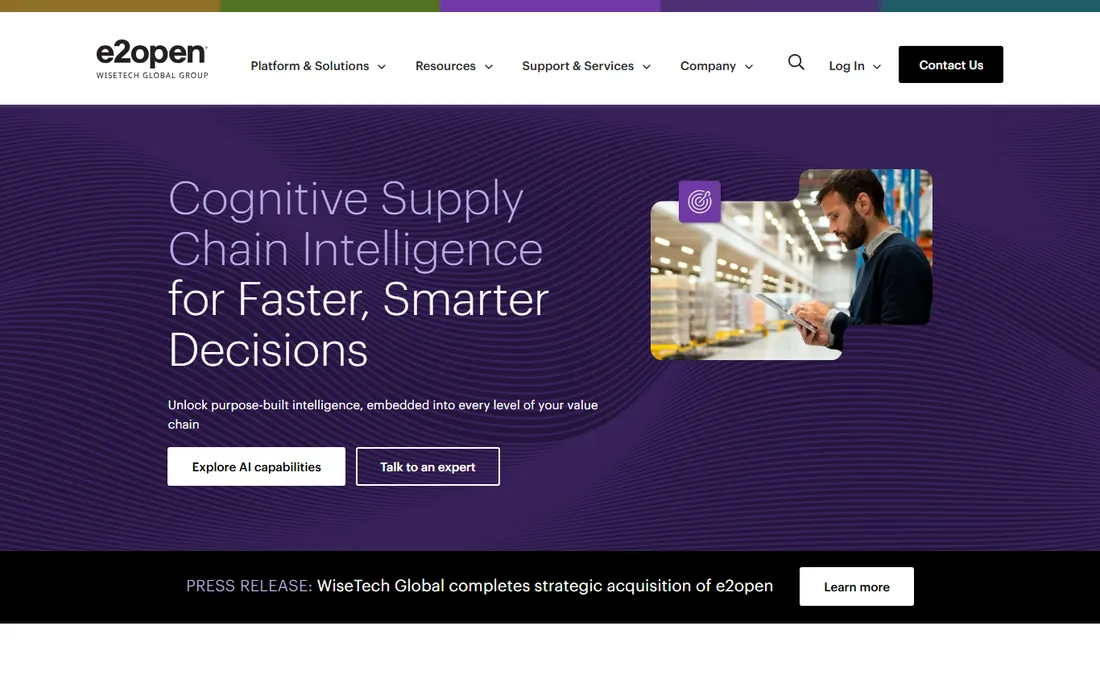
E2open is built around a simple idea: every trading partner should work from the same data. Instead of each company keeping its own spreadsheet of orders, forecasts, and shipments, E2open puts suppliers, contract manufacturers, logistics providers, and distributors on a single multi-enterprise network. When a forecast changes or a shipment is delayed, everyone entitled to see it sees it at once.
That network model is what separates E2open from planning-only tools. It covers demand and supply planning, but also global logistics, trade compliance, and channel data management. For a brand that sells through distributors and builds through contract manufacturers, that breadth matters. You can trace a problem from a retail shelf back through distribution to the factory that caused it, without reconciling four systems.
The honest catch is scale and cost. E2open sells to enterprises, pricing is quote-based, and onboarding a network of partners takes real effort. Smaller companies will find the platform more than they need. If you run a complex, outsourced supply chain and your biggest pain is partners working from different numbers, E2open deserves the first demo slot.
What we like- One network connecting suppliers, logistics providers, and distributors
- Covers planning, execution, and trade
- Strong multi-tier visibility
Watch out for- Enterprise pricing with no public plans
- Implementation is a major project, not a quick rollout
Starting priceSee website
Free planNo
Kinaxis RapidResponse is the tool planners reach for when the plan changes faster than the planning cycle. Its concurrent planning engine lets teams model a supply disruption, a demand spike, or a capacity constraint and see the ripple effects across the plan in one session. That speed is the product's identity. Where traditional planning runs in weekly or monthly batches, Kinaxis is built for continuous, event-driven decisions.
Collaboration comes through shared scenarios rather than shared documents. Planners, procurement, and finance can work through the same live plan, test alternatives, and commit to one version of the response. For industries with volatile demand or long lead times, electronics, automotive, and industrial manufacturing especially, that capability is hard to replace with email and spreadsheets.
Kinaxis is unapologetically enterprise. Pricing is quote-based, and the platform rewards companies that already run structured S&OP processes. If your planning team is still maturing, you may pay for horsepower you cannot use yet. But if scenario speed is your bottleneck, few tools answer it as directly.
What we like- Concurrent planning engine built for rapid what-if analysis
- Strong in demand, supply, and S&OP
- Used by large global manufacturers
Watch out for- Quote-based enterprise pricing
- Delivers the most value when planning teams are mature enough to use it fully
Starting priceSee website
Free planNo
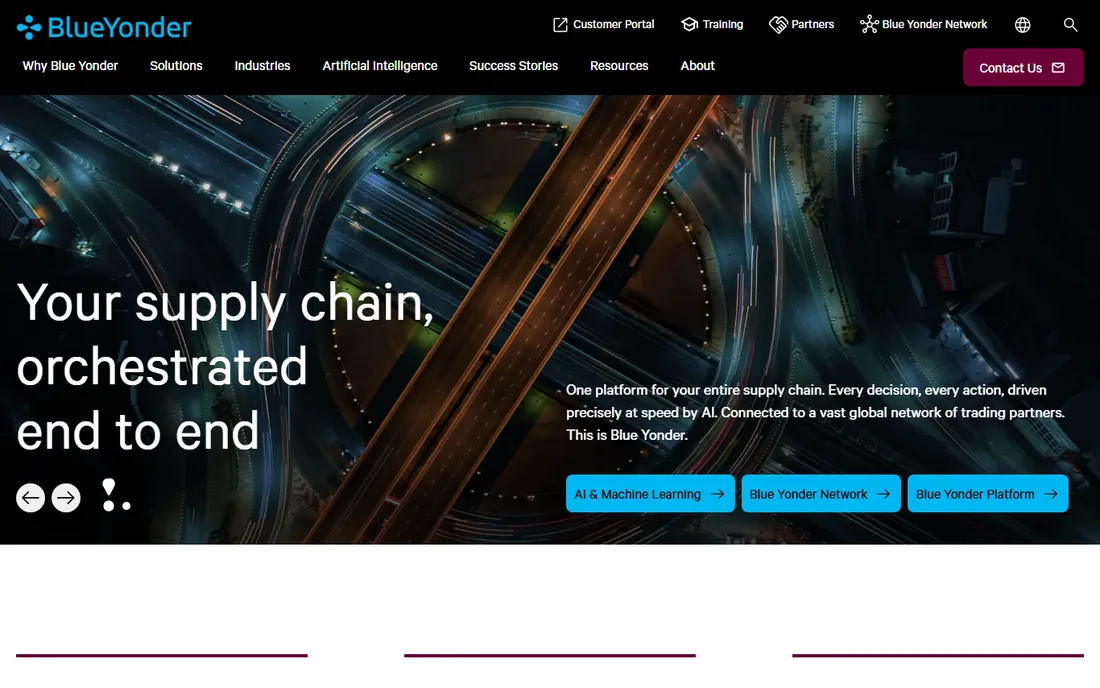
Blue Yonder, formerly JDA, covers more of the supply chain than almost any vendor on this list. Demand planning, replenishment, warehouse management, transportation, and labor management all live in one portfolio. For retailers and consumer goods companies, that matters, because the handoff between planning a promotion and executing it in the warehouse is where many supply chains break.
The platform leans on machine learning for forecasting and decision support, and its installed base in retail gives it deep category knowledge. Collaboration features let retailers and suppliers align on forecasts and replenishment plans, which is the core of programs like vendor-managed inventory. If your supply chain problem spans both the plan and the physical execution, Blue Yonder lets you buy both from one vendor.
The trade-off is the size of the commitment. These are enterprise implementations with enterprise timelines and enterprise price tags. Companies that need only one piece, say demand planning, may find a point solution faster to deploy. Blue Yonder fits buyers who want a long-term platform, not a quick fix.
What we like- Broad suite covering planning, warehouse, transportation, and labor
- Deep retail and CPG experience
- AI-driven forecasting
Watch out for- Large implementations with long timelines
- Breadth can mean complexity for narrower needs
Starting priceSee website
Free planNo

o9 Solutions positions its platform as the digital brain of the enterprise, connecting commercial, supply chain, and financial planning in one model. The pitch is integration: instead of demand planning, supply planning, and financial planning running as separate exercises that get reconciled quarterly, o9 lets them run on shared data with shared scenarios.
In practice, buyers choose o9 when their planning process is fragmented and they want one platform to unify it. The modeling flexibility is a genuine strength. Planners can build custom optimization models and run scenarios without waiting on IT, which shortens the distance between a question and an answer. That appeals to large, complex enterprises where off-the-shelf planning logic never quite fits.
As a younger vendor than SAP or Blue Yonder, o9 has a smaller ecosystem of implementation partners and prebuilt content. Expect a meaningful services engagement to get it live. Companies that want a configurable planning platform and have the team to wield it will get the most from o9.
What we like- Flexible platform for integrated business planning
- Strong scenario and optimization modeling
- Growing enterprise customer base
Watch out for- Quote-based pricing with significant services component
- Newer vendor means a smaller partner ecosystem than legacy rivals
#5
SAP Business Network
Best for: Trading-partner collaboration inside SAP
Visit sap.com
Starting priceSee website
Free planNo

SAP Business Network is the collaboration layer for the SAP world. It connects buyers and suppliers for procurement, handles logistics collaboration across carriers and shippers, and supports asset-intensive industries with maintenance collaboration. Because it sits on top of SAP's ERP installed base, an SAP customer can often extend collaboration to trading partners without ripping out core systems.
The network effect is real. Thousands of suppliers already transact on the network through Ariba, which lowers the onboarding barrier for new buyers. Purchase orders, invoices, shipment notices, and payments can flow between companies with less manual reconciliation. For procurement teams, that means fewer disputes and faster cycle times.
The catch is ecosystem gravity. SAP Business Network is at its best when your company already runs SAP. Non-SAP companies can use it, but they will not get the same integration payoff, and SAP licensing is famously intricate. If you are an SAP shop with collaboration pain, this is the default shortlist. If you are not, weigh the integration cost honestly.
What we like- Deep integration with SAP ERP and Ariba
- Massive existing supplier network
- Covers procurement, logistics, and asset collaboration
Watch out for- Strongest inside the SAP ecosystem
- Pricing and licensing can be complex
#6
Coupa
Best for: Procurement and supplier spend collaboration
Visit coupa.com
Starting priceSee website
Free planNo
Coupa approaches collaboration from the spend side. Its platform covers procurement, invoicing, expenses, and payments, with supplier collaboration built around sourcing events, contracts, and order management. The interface is famously easier to use than legacy procurement tools, which matters because procurement software only works if requisitioners and suppliers actually log in.
For collaboration, Coupa's strength is bringing suppliers into sourcing and fulfillment workflows. Buyers can run competitive sourcing events, manage supplier information and risk, and collaborate on orders and invoices in one place. Finance gets visibility into committed spend before it becomes actual spend, which is the whole point of the category.
Coupa is not a supply chain planning tool. It will not optimize your production schedule or model a multi-tier disruption. Buyers sometimes confuse spend collaboration with supply chain collaboration, and they are related but different. Choose Coupa when procurement owns the problem and the goal is controlling spend with supplier cooperation.
What we like- Intuitive spend management users actually adopt
- Strong supplier collaboration for sourcing and invoicing
- Good visibility into business spend
Watch out for- Focused on procurement and spend, not production planning
- Enterprise pricing without public tiers
#7
Infor Nexus
Best for: Global trade visibility on one network
Visit infor.com
Starting priceSee website
Free planNo

Infor Nexus is a cloud network that connects buyers, suppliers, and logistics providers around the lifecycle of a purchase order. From order placement through production milestones to shipment and delivery, every party works from shared status and documents. For companies that source heavily from overseas, that visibility replaces a patchwork of emails, portals, and freight forwarder updates.
The platform's sweet spot is global trade execution. It handles the document-heavy reality of international supply chains, commercial invoices, packing lists, and compliance paperwork, while giving planners milestone-level visibility into inbound supply. Finance teams can also tie payments to shipment events, which tightens working capital.
Infor Nexus is enterprise software with enterprise sales cycles. It shines when international complexity is the core problem. Domestic-focused companies with simple logistics may find lighter visibility tools sufficient. But if your inbound supply chain spans continents and your planners are blind between order and arrival, the network model earns its keep.
What we like- Multi-enterprise network for global trade and logistics
- Strong purchase order and shipment visibility
- Backed by Infor and Koch Industries
Watch out for- Enterprise focus with quote-based pricing
- Most valuable for companies with heavy international sourcing
Starting priceSee website
Free planNo
TraceLink is the specialist on this list. It provides supply chain collaboration specifically for the pharmaceutical industry, centered on track and trace, serialization, and regulatory compliance. Drug supply chains face requirements that other industries do not, every unit traceable, every handoff documented, and TraceLink's network is built to satisfy them.
Collaboration on TraceLink means manufacturers, wholesalers, distributors, and pharmacies exchanging serialized product data and compliance documentation on a shared network. When regulators in the US, EU, or other markets demand proof of a product's chain of custody, the data is already structured and shared. For pharma companies, this is not optional software, it is infrastructure.
The specialization is also the limitation. Outside pharmaceuticals and closely regulated distribution, TraceLink has little to offer. General manufacturers should look elsewhere. But if you operate in pharma, few vendors understand your compliance burden the way TraceLink does, and its prebuilt trading-partner network shortens onboarding considerably.
What we like- Purpose-built for pharmaceutical track and trace
- Deep serialization and regulatory compliance
- Network of pharma trading partners
Watch out for- Narrow industry focus
- Overkill outside life sciences and regulated distribution
How we chose
We started with the vendors that supply chain leaders actually evaluate: the planning suite vendors, the multi-enterprise network providers, and the specialists that dominate regulated niches. We checked each vendor's current homepage and product positioning, confirmed pricing is quote-based rather than public, and verified that every product is actively sold today. We excluded discontinued tools and vendors that pivoted away from supply chain. We did not claim hands-on testing. Instead we weighted breadth of collaboration features, fit for different company sizes and industries, and the honest trade-offs buyers report, like implementation effort and ecosystem lock-in.
What to evaluate before you sign a contract
Start by naming the actual collaboration problem. A company struggling with supplier onboarding needs a network like E2open or Infor Nexus. A company whose planners cannot answer what-if questions needs Kinaxis or o9. A procurement team drowning in maverick spend needs Coupa. Buying a planning suite to fix a supplier communication problem, or vice versa, is the most common expensive mistake in this category.
Ask about partner onboarding during the demo, not after the contract. Multi-enterprise tools only deliver value when your suppliers and logistics providers actually join the network. Find out what onboarding support the vendor provides, what it costs, and how long it typically takes for a mid-size supplier. A beautiful platform with an empty network is just an expensive database.
Pin down the total cost, not the license cost. Quote-based enterprise pricing means the software license is only part of the bill. Implementation services, partner onboarding, integration with your ERP, and ongoing support can multiply the first-year cost. Ask for reference customers of your size and industry, and ask them what the second year cost. The vendors on this list all sell transformation, so make them show you the full price of that transformation before you commit.
Where supply chain software projects go wrong
The most consistent failure pattern is underestimating change management. Supply chain collaboration tools ask suppliers, planners, and warehouse teams to change how they work, and software alone does not produce that change. Projects that budget for licenses but not for training, process redesign, and supplier enablement tend to stall after go-live, with the new system running in parallel with the old spreadsheets.
Data quality is the second trap. Planning and visibility tools are only as good as the data feeding them. Companies that skip the hard work of cleaning master data, item masters, supplier records, bills of material, discover that the new system confidently produces wrong answers. Build a data readiness phase into the timeline, and be skeptical of any vendor that says it is unnecessary.
Finally, watch scope creep. Enterprise suites tempt buyers to implement everything at once. The projects that succeed usually start with one high-value pain, prove the value, and expand. Pick the module that hurts most, get it live, and let the results fund the next phase.
Frequently asked questions
What is supply chain collaboration software?
It is software that lets a company plan and execute its supply chain together with its trading partners, suppliers, contract manufacturers, logistics providers, and distributors, instead of each party working from its own disconnected systems. Typical capabilities include shared demand forecasts, order and shipment visibility, supplier portals, and joint planning workflows.
How is this different from supply chain planning software?
Planning software optimizes what your company should make, buy, and move. Collaboration software extends those plans and the underlying data to the partners who have to execute them. Many platforms do both, but the distinction matters when you evaluate: ask whether the tool is built for your planners, your partners, or both.
How much does supply chain collaboration software cost?
The enterprise tools on this list use quote-based pricing, and total cost depends on modules, user counts, partner counts, and implementation scope. Expect the first-year total, including services, to be a multiple of the license fee. Smaller point solutions exist below this tier, but the network platforms here are priced for mid-market and enterprise buyers.
How long does implementation take?
It varies widely. A focused procurement or visibility deployment can go live in months, while a full multi-enterprise network or integrated planning rollout can take a year or more, especially when dozens of trading partners must be onboarded. Ask vendors for timelines from reference customers of your size.
Do our suppliers have to pay to join the network?
It depends on the vendor and the model. Some networks charge suppliers a subscription, which can slow onboarding. Others let suppliers join free and charge only the buying organization. Ask this explicitly during evaluation, because supplier fees are a common source of friction after the contract is signed.
Can small businesses use these tools?
Most tools on this list target mid-market and enterprise companies. Small businesses with simpler supply chains usually do better with lighter tools, like inventory management software with supplier portals, or the collaboration features inside their accounting or ERP system. The platforms here earn their cost when complexity, partner counts, or regulatory demands are high.
Sources we checked (8)
- https://www.e2open.com/
- https://kinaxis.com/
- https://blueyonder.com/
- https://o9solutions.com
- https://www.sap.com
- https://www.coupa.com/
- https://www.infor.com/
- http://tracelink.com/
Is your product missing or out of date?
We review this list regularly. Vendors can request a listing, send updated pricing or ask about featured placement.

Shihab Mia · Founder, Rankite
Shihab has spent more than a decade helping SaaS and e-commerce brands grow through search. He writes Rankite's software buying guides from pricing pages, documentation and public user reviews. More about Shihab.