How we make this list: we compare pricing pages, product documentation and public user reviews. Rankite is independent; if a vendor ever pays for a featured spot, that listing is clearly labeled Partner.
Key takeaways
- PostgreSQL has the widest community-built ecosystem of any database here: extensions, drivers, and managed options on every cloud, and it costs nothing to run yourself.
- If you want zero operations, Supabase ($25/month Pro), Firebase (free Spark tier), MongoDB Atlas, and PlanetScale bundle the database with hosting, auth, and scaling handled for you.
- Snowflake, Oracle Database, and SQL Server win inside enterprises with compliance teams, thanks to certified connectors, audit features, and vendor support contracts.
- Watch the pricing models before you commit: Snowflake and Firebase bill by usage, PlanetScale bills by resources, and Oracle and SQL Server need careful license planning.
Quick comparison
| Tool | Best for | Starting price | Free plan |
|---|
 PostgreSQL PostgreSQL | teams wanting a free relational database with the widest extension support | Free (open source) | Yes |
 MongoDB MongoDB | product teams shipping document-based apps with flexible schemas | See website | Yes (Atlas free tier) |
 MySQL MySQL | web apps and agencies wanting the most widely deployed open-source SQL engine | Free (Community Edition) | Yes |
 Snowflake Snowflake | analytics teams consolidating warehouses and sharing data across clouds | See website | Free trial |
 Supabase Supabase | builders wanting Postgres plus auth, storage, and realtime in one place | $25/month (Pro) | Yes |
 Firebase Firebase | mobile and web teams needing auth, sync, and push out of the box | See website | Yes (Spark plan) |
 Microsoft SQL Server Microsoft SQL Server | enterprises standardized on Microsoft, Azure, and .NET | See website | Yes (Express and Developer editions) |
 Oracle Database Oracle Database | large organizations with mission-critical, compliance-heavy workloads | See website | Yes (Oracle AI Database Free) |
 PlanetScale PlanetScale | teams wanting MySQL with branching and non-blocking schema changes | From $5/month (Base) | No |
Is your product missing or out of date?
We review this list regularly. Vendors can request a listing, send updated pricing or ask about featured placement.
The best database software for ecosystem support
#1
PostgreSQL
Best for: teams wanting a free relational database with the widest extension support
Visit postgresql.org
Starting priceFree (open source)
Free planYes
Start with the engine that shows up everywhere. PostgreSQL is open source and free, and its ecosystem is the reason it keeps winning default-choice status in developer surveys. Need full-text search? A capable engine is built in. Geospatial queries? PostGIS is the industry standard. AI embeddings? pgvector plugs in without a migration. Every language has a mature driver, every major ORM speaks Postgres natively, and every cloud runs a managed version, from RDS and Cloud SQL to Neon, Supabase, and dozens of smaller hosts.
That breadth changes the buying math. You can prototype on a laptop with the free download, ship on a cheap VPS, and move to a managed service when growth demands it, all without changing your SQL. The community is large enough that almost any error message has a decade of Stack Overflow threads behind it. The trade is operational: running Postgres yourself means you own backups, upgrades, failover, and tuning, and most teams eventually pay a managed provider to take that work on.
What we like- Extensions like PostGIS and pgvector plug straight in
- Every major ORM and BI tool ships a Postgres connector
- Permissive license keeps costs flat as you scale
Watch out for- You manage backups, tuning, and failover yourself unless you pay a cloud provider
- Advanced features assume real database skill
#2
MongoDB
Best for: product teams shipping document-based apps with flexible schemas
Visit mongodb.com
Starting priceSee website
Free planYes (Atlas free tier)
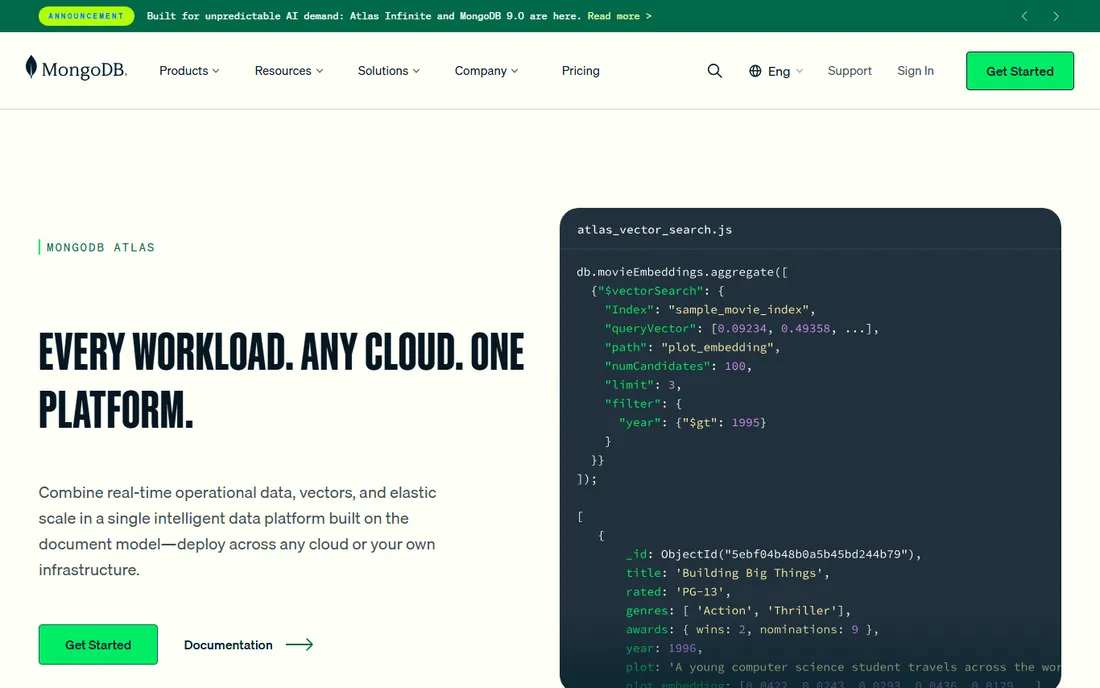
MongoDB built its name on flexibility, and its ecosystem has grown around that idea. The document model lets you change your schema as the product evolves, which suits teams iterating fast. MongoDB Atlas, the managed cloud service, is where most of the ecosystem energy now sits: a free shared tier for experiments, then usage-based pricing as you scale. Drivers exist for every mainstream language, and the partner network covers BI tools, ETL vendors, and cloud marketplaces on AWS, Azure, and Google Cloud.
Built-in search, time-series collections, charts, and vector search mean many teams never leave the platform for adjacent features. That convenience has a price curve worth watching: Atlas bills by usage, and heavy read/write workloads or large datasets can push the monthly bill well past a self-hosted alternative. Teams with clean document-shaped data and a need to move fast get the most value; teams with deeply relational data should look hard at Postgres first.
What we like- Flexible documents evolve with the product
- Atlas marketplace, drivers, and partner integrations cover every stack
- Search, charts, and vector indexes live in one place
Watch out for- Relational workloads and multi-document joins fight the model
- Costs climb fast once data and traffic grow
#3
MySQL
Best for: web apps and agencies wanting the most widely deployed open-source SQL engine
Visit mysql.com
Starting priceFree (Community Edition)
Free planYes
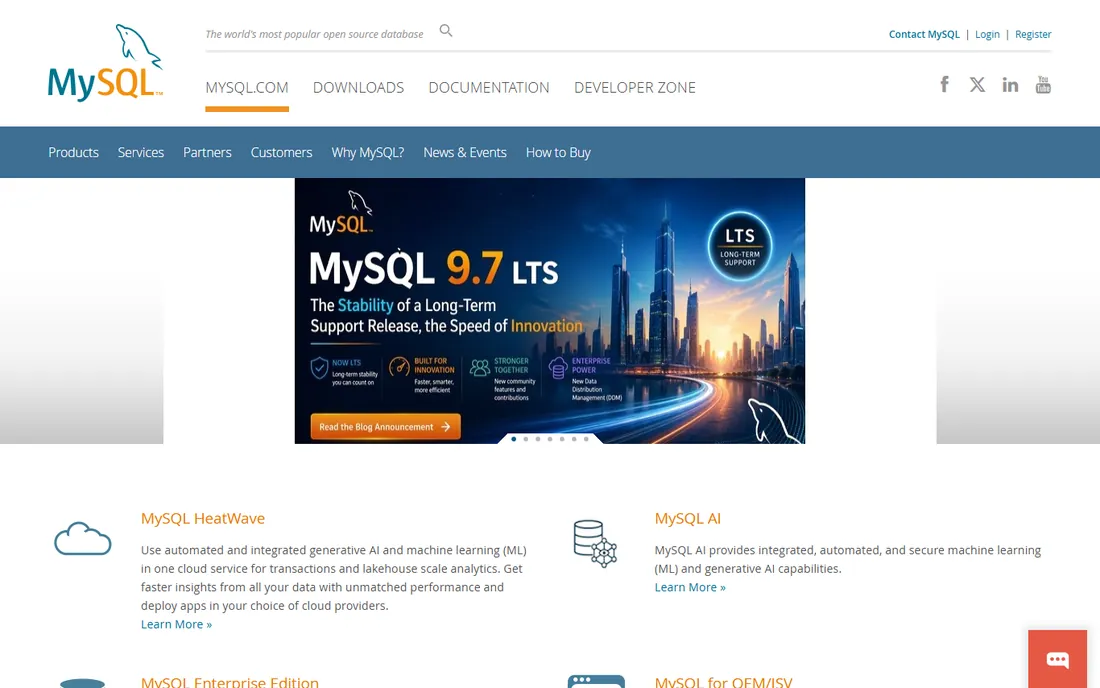
MySQL is the database of the commodity web, and that is a strength, not a criticism. WordPress, Drupal, Magento, and countless custom PHP and Laravel apps run on it, which means nearly every shared host, VPS image, and deployment tutorial assumes MySQL. The Community Edition is free and open source, and managed versions run on every cloud. Hiring is easy: almost every backend developer has touched it.
The ecosystem is broad rather than deep. You will find connectors, ORMs, and migration tools for everything, but advanced features like window functions, CTEs, and JSON handling arrived later than in Postgres, and some shops prefer MariaDB as a drop-in community-led alternative. Oracle's ownership also makes some teams nervous about licensing direction, though the Community Edition remains free. For standard CRUD web apps and agencies shipping client sites, MySQL remains the path of least resistance.
What we like- Ships everywhere: every host, control panel, and CMS supports it
- Huge talent pool and community answers
- Mature, well-documented replication tooling
Watch out for- Oracle owns it, so some teams distrust the roadmap
- Advanced features lag PostgreSQL
- Per-connection tuning bites at high scale
#4
Snowflake
Best for: analytics teams consolidating warehouses and sharing data across clouds
Visit snowflake.com
Starting priceSee website
Free planFree trial
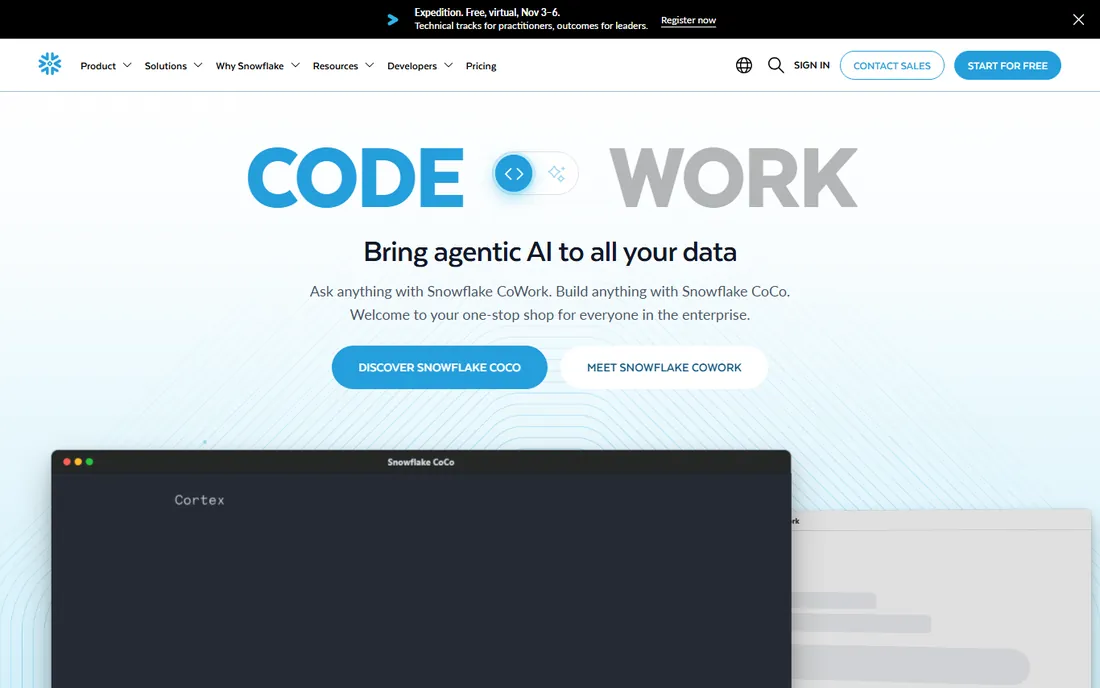
Snowflake sells the data cloud, and its ecosystem is built for sharing. The Data Marketplace lets you subscribe to third-party datasets and share your own with partners without moving files around. Native connectors cover BI tools, dbt, Fivetran, and every major cloud, and the platform runs on AWS, Azure, and Google Cloud with cross-cloud sharing. For analytics teams, the partner list reads like a who's who of the modern data stack.
The pricing model is the thing to understand before you sign. Snowflake bills credits for compute and separate charges for storage, which is elegant until an unoptimized query burns credits all weekend. Cost controls, resource monitors, and query tagging are not optional; they are the difference between a reasonable bill and a horror story. Snowflake is not a transactional database, so if your workload is OLTP rather than analytics, it does not belong on your shortlist at all.
What we like- Data sharing and the marketplace make cross-org collaboration simple
- Compute and storage scale independently
- Near-zero operations for the data team
Watch out for- Usage-based pricing is easy to overspend on
- Operational and transactional workloads are not its strength
#5
Supabase
Best for: builders wanting Postgres plus auth, storage, and realtime in one place
Visit supabase.com
Starting price$25/month (Pro)
Free planYes
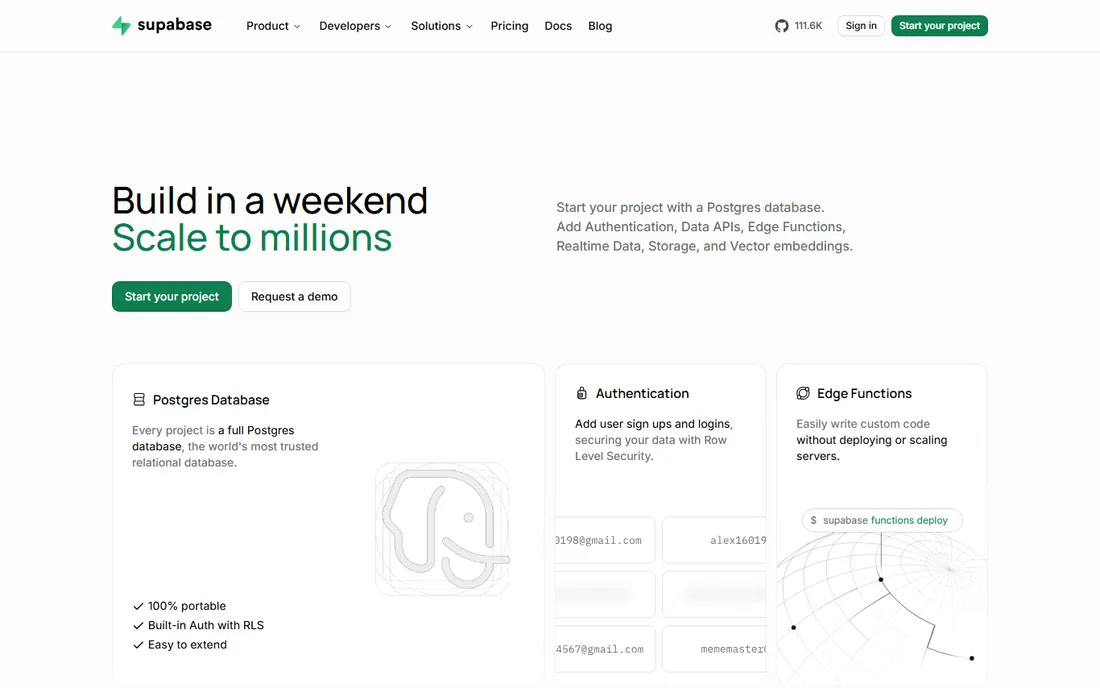
Supabase is Postgres with the boring parts removed. You get a real Postgres database, plus authentication, file storage, edge functions, and realtime subscriptions in one dashboard. Because it is genuinely Postgres, you keep the whole ecosystem: any Postgres driver, ORM, or migration tool works, and you can export your data and self-host if you ever want out. That portability is the core of its appeal compared with more proprietary backends.
Pricing is public and simple: a free tier for experiments and small projects, then Pro at $25 per month with higher limits, then Team and Enterprise tiers. The free tier pauses projects after a week of inactivity, which is fine for side projects but worth knowing before you demo to a client. Supabase fits indie hackers, startups, and agencies that want a backend live today without assembling auth, storage, and database services from separate vendors.
What we like- Real Postgres under the hood, so you can leave anytime
- Auth, storage, edge functions, and realtime ship together
- Public pricing page keeps costs predictable
Watch out for- Free tier projects pause when idle
- You inherit Postgres operational quirks at scale
- The roadmap moves fast and APIs change
Starting priceSee website
Free planYes (Spark plan)
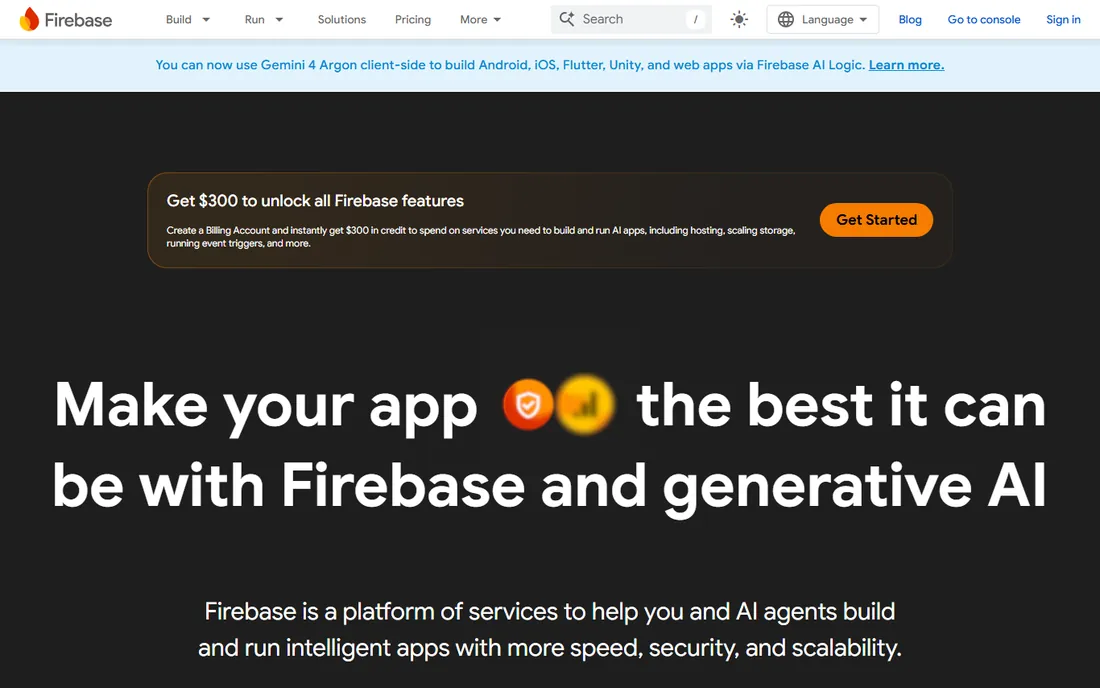
Firebase is Google's app-development platform, and its database products (Firestore and the Realtime Database) are built for client apps first. The ecosystem pitch is speed: authentication, push notifications, crash reporting, analytics, hosting, and serverless functions all live in one console, and the client SDKs handle offline sync and realtime updates without a custom backend. For mobile teams shipping an MVP, nothing else gets you live this fast.
The trade is lock-in. Your data model, queries, security rules, and functions all assume Firebase, and moving to Postgres or another backend later is a rewrite, not a migration. Firestore's query model (no joins, limited compound queries) also pushes complexity into your application code. Pricing is usage-based on the Blaze plan, with a free Spark tier; teams regularly report bill shock when an app goes viral or a runaway function loops. Firebase is excellent for getting started and risky as a forever home.
What we like- Firestore and Realtime Database sync across devices instantly
- Auth, hosting, and cloud functions in one console
- Generous free tier gets prototypes live fast
Watch out for- Migration away is painful
- The query model frustrates complex relational needs
- Usage-based costs surprise teams at scale
#7
Microsoft SQL Server
Best for: enterprises standardized on Microsoft, Azure, and .NET
Visit microsoft.com
Starting priceSee website
Free planYes (Express and Developer editions)
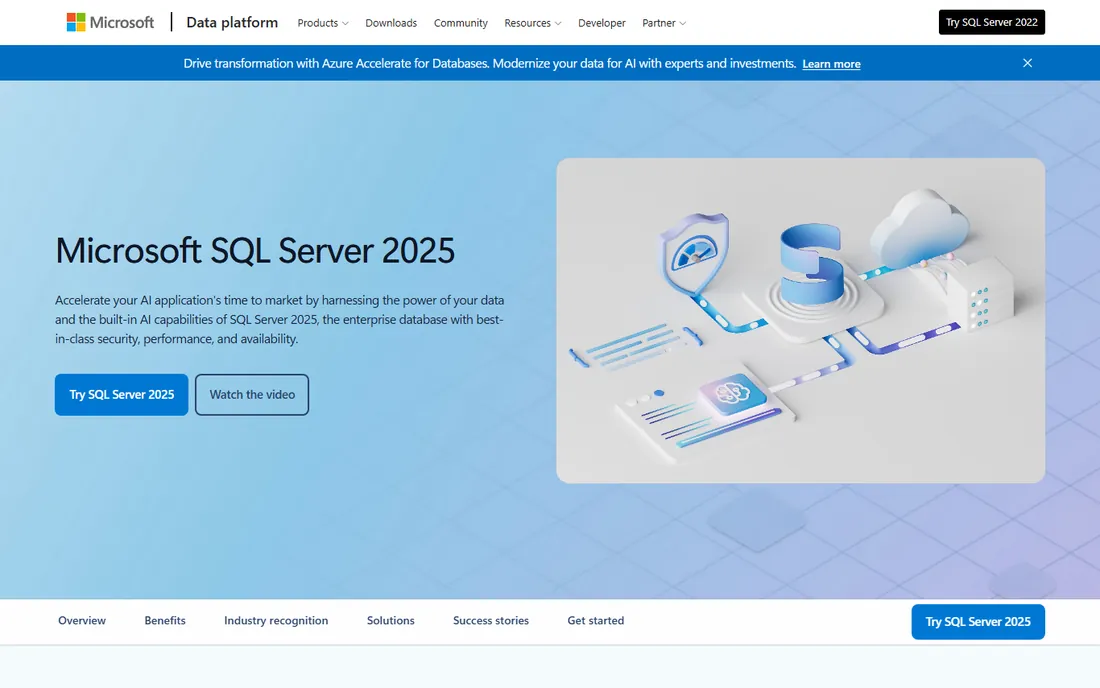
SQL Server is the database of the Microsoft world, and its ecosystem assumes you live there. Integration with Azure, Active Directory, Power BI, and the .NET data stack is first-class, and SQL Server Management Studio remains one of the best database GUIs available. For organizations with Microsoft enterprise agreements, compliance requirements, and existing Windows infrastructure, SQL Server is often the default rather than a choice.
The pricing conversation is where deals get complicated. Licensing by core, CAL models, and Software Assurance add-ons mean you should involve someone who reads Microsoft licensing for a living before signing. The free Express edition covers small workloads and the Developer edition is free for development, but production at scale is a significant line item. Linux and Docker support exists and has improved, yet the ecosystem's center of gravity remains Windows and Azure.
What we like- Deep integration with the Microsoft stack: Azure, Power BI, and SSIS
- SQL Server Management Studio is excellent
- Strong enterprise support and compliance story
Watch out for- Licensing is complex and expensive
- Linux and container support still trails the Windows heritage
#8
Oracle Database
Best for: large organizations with mission-critical, compliance-heavy workloads
Visit oracle.com
Starting priceSee website
Free planYes (Oracle AI Database Free)
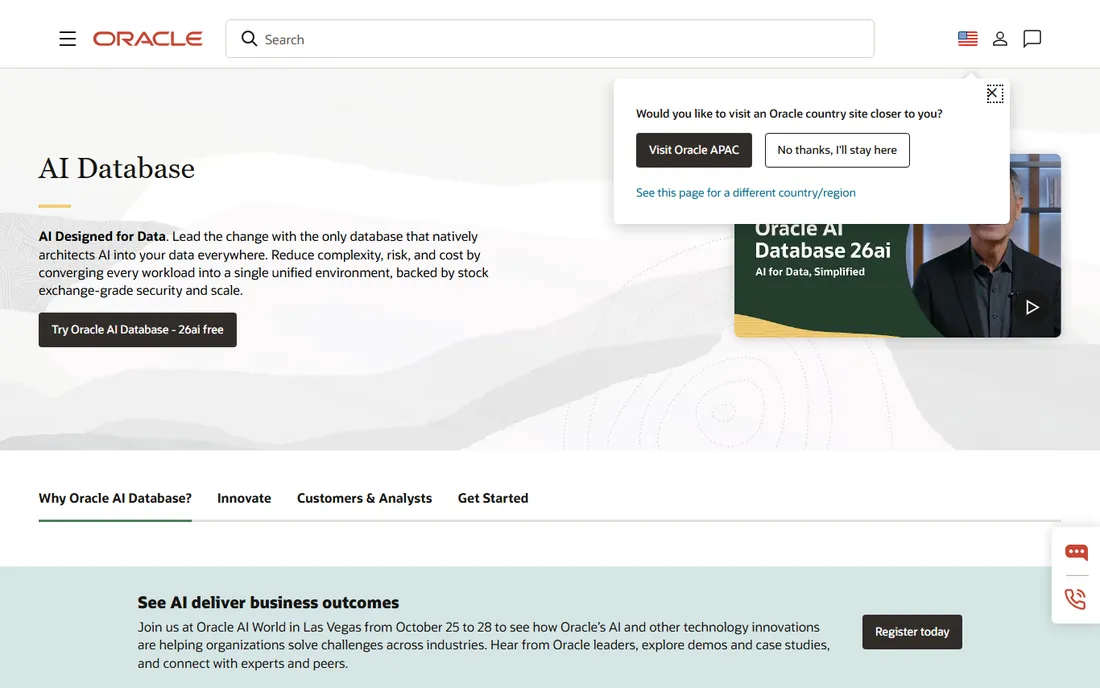
Oracle Database is the incumbent of record for banks, telcos, and governments, and its ecosystem reflects forty years of entrenchment. The feature list is enormous: Real Application Clusters, partitioning, advanced security, and now the Autonomous Database, which automates patching, tuning, and scaling in Oracle Cloud. Third-party tooling, certified integrations, and a global partner network cover every enterprise scenario. Oracle AI Database Free gives developers a no-cost edition to build and test with.
Nobody picks Oracle for the price. Licensing is notoriously complex, list prices are high, and Oracle's audit practices are a running industry joke that nobody finds funny when it happens to them. Cloud rivals have eaten the mid-market, but for organizations with existing Oracle estates, regulatory mandates, and workloads that cannot fail, the ecosystem depth and support contracts still justify the spend. New projects without legacy Oracle dependencies should think carefully before starting here.
What we like- Battle-tested reliability for the largest workloads
- Autonomous Database automates patching and tuning
- Unmatched feature depth for complex enterprise needs
Watch out for- Licensing and audit practices are famously aggressive
- Costs are high
- Community resources skew enterprise
#9
PlanetScale
Best for: teams wanting MySQL with branching and non-blocking schema changes
Visit planetscale.com
Starting priceFrom $5/month (Base)
Free planNo
PlanetScale takes MySQL and adds the workflow developers expect from modern tooling. Database branching lets you create a copy of production, test a schema change, and merge it back, with deploy requests that mirror pull requests. Non-blocking schema changes mean ALTER TABLE no longer locks your production database at 3 a.m. Under the hood, Vitess provides horizontal sharding for teams that outgrow a single MySQL instance.
The ecosystem is narrower than the giants here: it is MySQL-compatible, so standard MySQL drivers and ORMs work, but the platform-specific features live inside PlanetScale. Note that the free Hobby tier was removed in 2024, so there is no free plan; the Base plan starts from $5 per month with resource-based pricing, and Metal plans start from $50. PlanetScale fits teams committed to MySQL who want a modern developer workflow without running Vitess themselves.
What we like- Database branching makes schema changes safe
- Vitess-based sharding scales MySQL horizontally
- Developer experience is excellent
Watch out for- No free tier since 2024
- MySQL-only, so Postgres shops look elsewhere
- Resource-based pricing needs monitoring
How we chose
We scored each platform on seven ecosystem signals: driver and ORM coverage, extensions or add-on products, third-party integrations, managed cloud options, documentation quality, community size, and the partner or marketplace network. We checked vendor pricing pages, documentation, and integration directories, then cross-checked against public reviews on G2, Capterra, and Reddit threads from working developers. Products that were acquired or shut down were excluded; renames use the current name. We did not run hands-on benchmarks, so performance claims come from vendor documentation and user reports, not our own testing.
What ecosystem support actually includes
Ecosystem strength breaks down into layers, and different buyers care about different ones. Developers care about drivers, ORMs, and how fast a forum answer arrives. Architects care about managed options and migration paths. Procurement cares about support contracts, certifications, and audit trails.
Map your team to the layers before you compare vendors. A startup with three developers gets more from Supabase's bundled auth and Postgres portability than from Oracle's partner network. A bank with a compliance department gets more from SQL Server's certifications than from MongoDB's community. The "best" ecosystem is the one whose help arrives in the form you actually need: code you can copy, people you can hire, or a vendor contract you can escalate.
Open source vs managed hosting
The open-source databases here (PostgreSQL, MySQL, and the free editions of SQL Server and Oracle) cost nothing in license fees but charge you in operations. Backups, upgrades, failover, and performance tuning become your team's job, and the ecosystem helps: managed providers like RDS, Cloud SQL, Neon, and PlanetScale exist precisely to sell that work back to you.
The managed-first options (Supabase, Firebase, MongoDB Atlas, Snowflake) flip the deal: you pay from day one, in money rather than engineer hours. For most teams under fifty people, the managed price is cheaper than the salary cost of doing it yourself. The exception is steady, predictable workloads at scale, where self-hosting on cheap compute wins. Decide which currency you are paying in before you fall in love with a feature list.
Frequently asked questions
Which database has the largest ecosystem?
PostgreSQL. It has the most extensions, the most managed providers, driver support in every language, and the largest community answering questions. MySQL is close for web hosting scenarios, and MongoDB leads among document databases.
Is a free database really free for production?
The software is free, but production is not. You still pay for servers, backups, monitoring, and the engineer time to run it all. Managed free tiers (Supabase, Firebase Spark, MongoDB Atlas) are free up to usage limits, then bill by consumption.
What is the cheapest managed database for a side project?
Supabase's free tier and Firebase's Spark plan both run small projects at zero cost. PlanetScale starts from $5 per month with no free tier. For a project that might sleep for weeks, check idle-pause policies before you choose.
Should a startup pick Oracle or SQL Server?
Usually not, unless the founding team already knows them or a big customer requires them. Licensing costs and complexity outweigh the benefits for most startups. Postgres, MySQL, or a managed service covers the same ground for far less money.
How do I avoid getting locked into one vendor?
Prefer databases with standard interfaces: Postgres and MySQL let you move between providers. Firebase and Snowflake have proprietary APIs that make migration expensive. Keep exports automated and test restoring them somewhere else at least once a year.
Sources we checked (9)
- https://postgresql.org/
- https://www.mongodb.com
- https://www.mysql.com/
- https://www.snowflake.com/
- https://supabase.com
- https://firebase.google.com
- https://www.microsoft.com/en-sg/sql-server
- https://www.oracle.com/database
- https://planetscale.com/
Is your product missing or out of date?
We review this list regularly. Vendors can request a listing, send updated pricing or ask about featured placement.

Shihab Mia · Founder, Rankite
Shihab has spent more than a decade helping SaaS and e-commerce brands grow through search. He writes Rankite's software buying guides from pricing pages, documentation and public user reviews. More about Shihab.