How we make this list: we compare pricing pages, product documentation and public user reviews. Rankite is independent; if a vendor ever pays for a featured spot, that listing is clearly labeled Partner.
Key takeaways
- Zoho Inventory is the value benchmark: a genuinely free plan plus a $29-a-month tier that covers most small sellers.
- Sortly is the cheapest way to track physical items visually, but its Advanced plan omits purchase orders and stock counts.
- inFlow packs more core features per dollar than most rivals at $161 a month, though that is still a jump from the free tier crowd.
- Cin7, Fishbowl and Ordoro all start between $229 and $349 a month, which buys depth but only makes sense above roughly $1M in annual revenue.
- KORONA POS and Square for Retail suit single-location retailers who want POS and inventory in one subscription.
Quick comparison
| Tool | Best for | Starting price | Free plan |
|---|
 Zoho Inventory Zoho Inventory | Small sellers who want the most for the least | $29/month (Standard, billed annually) | Yes |
 Sortly Sortly | Teams tracking equipment, supplies and materials visually | $49/month (Advanced, billed monthly) | Yes |
 inFlow inFlow | B2B sellers and wholesalers who need structure | $161/month (Entrepreneur, billed monthly) | Free trial (14 days) |
 Katana Katana | Product businesses that also manufacture | See website | Yes |
 Cin7 Cin7 | Multichannel brands outgrowing basic tools | $349/month (Core) | Free trial (14 days) |
 Fishbowl Fishbowl | Manufacturers and distributors on QuickBooks | $229/month (Essentials, billed annually) | No |
 Ordoro Ordoro | Ecommerce brands that ship and stock in one place | $349/month (Inventory Advanced) | Free trial (15 days) |
 KORONA POS KORONA POS | Brick-and-mortar retailers who need POS plus inventory | $59/terminal/month (Core) | Free trial |
 Square for Retail Square for Retail | Stores already running on Square | See website | Yes |
Is your product missing or out of date?
We review this list regularly. Vendors can request a listing, send updated pricing or ask about featured placement.
The best value inventory management software
#1
Zoho Inventory
Best for: Small sellers who want the most for the least
Visit zoho.com
Starting price$29/month (Standard, billed annually)
Free planYes
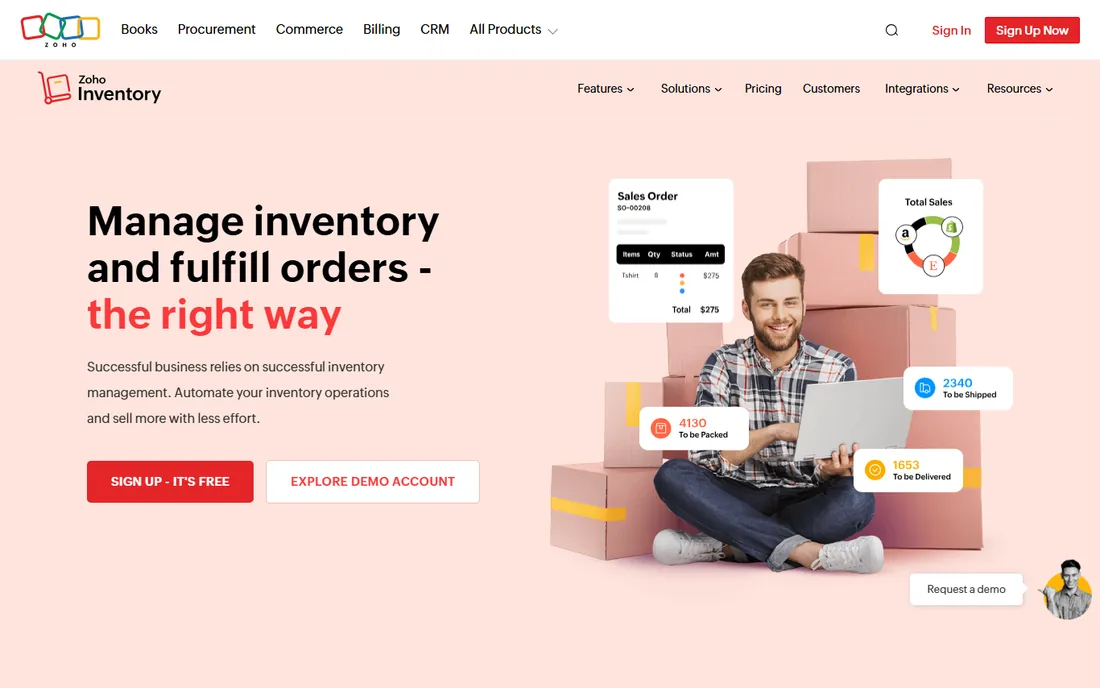
Zoho Inventory is the first tool to check because it resets expectations. The free plan handles 50 orders a month for one user at one location, which is enough for a side business or a new store to run properly. The Standard plan at $29 a month (billed annually) raises that to 500 orders, 3 users and 2 locations, and you are still paying per organization rather than per seat. Few competitors touch that ratio.
The catch is the tier structure. Order volume, user count and warehouse limits all rise with the plan, so a business that grows past 500 orders a month lands on Professional at $79. Automation tools, fulfillment features and advanced reporting also wait on higher tiers. If you already use Zoho Books or Zoho CRM, the shared data makes the value case even stronger.
What we like- Free plan covers 50 orders a month
- Flat per-organization pricing, not per user
- Deep integration with the rest of Zoho
Watch out for- Paid plans cap orders, users and locations, so growing sellers upgrade fast
- Advanced automation and fulfillment features sit on higher tiers
#2
Sortly
Best for: Teams tracking equipment, supplies and materials visually
Visit sortly.com
Starting price$49/month (Advanced, billed monthly)
Free planYes
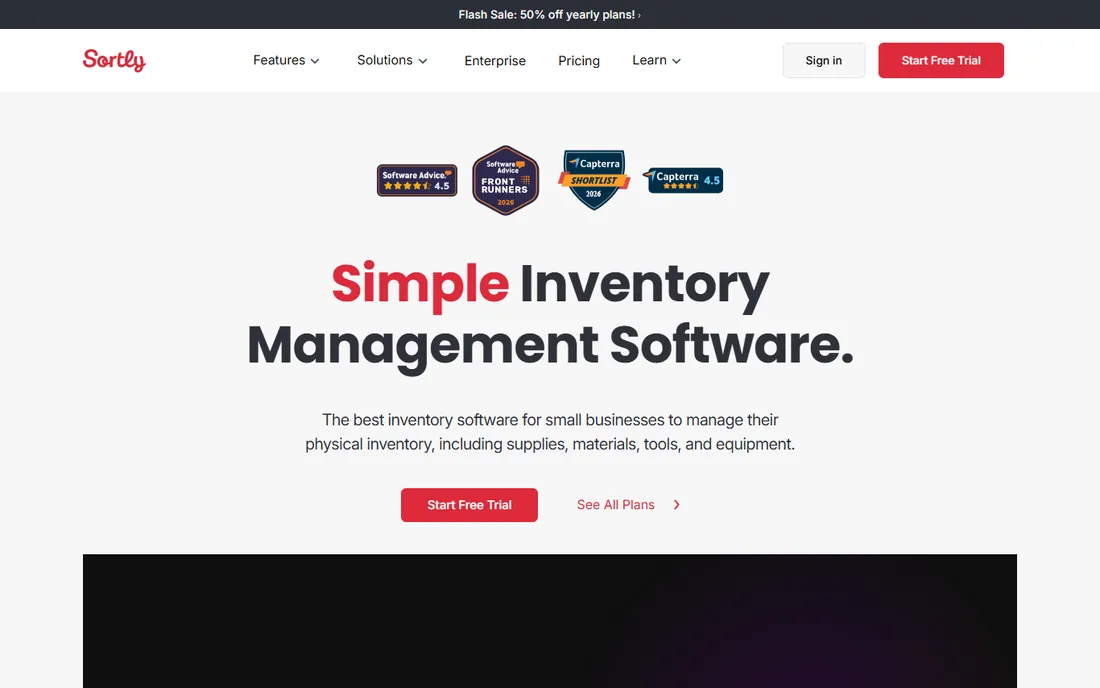
Sortly is not a full ERP, and it does not pretend to be. It is a visual inventory tracker: photograph items, tag them with QR or barcode labels, scan them with the mobile app, and get low-stock alerts. For contractors, clinics, schools and small warehouses tracking equipment and supplies, that is exactly the job. The free plan covers 100 unique items for one user, and the app works offline, which field teams genuinely need.
The value story gets complicated at the paid tiers. Advanced costs $49 a month but leaves out stock counts, pick lists and purchase orders, so many businesses end up on Ultra at $149 a month for day-to-day functionality. Sortly is excellent value if your workflow is track-and-find; if you need purchasing and fulfillment, budget for Ultra or look elsewhere.
What we like- Free plan with 100 items and a mobile app that works offline
- QR and barcode label printing
- Simple enough to roll out in a day
Watch out for- Advanced plan excludes stock counts, pick lists and purchase orders
- Item caps force upgrades as the catalog grows
Starting price$161/month (Entrepreneur, billed monthly)
Free planFree trial (14 days)
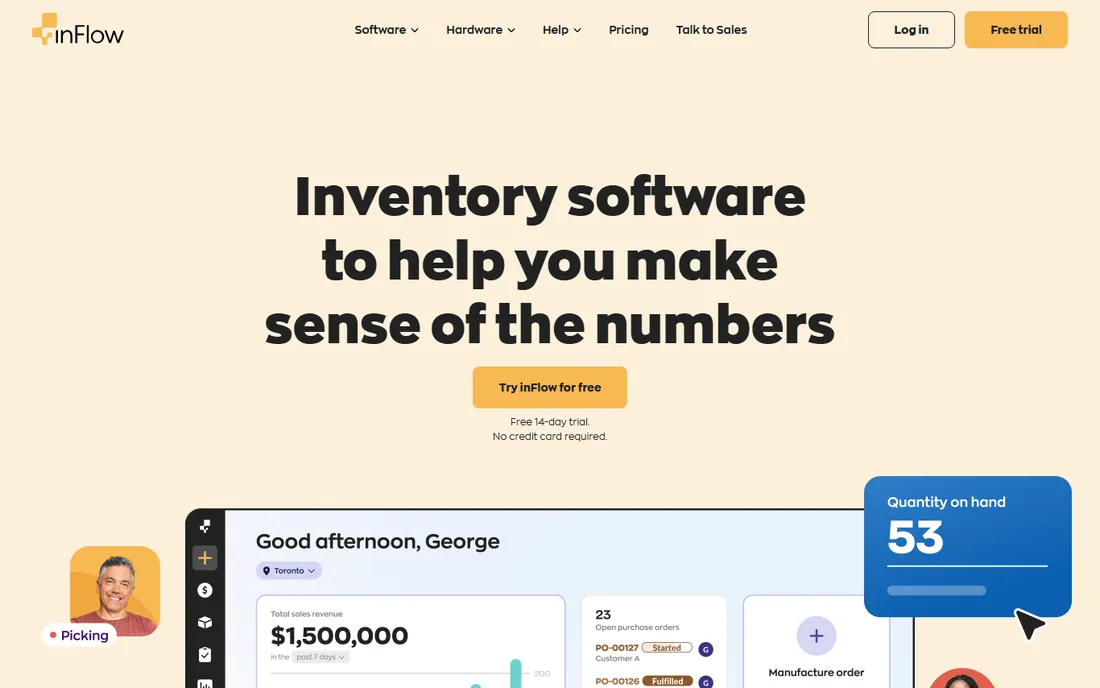
inFlow takes the opposite approach to Sortly: instead of a stripped-down core with upsells, it bundles inventory, purchasing, sales orders, reporting and barcode support into every plan. The Entrepreneur tier starts at $161 a month on monthly billing (about 20% less annually) with 2 team members included, and pricing is per tier rather than per seat. For a wholesaler or B2B seller that needs showrooms, invoicing automation and real purchasing workflows, the included feature set is generous.
The cost picture includes the add-on menu. Serial number tracking, API access, additional integrations and extra team members are all separate line items, and a business that needs several of them can add $100 or more to the monthly bill. Compared with tools that force tier upgrades for extra features, inFlow's add-on model is more flexible, but it rewards careful scoping.
What we like- Strong core feature set included from the first paid tier
- 95+ integrations including Shopify, QuickBooks and Xero
- First-party support from in-house teams
Watch out for- No free plan, only a 14-day trial
- Add-ons for serial numbers, API access and extra integrations stack up quickly
Starting priceSee website
Free planYes
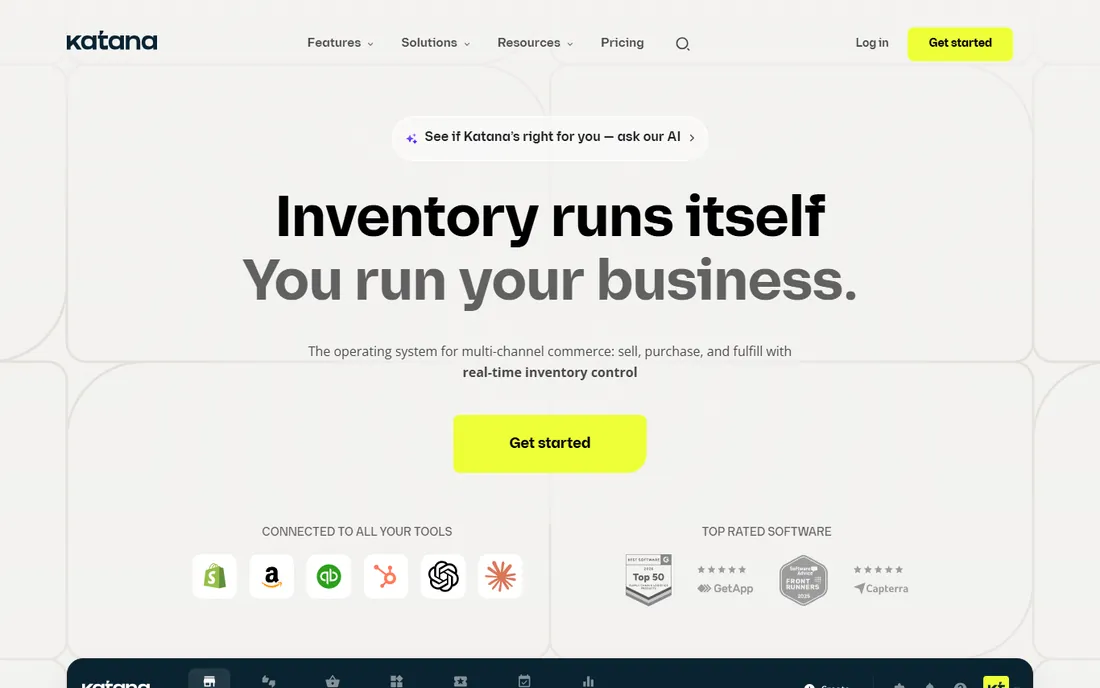
Katana earns its place on a value list for manufacturers, not for bargain hunters. It unifies stock, sales orders and production on one screen, with multi-level BOMs, lot and serial traceability, and live sync across Shopify, Amazon and WooCommerce. For a business that makes what it sells, replacing a spreadsheet plus a separate MRP tool with one system is where the value lives. You can explore the product at no cost before talking to sales.
The pricing model has moved to a custom Advantage contract with unlimited SKUs, users and integrations, which means there is no public starting price to compare. Third-party comparisons put paid tiers in the hundreds per month, and mid-tier plans have historically required paid onboarding. If you are a pure reseller with no production, Katana is more tool than you need, and Zoho or inFlow will cost less. If you manufacture, get the quote and compare it against Fishbowl and Cin7 on total cost, not headline price.
What we like- Real-time inventory, orders and production in one screen
- Unlimited SKUs, users and integrations on Advantage
- Live Shopify and Amazon sync
Watch out for- Pricing is custom-quoted, so you cannot budget without a sales conversation
- Guided onboarding adds time and cost for complex setups
#5
Cin7
Best for: Multichannel brands outgrowing basic tools
Visit cin7.com
Starting price$349/month (Core)
Free planFree trial (14 days)
Cin7 is the overall pick for product businesses selling across many channels because the integration breadth is hard to match: 700+ connections, built-in EDI, and connectors for the marketplaces and 3PLs a growing brand actually uses. Core starts at $349 a month with a 14-day free trial, and the plan includes demand forecasting and multi-location stock visibility that cheaper tools charge extra for or lack entirely.
Value here is relative. At $349 a month, Cin7 costs roughly twelve times Zoho's Standard plan, so the math only works if you are using the depth: multiple sales channels, complex purchasing, or B2B EDI requirements. Implementation is a project, not an afternoon, and businesses should budget staff time for migration. For a brand doing a few hundred orders a month on one channel, this is overbuying. For a brand doing thousands across six channels, it is often cheaper than stitching tools together.
What we like- 700+ integrations and built-in EDI on higher tiers
- AI-driven demand forecasting
- Real-time visibility across every product and location
Watch out for- $349 a month is the floor, not the ceiling
- Onboarding and data migration take real effort at this tier
Starting price$229/month (Essentials, billed annually)
Free planNo
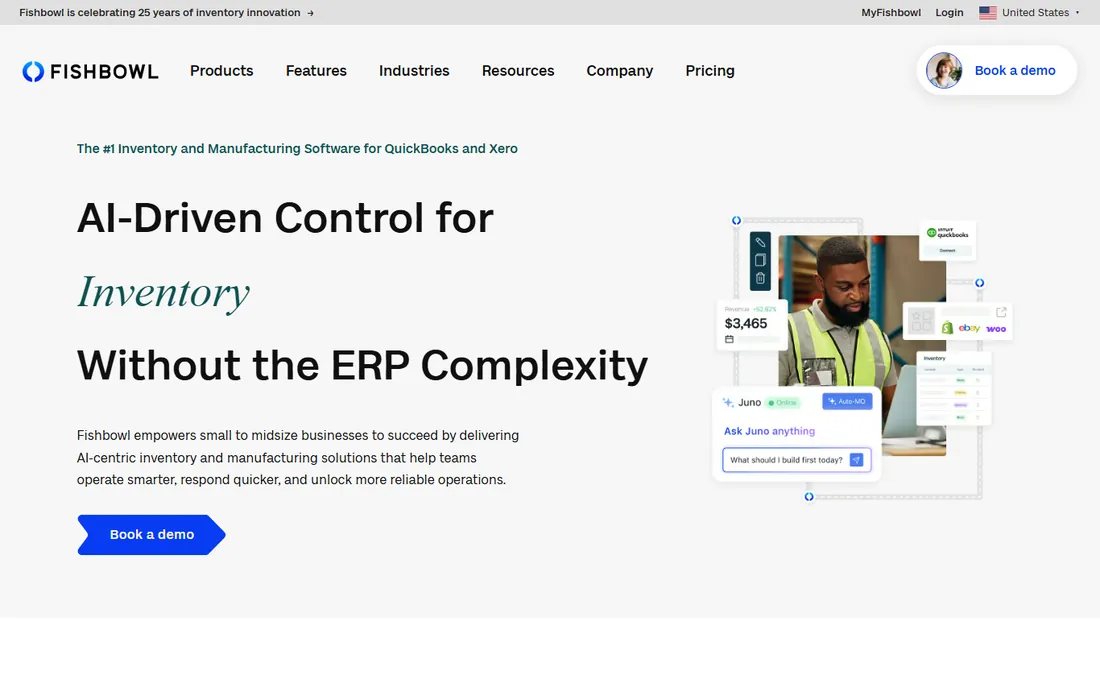
Fishbowl's value pitch is aimed squarely at QuickBooks users. The two-way sync posts inventory movements cleanly to QuickBooks Desktop, Online and Xero, which keeps finance and ops on the same numbers without reconciliation work. Pricing is refreshingly flat: Essentials at $229 a month billed annually includes 2 users with unlimited locations, orders and volume, and there is no fee tied to your sales volume. Growth at $429 and Scale at $729 add fulfillment, forecasting and compliance features.
The catch is the buying process. There is no free plan and no click-to-start trial; you talk to sales, and an implementation package is required with every purchase. For a manufacturer already on QuickBooks, the accounting integration alone can justify the cost. For a business not on QuickBooks, much of Fishbowl's advantage disappears, and Cin7 or inFlow may fit better. Note that manufacturing features (BOMs, work orders, MRP) live on the separate Fishbowl Advanced platform, which starts higher.
What we like- Deepest QuickBooks Desktop and Online integration in the category
- Unlimited locations, orders and volume with no GMV tax
- Manufacturing BOMs and MRP on Advanced
Watch out for- No free plan and no self-serve trial
- Implementation package required, adding to first-year cost
#7
Ordoro
Best for: Ecommerce brands that ship and stock in one place
Visit ordoro.com
Starting price$349/month (Inventory Advanced)
Free planFree trial (15 days)
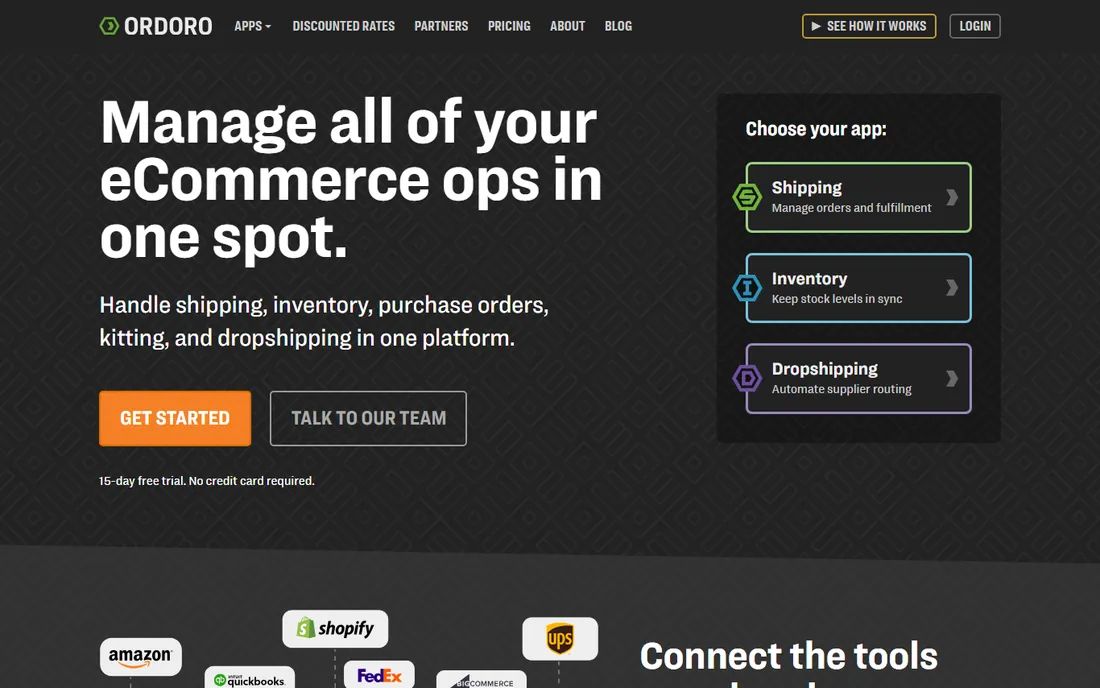
Ordoro sells three apps, shipping, inventory and dropshipping, that can be bought separately or bundled. The inventory app starts at $349 a month for the Advanced tier with unlimited users, warehouses and sales channels, which is generous compared with per-seat rivals. Kitting, automation rules, QuickBooks Online integration and API access are all included, and the Austin-based support team gets consistently good reviews.
The order cap is the thing to watch. Both inventory tiers cap at 1,000 orders a month, with $100 charged for each additional 1,000. A brand doing 3,000 orders a month pays $549 before any other app. The shipping app has its own free tier and paid plans from $59, so a brand that mainly needs labels can start small. Ordoro makes sense when shipping and inventory truly live together in your operation; if you only need inventory, the $349 floor is high.
What we like- Shipping, inventory, kitting and dropshipping under one roof
- Unlimited users, warehouses and sales channels
- Automation rules included
Watch out for- Inventory app starts at $349 a month with a 1,000-order cap
- Overage fees of $100 per extra 1,000 orders add up fast
#8
KORONA POS
Best for: Brick-and-mortar retailers who need POS plus inventory
Visit koronapos.com
Starting price$59/terminal/month (Core)
Free planFree trial
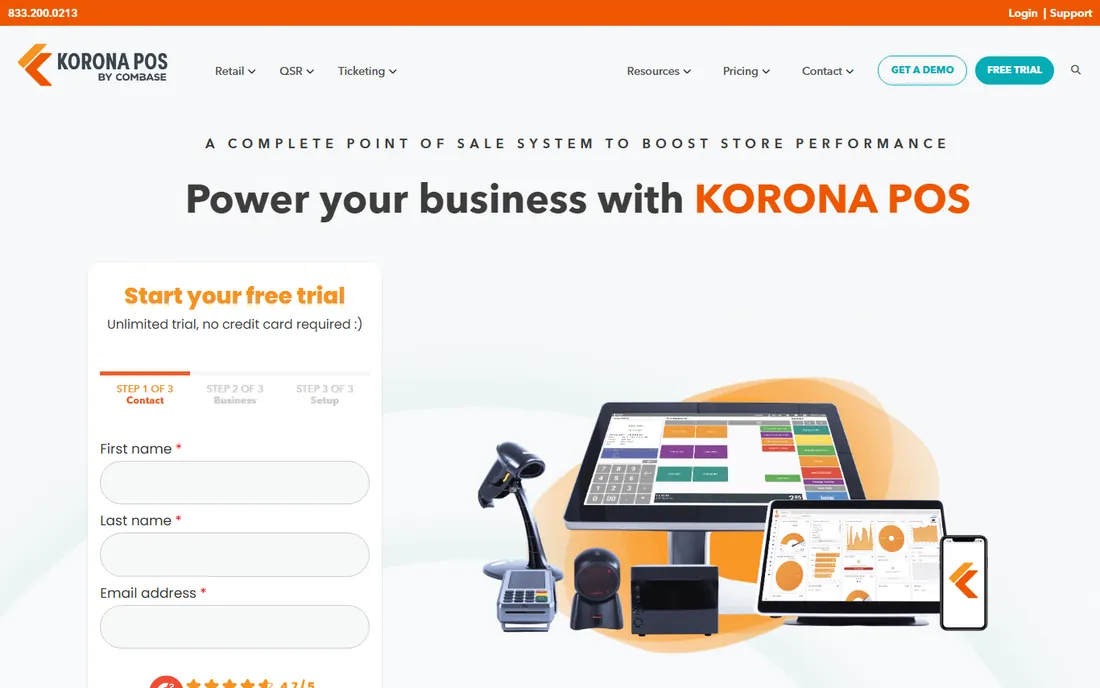
KORONA POS is a point-of-sale system with inventory built in, which makes it a value play for single-location retailers rather than ecommerce brands. Pricing is per terminal per month: Core at $59, Retail at $79, Plus at $99, with no contracts, no setup fees and no percentage taken from card processing. Every plan includes unlimited users, and the trial requires no credit card.
For inventory purposes, the Retail tier at $79 a month is the real starting point, since it adds inventory counts, real-time stock tracking, barcode automations and supplier ordering. Multi-location tools wait until Plus at $99. Because pricing is per terminal, a three-register store pays triple the headline number, so count registers before comparing with flat-rate tools. The 24/7 in-house support and processing-agnostic model are genuine differentiators for independent retailers.
What we like- No contracts, no setup fees, no payment-processing cut
- Unlimited users and sales on every plan
- Free trial with no credit card required
Watch out for- Real inventory features start on the $79 Retail tier, not Core
- Priced per terminal, so multi-register stores multiply the bill
Starting priceSee website
Free planYes
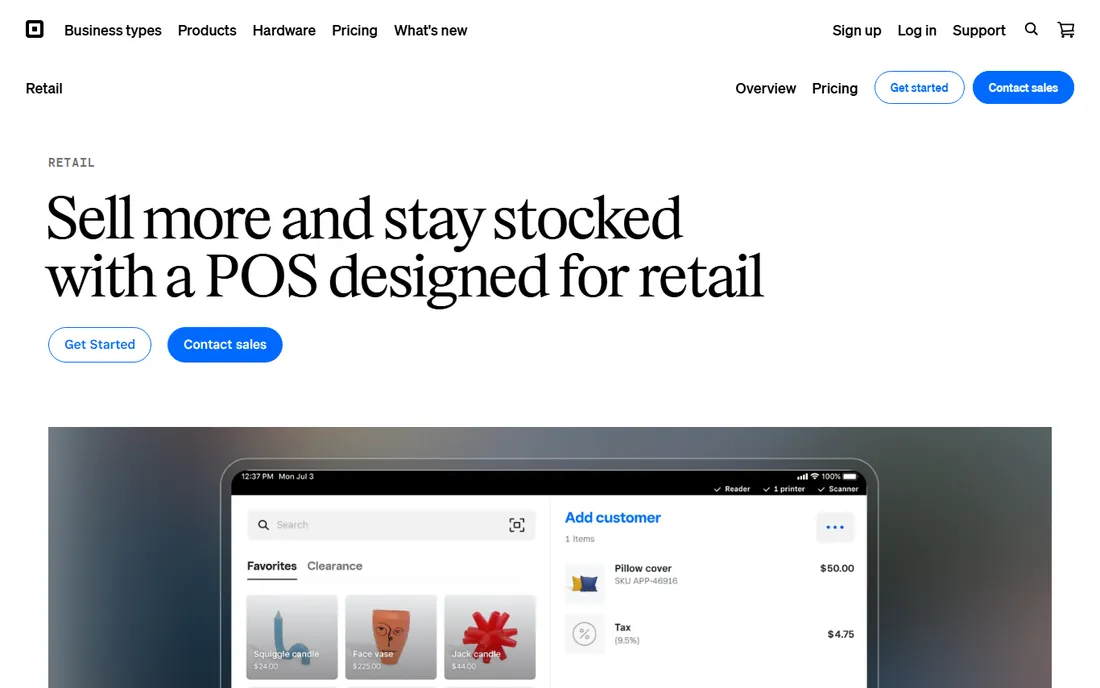
Square for Retail is the default value choice for stores already in the Square ecosystem. The free plan handles checkout and basic inventory with real-time stock updates across locations and channels, and you can downgrade back to it from Plus at any time. Purchase orders, vendor profiles, COGS tracking and bulk inventory tools cover the operational basics without a separate system.
The free plan's limits are real: multi-location stock management, barcode label printing and the smarter inventory features sit on the paid Plus plan, which carries a 30-day free trial. Processing fees apply on every card transaction on top of the subscription, which is standard for Square but worth factoring into the total. If you are choosing a POS and inventory system from scratch, compare the all-in cost against KORONA POS. If you already run Square, staying put is usually the cheapest path.
What we like- Free plan covers core POS and basic inventory
- Stock syncs in real time across locations and channels
- No long-term contracts
Watch out for- Smart inventory features, multi-location stock and barcode label printing require the paid Plus plan
- Payment processing fees apply on top
How we chose
We started from each vendor's own pricing page, checked in October 2026, and built this list around total cost of ownership rather than headline price. Every tool here is an active product with real customers. We favored tools with transparent public pricing and free plans or trials, because value cannot be judged without numbers. Where a vendor gates pricing behind sales, we say so plainly instead of inventing a figure.
We read plan comparison tables for user, location, order and feature caps, since those caps decide the real bill. We also checked public reviews on G2, Capterra and Reddit for reports of surprise fees, forced upgrades and onboarding costs. Enterprise-only platforms and tools without any inventory depth were excluded.
Reading inventory pricing without getting burned
Inventory vendors price on four axes: users, locations, order volume and features. The plan that fits today may not fit after a good quarter, so model your cost at twice your current volume before you sign. Per-organization pricing like Zoho's favors small teams; per-terminal pricing like KORONA's punishes multi-register stores; per-tier pricing like inFlow's steps up at predictable points.
Watch the caps that trigger overage fees. Ordoro charges $100 per extra 1,000 orders, and several vendors meter API calls, integrations or AI features separately. Ask sales for the overage schedule in writing. Check whether the trial is the full product or a limited demo, and confirm what happens to your data if you do not convert. Finally, separate the software subscription from payment processing fees, implementation packages and hardware, since vendors quote these inconsistently.
Where the money actually goes
For a five-person team doing 500 orders a month on one channel, the realistic annual software cost ranges from $348 on Zoho's Standard plan to around $2,000 on inFlow's Entrepreneur tier, before add-ons. The jump to Cin7, Fishbowl or Ordoro territory starts around $2,700 to $4,200 a year and buys multichannel depth, EDI or manufacturing features most small sellers will never touch.
The expensive mistakes are predictable. Buying a $349-a-month platform for a one-channel store is the most common. Paying per terminal without counting registers is second. Signing an annual plan to save 20% before the trial proves the workflow fits is third. Run the trial with your real catalog, your real order volume and your actual staff, and only then commit to the annual discount.
Frequently asked questions
What is the cheapest inventory management software?
Zoho Inventory has the strongest free plan at 50 orders a month, and its Standard plan at $29 a month is the cheapest paid tier with real depth on this list. Sortly's free plan is also genuinely useful for simple tracking. The cheapest sticker price is not always the cheapest total, so check order and user caps.
How much should a small business pay for inventory software?
A small business doing a few hundred orders a month should expect to pay $0 to $160 a month for software alone. Once you pass roughly 1,000 orders a month or add multiple warehouses, realistic pricing moves to $229 to $349 a month. Manufacturing and EDI requirements push costs higher from there.
Is there really free inventory management software?
Yes. Zoho Inventory, Sortly and Square for Retail all offer free plans with real functionality, and several others offer free trials of 14 to 15 days. Free plans cap orders, items, users or locations, so they suit new or very small operations. Expect to upgrade once volume grows.
Do I need to pay per user for inventory software?
It depends on the vendor. Zoho charges per organization, KORONA charges per terminal, inFlow and Fishbowl charge per tier with users included, and Ordoro includes unlimited users. Per-user pricing punishes growing teams fastest, so favor flat or tiered models if you plan to hire.
What hidden costs should I watch for?
Overage fees on order volume, paid add-ons for API access or serial tracking, mandatory implementation packages, payment processing fees, and hardware costs. Ask for the overage schedule and the implementation quote in writing before signing, and model the cost at twice your current volume.
When should I upgrade from a free plan?
Upgrade when you hit a cap that affects daily work: order limits, user limits, or a missing feature like purchase orders or barcode scanning. Do not upgrade for features you might need someday. Most vendors let you change plans mid-cycle, so start low and move up when the work demands it.
Sources we checked (9)
- https://www.zoho.com/inventory/
- https://www.sortly.com/pricing
- https://www.inflowinventory.com/inflow-vs/excel-inventory-template
- https://katanamrp.com
- https://www.cin7.com
- https://www.fishbowlinventory.com/pricing
- https://www.ordoro.com/pricing/
- https://koronapos.com/pricing
- https://squareup.com/us/en/point-of-sale/retail
Is your product missing or out of date?
We review this list regularly. Vendors can request a listing, send updated pricing or ask about featured placement.

Shihab Mia · Founder, Rankite
Shihab has spent more than a decade helping SaaS and e-commerce brands grow through search. He writes Rankite's software buying guides from pricing pages, documentation and public user reviews. More about Shihab.