How we make this list: we compare pricing pages, product documentation and public user reviews. Rankite is independent; if a vendor ever pays for a featured spot, that listing is clearly labeled Partner.
Key takeaways
- HubSpot Marketing Hub is the default for companies that want marketing, sales and service on one CRM, but costs climb steeply once you outgrow the free tools.
- Marketo Engage is the enterprise B2B choice for lead scoring and account-based marketing, and it needs a trained admin and a quote-only budget to match.
- ActiveCampaign gives small businesses the deepest email automation per dollar, while Kit is the pick for creators monetizing newsletters and digital products.
- Brevo and Mailchimp are the low-friction starting points, with free plans that let a small team run real campaigns before spending anything.
- Keap and GetResponse bundle CRM, automation and extras like webinars in one subscription, which suits service businesses that want fewer tools, not more.
Quick comparison
| Tool | Best for | Starting price | Free plan |
|---|
 HubSpot Marketing Hub HubSpot Marketing Hub | companies that want marketing, sales and service in one CRM | See website | Yes |
 Marketo Engage Marketo Engage | enterprise B2B teams with complex buying journeys | See website | No |
 ActiveCampaign ActiveCampaign | small businesses that live on email automation | See website | Free trial |
 Kit Kit | creators monetizing newsletters and digital products | See website | Yes |
 Mailchimp Mailchimp | small teams starting with email and SMS | See website | Yes |
 Keap Keap | service businesses that need CRM plus follow-up | See website | Free trial |
 GetResponse GetResponse | ecommerce teams that want funnels and webinars too | See website | Free trial |
 Brevo Brevo | teams that prefer pay-per-email over pay-per-contact | See website | Yes |
Is your product missing or out of date?
We review this list regularly. Vendors can request a listing, send updated pricing or ask about featured placement.
The best inbound marketing software
#1
HubSpot Marketing Hub
Best for: companies that want marketing, sales and service in one CRM
Visit hubspot.com
Starting priceSee website
Free planYes
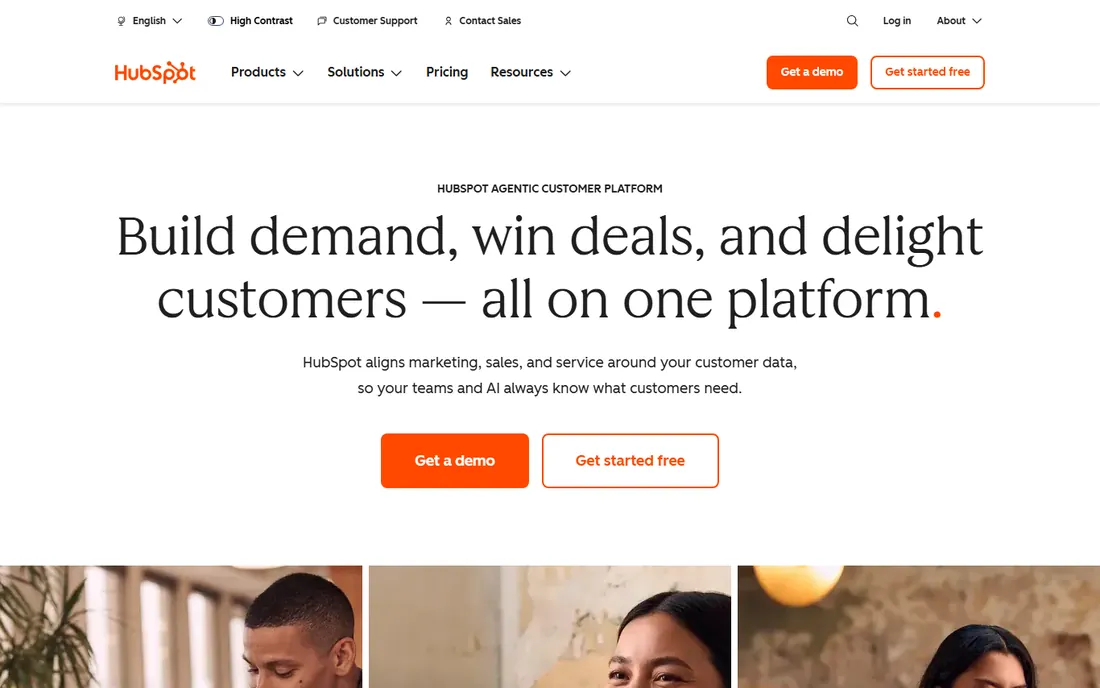
HubSpot invented the inbound category and still defines it. Marketing Hub covers the full arc: attract with blogging, SEO and social tools, convert with forms, landing pages and CTAs, close with lead scoring, email automation and ABM, then delight with service tools, all on the free Smart CRM underneath. The free tier is genuinely useful, which is why so many small businesses start here and grow into paid plans.
The honest catch is the price curve. Starter plans are affordable, but the jump to Professional and Enterprise is steep, and features like custom reporting, advanced automation and AI agents cluster at the top. Complex implementations frequently need a solutions partner, which adds cost. HubSpot is also an ecosystem play: once your data, website and sales process live in it, leaving is painful. If you want one platform that scales from a five-person startup to a mid-market company without replatforming, this is the safest choice. If you only need email automation, you are paying for far more than you will use.
What we like- Free CRM and free marketing tools to start
- 306,000+ customers
- Deep automation plus AI agents across hubs
Watch out for- Professional and Enterprise tiers get expensive fast
- Complex setups often need a partner
- Best features are gated behind higher tiers
Starting priceSee website
Free planNo
Marketo Engage, now part of Adobe, is the heavyweight for B2B marketing automation. It handles the complexity that mid-market tools cannot: multi-touch nurture across long sales cycles, sophisticated lead scoring and routing, account-based marketing with target account management, and revenue attribution that ties marketing spend to pipeline. The native, bidirectional sync with Salesforce and Microsoft Dynamics keeps sales and marketing on the same data.
Everything about Marketo assumes scale. There is no free plan and no self-serve signup; pricing is quote-based and sits firmly in enterprise territory. Implementations take months and the platform genuinely needs a trained administrator, which is a headcount cost buyers underestimate. Small teams will drown in it. But for a B2B company with a real marketing operations function, long deal cycles and a Salesforce instance at the center, Marketo remains the reference standard that everything else is measured against.
What we like- Deep lead scoring, nurturing and account-based marketing
- Native Salesforce and Dynamics sync
- Part of Adobe Experience Cloud
Watch out for- Needs a trained admin to run well
- Implementation is measured in months
- Pricing is quote-only and enterprise-grade
Starting priceSee website
Free planFree trial
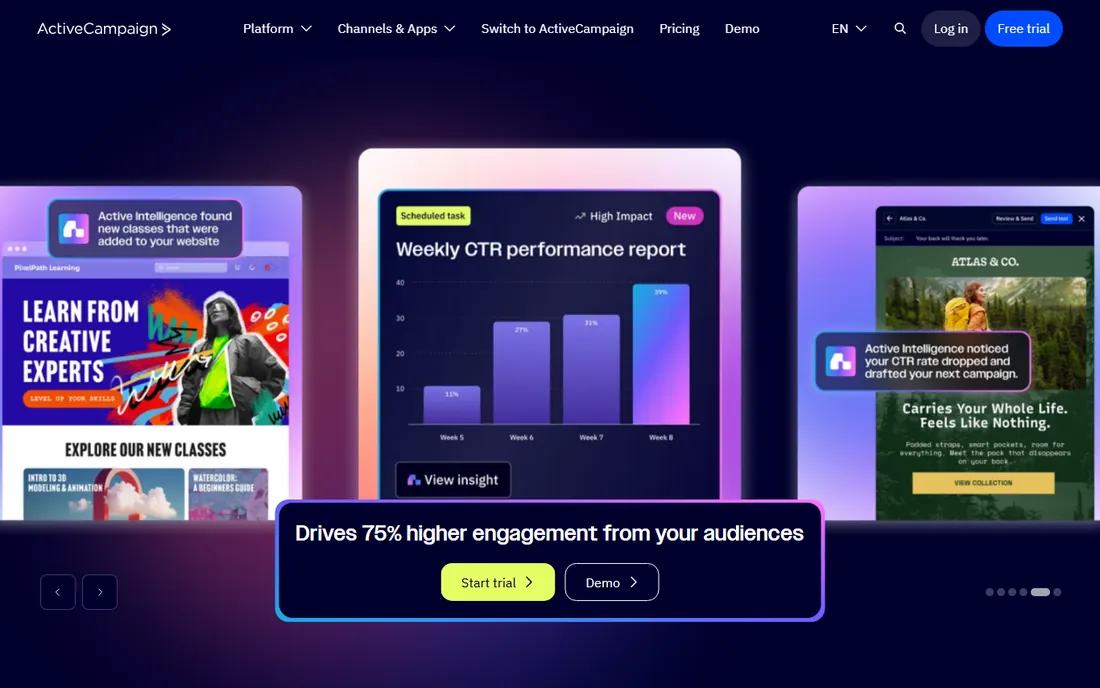
ActiveCampaign built its reputation on one thing: automation depth at small-business prices. The visual automation builder handles branching, conditional logic, lead scoring and multi-channel sequences across email, SMS and site messaging, rivaling tools that cost several times more. A built-in CRM with sales pipelines means a small team can run marketing and follow-up in one place, and the platform's deliverability reputation is consistently strong.
The pricing model deserves attention. Like most email platforms, ActiveCampaign charges by contacts, so a growing list means a growing bill, and cleaning unengaged contacts becomes a real chore. Reporting is serviceable but thinner than HubSpot's, and while basic automations are easy, the advanced builder takes study. There is a free trial rather than a free plan. For a small business where email drives revenue and you want automation that can grow with you, ActiveCampaign is the value leader in its class.
What we like- Deep visual automation builder
- Built-in CRM and sales pipelines
- Strong deliverability reputation
Watch out for- Reporting lags behind HubSpot
- Contact-based pricing punishes list growth
- Advanced automations have a learning curve
#4
Kit
Best for: creators monetizing newsletters and digital products
Visit kit.com
Starting priceSee website
Free planYes
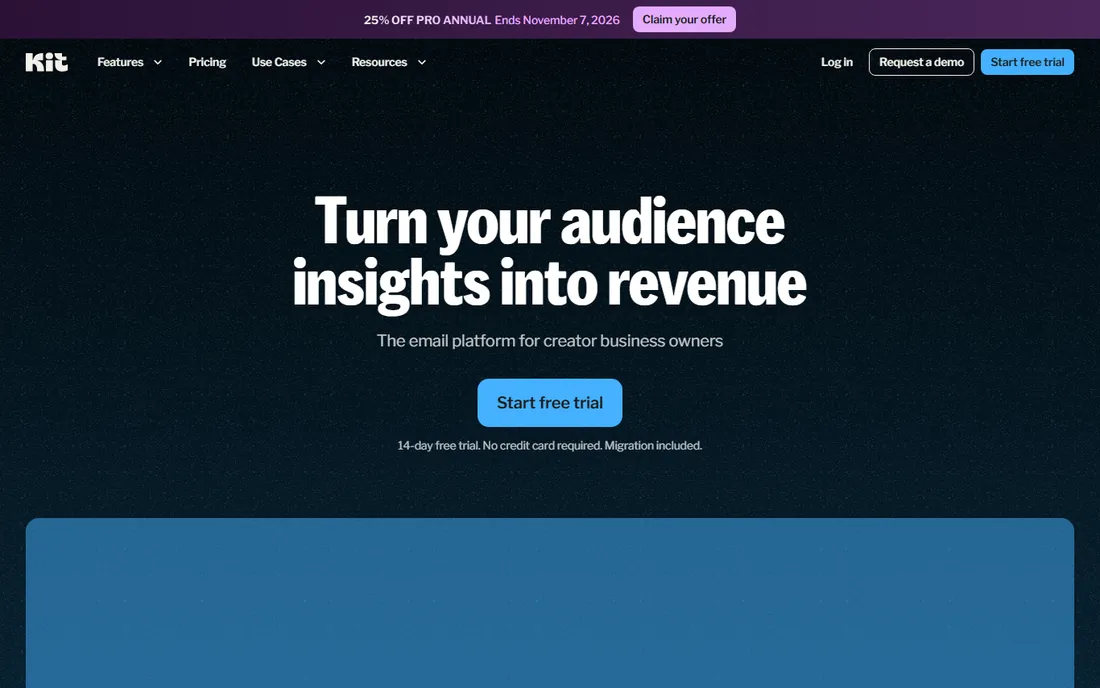
Kit, formerly ConvertKit, is email marketing built for creators rather than companies. The model is simple: a free plan to start, paid plans priced by active subscriber count rather than emails sent, with unlimited sends and two months free on annual billing. On top of email automation, landing pages and forms, Kit adds commerce for selling digital products and paid newsletters, plus a Creator Network where newsletters recommend each other for faster list growth. The homepage cites strong deliverability and a migration team that moves your list for you on paid plans.
The trade-off is focus. Kit is superb for newsletters, courses and digital products, and thin for B2B needs like lead scoring, Salesforce sync or complex attribution. Commerce takes a small cut plus card processing, which is fine at first and worth modeling at scale. If you are a creator, coach, author or course seller building an audience you own, Kit is purpose-built for your business model. If you are a B2B marketer, look at ActiveCampaign or HubSpot instead.
What we like- Free plan to start
- Paid plans priced by subscribers with unlimited sends
- Built-in commerce and creator network
Watch out for- Weak for B2B lead scoring
- Limited CRM depth
- Commerce transaction fees add up at scale
Starting priceSee website
Free planYes
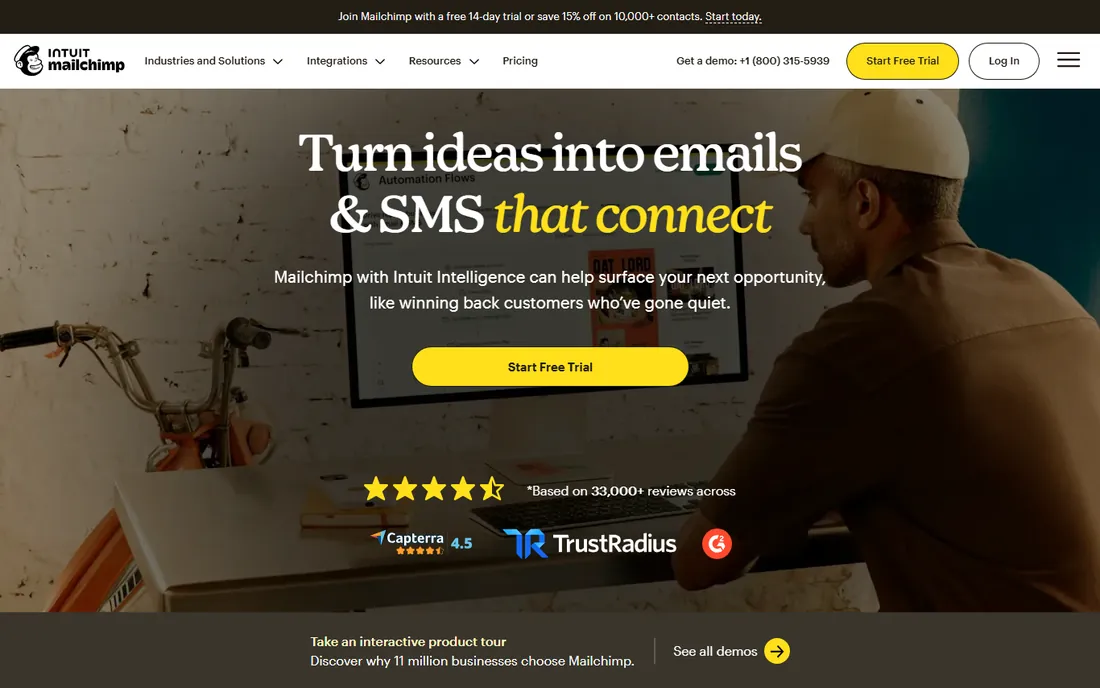
Mailchimp is the tool most small businesses try first, and the onboarding shows why: a free plan, a 14-day trial of Standard with enhanced automations and AI features, and an interface that a non-marketer can figure out in an afternoon. It covers email and SMS marketing, audience segmentation, landing pages and basic automation, with phone support numbers published for sales and demos.
The familiar complaint is the price curve. Mailchimp charges by contacts, and the bill climbs quickly as your list grows, which pushes successful users toward cheaper-per-contact rivals. Automation depth trails ActiveCampaign, and advanced users hit walls in segmentation and reporting. SMS is an add-on with its own credits and approval process. For a small team sending newsletters and promos that wants the easiest possible start, Mailchimp remains a fine choice. For automation-heavy inbound, budget for a specialist.
What we like- Free plan for getting started
- 14-day trial of the Standard plan
- Intuitive templates and AI-assisted tools
Watch out for- Pricing jumps as contacts grow
- Automation is weaker than specialists
- Support quality varies by tier
#6
Keap
Best for: service businesses that need CRM plus follow-up
Visit keap.com
Starting priceSee website
Free planFree trial
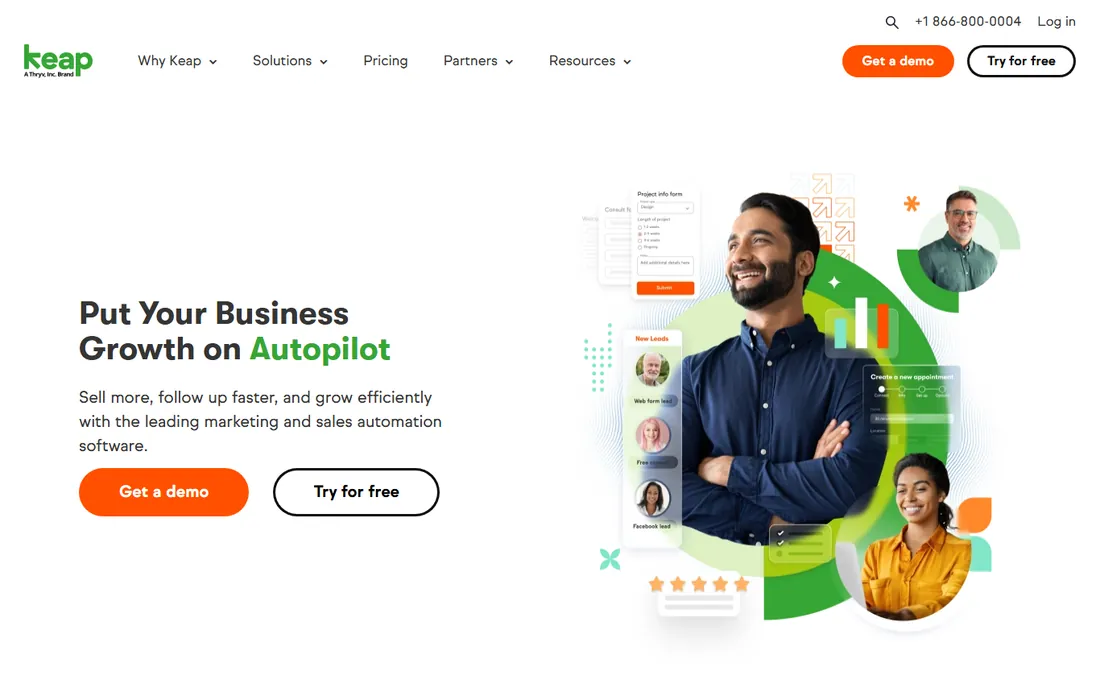
Keap, a Thryv brand with roots going back to 2001, sells one promise to service businesses: stop losing leads to slow follow-up. It combines a small-business CRM with marketing automation, sales pipelines, invoicing and payments, so a consultant, agency or home-services company can capture a lead, nurture it, close it and bill it without stitching tools together. The company cites 200,000+ small businesses grown on the platform and 5,000+ integrations.
The product reflects its history. Parts of the interface feel dated next to HubSpot or ActiveCampaign, and migrating from spreadsheets or a simpler tool takes real effort, though Keap provides strategy and support services to help. Pricing runs on contact tiers with a free trial to start. For a service business where the owner does the marketing between jobs, Keap's all-in-one simplicity beats a best-of-breed stack. For a marketing-led team that wants advanced automation, it will feel limiting.
What we like- Sales and marketing automation in one app
- 5,000+ integrations
- 20+ years serving small businesses
Watch out for- Interface shows its age in places
- Migration from spreadsheets takes work
- Per-contact pricing tiers
Starting priceSee website
Free planFree trial
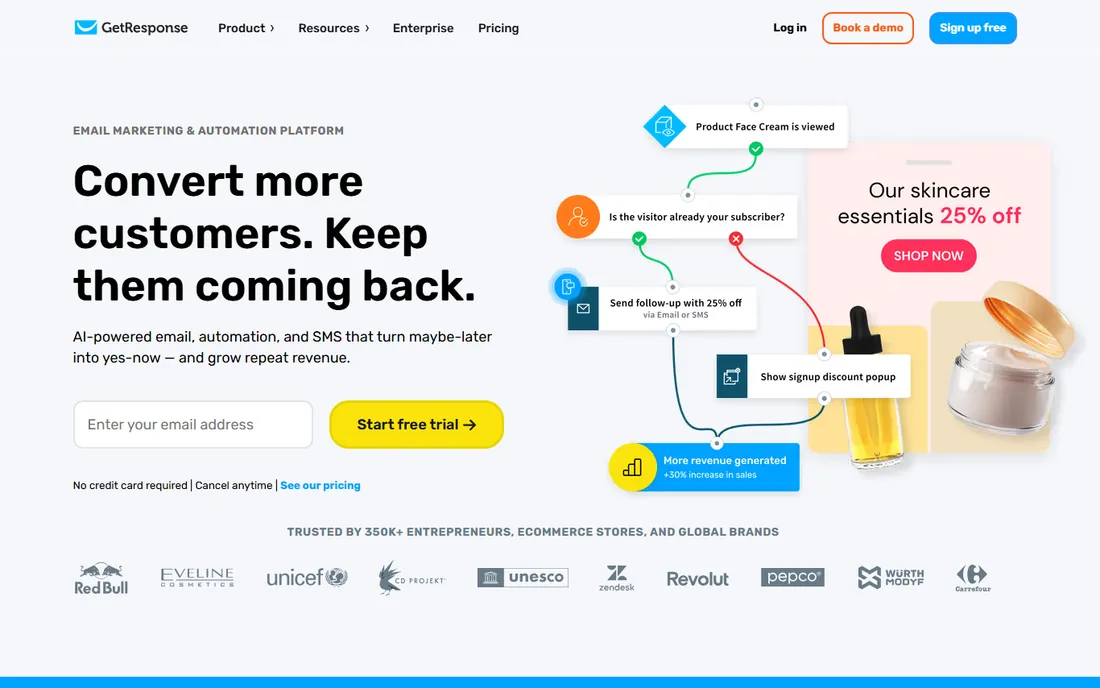
GetResponse differentiates with breadth. Beyond email marketing and automation, it bakes in webinars, conversion funnels, landing pages, forms, popups and AI product recommendations, aiming to be the whole revenue toolkit for ecommerce and course sellers. The company reports 350,000+ customers, a 99% deliverability rate across 160+ countries, and 24/7 support from a highly rated success team.
Breadth comes at the cost of depth. The automation builder is capable but less flexible than ActiveCampaign's, and long-time users note uneven template quality. Like most platforms here, pricing scales with list size, and SMS is a separate cost in many regions. There is a free 14-day trial with no credit card required. For an ecommerce business that wants webinars and funnels without buying three more tools, GetResponse's bundle is compelling. For pure automation power, compare it directly against ActiveCampaign first.
What we like- Webinars built into the platform
- Conversion funnels for ecommerce
- 350,000+ customers and 24/7 support
Watch out for- Automation builder less flexible than ActiveCampaign
- Template quality is uneven
- SMS costs extra in many regions
#8
Brevo
Best for: teams that prefer pay-per-email over pay-per-contact
Visit brevo.com
Starting priceSee website
Free planYes
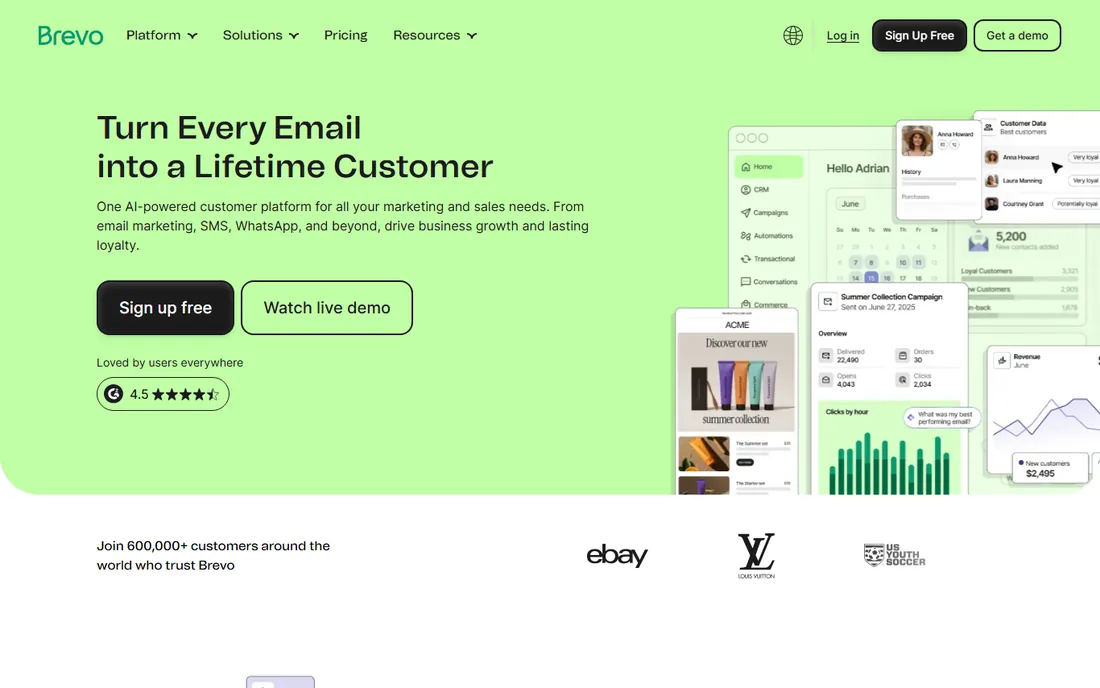
Brevo, formerly Sendinblue, wins buyers with its pricing model. Instead of charging by contacts, it charges by emails sent, which makes it dramatically cheaper for businesses with large lists that email infrequently. The platform covers email, SMS and WhatsApp marketing plus automation, a built-in CRM, and loyalty tools, with 600,000+ customers claimed on its homepage and AI features for send-time optimization and product recommendations.
The trade-offs are in depth. The CRM and automation are solid but basic compared with HubSpot or ActiveCampaign, the template and automation library is smaller, and deliverability tooling is less prominent than at specialist email platforms. The free plan lets you test real campaigns before spending. For a small business with a big list and a simple sending pattern, Brevo is often the cheapest credible option. For complex lifecycle automation, the specialists justify their higher prices.
What we like- 600,000+ customers worldwide
- Email, SMS and WhatsApp in one platform
- Pricing based on sends, not list size
Watch out for- CRM is basic next to HubSpot
- Fewer automation templates
- Deliverability tooling less visible
How we chose
We started from each vendor's own site and pricing pages, then checked documentation, feature lists, and public reviews on G2, Capterra and Reddit. We looked at how each tool covers the inbound arc, attract, convert, close and delight, what the free tier or trial actually includes, how pricing scales with contacts or sends, and what kind of team each product assumes. We listed renamed products under current names, noting old names once. No vendor paid for placement.
When free plans stop being enough
Free plans in this category are genuinely useful, and they all break at the same point: scale. HubSpot's free CRM and marketing tools carry a small business surprisingly far until contact limits, branding removal or automation depth force an upgrade. Mailchimp's and Brevo's free tiers work until list growth or sending volume pushes you into paid tiers. Kit's free plan is the most generous for creators starting out.
The tripwires to watch are contact-based pricing, automation limits and seats. A platform that charges per contact gets more expensive exactly when your marketing is working, which is why Brevo's pay-per-send model appeals to big-list senders. Automation builders on free and starter tiers often cap the number of active workflows or remove branching logic. And several tools charge per user, so a growing team multiplies the bill. Before you commit, model your cost at twice your current list size and team size. The cheapest tool today is rarely the cheapest at 2x.
What to look for before you buy
Start with your motion, not the feature list. A B2B company with a sales team needs lead scoring, Salesforce sync and attribution: HubSpot or Marketo. A creator selling courses needs commerce and list growth: Kit. An ecommerce store needs funnels and product recommendations: GetResponse. A service business needs follow-up and invoicing in one place: Keap. Buying the wrong-shaped tool is the most expensive mistake in this category.
Then check the pricing math at your scale. Model cost at your current contacts and at double, because contact-based pricing punishes success. Confirm what counts as a billable contact, since unsubscribed and bounced contacts are sometimes counted. Ask about onboarding: Marketo assumes months and a specialist, HubSpot often needs a partner for complex setups, and the simpler tools are genuinely self-serve.
Finally, test deliverability and migration before you commit. Send a real campaign to a seed list and check inbox placement, not just the vendor's claimed rate. Ask how list migration works and whether the vendor helps with it; Kit and several others include free migration on paid plans. And confirm data export terms, because your contact list is your most valuable marketing asset and you should be able to leave with it.
Frequently asked questions
What is inbound marketing software?
It is software that helps you attract visitors with content, convert them into contacts with forms and landing pages, nurture them with email automation, and turn them into customers with CRM and sales tools. The classic inbound methodology is attract, convert, close and delight, and the best platforms cover all four stages in one system.
How much does inbound marketing software cost?
Free plans cover the basics at HubSpot, Mailchimp, Brevo and Kit. Paid plans typically start in the tens of dollars per month for small lists and rise with contacts, sends or seats. Mid-market automation runs into the hundreds per month, and enterprise platforms like Marketo Engage are quote-only at thousands per year. Always model the price at twice your current list size before committing.
Do I need a CRM with my marketing software?
If anyone follows up with leads personally, yes. Marketing automation without a CRM means leads fall into a spreadsheet gap between marketing and sales. HubSpot, Keap and ActiveCampaign bundle a CRM; Kit, Mailchimp and Brevo offer lighter contact management. If you already run Salesforce or another CRM, prioritize the native sync quality, which is Marketo's strong suit.
Which tool is best for a small business?
For most small businesses, the choice is between HubSpot's free tools, ActiveCampaign's automation depth, and Brevo's low cost. Start with the free tier that matches your motion: HubSpot if you want an all-in-one CRM, ActiveCampaign if email automation drives your revenue, Brevo if you have a large list and send infrequently. All three let you upgrade without migrating.
Can I switch platforms later without losing my list?
Yes, but it takes work. Every platform here lets you export contacts, though automation workflows, templates and landing pages rarely transfer and must be rebuilt. Several vendors, including Kit, offer free migration services on paid plans. Before switching, audit which automations actually drive revenue and rebuild those first in the new tool.
How is inbound software different from a plain email tool?
Email tools send campaigns to a list. Inbound platforms add the stages around the email: attracting visitors with content and SEO tools, converting them with forms and landing pages, scoring and routing leads, syncing with sales, and measuring revenue attribution. If all you need is newsletters, a simpler email tool costs less. If marketing owns pipeline, you need the platform.
Sources we checked (8)
- https://hubspot.com/
- https://business.adobe.com/products/marketo.html
- https://activecampaign.com/
- https://kit.com
- https://mailchimp.com/
- https://keap.com
- https://www.getresponse.com
- https://brevo.com/
Is your product missing or out of date?
We review this list regularly. Vendors can request a listing, send updated pricing or ask about featured placement.

Shihab Mia · Founder, Rankite
Shihab has spent more than a decade helping SaaS and e-commerce brands grow through search. He writes Rankite's software buying guides from pricing pages, documentation and public user reviews. More about Shihab.