How we make this list: we compare pricing pages, product documentation and public user reviews. Rankite is independent; if a vendor ever pays for a featured spot, that listing is clearly labeled Partner.
Key takeaways
- Zoho Inventory ($29/month, free plan available) is the cheapest credible option for small sellers who need multichannel stock tracking.
- Katana (free plan, paid from $299/month) and Fishbowl ($229/month billed annually) lead for makers and manufacturers; Katana wins on usability, Fishbowl on QuickBooks depth.
- Cin7 Core ($349/month) and Unleashed ($399/month) are built for mid-size product businesses with several sales channels; both price by volume, so ask for the full schedule.
- Odoo's one-app-free tier and Square's free retail plan work if your catalog is small and your needs are simple.
- NetSuite only makes sense once you need full ERP functions; everything about it is custom quoted.
Quick comparison
| Tool | Best for | Starting price | Free plan |
|---|
 Cin7 Core Cin7 Core | Multichannel sellers and wholesalers juggling many integrations | $349/month (Core) | Free trial (14 days) |
 Zoho Inventory Zoho Inventory | Small businesses that need affordable multichannel stock control | $29/month (Standard, billed annually) | Yes |
 Katana Katana | Makers and small manufacturers who need production planning | Free plan; paid from $299/month (Core) | Yes |
 Fishbowl Inventory Fishbowl Inventory | QuickBooks users who want deep inventory and manufacturing control | $229/month (Essentials, billed annually) | No (demo only) |
 inFlow Inventory inFlow Inventory | B2B sellers and wholesalers who sell through a showroom | $129/month (Entrepreneur, billed annually) | Free trial (14 days) |
 Sortly Sortly | Teams that track physical items, equipment and supplies visually | Free plan; $49/month (Advanced) | Yes |
 Odoo Odoo | Businesses that want inventory inside a full ERP suite | Free (one app); $31.10/user/month (Standard) | Yes (one app free, unlimited users) |
 Unleashed Unleashed | Wholesalers and distributors needing lot and serial traceability | $399/month (Core) | Free trial |
 Square for Retail Square for Retail | Small retailers already processing payments with Square | Free plan; $49/location/month | Yes |
 NetSuite NetSuite | Mid-size and large companies that need full ERP, not just inventory | See website | No |
Is your product missing or out of date?
We review this list regularly. Vendors can request a listing, send updated pricing or ask about featured placement.
The best online inventory management software
The spreadsheet that ran your stock when you had 40 SKUs starts lying to you around 400. Stockouts sneak in, someone sells the same unit twice, and nobody trusts the numbers. An online inventory system fixes that by keeping one live count across every sales channel and warehouse. The ten tools below cover the real range: free starters, mid-range specialists, and the ERP-grade systems larger companies graduate to.
#1
Cin7 Core
Best for: Multichannel sellers and wholesalers juggling many integrations
Visit cin7.com
Starting price$349/month (Core)
Free planFree trial (14 days)
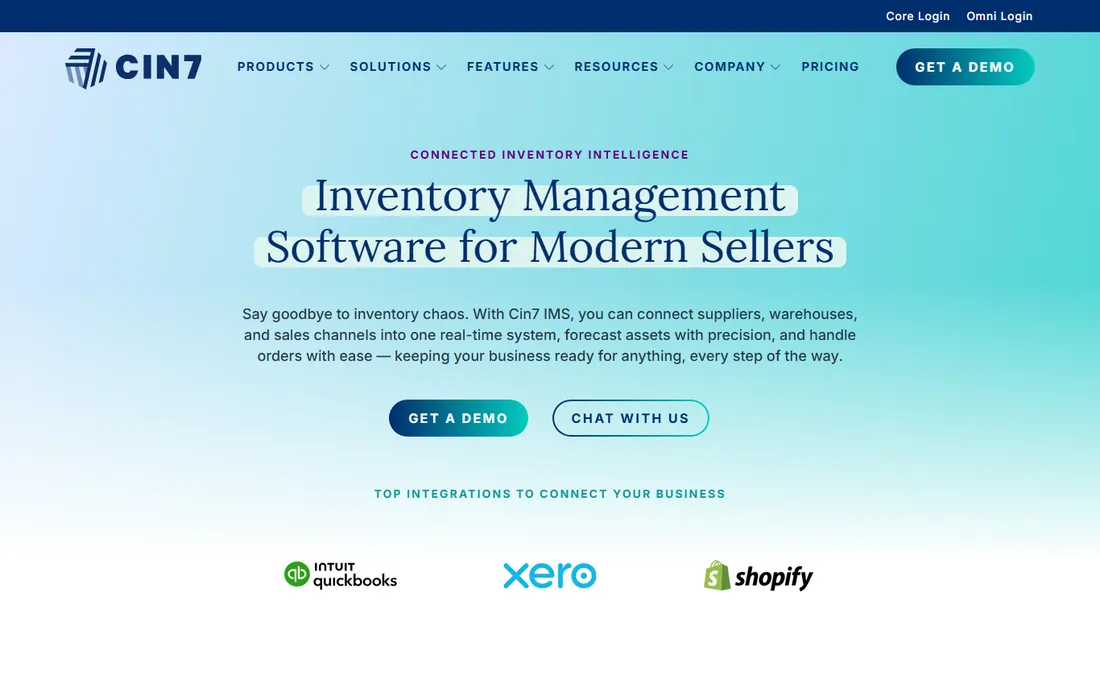
Cin7 started as the system for sellers who outgrew basic tools but were not ready for NetSuite. The Core plan at $349 a month includes five users and 6,000 orders a year, which positions it squarely at growing brands rather than solo shops. Its connector library is the genuine draw: if you sell on Shopify, Amazon, Walmart and wholesale portals at once, Cin7 keeps the counts in sync without custom middleware.
The catch is cost creep. Order volume, extra warehouses and the Omni tier for complex retail move the price up, and the cheapest plan tops out faster than most buyers expect. Get the order-volume tiers in writing before you commit, and ask what happens when you exceed them.
What we like- 700+ integrations
- Built-in EDI and 3PL support
- AI-assisted demand forecasting
Watch out for- Entry price is high for small sellers
- The fuller feature set takes real setup time
#2
Zoho Inventory
Best for: Small businesses that need affordable multichannel stock control
Visit zoho.com
Starting price$29/month (Standard, billed annually)
Free planYes
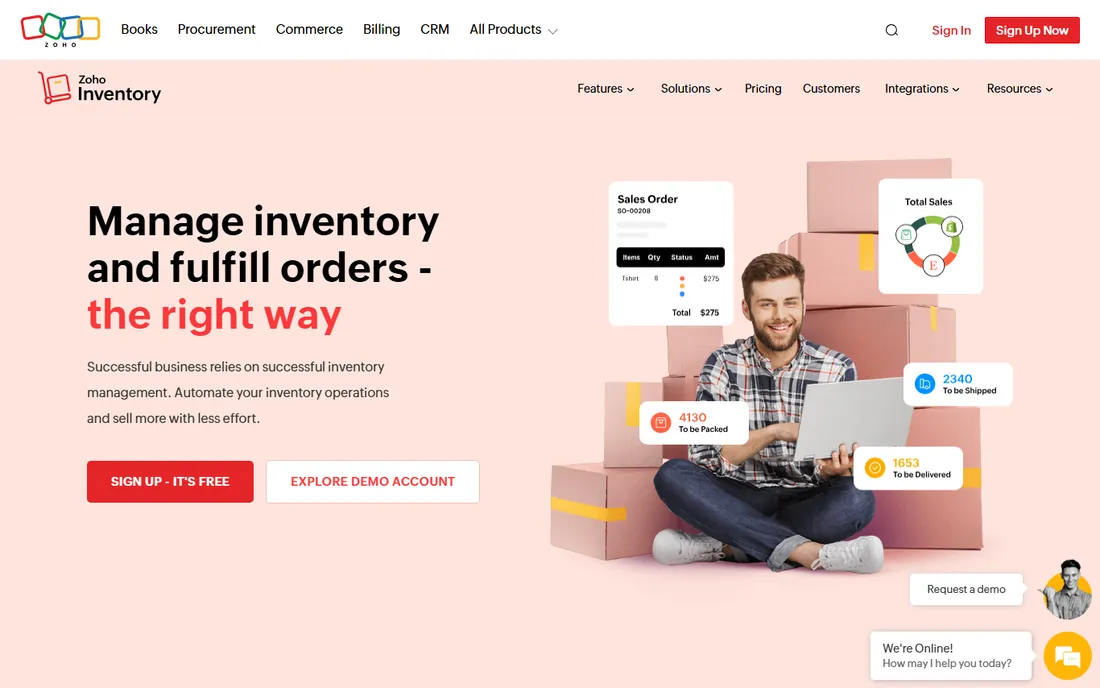
Zoho Inventory wins the value argument most years, and 2026 is no exception. The free plan covers one user, one warehouse and 50 orders a month, which is enough for a side business or a slow-starting store to run properly. Standard at $29 a month is per organization, so adding team members does not raise the bill, a pricing choice almost nobody else in this list makes.
The trade-off is the order cap. Every growth milestone, 501 orders, a second location, serial number tracking, triggers an upgrade, and the jumps between tiers are sharp rather than gradual. If you already use Zoho Books or Zoho CRM, the native sync makes this an easy pick. If you do not, compare the $79 Premium tier against competitors before assuming Zoho stays cheapest at your scale.
What we like- Genuine free plan with 50 orders a month
- Per-organization pricing, not per user
- Tight fit with Zoho Books and Zoho CRM
Watch out for- Everything is capped by order volume, so growth forces upgrades
- Serial tracking and multi-currency sit on higher tiers
#3
Katana
Best for: Makers and small manufacturers who need production planning
Visit katanamrp.com
Starting priceFree plan; paid from $299/month (Core)
Free planYes
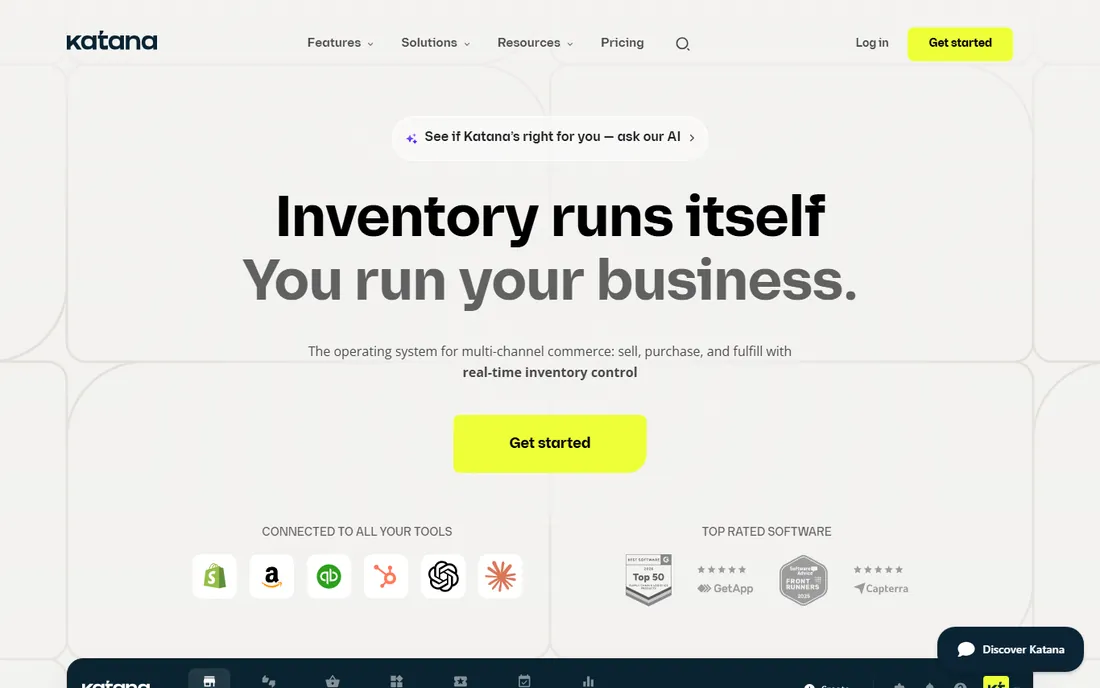
Katana was built for people who make things: candle brands, furniture shops, food producers. Where most inventory tools treat manufacturing as an afterthought, Katana puts bills of materials, production planning and stock levels on one visual screen. The free plan is real, with 30 SKUs and unlimited users, so a small maker can run a genuine operation on it before paying anything.
The pricing model deserves attention. Core starts at $299 a month, but traceability, warehouse management and manufacturing management are paid add-ons at $149 to $249 a month each, and usage scales with sales order volume and locations. A growing manufacturer can end up near $500 to $800 a month once the add-ons are in. Price the configuration you will actually run, not the headline plan.
What we like- Bills of materials and manufacturing orders in the base plan
- Unlimited users on every tier
- Genuinely usable interface for non-technical teams
Watch out for- Big jump from free (30 SKUs) to paid
- Add-ons like traceability and the shop floor app raise the bill fast
Starting price$229/month (Essentials, billed annually)
Free planNo (demo only)
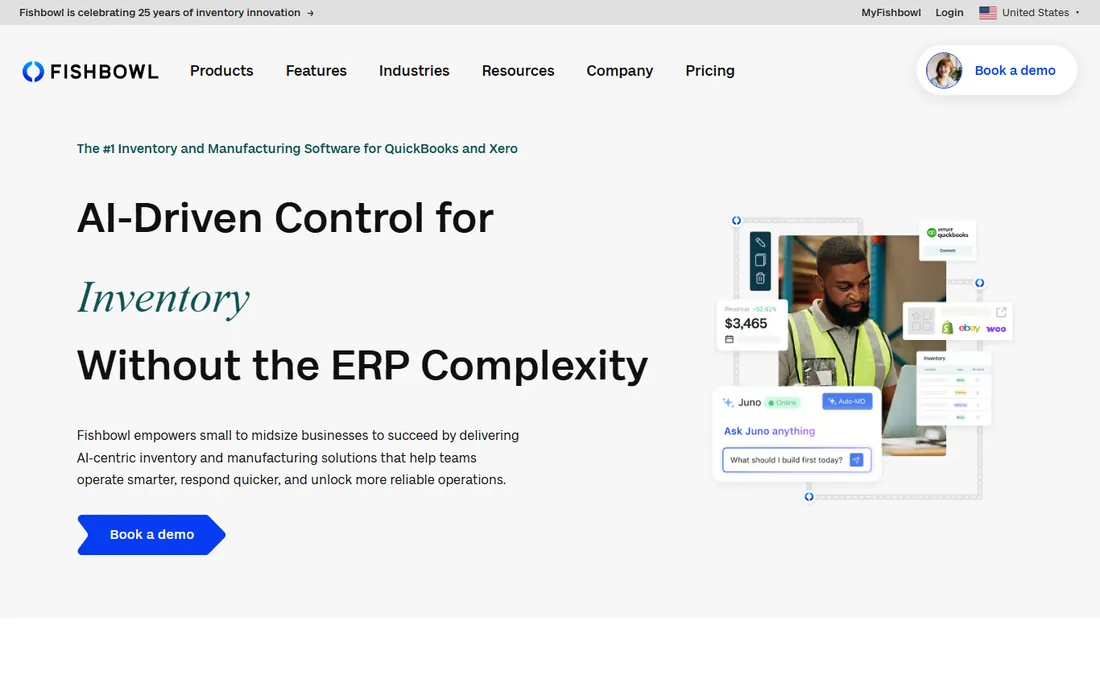
Fishbowl has been the default answer for QuickBooks Desktop and Online users for years, and the relationship still works both ways: inventory moves post back to the accounting books cleanly. The 2026 line-up runs three subscription tiers, Essentials at $229 a month for two users, Growth at $429 for five, Scale at $729 for ten, all billed annually, with cloud hosting included.
Read the plan names carefully. Finished-goods inventory lives in those three tiers; anything involving work orders, routings or traceability sits in Fishbowl Advanced Manufacturing, a different product starting around $675 a month and always confirmed by quote. Fishbowl also requires an implementation package whose price is not published. Budget for it before you sign.
What we like- The deepest QuickBooks integration in this category
- Real warehouse management with barcode workflows
- Now cloud-hosted with an implementation package
Watch out for- Manufacturing needs the separate Advanced Manufacturing product
- No free tier or trial, only a demo
- Implementation cost is unpublished
Starting price$129/month (Entrepreneur, billed annually)
Free planFree trial (14 days)
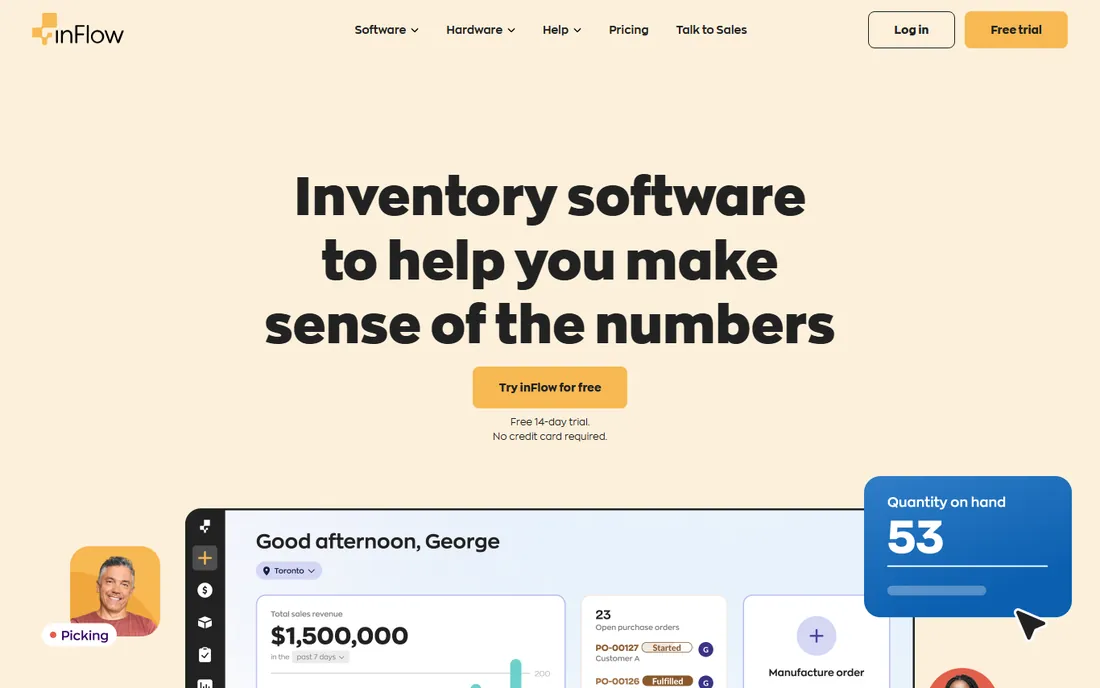
inFlow earns its place with wholesalers. The built-in showroom lets B2B customers browse and order online, which replaces a surprising amount of email and phone work for distributors. The Entrepreneur plan at $129 a month billed annually covers two team members, one location and 1,200 sales orders a year, with a 14-day trial that needs no credit card.
Limits are explicit, which is actually a strength: you know exactly what two users and one integration get you. The honest weakness is that growth past five users or a second warehouse pushes you to Small Business at $349 a month, and manufacturing add-ons like bills of materials and work orders cost $39 a month extra. It is a wholesaler's tool first and a manufacturer's tool second.
What we like- Built-in B2B showroom for wholesale customers
- Strong barcode and mobile apps
- Clear per-plan team and order limits
Watch out for- Smallest plan allows only two users and one location
- Manufacturing features cost extra as add-ons
#6
Sortly
Best for: Teams that track physical items, equipment and supplies visually
Visit sortly.com
Starting priceFree plan; $49/month (Advanced)
Free planYes
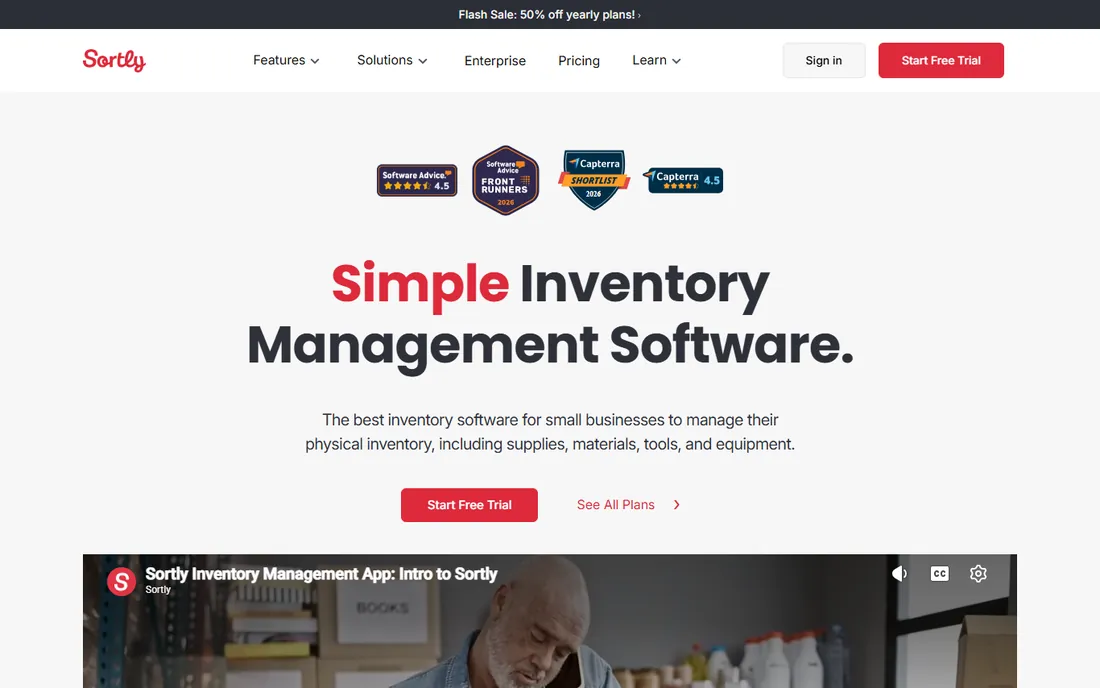
Sortly is the odd one out here, and deliberately so. It is not an order management system; it is a visual tracker for stuff. Contractors track tools, clinics track equipment, small retailers track finished goods, all with photos, folders and QR codes. The free plan handles 100 items for one user, and the Advanced plan at $49 a month adds 500 items, two users and QR label creation.
Know what it cannot do before you buy: no bills of materials, no component deduction, no cost-of-goods math. If you make what you sell, Sortly tracks the finished units and something else has to handle production. Also watch the pricing structure: the advertised annual rates are a first-year promotional discount, and standard rates apply from year two.
What we like- Photo-based tracking anyone can learn in an afternoon
- Excellent mobile app with QR and barcode scanning
- Free plan covers 100 items
Watch out for- No manufacturing or bill-of-materials features
- Item and custom-field caps force upgrades
- Year-two pricing is higher than the first-year promo
#7
Odoo
Best for: Businesses that want inventory inside a full ERP suite
Visit odoo.com
Starting priceFree (one app); $31.10/user/month (Standard)
Free planYes (one app free, unlimited users)
Odoo plays a different game from everyone else on this list. The One App Free plan gives you the inventory app alone, with unlimited users, on Odoo's cloud, at no cost. Step up to Standard at $31.10 per user per month (monthly billing; $24.90 billed annually) and you get all 40-plus apps, from CRM and accounting to manufacturing and e-commerce, for the same per-user price.
That breadth is the point and the risk. Odoo is genuinely the cheapest way to get an integrated ERP, but the license is the smallest line on the real invoice. Implementation, partner services and customization commonly run into the thousands, and the promotional pricing shown on odoo.com applies to the first 12 months for initial users. If you have developer capacity or an Odoo partner, it is hard to beat. If you do not, a simpler specialist tool will cost less in practice.
What we like- One-app-free tier with unlimited users
- Standard opens up 40+ apps at one per-user price
- Open-source Community edition for self-hosters
Watch out for- Implementation and customization costs dwarf the license
- Inventory depends on how well the rest of the suite is set up
Starting price$399/month (Core)
Free planFree trial
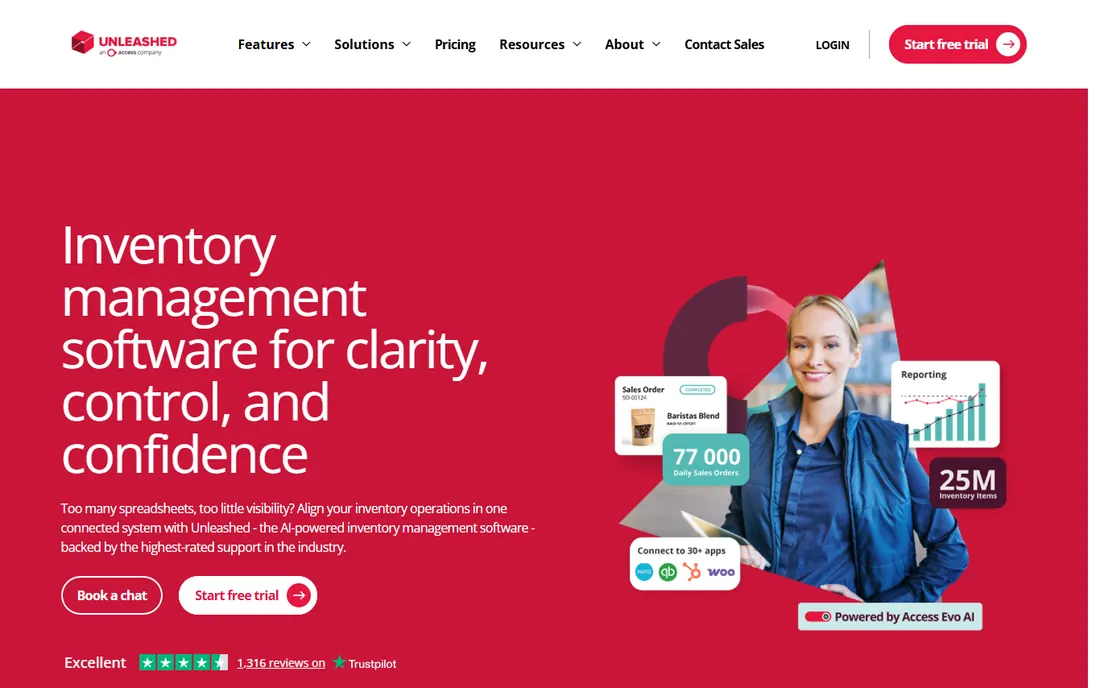
Unleashed, part of The Access Group, targets distributors and mid-market manufacturers who have outgrown entry-level tools. The headline Core plan at $399 a month includes three users, and the platform's strengths show in traceability: batch and lot tracking, expiry management and landed-cost calculations that food, supplement and parts distributors actually need.
The pricing has sharp edges worth knowing. Base plans include 100 sales orders a month; exceed that and fixed overage charges apply in steps up to $350 a month for unlimited volume. The Pro plan at $729 a month adds advanced inventory and B2B e-commerce features. This is a tool for a business doing serious wholesale volume, and the pricing only makes sense at that scale.
What we like- Strong batch and serial tracking for regulated or perishable goods
- Mature Xero and QuickBooks integrations
- Visual dashboards non-accountants can read
Watch out for- Priced for mid-market, not small business
- Sales-order overages add fixed monthly charges
- Advanced modules cost extra
#9
Square for Retail
Best for: Small retailers already processing payments with Square
Visit squareup.com
Starting priceFree plan; $49/location/month
Free planYes

If your business is a shop with a Square register, you may not need anything else on this list. Square's free plan includes basic inventory tracking, and stock counts update automatically whether a sale happens at the counter or on your Square Online site. Setup takes an afternoon because there is no separate system to integrate.
The ceiling arrives fast. There is no real warehouse management, no manufacturing planning, and no purchase-order depth for businesses with complex supply chains. The $49 per location per month plan adds features, but per-location pricing punishes multi-store growth. Treat Square as the right tool for simple retail and a stepping stone to Cin7 or inFlow when the business outgrows it.
What we like- Free inventory with the free POS plan
- Stock syncs automatically with in-person and online sales
- No separate system to learn
Watch out for- Weak for warehousing and manufacturing
- Multichannel selling beyond Square's ecosystem is limited
- Paid features add up per location
#10
NetSuite
Best for: Mid-size and large companies that need full ERP, not just inventory
Visit netsuite.com
Starting priceSee website
Free planNo
NetSuite is the system companies buy when inventory is one module among many. Oracle's cloud ERP handles multi-location inventory, demand planning, procurement and financials in a single database, with automation that smaller tools cannot match. For a company running several warehouses, multiple subsidiaries or complex compliance needs, it is the credible top end of this list.
Everything else about it is a negotiation. There is no published price; the license comprises a base platform fee plus per-user and per-module charges, with implementation commonly running into five or six figures. A small business should not be here yet. A mid-size company comparing Cin7 or Unleashed against NetSuite should get the full fee schedule, including the annual uplift, before deciding the step up is worth it.
What we like- Inventory, financials, CRM and e-commerce in one system
- Advanced automation and multi-subsidiary support
- Scales to enterprise complexity
Watch out for- Custom-quoted pricing with significant implementation costs
- Overkill and overpriced for small businesses
- Long deployment timelines
How we chose
We started from the tools that actually dominate this category in 2026, then checked each vendor's own pricing page and current plan structure rather than trusting old roundup posts. Prices above come from vendor pricing pages or from third-party pages that cite the vendor's page with a 2026 check date, and we note billing terms where annual billing changes the number. We weighed public review patterns on G2, Capterra and Reddit for usability and support quality, checked integration lists for the accounting and sales channels US small businesses actually use, and matched each tool to a company size and business model instead of ranking them on feature count alone. No vendor paid for placement, and we did not claim hands-on trials that did not happen.
What to check before you commit
Start with order volume, not features. Most tools in this list price by some form of usage: orders per month, sales orders per year, SKUs, users or locations. Write down your current numbers and your 18-month projection, then check which plan covers the projection, because the plan that fits today often does not fit next year.
Second, confirm the accounting integration actually posts both ways. A connector that pulls sales into inventory but cannot post cost-of-goods back to QuickBooks, Xero or NetSuite creates month-end work that defeats the purpose. Ask for the specific sync behaviors, not a logo on an integrations page.
Third, separate inventory from manufacturing in your head. Finished-goods tracking and production planning are different products at several vendors here, sometimes literally different products with different quotes. If you make what you sell, price the manufacturing configuration, not the entry plan.
Fourth, ask about the parts of the price that are not on the pricing page. Implementation packages, onboarding fees, order overages and first-year promotional discounts all change the real number. Get the full first-year cost in writing, including what renews at a higher rate.
Free plans and trials, honestly assessed
Four tools here offer a genuinely free tier: Zoho Inventory, Katana, Sortly and Square, plus Odoo's one-app-free plan. They are useful in different ways. Zoho's is the most complete small-business system you can run for free, but the 50-order monthly cap means a single good month forces an upgrade. Katana's free plan suits makers with few SKUs but jumps straight to $299 a month when you outgrow 30 SKUs, with no middle step.
Sortly's free tier is best for non-selling use cases like equipment tracking, and Square's is fine if you already live in the Square ecosystem. Trials fill the gaps: Cin7 and inFlow offer 14-day trials, and Unleashed offers a trial too. Fishbowl and NetSuite only do demos, which tells you something about who they sell to. A practical approach is to run your real catalog in a free tier or trial for two weeks before any sales call, so you negotiate from knowledge instead of slides.
Frequently asked questions
What is the cheapest inventory management software that is actually usable?
Zoho Inventory's free plan is the cheapest starting point that still handles real multichannel selling, covering 50 orders a month. The first paid step is Standard at $29 a month billed annually. For equipment and asset tracking rather than selling, Sortly's free plan is the cheapest credible option.
Do I need manufacturing features or just inventory tracking?
If you buy finished goods and resell them, you need inventory tracking only, and tools like Zoho, Cin7 or inFlow fit. If you assemble, blend, build or package products from components, you need bills of materials and production planning, which points to Katana, Fishbowl Advanced Manufacturing or Odoo. Buying an inventory-only tool when you manufacture is the most common expensive mistake in this category.
How much does inventory management software cost per month?
For small businesses, expect $29 to $129 a month for entry plans from Zoho, Sortly or inFlow. Mid-size sellers and light manufacturers typically pay $229 to $399 a month for Fishbowl, Katana or Unleashed. Larger operations on Cin7 or NetSuite run from $349 a month into custom-quoted ERP territory, plus implementation.
Can free inventory software handle a real business?
Yes, within limits. Zoho's free plan runs a small store doing under 50 orders a month, and Odoo's one-app-free tier handles unlimited users on a single app. The limits that force upgrades are usually order volume, user count, locations and manufacturing features. Outgrowing a free tier is a good problem; just know the upgrade price before you build your workflow on the free plan.
Which inventory software integrates best with QuickBooks?
Fishbowl has the deepest QuickBooks integration, posting inventory movements back to both QuickBooks Online and Desktop in detail. inFlow, Cin7 and Unleashed also integrate with QuickBooks Online, and Zoho pairs natively with Zoho Books if you are open to switching accounting systems.
Should a small business buy NetSuite?
Almost never at small scale. NetSuite is priced and implemented for mid-size and larger companies, with custom quotes and significant setup costs. A small business gets more value from Zoho, Katana or inFlow and can migrate when multi-subsidiary or advanced compliance needs actually arrive.
Sources we checked (15)
- https://www.cin7.com/blog/best-inventory-management-software-solutions/
- https://www.zoho.com/us/inventory/pricing/
- https://katanamrp.com/pricing/
- https://www.fishbowlinventory.com/pricing/
- https://www.inflowinventory.com/pricing/
- https://www.sortly.com/pricing/
- https://www.odoo.com/pricing/
- https://www.unleashedsoftware.com/pricing/
- https://squareup.com/us/en/point-of-sale/retail
- https://www.netsuite.com/portal/products/erp.shtml
- https://softwareconnect.com/reviews/katana-mrp/
- https://softwareconnect.com/reviews/inflow-inventory/
- https://softwareconnect.com/reviews/fishbowl-inventory/
- https://www.g2.com/products/unleashed/pricing
- https://www.techrepublic.com/article/best-inventory-management-software/
Is your product missing or out of date?
We review this list regularly. Vendors can request a listing, send updated pricing or ask about featured placement.

Shihab Mia · Founder, Rankite
Shihab has spent more than a decade helping SaaS and e-commerce brands grow through search. He writes Rankite's software buying guides from pricing pages, documentation and public user reviews. More about Shihab.