How we make this list: we compare pricing pages, product documentation and public user reviews. Rankite is independent; if a vendor ever pays for a featured spot, that listing is clearly labeled Partner.
Key takeaways
- RFID software turns raw tag reads into inventory counts, asset locations, and audit trails; the readers are commodities, the software is the decision.
- Avancir is the most transparent option with public pricing from $269 per month; most rivals are quote-based.
- Match the tool to the job: Xemelgo for manufacturing, EnvisionWare for libraries, AMG for IT assets, BarTender for label encoding.
- Budget for hardware, tags, and integration separately; software licenses are only part of an RFID deployment.
- A bad fit means months of reconciliation work when reads do not map cleanly to your systems.
Quick comparison
Is your product missing or out of date?
We review this list regularly. Vendors can request a listing, send updated pricing or ask about featured placement.
The best RFID software
RFID hardware gets the attention, but software decides whether the deployment works. Tags and readers generate a constant stream of raw reads; the software deduplicates them, maps each tag to an item, maintains current state, and pushes clean events into your ERP or WMS. Buy the wrong software and you get a pile of timestamps that someone reconciles by hand every week. The cost of getting it wrong is not the license fee. It is the months of manual reconciliation and the inventory counts nobody trusts.
Starting priceFrom $269/month (billed annually)
Free planFree option
Avancir is a configurable RFID and IoT SaaS platform for real-time tracking, visibility, and workflow automation. It connects fixed RFID hardware and handheld or mobile devices into one system, then layers automations, alerts, analytics, and integrations on top. Pricing is published in four tiers: Starter at $269, Basic at $998, Pro at $1,649, and Premium at $2,419 per month, all billed annually. A free option is available to start.
The honest catch is that transparency has a floor. $269 per month is fair for what it does, but small operations should run the numbers against their count frequency. For mid-size operations that want to stand up RFID tracking quickly without a services engagement, it is the strongest default on this list.
What we like- Public pricing, rare in this market
- Connects fixed and handheld readers to automations and alerts
- Pricing not based on user count
Watch out for- Still an investment at $269 per month to start
- Hardware not included
#2
TagMatiks (RFID4U)
Best for: multi-workflow asset and inventory
Visit rfid4u.com
Starting priceSee website
Free planNo
TagMatiks is an RFID software family from RFID4U focused on asset tracking and inventory management. Modules cover asset tracking, field inventory, retail cycle counts, and work-in-progress, so teams can address several workflows from one vendor. TagMatiks Core provides the middleware engine with reader management and edge processing, while business applications add vertical-specific workflows and dashboards.
The honest catch is the quote. Pricing is not published, so budgeting requires a sales conversation scoped to reader hardware, site count, and modules. For organizations standardizing RFID across departments or sites, the modular continuity is worth the sales process.
What we like- Modular product family covering asset tracking, field inventory, and retail
- 25+ years of RFID delivery experience
- Middleware included
Watch out for- Pricing not published
- Product line breadth can complicate the buying decision

#3
Zebra MotionWorks
Best for: enterprise location intelligence
Visit zebra.com
Starting priceSee website
Free planNo
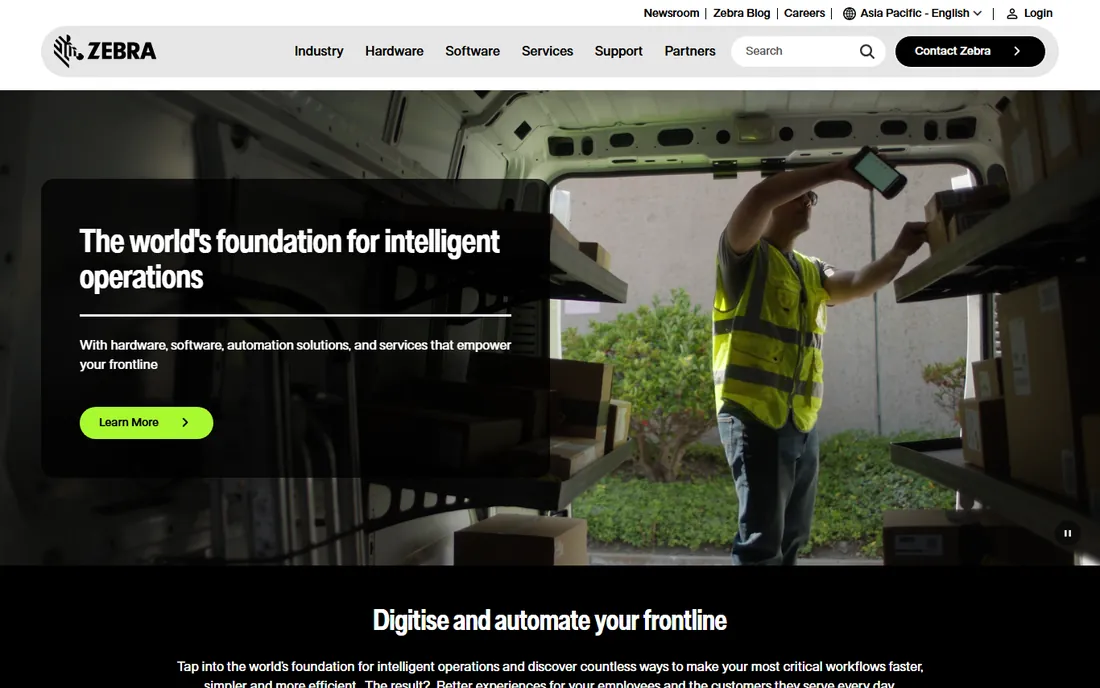
Zebra MotionWorks is enterprise location-and-tracking software that turns asset and personnel location data into operational insights. It manages multiple sensor technologies from one place, so RFID reads sit alongside other location signals in a single view. For large operations running mixed hardware across big sites, that centralization is the point.
The honest catch is that this is enterprise software with enterprise buying. Pricing is quote-based and scoped around site size, sensor count, and integration needs. If you already run Zebra readers and printers, the ecosystem fit is strong. If you run one warehouse, look at Avancir or TagMatiks instead.
What we like- Tracks assets and people across multiple sensor technologies
- Natural fit if you already run Zebra hardware
- Enterprise scale
Watch out for- Quote-based enterprise pricing
- Overkill for single-site operations
Starting priceSee website
Free planNo
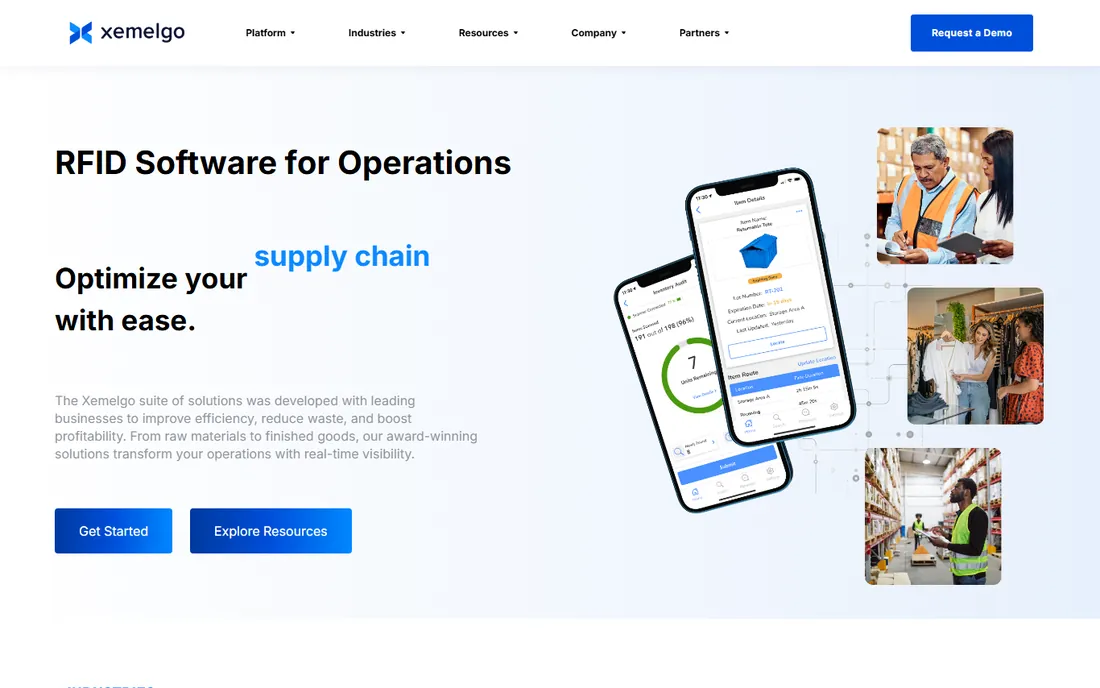
Xemelgo is RFID software for operations, offering real-time tracking, automation, and visibility across inventory, assets, shipments, and work-in-progress. It is built around item-level traceability and a rules engine, which fits manufacturing and warehouse environments where knowing the exact state of each item drives throughput. Cloud deployment can start in an afternoon for starter kits.
The honest catch is specialization. Xemelgo is excellent for the factory floor and the warehouse; it is not the tool for IT asset management or library circulation. Pricing is quote-based. Manufacturers evaluating RFID should put it on the shortlist early.
What we like- Item-level traceability with a rules engine
- Deploys in hours for starter kits
- Strong manufacturing customer base
Watch out for- Quote-based pricing
- Focused on operations, not IT assets or libraries
Starting priceFrom $99/month
Free planNo
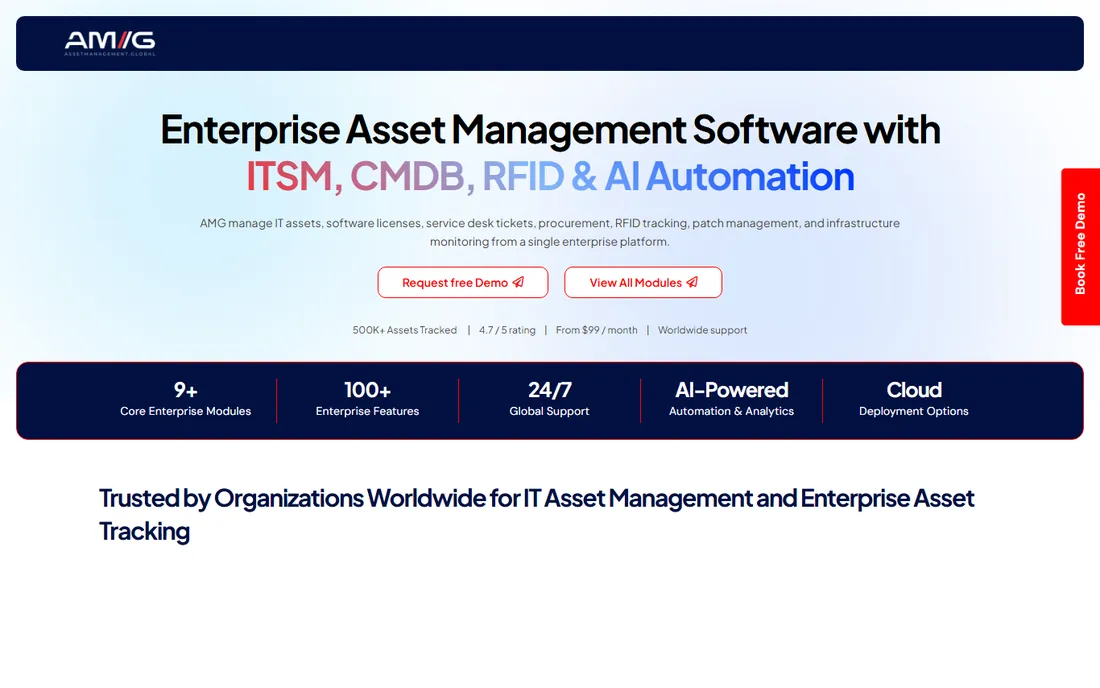
AMG is a SaaS IT asset management and IT service management platform with nine integrated modules, including native RFID tracking alongside ITAM, ITSM, CMDB, patch management, and visitor management. Pricing starts at $99 per month with enterprise licensing available. For IT teams that need RFID as part of a broader asset lifecycle, the consolidation is the selling point.
The honest catch is the center of gravity. AMG is an IT platform first; if your primary need is warehouse inventory or manufacturing traceability, the operations-focused tools above fit better. For IT asset audits with RFID check-in and check-out, it is priced well against ServiceNow-class alternatives.
What we like- ITAM, ITSM, CMDB, and RFID tracking in one platform
- Published pricing from $99 per month
- Cost-effective ServiceNow alternative
Watch out for- IT-focused, not a fit for warehouse or retail inventory
- RFID is one module among many
Starting priceSee website
Free planNo
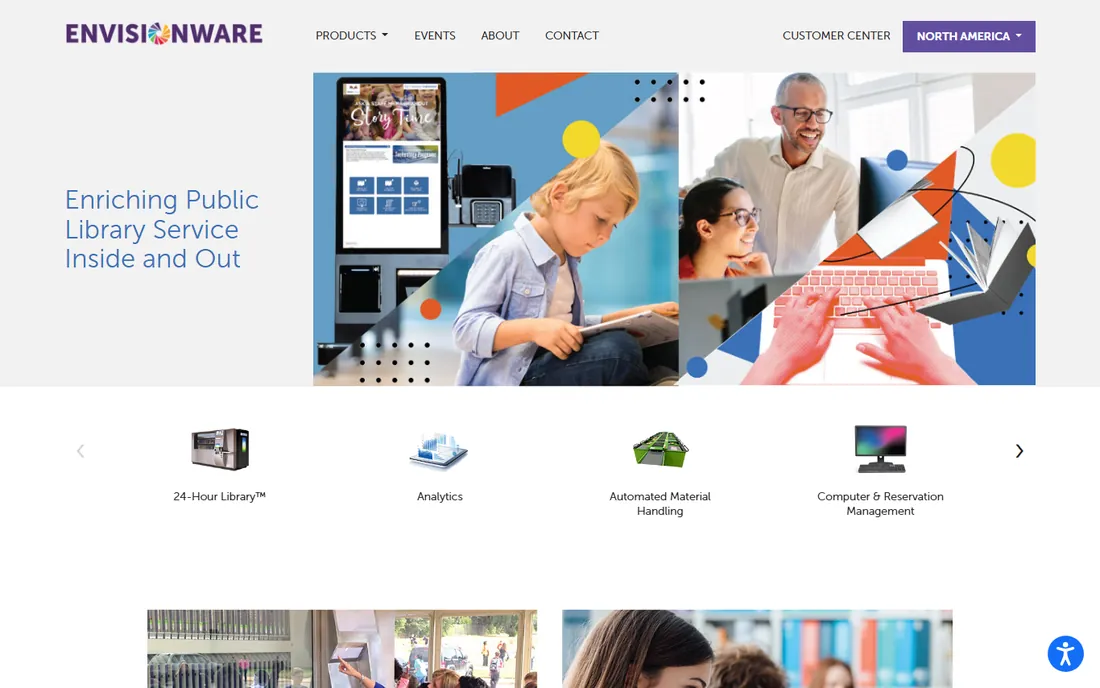
EnvisionWare's RFID Solutions are built for public libraries: tag encoding and validation, self-service checkout, automated material handling, and inventory tied to circulation systems. Libraries from Dallas to Las Vegas run EnvisionWare for self-service and material handling. It is the vertical specialist on this list.
The honest catch is that it does one thing. If you run a library, that specialization is exactly what you want. If you do not, skip it. Pricing is quote-based through the vendor, typical for library systems sold with hardware.
What we like- Purpose-built for library RFID: encoding, validation, self-checkout, and circulation integration
- Long library track record
Watch out for- Library-only focus
- Pricing requires contacting the vendor
Starting priceFrom $199
Free planFree trial
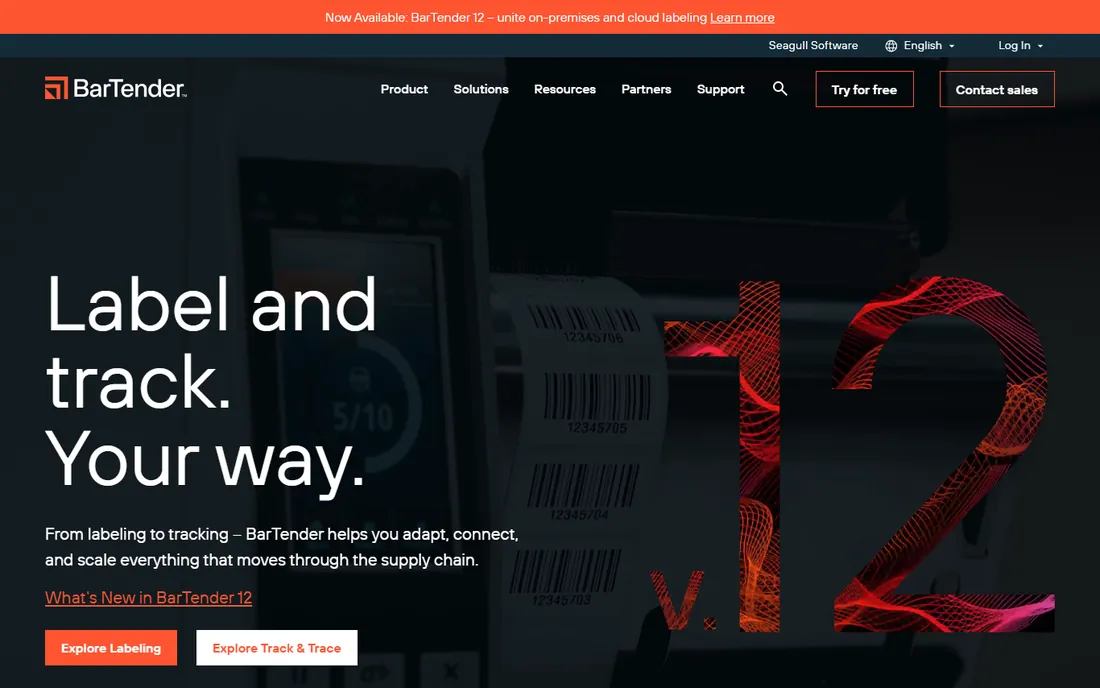
BarTender by Seagull Scientific is the most trusted labeling system in the world, used by over 250,000 companies to design, encode, and print labels, barcodes, and RFID tags. When labeling, encoding, and operational printing must connect to your tracking workflow, BarTender is the piece that creates the tags everything else reads. BarTender Track and Trace extends it into item and asset tracking.
The honest catch is scope. BarTender creates and encodes the tags; it is not a real-time tracking platform on its own. Most RFID deployments need BarTender plus one of the tracking tools above. Price starts at $199 per the vendor, with a free trial available.
What we like- The standard for label design and RFID tag encoding
- Track and Trace adds item visibility
- 250,000+ companies use it
Watch out for- Labeling software, not a tracking platform
- Encoding is the start of the workflow, not the end
How we chose
We compared seven RFID software tools in October 2026 using vendor homepages, vendor pricing pages, and a current practitioner guide that verified pricing against sources. We selected products that solve a clear operational job, connect to existing readers and business systems, and serve identifiable use cases across retail, manufacturing, IT asset management, and libraries. Where vendors gate pricing behind sales, we say so rather than guess. No vendor paid for placement, and nothing here is based on hands-on product testing.
Budget the whole deployment, not just the software
Software licenses are one line in an RFID budget. Tags cost money per unit and add up fast at item level. Readers, antennas, and handhelds are capital expenses. Integration with your ERP or WMS takes services time. And someone has to tag the existing inventory, which is labor.
Get quotes for all of it before committing to software. A platform that looks expensive can be cheap if it includes middleware you would otherwise buy separately, and a platform that looks cheap can be expensive if it needs a systems integrator to connect to your ERP. Ask each vendor what a complete deployment for your site count typically costs.
Start with the workflow, not the technology
The most common RFID failure is buying technology before defining the workflow. Decide first: what gets tagged, what a read means, which system of record it updates, and who acts on the exceptions. Then choose software that implements that workflow.
Pilot on one workflow at one site. Measure the before and after: count time, accuracy, shrinkage, audit labor. RFID pays back fastest where counts are frequent and errors are expensive, which is why retail stockrooms and tool cribs are common entry points. Expand only when the pilot numbers justify it. The pilot is also where you discover whether your readers, tags, and software actually work together in your environment.
Frequently asked questions
What does RFID software do?
It sits between RFID readers and your business systems, turning raw tag reads into inventory counts, asset locations, check-in records, and alerts. It deduplicates reads, maps tags to items, and feeds clean events into ERP or WMS systems.
How much does RFID software cost?
Published pricing ranges from $99 per month (AMG) to $269 per month (Avancir Starter) to $199 one-time-ish for BarTender. Most enterprise options are quote-based. Budget hardware, tags, and integration separately.
Do I need special hardware to use RFID software?
Yes. You need RFID tags for the items and readers (fixed or handheld) to capture them. Some platforms like Avancir work with your existing readers; others are sold with hardware bundles.
RFID vs barcode: which should I choose?
RFID reads many tags at once without line of sight, so it wins for fast cycle counts and automated check-in. Barcodes are cheaper per unit. Many operations use both: RFID for high-value or high-velocity items, barcodes for the rest.
Can RFID software integrate with my ERP?
The serious platforms can. Avancir offers APIs and webhooks, Xemelgo integrates with ERP systems, and TagMatiks Core is built for enterprise integration. Confirm your specific ERP during evaluation.
Which RFID software is best for small businesses?
Avancir's Starter tier at $269 per month with a free option to start is the most accessible transparent choice. TagMatiks AT Lite is designed as a lightweight entry point. Start with one workflow and expand.
Sources we checked (8)
- https://avancir.com/
- https://rfid4u.com
- https://www.zebra.com
- https://xemelgo.com/
- https://assetmanagement.global
- https://www.envisionware.com/
- https://bartendersoftware.com/
- https://www.guideflow.com/blog/rfid-software
Is your product missing or out of date?
We review this list regularly. Vendors can request a listing, send updated pricing or ask about featured placement.

Shihab Mia · Founder, Rankite
Shihab has spent more than a decade helping SaaS and e-commerce brands grow through search. He writes Rankite's software buying guides from pricing pages, documentation and public user reviews. More about Shihab.
 Avancir
 Xemelgo
 Asset Management Global (AMG)
 EnvisionWare
 BarTender