How we make this list: we compare pricing pages, product documentation and public user reviews. Rankite is independent; if a vendor ever pays for a featured spot, that listing is clearly labeled Partner.
Key takeaways
- Retail analytics splits into three jobs: counting what happens in stores, watching what happens on shelves, and planning what happens next.
- RetailNext and Dor answer the first question for chains of any size, while Trax and its computer vision rivals serve brands that live or die by shelf execution.
- RELEX and SymphonyAI are planning platforms for larger operations; EDITED gives apparel and fashion retailers market-wide pricing and trend data without a data science team.
- Almost every vendor here prices by quote, so budget for implementation time and hardware, not just the subscription.
- Start with one question you need answered weekly, then pick the tool built for that question.
Quick comparison
| Tool | Best for | Starting price | Free plan |
|---|
 RetailNext RetailNext | in-store traffic and shopper behavior analytics | See website | No |
 Trax Trax | shelf monitoring and retail execution for CPG brands | See website | No |
 RELEX Solutions RELEX Solutions | demand forecasting and supply chain planning | See website | No |
 EDITED EDITED | market intelligence for fashion and apparel retail | See website | No |
 SymphonyAI SymphonyAI | AI-driven planning for retailers and CPG companies | See website | No |
 Dor Dor | simple foot traffic counting for small and mid-size chains | See website | No |
 Tulip Tulip | clienteling analytics for premium retail | See website | No |
 NewStore NewStore | unified commerce reporting across stores and channels | See website | No |
 Retail Zipline Retail Zipline | store communication and execution analytics | See website | No |
Is your product missing or out of date?
We review this list regularly. Vendors can request a listing, send updated pricing or ask about featured placement.
The best retail analytics software
Starting priceSee website
Free planNo
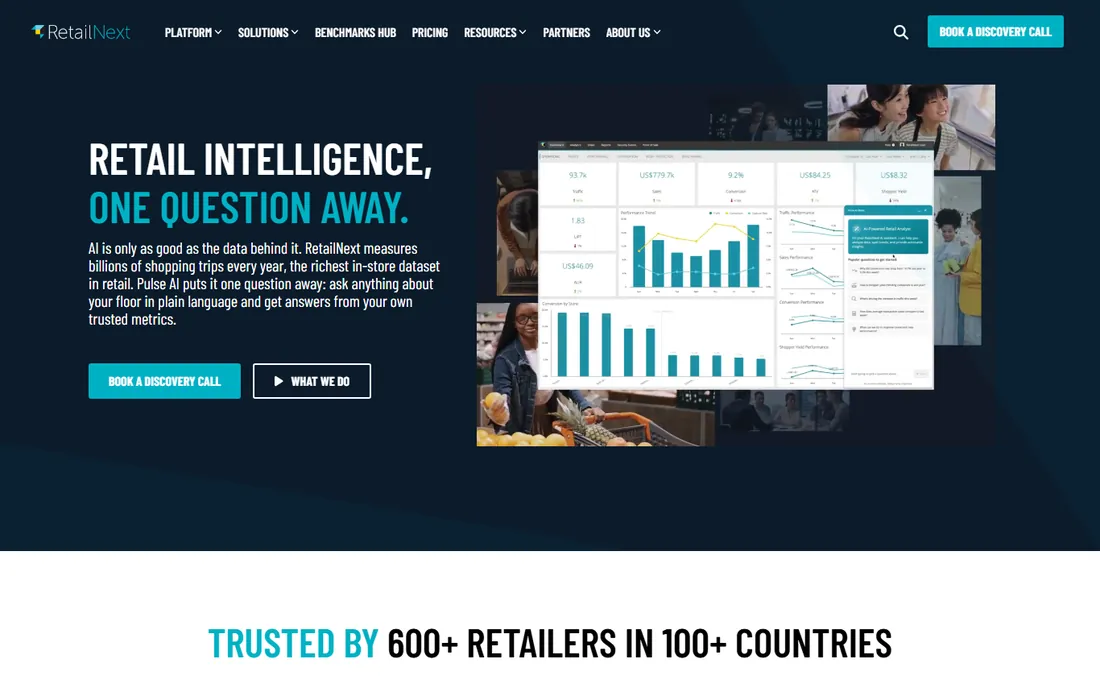
RetailNext answers the most basic retail question: how many people came in, what did they do, and how many bought something. Its sensors count traffic at the door, and the platform ties that data to point-of-sale transactions and video, so you can see conversion rates, dwell patterns and staffing gaps by hour. Operations teams use it to schedule labor against real demand instead of gut feel.
The platform is built for chains, and it is priced that way. Expect a quote that includes sensors, installation and an annual platform fee. For a retailer with ten or more locations, the labor savings alone can justify it. For a single boutique, the math rarely works, which is exactly the gap Dor fills further down this list.
What we like- Combines traffic, POS and video into one view
- Strong conversion and staffing analytics
- Proven with large chains
Watch out for- Enterprise pricing with hardware costs
- Overkill for a single location
Starting priceSee website
Free planNo
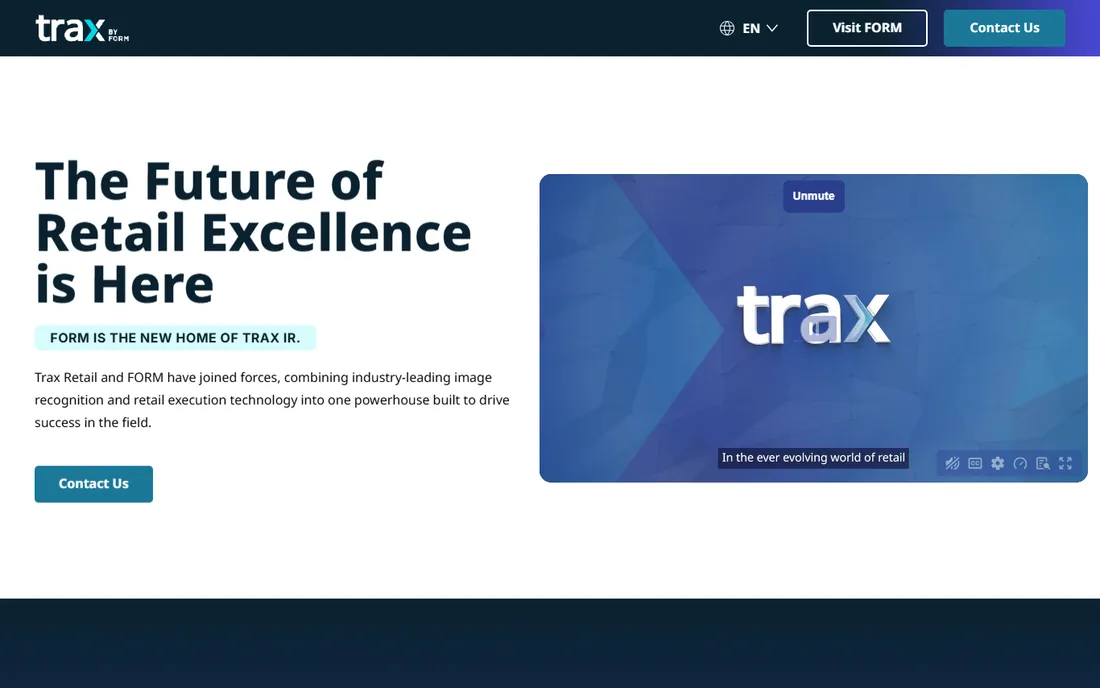
Trax points cameras at shelves and turns photos into data. Its image recognition reads on-shelf availability, share of shelf, pricing and planogram compliance, then tells field teams exactly what to fix and where. In 2026 the company unified with FORM, adding task management so the insight and the fix live in one workflow.
This is a brand-side tool: CPG companies and large retailers use it to protect distribution across thousands of stores. If you are a manufacturer wondering whether your products are actually on the shelf where they should be, nothing else measures it at this scale. Small retailers will find the price and complexity far beyond what they need.
What we like- Image recognition trained on billions of shelf photos
- Real-time stockout and compliance alerts
- Now combined with FORM for task management
Watch out for- Built for brands and large retailers, not small shops
- Pricing is quote-based and substantial
Starting priceSee website
Free planNo
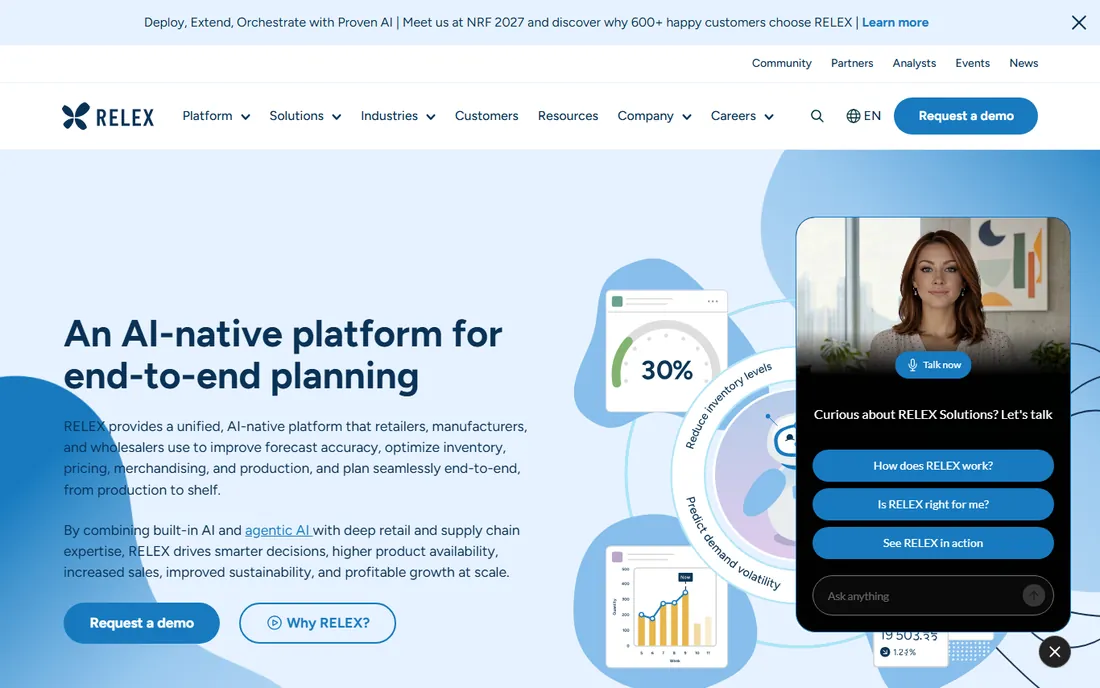
RELEX sits one level above store analytics: it predicts what customers will buy and makes sure the product is there. The platform combines demand signals, promotions, weather and supply constraints into forecasts that drive automated replenishment, assortment and workforce planning. Grocery, convenience and DIY chains with perishable or seasonal inventory get the most from it.
This is not plug-and-play software. Rollouts take months and need clean data to work well. But for retailers losing money to stockouts on one side and waste on the other, RELEX's forecasting accuracy is the whole pitch, and customers like Lowe's, Rossmann and Family Dollar show the scale it operates at.
What we like- Unified forecasting, replenishment and pricing in one platform
- Strong for grocery and short-shelf-life categories
- Recognized leader by industry analysts
Watch out for- Implementation is a real project, not a signup
- Priced for mid-market and enterprise
#4
EDITED
Best for: market intelligence for fashion and apparel retail
Visit edited.com
Starting priceSee website
Free planNo
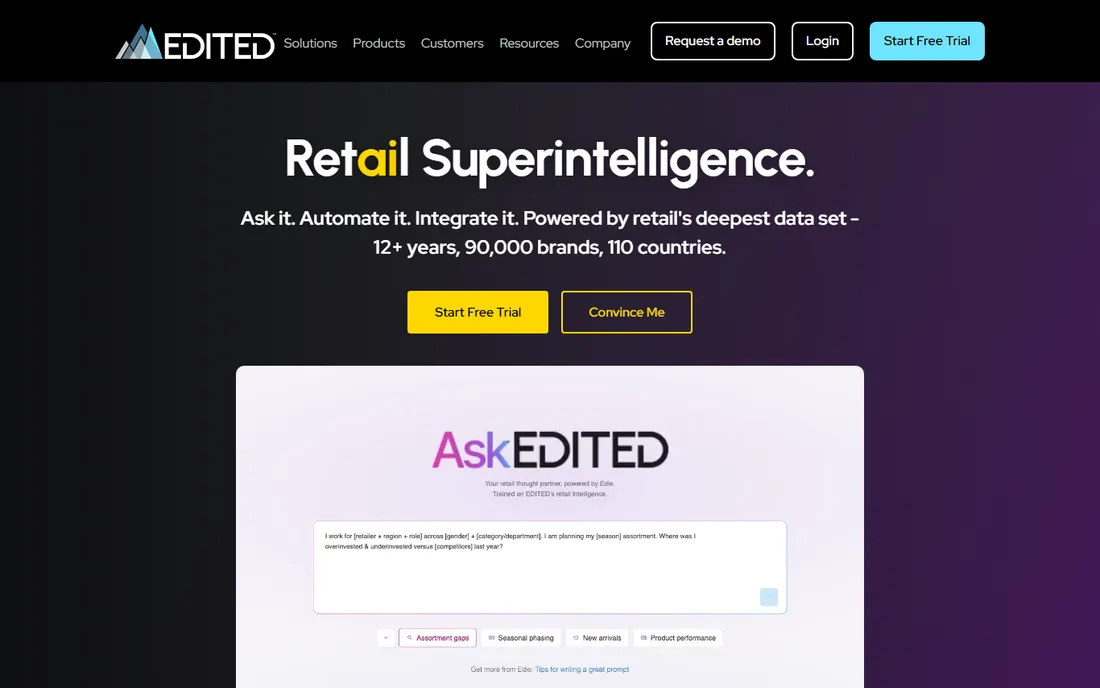
EDITED watches the entire market so you do not have to. It gathers product, pricing and trend data across thousands of retailers, then shows where your assortment is overpriced, where competitors are discounting and which trends are gaining early traction. Fashion buyers use it to time launches, set prices and plan markdowns with evidence instead of instinct.
The customer stories are specific: brands report measurable lifts in sell-through and margin from pricing decisions the platform flagged. The limitation is scope. EDITED is built for fashion, apparel and adjacent categories; a hardware store will not find its assortment here. Pricing is annual and aimed at established brands.
What we like- Tracks competitor assortments, pricing and trends across the market
- Used by major fashion brands
- Clear ROI stories on pricing and markdowns
Watch out for- Focused on apparel, footwear and related categories
- Enterprise contracts only
Starting priceSee website
Free planNo
SymphonyAI's retail division (the former Symphony RetailAI) sells an AI platform that connects planning to execution: shopper insights, localized assortments, promotional effectiveness and supply chain intelligence. A distinctive piece is its retailer-CPG collaboration programs, where both sides share data to build joint business plans.
Like RELEX, this is enterprise software with enterprise timelines. The breadth is the selling point and the complication: you can replace several point tools with one platform, but you need the team and the data maturity to use it. Mid-size retailers should evaluate it against RELEX and pick based on which planning problems hurt most.
What we like- Covers shopper insights, assortment, promotions and supply chain in one suite
- Strong CPG collaboration tools
- Enterprise-grade security and scale
Watch out for- Broad suite means longer evaluation and rollout
- Quote-only pricing
#6
Dor
Best for: simple foot traffic counting for small and mid-size chains
Visit getdor.com
Starting priceSee website
Free planNo
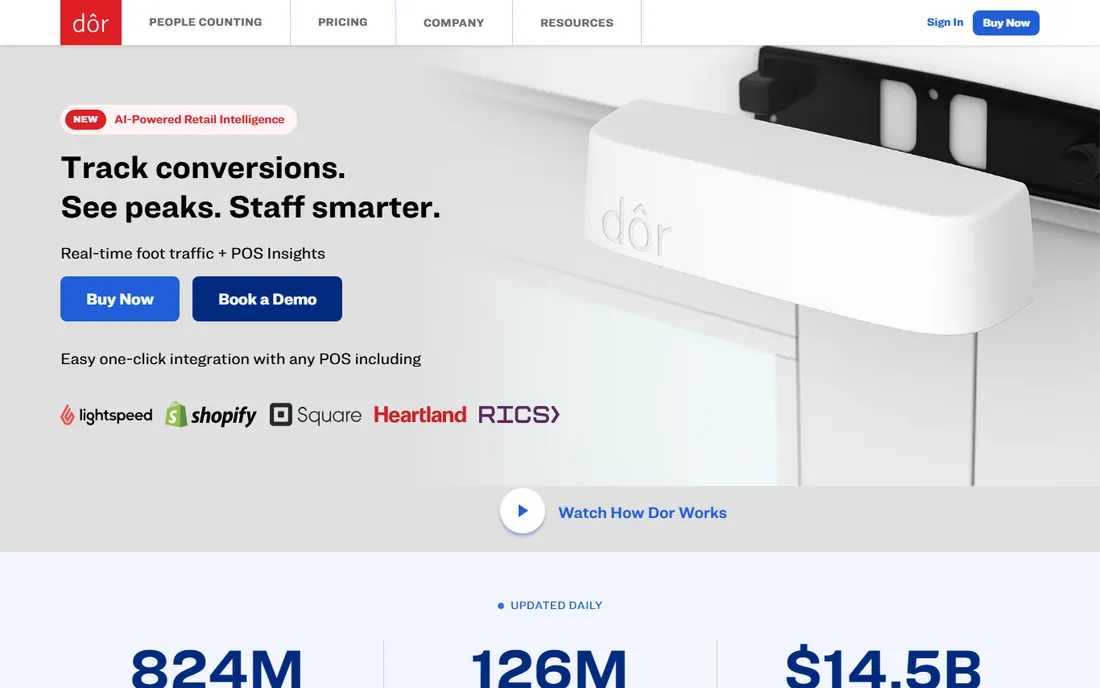
Dor is the accessible answer to RetailNext. A small thermal sensor sticks above the door, counts people in and out, and feeds a dashboard with traffic, conversion rates and revenue per store when connected to your POS. Setup takes minutes with no wiring or IT project, and the thermal approach sidesteps the privacy concerns of camera-based counting.
Independent retailers and small chains are the core audience: businesses that need to know their conversion rate and peak hours without an enterprise budget or a facilities team. The newer AI intelligence layer adds insight summaries that connect traffic to staffing and weather. Pricing includes the sensor hardware plus a subscription, so get a per-door quote before planning a large rollout.
What we like- Battery-powered thermal sensor installs in minutes
- Privacy-friendly, no cameras or facial recognition
- Integrates with Shopify and POS systems
Watch out for- Counts traffic rather than full shopper behavior
- Hardware cost per door adds up across many locations
Starting priceSee website
Free planNo
Tulip turns store associates into data-driven sellers. Its clienteling platform gives staff full customer histories, preferences and outreach tools, so follow-ups feel personal and timed. The analytics side shows which clients drive revenue, which outreach converts and how appointments turn into sales. Brands like Kate Spade, Coach and Michael Kors run on it.
This is analytics for relationship retail. If your business depends on repeat high-value customers, knowing exactly who bought what and when to reach out is worth more than traffic counts. If you sell commodity products at thin margins, the model does not fit. Expect enterprise pricing and a sales-led buying process.
What we like- Rich customer profiles drive repeat visits and bigger baskets
- Includes POS and outreach in one platform
- Strong with luxury and apparel brands
Watch out for- Built for high-touch retail, not commodity stores
- Pricing reflects the enterprise focus
#8
NewStore
Best for: unified commerce reporting across stores and channels
Visit newstore.com
Starting priceSee website
Free planNo
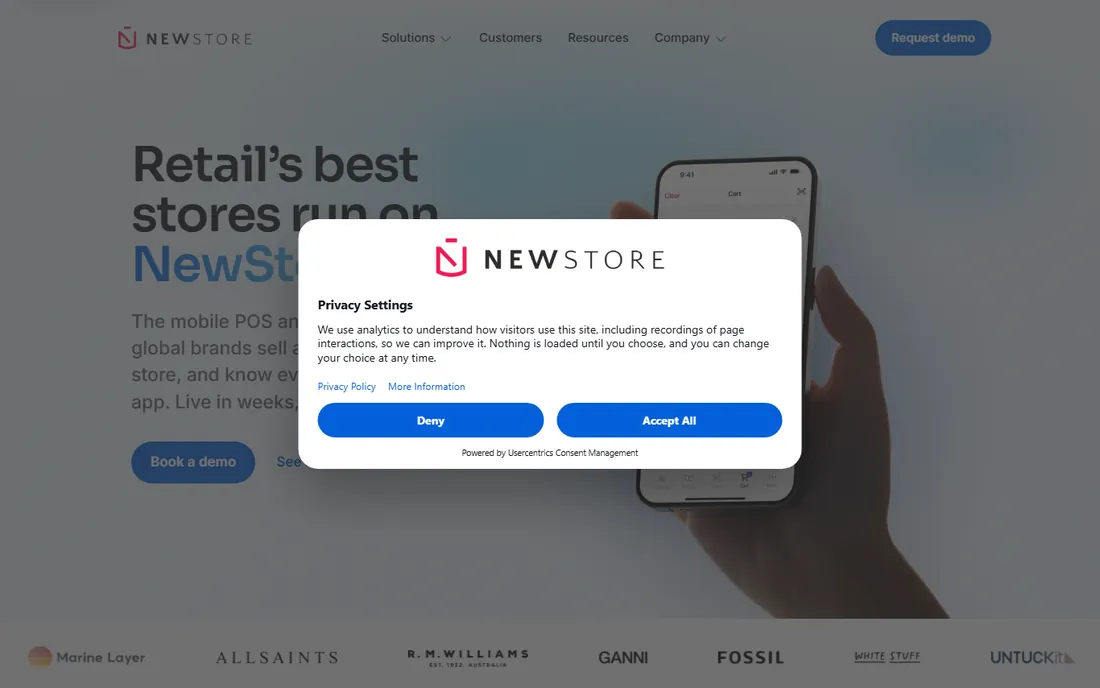
NewStore takes a different route to retail analytics: instead of bolting reporting onto old systems, it replaces the store stack with one cloud platform covering POS, endless aisle, inventory, fulfillment and clienteling. The analytics come free with that unification, because every transaction, stock movement and customer interaction already flows through one system.
For omnichannel brands, the reporting is genuinely better than stitching together separate tools: you can see a single view of inventory, sales and customer behavior across stores and ecommerce. The tradeoff is commitment. This is a platform migration, not a dashboard purchase. Brands like GANNI, Burton and Lorna Jane show the target: multi-store retailers ready to modernize the whole stack.
What we like- One platform for POS, inventory, fulfillment and clienteling
- Real-time data across all channels
- Fast go-live measured in weeks
Watch out for- Replacing your POS is a bigger decision than adding analytics
- Aimed at brands, not single stores
Starting priceSee website
Free planNo
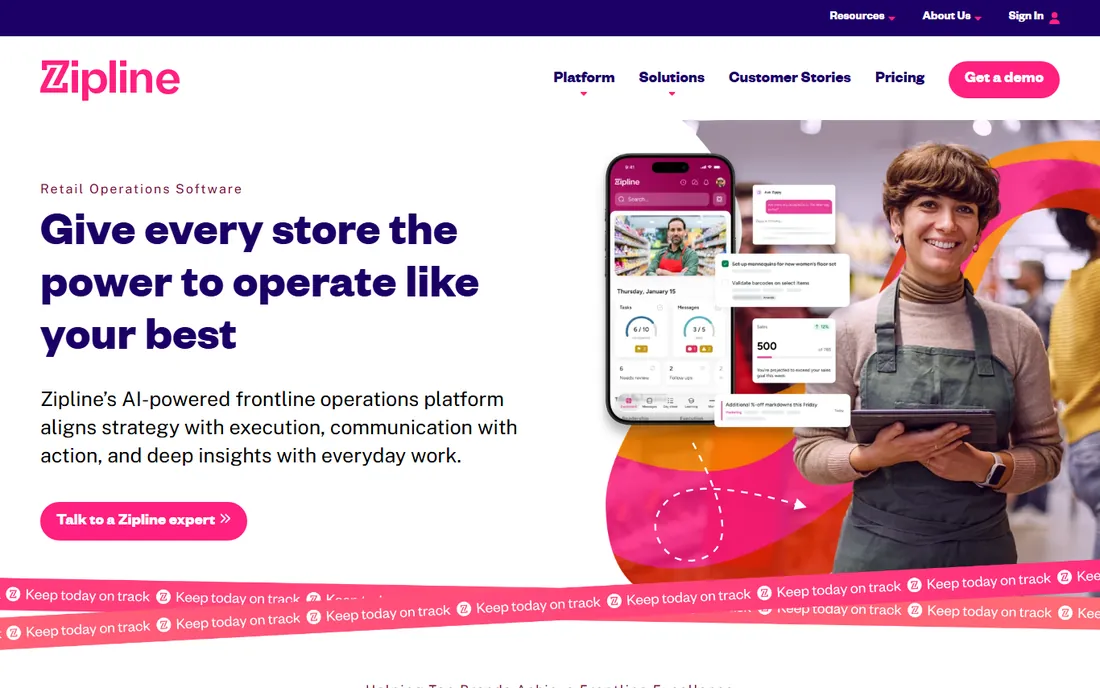
Retail Zipline closes the gap between what headquarters asks for and what stores actually do. It pushes tasks, promotions and operational updates to frontline teams, then reports back on completion rates and execution quality by location. The analytics answer questions like which stores ran the promotion correctly and where the message never landed.
It is less a general analytics platform than an execution measurement tool, and that focus is the point. Retailers that already have sales data but cannot see whether stores follow through get the most value. Like most tools here, pricing is quote-based and makes the most sense for chains rather than independents.
What we like- Connects HQ messages to frontline task completion
- Tracks execution rates by store
- Built specifically for retail operations teams
Watch out for- Narrower analytics scope than full BI platforms
- Best value at multi-store scale
How we chose
We looked at what retail analytics actually means in practice: traffic counting, shelf monitoring, market intelligence and demand planning are different jobs, and no single tool does all four well. We picked established vendors in each lane, checked that each product is live and accepting customers in 2026, and read vendor documentation, pricing pages and public reviews on G2, Capterra and industry press. We did not test any software hands-on. Pricing in this category is almost always quote-based, so we say so plainly instead of guessing.
Picking analytics that match your store count
A single store needs answers, not platforms. If you run one or two locations, start with Dor for traffic and your POS reports for sales. That combination tells you conversion rate and peak hours, which is most of what a small operator can act on. Adding anything heavier just creates dashboards nobody opens.
At ten to fifty stores, patterns beat anecdotes. RetailNext or a similar traffic platform starts to pay for itself through labor scheduling alone, and Retail Zipline earns its place by showing which locations execute and which do not. This is also where market intelligence like EDITED makes sense if you compete on assortment.
Past fifty stores, or with a distribution network, you are in planning territory. RELEX and SymphonyAI exist for this scale, where a one-point improvement in forecast accuracy is worth more than any dashboard. Budget for implementation measured in months and a data cleanup project before the software can do its job.
The hidden costs nobody puts on the pricing page
Quote-based pricing means the number you negotiate is only part of the spend. Hardware is the first surprise: traffic sensors, shelf cameras and POS replacements all cost money per location, and installation across dozens of stores adds up fast. Ask every vendor for the full per-store cost, not just the software fee.
Implementation is the second. Enterprise platforms need your data cleaned and your processes mapped before they deliver value. Plan for internal staff time, not just the vendor's professional services bill. A three-month rollout that your team cannot support will take six.
The third is the exit. Annual contracts with auto-renewal are standard, and exporting years of historical analytics into a new system is rarely simple. Before signing, ask how you get your data out and what format it comes in. The vendors worth working with answer that question directly.
Frequently asked questions
What is retail analytics software?
It is software that turns retail data into decisions: how many people visit stores, what they buy, whether shelves are stocked correctly, how competitors price products and how much inventory to order. Different tools cover different parts of that picture.
How much does retail analytics software cost?
Most vendors price by quote based on store count, data volume and modules. Small-chain tools like Dor publish hardware-plus-subscription models, while enterprise platforms like RELEX and Trax negotiate annual contracts. Always ask for the total per-store cost including hardware and implementation.
Do I need hardware for retail analytics?
It depends on the job. Traffic counting needs door sensors. Shelf monitoring needs cameras or phone photos from field teams. Market intelligence and demand planning are pure software that work from data feeds and POS integrations.
What is the difference between RetailNext and Dor?
Both count foot traffic, but RetailNext is an enterprise platform combining traffic, video and POS analytics for large chains, while Dor is a simpler, more affordable sensor-and-dashboard product aimed at small and mid-size retailers.
Can small retailers use tools like RELEX or Trax?
Technically yes, but the pricing and complexity are built for larger operations. Small retailers get better value from focused tools: Dor for traffic, POS reports for sales and EDITED-style market data if they compete on assortment.
How long does implementation take?
Simple sensor tools go live in days. Mid-market platforms take weeks. Enterprise planning suites like RELEX and SymphonyAI typically take months and need clean historical data to produce useful forecasts.
Sources we checked (11)
- https://retailnext.net
- https://traxretail.com/
- https://relexsolutions.com/
- https://edited.com
- https://www.symphonyai.com/retail/
- https://www.getdor.com
- https://www.tulip.com/
- https://www.newstore.com/
- https://retailzipline.com
- https://www.resonai.com/blog/best-retail-analytics-companies
- https://wifitalents.com/best/retail-tracking-software/
Is your product missing or out of date?
We review this list regularly. Vendors can request a listing, send updated pricing or ask about featured placement.

Shihab Mia · Founder, Rankite
Shihab has spent more than a decade helping SaaS and e-commerce brands grow through search. He writes Rankite's software buying guides from pricing pages, documentation and public user reviews. More about Shihab.