How we make this list: we compare pricing pages, product documentation and public user reviews. Rankite is independent; if a vendor ever pays for a featured spot, that listing is clearly labeled Partner.

Key takeaways
- Proof (the company behind Notarize) is the standard on-demand option: $25 for the first notarial seal, with 24/7 access to commissioned notaries.
- DocuSign Notary fits teams already living in DocuSign, with on-demand sessions starting at $25 through its OneNotary partnership.
- NotaryCam and BlueNotary are built for real estate closings, with transaction-based pricing instead of big software rollouts.
- NotaryLive's Business plan runs $23 per session billed monthly, aimed at teams that notarize regularly.
- Enterprise buyers needing API access and deep audit trails should shortlist SIGNiX and NotaryCam over consumer-first options.

#1
Proof
Best for: Individuals and businesses that need on-demand notarization any time
Visit notarize.com
Starting price$25
Free planNo
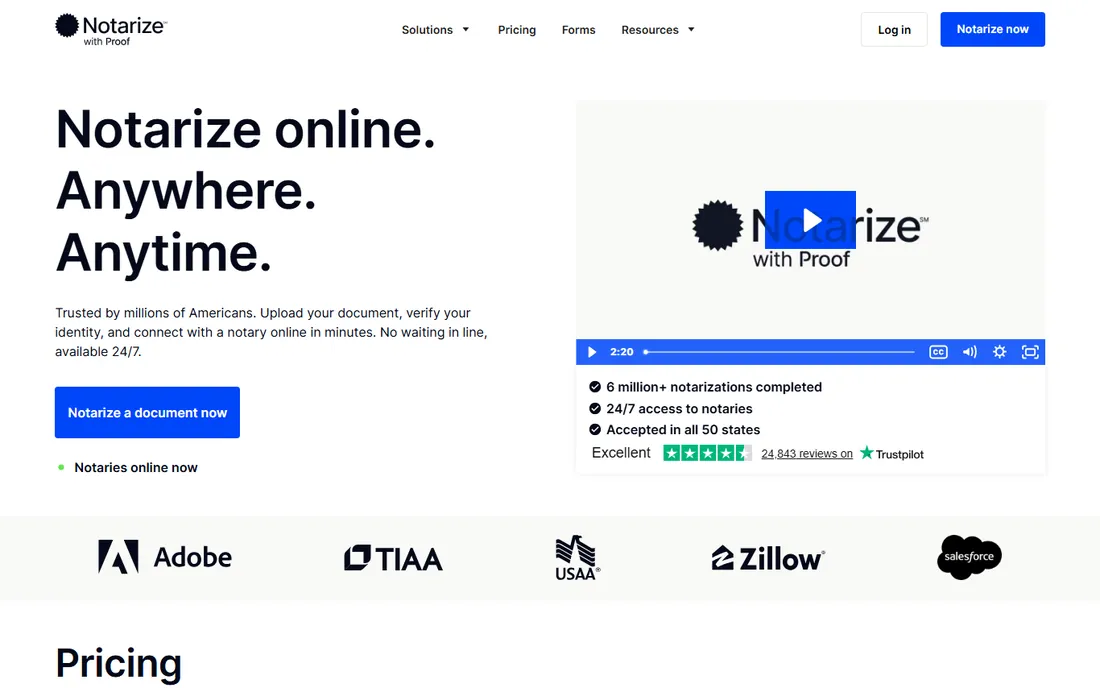
Proof is the company behind the Notarize brand, and it remains the reference point for remote online notarization in the US. A signer uploads a document, verifies identity with a government ID and knowledge-based questions, connects to a commissioned notary over live video, and the session is sealed and recorded. It runs 24/7 with no appointment, which is why partner services like FedEx's online notary run on the Proof network.
Pricing is itemized and public: $25 for the first notarial seal with the Notarize network, $15 for each additional seal, $15 per on-demand witness and $10 per additional signer. That transparency is a genuine strength, but it also means a multi-signer document with witnesses costs well more than $25. Organizations that send documents through a business account get negotiated pricing, so the public rates mainly tell the story for one-off consumer use.
What we like- 24/7 on-demand notary network
- Transparent per-item pricing (first seal $25, extra seals $15)
- Powers partner services like FedEx online notary
Watch out for- Consumer pricing stacks up with witnesses and extra signers
- Business platform pricing is quote-based

#2
DocuSign Notary
Best for: Teams already running on DocuSign eSignature
Visit docusign.com
Starting price$25
Free planNo
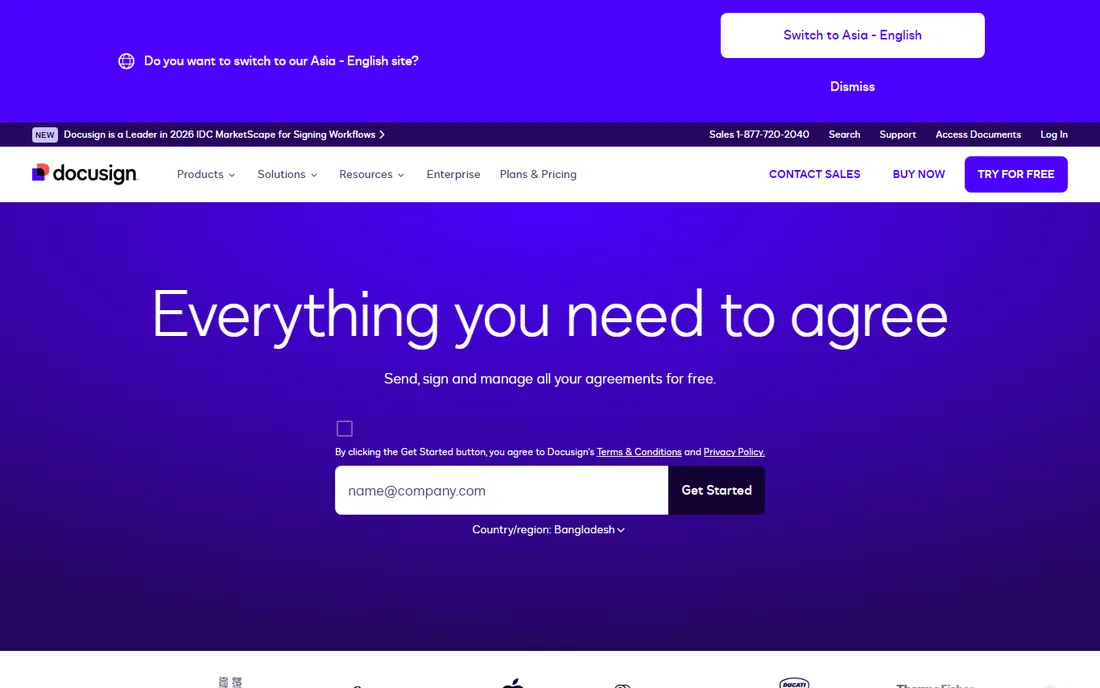
DocuSign Notary makes the most sense if your documents already live in DocuSign. It adds remote online notarization to eSignature with the same sending and signing experience, tamper-evident certificates of completion, audio-visual session recordings and notary-specific tags and journal entries. Organizations can bring their own commissioned notaries or tap an on-demand pool, and the MISMO certification matters for lenders folding RON into mortgage closings.
For individuals, DocuSign routes on-demand notarization through its partner OneNotary, with sessions starting at $25. That keeps the consumer path simple, but DocuSign Notary is fundamentally a business add-on: you need the DocuSign platform for the full experience. If your team signs in DocuSign already, adding notary capability is the path of least resistance; if it does not, one of the standalone platforms below is simpler.
What we like- Built on the familiar DocuSign eSignature experience
- Supports your own notaries or an on-demand pool
- MISMO certified for mortgage workflows
Watch out for- It is an add-on to a DocuSign environment, not a standalone consumer service
- Enterprise pricing requires a DocuSign relationship

#3
NotaryCam
Best for: Real estate closings that need an organized, scheduled session
Visit notarycam.com
Starting priceSee website
Free planNo
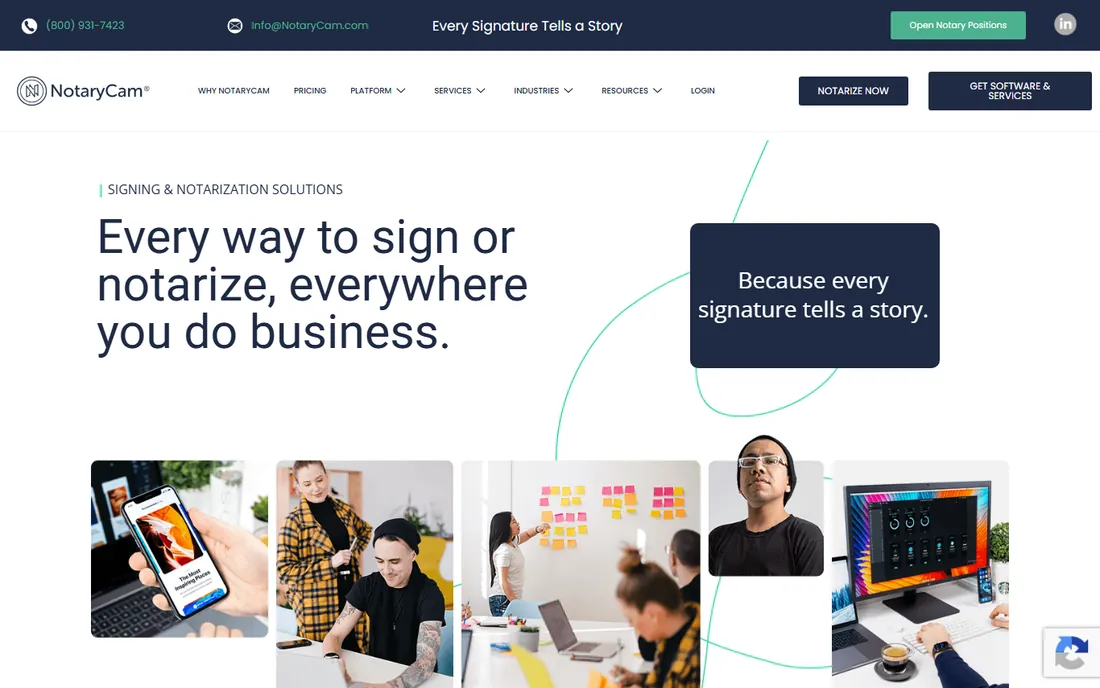
NotaryCam has spent years specializing in the unglamorous logistics of real estate closings. Its eClose workflow gives escrow officers and attorneys a structured way to submit property details, signers, documents and appointment preferences, and it handles mortgage purchases, refinances and home equity transactions. Real estate closings using its notary network start from $199, a closing-service price rather than a per-seal consumer rate, with separate charges for rush requests and extras.
The platform side is built for volume: bulk upload, document pre-screening and API access for teams that want notarization inside their own workflows. It also supports multiple identity verification methods, useful for international signers. The trade-off is realism about scheduling: this is an arranged closing, not an instant one, and same-day requests have a 1 p.m. Eastern cutoff. Title and lending teams that want a managed process will appreciate that; individuals in a hurry should look elsewhere.
What we like- Deep real estate closing expertise (mortgage, refinance, home equity)
- API access and bulk upload for enterprise
- Flexible identity verification options
Watch out for- Scheduled closings need lead time (same-day requests by 1 p.m. Eastern)
- Consumer one-off pricing is less prominent than enterprise offerings
Starting price$23 per session
Free planNo
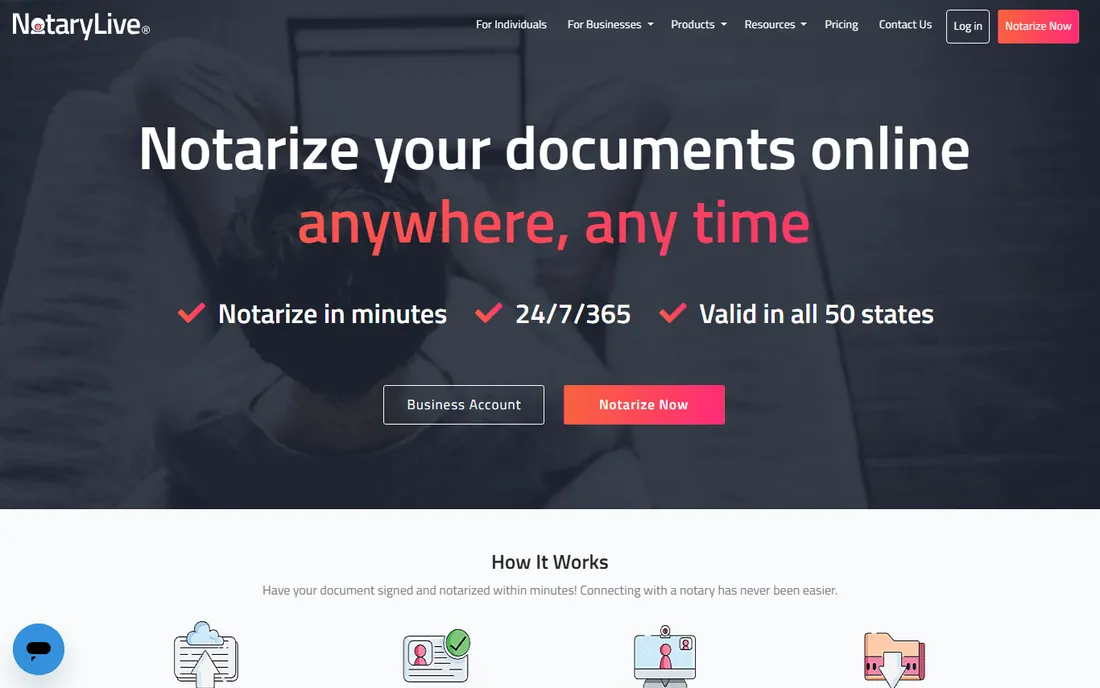
NotaryLive positions itself between consumer one-offs and enterprise platforms. Its Business plan costs $23 per session billed monthly for one to five users, and includes reusable templates, AI-powered document tagging, a centralized dashboard and the ability to facilitate sessions and eSign for others. The first 25 pages are included per session, with small add-on fees for extra signers and pages.
The top tier adds unlimited users, API and white-label access, the ability to bring your own notary, and in-person electronic notarization for hybrid operations. For a law office, dealership or HR team that notarizes a steady stream of documents, $23 a session with team tooling is competitive. Occasional individual users may find the session-based model less appealing than pure pay-per-seal alternatives.
What we like- Clear per-session business pricing
- Reusable templates and AI-powered document tagging
- White-label and API options at the enterprise tier
Watch out for- Basic tier pricing is not prominently published
- Fewer enterprise integrations than the largest rivals

#5
BlueNotary
Best for: Transaction-based closings without a software commitment
Visit bluenotary.us
Starting priceSee website
Free planNo
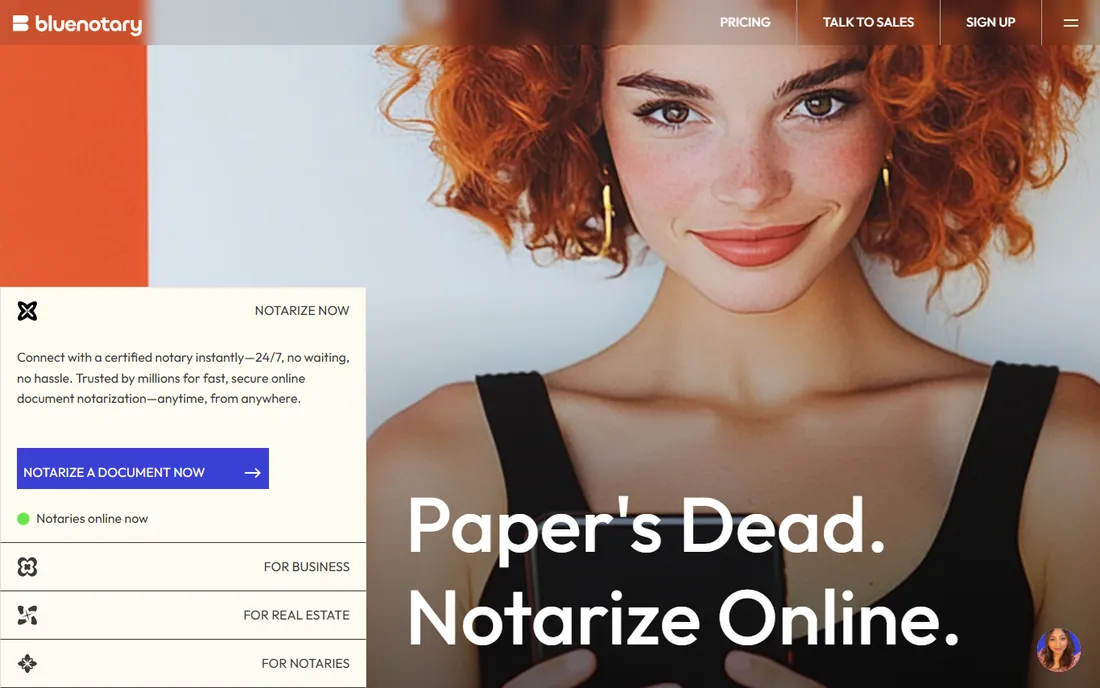
BlueNotary's pitch is that an occasional closing should not require an enterprise software rollout. Its public schedule lists a $99 package fee for a one-time loan closing, and its lender offering includes eNote execution and MERS registration capabilities. General online notarization runs alongside the closing services, with both pay-per-use and subscription pricing available.
The caution is the one reviewers keep repeating: platform fees, what the notary bills and what the customer pays can be different numbers, so compare the complete charge for the actual package rather than the cheapest headline figure. Confirm the plan, the notary arrangement and any extras before quoting a client. For settlement teams exploring transaction-based RON, it is worth a serious look with that caveat in mind.
What we like- Pay-per-use and subscription options
- Lender-grade features like eNote execution and MERS registration
- Fast live chat support
Watch out for- Pricing has several layers (platform fees, notary fees, plan rates) that need careful reading
- Smaller brand than Proof or DocuSign
Starting priceSee website
Free planNo

OneNotary serves two audiences at once: individuals who need a $25 notarization and businesses that need bulk notarization with an API. It is also the partner behind DocuSign's on-demand notary flow, which says something about its infrastructure. The real estate focus is explicit, with mobile notarization options alongside the online service, and subscriptions exist for businesses with steady volume.
As a standalone brand it is quieter than Proof or DocuSign, which can make buyers hesitate even though the underlying service is solid. Pricing for the consumer path is straightforward; business and API pricing runs through sales. If you want Proof-style availability with an API-first mindset, OneNotary belongs on the shortlist.
What we like- Sessions from $25 with business subscriptions
- API for embedding notarization
- Real estate focus with mobile notarization options
Watch out for- Less brand recognition than Proof
- Enterprise features need a sales conversation

#7
Notaron
Best for: A fast one-off notarization with no account required
Visit notaron.com
Starting price$25 per session
Free planNo
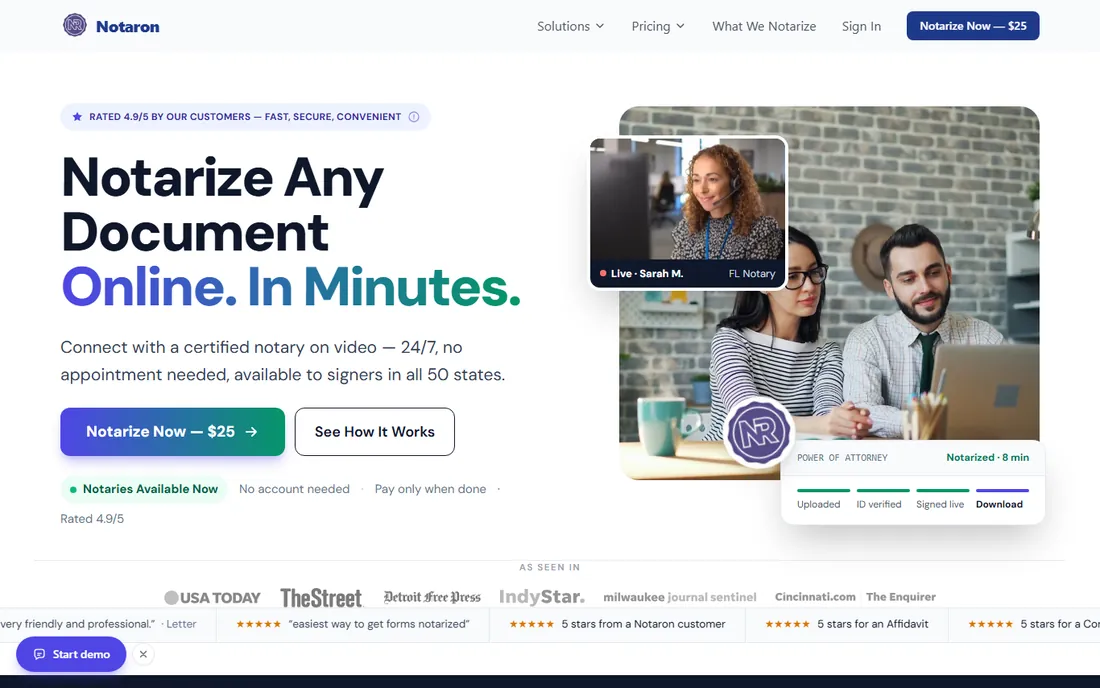
Notaron takes the friction out of the consumer experience. You upload a PDF, verify your identity, connect to a notary, and the session takes about ten minutes, all without creating an account or booking ahead. The base price is $25 per notarization session, with $5 per additional notarial act on the same document set, $10 per additional signer and $15 per witness.
Identity verification follows the standard RON recipe: a captured government ID checked against databases plus knowledge-based authentication questions, with the notary confirming on live video. For individuals with a single document and a deadline, the no-account flow is the fastest path on this list. Businesses looking for templates, APIs or volume pricing should look at the enterprise-leaning options above.
What we like- No account needed to start
- About ten minutes per session
- Clear add-on pricing (extra acts $5, extra signer $10, witness $15)
Watch out for- Newer and less proven at enterprise scale
- No subscription or API tier advertised

#8
SIGNiX
Best for: Regulated industries needing deep audit trails and standards-based signatures
Visit signix.com
Starting priceSee website
Free planNo
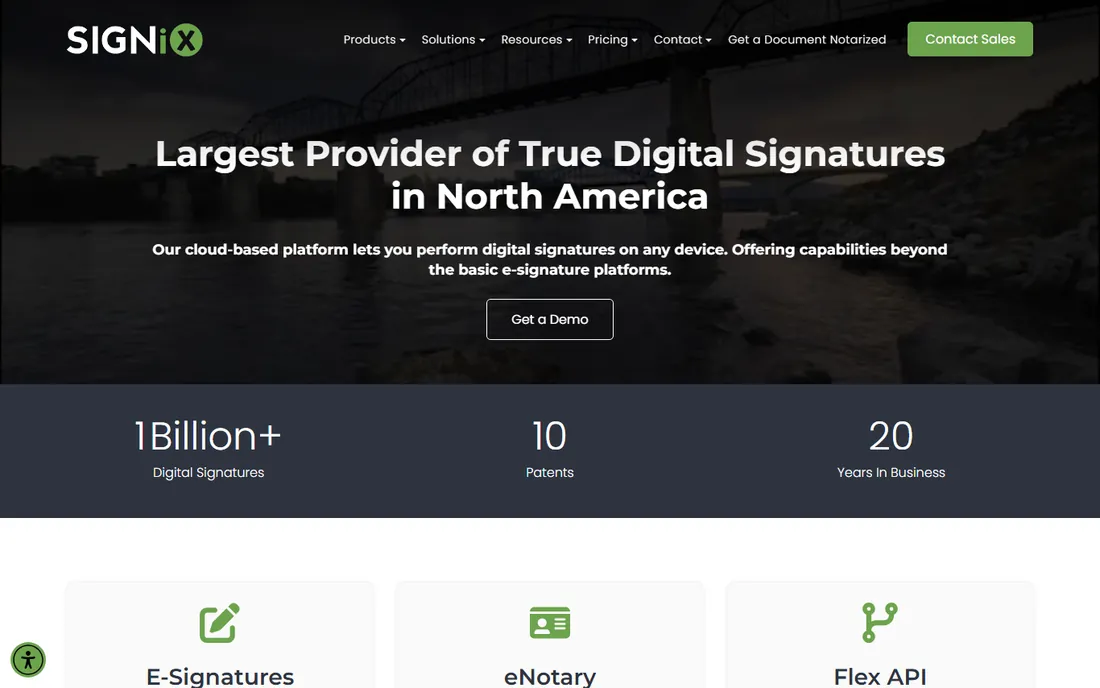
SIGNiX plays the long game on trust. Its patented digital signature technology embeds the legal evidence inside the document itself, so clients can store documents on their own servers and verify them independently years later without relying on the vendor. That design resonates in regulated industries: legal, real estate and title, wealth management, banking, healthcare and life sciences.
The company holds multiple patents, runs multi-factor authentication throughout, and keeps a comprehensive audit record of both the signature and the notarization process. Partnerships with bar associations and banking technology providers show where its customer base sits. This is not a self-serve consumer tool, and public pricing is thin, but for compliance-first organizations, SIGNiX's evidence model is the differentiator.
What we like- Patented digital signature technology with self-contained evidence
- Strong in legal, title, banking and healthcare
- API access
Watch out for- Enterprise sales motion, not self-serve
- Public pricing is limited

#9
Pactima
Best for: Notaries building their own remote online notary business
Visit pactima.com
Starting priceSee website
Free planNo
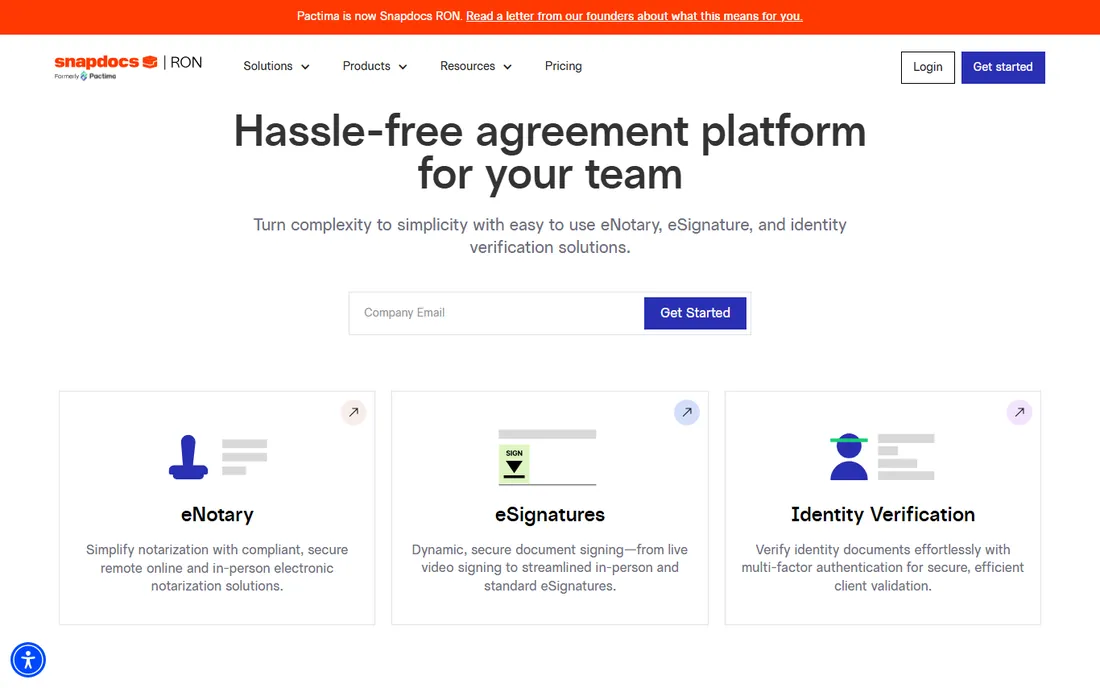
Pactima approaches RON from the notary's side of the camera. It is one of the platforms working notaries actually choose when building a remote online notary practice, with support for bringing their own clients rather than only taking network-assigned work. That notary-first orientation makes it a practical pick for signing agents and small notary businesses going online.
For enterprise buyers it is less relevant: the ecosystem, integrations and volume tooling of NotaryCam or SIGNiX are a better fit. But if you are a notary rather than a buyer of notarizations, Pactima deserves to be in your evaluation alongside the bigger names, because the platform economics for the working notary are the whole point.
What we like- Built with the working notary in mind
- Lets notaries bring their own clients
- Noted for ease of setup
Watch out for- Smaller ecosystem than the big platforms
- Less suited to enterprise buyers
Quick comparison
| Tool | Best for | Starting price | Free plan |
|---|
| Proof | Individuals and businesses that need on-demand notarization any time | $25 | No |
| DocuSign Notary | Teams already running on DocuSign eSignature | $25 | No |
| NotaryCam | Real estate closings that need an organized, scheduled session | See website | No |
 NotaryLive NotaryLive | Small teams that notarize documents regularly | $23 per session | No |
| BlueNotary | Transaction-based closings without a software commitment | See website | No |
 OneNotary OneNotary | Bulk notarization and businesses needing an API | See website | No |
| Notaron | A fast one-off notarization with no account required | $25 per session | No |
| SIGNiX | Regulated industries needing deep audit trails and standards-based signatures | See website | No |
| Pactima | Notaries building their own remote online notary business | See website | No |
Is your product missing or out of date?
We review this list regularly. Vendors can request a listing, send updated pricing or ask about featured placement.
How we chose
Remote online notarization is now authorized in the large majority of US states, and the market has split into consumer on-demand services, real estate closing specialists and enterprise platforms. We covered all three. We verified pricing against vendor help centers, pricing pages and product pages, and used "See website" wherever current vendor pricing could not be confirmed. We checked real user and notary feedback for reliability complaints, and we favored platforms that are actively maintained and clearly in business in 2026. Every platform here performs real remote online notarization with commissioned notaries, not just electronic signatures.
Start with legality, not features. RON is authorized in most but not all states, and rules differ on identity verification, recording retention and which documents qualify. Confirm your state accepts remote notarization for your specific document type, especially for wills, powers of attorney and real estate instruments, before you build a workflow around it.
Then match the pricing model to your volume. Occasional users should compare the true per-session cost including extra seals, signers and witnesses, not just the headline $25. Regular teams should look at session or subscription plans like NotaryLive's $23 per session. Real estate teams should get a complete quote for a closing package, since platform fees, notary fees and extras can be billed separately.
Finally, check identity verification and the audit trail. Every legitimate platform uses credential analysis plus knowledge-based authentication and records the audio-visual session. If a provider is vague about either, walk away. And keep the journal and recording retention policy in mind: you may need that evidence years after the session.
Frequently asked questions
Is remote online notarization legal in my state?
RON is authorized in the large majority of US states, but the details vary. Some states restrict which documents can be notarized remotely or impose specific identity verification and recording rules. Check your state's secretary of state guidance for your document type before proceeding.
How much does an online notarization cost?
For a simple one-off, expect around $25 for the first notarial seal. Extra seals, additional signers and witnesses add to the bill, so a complex document can cost considerably more. Teams with regular volume can get per-session or subscription pricing, and real estate closings are typically priced as packages starting around $99 to $199.
What do I need for a remote notarization session?
A device with a camera and microphone, a reliable internet connection and a valid government-issued photo ID. You will verify your identity through ID capture and knowledge-based authentication questions, then join a live video session with a commissioned notary.
Can I use my own notary with these platforms?
Some platforms support it. DocuSign Notary and NotaryLive both let organizations bring their own commissioned notaries onto the platform, while others like Proof and Notaron connect you with notaries from their own networks. Pactima is built specifically for notaries serving their own clients.
How is a remote notarization different from an electronic signature?
An electronic signature captures your agreement; a notarization adds a commissioned third party who verifies your identity, witnesses the signing and applies an official seal, with the session recorded. RON platforms provide the notary, the identity proofing and the tamper-evident record, which is what gives the document its legal weight.
Sources we checked (7)
- https://support.proof.com/hc/en-us/articles/22372310048919-How-Much-Does-Notarization-Cost-on-the-Proof-Platform
- https://www.docusign.com/products/notary
- https://notaron.com/blog/fedex-online-notary-vs-notaron
- http://Notarylive.com/pricing
- https://businessanywhere.io/best-online-notary-services/
- https://editorialge.com/e-notary-apps-for-remote-closings/
- https://www.prweb.com/releases/ohio-notary-services-chooses-signix-as-exclusive-remote-online-notarization-partner-827498852.html
Is your product missing or out of date?
We review this list regularly. Vendors can request a listing, send updated pricing or ask about featured placement.

Shihab Mia · Founder, Rankite
Shihab has spent more than a decade helping SaaS and e-commerce brands grow through search. He writes Rankite's software buying guides from pricing pages, documentation and public user reviews. More about Shihab.