How we make this list: we compare pricing pages, product documentation and public user reviews. Rankite is independent; if a vendor ever pays for a featured spot, that listing is clearly labeled Partner.
Key takeaways
- Real-time analytics means different things: live event streams (Mixpanel, Amplitude), session replay (FullStory, UXCam, PostHog) and instant alerting; match the tool to the decision speed you need.
- PostHog is the only open-source option here, combining analytics, replay, feature flags and experiments in one SDK, which simplifies the stack enormously.
- Mobile-first teams should weight UXCam and PostHog's mobile replay; web-first teams get more from FullStory or Heap.
- Free tiers are generous across this category (Mixpanel, Amplitude, PostHog, Heap all offer them), so pilot with real data before paying.
Quick comparison
| Tool | Best for | Starting price | Free plan |
|---|
 Mixpanel Mixpanel | Teams that need live funnels and behavioral answers fast | See website | Yes |
 Amplitude Amplitude | Real-time product analytics with experimentation built in | See website | Yes |
 PostHog PostHog | Teams that want the whole product stack in one SDK | See website | Yes |
 Heap Heap | Teams that cannot afford to miss tracking an event | See website | Yes |
 FullStory FullStory | Understanding why users behave the way they do | See website | Free trial |
 UXCam UXCam | Mobile apps needing gesture-level experience analytics | See website | Free trial |
 Pendo Pendo | Acting on real-time behavior inside the product | See website | Free trial |
 Google Analytics 4 Google Analytics 4 | Free real-time traffic and conversion overview | Free | Yes |
Is your product missing or out of date?
We review this list regularly. Vendors can request a listing, send updated pricing or ask about featured placement.
When a launch goes live, a campaign spikes or a funnel breaks, yesterday's report is useless. Real-time analytics tools show what users are doing right now: live event streams, session replays, funnel drop-offs as they happen and alerts when metrics move. Eight platforms that deliver the present tense of your data.
#1
Mixpanel
Best for: Teams that need live funnels and behavioral answers fast
Visit mixpanel.com
Starting priceSee website
Free planYes
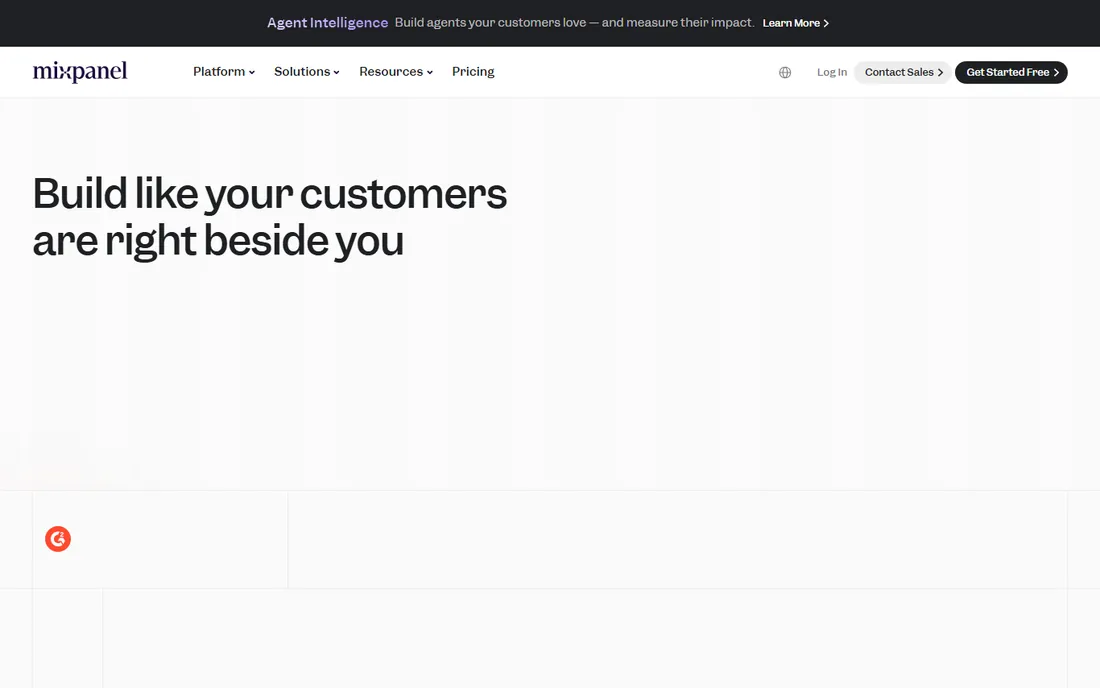
Mixpanel's real-time engine is its core identity: events stream in and appear in funnels, cohorts and retention reports within seconds, not hours. When a product team ships a change and wants to know if the funnel moved, Mixpanel answers before the standup ends. The analysis depth (segmentation, cohorts, formulas) works on live data, which is rarer than it sounds.
The honest boundary is scope. Mixpanel is behavior-first; marketing attribution and revenue reporting are things you build, not things it ships. And event-volume pricing means the bill tracks your traffic. For product teams where decision speed matters, it remains the benchmark.
What we like- Real-time event processing with instant funnel and cohort analysis
- No sampling on core reports
- Generous free tier for getting started
Watch out for- Ecommerce attribution and marketing reporting need custom setup
- Event-volume pricing climbs with scale
#2
Amplitude
Best for: Real-time product analytics with experimentation built in
Visit amplitude.com
Starting priceSee website
Free planYes
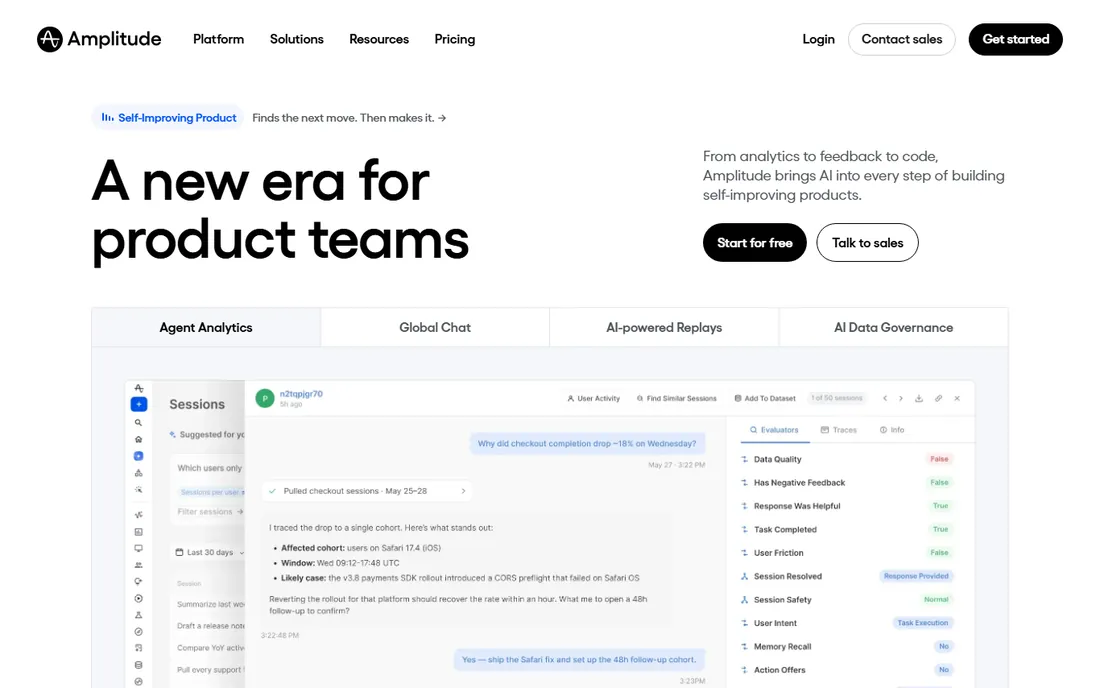
Amplitude treats real-time as the foundation for action: see the behavior live, form a hypothesis, run the experiment, measure the result, all in one platform. That closed loop is what separates it from dashboards that only describe. The event processing handles serious scale without the sampling compromises that plague web analytics tools.
The complexity is real. Amplitude assumes analytical staffing and event-driven thinking; small teams drown in it. But for growth organizations where the speed from insight to experiment determines outcomes, Amplitude's real-time-plus-testing combination is the most complete in this list.
What we like- Live journey mapping and behavioral cohorts
- Experimentation platform for testing hypotheses on real-time data
- Scales to massive event volumes
Watch out for- Complexity overwhelms teams without analysts
- Premium tiers for the full feature set
#3
PostHog
Best for: Teams that want the whole product stack in one SDK
Visit posthog.com
Starting priceSee website
Free planYes
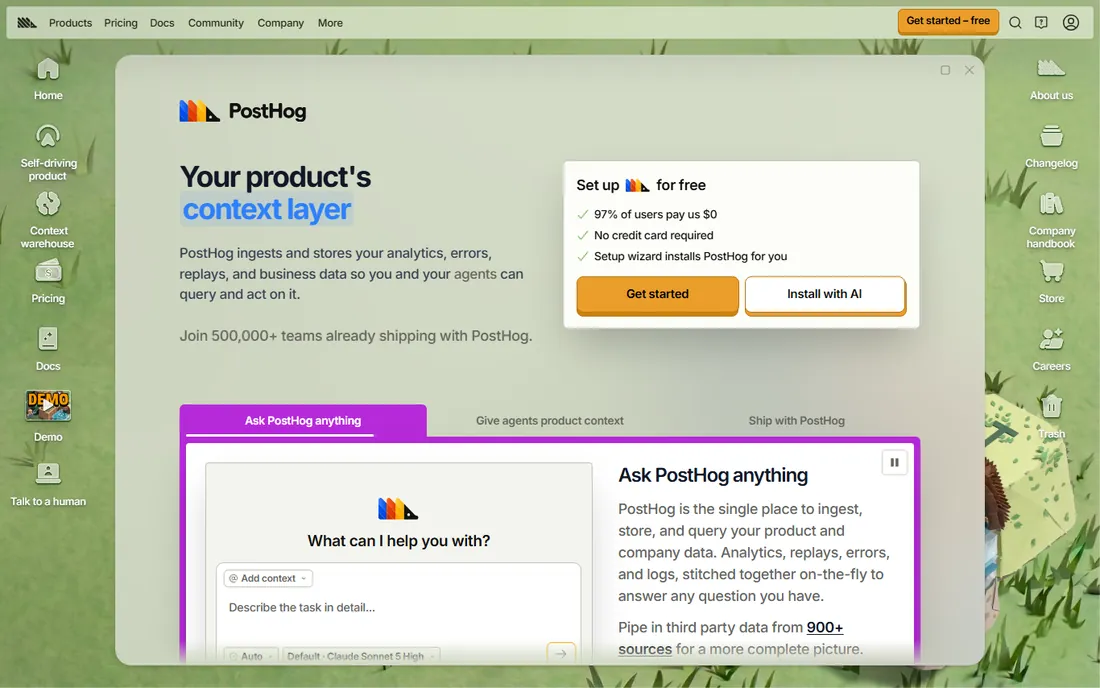
PostHog's pitch is consolidation: one SDK gives you product analytics, session replay, feature flags, experiments, surveys and error tracking, with data flowing between them. See a funnel drop-off, jump straight into the session replays behind it, flag the fix behind a feature flag, all without switching tools. The open-source core and self-hosting option appeal to teams that want data ownership.
The trade-off is specialization. PostHog's replay is not quite FullStory's, its analytics not quite Mixpanel's. But the integration dividend is enormous for lean teams: one implementation, one bill, one data model. For startups and scale-ups building a modern product stack, it is the efficient choice.
What we like- Open-source with self-hosting option
- Combines analytics, session replay, feature flags, A/B testing and error tracking
- Generous free tier
Watch out for- Breadth means less depth in each area than specialists
- Self-hosting is operational work
#4
Heap
Best for: Teams that cannot afford to miss tracking an event
Visit heap.io
Starting priceSee website
Free planYes
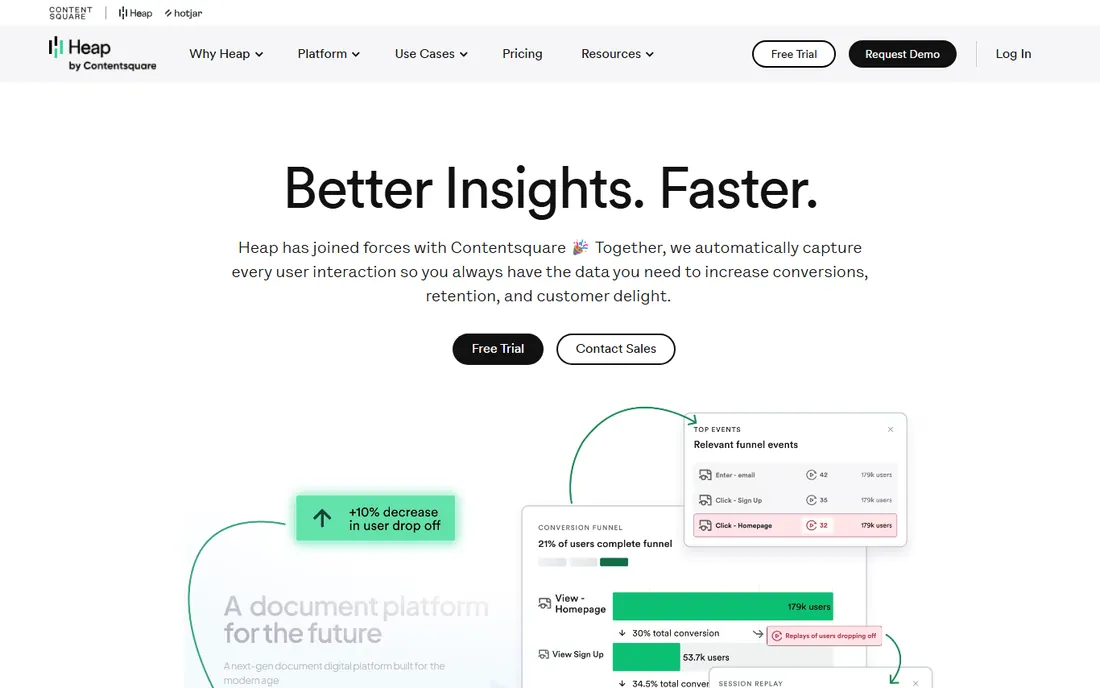
Heap solves the real-time tracking problem upstream: because it autocaptures every interaction, there is no "we forgot to tag that button" when an urgent question arrives. Define the event retroactively and analyze history you already have. For teams without analytics engineering, that changes the speed of insight from days to minutes.
The honest caveat is hygiene. Autocapture collects everything, so thoughtful definitions separate signal from noise. Pricing on sessions also needs real-volume modeling. But for the specific pain of missing data at critical moments, Heap's approach is the most forgiving in the category.
What we like- Autocapture records everything automatically with retroactive event definition
- Real-time data without tagging tickets
- Fast answers for non-technical users
Watch out for- Autocaptured volume needs governance
- Session-based pricing needs modeling at scale
Starting priceSee website
Free planFree trial
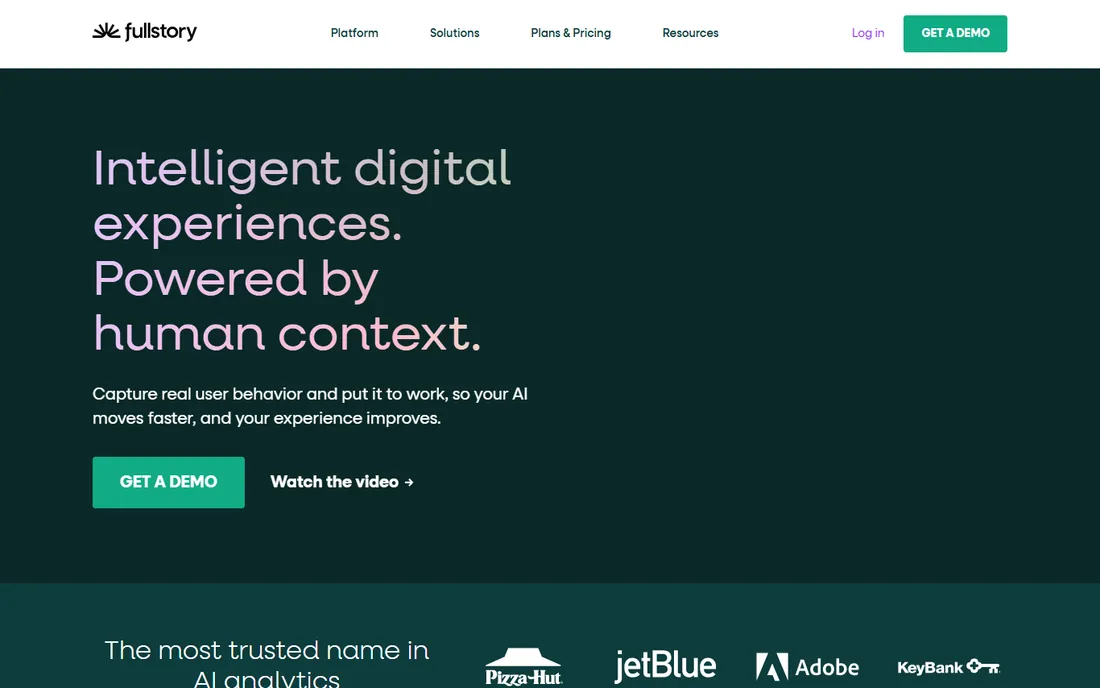
FullStory's real-time value is qualitative: watch what users actually do, the moment they do it. Its session replay with frustration signals (rage clicks, dead clicks, error clicks) shows UX problems that funnels only hint at. For CRO and UX teams, the combination of replay plus behavioral analytics turns "conversion dropped" into "here is the broken interaction, watch."
The pricing opacity is the friction: custom quotes and a sales process. And it is replay-first; teams wanting deep funnel and cohort analytics may pair it with Mixpanel or Amplitude. But for understanding the why behind the numbers in real time, FullStory leads.
What we like- Best-in-class session replay with rage-click and frustration detection
- Behavioral analytics layered on replay data
- Strong for CRO and UX teams
Watch out for- Custom pricing with no self-serve transparency
- Replay-heavy, lighter on traditional funnel analytics
#6
UXCam
Best for: Mobile apps needing gesture-level experience analytics
Visit uxcam.com
Starting priceSee website
Free planFree trial
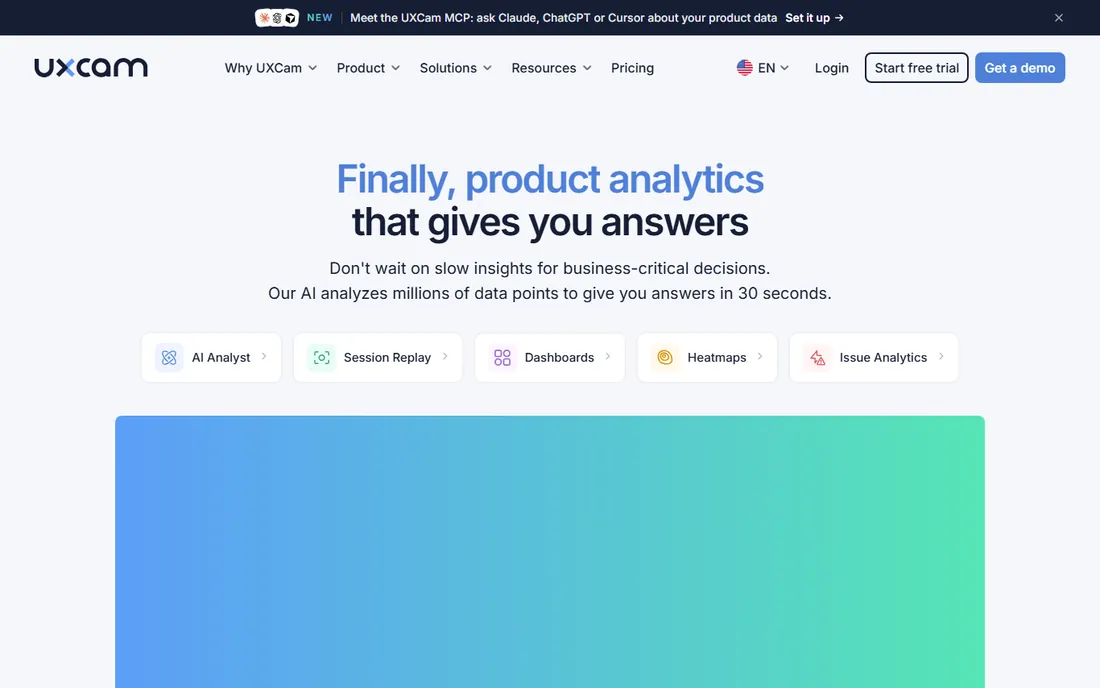
UXCam is the mobile specialist: where web-first tools treat mobile as another viewport, UXCam captures the gestures that define app experience (swipes, pinches, taps, rage taps) with dedicated heatmaps and replay. App teams debugging onboarding friction or checkout drops get the mobile-native detail generic tools miss.
The boundary is the platform: this is for mobile apps, not websites. Teams with both will need a companion tool for web. But for app-first companies, UXCam's gesture-level insight beats repurposed web analytics, and its focused design keeps the learning curve manageable.
What we like- Purpose-built mobile replay capturing swipes, pinches and rage taps
- Mobile heatmaps and gesture analytics
- Lightweight SDK for app teams
Watch out for- Mobile-only focus limits web use cases
- Smaller company than the platform giants
#7
Pendo
Best for: Acting on real-time behavior inside the product
Visit pendo.io
Starting priceSee website
Free planFree trial
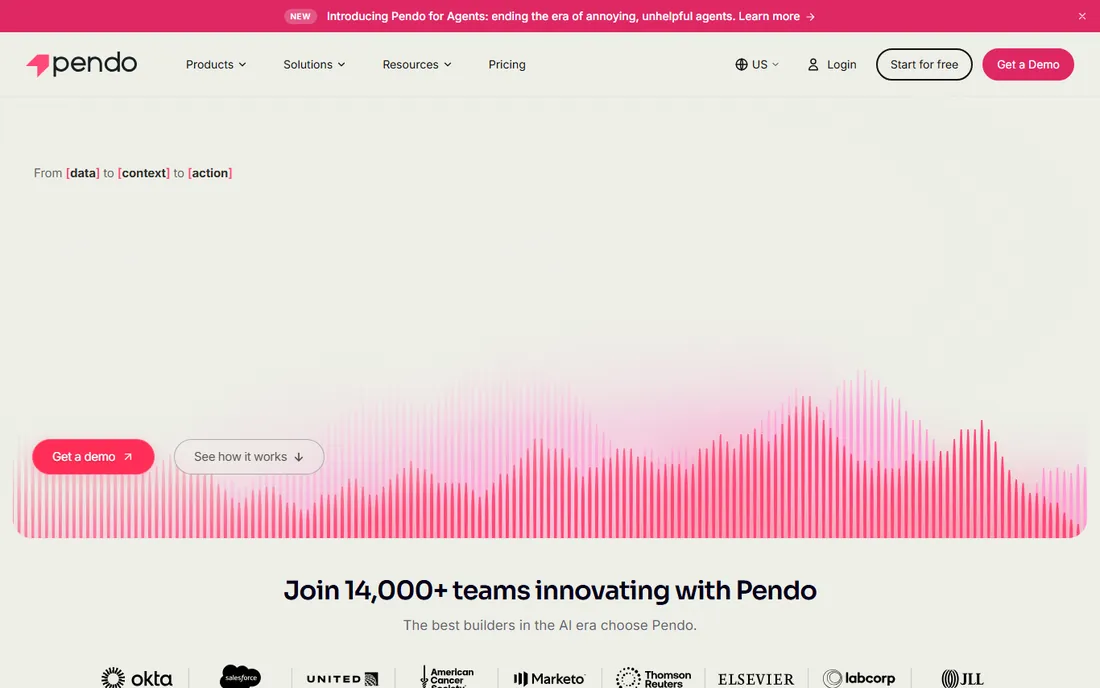
Pendo's real-time story is intervention: see the behavior as it happens, then guide the user with in-app messages, walkthroughs and checklists without leaving the platform. For B2B SaaS where onboarding completion determines retention, that measure-plus-act loop runs on live data. Its scale powers AI features that surface patterns humans miss.
It is priced for the SaaS segment it serves, and pure analytics depth in some dimensions trails the specialists. But when the goal is changing user behavior in the moment rather than reporting on it later, Pendo's integrated approach is purpose-built.
What we like- Real-time product analytics plus in-app guides and messaging
- AI-assisted insights from massive event dataset
- Strong for B2B SaaS onboarding
Watch out for- Premium pricing for larger SaaS companies
- Analytics depth trails pure-plays in spots
Starting priceFree
Free planYes
GA4's real-time reports answer the basic live questions free: how many users are active now, where they came from, what events are firing, which pages convert. For launches, campaigns and incident response ("is the site working?"), that live view is genuinely useful and costs nothing.
The depth ends quickly. GA4's real-time view is a monitor, not an analysis environment; funnel forensics, replay and behavioral cohorts need the tools above. Run GA4's real-time as the always-on pulse, and add a specialist when the questions get harder than "what is happening right now."
What we like- Real-time reports show active users, events and conversions live
- Completely free
- The baseline every property should run
Watch out for- Real-time depth is shallow next to product tools
- Sampling and interface limits on deeper analysis
How we chose
We compared tools on genuine real-time capability (not just "updated daily" marketing): live event processing, session replay, real-time alerting and the speed from question to answer. We covered web, mobile and product use cases, favoring tools with generous free tiers and current development. Pricing comes from each vendor's own pricing page; unverifiable plans are marked "See website." No hands-on testing was performed.
What to look for before you buy
Define what "real-time" means for your decisions. Launch monitoring needs live traffic views; funnel debugging needs replay; metric movements need alerting. Buying replay when you need alerting (or vice versa) wastes the budget.
Check data latency claims against the trial. "Real-time" ranges from seconds to tens of minutes across vendors; test with your own events during the pilot and time the delay yourself.
Confirm the mobile story if you have an app. Web-first replay tools handle mobile poorly; gesture-level mobile analytics needs a mobile-native tool. Do not assume one tool covers both well.
Finally, plan the alerting workflow. Real-time data nobody watches is decoration. The value comes from alerts routed to the people who can act: on-call engineers, growth teams, support leads. Confirm alert flexibility before you commit.
Designing a real-time analytics practice
Real-time tools are only valuable if the organization can act in real time. A dashboard that updates every second but gets reviewed every Monday is an expensive batch report. Building the practice around the tooling is what separates genuine real-time operations from real-time theater.
Define what "real-time" means for each decision. Fraud detection needs seconds; pricing adjustments need minutes; content performance needs hours; strategic planning needs weeks. Not every metric deserves streaming infrastructure. Map your decisions to their required freshness first, then buy tooling to match. Over-instrumenting everything in real time creates noise and cost without better decisions.
Staff the response, not just the dashboard. Real-time alerts at 2am need someone authorized to act at 2am, with a runbook for what to do. Unowned alerts get muted; muted alerts get ignored; ignored alerts make the whole system decorative. Every real-time alert should name an owner, a response SLA and an escalation path. If you cannot staff it, do not alert on it.
Separate signal from noise with thresholds and baselines. Raw event streams are overwhelming; the value is in anomaly detection against learned baselines. Spend the tuning time: alert on genuine deviations (conversion drops 30 percent below baseline) rather than raw volumes. The first month of any real-time deployment should be calibration, with alert thresholds adjusted weekly.
Mind the cost of freshness. Streaming infrastructure, high-cardinality storage and always-on compute cost more than batch equivalents, sometimes much more. Justify the premium per use case: fraud prevention and incident response usually clear the bar easily; executive dashboards rarely do. A hybrid practice (real-time for operations, batch for analysis) is usually the right economics.
Finally, keep a batch backbone. Real-time pipelines fail, backfill and replay; the batch layer is the system of record that corrects the stream. Designs that treat streaming as the only pipeline discover this painfully during the first major outage. Lambda-style thinking (stream for speed, batch for truth) remains the resilient pattern.
Frequently asked questions
What counts as real-time analytics?
Data available within seconds to minutes of the user action, usable for live decisions: active-user counts, streaming events, session replay and instant alerts. Anything batched hourly or daily is near-real-time at best.
Do I need real-time analytics or is daily enough?
Daily suffices for strategic reporting. Real-time earns its keep for launches, incident response, live campaigns and funnel debugging, where hours of delay cost money or users.
Which tool has the best session replay?
FullStory leads for web replay depth; UXCam leads for mobile gesture replay; PostHog offers solid replay inside a broader platform. Choose by platform (web vs mobile) and whether you need replay standalone or integrated.
Can free tools do real-time analytics?
Yes, usefully. GA4's real-time reports are free, and Mixpanel, Amplitude, PostHog and Heap all offer generous free tiers with real-time processing. Paid tiers add volume, history and advanced features.
How is real-time analytics different from business intelligence?
BI tools analyze historical data for strategic decisions; real-time analytics tools process live data for operational decisions. Many companies need both: BI for the quarter, real-time for the day.
Will real-time tracking slow down my site or app?
Well-built SDKs have minimal impact, but it is worth verifying. Check each vendor's performance documentation and test with your own pages during the trial, especially on mobile.
Sources we checked (9)
- https://www.mixpanel.com
- https://www.amplitude.com
- https://www.posthog.com
- https://www.heap.io
- https://www.fullstory.com
- https://www.uxcam.com
- https://www.pendo.io
- https://analytics.google.com
- https://posthog.com/blog/best-mobile-app-analytics-tools
Is your product missing or out of date?
We review this list regularly. Vendors can request a listing, send updated pricing or ask about featured placement.

Shihab Mia · Founder, Rankite
Shihab has spent more than a decade helping SaaS and e-commerce brands grow through search. He writes Rankite's software buying guides from pricing pages, documentation and public user reviews. More about Shihab.