How we make this list: we compare pricing pages, product documentation and public user reviews. Rankite is independent; if a vendor ever pays for a featured spot, that listing is clearly labeled Partner.
Key takeaways
- Google Analytics 4 is the free baseline every digital property should run; the buying decision is what you add on top of it.
- Product-led companies should compare Mixpanel, Amplitude, Heap and Pendo on event modeling and experimentation, not on pageview reports.
- Privacy-regulated businesses in the EU should shortlist Piwik PRO and Matomo first; both are built for GDPR-grade data ownership.
- Adobe Analytics wins at enterprise customer-journey scale but needs dedicated analysts; smaller teams get more from simpler tools.
Quick comparison
| Tool | Best for | Starting price | Free plan |
|---|
 Google Analytics 4 Google Analytics 4 | Every digital property as the free baseline | Free | Yes |
 Adobe Analytics Adobe Analytics | Enterprises doing customer-journey analytics at scale | See website | No |
 Mixpanel Mixpanel | Product teams obsessed with funnels and retention | See website | Yes |
 Amplitude Amplitude | Product analytics with built-in experimentation | See website | Yes |
 Piwik PRO Piwik PRO | Regulated industries needing privacy-compliant analytics | See website | Yes |
 Matomo Matomo | Organizations that want to own their analytics data | See website | Yes |
 Heap Heap | Teams that want analytics without manual event tagging | See website | Yes |
 Pendo Pendo | Product teams combining analytics with in-app guidance | See website | Free trial |
Is your product missing or out of date?
We review this list regularly. Vendors can request a listing, send updated pricing or ask about featured placement.
The best digital analytics software
Digital analytics answers what users do on your website and in your product: where they come from, what they touch, where they leave, and which behaviors predict revenue. The category splits into web analytics (traffic and conversions), product analytics (events and retention) and privacy-first alternatives. Eight platforms covering all three.
Starting priceFree
Free planYes
GA4 is the starting point for digital analytics because the price is zero and the coverage is broad: traffic sources, event tracking, conversion funnels, audience building and predictive metrics like churn probability. Its event-based model suits modern measurement better than the old session model, and the ML layer surfaces anomalies without manual digging.
The honest complaints are sampling (explorations on high-traffic properties can skew) and complexity (building custom reports takes real effort). Analytics 360 removes sampling at enterprise prices. Run GA4 always; the question is never whether to use it, but what to add alongside it.
What we like- Free with deep event-based tracking and ML-powered insights
- Cross-device journey stitching
- The default integration target for every marketing tool
Watch out for- Sampling on high-traffic properties
- The redesigned interface still frustrates longtime users
Starting priceSee website
Free planNo
Adobe Analytics is the heavyweight for organizations where analytics is a team sport. Its segmentation, calculated metrics and journey analysis go deeper than any free tool, and it processes enterprise data volumes without the sampling compromises. Companies running Adobe's marketing stack get the integration dividend across the Experience Cloud.
The cost is expertise as much as money. Adobe Analytics assumes trained analysts; without them, teams pay enterprise prices for reports they could have built in GA4. Buy it when your measurement questions genuinely exceed simpler tools, and staff accordingly.
What we like- Best-in-class segmentation and customer-journey analysis
- Handles massive data volumes
- Deep integration with the Adobe Experience Cloud
Watch out for- Requires dedicated analysts to operate well
- Enterprise pricing and implementation
Starting priceSee website
Free planYes
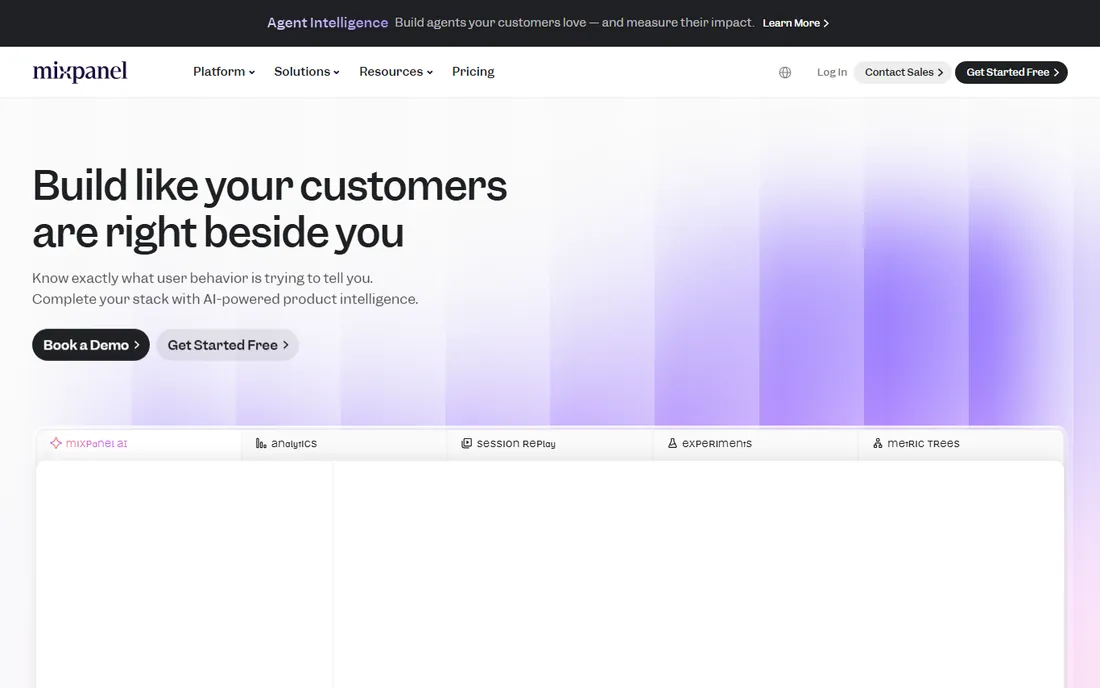
Mixpanel is the product analytics standard for teams that think in user behavior: which onboarding steps predict retention, where the funnel breaks, which cohorts stick. Its event model and real-time processing answer those questions directly, and the free tier is genuinely useful for evaluation and early-stage products.
It is not a marketing analytics tool out of the box. Traffic attribution and campaign reporting need configuration or a companion tool. Event-volume pricing also means modeling costs at scale. For product-led companies, though, Mixpanel's behavioral depth is the benchmark.
What we like- Event-based analytics built for funnels, cohorts and retention
- Real-time data without sampling
- Generous free tier
Watch out for- Web-marketing attribution needs custom work
- Event-volume pricing climbs with scale
Starting priceSee website
Free planYes
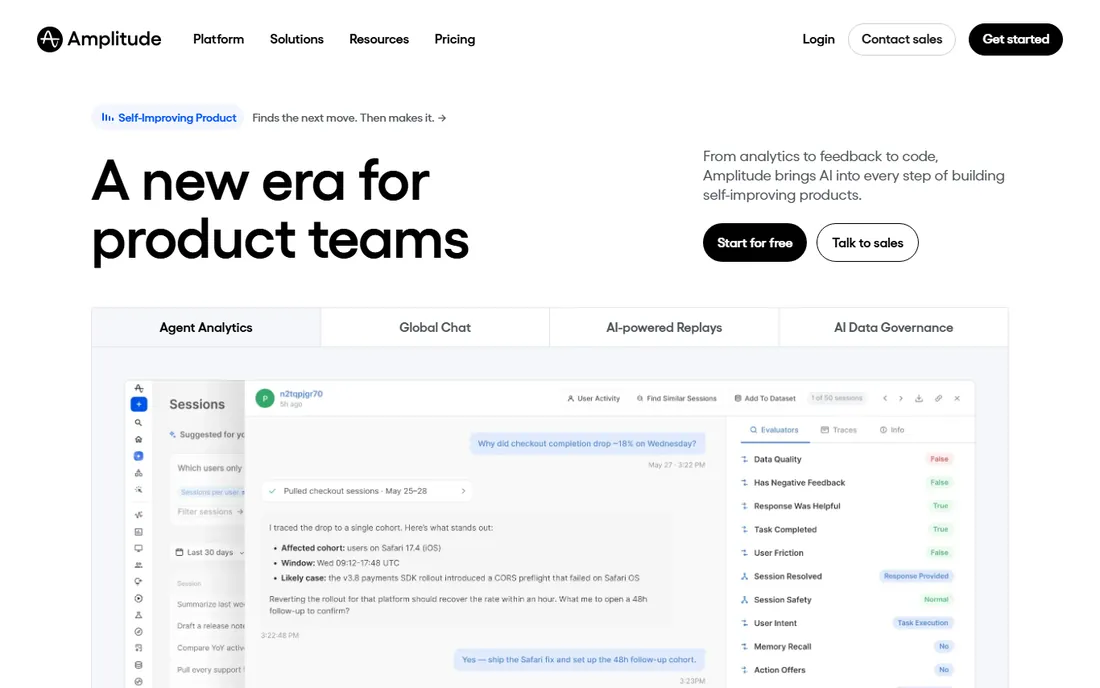
Amplitude pairs deep product analytics with experimentation: form a hypothesis about user behavior, test it, and measure the result without leaving the platform. For larger product organizations with dedicated growth teams, that closed loop (analyze, experiment, measure) is the core workflow, and Amplitude handles it at serious scale.
Smaller teams should be honest about the complexity. Amplitude assumes event-driven thinking and analytical staffing; without both, simpler tools deliver more value per dollar. Choose it when behavioral insight is a competitive advantage, not a nice-to-have.
What we like- Journey mapping, behavioral cohorts and experimentation in one platform
- Scales to massive event volumes
- Generous free tier
Watch out for- Enterprise-grade complexity overwhelms small teams
- Needs analysts to extract full value
#5
Piwik PRO
Best for: Regulated industries needing privacy-compliant analytics
Visit piwik.pro
Starting priceSee website
Free planYes
Piwik PRO is the enterprise answer to privacy-regulated analytics. It offers web analytics comparable to GA4's core, plus built-in consent management and tag management, with data residency options that satisfy EU regulators and enterprise security reviews. Healthcare, finance and government organizations choose it when Google's data practices are a non-starter.
The ecosystem is smaller: fewer native integrations, fewer community resources. And the full enterprise tier is premium-priced. But for organizations where privacy compliance is a requirement rather than a preference, Piwik PRO is the most complete alternative to the US giants.
What we like- GDPR-grade privacy with EU data hosting options
- Web analytics plus consent management and tag management in one suite
- Enterprise features without Google's data sharing
Watch out for- Smaller ecosystem and integration library
- Premium pricing for the full enterprise tier
#6
Matomo
Best for: Organizations that want to own their analytics data
Visit matomo.org
Starting priceSee website
Free planYes
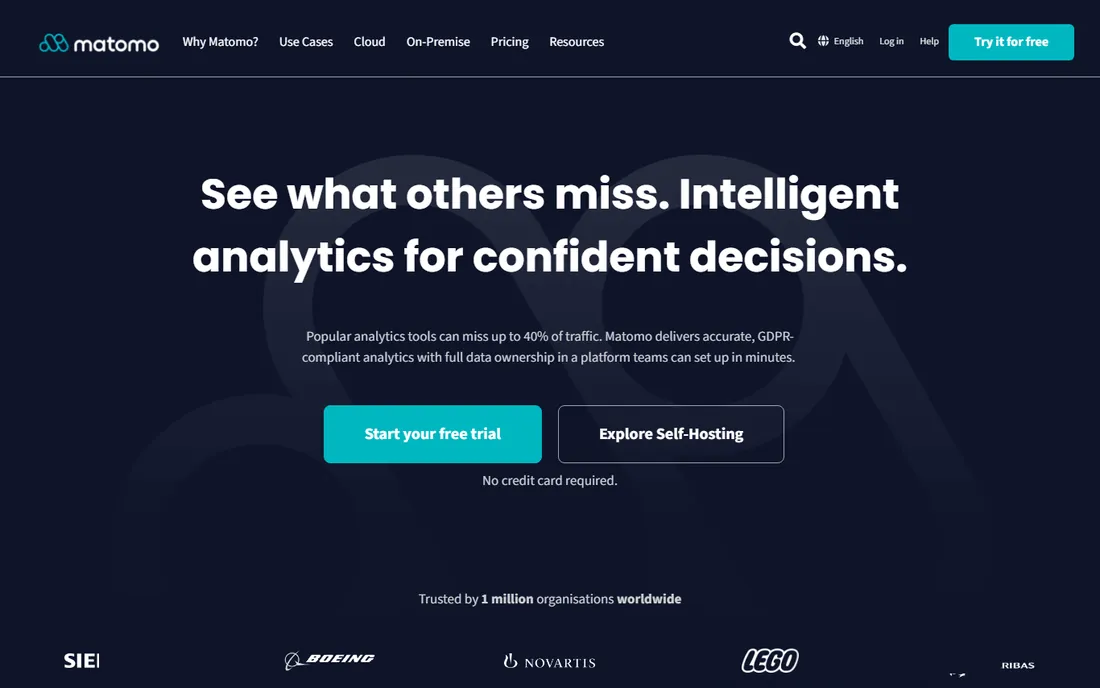
Matomo (formerly Piwik) is the open-source analytics platform for organizations that refuse to trade data for free software. Self-host it and your analytics data never leaves your servers: no sampling games, no ad-platform sharing, full GDPR control. The interface will feel familiar to anyone coming from classic Google Analytics.
The price is operational: you host, update and scale it. The cloud-hosted version removes that burden at a subscription cost. Feature-wise it covers the web analytics essentials well, though advanced product-analytics workflows trail Mixpanel and Amplitude. For privacy-first organizations with technical capacity, Matomo's data ownership is unmatched.
What we like- Open-source with self-hosting for complete data ownership
- No data sharing with ad platforms
- Familiar GA-style interface
Watch out for- Self-hosting means you manage infrastructure
- Plugin ecosystem smaller than commercial alternatives
#7
Heap
Best for: Teams that want analytics without manual event tagging
Visit heap.io
Starting priceSee website
Free planYes
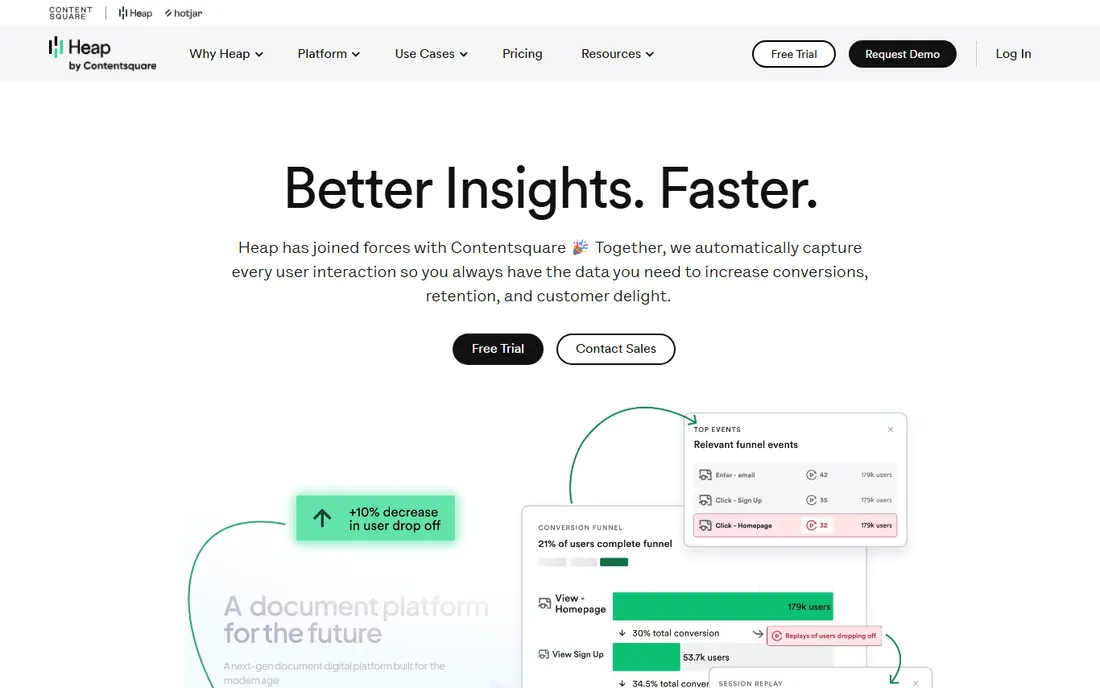
Heap's autocapture is its reason to exist: instead of manually tagging every button and event (and inevitably missing some), Heap records all user interactions automatically, and you define events retroactively when questions arise. That eliminates the classic analytics failure: realizing too late that nobody tagged the funnel step that matters.
The honest caveat is data hygiene. Autocapture collects everything, which means thoughtful event definitions and governance separate useful Heap implementations from noisy ones. Session-based pricing also needs modeling at scale. For teams without dedicated analytics engineering, though, Heap's "never lose data" promise is compelling.
What we like- Autocapture records every interaction automatically
- Retroactive analysis means no lost data from untracked events
- Fast answers without engineering tickets
Watch out for- Autocaptured data needs governance to stay meaningful
- Pricing scales with session volume
#8
Pendo
Best for: Product teams combining analytics with in-app guidance
Visit pendo.io
Starting priceSee website
Free planFree trial
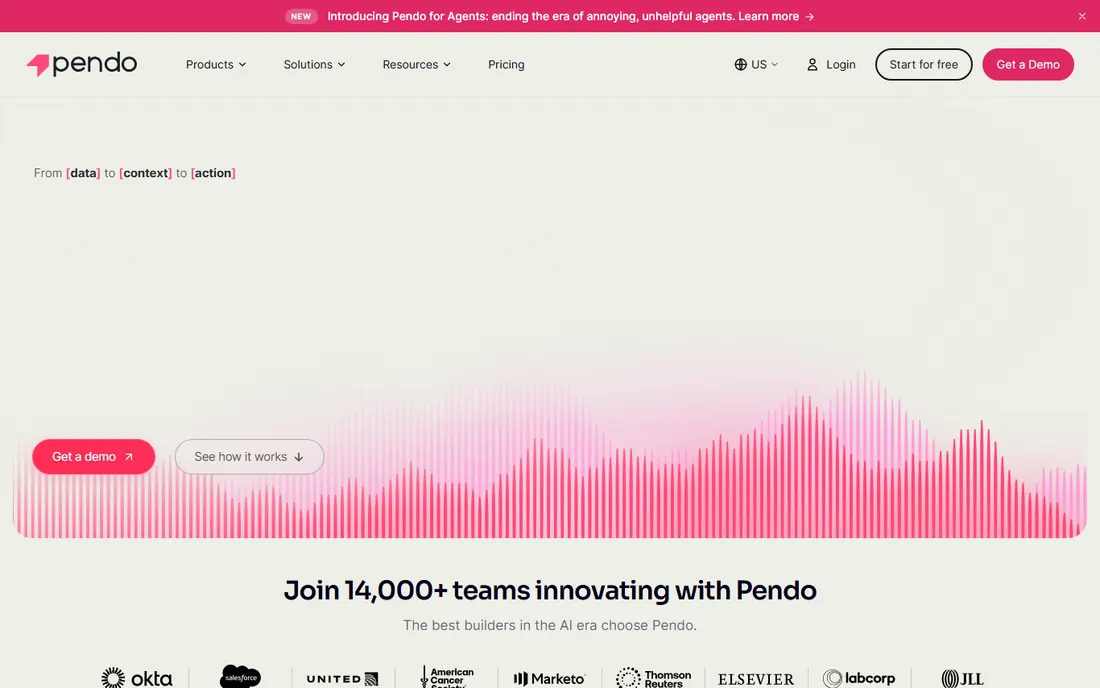
Pendo combines product analytics with digital adoption: understand what users do, then guide them with in-app messages, walkthroughs and onboarding, all from one platform. For B2B SaaS companies where user onboarding determines retention, that combination (measure plus intervene) is the product's core value. Its scale (trillions of events processed) powers AI-assisted insights.
It is priced for the SaaS companies it serves, and pure analytics depth in some dimensions trails Mixpanel or Amplitude. But when the job is improving product adoption rather than just measuring it, Pendo's integrated approach beats stitching analytics to a separate guidance tool.
What we like- Product analytics plus in-app guides, onboarding and feedback in one platform
- Massive event dataset powering AI features
- Strong for B2B SaaS adoption
Watch out for- Premium pricing aimed at larger SaaS companies
- Analytics depth trails pure-play tools in some areas
How we chose
We covered the three real branches of digital analytics (web, product, privacy-first), picking established platforms with current development and genuine adoption in each. We weighed data ownership, pricing model transparency, free-tier usefulness, analytical depth and the staffing each tool assumes. Pricing comes from each vendor's own pricing page; unverifiable plans are marked "See website." No hands-on testing was performed.
What to look for before you buy
Start with the question, not the tool. Marketing attribution questions need web analytics; retention and onboarding questions need product analytics; compliance questions need privacy-first platforms. The most expensive mistake is buying product analytics for a marketing problem.
Check data ownership and privacy against your obligations. EU operations, healthcare and finance all impose constraints that eliminate some tools outright. Confirm data residency, retention controls and deletion capabilities before the demo.
Model pricing at your real volume. Event-based, session-based and MTU-based pricing all scale with usage; the entry tier is never the long-term price. Ask for the cost at twice your current traffic.
Finally, staff honestly. Adobe Analytics without analysts is shelfware; Mixpanel without event thinking is confusion. The best tool is the one your team can actually operate.
Privacy-first analytics without losing insight
Regulations and browser changes have made traditional analytics harder, but the teams thriving under constraints share an approach: collect less, own more, and measure what matters. Privacy-first is not the absence of analytics; it is analytics with different defaults.
Cookieless does not mean blind. First-party data (your own site events, CRM records, purchase history) remains fully available and is higher quality than third-party cookie data ever was. The shift is from tracking everyone everywhere to understanding your own audience deeply. Companies that invested in first-party data collection early barely noticed the cookie changes; companies that rented their insight from ad platforms felt it acutely.
Consent management is now part of the analytics stack, not a legal afterthought. A proper consent banner, granular choices and respected opt-outs are required in the EU/UK and increasingly elsewhere. But consent design affects data quality: clear, honest banners get higher opt-in rates than dark patterns that regulators penalize. Treat the banner as UX, test its wording, and measure consent rates like any other funnel metric.
Server-side tagging recovers data browsers block. Moving tag execution from the visitor's browser to your server bypasses ad blockers and ITP restrictions for first-party data, improving accuracy substantially. It adds infrastructure complexity, but for businesses where measurement drives millions in spend, the accuracy gain justifies it. Evaluate whether your analytics platform supports server-side collection before committing.
Model the gaps instead of mourning them. No privacy-compliant setup captures 100 percent of users; the practice is measuring the observable portion well and modeling the rest (Google's modeled conversions, Meta's aggregated events). Document your assumptions and revisit them as consent rates change. Directional accuracy with known limitations beats false precision.
Finally, align analytics with the privacy story you tell customers. Brands that visibly respect data ("we don't sell your info, here's exactly what we track and why") turn compliance into trust. The analytics setup and the privacy page should tell the same story; when they contradict, customers notice.
Frequently asked questions
Is Google Analytics enough?
For traffic and conversion basics, yes. GA4 covers what most marketing teams need. Product teams needing behavioral depth, and regulated companies needing data control, should add or replace accordingly.
What is the difference between web analytics and product analytics?
Web analytics measures traffic, sources and conversions on websites. Product analytics measures user behavior inside products: events, funnels, retention and feature adoption. Many companies need both.
Which analytics tool is best for privacy?
Piwik PRO and Matomo lead for privacy: EU hosting options, consent management, and (for Matomo) self-hosted data ownership. Both are built for GDPR compliance in ways the US giants are not.
Do I need to replace Google Analytics?
Only if you have a specific reason: privacy obligations, sampling pain at scale, or product-analytics needs GA4 handles poorly. Most companies run GA4 plus a specialist, not instead of it.
How much does digital analytics software cost?
From free (GA4, Matomo self-hosted, generous free tiers) to mid-market subscriptions scaling with events or users, to enterprise contracts for Adobe and Pendo. Price the tool at your real volume, not the trial.
What is autocapture and should I want it?
Autocapture (Heap's approach) records all user interactions automatically so you can define events retroactively. It prevents lost data from untracked events but requires governance to keep the data meaningful.
Sources we checked (8)
- https://analytics.google.com
- https://business.adobe.com
- https://www.mixpanel.com
- https://www.amplitude.com
- https://www.piwik.pro
- https://www.matomo.org
- https://www.heap.io
- https://www.pendo.io
Is your product missing or out of date?
We review this list regularly. Vendors can request a listing, send updated pricing or ask about featured placement.

Shihab Mia · Founder, Rankite
Shihab has spent more than a decade helping SaaS and e-commerce brands grow through search. He writes Rankite's software buying guides from pricing pages, documentation and public user reviews. More about Shihab.