How we make this list: we compare pricing pages, product documentation and public user reviews. Rankite is independent; if a vendor ever pays for a featured spot, that listing is clearly labeled Partner.
Key takeaways
- Mixpanel and Amplitude both offer generous free tiers (1M and 2M events per month), making them the cheapest way to start with product analytics.
- PostHog and Snowplow give you full data ownership, which matters if privacy or warehouse control is a priority.
- Tinybird, ClickHouse and Materialize are infrastructure plays: they shine when you need sub-second queries over streaming data, not dashboards for marketers.
- Pendo is the pick when analytics must sit next to in-app guides and user feedback rather than stand alone.
Quick comparison
| Tool | Best for | Starting price | Free plan |
|---|
 Mixpanel Mixpanel | self-serve product analytics for growth teams | Free (1M events/month); Growth usage-based from $0 | Yes |
 Amplitude Amplitude | deep behavioral analysis for maturing products | Free (Starter, 2M events/month); Plus from $49/month | Yes |
 Tinybird Tinybird | developers building real-time data APIs | Usage-based | Yes (free tier) |
 PostHog PostHog | teams that want analytics plus session replay in one open-source suite | Free tier; usage-based beyond that | Yes |
 Pendo Pendo | product teams that pair analytics with in-app messaging | Free plan; paid plans custom | Yes |
 Snowplow Snowplow | companies that want every event in their own warehouse | Free (open source); Snowplow Cloud custom | Yes (open source) |
 ClickHouse ClickHouse | analytical queries over massive datasets at speed | Free (open source); ClickHouse Cloud usage-based | Yes (open source) |
 Materialize Materialize | live dashboards powered by streaming SQL | Usage-based | Free trial |
Is your product missing or out of date?
We review this list regularly. Vendors can request a listing, send updated pricing or ask about featured placement.
Starting priceFree (1M events/month); Growth usage-based from $0
Free planYes
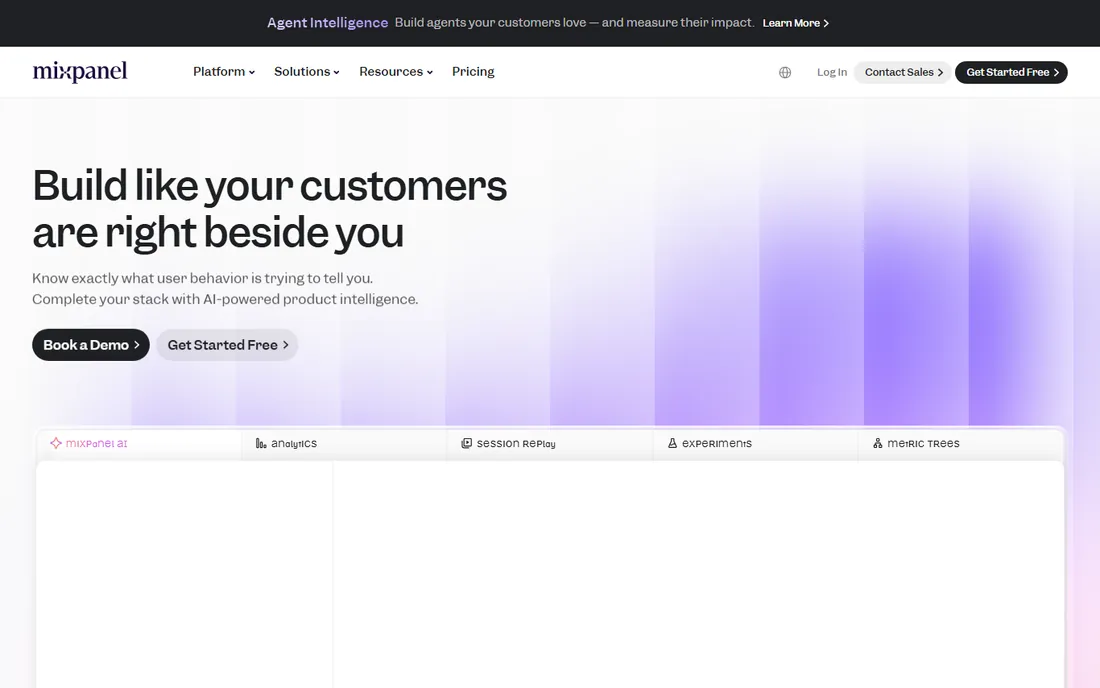
Most product teams start with Mixpanel because the free tier is genuinely usable: a million events a month, funnels, retention and session replays without a credit card. The interface is built for non-technical users, so PMs and marketers can answer their own questions without waiting on data teams.
The bill is where discipline matters. Growth pricing runs $0.28 per thousand events above the free allowance, which means a moderately successful app can land at several hundred dollars a month before anyone notices. Model your event volume early, name events carefully, and you will stay in control. For teams that want answers fast without engineering help, it remains the benchmark.
What we like- Generous free tier with 1M monthly events
- Fast funnel and retention reports
- Unlimited seats on all plans
Watch out for- Bills climb steeply past the free tier
- Account-level analytics costs extra
Starting priceFree (Starter, 2M events/month); Plus from $49/month
Free planYes
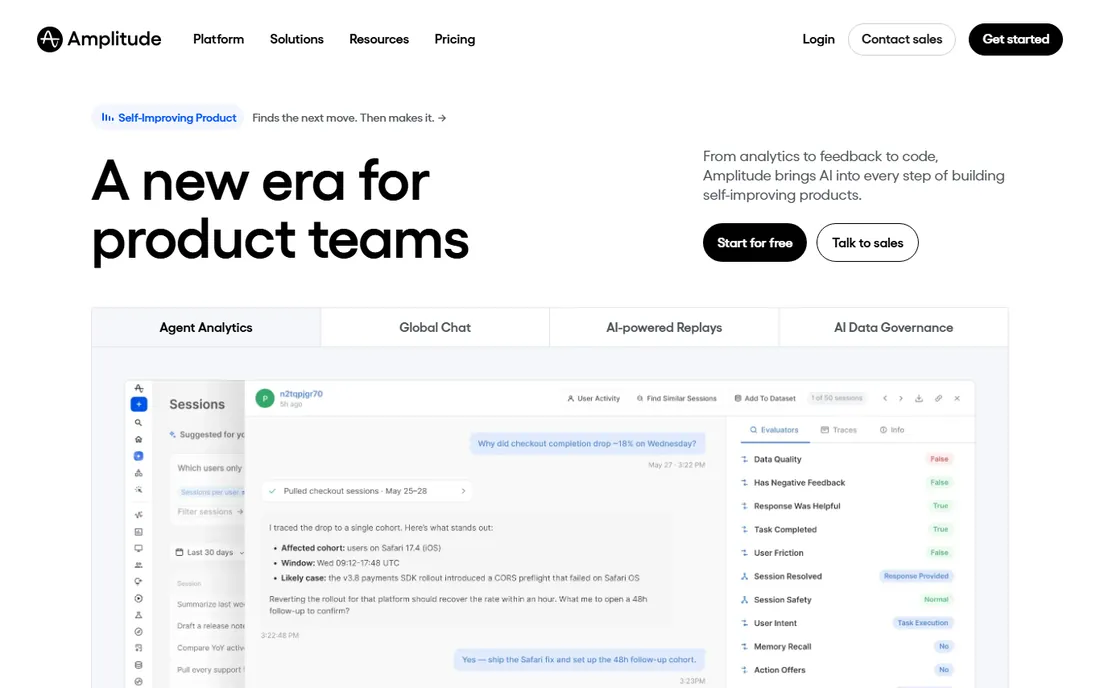
Amplitude plays one tier above Mixpanel in complexity and ambition. The Starter plan covers 2 million events a month free, and the platform adds behavioral cohorts, predictive audiences and experimentation that growth-stage teams rely on. If your analytics need to graduate from "what happened" to "what will happen," this is the natural step up.
That power comes with pricing that rewards careful instrumentation. Plus starts at $49 a month but scales with monthly tracked users and event volume, and Growth and Enterprise move to custom contracts. Teams with chatty apps should negotiate event guardrails upfront. For data-mature organizations, the depth justifies the cost.
What we like- Largest free event allowance in the category
- Strong experimentation and cohort tools
- Unlimited seats
Watch out for- Paid tiers get expensive quickly
- Event guardrails can trigger overages
Starting priceUsage-based
Free planYes (free tier)
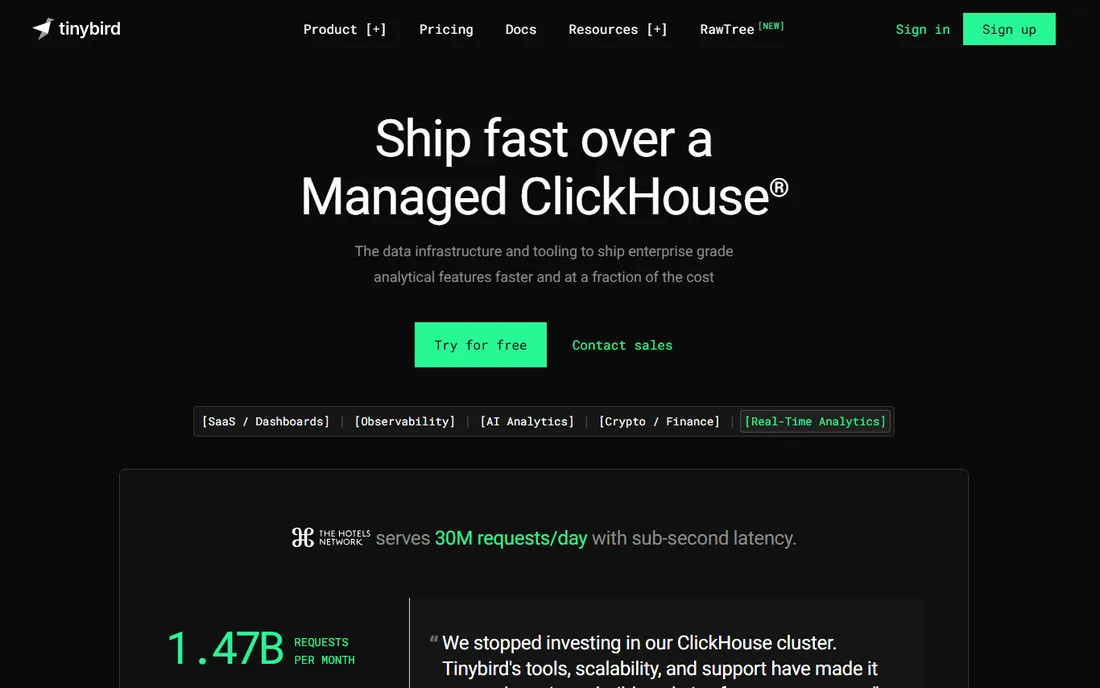
Tinybird is not a dashboard tool. It is a real-time data platform where you pipe in streaming events and query them with SQL at millisecond latency, then publish the results as APIs. Engineering teams use it to power live dashboards, personalization and user-facing analytics inside their own products.
Because it charges on usage, costs track directly with query and ingestion volume, which is fair but demands attention. There is no drag-and-drop report builder for business users, so it fits organizations with data engineering capacity. When you need real-time numbers served to thousands of users, few things match it.
What we like- SQL interface over streaming data
- Extremely low query latency
- Simple publishing of data APIs
Watch out for- Developer-centric, not a marketer dashboard
- Usage pricing needs monitoring
#4
PostHog
Best for: teams that want analytics plus session replay in one open-source suite
Visit posthog.com
Starting priceFree tier; usage-based beyond that
Free planYes
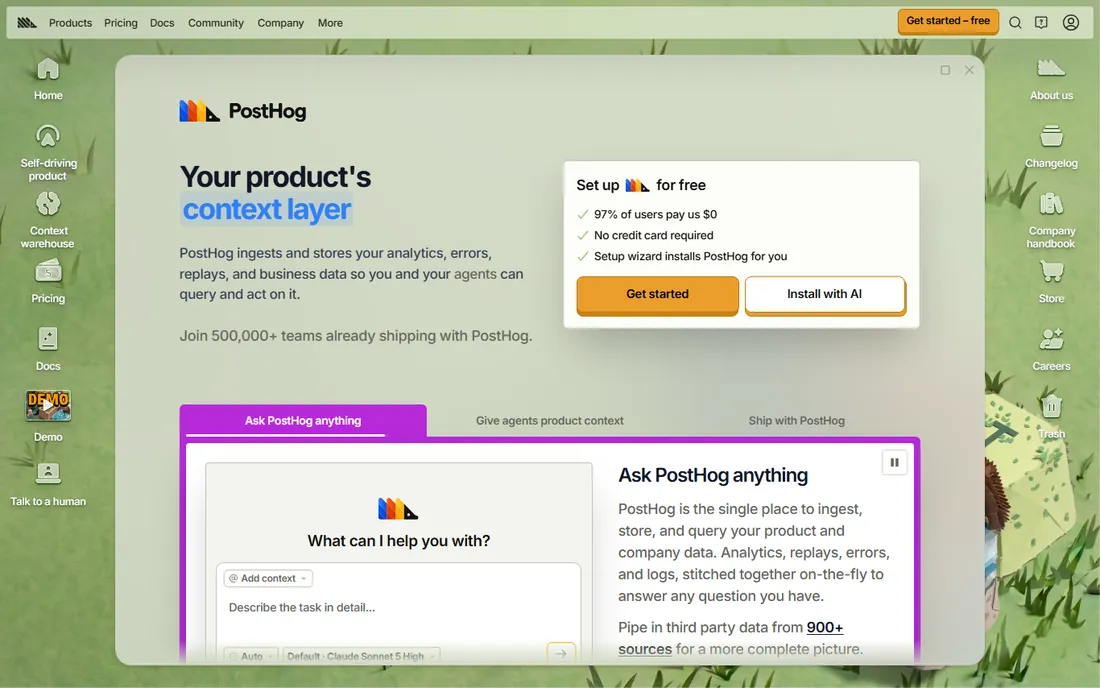
PostHog has quietly become the default for teams that want to own their analytics stack. The open-source platform bundles product analytics, session replay, feature flags, experiments and surveys, all billed on transparent usage. You can self-host to keep data entirely in your infrastructure.
The tradeoff is refinement. Individual modules are not quite as slick as best-of-breed point tools, and pricing spans several meters that each need watching. For startups and privacy-conscious companies, though, the combination of a real free tier and full data control is unmatched.
What we like- Product analytics, replays, feature flags and surveys in one bill
- Self-hosting option
- Transparent usage pricing
Watch out for- Interface less polished than Mixpanel
- Costs spread across several meters
#5
Pendo
Best for: product teams that pair analytics with in-app messaging
Visit pendo.io
Starting priceFree plan; paid plans custom
Free planYes
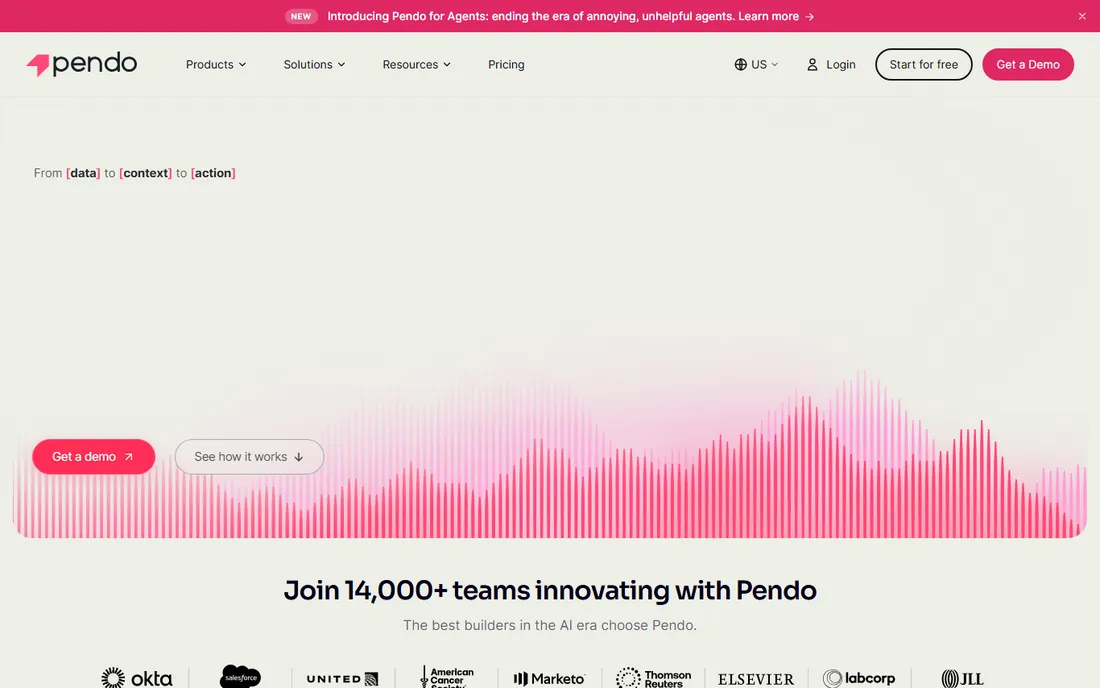
Pendo answers a different question than Mixpanel: not just what users do, but how you respond inside the product. Its analytics sit alongside in-app guides, tooltips and NPS surveys, so product teams can spot friction and ship a fix without leaving the platform.
That breadth means the analytics alone are less deep than specialists, and pricing is custom, which usually signals enterprise budgets. The free plan lets small teams test the core loop. Choose Pendo when adoption and onboarding are the job, not just measurement.
What we like- Analytics plus guides, surveys and feedback in one platform
- Strong for onboarding use cases
- Free plan for trying core features
Watch out for- Pricing is quote-based and enterprise-leaning
- Analytics depth lags pure-play tools
#6
Snowplow
Best for: companies that want every event in their own warehouse
Visit snowplow.io
Starting priceFree (open source); Snowplow Cloud custom
Free planYes (open source)
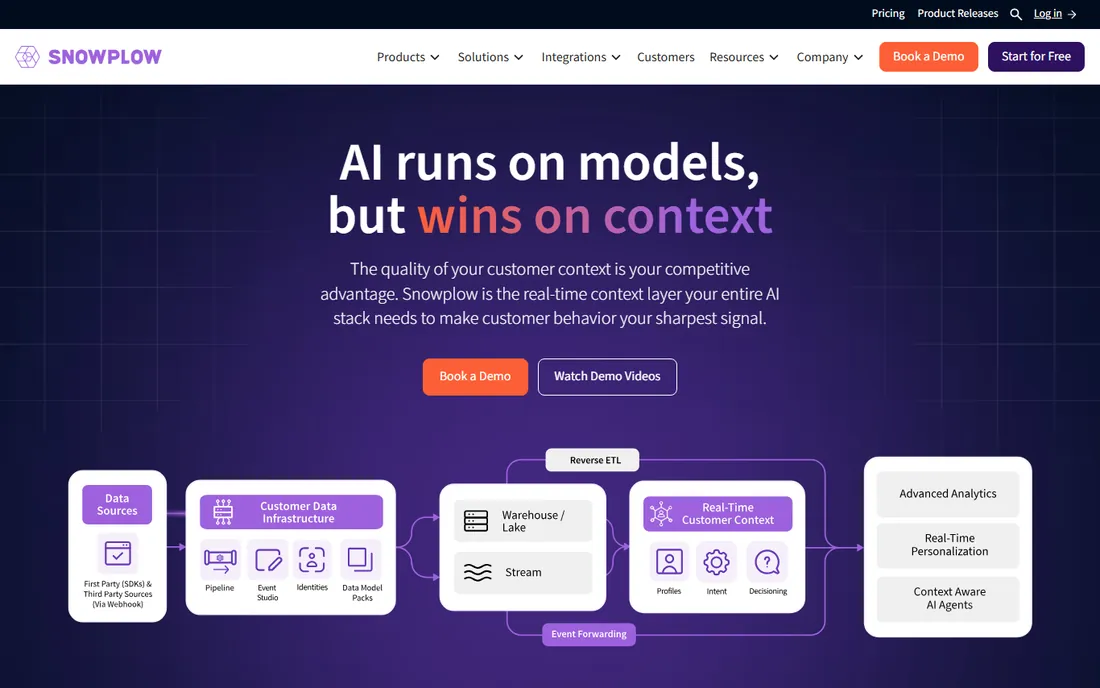
Snowplow collects behavioral events and lands them in your own data warehouse, structured and ready for any BI tool. Nothing is sampled, nothing is locked in a vendor's black box. For companies with strict data governance or existing warehouse investments, that control is the whole point.
Control has a cost in effort. Snowplow is infrastructure, not an application: you need engineers to deploy, monitor and model the data. There are no native funnels or retention charts. Pair it with a BI layer and it becomes the most flexible analytics foundation you can buy.
What we like- Full ownership of raw event data
- Runs in your own cloud
- Highly customizable tracking
Watch out for- Needs data engineering to operate
- No built-in dashboards
Starting priceFree (open source); ClickHouse Cloud usage-based
Free planYes (open source)
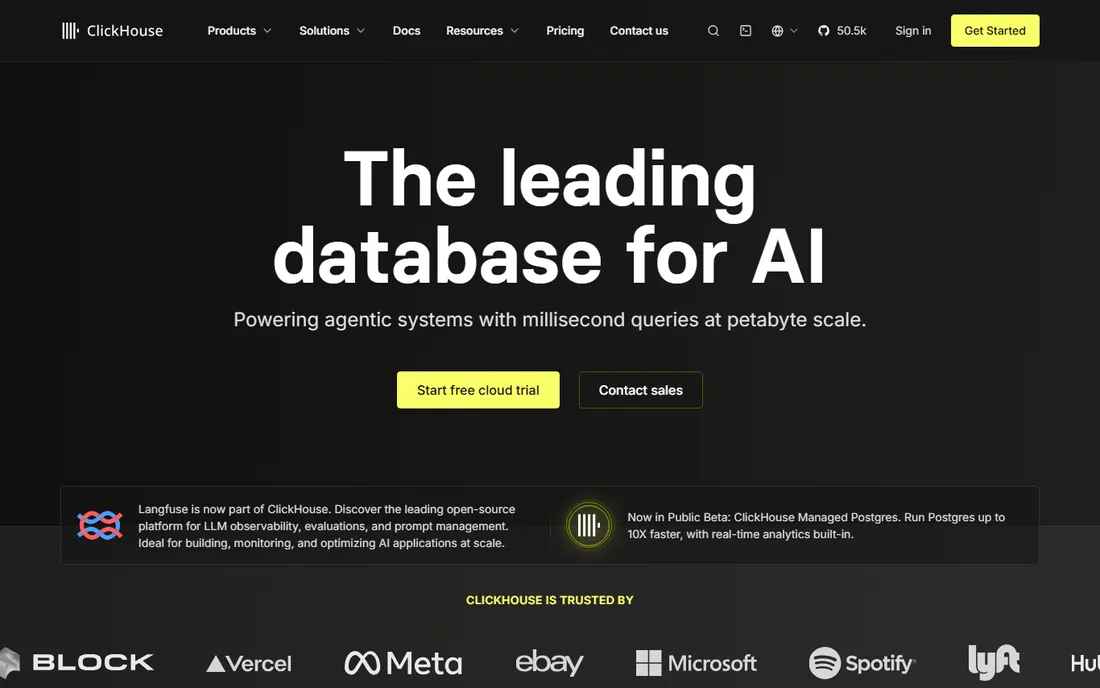
ClickHouse is the database behind many real-time analytics products, and you can run it directly. It executes analytical SQL over billions of rows in milliseconds, which makes it ideal for event data, logs and observability at scale. The open-source version is free; the managed cloud removes the ops burden for a usage-based fee.
It is a database, not an analytics app, so expect to build or buy the visualization layer. Teams comfortable running infrastructure get extraordinary price-to-performance. If your data volume makes traditional warehouses groan, ClickHouse deserves a serious look.
What we like- Exceptional query speed on billions of rows
- Open source with a managed cloud
- SQL interface
Watch out for- Operational complexity when self-hosted
- Not a plug-and-play product analytics UI
Starting priceUsage-based
Free planFree trial
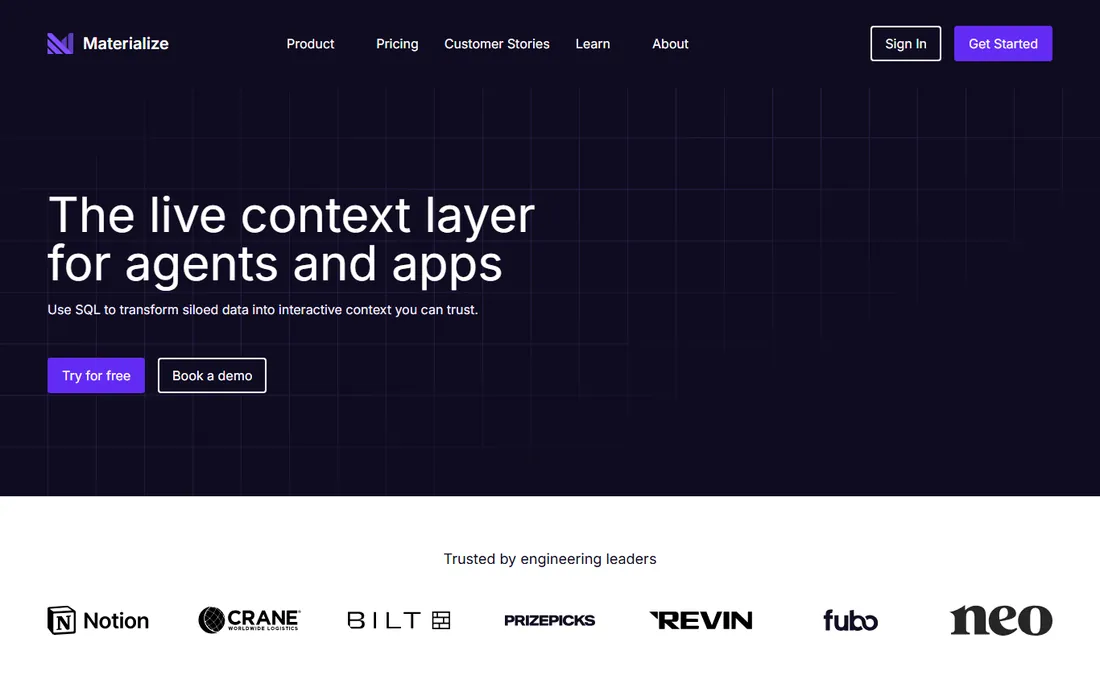
Materialize lets you write ordinary SQL that stays correct as new data streams in, which means dashboards and alerts that are always current without scheduled refresh jobs. It speaks the Postgres wire protocol, so existing tools connect without modification.
As a newer category, the ecosystem and community are smaller than ClickHouse or Snowflake, and usage-based billing needs the same vigilance as any metered service. For operational dashboards where stale data costs money, the streaming model is a genuine advantage.
What we like- Standard SQL over live streams
- Results stay fresh without batch jobs
- Strong Postgres compatibility
Watch out for- Usage-based pricing can surprise
- Smaller ecosystem than established warehouses
How to pick the right real-time stack
Start with who asks the questions. If product managers and marketers need self-serve answers, pick Mixpanel, Amplitude or PostHog and skip the infrastructure tools. If engineers need to serve live data inside the product, start from Tinybird, ClickHouse or Materialize and add a visualization layer. Buying a database when you needed dashboards (or the reverse) is the most common mistake in this category.
Then check the data ownership requirement. Regulated industries and privacy-sensitive companies should shortlist PostHog and Snowplow, which keep raw data in your hands. Everyone else can trade some control for convenience with the SaaS options.
Finally, model cost at 10x your current volume. Event-based pricing looks cheap during a pilot and punishing at scale. Run each vendor's calculator with realistic growth numbers, and ask what happens when you exceed plan limits: throttling, overage bills or forced upgrades all change the true cost.
How we chose
We evaluated current product positioning, documentation and pricing pages, cross-checked against public reviews on G2 and practitioner threads on Reddit and Hacker News. Every platform listed is actively maintained with a live homepage as of October 2026. We included both application-layer analytics and the infrastructure underneath, because "real-time analytics" buyers split across both. Prices reflect the lowest published tier or free allowance from each vendor's own pricing page.
Where the costs hide
The sticker price in this category is rarely the real price. Event overages are the biggest trap: a free tier of 1M events sounds generous until your tracking plan fires fifty events per session. Audit your event taxonomy before you commit, and kill redundant or duplicate events.
The second trap is add-ons. Session replay volumes, data export pipelines, account-level analytics and SSO often sit outside the base plan. Ask for an itemized quote that includes everything you need in production, not just the headline tier.
The third is people cost. Self-hosted options like Snowplow and ClickHouse look free until you count engineering hours. For a team without data infrastructure experience, a managed SaaS at a few hundred dollars a month is usually cheaper than the salary fraction required to run open source well.
Frequently asked questions
What is the difference between real-time analytics and business intelligence?
Real-time analytics works on streaming data with seconds of latency, answering "what is happening now." Traditional BI runs scheduled queries against a warehouse, answering "what happened last week." Many companies need both: real-time for operations, BI for planning.
Which real-time analytics platform has the best free plan?
Amplitude offers 2M events per month free, Mixpanel 1M, and PostHog 1M plus other products. For a side project or early startup, any of the three works without spending anything. The right choice depends on which interface your team prefers.
Do I need engineers to use these tools?
Mixpanel, Amplitude, Pendo and PostHog Cloud are built for non-technical users once tracking is installed. Tinybird, ClickHouse, Materialize and Snowplow need data engineering to deploy and maintain. Match the tool to the skills on your team.
How much does real-time analytics cost at scale?
It varies widely. A mid-size SaaS app can pay anywhere from a few hundred to several thousand dollars a month depending on event volume and add-ons. Usage-based tools reward lean instrumentation; the cheapest lever is always sending fewer, better events.
Can I self-host my analytics?
Yes. PostHog, Snowplow and ClickHouse all offer self-hosted or open-source options that keep data inside your infrastructure. Expect to trade license cost for operational effort.
What should I instrument first?
Track the events that define your funnel: signup, activation, key feature use and purchase. Five well-named events beat five hundred noisy ones. You can always add more once the basics prove valuable.
Sources we checked (12)
- https://mixpanel.com
- https://mixpanel.com/pricing/
- https://amplitude.com
- https://tinybird.co
- https://posthog.com
- https://pendo.io
- https://snowplow.io
- https://clickhouse.com
- https://materialize.com
- https://rybbit.com/blog/mixpanel-pricing
- https://userpilot.com/blog/amplitude-pricing/
- https://brainforge.ai/resources/amplitude-vs-mixpanel-vs-posthog/
Is your product missing or out of date?
We review this list regularly. Vendors can request a listing, send updated pricing or ask about featured placement.

Shihab Mia · Founder, Rankite
Shihab has spent more than a decade helping SaaS and e-commerce brands grow through search. He writes Rankite's software buying guides from pricing pages, documentation and public user reviews. More about Shihab.