How we make this list: we compare pricing pages, product documentation and public user reviews. Rankite is independent; if a vendor ever pays for a featured spot, that listing is clearly labeled Partner.
Key takeaways
- NVivo (now Lumivero), ATLAS.ti, and MAXQDA are the established trio for serious academic and professional qualitative research.
- Dedoose stands out for mixed-methods work and genuinely collaborative cloud-based analysis.
- Dovetail and Delve bring modern, user-friendly design to UX research and smaller teams.
- Quirkos is the approachable option for students and newcomers to qualitative analysis.
- Taguette is the free, open source choice for researchers with no budget.
Quick comparison
| Tool | Best for | Starting price | Free plan |
|---|
 NVivo NVivo | Comprehensive academic research | See website | No |
 ATLAS.ti ATLAS.ti | Flexible professional QDA | See website | No |
 MAXQDA MAXQDA | Mixed-methods research | See website | No |
 Dedoose Dedoose | Collaborative cloud analysis | See website | No |
 Quirkos Quirkos | Beginners and students | See website | No |
 Dovetail Dovetail | UX research teams | See website | No |
 Delve Delve | Simple modern coding | See website | No |
 Taguette Taguette | Free open source QDA | Free (open source) | Yes |
 QDA Miner QDA Miner | Text mining plus coding | See website | No |
Is your product missing or out of date?
We review this list regularly. Vendors can request a listing, send updated pricing or ask about featured placement.
The best qualitative analysis software
Starting priceSee website
Free planNo
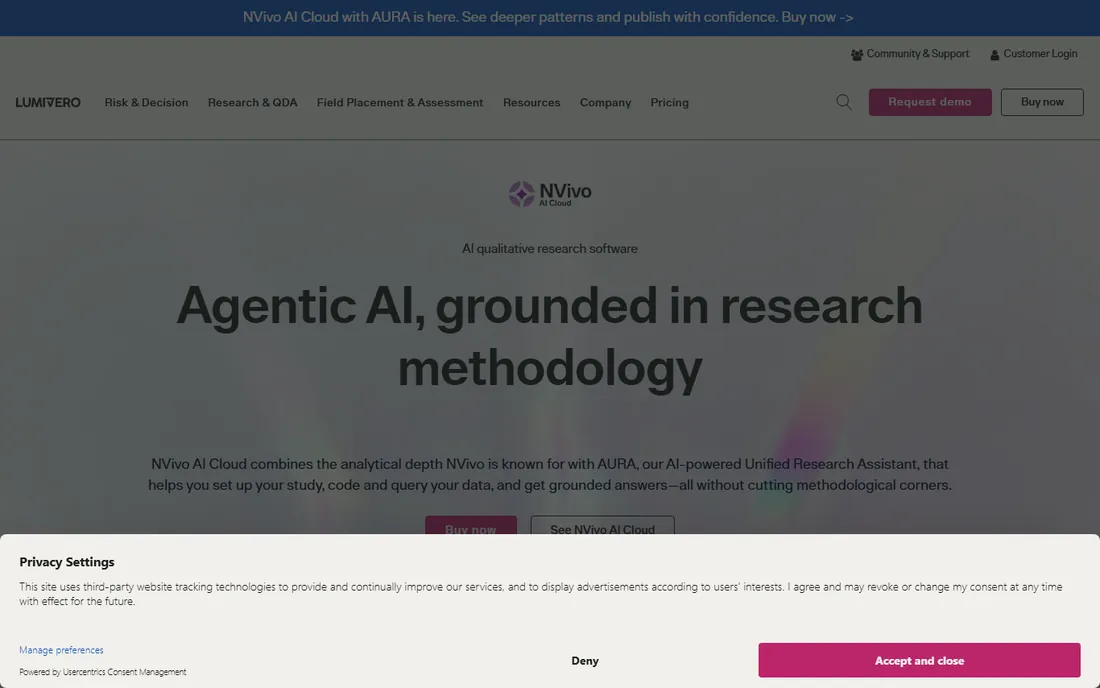
NVivo, now part of Lumivero, remains the most fully-featured qualitative data analysis software available. It codes interviews, surveys, audio, video, images, and social media data, with queries that find patterns across all of it. Universities teach it, which means a large community, many tutorials, and graduates who already know it.
The price and complexity are the barriers. Solo researchers and small teams may find it more than they need, and the interface reflects decades of accumulated features. But for dissertations, funded research projects, and institutional work where analytical depth matters, NVivo is still the benchmark.
What we like- Deepest feature set
- Handles all data types
- Widely taught in universities
Watch out for- Expensive
- Interface can overwhelm
Starting priceSee website
Free planNo
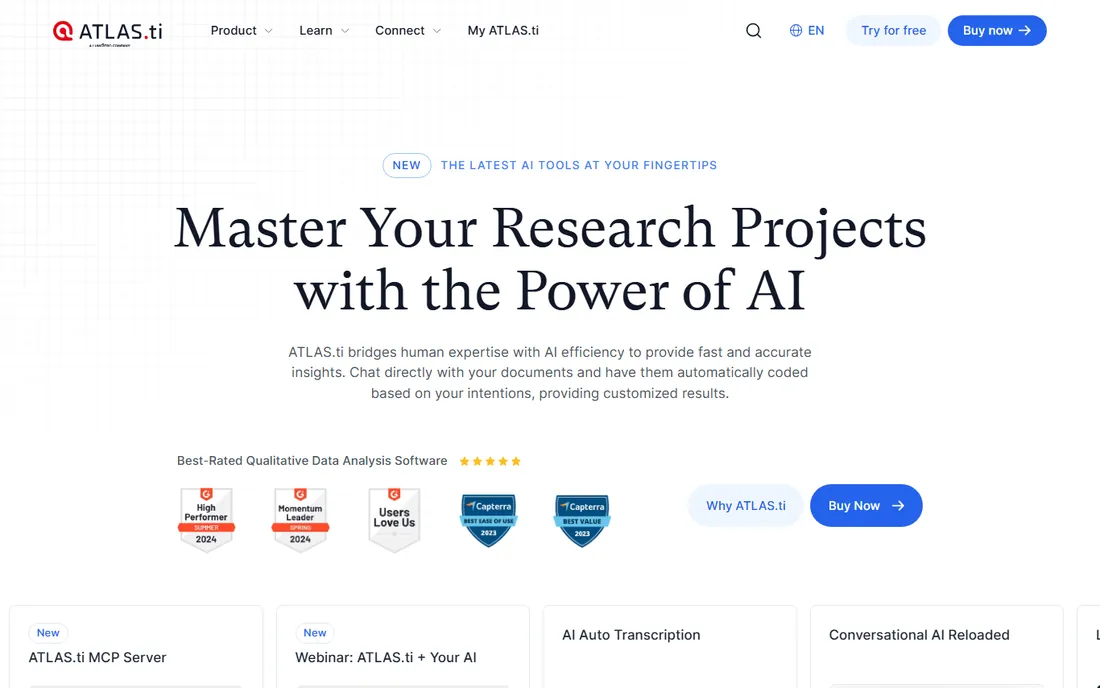
ATLAS.ti takes a flexible approach to qualitative analysis: code freely, build networks of concepts visually, and work across desktop, web, and mobile. The network views help researchers see relationships between codes and themes, which suits theory-building work. Recent versions added AI-assisted coding features.
Per-user pricing makes team deployments expensive, and the flexibility means new users face choices without much guidance. But researchers who chafe at NVivo's structure often prefer ATLAS.ti's more open style. It is a strong second choice that some researchers consider the first.
What we like- Flexible coding approach
- Good visualization
- Cloud and desktop options
Watch out for- Pricing per user adds up
- Learning curve
Starting priceSee website
Free planNo
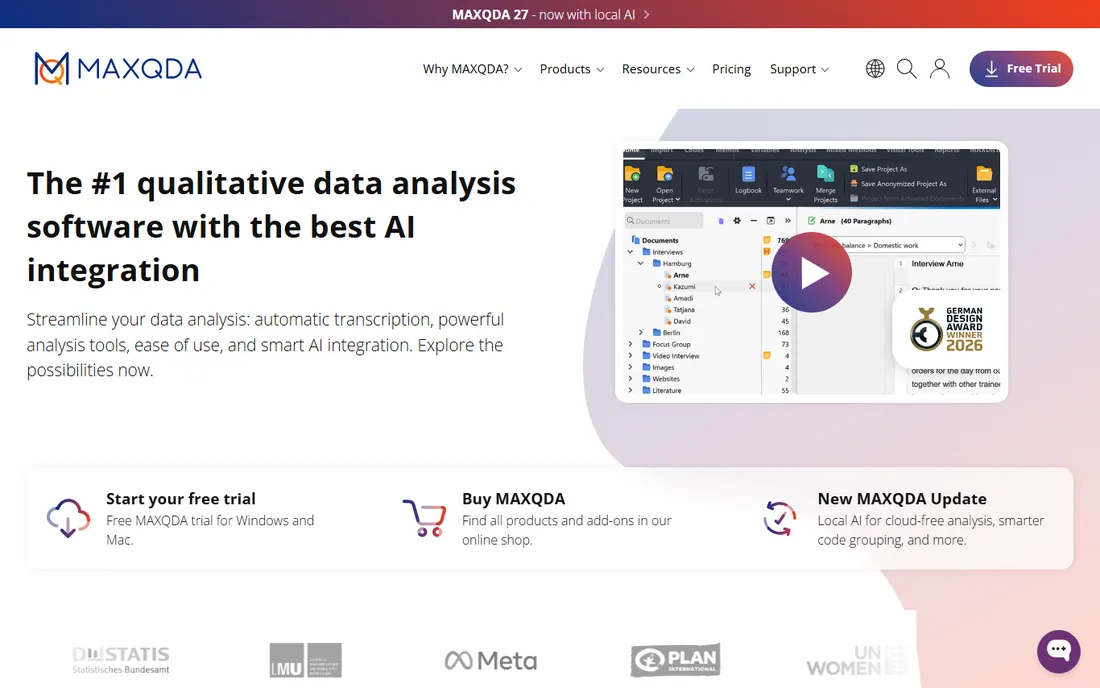
MAXQDA shines where qualitative meets quantitative: survey data with open-ended responses, coded alongside statistics, in one project. The interface is more intuitive than its rivals, which helps teams adopt it faster. It is particularly strong in European academia, with excellent multilingual support.
Outside its strongholds, community resources are thinner than NVivo's. The pricing tiers take study to navigate. But for mixed-methods researchers who need both worlds in one tool, MAXQDA's integration of qualitative coding with quantitative analysis is genuinely best-in-class.
What we like- Excellent mixed-methods support
- Intuitive interface
- Strong in Europe
Watch out for- Less known in some regions
- Pricing tiers confuse
Starting priceSee website
Free planNo
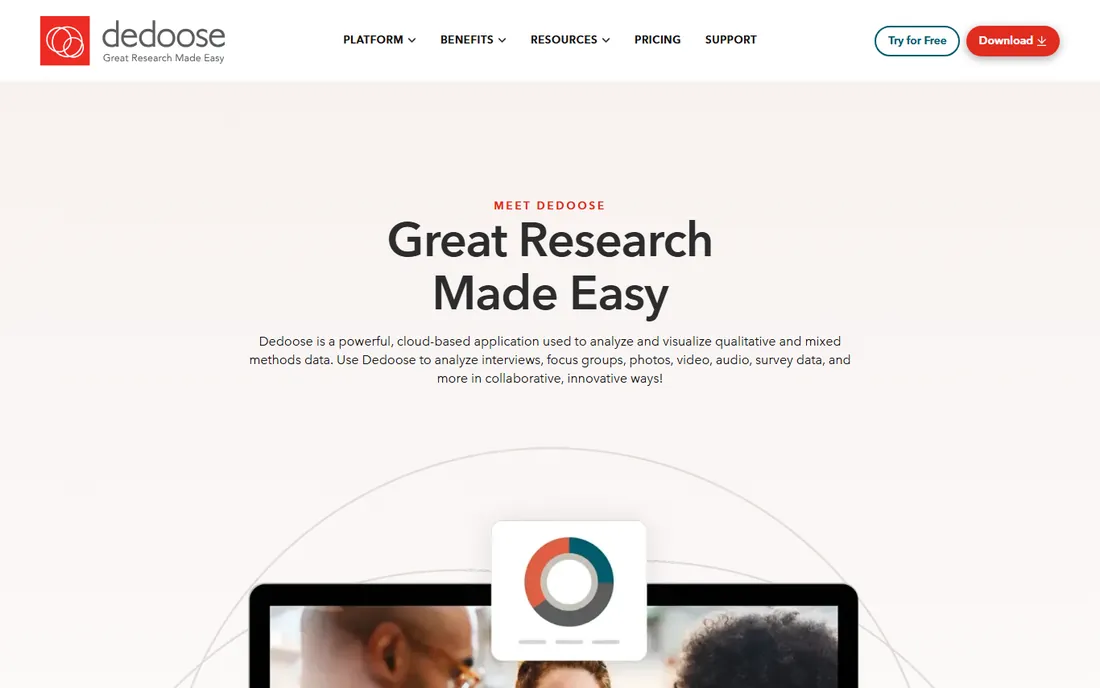
Dedoose was built for the way research teams actually work now: distributed, collaborative, and in the browser. Multiple coders work on the same project simultaneously, inter-rater reliability is built in, and the monthly pricing is affordable for projects with defined timelines. Mixed-methods support handles surveys alongside interviews.
It needs an internet connection, and the advanced analytical features do not match NVivo's depth. But for team-based projects, especially in evaluation and applied research, Dedoose's collaboration-first design beats retrofitting desktop software for teamwork. The pricing model suits grant-funded projects perfectly.
What we like- True cloud collaboration
- Great for teams
- Affordable monthly pricing
Watch out for- Needs internet
- Fewer advanced features than desktop giants
Starting priceSee website
Free planNo
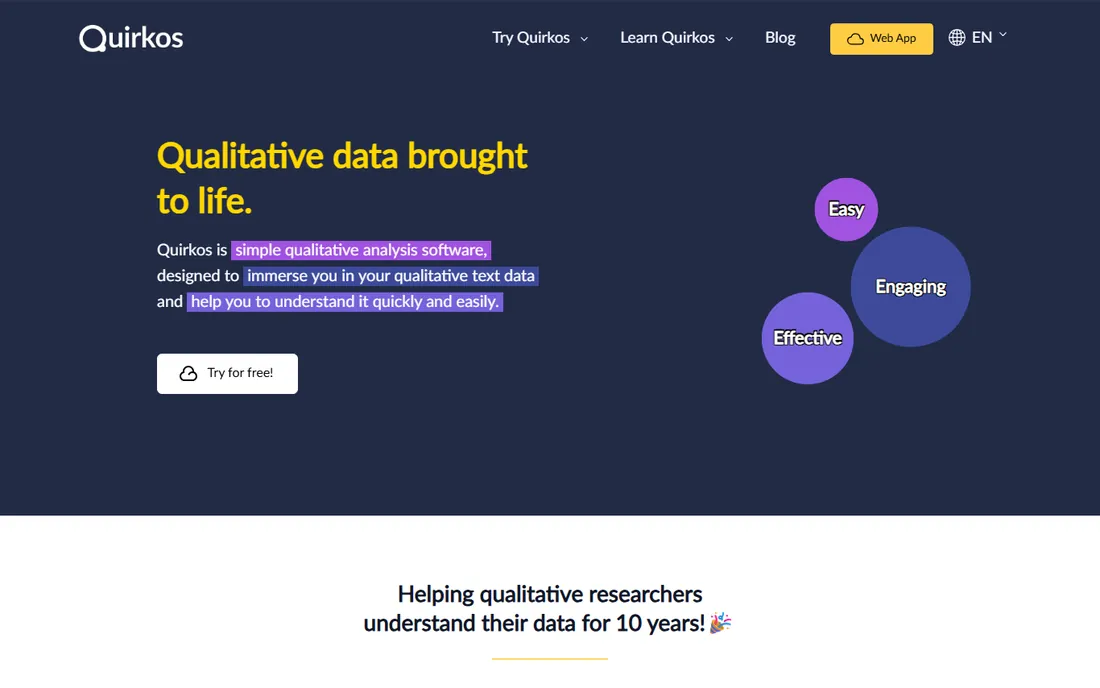
Quirkos is the friendly face of qualitative analysis. The visual, bubble-based interface makes coding intuitive for students and newcomers who find NVivo intimidating. It covers the essentials (coding, queries, visualizations, reports) without the overwhelming options. Pricing is affordable, with student-friendly terms.
Complex projects with huge datasets or advanced queries will outgrow it. The community and tutorial ecosystem are smaller. But as a teaching tool and a first QDA purchase, Quirkos's approachability is unmatched. Many researchers start here and graduate to the bigger tools later.
What we like- Very easy to learn
- Visual and intuitive
- Affordable
Watch out for- Less depth for complex projects
- Smaller ecosystem
Starting priceSee website
Free planNo
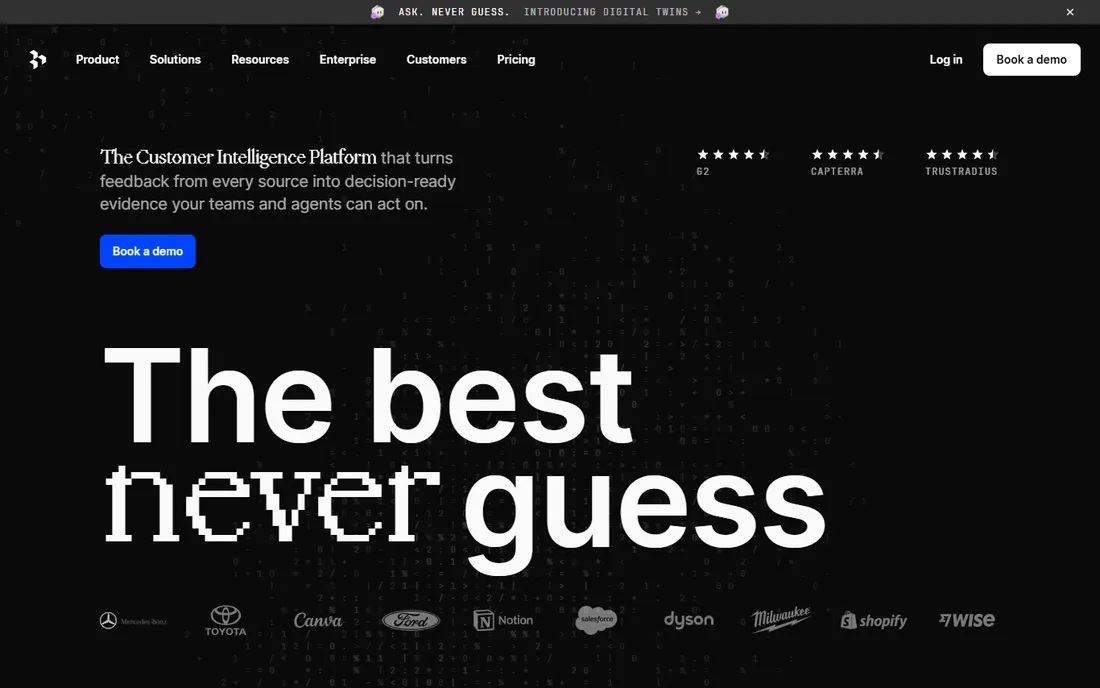
Dovetail brings consumer-grade design to research repositories. UX teams store interviews, code insights, and build searchable knowledge bases that the whole product organization can use. The interface is the best-looking on this list, and features like automated transcription and AI summaries speed up the research workflow.
Pricing targets business teams, not students or solo academics. Traditional academic workflows (complex coding hierarchies, specific methodologies) fit less naturally. But for product and UX teams turning user research into organizational knowledge, Dovetail is purpose-built in a way the academic tools are not.
What we like- Beautiful modern interface
- Built for product teams
- Great repository features
Watch out for- Priced for business teams
- Less for academic research
Starting priceSee website
Free planNo
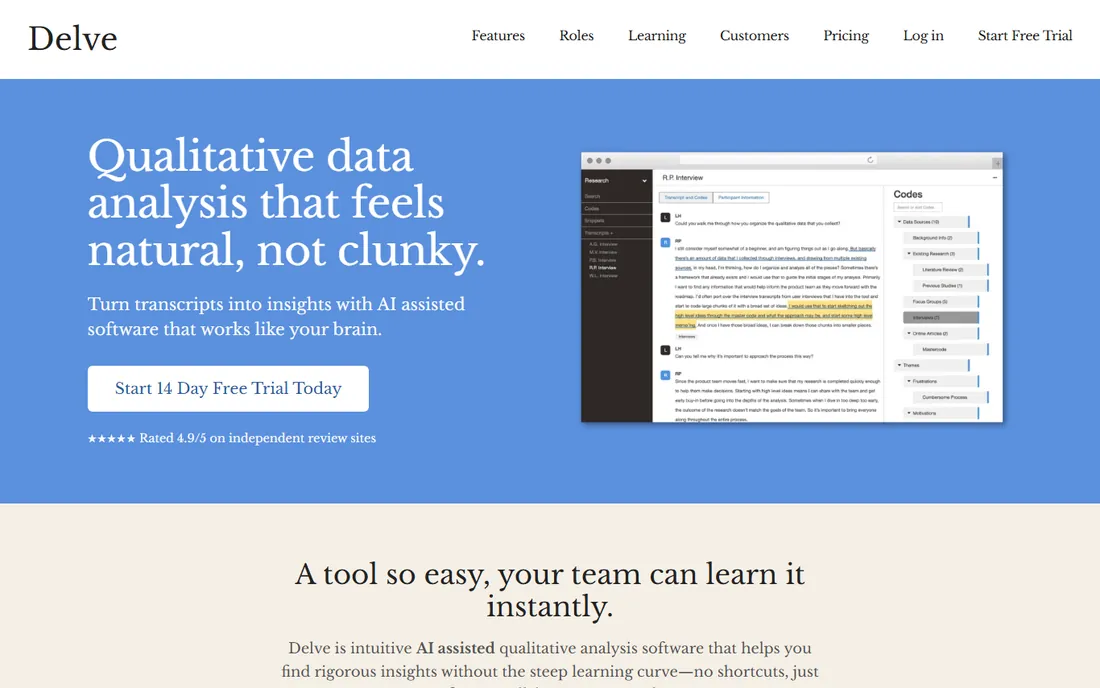
Delve strips qualitative analysis to its essence: import transcripts, code them, find themes, export the results. The interface is clean, the learning curve is short, and the price is accessible. Small teams and solo researchers who found the big tools overwhelming appreciate the focus.
The feature set is deliberately narrow; advanced queries, complex visualizations, and mixed-methods work go elsewhere. As a smaller company, Delve's longevity is less certain than the established vendors'. But for straightforward thematic analysis, its simplicity is a legitimate advantage.
What we like- Clean and simple
- Affordable
- Quick to learn
Watch out for- Fewer features than leaders
- Smaller company
Starting priceFree (open source)
Free planYes
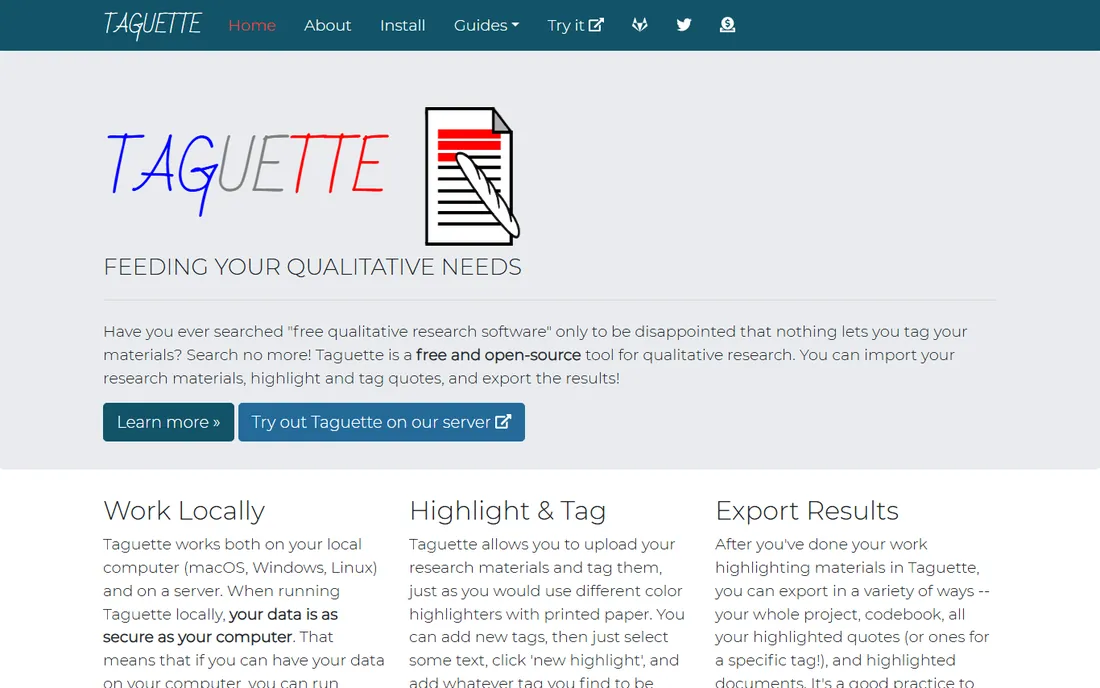
Taguette is the open source answer: free qualitative coding software that handles the fundamentals (import documents, highlight and code, export results) without charging anything. Researchers with no budget, students, and teams in low-resource settings get real QDA capability for zero cost. Self-hosting keeps data fully under your control.
It does not match the analytical depth, visualizations, or AI features of commercial tools. Development depends on the open source community, so updates arrive when contributors have time rather than on a corporate schedule. Export your work regularly in open formats so your coded data survives any software change. But the basics are solid, and for many projects the basics are enough. Every researcher should know Taguette exists before assuming QDA software must be expensive.
What we like- Completely free
- Open source
- Covers coding basics well
Watch out for- Basic features
- Self-hosting for full control
Starting priceSee website
Free planNo
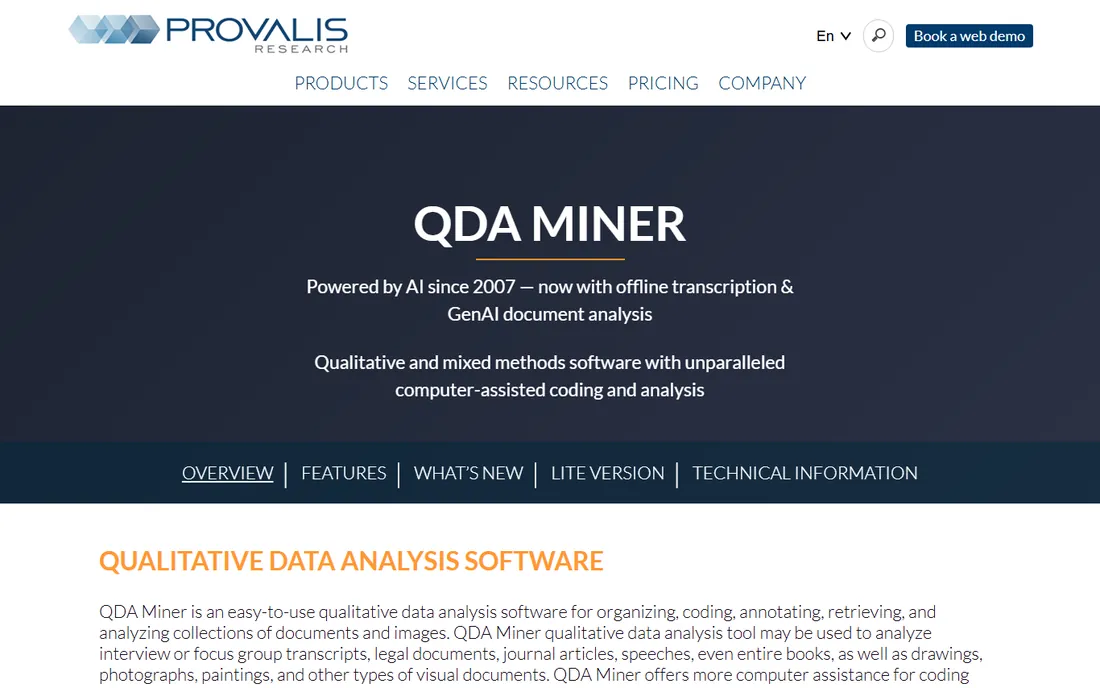
QDA Miner, from Provalis Research, bridges qualitative coding and quantitative text mining. Alongside standard coding, it offers clustering, concept mapping, and statistical analysis of text, which suits researchers working with large document collections. Integration with WordStat (statistical text analysis) and SimStat extends the analytical range further.
The interface shows its age, and the learning curve is real. But for researchers who need both human coding and computational text analysis in one workflow, QDA Miner occupies a unique position. It is the power tool for text-heavy projects.
What we like- Combines coding with text mining
- Powerful for large text datasets
- Statistical tools
Watch out for- Interface is dated
- Learning curve
The qualitative software world splits into two philosophies. NVivo, ATLAS.ti, and MAXQDA are comprehensive desktop-originated platforms: deep, proven, and complex, built for academic rigor. Dovetail, Delve, Dedoose, and Quirkos are modern and approachable: cloud-native or simplified, built for teams and speed. Neither philosophy is universally better. Choose the comprehensive tools when the methodology demands depth, the dataset is large, or the institution standardizes on them. Choose the modern tools when collaboration, speed, or user experience matter more than analytical exhaustiveness. And remember Taguette: for many projects, free and simple beats expensive and complex.
What to check before you buy
Your methodology comes first
Grounded theory, thematic analysis, content analysis, and phenomenology each fit different tools better. The software should support your methodology, not dictate it. Talk to researchers in your specific tradition about what they actually use before committing to the most popular option.
Data types you will analyze
Interviews and transcripts are universal, but video, audio, images, surveys, and social media vary by tool. NVivo and ATLAS.ti handle the widest range; modern tools focus on text and video. List your actual data types and verify each candidate handles them natively.
Collaboration and team size
Solo researchers can use anything. Teams need to think about simultaneous coding, inter-rater reliability, and project sharing. Dedoose and Dovetail lead on collaboration; desktop tools handle it through project merging or server versions. Do not discover collaboration limits mid-project.
Budget reality and licensing
Academic pricing differs enormously from commercial, and student licenses are often cheap or free. Check your institution's site licenses before buying anything; many universities provide NVivo or ATLAS.ti already. For grant-funded projects, Dedoose's monthly model may fit the budget cycle better than perpetual licenses.
How we chose
We selected qualitative data analysis tools with real user bases in 2026, spanning academic standards, modern team tools, and free options. We evaluated feature depth, usability, collaboration support, and fit for different research contexts. We excluded generic text analysis tools and AI chatbots without real QDA workflows. No vendor paid for placement, and we did not code test datasets.
Frequently asked questions
What is the best qualitative analysis software for students?
Quirkos is the easiest to learn, and Taguette is free. Many universities provide NVivo or ATLAS.ti through site licenses, so check what your institution offers before spending anything. For a thesis, institutional access plus YouTube tutorials usually suffice.
NVivo vs ATLAS.ti vs MAXQDA: which should I choose?
All three are excellent. NVivo has the deepest features and biggest community. ATLAS.ti offers the most flexible coding style. MAXQDA leads on mixed-methods and usability. The practical tiebreaker is often what your department, supervisor, or collaborators already use, since sharing projects matters.
Is there free qualitative analysis software?
Yes: Taguette is free and open source, covering the coding fundamentals well. Some commercial tools offer free trials or limited free tiers. For many student and small projects, Taguette is genuinely sufficient. The paid tools earn their price on large, complex, or collaborative projects.
Can AI do qualitative coding now?
AI can suggest codes and summarize themes, and several tools (ATLAS.ti, Dovetail, NVivo) have added AI features. But AI coding is a starting point, not a result: the researcher's judgment, reflexivity, and theoretical framing are the actual analysis. Use AI to accelerate the mechanical parts, then do the thinking yourself. Supervisors and reviewers increasingly ask how AI was used, so document it.
How long does it take to learn QDA software?
Quirkos or Delve: an afternoon. Dedoose or Taguette: a day or two. NVivo, ATLAS.ti, or MAXQDA: expect one to two weeks of serious learning for basic competence, longer for advanced features. Budget this time before your project deadline, not during it.
Sources we checked (9)
- https://lumivero.com/products/nvivo/
- https://atlasti.com
- https://www.maxqda.com
- https://www.dedoose.com
- https://www.quirkos.com
- https://dovetail.com
- https://delvetool.com
- https://www.taguette.org
- https://provalisresearch.com/products/qualitative-data-analysis-software/
Is your product missing or out of date?
We review this list regularly. Vendors can request a listing, send updated pricing or ask about featured placement.

Shihab Mia · Founder, Rankite
Shihab has spent more than a decade helping SaaS and e-commerce brands grow through search. He writes Rankite's software buying guides from pricing pages, documentation and public user reviews. More about Shihab.