How we make this list: we compare pricing pages, product documentation and public user reviews. Rankite is independent; if a vendor ever pays for a featured spot, that listing is clearly labeled Partner.
Key takeaways
- Epic dominates large health systems: the most comprehensive EHR for complex organizations.
- Oracle Health (formerly Cerner) serves large systems in the Oracle ecosystem.
- MEDITECH remains strong in community hospitals with a modern web platform.
- athenahealth, eClinicalWorks, NextGen, Greenway, and DrChrono serve ambulatory practices of different sizes.
- Veradigm (formerly Allscripts) offers EHR plus data and analytics for connected care.
Quick comparison
Is your product missing or out of date?
We review this list regularly. Vendors can request a listing, send updated pricing or ask about featured placement.
The top EMR software solutions
Starting priceSee website
Free planNo
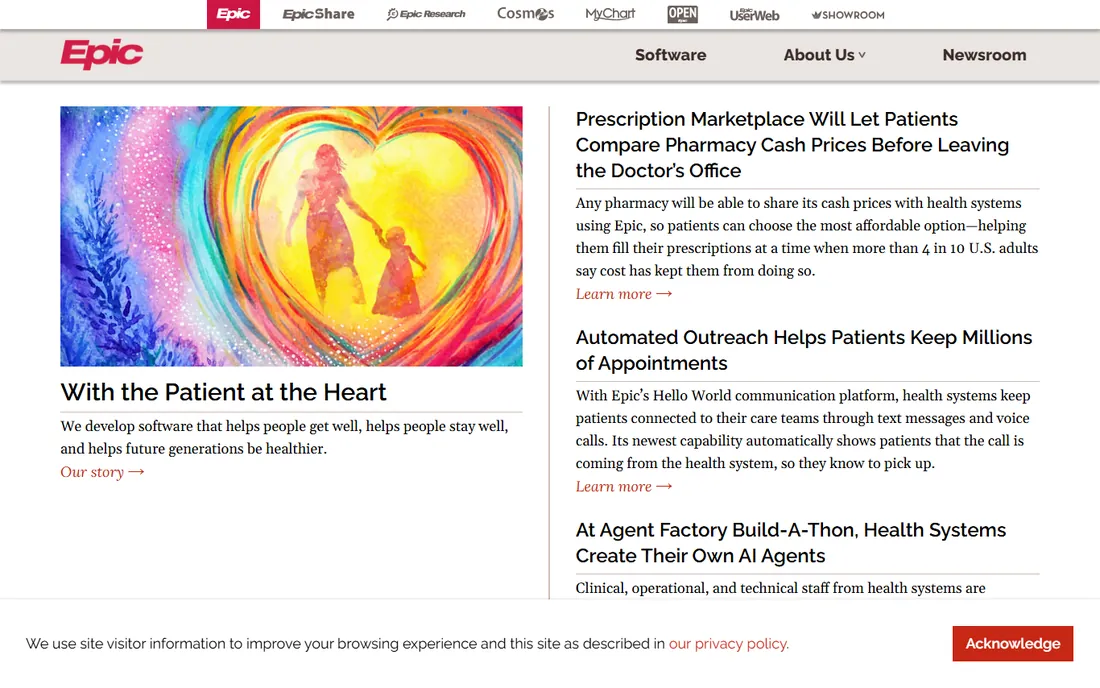
Epic is the EHR of America's largest health systems: comprehensive clinical, revenue cycle, and patient engagement functionality in one integrated database. The interoperability (Care Everywhere) and the app ecosystem (App Orchard) extend its reach. Organizations that can afford the implementation get the deepest EHR available.
The cost and commitment are enormous: nine-figure implementations over multiple years. Smaller organizations cannot realistically adopt it. But for large systems, Epic's comprehensiveness and the network effect (most major systems use it) make it the default choice. It wins by being everywhere that matters.
What we like- Most comprehensive EHR
- Excellent interoperability
- Huge user community
Watch out for- Enormous cost
- Decade-scale commitment
Starting priceSee website
Free planNo
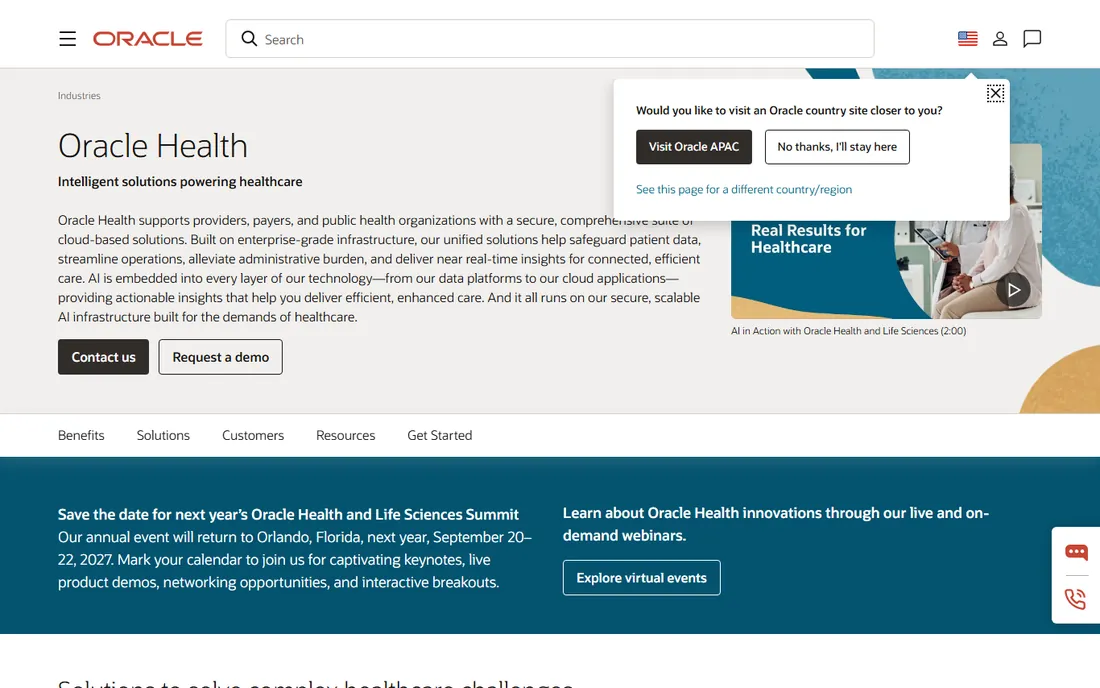
Oracle Health, the former Cerner, provides enterprise EHR functionality for hospitals and health systems worldwide. Oracle's ownership brought cloud infrastructure ambitions and resources, with a roadmap toward a more modern platform. International presence suits global health organizations.
Implementation experiences have varied, and the transition under Oracle created uncertainty some customers are still evaluating. Reference-checking is essential. But for large organizations, particularly those standardized on Oracle technology, the platform's breadth and the cloud roadmap merit consideration.
What we like- Broad hospital functionality
- Oracle cloud roadmap
- Global presence
Watch out for- Implementation reputation
- Transition uncertainty
Starting priceSee website
Free planNo
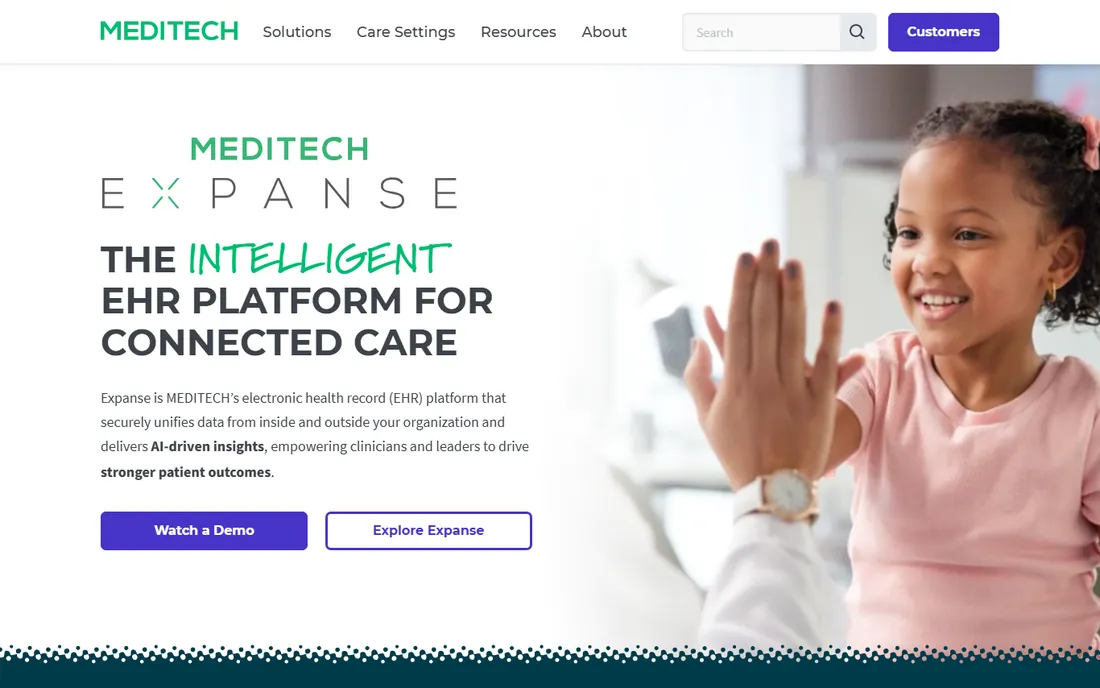
MEDITECH has served community hospitals for decades, and its modern Expanse web platform brought the EHR current: web-based, mobile-friendly, and interoperable. Community and mid-size hospitals get enterprise-grade clinical functionality at more accessible pricing. Customer loyalty in this segment is notably high.
Giant academic medical centers generally choose Epic. The third-party ecosystem is smaller. But for the thousands of community hospitals that form healthcare's backbone, MEDITECH's combination of capability, value, and understanding of their specific needs is compelling.
What we like- Strong in community hospitals
- Modern Expanse platform
- Good value
Watch out for- Less for giant academic centers
- Smaller ecosystem
Starting priceSee website
Free planNo
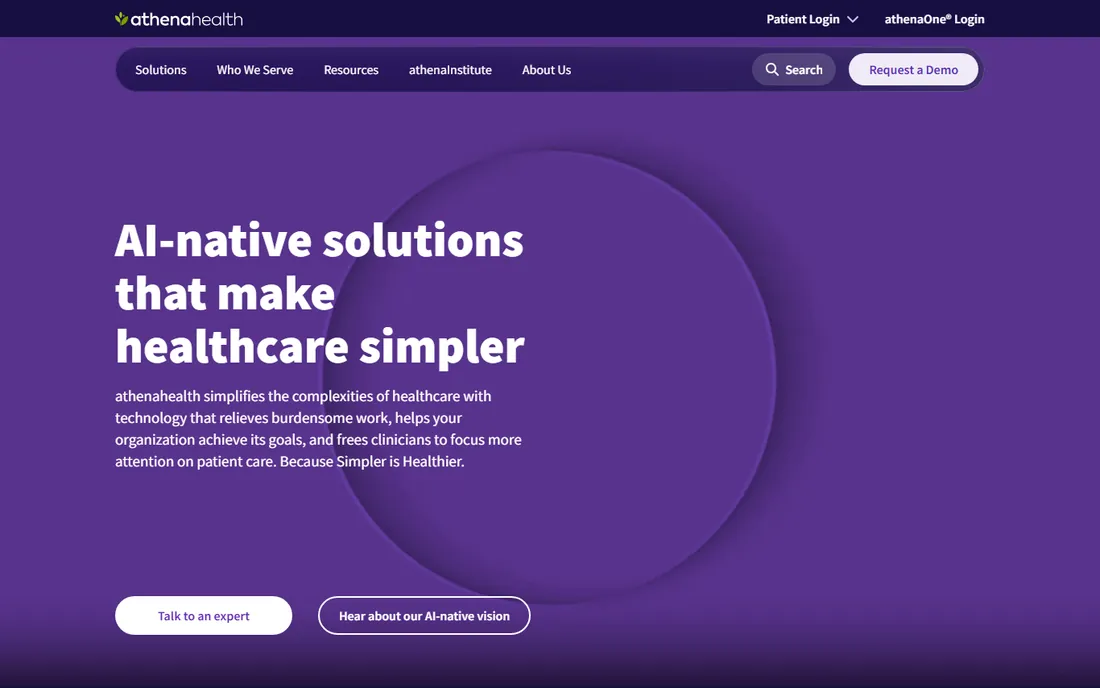
athenahealth's cloud EHR serves ambulatory practices with clinical documentation, patient engagement, and integrated revenue cycle services. The network effect is the differentiator: insights from millions of encounters improve documentation, coding, and collections for every practice. Practices get enterprise-grade RCM without a billing department.
Inpatient functionality is limited; hospitals look elsewhere. The percentage-of-collections pricing draws debate. But for independent practices wanting a cloud EHR that handles both clinical and financial workflows, athenahealth's integrated model removes the usual EHR-to-billing friction.
What we like- True cloud EHR
- Network intelligence
- RCM integration
Watch out for- Less for inpatient
- Pricing model debated
Starting priceSee website
Free planNo
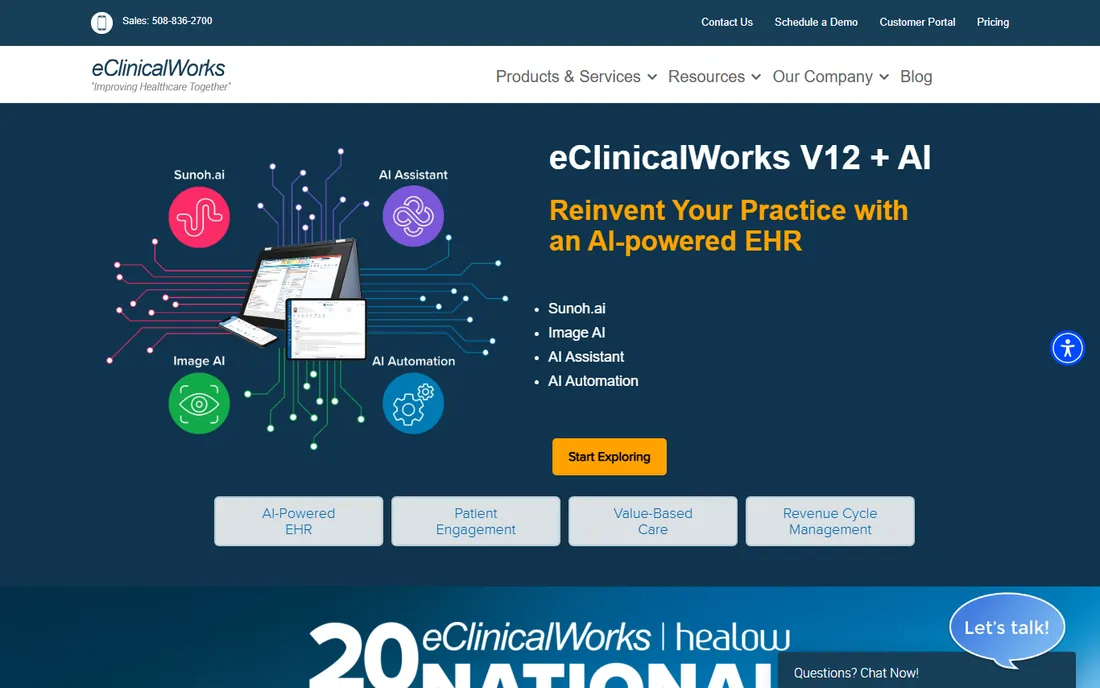
eClinicalWorks serves ambulatory practices with a broad feature set: EHR, practice management, patient engagement, telehealth, and population health tools. The large user base means specialty-specific workflows and a big community. Pricing is accessible for independent practices.
The interface packs in a lot and can feel dense. Support experiences vary by account. But the feature breadth at the price point is strong, and the integrated telehealth (increasingly essential) works well. For practices wanting comprehensive ambulatory functionality affordably, it belongs on the shortlist.
What we like- Broad ambulatory features
- Large user base
- Telehealth included
Watch out for- Interface is dense
- Support experiences vary
Starting priceSee website
Free planNo
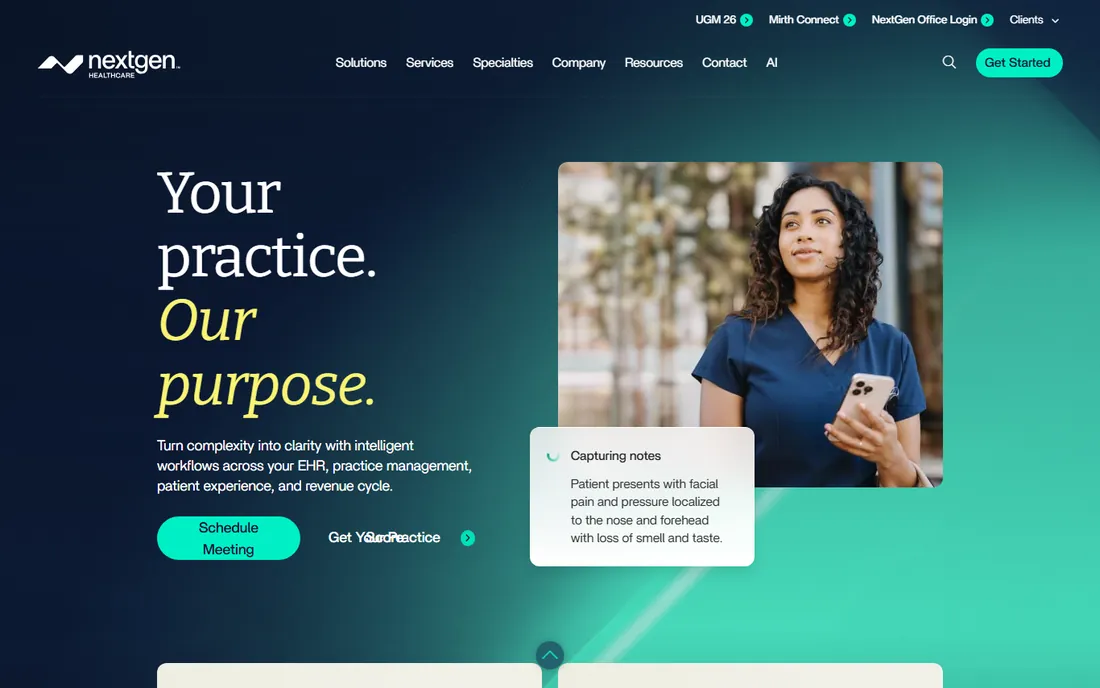
NextGen Healthcare focuses on ambulatory practices, especially specialties and larger groups: specialty-specific templates and workflows, integrated practice management, and the scale to handle multi-location groups. The depth in specialty documentation suits practices where generic EHRs fall short.
Implementation takes effort and parts of the interface show age. But specialty practices have specific needs (templates, workflows, reporting) that generalist EHRs handle poorly. NextGen's specialty focus addresses exactly this. For specialty groups of real size, it is a strong contender.
What we like- Strong specialty templates
- Good for larger groups
- Integrated PM
Watch out for- Implementation effort
- Interface aging in places
Starting priceSee website
Free planNo
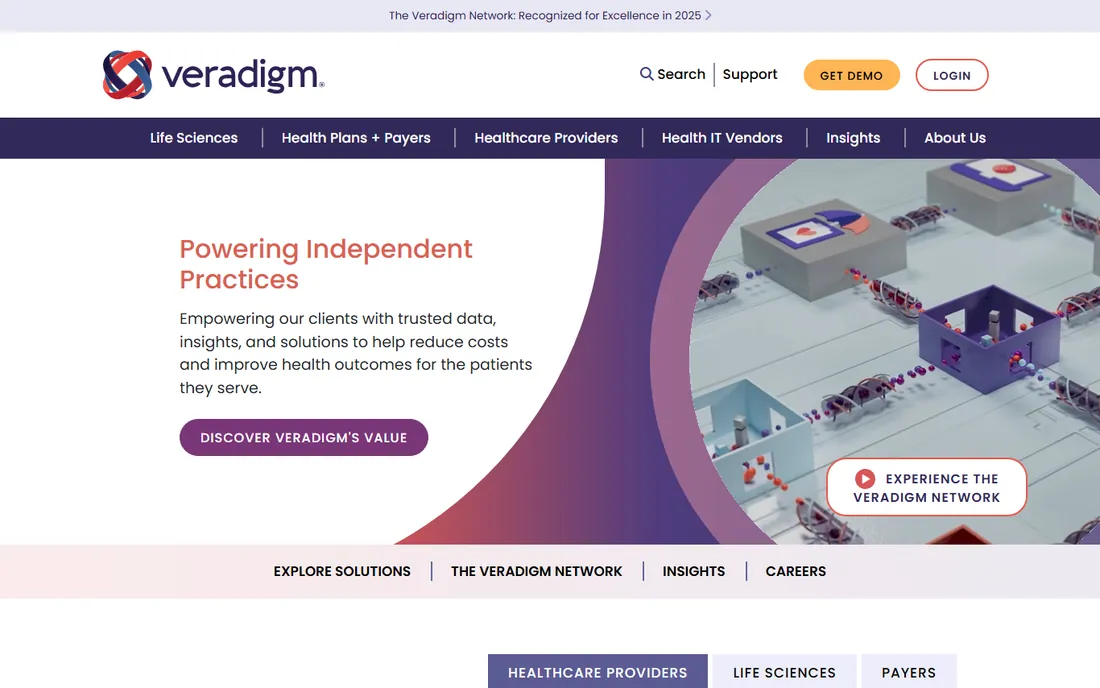
Veradigm, formerly Allscripts, combines EHR products (including the former TouchWorks and Professional suites) with a large data and analytics network connecting providers and payers. The FollowMyHealth patient engagement and payer connectivity extend beyond documentation. Organizations valuing the data network alongside the EHR find the combination distinctive.
The Allscripts-to-Veradigm transition reshaped the company; the market position continues evolving. But the installed base is large and the data assets are real. For practices already on the platform and organizations interested in the payer-provider data connectivity, Veradigm offers more than just an EHR.
What we like- EHR plus data network
- Payer connectivity
- Analytics strengths
Watch out for- Transition from Allscripts
- Market position evolving
Starting priceSee website
Free planNo
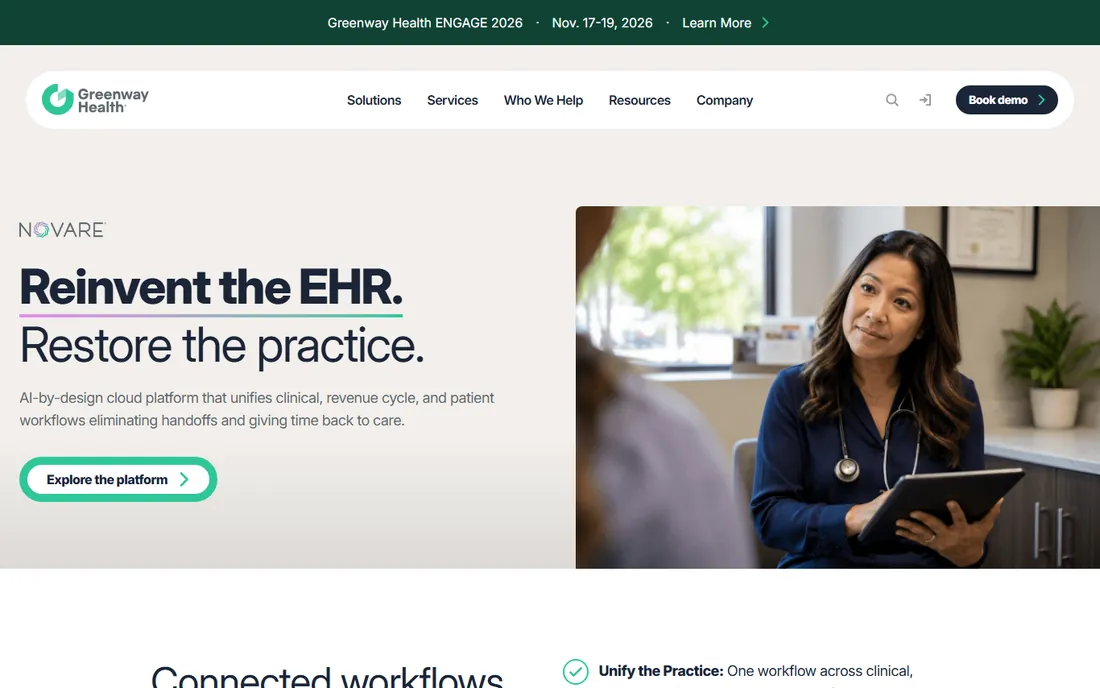
Greenway Health (Intergy and Prime Suite) serves small to mid-size ambulatory practices: EHR and practice management scaled to independent practice realities, with specialty-specific options. The focus keeps pricing and complexity appropriate for practices without IT departments. Long-standing presence means stability.
Larger groups and hospitals need more. The ecosystem is narrower than the giants'. But small practices are poorly served by enterprise EHRs; Greenway's practice-sized approach fits the way independent medicine actually operates. Right-sized software for right-sized practices.
What we like- Focused on small practices
- Accessible
- Specialty options
Watch out for- Less for large groups
- Narrower ecosystem
Starting priceSee website
Free planNo
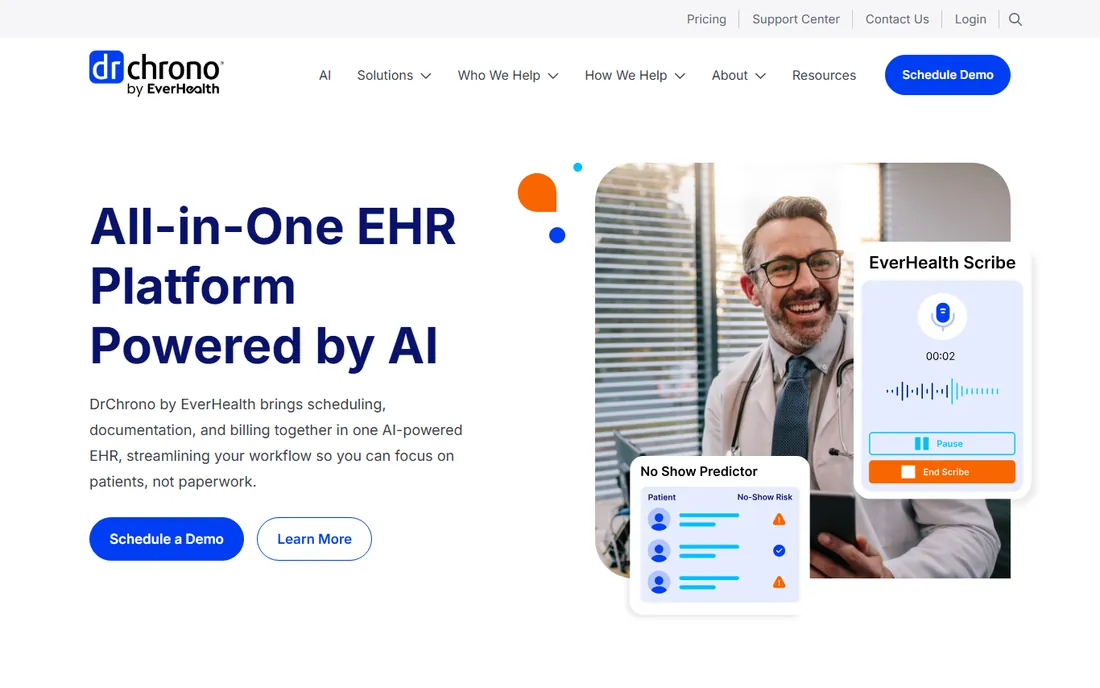
DrChrono built its EHR around the iPad: native mobile documentation, photos, and patient interaction designed for the tablet from day one. Small practices (especially cash-pay, concierge, and mobile practices) appreciate the modern interface and the freedom from desktop workstations. The API and developer platform extend functionality.
The Apple-centric design limits Windows/Android shops. Complex organizations need more. But for the growing segment of practices that run on tablets, DrChrono's mobile-first approach is not a gimmick but the actual workflow. It designed for how these practices work rather than shrinking a desktop EHR.
What we like- IPad-native design
- Modern interface
- Good for small practices
Watch out for- Apple-centric
- Less for complex organizations
The implementation reality
EHR selection matters less than EHR implementation, and buyers consistently underestimate the latter. Successful implementations share patterns: physician champions involved from selection through go-live, workflow redesign (not just digitizing paper processes), realistic training time (measured in weeks per provider, not hours), and honest reference visits to similar organizations. The software's quality sets the ceiling; the implementation determines where you land under it. Budget as much for implementation, training, and workflow change as for the software itself. Data migration deserves special attention: years of patient records, often with inconsistent coding and duplicate charts, must move cleanly. Start the data cleanup early, validate migrated records with clinical staff, and keep the legacy system readable (not necessarily live) for at least a year after go-live. The practices that struggle most are the ones that treated migration as an IT task rather than a clinical safety project. And plan for the productivity dip: every EHR go-live temporarily slows providers before the new workflows pay off.
What to check before you choose
Specialty and setting fit
Hospital EHRs and ambulatory EHRs are different products; specialty needs differ further. Shortlist only vendors with proven customers in your exact setting and specialty. Generic demos impress; specialty workflows decide. Visit reference sites and watch real users work.
Interoperability in practice
Every vendor claims interoperability; test it against your actual exchange partners (labs, imaging, hospitals, HIEs). FHIR APIs are the modern standard; verify what is genuinely available versus roadmap. Poor interoperability creates the fax-machine workarounds that frustrate everyone.
Total cost over ten years
EHR relationships last a decade or more. Model licenses, implementation, training, interfaces, upgrades, and support over ten years, not three. The cheapest license with expensive interfaces and upgrades often costs most. Include the productivity dip in your planning.
Physician usability
Providers who hate the EHR burn out faster; usability is a clinical issue, not just an IT preference. Involve practicing physicians in evaluation, measure clicks per task, and assess documentation burden honestly. Ambient AI documentation tools are changing this picture; ask every vendor about their approach.
How we chose
We selected EHR/EMR platforms with real provider user bases in 2026, from enterprise systems to practice-focused tools. We evaluated clinical functionality, usability reputation, interoperability, and fit for different care settings. We excluded pure practice management tools without clinical EHR, niche single-specialty apps, and discontinued products. No vendor paid for placement, and we did not run clinical trials.
Frequently asked questions
What is the difference between EMR and EHR?
The terms are often used interchangeably. Strictly, EMR (electronic medical record) is the digital chart within one practice; EHR (electronic health record) implies broader sharing across providers. In practice, vendors and buyers say EHR for the full platform. This guide covers both usages.
Which EHR is best for a small practice?
athenahealth, eClinicalWorks, Greenway, and DrChrono all serve small practices well, with different strengths: athenahealth for integrated RCM, eClinicalWorks for feature breadth, Greenway for simplicity, DrChrono for mobile-first workflows. The right choice depends on specialty, tech comfort, and whether you want billing services bundled.
How long does EHR implementation take?
Small practices: two to four months. Mid-size groups: six to twelve months. Large health systems: two to four years. These are planning horizons, not software installation times; workflow redesign, training, and data migration consume the schedule. Rushing implementation is the most common cause of EHR dissatisfaction.
Can we switch EHRs later?
Yes, but it is painful and expensive: data migration, retraining, workflow rebuilding, and the productivity dip repeat. Organizations switch when the current EHR fundamentally cannot meet needs, not for marginal improvements. Choose carefully now; the switching cost enforces the decision for years. If you are currently on a legacy system, involve your physicians in the decision early: the people who will live in the new EHR daily should have real influence over the choice, not just a demo seat. Their buy-in determines whether implementation succeeds or becomes an expensive struggle.
What about AI in EHRs?
Ambient clinical documentation (AI that drafts notes from patient conversations) is the most significant EHR development in years, reducing the documentation burden substantially. Every major vendor has a strategy here; ask specifically about ambient AI availability, accuracy, and cost during evaluation. It may matter more than traditional feature differences within a few years. Early adopters report meaningful reductions in after-hours charting, which directly addresses burnout.
Is cloud-based EMR safe?
Reputable cloud EMR vendors meet HIPAA requirements with encryption and access controls. On-premise gives you physical control but shifts security burden to your IT team. Most small practices choose cloud for simplicity.
Sources we checked (9)
- https://www.epic.com
- https://www.oracle.com/health/
- https://ehr.meditech.com/
- https://www.athenahealth.com
- https://www.eclinicalworks.com
- https://www.nextgen.com
- https://veradigm.com
- https://www.greenwayhealth.com
- https://www.drchrono.com
Is your product missing or out of date?
We review this list regularly. Vendors can request a listing, send updated pricing or ask about featured placement.

Shihab Mia · Founder, Rankite
Shihab has spent more than a decade helping SaaS and e-commerce brands grow through search. He writes Rankite's software buying guides from pricing pages, documentation and public user reviews. More about Shihab.
 Epic
Epic Oracle Health
 MEDITECH
 athenahealth
 eClinicalWorks
 NextGen
 Veradigm
 Greenway Health
 DrChrono