How we make this list: we compare pricing pages, product documentation and public user reviews. Rankite is independent; if a vendor ever pays for a featured spot, that listing is clearly labeled Partner.
Key takeaways
- Productboard leads for customer-driven roadmapping, connecting user feedback directly to roadmap decisions.
- Aha! is the most complete product management suite, for teams that want strategy through delivery in one place.
- Roadmunk and ProductPlan are the visual roadmap specialists: beautiful shareable roadmaps without the suite overhead.
- airfocus and Canny bring prioritization and feedback into focus, which suits teams whose roadmap problem is deciding what matters.
Quick comparison
| Tool | Best for | Starting price | Free plan |
|---|
 Productboard Productboard | Turning customer feedback into roadmaps | See website | Free trial |
 Aha! Aha! | End-to-end product management | See website | Free trial |
 Roadmunk Roadmunk | Visual roadmaps that impress stakeholders | See website | Free trial |
 ProductPlan ProductPlan | Simple roadmaps without the learning curve | See website | Free trial |
 airfocus airfocus | Prioritization-driven roadmapping | See website | Free trial |
 Canny Canny | Roadmaps driven by user feedback | See website | Free tier |
 ProdPad ProdPad | Lean product teams that hate bloat | See website | Free trial |
 Favro Favro | Agile teams bridging planning and roadmaps | See website | Free trial |
 FeatureMap FeatureMap | Visual story mapping and lightweight roadmaps | See website | Free tier |
 Dragonboat Dragonboat | Outcome-focused product portfolios | See website | No |
Is your product missing or out of date?
We review this list regularly. Vendors can request a listing, send updated pricing or ask about featured placement.
The best product roadmap software
Starting priceSee website
Free planFree trial
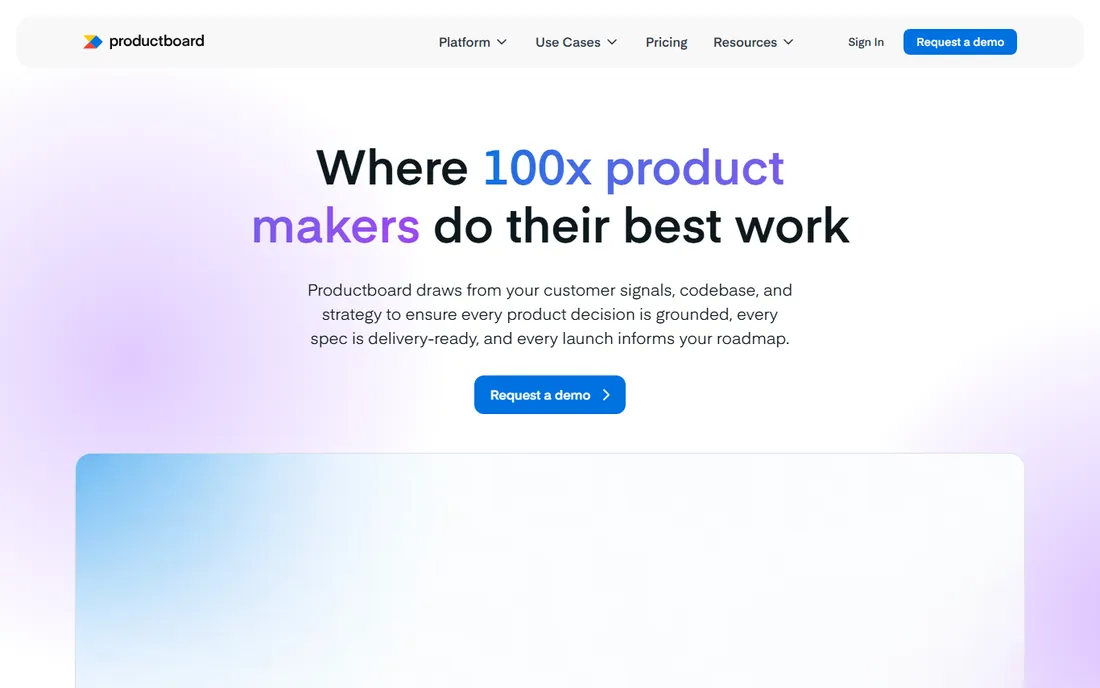
Productboard's thesis is that roadmaps should start from customer needs: collect feedback from everywhere, organize it into insights, prioritize features against real evidence, then share roadmaps that explain the why. Product-led companies find this workflow natural.
The pricing targets established product organizations, and small teams may find it heavy. But for companies where "the customer asked for it" should be provable, Productboard closes the loop.
What we like- Feedback insights feed prioritization directly
- Great for product-led companies
- Strong integrations
Watch out for- Premium pricing
- Can be more than small teams need
Starting priceSee website
Free planFree trial
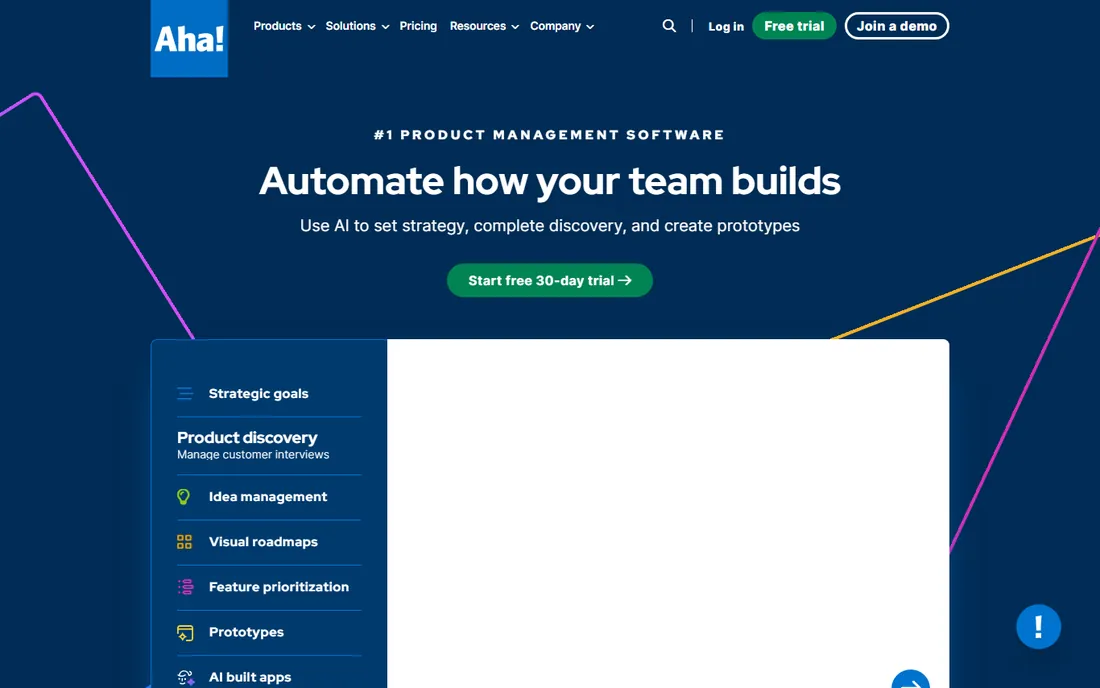
Aha! is the full product management suite: strategy, idea management, roadmaps, releases and reporting in one deeply integrated platform. Large product organizations standardize on it because it handles the entire product lifecycle coherently.
The depth brings a learning curve, and the pricing reflects the enterprise positioning. But teams that outgrow point tools will find Aha!'s completeness worth the investment.
What we like- Strategy, roadmaps, ideas and delivery in one suite
- Deep functionality
- Proven at scale
Watch out for- Learning curve
- Premium pricing
Starting priceSee website
Free planFree trial
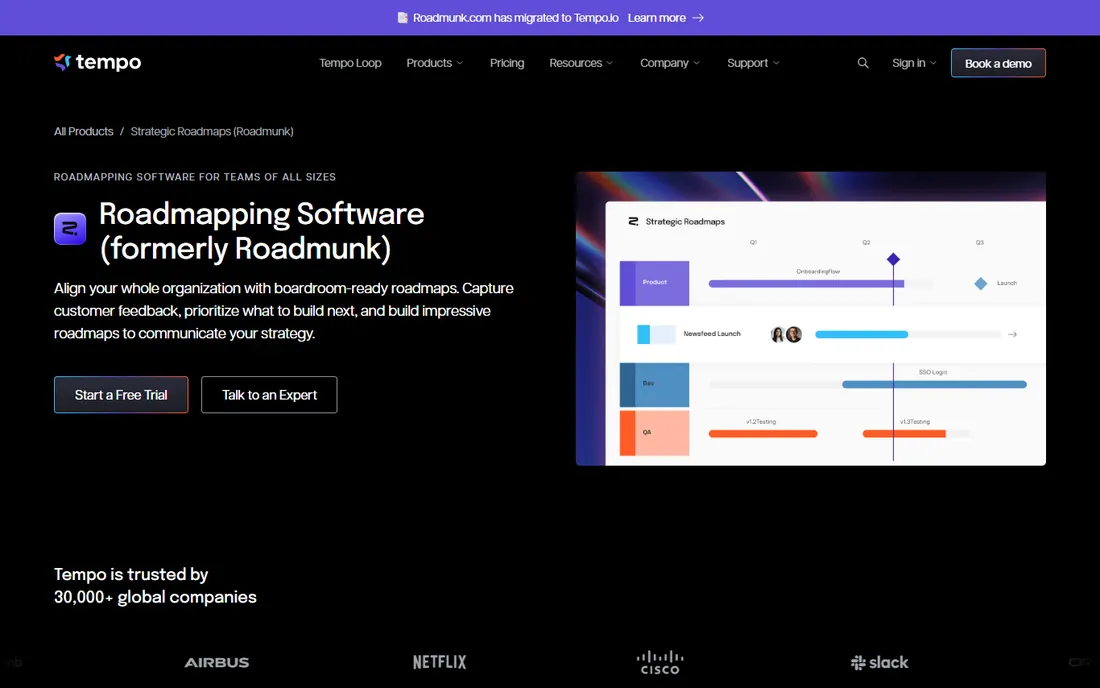
Roadmunk makes roadmaps people actually enjoy looking at: timeline, swimlane and portfolio views that export beautifully for executives and board meetings. The Jira integration keeps engineering reality connected to the pretty picture.
Feedback management and deep prioritization are thinner than Productboard's. But when the job is communicating the plan clearly, Roadmunk's visual polish is the point.
What we like- Beautiful presentation-ready roadmaps
- Easy stakeholder sharing
- Good Jira integration
Watch out for- Less depth in feedback and prioritization
- Now part of Tempo
Starting priceSee website
Free planFree trial
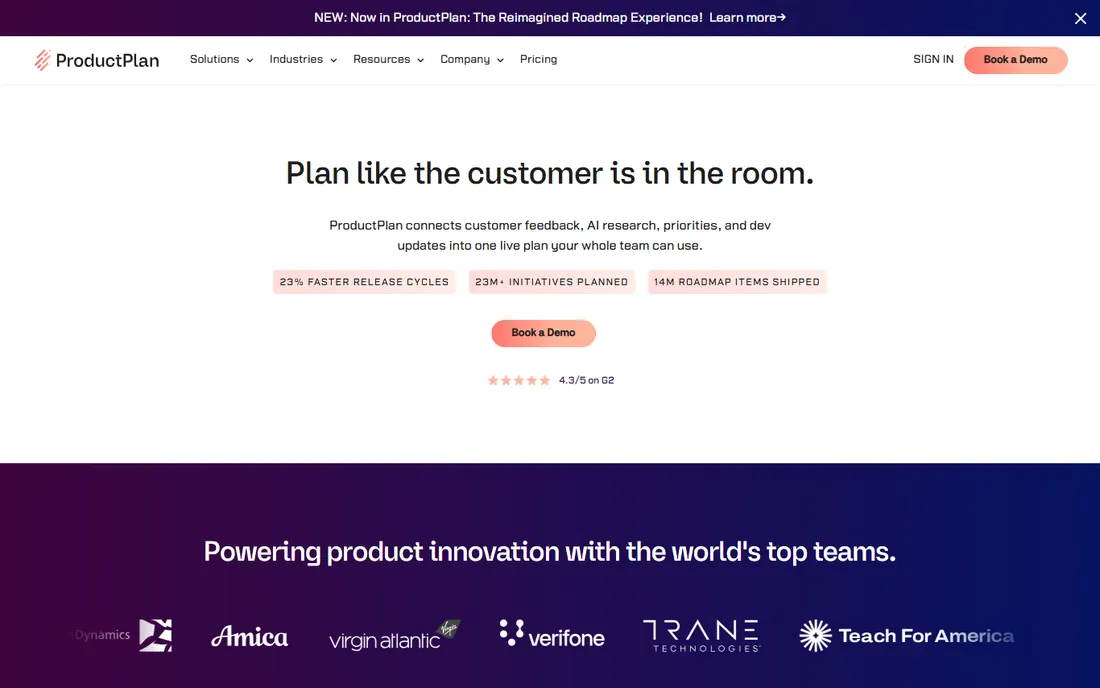
ProductPlan does one thing well: visual roadmaps anyone can build in an afternoon. Drag bars on a timeline, color by status, share with stakeholders. Teams that found Aha! overwhelming get communicating value immediately.
Product managers needing feedback, scoring and delivery management will outgrow it. But simplicity is a strategy: a roadmap everyone understands beats a sophisticated one nobody reads.
What we like- Extremely easy to learn
- Clean visual roadmaps
- Good for stakeholder communication
Watch out for- Limited product management depth
- Simple by design
Starting priceSee website
Free planFree trial
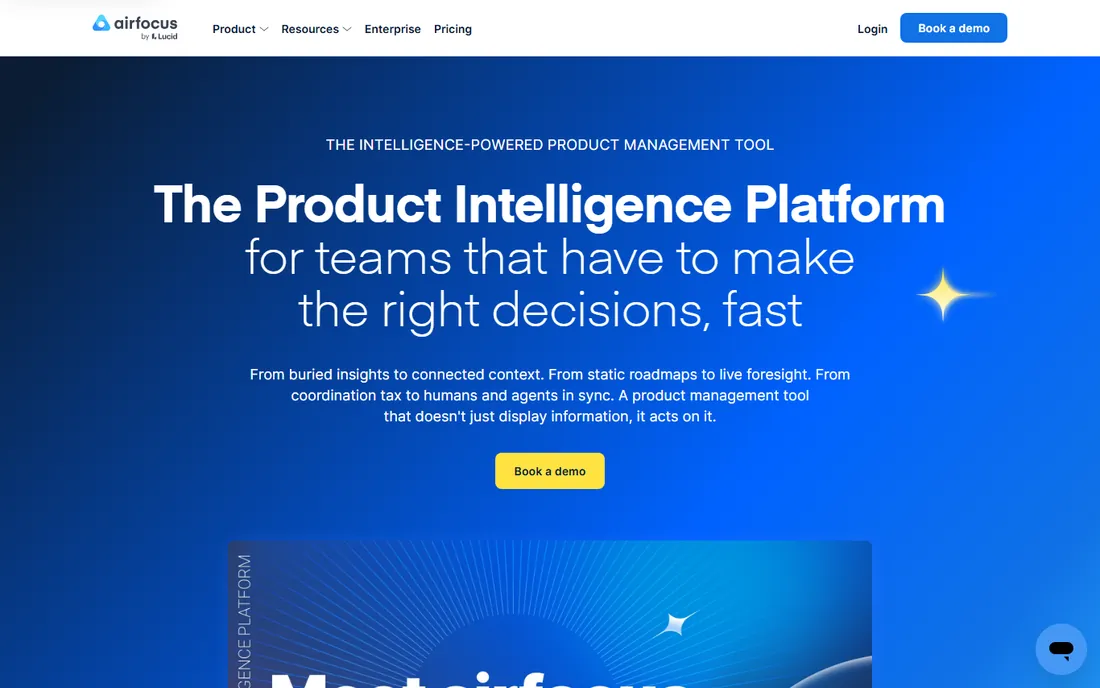
airfocus starts from prioritization: score features with RICE, value-vs-effort or custom frameworks, then build roadmaps from the ranked list. Teams whose real problem is deciding what matters, not drawing timelines, find this focus refreshing.
The visualizations are functional rather than beautiful. But disciplined prioritization beats pretty roadmaps that nobody believes, and airfocus enforces the discipline.
What we like- Excellent prioritization frameworks
- Modular approach
- Good integrations
Watch out for- Smaller vendor
- Roadmap visualization is functional
Starting priceSee website
Free planFree tier
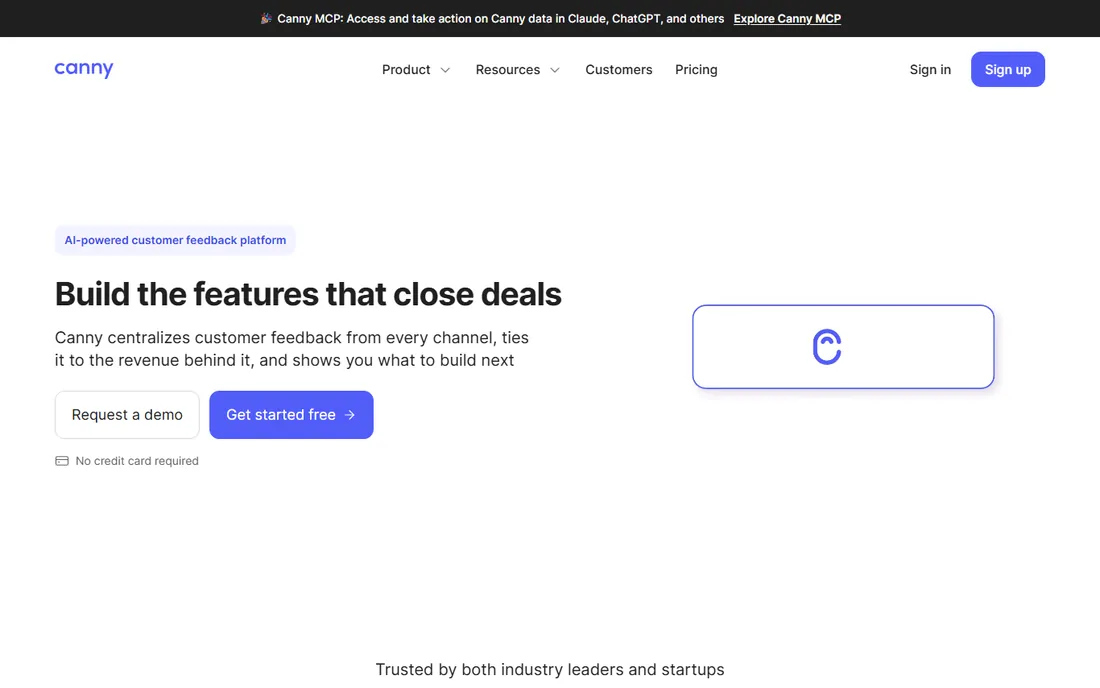
Canny combines user feedback collection, public roadmaps and changelogs in one affordable tool. SaaS companies show users what is planned, let them vote, and announce releases, closing the feedback loop publicly. The free tier covers the basics.
Enterprise portfolio management is beyond its scope. But for SaaS teams wanting transparent, feedback-driven roadmaps, Canny delivers the complete loop cheaply.
What we like- Feedback boards plus public roadmaps
- Changelog included
- Affordable with free tier
Watch out for- Lightweight for complex portfolios
- Less enterprise depth
Starting priceSee website
Free planFree trial
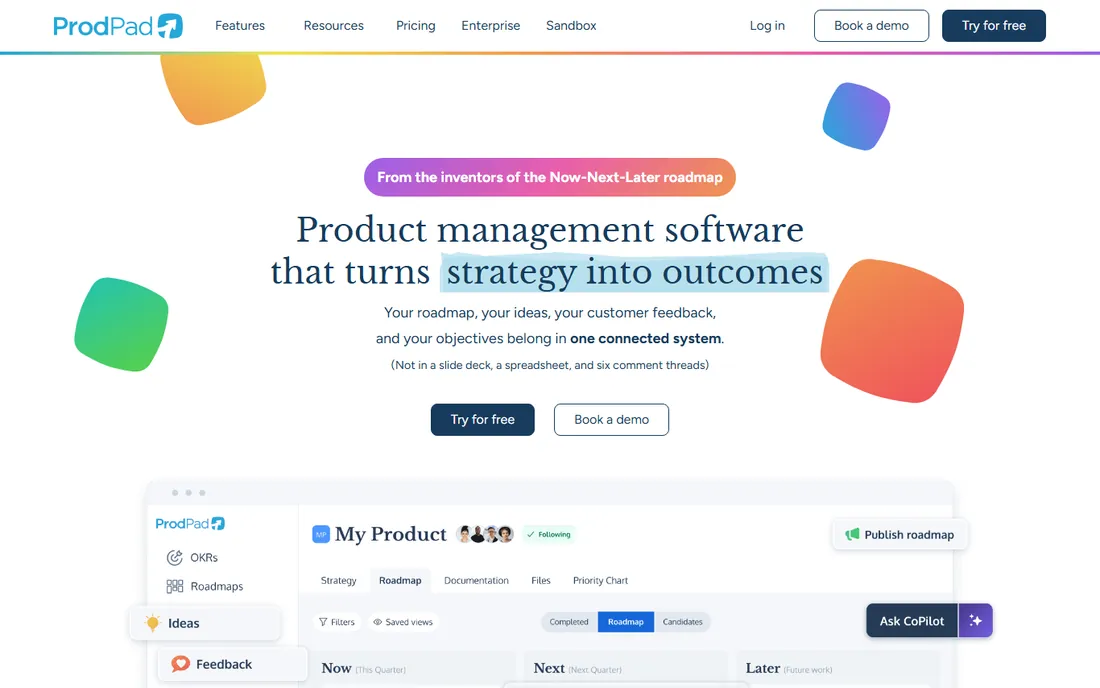
ProdPad is product management without the bloat: ideas, feedback, roadmaps and specs in a lean tool that respects small teams' time. The philosophy shows in every screen: enough structure to be useful, never so much it slows you down.
Teams wanting beautiful board-ready visuals or enterprise depth should look elsewhere. But lean product teams will find ProdPad the right-sized tool.
What we like- Lean and focused
- Good idea management
- Sensible pricing
Watch out for- Less visual polish than rivals
- Smaller ecosystem
#8
Favro
Best for: Agile teams bridging planning and roadmaps
Visit favro.com
Starting priceSee website
Free planFree trial
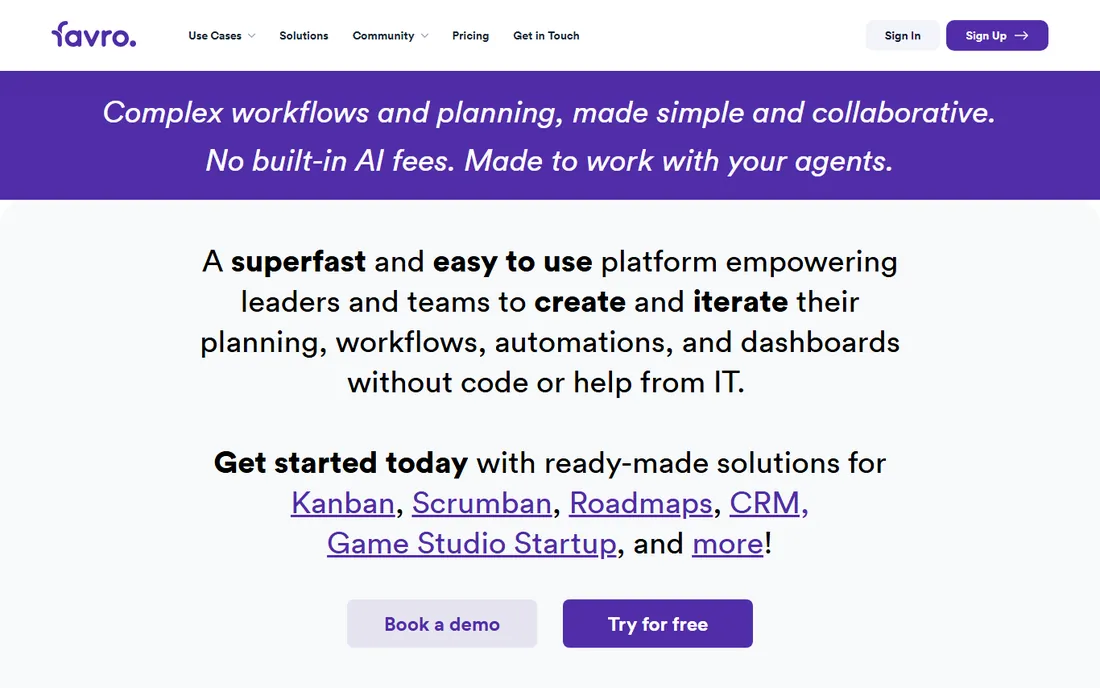
Favro's collections flex from kanban boards to timelines to roadmaps, suiting agile organizations that plan at multiple levels. Product, engineering and leadership views connect without separate tools. The modern interface keeps it fast.
It is less product-management-specific than Productboard or Aha!: no feedback portals, lighter prioritization. But agile teams that plan collaboratively will find Favro's flexibility natural.
What we like- Flexible collections from boards to roadmaps
- Good for agile orgs
- Fast and modern
Watch out for- Less product-specific than dedicated tools
- Requires setup thinking
Starting priceSee website
Free planFree tier
FeatureMap does story mapping beautifully: lay out user journeys, slice releases, and plan visually. Agile teams run planning workshops in it, and the free tier covers real use. The visual approach makes priorities tangible.
It is a mapping tool, not a product management suite. But for teams that think visually and plan collaboratively, FeatureMap's focus beats feature bloat.
What we like- Story mapping done well
- Free tier usable
- Great for workshops
Watch out for- Narrow focus
- Not a full product suite
Starting priceSee website
Free planNo
Dragonboat connects roadmaps to outcomes: OKRs, portfolio planning and resource allocation for product organizations managing many teams. The focus on measurable results suits companies running product at scale.
Single teams will find it heavy. But product leaders coordinating portfolios around outcomes will value the alignment it enforces.
What we like- OKR-aligned roadmapping
- Portfolio-level planning
- Good for scaled product orgs
Watch out for- Enterprise positioning
- Less suited to single teams
Roadmaps communicate; prioritization decides
The tool matters less than the discipline. A beautiful roadmap built on politics fails; an ugly one built on evidence succeeds. Before buying software, fix the decision process: how do ideas get scored, who decides, and what evidence counts.
Then pick the tool that fits your bottleneck. Communication problem? Roadmunk or ProductPlan. Prioritization problem? airfocus or Productboard. Feedback problem? Canny. Enterprise complexity? Aha! or Dragonboat. The software amplifies the process; it cannot replace it.
How we chose
We compared tools on roadmap visualization, prioritization methods, feedback integration, collaboration, integrations and pricing. We verified each vendor's homepage and current positioning, reviewed product manager feedback on industry forums, G2 and review sites, and weighted real planning workflows over feature lists. We did not run product organizations on these platforms.
Saying no: the roadmap skill nobody teaches
Every product manager knows the roadmap is as much about what you exclude as what you include. The skill is saying no in a way that preserves the relationship: acknowledge the request's merit, explain the trade-off in terms of what would have to slip, and offer the alternative you can commit to. "Not now" beats "no" when the idea has genuine value for later.
Document the nos. A public or internal "considered but not planned" list with brief reasons does three things: it shows stakeholders they were heard, it prevents the same request from resurfacing every quarter as if new, and it creates a backlog of validated ideas for future planning. The worst outcome is a request that vanishes into silence.
Use a consistent prioritization framework and show your work. Whether it is RICE, weighted scoring or cost-of-delay, the framework matters less than its consistent application. When stakeholders see their request scored by the same rules as everything else, the conversation shifts from politics to evidence. Publish the scores, not just the decisions.
Tie every major roadmap item to a measurable outcome. "Improve onboarding" is a wish; "raise trial-to-paid conversion from 8 to 12 percent" is a commitment the team can rally around and be judged on. Outcome-linked roadmaps also make the nos easier: anything that does not move a committed metric waits its turn.
Finally, revisit quarterly with fresh evidence. Roadmaps are hypotheses, and hypotheses update. A quarterly review where items move based on new data keeps the roadmap honest and teaches the organization that planning is a discipline, not a promise carved in stone.
Roadmapping mistakes product teams make
The most common is the feature factory roadmap: a list of outputs with no outcomes attached. Shipping features is not the goal; moving metrics is. Every roadmap item should connect to a measurable result, or it is just busywork with a timeline.
Second is confusing the roadmap with a commitment. Roadmaps shown without uncertainty caveats become promises, and every change becomes a betrayal. Label time horizons honestly: now is committed, next is planned, later is directional. Teams that communicate uncertainty keep trust when plans change.
Third is building by loudest voice. Without a consistent prioritization framework, the roadmap reflects who argued best in the last meeting. Apply the scoring rules equally, publish the reasoning, and let evidence beat politics. The framework is the shield against HIPPO-driven planning.
Fourth is neglecting discovery. Roadmaps full of solutions nobody validated produce shipped features nobody uses. Reserve real capacity for discovery: customer interviews, prototype testing, data analysis. The best roadmap item is often the one you killed after discovery proved it wrong.
Finally, setting the roadmap in stone annually. Markets shift, competitors move, and user feedback accumulates. Review quarterly, update based on evidence, and treat the roadmap as a living hypothesis. Rigidity is not discipline; responsiveness is.
Frequently asked questions
What is product roadmap software?
Tools for planning, visualizing and communicating what a product team will build and why: timelines, priorities, dependencies and the rationale, shared with stakeholders.
Do small teams need roadmap software?
A shared doc or simple tool like ProductPlan or Canny often suffices until the team grows. Buy dedicated software when prioritization arguments or stakeholder communication becomes painful.
How is this different from Jira?
Jira tracks engineering execution; roadmap tools plan and communicate strategy. Most teams use both: roadmaps for direction, Jira for delivery. Integrations connect them.
What is the best free option?
Canny and FeatureMap offer usable free tiers. ProductPlan and others offer trials. For ongoing free use, the lightweight tools beat enterprise trials.
Should roadmaps be public?
SaaS companies increasingly share public roadmaps via tools like Canny to build trust. Internal roadmaps stay private for competitive reasons. Many teams run both.
How often should roadmaps change?
Roadmaps are plans, not promises: review quarterly, update as evidence changes. Tools that make updating easy get updated; static roadmaps become fiction.
Sources we checked (10)
- https://www.productboard.com/
- https://www.aha.io/
- https://www.roadmunk.com/
- https://www.productplan.com/
- https://airfocus.com/
- https://canny.io/
- https://www.prodpad.com/
- https://www.favro.com/
- https://www.featuremap.co/
- https://www.dragonboat.io/
Is your product missing or out of date?
We review this list regularly. Vendors can request a listing, send updated pricing or ask about featured placement.

Shihab Mia · Founder, Rankite
Shihab has spent more than a decade helping SaaS and e-commerce brands grow through search. He writes Rankite's software buying guides from pricing pages, documentation and public user reviews. More about Shihab.