How we make this list: we compare pricing pages, product documentation and public user reviews. Rankite is independent; if a vendor ever pays for a featured spot, that listing is clearly labeled Partner.
Key takeaways
- LeanIX (now part of SAP) leads the modern SaaS approach: collaborative, continuously updated architecture rather than static diagrams.
- Ardoq is the data-driven challenger, treating architecture as a living graph that answers real questions.
- Bizzdesign, Orbus and MEGA serve traditional EA practices with deep modeling and governance.
- Sparx Enterprise Architect remains the affordable modeling workhorse for architects who draw more than they govern.
Quick comparison
| Tool | Best for | Starting price | Free plan |
|---|
 LeanIX LeanIX | Modern collaborative enterprise architecture | See website | Free trial |
 Ardoq Ardoq | Architecture as answerable data | See website | Free trial |
 Bizzdesign Bizzdesign | Formal EA practice with ArchiMate depth | See website | No |
 Orbus iServer Orbus iServer | EA in Microsoft-centric organizations | See website | Free trial |
 Sparx Enterprise Architect Sparx Enterprise Architect | Affordable deep modeling | See website | Free trial |
 Avolution Abacus Avolution Abacus | Algorithm-driven architecture analysis | See website | Free trial |
 MEGA Hopex MEGA Hopex | EA integrated with risk and compliance | See website | No |
 Alfabet Alfabet | IT portfolio management with architecture | See website | No |
 Erwin Erwin | Data architecture plus enterprise modeling | See website | Free trial |
 Planview Planview | EA connected to work and portfolio execution | See website | No |
Is your product missing or out of date?
We review this list regularly. Vendors can request a listing, send updated pricing or ask about featured placement.
#1
LeanIX
Best for: Modern collaborative enterprise architecture
Visit leanix.net
Starting priceSee website
Free planFree trial
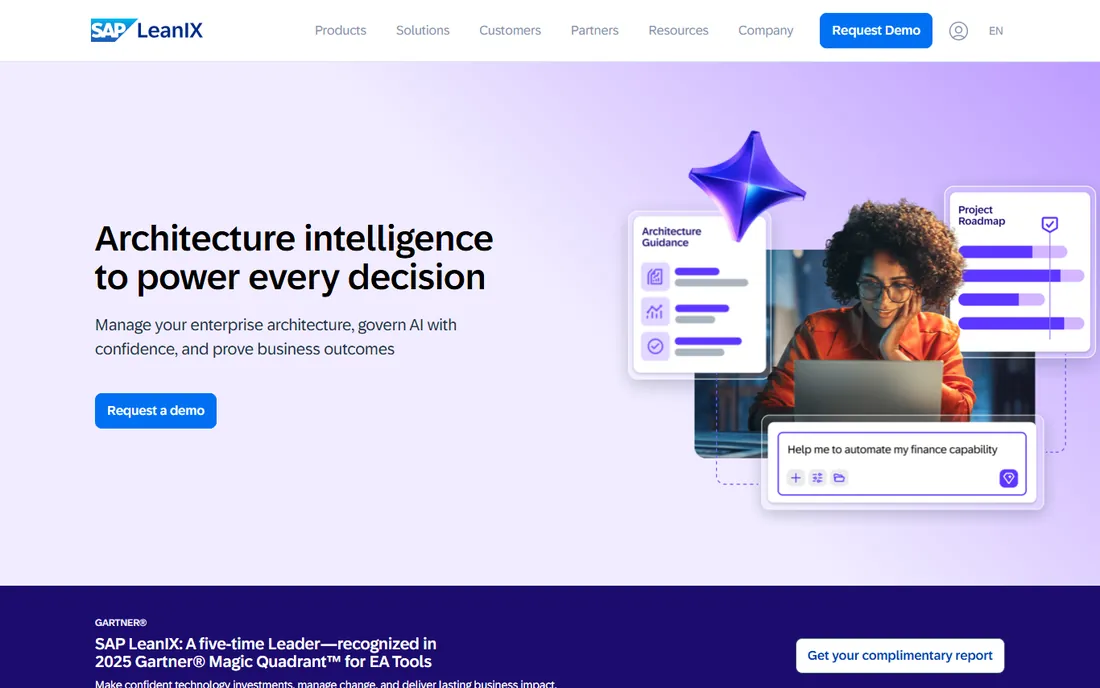
LeanIX (acquired by SAP) modernized enterprise architecture: a SaaS platform where application portfolios, technology standards and transformations are documented collaboratively and kept current. The fact sheets and surveys make data collection painless compared to traditional EA tools.
Traditionalists find the modeling depth lighter than Bizzdesign or MEGA. And SAP ownership raises roadmap questions for non-SAP shops. But for EA teams wanting living architecture instead of shelfware diagrams, LeanIX defined the modern approach.
What we like- SaaS simplicity
- Application portfolio management done well
- Strong ecosystem and community
Watch out for- Now part of SAP, which affects roadmap
- Less deep modeling than traditional tools
Starting priceSee website
Free planFree trial
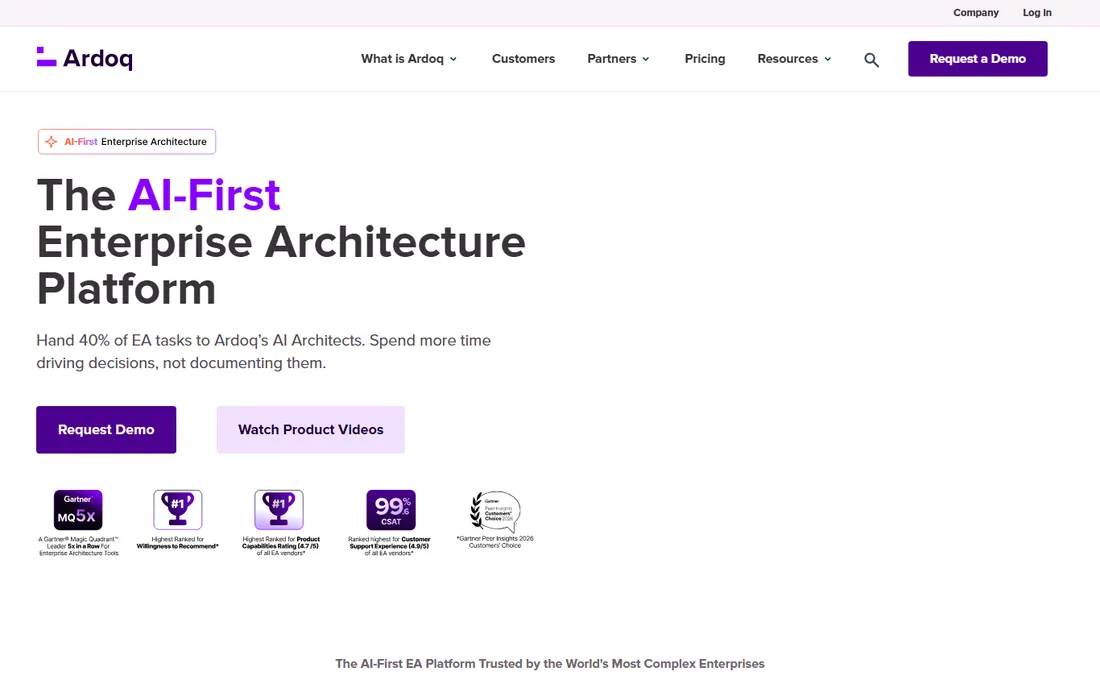
Ardoq treats enterprise architecture as a graph database: model applications, capabilities, people and technology once, then query it for answers. What depends on this system? What breaks if we retire it? The visualizations make dependencies tangible for non-architects.
The approach demands data discipline; a graph is only as good as its data. But organizations that maintain it get decision support traditional diagram tools cannot match.
What we like- Graph-based model answers real questions
- Modern UX
- Good integrations
Watch out for- Newer with smaller ecosystem
- Requires data discipline
Starting priceSee website
Free planNo
Bizzdesign (including the former BiZZdesign Architect) serves formal enterprise architecture practices: rigorous ArchiMate modeling, governance workflows and portfolio management. Large enterprises and governments with established EA functions rely on its depth.
The learning curve is real, and the pricing is enterprise. But organizations practicing architecture as a discipline, not just documentation, will find the rigor appropriate.
What we like- Deep ArchiMate modeling
- Strong governance workflows
- Proven in large enterprises
Watch out for- Traditional EA learning curve
- Enterprise pricing
Starting priceSee website
Free planFree trial
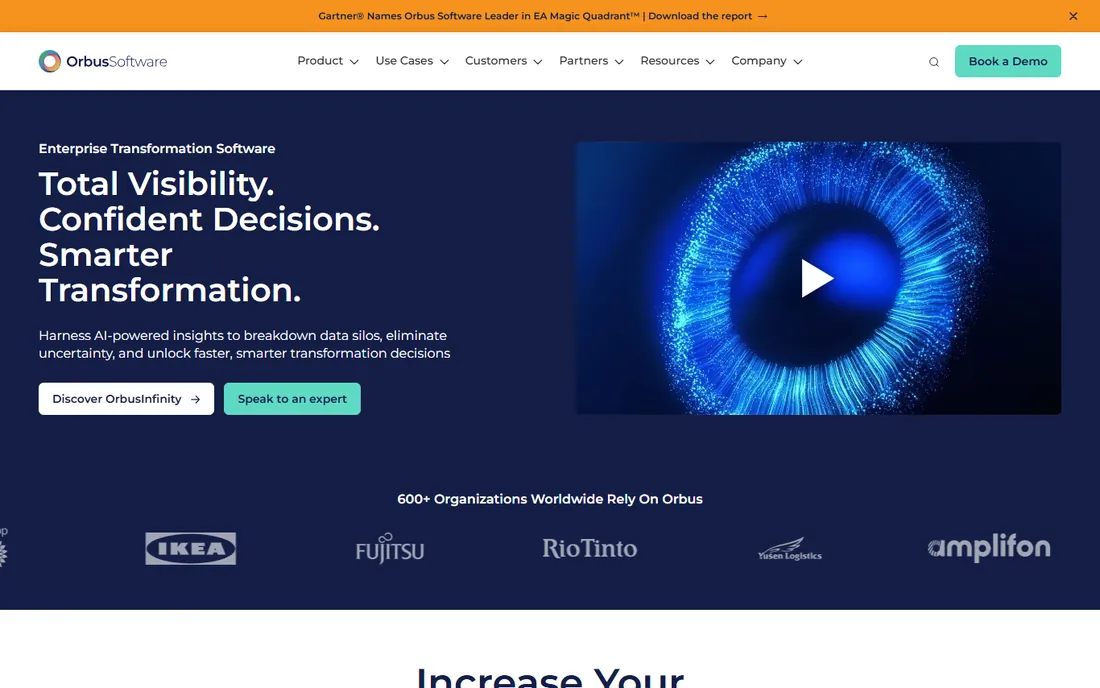
Orbus iServer builds its EA repository on Microsoft platforms, which suits organizations standardized on Microsoft: familiar interfaces, SharePoint integration and Office-friendly outputs. The repository approach centralizes architecture artifacts effectively.
The Microsoft foundation is also the limit; cloud-native flexibility trails SaaS competitors. But Microsoft shops wanting EA without a new platform paradigm will find iServer comfortable.
What we like- Built on Microsoft technology
- Familiar to Office users
- Good repository features
Watch out for- Microsoft dependency
- Less modern than SaaS rivals
Starting priceSee website
Free planFree trial
Sparx Enterprise Architect is the value champion: deep modeling across UML, ArchiMate, BPMN and more at a fraction of enterprise tool prices. Individual architects and small teams get professional-grade modeling cheaply.
The interface is dated and collaboration features lag SaaS tools. But for architects who model deeply and present occasionally, the capability per dollar is unmatched.
What we like- Very affordable
- Deep UML and ArchiMate modeling
- Huge feature set
Watch out for- Dated interface
- Single-user heritage shows in collaboration
Starting priceSee website
Free planFree trial
Avolution's Abacus applies algorithms to architecture: analyze options, optimize roadmaps and simulate transformation scenarios mathematically. Architects planning complex change get decision support beyond diagrams.
The approach is distinctive enough to require learning. But for transformation programs where the question is which path, not just what exists, the analytics justify the effort.
What we like- Unique analytics and roadmapping algorithms
- Good for transformation planning
- Flexible modeling
Watch out for- Smaller market presence
- Learning curve on the analytics
#7
MEGA Hopex
Best for: EA integrated with risk and compliance
Visit mega.com
Starting priceSee website
Free planNo
MEGA Hopex combines enterprise architecture with governance, risk and compliance: one platform where architecture, risk and regulatory requirements connect. Banks, insurers and regulated enterprises get the integrated view auditors demand.
The platform is heavyweight by design. But regulated organizations needing architecture and compliance together will find the integration valuable.
What we like- EA plus GRC in one platform
- Strong for regulated industries
- Deep methodology
Watch out for- Enterprise complexity and pricing
- Heavyweight for simple needs
Starting priceSee website
Free planNo
Alfabet (Software AG) approaches from IT portfolio management: plan applications, technologies and investments with architecture as the foundation. Large IT organizations managing hundreds of applications get the planning discipline they need.
Pure architecture modeling is secondary to portfolio thinking. But CIOs managing IT as an investment portfolio will find Alfabet's perspective natural.
What we like- Strong IT portfolio and planning
- Part of Software AG
- Good for large IT orgs
Watch out for- Enterprise sales process
- Portfolio-first rather than architecture-first
#9
Erwin
Best for: Data architecture plus enterprise modeling
Visit erwin.com
Starting priceSee website
Free planFree trial
Erwin built its name on data modeling and expanded into enterprise architecture: organizations where data is the asset get modeling that treats data as first-class. The data governance connections suit data-driven enterprises.
Traditional application architecture is newer than the data side. But for data-centric organizations, Erwin's perspective matches how they actually think.
What we like- Best-in-class data modeling
- Now broader EA
- Good for data-driven orgs
Watch out for- Data-first heritage
- Enterprise pricing
Starting priceSee website
Free planNo
Planview connects enterprise architecture to the work: project portfolios, resource planning and execution informed by architectural understanding. PMOs and transformation offices get the bridge between plans and reality.
Deep architecture modeling trails the specialists. But organizations where architecture must drive execution will value the connection more than modeling purity.
What we like- Connects architecture to project portfolios
- Strong for PMOs
- Enterprise proven
Watch out for- Portfolio-first
- Architecture depth is lighter
Diagrams versus decisions
Enterprise architecture tools split into two philosophies. Modeling tools (Sparx, Bizzdesign) produce rigorous diagrams. Intelligence platforms (LeanIX, Ardoq) produce answers from living data. The first serves governance; the second serves decisions.
Most EA programs need both eventually, but start with your actual pain. If stakeholders ignore architecture because it is outdated, you need living data. If auditors demand rigorous models, you need modeling depth. Buy for the problem, not the category.
How we chose
We compared tools on modeling depth, data currency, collaboration, analytics, governance support and pricing models. We verified each vendor's homepage and current positioning, reviewed analyst coverage and practitioner feedback, and noted acquisitions affecting the market. We did not run EA programs on these platforms.
Getting business stakeholders to care about enterprise architecture
Enterprise architecture fails when it speaks only to architects. Business leaders care about three things: what things cost, what the risks are, and what changes are possible. Every architecture artifact should answer at least one of these in language a non-technical executive understands.
Translate the repository into decisions. Instead of presenting an application catalog, present the answers: which systems can we retire to save licensing costs, where are the single points of failure in our order process, what would it take to enter a new market from a systems perspective. The tool holds the data; your job is the translation.
Find the burning questions and answer them fast. Every organization has two or three strategic questions architecture can illuminate: cloud migration scope, post-merger integration, cybersecurity exposure. Deliver a crisp answer to one burning question and you earn the credibility to build the broader practice.
Keep the data visibly current. Nothing kills stakeholder trust faster than an architecture review based on last year's data. Automate discovery feeds where possible, assign data owners for the rest, and show the "last updated" dates proudly. Living data gets used; stale data gets ignored.
Finally, measure architecture's value in business terms. Track the licensing saved from rationalization, the incidents avoided through dependency knowledge, the faster answers during due diligence. EA programs that cannot show value get defunded; the tools are just the instrument.
Enterprise architecture mistakes to avoid
The classic is the ivory tower: architects modeling in isolation while the business makes real decisions elsewhere. Architecture disconnected from decision-making is expensive documentation. Embed architects in the planning processes where technology choices actually get made, or accept irrelevance.
Second is boiling the ocean. Attempting to model the entire enterprise before delivering any value guarantees a multi-year project that gets cancelled. Start with one domain or one burning question, deliver a useful answer, and expand. Credibility compounds; big-bang EA does not.
Third is stale data presented as current. An architecture repository updated annually is a history book, not a decision tool. Automate what you can, assign ownership for the rest, and be honest about data freshness. One outdated diagram cited in a wrong decision destroys more trust than ten missing diagrams.
Fourth is framework fundamentalism. Arguing about TOGAF versus Zachman while the business waits for answers misses the point entirely. Frameworks are means, not ends. Use enough structure to be rigorous and no more; the deliverable is insight, not compliance with a methodology.
Finally, no connection to execution. Architecture that does not influence project portfolios, technology standards or investment decisions is theater. Tie the architecture explicitly to governance gates: projects get reviewed against it, standards get enforced through it. Influence is the product; diagrams are just the packaging.
Frequently asked questions
What do enterprise architecture tools do?
They document and analyze an organization's applications, technologies, data and capabilities: what exists, how it connects, what it costs, and how it should evolve.
How much do EA tools cost?
From a few hundred dollars (Sparx) to six figures annually (enterprise platforms). SaaS tools typically price per user or per managed asset. Always scope to your asset count.
Do we need a formal EA practice first?
Tools amplify practice; they do not create it. Organizations with no EA discipline should start with clear questions and lightweight tools before buying enterprise platforms.
What is the difference between LeanIX-style and traditional EA?
Modern SaaS tools emphasize collaborative, continuously updated data and decision support. Traditional tools emphasize rigorous modeling and governance. Many organizations blend both.
How long does implementation take?
SaaS tools can show value in weeks with focused data collection. Enterprise deployments take months. The long pole is always data gathering, not software configuration.
Can EA tools help with cloud migration?
Yes. Application portfolio analysis, dependency mapping and total-cost modeling are core cloud migration inputs, and most tools here support exactly that analysis.
Sources we checked (10)
- https://www.leanix.net/
- https://www.ardoq.com/
- https://www.bizzdesign.com/
- https://www.orbussoftware.com/
- https://www.sparxsystems.com/
- https://www.avolutionsoftware.com/
- https://www.mega.com/
- https://www.softwareag.com/
- https://www.erwin.com/
- https://www.planview.com/
Is your product missing or out of date?
We review this list regularly. Vendors can request a listing, send updated pricing or ask about featured placement.

Shihab Mia · Founder, Rankite
Shihab has spent more than a decade helping SaaS and e-commerce brands grow through search. He writes Rankite's software buying guides from pricing pages, documentation and public user reviews. More about Shihab.