How we make this list: we compare pricing pages, product documentation and public user reviews. Rankite is independent; if a vendor ever pays for a featured spot, that listing is clearly labeled Partner.
The short version
- WordPress.com is the safest default for a serious blog: free to start, Personal at $4 per month on annual billing, and a clear upgrade path to full plugin freedom.
- Wix is the easiest drag-and-drop route to a good-looking blog, with a real free plan and Light at $17 per month on annual billing.
- If making money is the goal, Substack, Beehiiv, Ghost, and self-hosted WordPress offer the most direct monetization: paid subscriptions, ad networks, and memberships.
- Medium is the fastest way to get readers with zero setup, but you do not own the audience and the Partner Program pays modestly.
- Blogger is completely free forever, which suits hobby blogs, but it is a dead end for anyone planning to build a business.
Quick comparison
| Tool | Best for | Starting price | Free plan |
|---|
 WordPress.com WordPress.com | Serious blogs that may grow | $4 per month (Personal, billed annually) | Yes |
 Wix Wix | Easiest visual blog builder | $17 per month (Light, billed annually) | Yes |
 Squarespace Squarespace | Design-first blogs and portfolios | See website | Free trial (14 days) |
 Ghost Ghost | Paid newsletters and memberships | See website | Free trial |
 Substack Substack | Paid email newsletters | See website (free to publish) | Yes |
 Beehiiv Beehiiv | Newsletter growth and ad revenue | See website | Yes |
 Medium Medium | Instant audience, zero setup | See website (free to publish) | Yes |
 Webflow Webflow | Designer-built blogs | See website | Yes |
 Weebly Weebly | Simple free starter blog | See website | Yes |
 Blogger Blogger | Free hobby blogging | $0 | Yes |
Is your product missing or out of date?
We review this list regularly. Vendors can request a listing, send updated pricing or ask about featured placement.
The best platforms to start a blog
Starting price$4 per month (Personal, billed annually)
Free planYes
WordPress powers an enormous share of the web, and WordPress.com is the hosted version that removes server management. The free plan gives you a wordpress.com subdomain, 1 GB of storage, and unlimited posts, which is enough to find your voice. Personal at $4 per month on annual billing ($9 month to month) adds a custom domain and removes WordPress.com ads. That is the honest starting point for a blog you intend to keep.
The catch is the ceiling structure. The SEO, email, and monetization tools serious bloggers need all require plugin installs, and those require the Business plan at $25 per month on annual billing. Many bloggers eventually move to self-hosted WordPress.org for full control, which is free software on hosting you pay for separately. Support ranges from community forums to live chat on higher tiers. For making money, WordPress is unmatched in optionality: ads, affiliates, sponsored posts, digital products, and memberships all work, especially once plugins enter the picture.
What we like- Free plan to start
- Huge theme and content ecosystem
- Clear upgrade path to plugins and monetization
Watch out for- Plugins locked until the Business tier
- Renewal prices higher than intro rates
Starting price$17 per month (Light, billed annually)
Free planYes
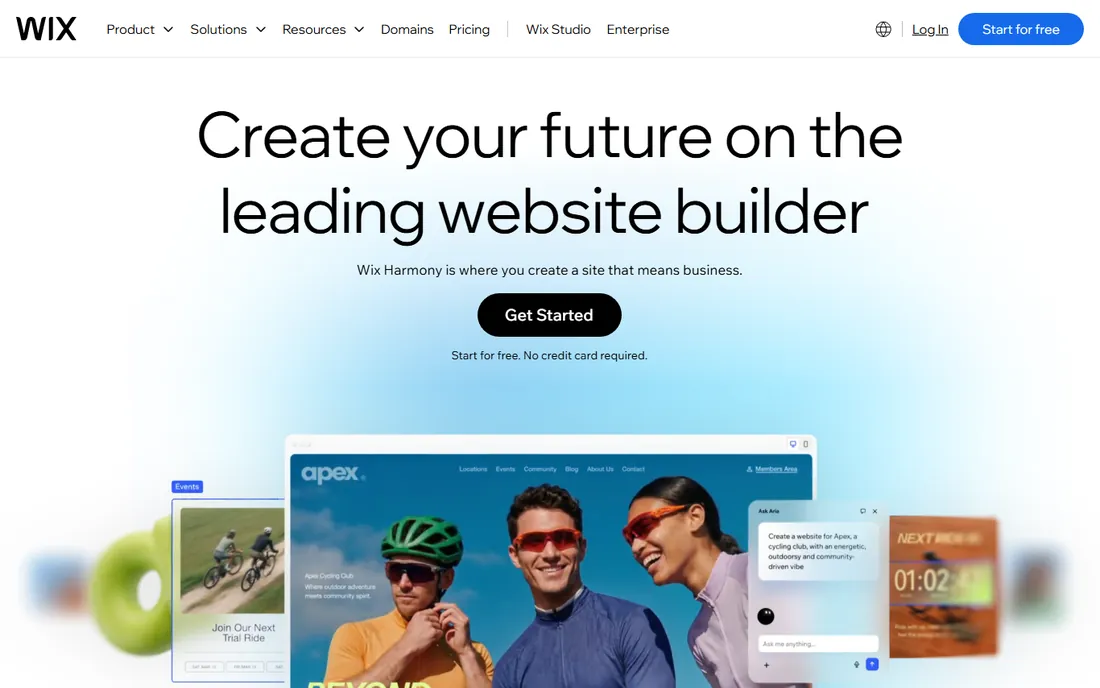
Wix is the fastest route from idea to good-looking blog for non-technical users. The drag-and-drop editor, AI builder, and template library produce a polished site in an afternoon, and the free plan includes hosting with Wix branding. Light at $17 per month on annual billing connects a custom domain and removes ads, which is the minimum for anything professional.
Two limitations matter. Wix does not let you export blog posts to another platform, so years of content are effectively locked in. And the plan ladder is steep: e-commerce and advanced marketing features start at Core ($29 per month), so costs climb as ambitions grow. For monetization, Wix supports ads, paid subscriptions, and online stores through its app market and built-in tools. Support includes 24/7 customer care on paid plans. Choose Wix when ease beats flexibility and you are comfortable staying put.
What we like- Genuine free plan with the full editor
- Excellent templates
- No technical skill needed
Watch out for- Cannot export blog posts to another platform
- Pricing jumps steeply between tiers
Starting priceSee website
Free planFree trial (14 days)
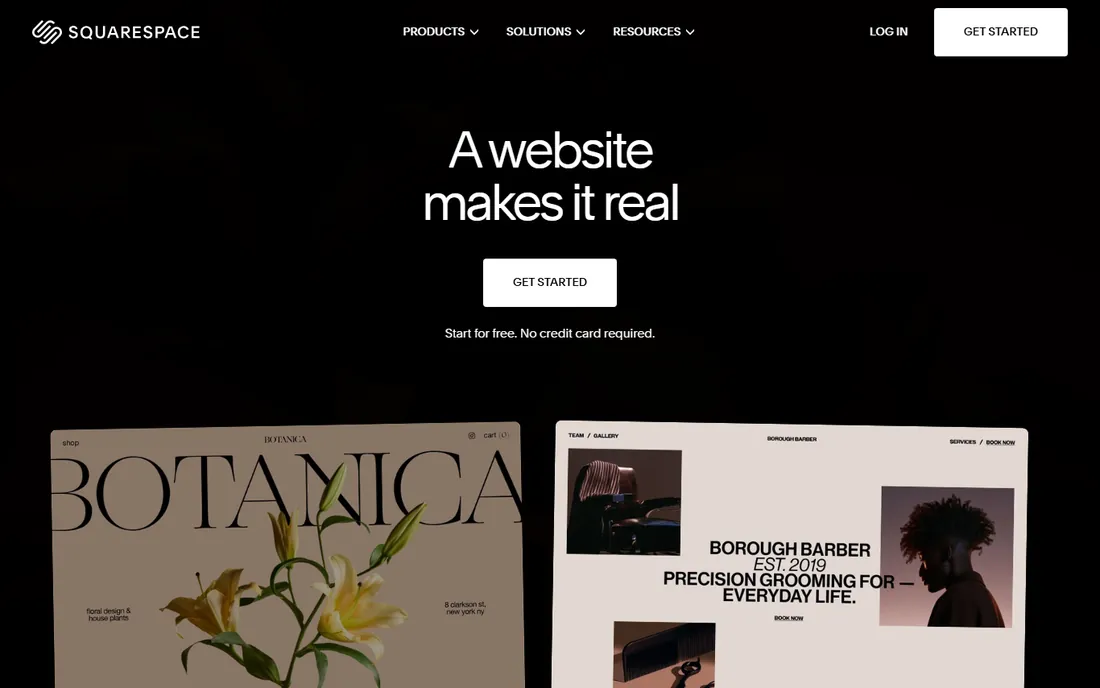
Squarespace is the choice when the blog needs to look expensive. Its templates are consistently the best in the industry, and the platform pairs blogging with portfolio, scheduling, and commerce tools that suit photographers, designers, and consultants. The blogging editor is clean, SEO basics are built in, and email campaigns can be added without third-party tools.
There is no free-forever plan, only a 14-day trial, so budget from the start. Pricing sits above Wix and WordPress.com's entry tiers, which is the price of the design quality. For making money, Squarespace supports member areas, digital products, and online stores, though the ecosystem of monetization plugins is far smaller than WordPress. Export options exist but are limited compared to WordPress. Support is 24/7 on paid plans. Pick Squarespace when visual brand matters more than plugin flexibility.
What we like- Best-in-class templates
- Blogging plus portfolio in one
- Solid built-in SEO tools
Watch out for- No permanent free plan
- Less flexible than WordPress for advanced monetization
Starting priceSee website
Free planFree trial
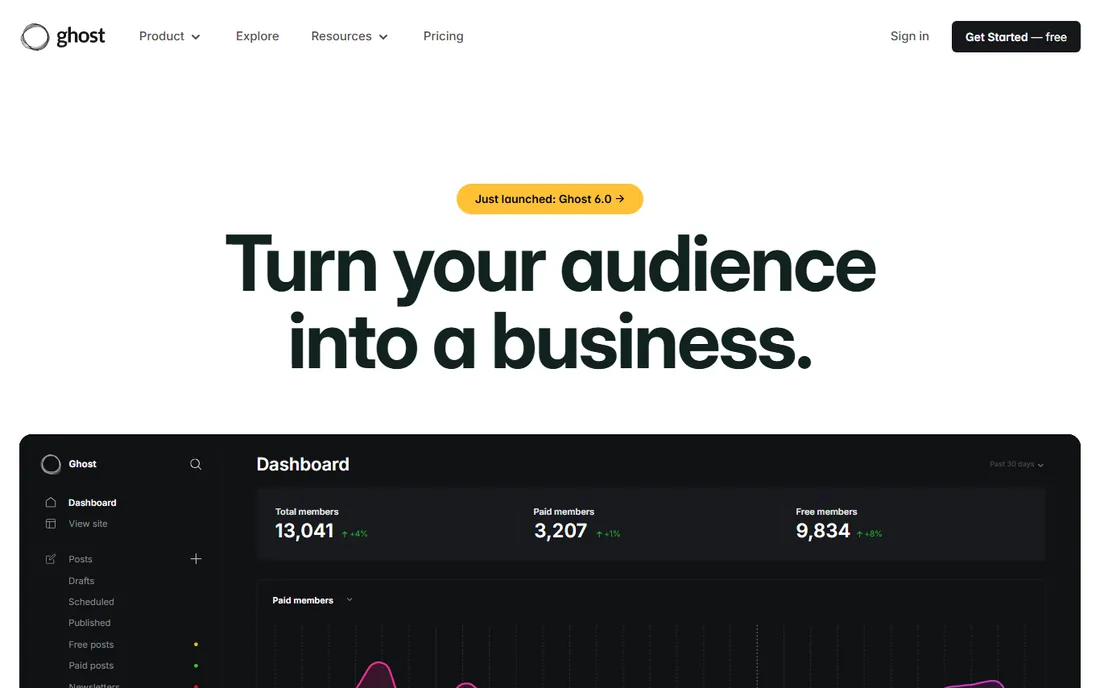
Ghost is the independent publisher's platform. It combines blogging with native membership and paid subscription tools, so you can run a free blog, a paid newsletter, or both from one dashboard without bolting on plugins. The editor is minimal and fast, the sites are quick, and there are no transaction fees on your subscription revenue beyond payment processing.
Ghost's hosted service starts with a trial rather than a free plan, and the self-hosted open-source version is free if you manage your own server. That split is the key decision: pay Ghost for hosting or pay a host and run it yourself. For making money, Ghost is one of the strongest options here because memberships are first-class, not an add-on. The ecosystem is smaller than WordPress, so exotic integrations may not exist. Support is email-based with thorough documentation. Choose Ghost when paid subscriptions are the business model.
What we like- Built-in memberships and paid subscriptions
- Fast and clean
- You keep your subscriber list
Watch out for- No free-forever hosted plan
- Smaller theme and integration ecosystem
Starting priceSee website (free to publish)
Free planYes
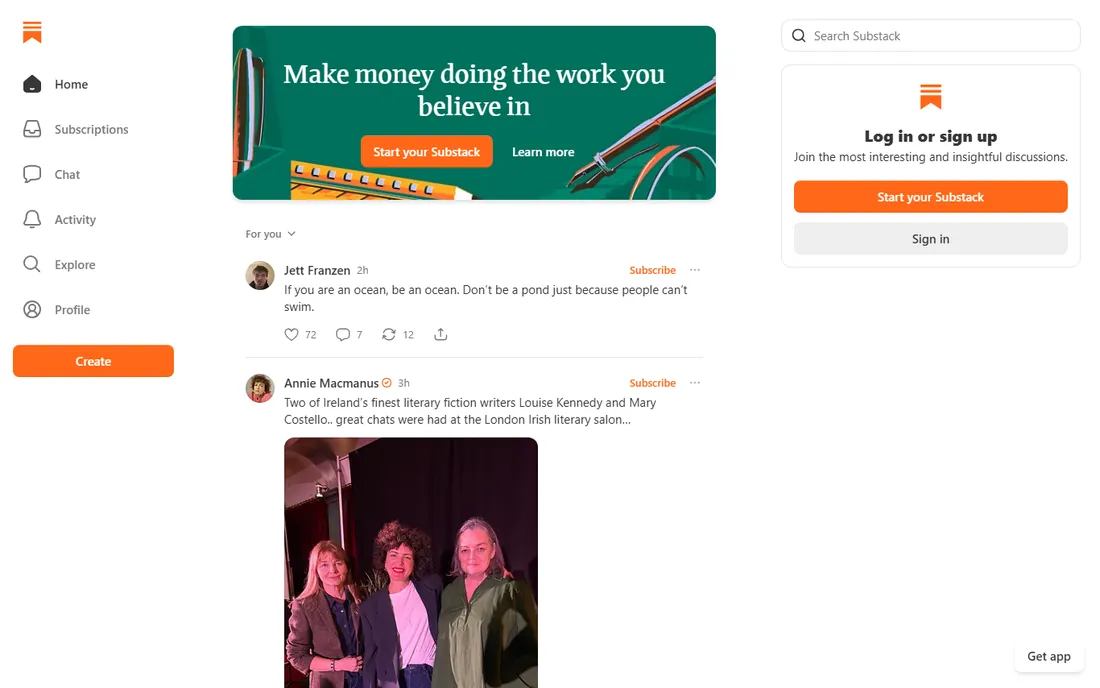
Substack made paid newsletters accessible to everyone. Publishing is free, and turning on paid subscriptions takes minutes; Substack handles payments, email delivery, and subscriber management in exchange for a 10% cut of subscription revenue plus payment processing fees. For writers whose content is the product, that tradeoff is often worth it: zero upfront cost and zero technical work.
The honest math matters. At $10 per month per subscriber, Substack keeps about $1.30 before processing fees. That is expensive compared to Ghost or Beehiiv at scale, but unbeatable at zero subscribers. Discovery through the Substack network helps new writers find readers, though you should still build an email list you can export. Customization is limited; every Substack looks like Substack. Support is help-center based. If your question is what is the best blogging platform to make money from writing alone, Substack is the simplest answer.
What we like- Free to start with no upfront cost
- Built-in paid subscriptions
- Network effects help discovery
Watch out for- 10% fee on paid subscription revenue
- Limited site customization
Starting priceSee website
Free planYes
Beehiiv is the growth-hacker's newsletter platform. The free plan covers getting started, and the platform's differentiators are monetization mechanics: an ad network that matches newsletters with sponsors, a Boost network for paid subscriber acquisition, and referral program tools. For creators who think in terms of audience growth and sponsorship revenue rather than just subscriptions, Beehiiv's toolkit is the most complete.
Paid plans raise subscriber limits and add advanced features. As a traditional blog with an archive-first reading experience, Beehiiv is thinner than WordPress or Ghost; it is really an email publication with a web archive. That is fine if email is the channel. The platform is newer than Substack, so longevity is a fair question, though growth has been rapid. Support is responsive. Choose Beehiiv when your monetization plan centers on newsletter ads and paid growth.
What we like- Free plan for starting out
- Built-in ad network and boosts
- Strong growth tools
Watch out for- Newsletter-first, weaker as a traditional blog
- Newer platform with a shorter track record
Starting priceSee website (free to publish)
Free planYes
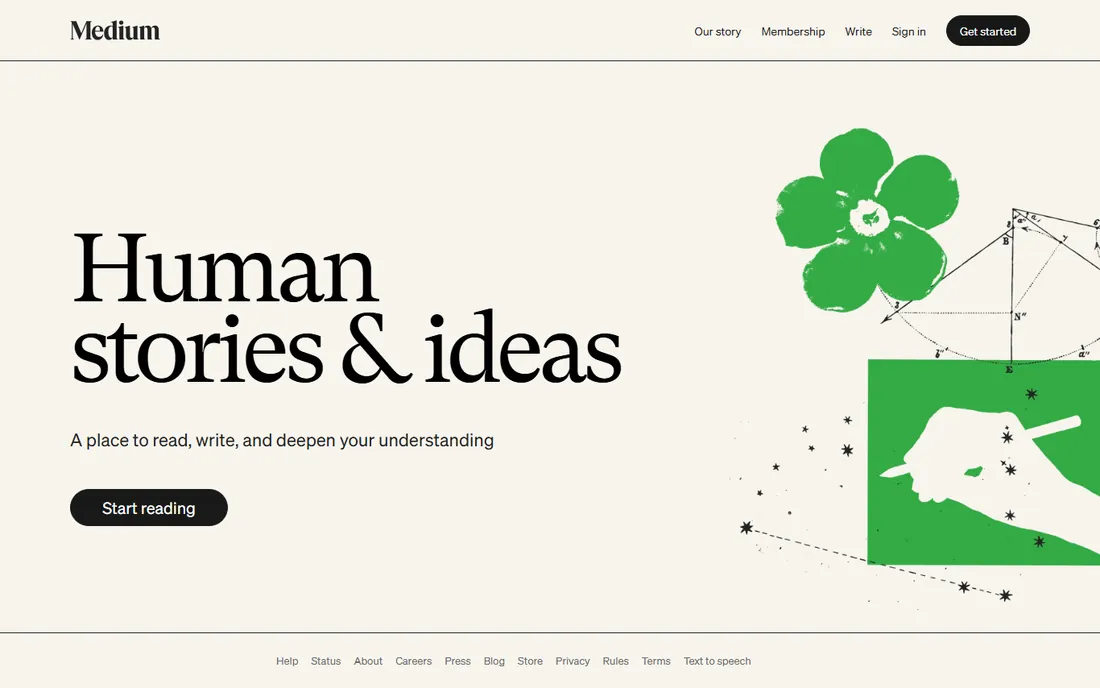
Medium is the fastest way to get your writing read. Publish an account in minutes and your posts can surface to millions of readers through recommendations, topics, and publications. There is no hosting, theming, or plugin work. For writers testing ideas or building a portfolio, that distribution is valuable.
The tradeoff is ownership. Your readers belong to Medium, customization is minimal, and the Partner Program pays based on member reading time, which produces modest earnings for most writers. Many successful bloggers use Medium as a distribution channel that points back to a newsletter or site they own. Publishing is free; reading beyond a monthly limit requires a membership. If your goal is the best blog platform to make money directly, Medium ranks below the subscription platforms. Use it for reach, not as your home base.
What we like- Built-in readership and distribution
- Zero setup or maintenance
- Clean reading experience
Watch out for- You do not own the audience
- Partner Program earnings are modest
- Limited branding
Starting priceSee website
Free planYes
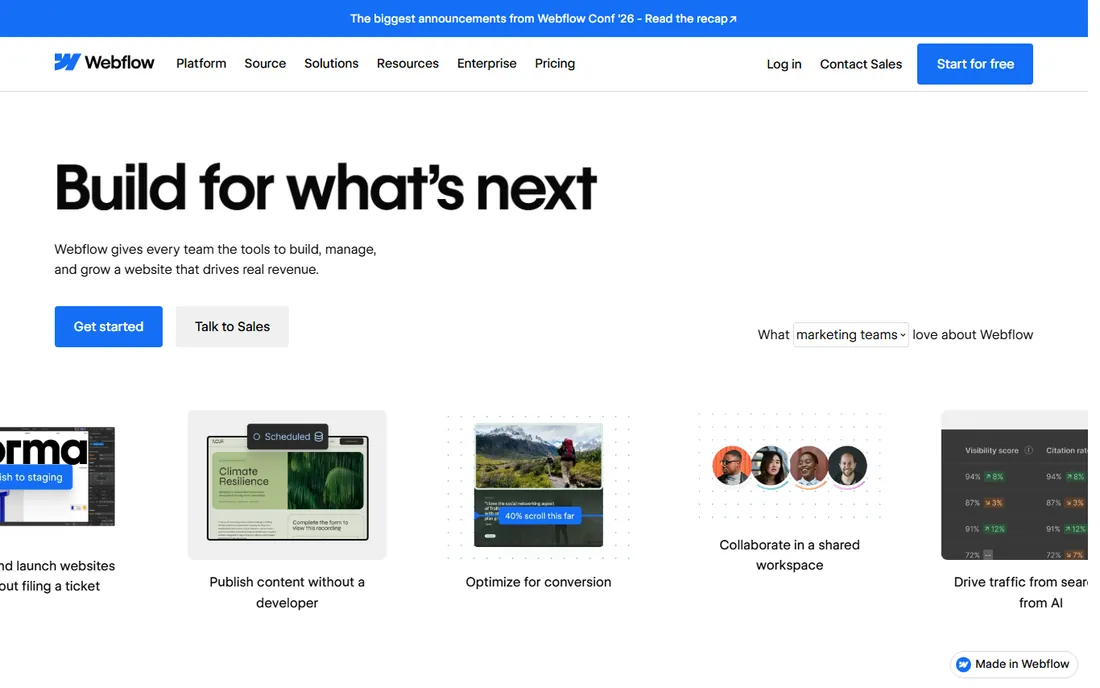
Webflow sits between Squarespace and hand-coding. Designers get near-total visual control without writing code, and the CMS handles blog collections, authors, and categories properly. The free plan lets you design and stage a site on a webflow.io subdomain, which is enough to learn the platform and prototype.
Publishing to a custom domain with CMS functionality requires a paid site plan. The learning curve is real; Webflow rewards design skill and punishes dabbling. For monetization, Webflow supports memberships, e-commerce, and integrations with email and payment tools, making it viable for content businesses with a strong visual brand. Export is better than most builders since you can take the code with you. Support includes documentation, community, and ticketed help. Choose Webflow when design control justifies the learning investment.
What we like- Pixel-level design control
- Clean code output
- CMS built for content sites
Watch out for- Steep learning curve
- CMS features need a paid site plan
Starting priceSee website
Free planYes
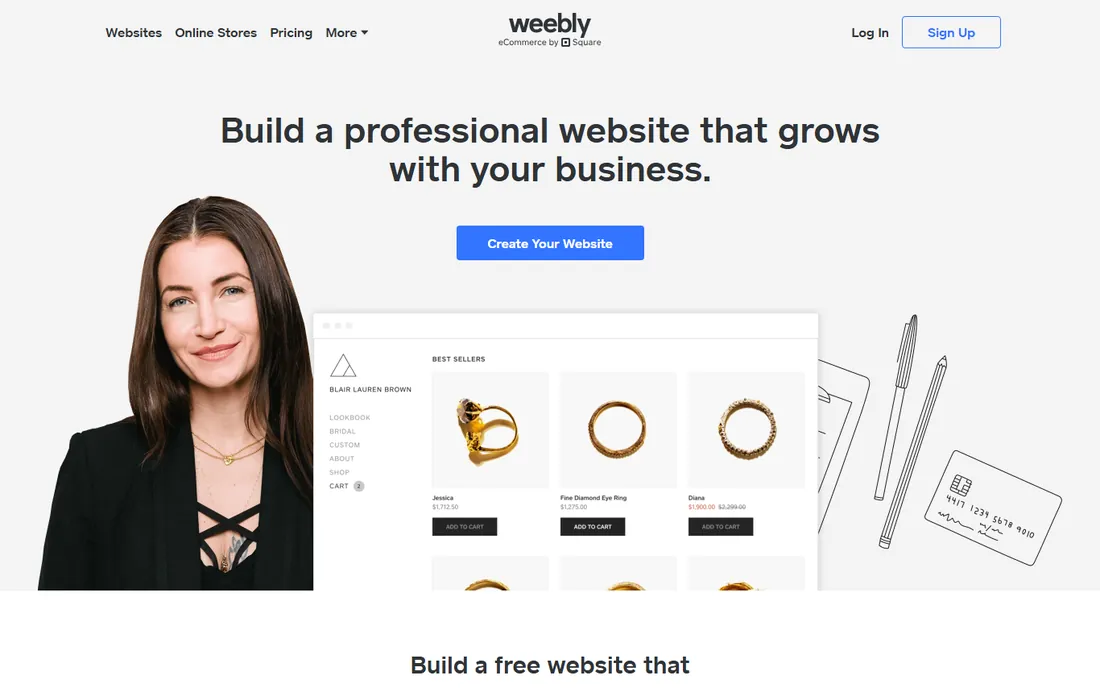
Weebly is the quiet veteran: a genuinely simple builder with a free plan that never expires. Owned by Square, it ties naturally into Square's payment and commerce ecosystem, which suits small sellers who want a basic blog alongside a store. The editor is straightforward, setup takes under an hour, and the free tier is enough for a personal blog.
The honest assessment is that Weebly has not kept pace. Templates look dated next to Squarespace and Wix, the feature set is narrower, and Square's attention has visibly shifted elsewhere. For monetization, the Square integration helps sellers, but content businesses will find the blogging and email tools basic. Export options are limited. Support exists but is thinner than the bigger platforms. Weebly fits a simple free blog or a Square seller's side content; ambitious bloggers should look higher on this list.
What we like- Free plan with no time limit
- Very easy to use
- Owned by Square for commerce tie-ins
Watch out for- Dated templates and editor
- Development pace has slowed
- Limited advanced features
Starting price$0
Free planYes
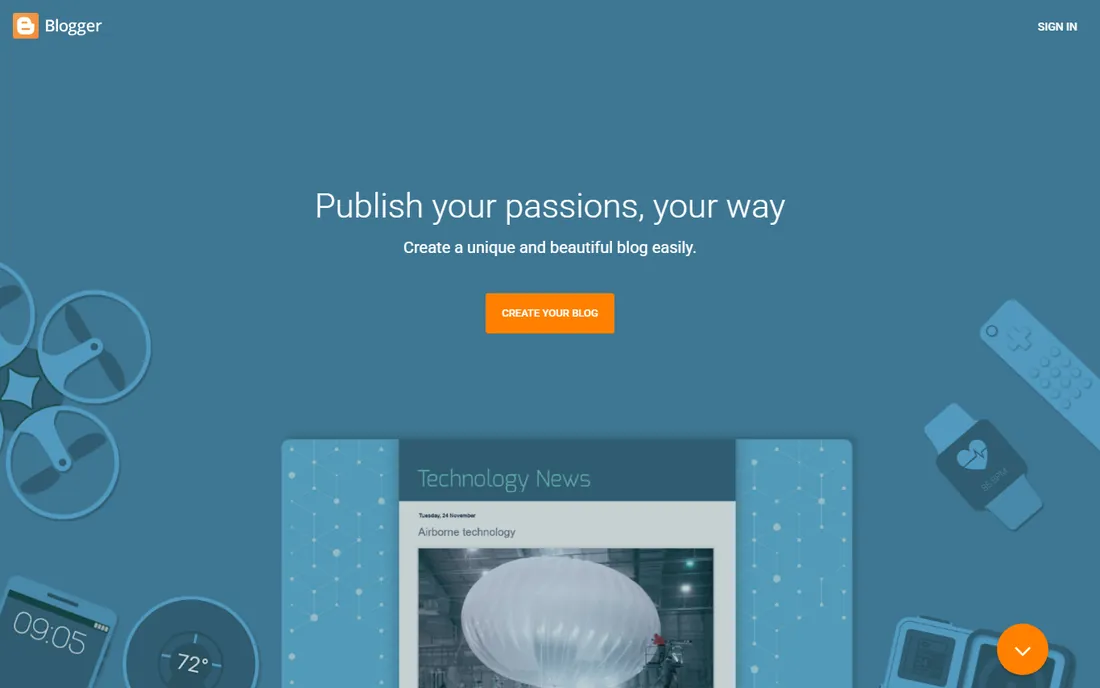
Blogger is Google's free blogging service, and it costs nothing, forever, with no premium tier to graduate to. Setup takes minutes with a Google account, publishing is simple, and Google's infrastructure keeps it reliably online. For a personal journal, a family blog, or a student project, it remains perfectly functional.
For anything commercial, it is a dead end. The platform has seen minimal development for years, templates are dated, SEO tooling is basic, and monetization realistically means AdSense, which needs serious traffic to pay. There is no support beyond help forums, and Google's history of shutting down services hangs over it. The best blog platform to make money is not the free one from 2003. Use Blogger for hobbies; build a business elsewhere.
What we like- Completely free with no upsells
- Dead simple
- Backed by Google infrastructure
Watch out for- Effectively frozen in time
- Weak monetization beyond AdSense
- No real support
How we chose
We reviewed each platform's current pricing page and free-plan terms, documentation on publishing and monetization features, and public reviews on G2, Capterra, and Trustpilot plus blogger discussions on Reddit. We weighted cost to start, ease of use for beginners, design quality, ownership and export options, and the realistic paths to revenue: subscriptions, ads, affiliates, products, and services. No vendor paid for placement, and we did not publish test blogs on every platform; findings reflect publicly documented terms as of October 2026. Note: vendor sites could not be re-verified on the day of writing due to a browser service outage, so unverified prices are marked See website.
How to actually make money blogging
Pick the model before the platform
The best blog platform to make money depends on how you plan to earn. Paid newsletters favor Substack, Beehiiv, and Ghost. Advertising and affiliates favor WordPress with its plugin ecosystem. Services and consulting favor Squarespace or Webflow for credibility. Digital products work almost anywhere with an email list. Choosing the platform before the model is the most common expensive mistake.
Subscriptions beat ads for small audiences
A thousand true fans paying $5 per month is $5,000 in monthly revenue; the same audience on display ads might earn a few hundred dollars. That math is why Substack, Beehiiv, and Ghost lead the monetization conversation. Ads and affiliates become attractive at tens of thousands of monthly visitors, which takes most blogs a year or more to reach.
Own your email list
Whatever platform you choose, export your subscriber list regularly and keep a copy outside the platform. Algorithmic feeds change, free platforms shut down, and terms of service evolve. The email list is the only audience asset you fully control, and every monetization path on this list performs better with one.
Count the platform's cut
Substack takes 10% of subscription revenue; Ghost takes none beyond processing fees; WordPress takes none at all. On $2,000 per month in subscriptions, that is the difference between $200 and $0 in platform fees. Factor the cut into your choice the same way you factor the subscription price.
Free vs paid: the real tradeoff
Free plans from WordPress.com, Wix, Medium, Substack, Beehiiv, Webflow, Weebly, and Blogger let you start writing today at no cost, which is genuinely valuable for finding your voice. The costs arrive later and take predictable forms: platform branding on your site, no custom domain, feature gates on the tools that earn money, and in some cases no way to export your content. The practical rule is simple. Blog for fun and free is fine. Blog to earn and budget for at least the entry paid tier within your first few months, because the features that make money, custom domains, email capture, payment buttons, plugin access, are almost never free. Treat the free plan as a trial with no expiry date, not as a permanent home for a business.
Frequently asked questions
What is the best blogging platform to make money?
For paid subscriptions, Substack is simplest and Ghost keeps more of your revenue with no platform fee. For ads and affiliates at scale, self-hosted WordPress offers the most options. Beehiiv suits newsletter ad revenue. The right choice depends on your monetization model.
What are the best platforms to start a blog for free?
WordPress.com, Wix, Medium, Substack, Beehiiv, Webflow, Weebly, and Blogger all offer free plans. WordPress.com and Wix give the most complete free website experience, while Substack and Beehiiv are best if newsletters are the goal.
Is WordPress.com or WordPress.org better for blogging?
WordPress.com is easier with hosting included; WordPress.org (self-hosted) gives full control, plugin freedom, and no revenue sharing. Serious monetization usually ends at WordPress.org, but WordPress.com is the gentler start.
Can you start a blog with no money?
Yes. Blogger, Medium, Substack, and the free tiers of WordPress.com and Wix cost nothing to start. Expect to pay for a custom domain ($10 to $15 per year) once the blog gets serious, since a subdomain looks unprofessional to readers and sponsors.
How long does it take to make money blogging?
Most blogs take 6 to 12 months of consistent publishing to earn meaningful revenue. Paid newsletters can monetize faster with an existing audience; ad and affiliate income typically needs substantial traffic first.
Should beginners use Wix or Squarespace for a blog?
Wix is easier to learn and has a free plan, which favors absolute beginners. Squarespace produces better-looking sites and suits visual brands. Both lock in your content more than WordPress, so consider how much platform flexibility you may want later.
Sources we checked (12)
- https://www.speckyboy.com/best-wordpress-hosting/
- https://wiksit.com/blog/wix-ecommerce-review
- https://wordpress.com/pricing
- https://www.wix.com/pricing
- https://www.squarespace.com/pricing
- https://ghost.org/pricing
- https://substack.com
- https://www.beehiiv.com/pricing
- https://medium.com/membership
- https://webflow.com/pricing
- https://www.weebly.com/pricing
- https://www.blogger.com
Is your product missing or out of date?
We review this list regularly. Vendors can request a listing, send updated pricing or ask about featured placement.

Shihab Mia · Founder, Rankite
Shihab has spent more than a decade helping SaaS and e-commerce brands grow through search. He writes Rankite's software buying guides from pricing pages, documentation and public user reviews. More about Shihab.