How we make this list: we compare pricing pages, product documentation and public user reviews. Rankite is independent; if a vendor ever pays for a featured spot, that listing is clearly labeled Partner.
Key takeaways
- Behance and ArtStation are the portfolio sites that get artists hired, with ArtStation dominating game and film work.
- DeviantArt and Dribbble serve different crowds: DeviantArt for illustration and fandom, Dribbble for designers chasing client work.
- Saatchi Art and Artfinder sell original work to collectors, while Etsy and Redbubble monetize prints and products.
- Patreon and Ko-fi turn fans into income through memberships and tips, with Ko-fi charging no monthly fee.
- The best social media platform for artists is the one where your buyers already spend time, not the one with the biggest user count.
Quick comparison
| Tool | Best for | Starting price | Free plan |
|---|
 Behance Behance | portfolios that attract creative clients | Free to join | Yes |
 ArtStation ArtStation | game, film and concept artists | See website | Yes |
 DeviantArt DeviantArt | illustrators and fandom communities | See website | Yes |
 Dribbble Dribbble | designers building client pipelines | See website | Yes |
 Saatchi Art Saatchi Art | selling original art to collectors | See website | Yes |
 Artfinder Artfinder | independent artists selling originals directly | See website | Yes |
 Etsy Etsy | handmade art and digital downloads | See website | Yes |
 Redbubble Redbubble | print-on-demand merch from your designs | See website | Yes |
 Patreon Patreon | fan-funded memberships and exclusive work | See website | Yes |
 Ko-fi Ko-fi | tips, memberships and sales with low fees | Free to start, 0-5% fee | Yes |
Is your product missing or out of date?
We review this list regularly. Vendors can request a listing, send updated pricing or ask about featured placement.
Picture two artists with equal talent. One posts work wherever is convenient and wonders why nothing sells. The other picks a platform that matches the goal: a portfolio site for client work, a marketplace for sales, a membership page for recurring income. That choice matters more than the algorithm. The best art platforms below are grouped by what they are for, because "best platform for artists" depends entirely on whether you want a job, a sale or a salary from fans.
Starting priceFree to join
Free planYes
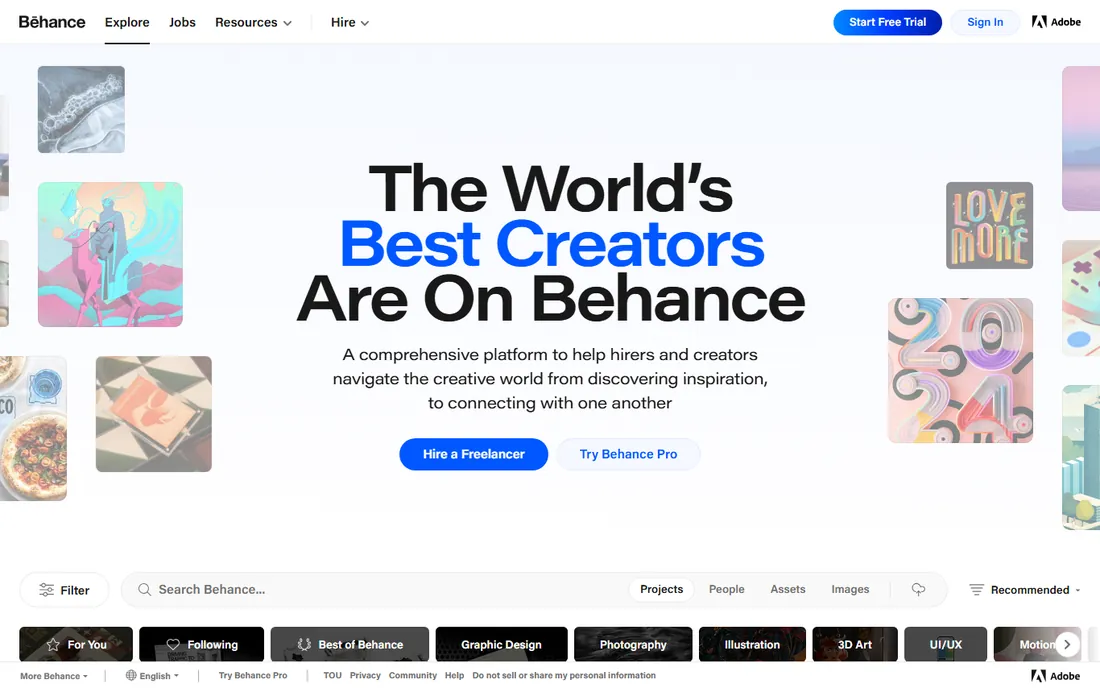
Behance is the portfolio site creative directors actually browse when hiring. Owned by Adobe, it is free to join, and portfolios are organized as projects rather than single images, which lets you show sketches, process shots and final work the way clients think. Appreciations and featured galleries drive discovery, and integration with Adobe Portfolio gives you a personal site for free.
The honest downside is saturation. Millions of portfolios compete for the same eyeballs, and the work that gets featured skews toward polished commercial design. Illustrators and fine artists can feel drowned out by UI designers and agencies. Still, as a free professional presence that ranks well in search and shows up in client research, every working artist should claim their Behance page.
What we like- Huge audience of creative directors
- Free with an Adobe ID
- Project-based portfolios show process
Watch out for- Crowded, so standing out is hard
- Engagement favors polished commercial work
Starting priceSee website
Free planYes
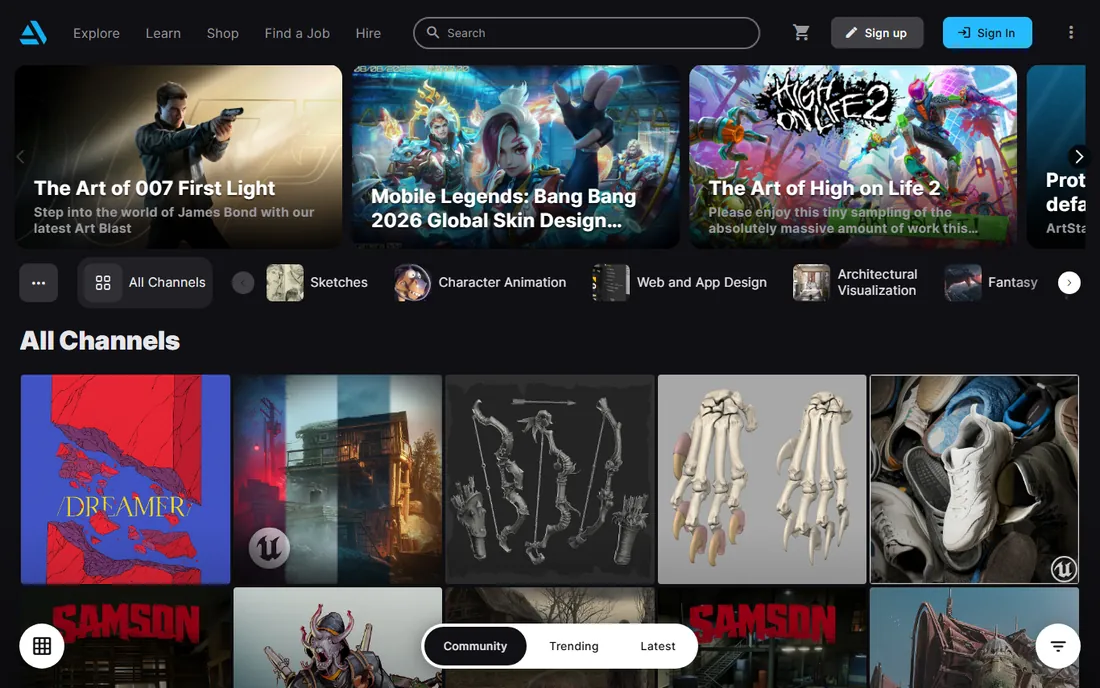
If you want work in games, film or animation, ArtStation is not optional. Studios recruit directly from it, and the jobs board lists openings from major developers. Portfolios support high-resolution images, 3D viewers and breakdowns, and the marketplace sells assets, tutorials and prints. Signing up is free, with paid tiers adding portfolio customization and marketplace perks.
The community leans hard into concept art, 3D and game aesthetics. Fine artists, traditional painters and designers outside entertainment will find less of an audience here. It is also owned by Epic Games, which ties it to that ecosystem's orbit. For its target audience, though, nothing else on this list gets your work in front of hiring art directors as directly.
What we like- The industry standard for entertainment art
- Jobs board and marketplace built in
- High-res image support
Watch out for- Heavily skewed to game and film styles
- Paid Pro features for full customization
Starting priceSee website
Free planYes
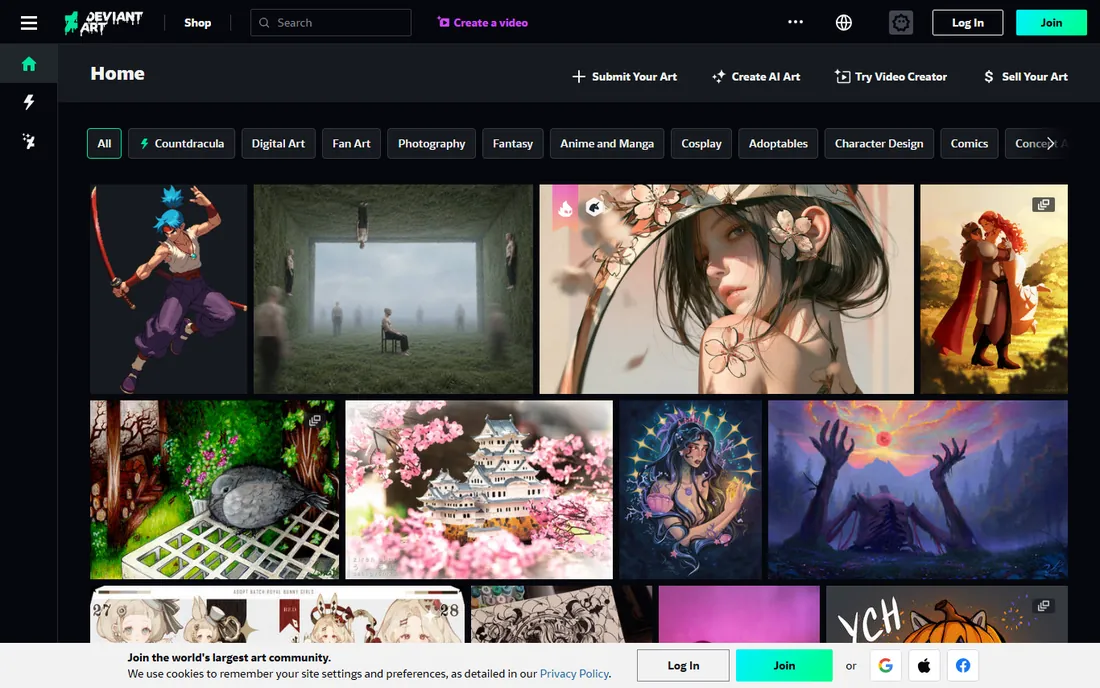
DeviantArt remains the largest online art community by membership, with groups organized around every fandom, medium and style imaginable. For illustrators, fan artists and anime-style creators, it offers something the portfolio sites do not: an audience that comments, critiques and commissions. The free tier is generous, and features like DeviantArt Draw let you sketch in the browser.
The platform carries baggage. The interface feels dated next to newer competitors, and the site's embrace of AI image generation alienated parts of its core artist community. It also skews younger and hobbyist, so fine art collectors and corporate clients rarely shop here. For building an audience around illustration and fan art, it is still unmatched in scale.
What we like- 100 million creators and art lovers
- Groups and fandoms for every niche
- Browser drawing tools built in
Watch out for- Aging reputation and dated interface
- AI-generated art controversies split the community
Starting priceSee website
Free planYes
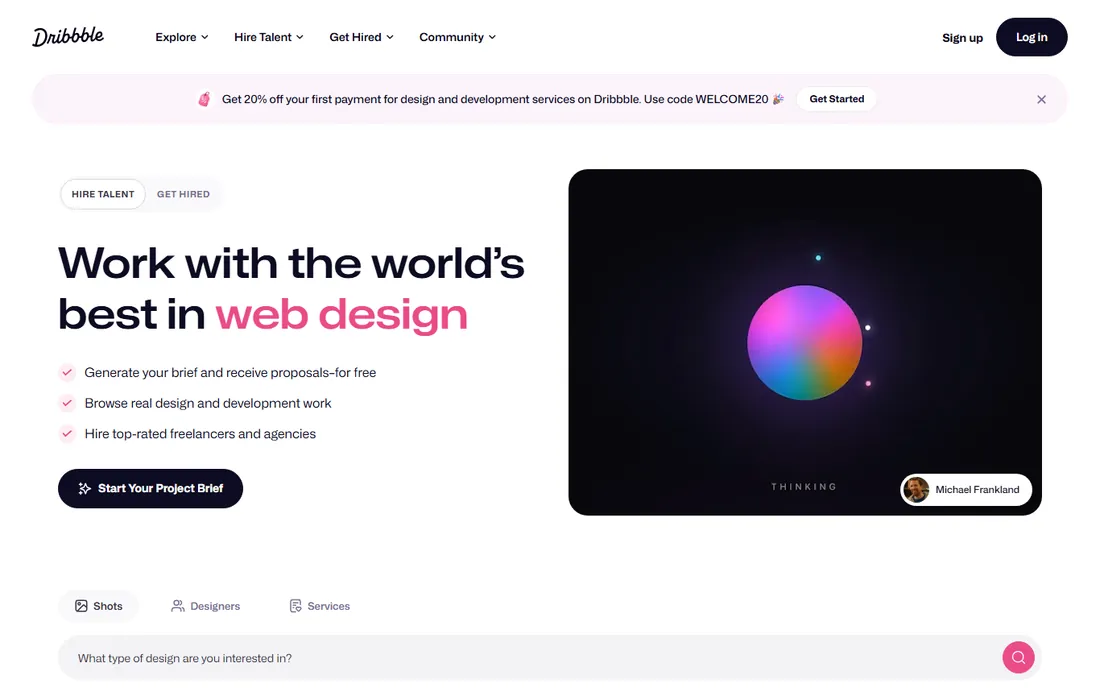
Dribbble is where designers get discovered by clients. The shots format, small polished pieces rather than full projects, encourages frequent posting, and the audience skews toward product managers, founders and agencies looking to hire. Job boards, freelance project listings and designer search tools make the hiring intent explicit. A free account gets you posting and discoverable.
It is a design platform first. Illustrators post here too, but the culture rewards UI, branding and product design, and fine artists will feel out of place. Visibility also demands consistency; occasional posters sink. For graphic designers, illustrators who do commercial work and anyone whose income depends on client briefs, Dribbble is one of the best social media apps for artists to convert followers into invoices.
What we like- Clients search it for design talent
- Shots format rewards regular posting
- Freelance and hiring tools
Watch out for- Favors UI and brand design over fine art
- Visibility needs consistent posting
Starting priceSee website
Free planYes
Saatchi Art is the closest thing to a global gallery for independent artists. Listing is free, and the platform handles the parts artists hate: payment processing, worldwide shipping, 14-day returns and buyer support. The Saatchi name carries weight with collectors, and prices run from a few hundred to tens of thousands of dollars, so original work sells at real margins rather than print prices.
You pay for that machinery with commission on every sale, and listings go through a curation process that rejects plenty of applicants. It is also a buyers' market for established styles; experimental work can sit. For painters, sculptors and photographers ready to sell originals at gallery prices without a gallery, Saatchi Art is the proven route.
What we like- Established collector audience
- Handles shipping, payments and returns
- Artist advisory support
Watch out for- Commission on every sale
- Approval process limits who can list
Starting priceSee website
Free planYes
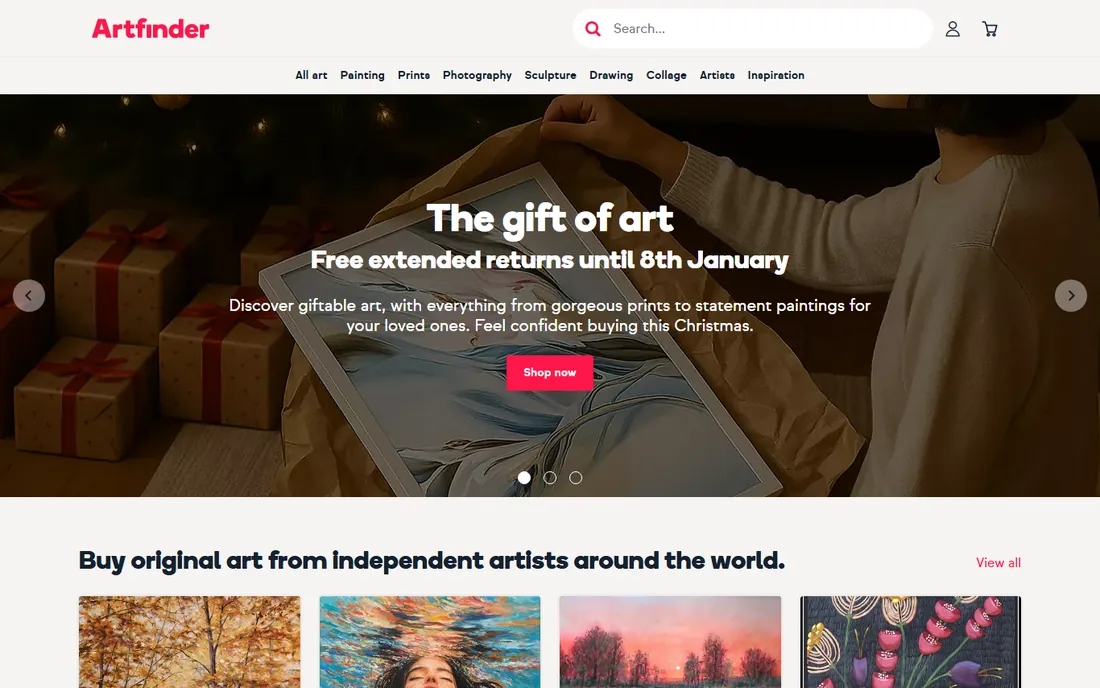
Artfinder positions itself as the friendlier alternative to the big art marketplaces, connecting buyers directly with independent artists and backing sales with free returns. Commission requests are a first-class feature, so artists can offer family portraits, pet portraits and custom pieces alongside finished work. The platform is B Corp certified, which appeals to buyers who care about how businesses behave.
The tradeoff is scale. Artfinder's audience is smaller than Saatchi Art's, which means fewer eyeballs on your work. The site prices in pounds, and some buyers report confusion around currency conversion at checkout. For artists who want a personal connection with buyers and a platform that treats them as partners, Artfinder is a strong pick among the best art platforms for selling originals.
What we like- Direct artist-to-buyer connection
- Free returns build buyer confidence
- Commissions and custom work supported
Watch out for- Smaller audience than Saatchi Art
- Pricing in GBP can confuse international buyers
Starting priceSee website
Free planYes
Etsy is the default marketplace for artists selling prints, originals, digital downloads and handmade goods. The buyer traffic is the draw: millions of shoppers arrive with credit cards out, which beats driving your own traffic to a standalone store. Digital products like printable art, Procreate brushes and planners cost nothing to fulfill, and opening a shop takes minutes.
The honest complaints are real. Listing and transaction fees have risen over the years, competition is fierce in every category, and sellers live at the mercy of search algorithm changes. Handmade positioning also means mass-produced art gets flagged. For artists willing to learn Etsy SEO and treat the shop as a business, it remains the highest-traffic sales channel for independent art.
What we like- Massive built-in buyer traffic
- Digital downloads are pure margin
- Low barrier to opening a shop
Watch out for- Crowded marketplace with fee creep
- Algorithm changes can tank shop traffic
Starting priceSee website
Free planYes
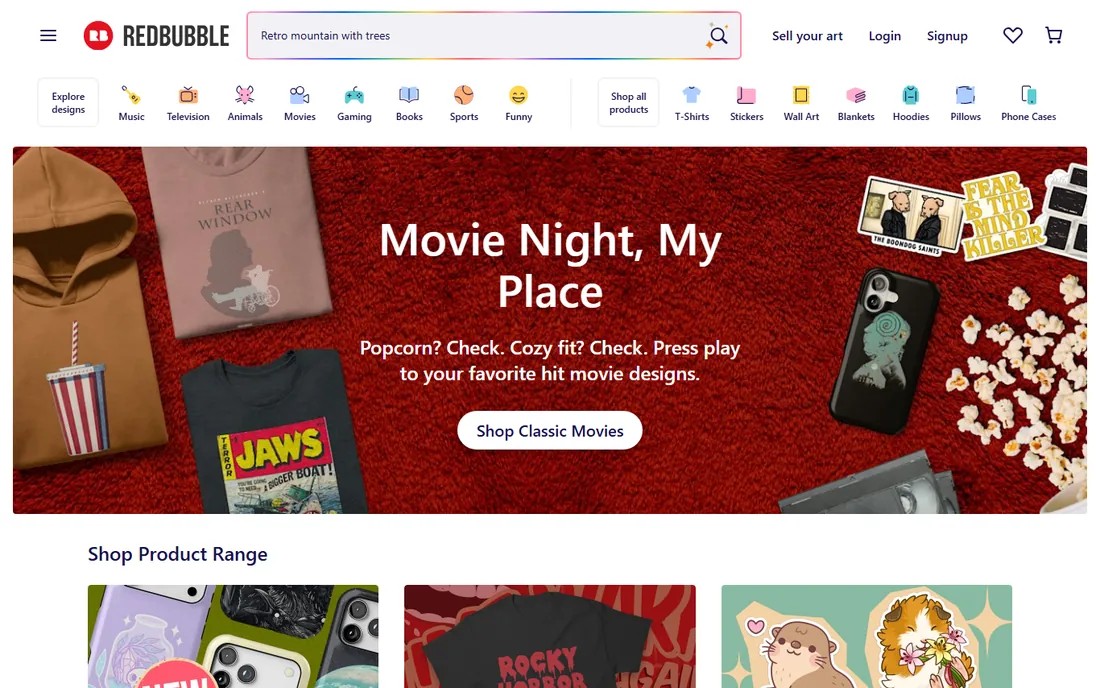
Redbubble is print-on-demand for artists: upload a design, and it appears on shirts, stickers, phone cases, wall art and dozens of other products, with Redbubble handling printing, shipping and support. There is no upfront cost and no inventory. The fan art program even lets artists sell officially licensed designs for participating franchises, which is rare in this space.
Margins per item are thin, since Redbubble takes the production and platform cut and you keep the artist margin. With millions of designs on the site, discoverability is the real job; successful sellers drive their own traffic from social media. It is not a get-rich platform. It is a zero-effort revenue stream for designs that already have an audience, and it costs nothing to test.
What we like- Zero inventory or fulfillment work
- Millions of designs on 70+ products
- Fan art programs for licensed work
Watch out for- Thin margins per sale
- Your work competes with millions of designs
Starting priceSee website
Free planYes
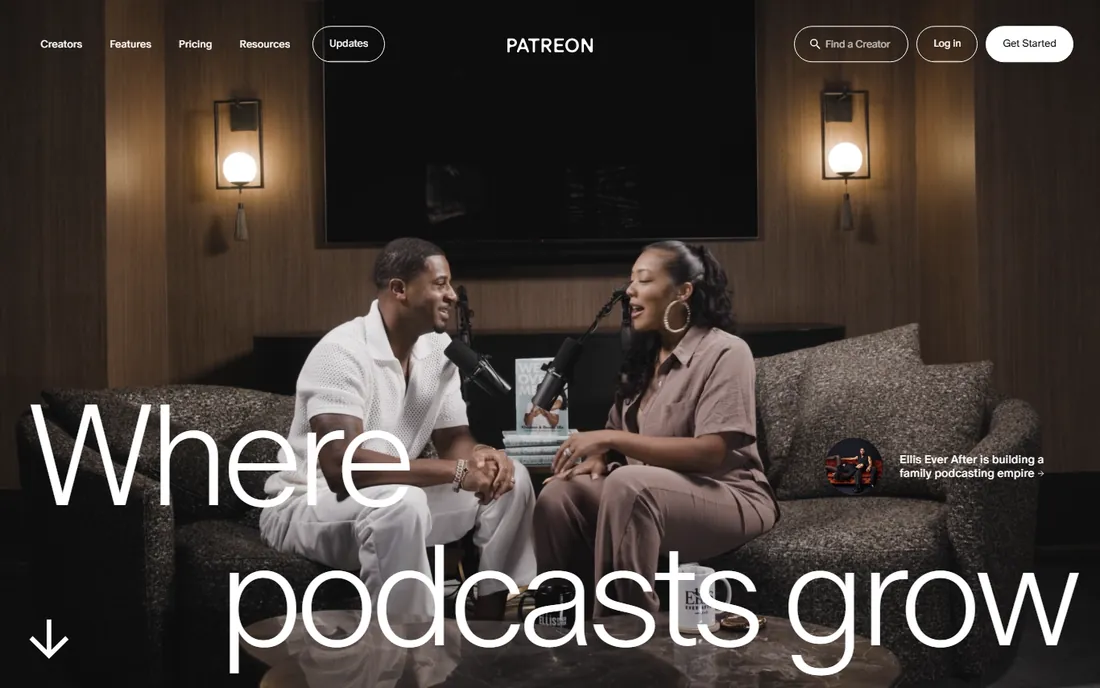
Patreon turns fans into a salary. Artists offer membership tiers with exclusive work, behind-the-scenes content, early access and community access, and fans pay monthly. It is free to start, with Patreon taking a percentage of earnings. The platform has matured into a real business tool with analytics, relationship management, group chats and an online shop for one-off sales.
The catch is that Patreon monetizes an audience you already have. Launching to zero followers earns zero dollars, and growth depends on promotion elsewhere. Fees on earnings plus payment processing take a meaningful cut. For artists with a following who want predictable monthly income instead of chasing individual sales, Patreon is the standard, and the best social media platforms for artists all funnel toward something like it.
What we like- Recurring monthly income from fans
- Exclusive content and community tools
- Direct fan relationships
Watch out for- Platform fees on earnings
- Success requires an existing audience
#10
Ko-fi
Best for: tips, memberships and sales with low fees
Visit ko-fi.com
Starting priceFree to start, 0-5% fee
Free planYes
Ko-fi is Patreon's friendlier sibling. You create a free page, connect your own PayPal or Stripe, and start accepting tips, memberships, commissions and shop sales. There is no monthly fee; Ko-fi takes 0 to 5 percent depending on the feature, and payouts go directly to your accounts instantly. The tone of the platform suits artists who dislike the grind of constant content.
It is smaller than Patreon, which means less built-in discovery and fewer power features for large membership operations. But for artists starting their first fan-funding page, or anyone who resents platform fees, Ko-fi's terms are the most creator-friendly on this list. Many artists run both: Patreon for the membership machine, Ko-fi for tips and one-off sales.
What we like- No monthly fee, just a 0-5% creator-friendly cut
- Instant payouts to your own accounts
- Tips, memberships and shop in one page
Watch out for- Smaller discoverability than Patreon
- Fewer advanced membership features
We verified each platform's homepage and final URL directly, then checked help centers and pricing pages for fees, free tiers and commission structures. Where vendors gate pricing behind signup or region-specific pages, we marked it as "See website" rather than guessing. We weighed each platform's fit against public reviews, artist discussions on Reddit and creative communities, and the platform's own published terms. We did not open seller accounts or run test transactions.
Decide what kind of income you are after, because no platform does everything well. Client work flows through portfolio sites: Behance for general creative hiring, ArtStation for entertainment, Dribbble for design clients. Original art sales belong on Saatchi Art and Artfinder for collectors, or Etsy for a broader buyer pool. Product income comes from Redbubble's print-on-demand or Etsy's digital downloads. Recurring income comes from Patreon memberships or Ko-fi tips.
Most working artists stack two or three. A common setup: a portfolio on Behance or ArtStation for clients, a shop on Etsy or Redbubble for passive product income, and a Ko-fi or Patreon page for fans who want to support you directly. DeviantArt and Dribbble double as audience-building channels that feed the others. The mistake is treating every platform as a sales channel; treat them as a portfolio, a shop and a tip jar, and each one does its job.
Watch the fee math before you commit your catalog. Marketplaces take commission or transaction fees on every sale, Patreon takes a cut of memberships, and Ko-fi's 0 to 5 percent is the cheapest of the fan platforms. Free to join does not mean free to earn. Read the fee schedule for any platform where you will sell, and price your work so the fees come out of your margin planning, not your surprise column.
Frequently asked questions
What is the best social media platform for artists?
It depends on your goal. Instagram and TikTok dominate general art discovery, but among dedicated art platforms, Behance and ArtStation get artists hired, DeviantArt builds illustration audiences, and Dribbble brings design clients. The best social media platform for artists is the one where your specific buyers spend time: collectors browse Saatchi Art, clients browse Behance, fans fund Patreon.
Where can artists sell their work online?
Saatchi Art and Artfinder sell original art to collectors with full sales support. Etsy reaches the largest buyer pool for prints, originals and digital downloads. Redbubble handles print-on-demand merch with no inventory. Patreon and Ko-fi sell memberships, exclusive content and commissions directly to fans.
Is it free to sell art on these platforms?
Joining is free on every platform here, and listing is free on most. You pay when you earn: marketplaces take transaction fees or commission on sales, Patreon takes a percentage of memberships, and Ko-fi takes 0 to 5 percent with no monthly fee. Only optional upgrades, like ArtStation Pro or DeviantArt Core, cost money upfront.
Should artists be on multiple platforms?
Yes, but with distinct jobs for each. Run a portfolio site for clients, a marketplace for sales and a fan page for recurring income, and use social apps to drive traffic between them. Spreading identical content across ten platforms with no strategy just multiplies the maintenance without multiplying the income.
Which platform is best for digital artists?
ArtStation for entertainment and game work, DeviantArt for illustration and fan communities, Behance for commercial and client work. For selling, Etsy moves digital downloads like brushes, planners and printable art at pure margin, and Redbubble turns designs into merch with no fulfillment effort.
Can beginners make money on these platforms?
Yes, but set expectations. Redbubble and Ko-fi let you start earning with no upfront cost, and Etsy digital products need only your time. Patreon and Saatchi Art work better once you have an audience or a body of work. Beginners do best starting with low-effort channels while building the portfolio that opens up the bigger ones.
Sources we checked (10)
- https://www.behance.net
- https://www.artstation.com
- https://www.deviantart.com
- https://dribbble.com
- https://www.saatchiart.com
- https://www.artfinder.com/
- https://www.etsy.com
- https://www.redbubble.com
- https://patreon.com/
- https://ko-fi.com
Is your product missing or out of date?
We review this list regularly. Vendors can request a listing, send updated pricing or ask about featured placement.

Shihab Mia · Founder, Rankite
Shihab has spent more than a decade helping SaaS and e-commerce brands grow through search. He writes Rankite's software buying guides from pricing pages, documentation and public user reviews. More about Shihab.